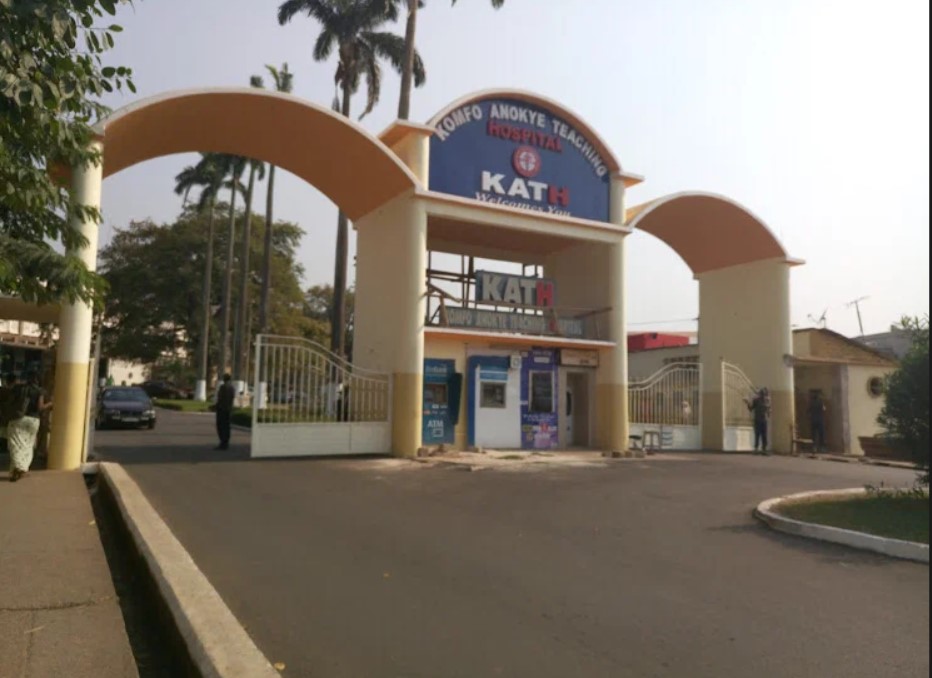
Three days ago, the media landscape was awash with disturbing news from Kumasi, the Ashanti Regional capital, that the Komfo Anokye Teaching Hospital (KATH), the largest referral health facility in Ghana, had announced the temporary closure of its Emergency Centre due to inadequate space.
A statement released by the hospital’s Public Affairs Unit noted that the Centre was full and overflowing with patients, compelling management to suspend the admission of new emergency cases for the next 24 hours.
The Head of Public Affairs at KATH, Mr Kwame Frimpong, explained that the Accident and Emergency (A&E) Centre, which was originally designed as a 37-bed facility, currently had 61 patients on admission in its Orange, Yellow and Red critical wards, with an additional 34 patients waiting to be attended to.
He indicated that in order not to unduly endanger the lives of critically ill patients, management deemed it necessary to temporarily curtail further admissions. A few hours after the announcement, the Ashanti Regional Health Directorate intervened, leading to the resumption of admissions.
Speaking to the media almost 24 hours after the hospital announced the temporary halt in admissions, the Acting Medical Director, Dr Yaw Larbi, indicated that bed availability at the facility had improved slightly.
The Chronicle finds this development heart-breaking and unacceptable, especially considering the manner in which successive governments have handled critical healthcare infrastructure projects in the Ashanti Region, notably the Afari Military Hospital and the Sewua Hospital, both of which remain uncompleted and non-operational despite years of public expectation.
We are worried because, apart from KATH, the Ashanti Region cannot boast of any major tertiary healthcare facility capable of serving the growing medical needs of the region and beyond. We are particularly concerned because only a few weeks ago, The Chronicle published an editorial on the inability of the state to commission the 250-bed Sewua Hospital and the 500-bed Afari Military Hospital.
The Chronicle is aware that, owing to congestion, parts of the A&E Centre have effectively been turned into holding wards, thereby compromising healthcare delivery at KATH. Once such a situation develops, genuine emergency care is inevitably affected.
Unlike the Greater Accra Region, which is blessed with several major healthcare facilities, the same cannot be said of the Ashanti Region. Beyond this, the Government of Ghana is actively undertaking multiple hospital projects in and around Accra. While this commitment is commendable, it raises a legitimate question as to whether the same urgency is being applied to critical healthcare projects in the Ashanti Region.
The Chronicle believes no rational and responsible government should allow the Ashanti Region to continue bearing such healthcare pressures while major hospital projects intended to ease the burden remain uncompleted. As it stands, KATH serves as the primary tertiary referral centre for 13 of Ghana’s 16 administrative regions.
Beyond Ghana’s borders, KATH also receives critical medical and surgical referrals from neighbouring countries such as Côte d’Ivoire and Burkina Faso.
With the foregoing in mind, we believe the Mahama administration must urgently address the congestion at KATH, considering the enormous pressure being placed on the facility.
Such challenges ultimately affect the ordinary Ghanaian who depends on the hospital for life-saving care.
While we do not have evidence that patients suffered adverse outcomes as a result of the temporary suspension of admissions, it is reasonable to conclude that overcrowding places enormous strain on healthcare delivery and can adversely affect patient care. A listening government and a responsive state must confront this challenge head-on.
While efforts are being made to fulfil various manifesto promises, the growing pressures on Ghana’s emergency healthcare system require equal attention and urgency.
Our political leaders must not wait for a full-blown crisis before acting decisively. The people of the Ashanti Region, and indeed the millions of Ghanaians who depend on KATH, deserve better.
For more news, join The Chronicle Newspaper channel on WhatsApp: https://whatsapp.com/channel/0029VbBSs55E50UqNPvSOm2z