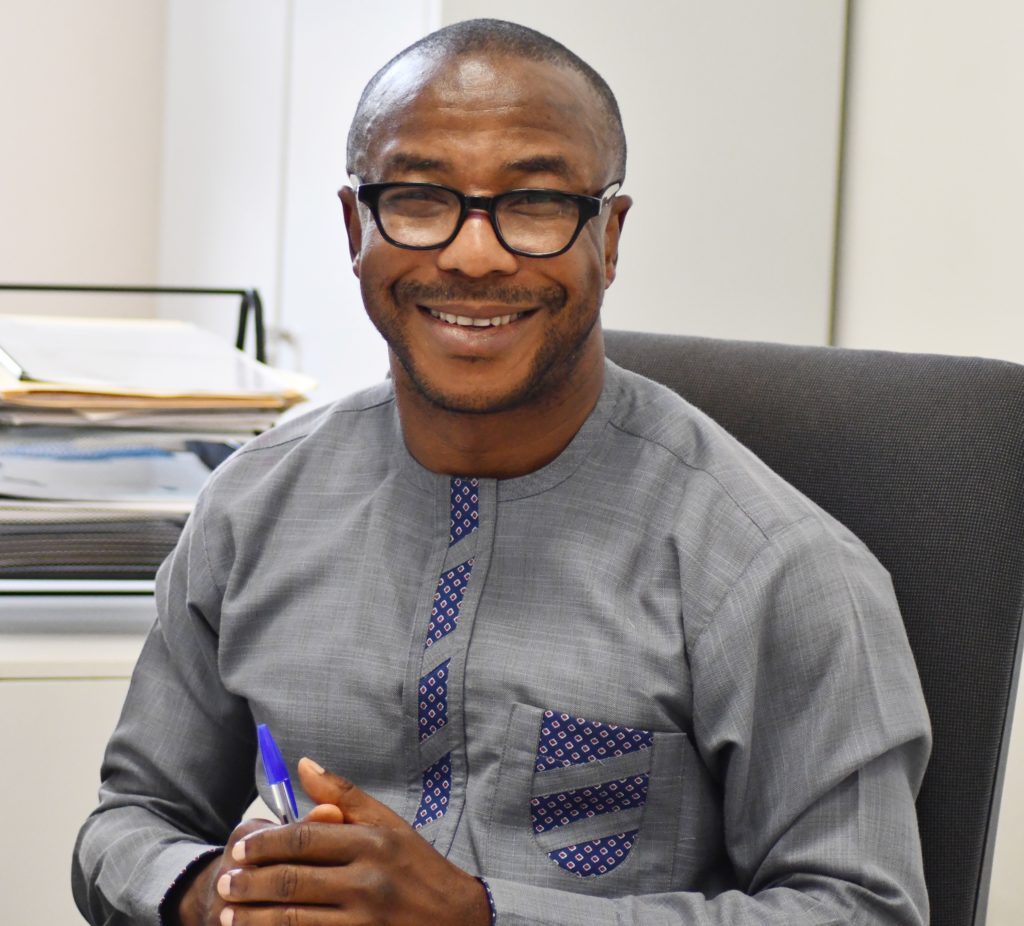
Conservation Biologist and Pro Vice-Chancellor of the University of Environment and Sustainable Development (UESD), Professor Edward Wiafe Debrah, has warned that Africa’s pursuit of economic development must not come at the expense of the natural ecosystems that sustain human life, insisting that biodiversity conservation remains the foundation for sustainable development.
Delivering his inaugural lecture on Thursday, at the auditorium of the university’s Multipurpose Building, Professor Wiafe Debrah challenged governments, policymakers, researchers, and citizens to rethink the relationship between development and the environment.
The lecture, which reflected more than three decades of academic research, conservation practice, and policy engagement, presented a compelling argument that biodiversity protection is not merely an environmental obligation, but a prerequisite for economic growth, food security, climate resilience, and human well-being.
Addressing an audience of academics, policymakers, students, and environmental practitioners, the renowned conservation scientist posed what he described as the central question that has shaped his professional life:
“How can development proceed without destroying the ecological systems that sustain life?”
Professor Wiafe Debrah rejected the narrow perception of biodiversity as simply wildlife or forests, describing it instead as Africa’s “natural capital” that supports virtually every aspect of human existence.
He explained that healthy ecosystems provide clean water, fertile agricultural lands, medicines, tourism opportunities, climate regulation, and employment for millions of people across the continent.
Without biodiversity, he noted, sustainable development would remain unattainable because economic prosperity ultimately depends on healthy ecosystems. He, therefore, urged governments to place biodiversity conservation at the center of national development planning rather than treating it as an afterthought.
The conservation expert observed that although Africa is endowed with enormous natural resources and a youthful population capable of driving development, the continent faces mounting environmental threats.
He cited deforestation, illegal mining, biodiversity loss, pollution, land degradation, climate change, food insecurity, and increasing social inequalities as interconnected challenges threatening Africa’s future.
According to him, today’s decisions will determine whether future generations inherit productive landscapes rich in biodiversity or degraded ecosystems incapable of supporting human livelihoods.
He cautioned that environmental degradation continues to undermine development gains in many African countries despite increasing awareness of sustainable development principles.
One of the strongest messages from the lecture was that economic development and environmental conservation should never be viewed as opposing objectives.
Professor Wiafe Debrah argued that protecting nature should be considered an investment in long-term economic stability rather than an obstacle to infrastructure expansion, industrialization, or urbanization.
He stressed that development strategies that destroy forests, wetlands, wildlife habitats, and water bodies eventually undermine the very economic benefits they seek to create.
Instead, he advocated development models that integrate ecological sustainability with economic planning. Professor Wiafe Debrah emphasized that effective biodiversity conservation cannot rely on assumptions or political expediency but must be driven by rigorous scientific research.
Drawing on decades of research involving endangered primates, ecosystem restoration, biodiversity monitoring, and protected area management, he demonstrated how scientific evidence provides practical solutions for environmental governance.
He maintained that policymakers should increasingly rely on ecological research when designing conservation policies, managing protected areas, and addressing climate-related challenges.
According to him, science remains the most reliable tool for balancing conservation priorities with national development objectives.
The professor also challenged traditional conservation approaches that rely primarily on law enforcement.
He argued that conservation efforts achieve lasting success only when local communities become active partners rather than passive observers or victims of conservation policies.
He advocated community-centred conservation models that combine environmental protection with improved livelihoods, social justice and inclusive decision-making.
“Conservation cannot succeed through enforcement alone,” he emphasised, adding that communities whose livelihoods depend on natural resources must be empowered to participate meaningfully in conservation programmes.
Sharing findings from research conducted across Ghana and other parts of West Africa, Professor Wiafe Debrah demonstrated the close relationship between wildlife conservation and human prosperity.
He explained that protecting endangered species such as the Roloway Monkey and the White-thighed Colobus ultimately safeguards forests, protects water sources, supports agriculture and enhances climate stability. The survival of these species, he noted, serves as an important indicator of ecosystem health. “When wildlife thrives, ecosystems remain healthy, and people benefit,” he observed.
For more news, join The Chronicle Newspaper channel on WhatsApp: https://whatsapp.com/channel/0029VbBSs55E50UqNPvSOm2z