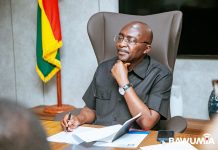
Minority Leader, Alexander Afenyo-Markin, has accused Speaker of Parliament Alban Bagbin of engaging in what he described as “parliamentary bullying”, following the removal of the Member of Parliament for Damongo, Samuel Abu Jinapor, from the Chamber.

He said the Speaker’s decision to maintain the directive for MrJinapor to leave the Chamber, despite the MP having withdrawn allegations he made on the Floor, was disproportionate, humiliating and inconsistent with the dignity of Parliament.
MrAfenyo-Markin made the allegations on Wednesday, November 4, 2026 when he read a statement on behalf of the Minority Caucus in Parliament, condemning the treatment of MrJinapor over his comments on the alleged sale of Ghanaian diplomatic passports.
MrJinapor, who is also the Ranking Member of the Foreign Affairs and Regional Integration Committee, had raised allegations concerning the alleged sale of diplomatic passports for amounts ranging from US$10,000 to US$50,000 and sought answers from the Minister for Foreign Affairs.
According to the Minority, when the Speaker directed him to withdraw the allegations, MrJinapor sought clarification on the specific allegation in question before expressly withdrawing it twice.
However, the directive for him to leave the Chamber was maintained, prompting the Minority Caucus to stage a walkout in solidarity with him.
“The dignity of Parliament requires candour, especially when that candour is uncomfortable,” MrAfenyo-Markin said while reading the statement.
He acknowledged the Speaker’s responsibility to maintain order in the House and ensure that allegations made by MPs were properly substantiated, but insisted that such authority must be exercised with restraint, fairness and impartiality.
The Minority maintained that a member’s request for clarification did not amount to defiance and that MrJinapor’s withdrawal should have been acknowledged rather than followed by his removal.
Beyond the incident, MrAfenyo-Markin said the substantive allegations surrounding the procurement and alleged sale of diplomatic and service passports required investigation.
He said the Minority had supporting material which, in its assessment, raised concerns about alleged false representations and impersonation in the procurement of such passports through the Ministry of Foreign Affairs.
He further alleged that the practices could have developed into an illicit trade, insisting that the claims were serious enough to warrant parliamentary scrutiny.
The Minority called for the material to be examined and its authenticity tested, while allowing all persons implicated to respond fairly.
It also demanded that the Speaker reconsider the treatment of MrJinapor, that the supporting material be admitted through the appropriate parliamentary procedures and that the Foreign Affairs Minister be required to appear before Parliament to respond to the allegations.
Citing Article 103 of the 1992 Constitution and the Standing Orders of Parliament, MrAfenyo-Markin argued that parliamentary committees had the constitutional responsibility to investigate the activities of ministries and government departments.
He warned against frustrating that responsibility because the issues under investigation were politically inconvenient.
The Minority Leader also criticised what he described as the potential use of the government’s overwhelming parliamentary majority to intimidate the Minority and suppress accountability.
He noted that the governing side commanded more than two-thirds of Parliament, arguing that such numerical strength imposed an even greater responsibility to protect the rights of the Minority.
“The Majority may possess the votes, but the Minority must retain an effective voice and a keen eye for scrutiny,” he said.
MrAfenyo-Markin cautioned that when executive dominance was reinforced by overwhelming parliamentary numbers and legitimate scrutiny was repeatedly frustrated, the danger of what he termed “elective dictatorship” could emerge.
He further alleged that members of the Minority had faced arrest, detention and onerous bail conditions since assuming their roles in opposition, raising concerns about the potential abuse of state institutions for political purposes.
The Minority, however, maintained that it supported lawful accountability for all citizens but would resist any attempt to use state power to intimidate political opponents.
It reaffirmed its commitment to defending constitutional democracy, parliamentary accountability and the rights of elected representatives to scrutinise government activities.
“Samuel Abu Jinapor shall not be silenced. The Minority Caucus shall not be silenced,” the statement declared.
For more news, join The Chronicle Newspaper channel on WhatsApp: https://whatsapp.com/channel/0029VbBSs55E50UqNPvSOm2z