For a mother whose premature baby needs specialised attention, the availability of an incubator can make a critical difference between uncertainty and hope.
For a patient arriving at a health facility with an acute asthma attack, access to a nebuliser could mean receiving immediate treatment without the distress of being referred elsewhere.
And for a woman in labour, an adjustable delivery bed and properly equipped maternity unit can make childbirth safer and more comfortable.
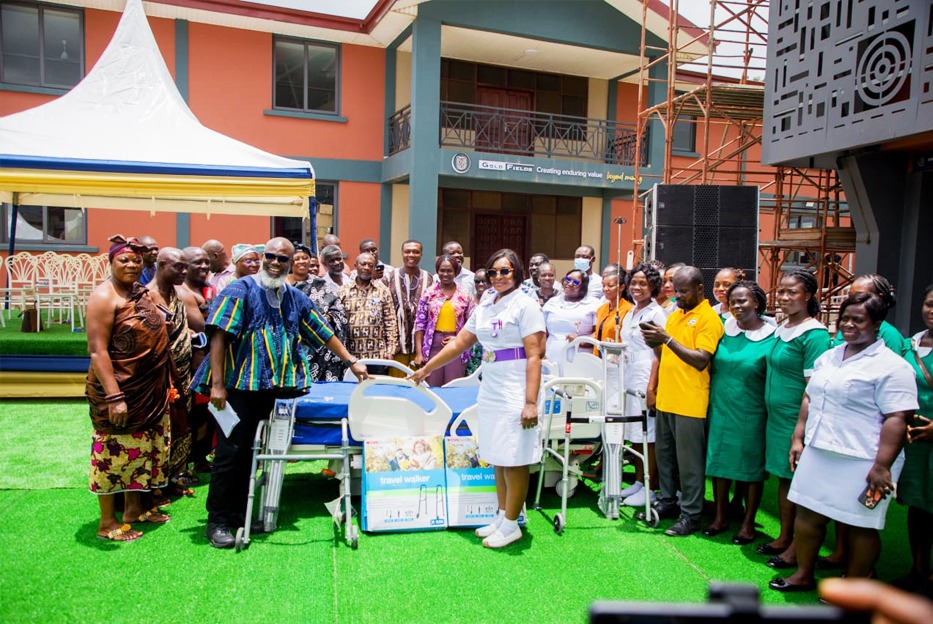
These are some of the practical differences the Gold Fields Ghana Foundation is helping to make in its host communities through a major investment in healthcare delivery in the Tarkwa-Nsuaem and Prestea-Huni Valley municipalities of the Western Region.
The Foundation, in partnership with Project CURE, has delivered medical equipment and essential supplies valued at US$793,491.75 to public health facilities across the two municipalities, in an intervention expected to improve patient care, strengthen the capacity of health workers and reduce the burden on facilities.
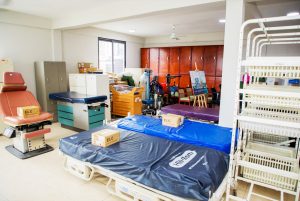
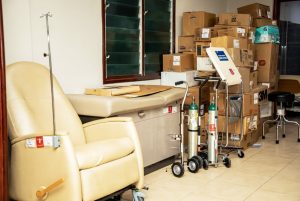
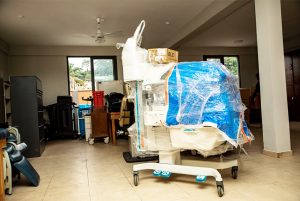
The donation, formally delivered on Wednesday, September 17, 2025, involved three 40-foot containers of medical equipment and consumables, including hospital beds, incubators, anaesthesia machines, imaging devices, gloves, syringes and sterile dressings.
But beyond the financial value of the consignment, the real significance of the intervention is emerging from the experiences of doctors, nurses and midwives working in the beneficiary facilities.
From managing asthma emergencies locally to improving maternal healthcare, doctors and nurses recount the impact of Gold Fields Ghana Foundation’s partnership with Project CURE
At New Atuabo Hospital, Dr Paa Kweku Eghan says the availability of new medical equipment has changed the way healthcare is delivered, particularly in the examination and treatment of patients.
He recalled that previously, even conducting basic examinations could involve moving patients to the ward and bringing them back before treatment could continue.
“Imagine a patient who is not in good shape. You have to take the person to the ward, examine them and bring them back before you continue your care,” he recounted.
The situation, he said, has improved considerably, with the new equipment helping to organise clinical work and make patient examination more convenient.
One of the items making a difference is an otoscope, a simple but important medical instrument that allows doctors to examine the ear and identify the actual cause of ear pain.
Dr Eghan explained that children presenting with ear complaints were previously sometimes treated empirically with antibiotics or eardrops because medical personnel could not adequately establish the underlying problem.
With the otoscope, doctors can now examine the ear canal and distinguish infections from mechanical obstructions such as earwax.
The equipment has consequently helped the facility avoid unnecessary antibiotic prescriptions while ensuring that patients receive more appropriate treatment.
More significantly, the facility’s ability to manage acute asthma cases has improved.
Dr Eghan disclosed that approximately 17 acute asthma cases had been managed at the facility over the preceding year without requiring further referral elsewhere.
Previously, the facility had limited options when patients arrived with suspected asthma or acute asthmatic episodes, with referrals often being the only available response.
The availability of a nebuliser has changed that situation, allowing medical personnel to provide treatment and stabilise patients locally.
“Sometimes the patients present with so much distress that after they get relief, they want to say thank you. Then we tell them that this thing was possible because of Gold Fields Ghana Foundation. If not for that, we’d still be asking for a nebulizer, as simple as that,” he said.
For the doctor, the intervention is a practical demonstration of how access to the right equipment can improve the quality of care and potentially save patients the inconvenience and risks associated with unnecessary referrals.
A new experience for mothers
At Huniso CHPS, the impact is equally significant, particularly for women accessing maternal healthcare.
Faustina Amponsah, a midwife at the facility, recalled how an old, non-adjustable delivery bed had made attending to expectant mothers difficult for healthcare workers.
The bed could not be adjusted to suit the needs of women during delivery, making an already demanding responsibility more difficult.
The new adjustable bed, however, has improved the comfort of mothers and made the work of midwives easier.
“We had an old bed. It was very old. You couldn’t adjust it, so it made working very difficult. But with this new one, it’s adjustable and it’s comfortable,” she said.
She also highlighted the adjustable chair, which allows midwives to position themselves comfortably while attending to mothers, particularly during procedures such as suturing.
Beyond the improved working conditions, the additional equipment has increased the facility’s capacity to accommodate women in labour.
Amponsah explained that the facility previously had only two delivery beds, a situation that created difficulties for women coming in to give birth.
The support received through Project CURE and the Gold Fields Ghana Foundation has increased the facility’s capacity to accommodate three women at a time.
Previously, some cases had to be referred to Tarkwa, creating inconvenience for expectant mothers and additional pressure on healthcare workers.
The improved facilities are therefore helping to strengthen maternal healthcare delivery closer to where women live, reducing the need for some patients to travel to bigger facilities for services that can now be provided locally.
Improving conditions for frontline health workers
At New Atuabo CHPS, Nurse Deborah Addy Tey also described how the equipment donation has improved the organisation and functionality of the facility.
She explained that before the intervention, the facility had only two beds, but the support had enabled them to arrange four beds, with another yet to be set up.
The facility also received trolleys for organising medications and other medical supplies, as well as a chair bed and several additional items.
For health workers who spend long hours attending to patients, such seemingly ordinary additions can make a meaningful difference to their daily responsibilities.
The wider consignment supplied under the partnership also included an incubator, hospital beds, anaesthesia machines, imaging equipment, medical instruments and essential consumables, addressing different needs across the beneficiary facilities.
At Aboso, a nurse who has worked at the facility for 15 years described an improvement that goes beyond the provision of medical equipment.
She recalled that the facility’s physical environment was previously in poor condition, with staff having to fetch water in buckets to attend to patients.
The intervention by Gold Fields Ghana Foundation, in partnership with Project CURE, has supported improvements to the facility’s structures, including renovation, pavement, parking space and water supply.
“I’ve been working here for 15 years. The facility wasn’t like this,” she said.
She explained that before the intervention, staff had to carry buckets to fetch water for the care of patients, a situation that made their work considerably difficult.
The provision of water and improvements to the physical environment have since changed the working conditions of the facility.
“We thank Gold Fields Ghana Foundation,” she said.
Her account provides another dimension to the intervention: improving healthcare is not only about sophisticated machines and medical supplies, but also ensuring that the facilities in which healthcare workers operate have the basic infrastructure needed to function effectively.
A donation informed by actual needs
The improvements being reported by health workers form part of the Foundation’s flagship Expanded Access to Quality Healthcare initiative under the Group Legacy Programme, which seeks to improve access to quality healthcare in Gold Fields’ host communities.
In partnership with Project CURE, the world’s largest distributor of donated medical equipment and supplies to resource-limited countries, the Foundation undertook a comprehensive needs assessment in 2024 to identify the specific requirements of beneficiary facilities.
This informed the assembly of a customised consignment intended to address actual gaps in healthcare delivery rather than provide equipment that might not meet the facilities’ immediate needs.
The three 40-foot containers of medical equipment and consumables were valued at US$793,491.75.
The Foundation also financed all associated costs of the partnership, including the baseline needs assessment, shipping, customs clearance and inland transportation, at an additional cost of US$95,987.08.
The intervention is expected to strengthen primary healthcare delivery, reduce pressure on frontline medical personnel and improve the referral pathway to secondary healthcare facilities, including the Apinto Government Hospital.
Healthcare beyond hospital walls
Beyond the supply of medical equipment, the Foundation’s healthcare programme has also incorporated community medical outreaches and efforts to improve access to affordable healthcare through the National Health Insurance Scheme (NHIS).
Between 2023 and the third quarter of 2025, a total of 8,845 people were screened through community medical outreaches, while 2,889 individuals were either newly enrolled or had their NHIS membership renewed.
For residents who might otherwise delay seeking medical attention because of financial constraints, early screening and access to health insurance offer an opportunity to identify health concerns and seek treatment without bearing the full cost of healthcare.
The Foundation considers the combination of medical outreaches and NHIS enrolment a practical and sustainable alternative to establishing a separate community health insurance scheme, as it allows more residents to benefit from the existing national health insurance framework.
Stakeholders welcome intervention
The intervention has also received commendation from traditional and political authorities, as well as the Ghana Health Service.
Nana Dr. Adarkwa Bediako II, Gyasehene of the Apinto Divisional Council, acknowledged the Foundation’s contributions to healthcare delivery in Tarkwa and expressed appreciation for the support extended to the communities.
The Member of Parliament for Tarkwa-Nsuaem, Hon. Isah Salifu Taylor, underscored the quality and importance of the equipment, noting that the region previously lacked some of the critical medical items supplied.
Representing the Western Regional Director of the Ghana Health Service, Mr. Chester Anabah urged heads of beneficiary facilities to establish a strong maintenance culture to ensure the equipment remained functional and served communities over an extended period.
His appeal highlights an important responsibility for the receiving facilities: ensuring that the investment translates into lasting improvements in healthcare delivery.
For Gold Fields Ghana Foundation, the partnership with Project CURE reflects a broader commitment to sustainable community development and creating lasting value beyond mining.
The intervention also advances the United Nations Sustainable Development Goals, particularly Goal 3 on good health and well-being, Goal 17 on partnerships for sustainable development, and Goals 1 and 10, which focus on poverty reduction and reducing inequalities.
Ultimately, the impact of the intervention will not be measured only by the three containers delivered or the US$793,491.75 worth of equipment supplied.
It will be measured in the patient with an asthma attack who can now receive treatment closer to home, the mother who receives better care during childbirth, the child whose ear condition is properly diagnosed and the health worker who can perform his or her duties with better equipment and improved working conditions.
For the thousands of residents who depend on public health facilities in Tarkwa-Nsuaem and Prestea-Huni Valley, the intervention represents more than a corporate donation. It is an investment in better healthcare, improved access to treatment and the possibility of healthier communities.
In 2026, several more facilities are expected to receive 5 40-footer containers full of medical equipment and supplies under the Gold Fields Ghana Foundation – Project CURE partnership.
For more news, join The Chronicle Newspaper channel on WhatsApp: https://whatsapp.com/channel/0029VbBSs55E50UqNPvSOm2z