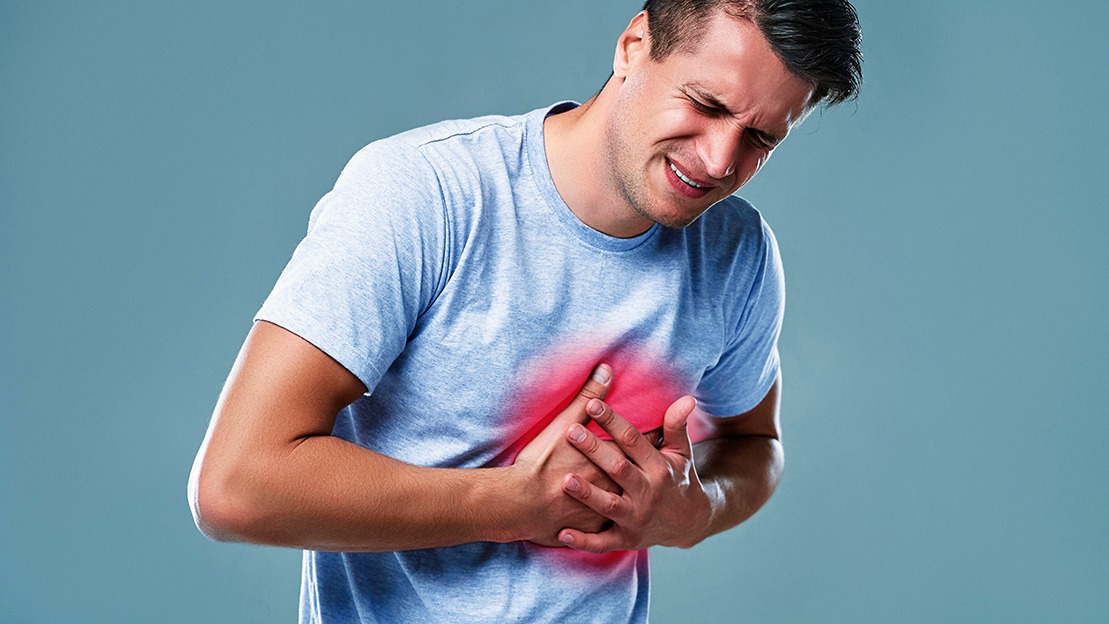
A heart attack happens when something blocks the blood flow to your heart so it can’t get the oxygen it needs. It’s a medical emergency. Call 911 right away at the first sign of any symptoms. Don’t wait to see if the symptoms pass.
Heart attacks are also called myocardial infarctions (MIs). “Myo” means muscle, “cardial” refers to the heart, and “infarction” means the death of tissue because of a lack of blood supply. This tissue death can cause lasting damage to your heart muscle.
Heart Attack Symptoms
Symptoms of a heart attack include:
- Discomfort, pressure, heaviness, tightness, squeezing, or pain in your chest, arm, or below your breastbone
- Discomfort that goes into your back, jaw, throat, or arm
- Fullness, indigestion, or a choking feeling (it may feel like heartburn)
- Sweating, upset stomach, vomiting, or dizziness
- Serious weakness, anxiety, fatigue, or shortness of breath
- Fast or uneven heartbeat (heart palpitations)
- Anxiety
Heart attack symptoms can be different from person to person or from one heart attack to another. Women and people assigned female at birth are more likely to have these heart attack symptoms:
- Unusual fatigue
- Shortness of breath
- Nausea or vomiting
- Dizziness or lightheadedness
- Discomfort in your gut (may feel like indigestion)
- Discomfort in the neck, shoulder, or upper back
- Trouble sleeping
- With some heart attacks, you won’t notice any symptoms (a “silent” myocardial infarction). This is more common in people who have diabetes.
- What does a heart attack feel like?
- A heart attack feels like intense chest pain, the kind where someone is squeezing your chest really hard, or you’re carrying a heavy weight on it. You could have this pain for a bit.
- You might also feel weak, dizzy, or like you’re going to pass out, and you could start sweating a lot. Sometimes, you’ll also have mild pain in your jaw, neck, back, or arms. Plus, you may have trouble breathing.
What is a silent heart attack?
- As the name suggests, a silent heart attack is one that happens without any obvious signs usually related to heart attacks, such as dizziness, a faster or irregular heartbeat (palpitations), trouble breathing, and anxiety. It’s hard for you to know if you’re having a silent heart attack because it happens without warning.
Facts About Heart Attacks
More than a million Americans have heart attacks each year. It happens every 40 seconds to someone in the U.S., according to the CDC.
Heart attacks happen to both men and women and those assigned male and female at birth. Although they are more likely as you get old, there are many risk factors—including high blood pressure, high levels of LDL (“bad”) cholesterol, diabetes, and whether you smoke—that you can change.
Heart attack vs. cardiac arrest
A sudden cardiac arrest is actually not a heart attack. You can think of a heart attack as a problem within the heart’s arteries, whereas a sudden cardiac arrest means the heart’s electrical system is suddenly not working right, causing the heart to stop pumping.
Heart Attack Causes
Your heart muscle needs a constant supply of oxygen-rich blood. Your coronary arteries give your heart this critical blood supply. If you have coronary artery disease, those arteries become narrow, and blood can’t flow as well as it should. When your blood supply is blocked, you have a heart attack.
Fat, calcium, proteins, and inflammatory cells build up in your arteries to form plaques. These plaque deposits are hard on the outside and soft and mushy on the inside.
When the plaque is hard, the outer shell cracks. This is called a rupture. Platelets (disc-shaped cells in your blood that help it clot) come to the area, and blood clots form around the plaque. If a blood clot blocks your artery, your heart muscle becomes starved for oxygen. The muscle cells soon die, causing permanent damage.
Rarely, a spasm in your coronary artery can also cause a heart attack. During this coronary spasm, your arteries restrict or spasm on and off, cutting off the blood supply to your heart muscle (ischemia). It can happen while you’re at rest and even if you don’t have serious coronary artery disease.
Each coronary artery sends blood to a different part of your heart muscle. How much the muscle is damaged depends on the size of the area that the blocked artery supplies and the amount of time between the attack and treatment.
Your heart muscle starts to heal soon after a heart attack. This takes about 8 weeks. Just like a skin wound, a scar forms in the damaged area. But the new scar tissue doesn’t move the way it should. So your heart can’t pump as much after a heart attack. How much that ability to pump is affected depends on the size and location of the scar.
Credit: webmd