Finding my rhythm
After talking with experts, I decided a week of no alarms would be a reasonable time to try to reprogramme my own internal alarm. It involved a little preparation, however.
The researchers I spoke with all suggested taking a few days to find my true sleep rhythm before starting (more later on how to adjust your circadian rhythm if this ends up not fitting your schedule).
I typically sleep for seven to eight hours, but my bedtime can be anywhere between 11pm and 2am. Occasionally, I’ll fall asleep watching TV on the sofa, only to wake up at 2:30am, which makes it a real challenge to get back to sleep.
Thankfully, I happened to be going on a cruise and had ample time to observe when I naturally felt sleepy at night and ready to wake up in the morning. It turned out to be about 11:30pm and 8am – an eight-and-a-half-hour sleep period.
Getting adequate sleep is vital for our bodies and minds to function properly, and adults should generally aim for seven to nine hours (anything below six increases the risk of premature death by 20%). But there’s no magic number that suits everyone.
“Eight [hours] is the middle, but some people are fine with seven, while some need nine,” says Eti Ben Simon, associate director of the Sleep Innovation Labs at the University of Texas at Dallas. There will be some biological variability, based on your circadian rhythm, she says.
So how could I maintain this during a work week, when higher anxiety – and worrying about managing to sleep eight hours a night – often impacts my sleep quality?
Light and winding down
My new routine also needed to incorporate natural light, to help sync my internal clock with my sleep schedule. Ideally, these work in tandem, so you’re “tired at night and awake during the day”, says Simon. Light plays a major role in this partnership by activating the hormones that signal sleep and wakefulness.
“Light is the single biggest regulator of the circadian clock,” says Anna Joyce, a chartered psychologist, sleep specialist and researcher at Regent’s University London. “It tells melatonin to turn off, and that it’s time to be awake.” Studies have also shown that bright morning light can have a significant antidepressant effect by providing a healthy dose of serotonin.
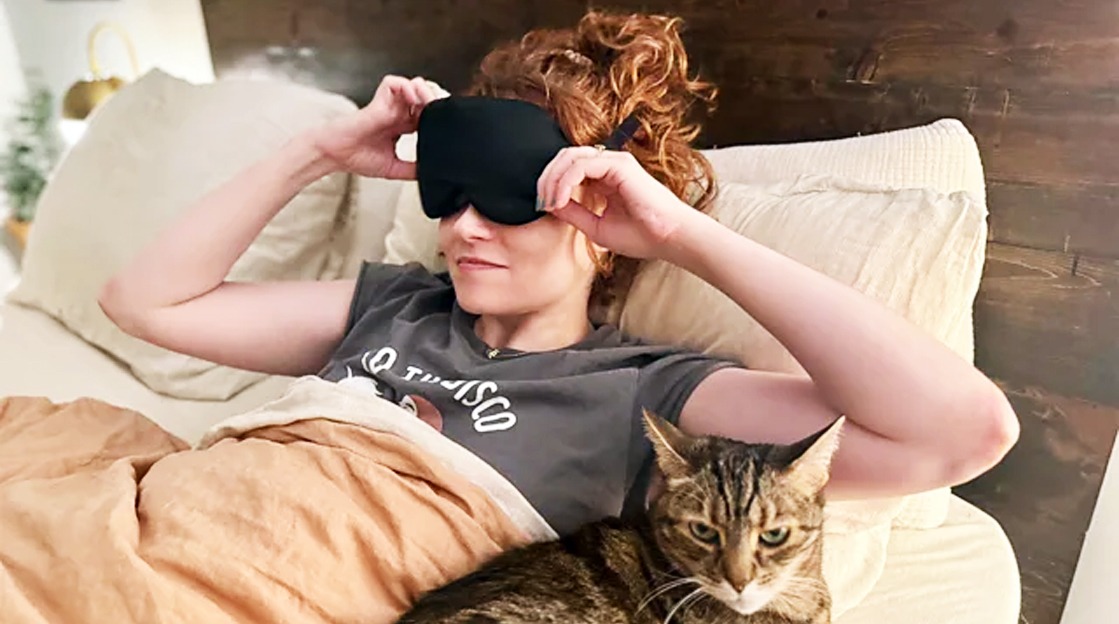
I’m quite light-sensitive, so the researchers I spoke to suggested using blackout blinds (which I already had) while sleeping, and I decided to wear my sleep mask for added protection. Then, upon waking, they recommended I immediately open the blinds to let in the morning light, which triggers a surge of cortisol, a hormone that allows us to be alert and ready for action. “That helps tell the clock, ‘Okay, this is when I start my day’,” says Simon.
Joyce also stressed the importance of having a “predictable wind-down routine” within approximately two hours of when you want to be asleep.
Sleep obstacles
My biggest sleep impediment, though, is my smartphone. That’s a common complaint, according to the experts I spoke to.
The blue light devices emit may be partly responsible: it’s on a similar wavelength to daylight, which can send confusing signals to the brain when it’s nighttime. The likely more impactful aspect of smartphones, though, is dopamine scrolling, aka habitually scanning social media feeds to chase small hits of good feelings. Algorithms on these platforms are designed to keep us engaged, so it’s not surprising that a recent analysis found that excessive scrolling inhibits sleep.
To overcome this obstacle, I used a physical app-blocking device, scheduling my block from 9pm to 12pm every night of the experiment. I also put my phone into greyscale mode (typically found in your accessibility settings, if you’re interested) to make the imagery look duller and less attention worthy.
I restricted myself to one cup of coffee a day in the morning, aimed to eat meals at a consistent time and finish dinner at least three hours before bed (since your metabolism influences your circadian rhythm). Burgess also suggested I avoid alcohol as much as possible. “It will actually help you fall asleep a little bit faster,” she says, but “messes up your sleep later on”, as it suppresses REM sleep.
Credit: bbc.com