Introduction: The Changing Geography of Asymmetric Influence
Modern international affairs have moved far beyond the binary constraints of raw military coercion and economic leverage. In a highly fluid, multipolar international system, a state’s capacity to subtly shape the normative preferences, cultural values, and institutional alignments of foreign societies, a dynamic historically defined as soft power, increasingly dictates the nature and terms of strategic competition.
While mainstream foreign policy scholarship remains heavily focused on overt instruments such as state-backed media infrastructure, international university exchanges, and bilateral development loans across Sub-Saharan Africa, a far more profound, subterranean frontier of foreign involvement has emerged within the spiritual domain. The accelerating institutional footprint of the Russian Orthodox Church (ROC) across the continent, particularly its current operational expansion within Ghana, marks an intricate intersection where global theological dynamics, secular geopolitical rivalries, and domestic civil governance collide.
For a democratic state like Ghana, this development presents an unprecedented institutional dilemma. Ghana’s long-standing tradition of pluralistic religious openness serves as an essential foundation for its domestic political stability, social cohesion, and democratic exceptionalism.
Yet, the deliberate institutionalization of foreign, state-aligned ecclesiastical bodies requires a clear-eyed interrogation of the vulnerabilities inherent within free, unregulated civic spaces. The focus of this piece is not to pass theological judgment or critique specific faith practices, but to trace the structural ways in which sacred institutions can be leveraged as instruments of long-term geopolitical realignment, ultimately reshaping the sovereign autonomy and public consciousness of a host nation.
Strategic Reorientation: The Post-Sahel Transnational Pivot
The institutional entry of the Moscow Patriarchate into the West African maritime belt cannot be understood as an isolated missionary event; it represents a deliberate mechanism within a broader, highly coordinated transformation of contemporary Russian statecraft. Over the past several years, the Kremlin has systematically diversified its traditional, defence-heavy footprint in Sub-Saharan Africa by deploying a flexible, hybrid strategy.
This model blends information manipulation, cultural diplomacy, and institutional religious alignments to push back against Western normative hegemony. The immense scale of this reorientation is clear from the financial ledgers: the Russian federal budget allocated a record $1.85 billion for foreign propaganda and international influence operations in 2026. This financial surge directly bankrolls the global projection of pro-Moscow narratives, sustains state diplomatic outposts, and funds the expanding network of cultural hubs known as Russian Houses (Russkiy Dom), managed by the state agency Rossotrudnichestvo.
By integrating these cultural and educational programs directly into the societal fabric of African nations, Russia seeks to cultivate durable elite networks and build viable alternatives to historical Euro-American alliances. The expansion of the ROC into West Africa functions as the spiritual spear of this hybrid apparatus. It is explicitly deployed in environments where standard diplomatic pressure or raw security manoeuvres are blocked or neutralized by local political conditions.
The Ecclesiastical Conduit: Institutionalizing the Exarchate
The practical manifestation of this ecclesiastical expansion began in December 2021, when the Holy Synod of the Russian Orthodox Church officially established the Patriarchal Exarchate of Africa. This administrative incursion grew out of an intense theological and geopolitical schism within global Orthodoxy, triggered by the Ecumenical Patriarchate of Constantinople’s decision to grant autocephaly to the Orthodox Church of Ukraine.
When the Greek Orthodox Patriarchate of Alexandria and All Africa—which had held exclusive canonical jurisdiction over the African continent for centuries—recognized the independent Ukrainian church, Moscow retaliated by severing communion and creating parallel church administrative structures across Africa.
In Ghana, this ecclesiastical strategy has focused tightly on creating structural, long-term educational pipelines. The Exarchate actively recruits domestic theological students, offering them fully funded scholarships to elite seminaries in Moscow. Following this specialized theological and ideological socialization, these newly ordained domestic clerics return to Ghana to establish local parishes.
This model shifts away from traditional missionary paradigms; instead of building new networks from scratch, it actively capitalizes on the financial vulnerabilities of local congregations, offering material incentives, stable salaries, and infrastructural support to lure existing clergy away from the Patriarchate of Alexandria. Through this method, the ROC rapidly acquires a ready-made institutional footprint embedded within Ghanaian communities.
Sovereignty, Openness, and the Legal Matrix
This intricate mixing of religious mission and secular strategy introduces profound challenges for Ghana’s national governance. The core threat to national sovereignty does not emerge from the practice of Eastern Orthodox liturgy, but rather from the high vulnerability of religious spaces being operationalized as covert channels for foreign policy alignment. Investigative precedents established within several European nations have exposed how state-aligned religious networks have been utilized to run clandestine disinformation campaigns, mobilize trusted civic figures for political purposes, and gather localized civil intelligence.
Because religious institutions carry an extraordinary level of public trust and moral legitimacy within Ghanaian society, they possess a unique capacity to bypass the standard scepticism directed at foreign state media or political entities. If a foreign state proxy can quietly direct the narratives flowing from local pulpits and religious classrooms, it gains the power to influence public opinion on critical geopolitical issues—such as international voting alignments, resource concessions, and security partnerships—without ever engaging in visible diplomatic coercion. The danger is one of slow, structural alignment, where the domestic civic discourse is subtly conditioned to favour the geopolitical priorities of an external power.
Preserving Sovereignty and Civil Autonomy: Concrete Policy Pathways
Addressing this institutional vulnerability requires a highly sophisticated strategy that protects national security without compromising Ghana’s profound constitutional commitment to religious liberty. Article 21(1)(c) of the 1992 Constitution of Ghana guarantees all individuals the freedom to manifest their religion or belief through worship, teaching, practice, and observance.
Any heavy-handed state intervention, arbitrary banning, or targeted state surveillance of foreign religious bodies would run counter to the democratic principles that define the Ghanaian republic. Therefore, the state must deploy non-coercive, administrative tools designed to enhance transparency and reinforce the autonomy of local civil society.
- Empirical Academic Mapping: Universities and foreign-policy think tanks must conduct rigorous, independent research into the funding mechanisms, institutional linkages, and political economies of foreign-backed religious networks within West Africa. Mapping these connections is an essential prerequisite for informed policy design.
- Voluntary Institutional Transparency: Domestic ecumenical unions, such as the Christian Council of Ghana, should champion the adoption of voluntary disclosure charters. Internationally affiliated ministries should be encouraged to openly declare their foreign financial conduits, organizational partnerships, and the source of their educational and training curricula.
- Modernization of Regulatory Oversight: State policymakers must update existing non-profit and non-governmental organization (NGO) frameworks. By enforcing standardized, non-discriminatory financial reporting and auditing requirements for all foreign-affiliated entities, the state can ensure that the inflow of international capital into the civic sector remains transparent and accountable under the law.
Conclusion
The rapid structural growth of the Russian Orthodox Church within Ghana serves as a powerful diagnostic indicator of the shifting dynamics of modern asymmetric statecraft. It demonstrates that in a multipolar environment, the defence of national sovereignty can no longer be confined to the physical and maritime borders of the state; it must encompass the institutional spaces that shape public thought and normative consensus.
Scrutinizing the geopolitical dimensions of foreign-aligned religious networks and maintaining an absolute respect for personal faith are complementary practices vital to a resilient democracy. By encouraging proactive civil transparency and maintaining clear institutional accountability, Ghana can successfully insulate its democratic spaces from external manipulation, ensuring that its rich tradition of religious freedom remains autonomous, secure, and entirely its own.
Author bio
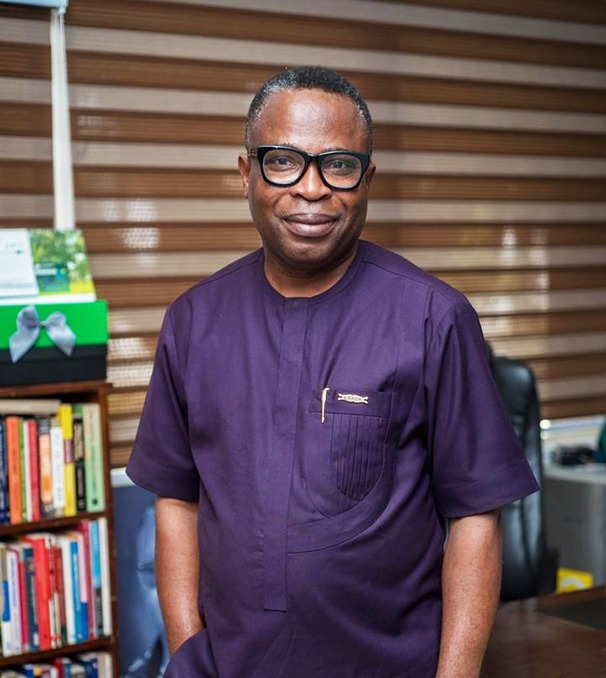
Lord Mawuko-Yevugah, PhD is an Associate Professor of International Relations and Comparative Political Economy of Development at the GIMPA School of Public Service and Governance. He is also the Founder and Lead Researcher of the Pan-Africanist Centre for African Diplomacy and Global Engagement (Afro-global). His latest book, Elements of Foreign Policy Analysis: Theories, Actors and Cases, was published by the University of Ghana Press in September 2026.
By Lord Mawuko-Yevugah, PhD
For more news, join The Chronicle Newspaper channel on WhatsApp: https://whatsapp.com/channel/0029VbBSs55E50UqNPvSOm2z