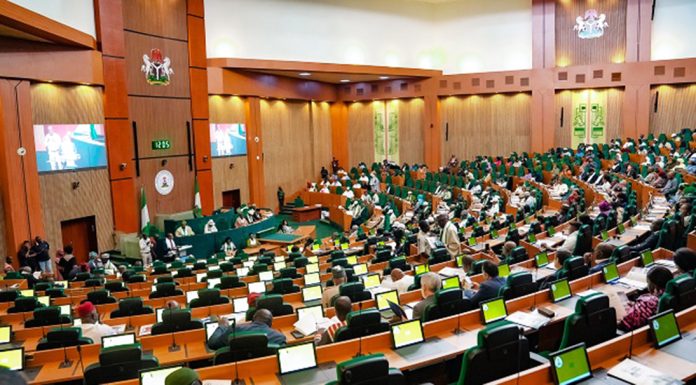
The House of Representatives has asked the Federal Government to rescind its blanket invalidation of degree certificates obtained from the Republics of Benin and Togo.
The green chamber made the decision following the consideration and approval of reports from its Committee on Public Petitions, which reviewed concerns raised after the Federal Government announced a ban on recognising university degrees from the two West African countries.
The House urged the Federal Government to adopt a case-by-case verification mechanism to address confirmed instances of fraud, rather than imposing a blanket sanction.
It also recommended that the Federal Ministry of Education work closely with education authorities in Benin and Togo to strengthen verification frameworks, curb academic fraud, and authenticate foreign qualifications.
In addition, the lower chamber suggested that the Federal Government, through the Ministry of Information and National Orientation Agency, should raise public awareness to educate Nigerians on verifying the accreditation status of foreign institutions and obtaining homologation or equivalence certification where applicable.
The House further called on the Federal Government to ensure that its future policies align with Nigeria’s bilateral, regional, and international treaty obligations.
Background
In January 2024, the Nigerian government suspended the accreditation and evaluation of degree certificates from Benin Republic and Togo.
This followed a report detailing how a degree was acquired from a university in Benin Republic in under two months.
Taiwo Oyedele has described his nomination as the Minister of State for Finance as a call to serve Nigeria.
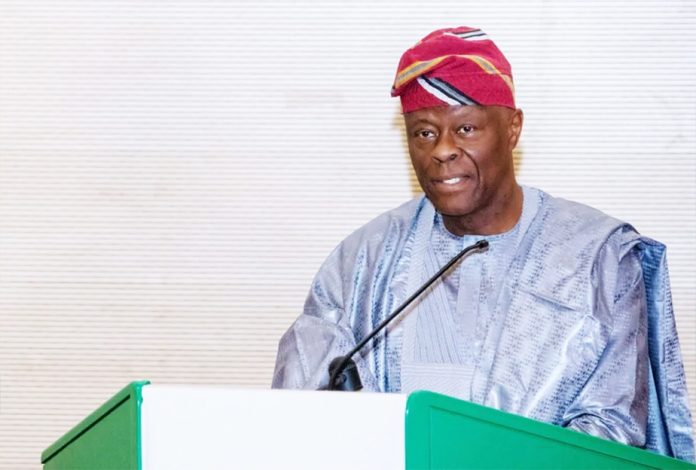
Oyedele, the outgoing chairman of the Presidential Committee on Fiscal Policy and Tax Reforms, said this during his screening for the position.
“With over two decades of experience working with national governments, multilateral institutions, and global corporations, my journey across the private sector, academia, and public policy has focused on fiscal governance and economic transformation,” the 50-year-old told senators on Wednesday.
“However, this moment is not about personal accomplishments; it is a call to serve at a critical time when Nigeria faces significant fiscal challenges and remarkable opportunities.”
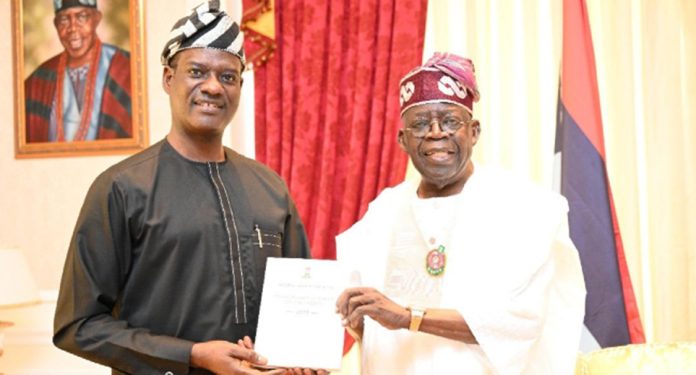
President Bola Tinubu nominated Oyedele to replace Doris Uzoka-Anite, who was moved to serve as the minister of Budget and National Planning (state).
Days after his nomination, President Tinubu forwarded his name to the Red Chamber, seeking the lawmakers’ confirmation.
At the event, Oyedele praised Tinubu for nominating him as a minister and tagged his appearance before the Senate as an honour.
“I am deeply honoured to appear before this distinguished chamber today. I thank President Bola Ahmed Tinubu, GCFR, for the confidence reposed in me through this nomination, and I thank the Senate for the opportunity to share my vision,” the public policy expert, accountant, and economist told the lawmakers.
Before his appointment, Oyedele served as the tax reforms committee chair, masterminding the enactment of a new tax regime in Nigeria.
While he was appointed to that position in July 2023, it took Oyedele and his team over two years to rejig Nigeria’s tax laws.
The Federal Government says it is closely monitoring rising geopolitical tensions in the Middle East involving the United States, Israel, and Iran to safeguard Nigeria’s economic stability.
This followed a meeting of the Economic Management Team (EMT) chaired by the Minister of Finance and Coordinating Minister of the Economy, Wale Edun, to assess possible implications for the Nigerian economy.
A statement released by the Finance Ministry Wednesday, government noted that global uncertainty, particularly concerns over disruptions to key energy supply routes such as the Strait of Hormuz, has already triggered volatility in crude oil prices and financial markets.
According to the EMT, the crisis could affect Nigeria through rising energy prices, shifts in capital flows to safer assets, and increased global logistics costs.
The team added that it is closely monitoring key indicators, including crude oil prices, exchange rate movements, and capital flows.
The Federal Government, however, noted that Nigeria is entering a period of uncertainty with improving economic fundamentals, highlighting real GDP growth of 4.07 per cent in the fourth quarter of 2025.
It assured Nigerians that it remains vigilant and will take necessary steps to protect the economy and sustain growth.
Government had on Monday noted that the repatriation of Nigerians stranded in parts of the Middle East will begin once the regional airspace reopens.
Chairperson of the Nigerians in Diaspora Commission, Abike Dabiri-Erewa, stated this while responding to complaints from a Nigerian stranded in Qatar.
Responding to the complaints, Dabiri-Erewa explained that repatriation flights could not begin yet because the airspace remains closed.
“Once the airspace opens, the multi-agency FGN team on crises and evacuation is on standby.
“Our prayers with you and all our people in affected countries,” she said on Tuesday.
The West Africa Mills Company (WAMCO) has called on the government to support the rehabilitation of its dormant processing facility in Sekondi to fully leverage the country’s new cocoa retention policy and boost local value addition in the cocoa sector.
The appeal comes on the back of the 50 percent cocoa retention policy introduced by President John Dramani Mahama, which has been welcomed by cocoa processing companies as a step toward strengthening Ghana’s domestic processing capacity.
Deputy Managing Director of West Africa Mills Company, Dr. Boakye Danquah, said revamping the company’s second processing plant, known as WAMCO Two, would significantly increase production and position the company to benefit from the policy.
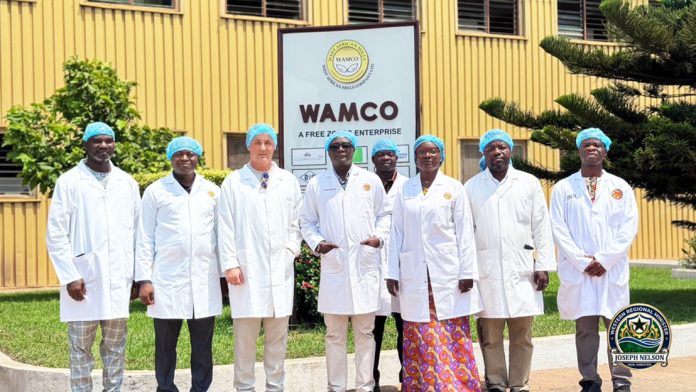
Speaking during a working visit by the Western Regional Minister, Joseph Nelson, Dr. Danquah appealed for government support and private investment estimated at between $5 million and $7 million to retool the facility.
WAMCO, established in 1949, is the first cocoa processing company in Ghana. The Government of Ghana, through Ghana Cocoa Board, holds a 40 percent stake in the company.
The firm operates two processing facilities, WAMCO One and WAMCO Two, with a combined installed capacity of about 60,000 metric tons of cocoa annually. However, production has declined significantly in recent years due to operational challenges.
Currently, WAMCO Two, which accounts for half of the company’s installed capacity of 30,000 metric tons, has become redundant because of technical problems and the shortage of raw cocoa beans.
As a result, the company relies solely on WAMCO One, which also has a capacity of 30,000 metric tons, but is operating at only about 30 percent capacity due to limited cocoa bean supply.
Managing Director of WAMCO, Frank Bednar, welcomed the government’s cocoa retention policy, describing it as a critical step toward boosting local value addition and increasing revenue within the cocoa value chain.
He noted that strengthening domestic processing capacity would not only improve export earnings but also create more jobs within the industry.
Dr. Boakye Danquah further stressed that reviving WAMCO Two would play a significant role in the economic revitalisation of Sekondi-Takoradi while safeguarding more than 200 direct jobs.
Responding to the concerns, the Western Regional Minister, Mr. Nelson, assured management of the government’s readiness to support initiatives aimed at restoring the company’s operational strength.
He reaffirmed the government’s commitment to policies that promote industrial recovery, enhance cocoa processing capacity and stimulate economic activity in the Western Region.
Industry observers believe that revitalising idle cocoa processing facilities like WAMCO Two could help Ghana maximise the benefits of the new retention policy and strengthen the country’s position in the global cocoa value chain.
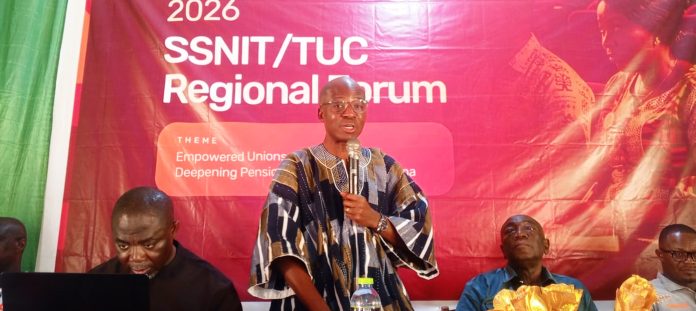
Mr Adam Sulley, the Deputy Director-General of SSNIT
Mr Adam Sulley, the Deputy Director-General in charge of Operations and Benefits of the Social Security and National Insurance Trust (SSNIT), has urged workers to take a keen interest in the national pension scheme to secure their future.
He said the SSNIT was moving in a positive direction as it had introduced reforms and innovative service delivery models aimed at improving access to pension services and strengthening the sustainability of the scheme.
Mr Adam Sulley made the call at a regional forum organised by the SSNIT, in collaboration with the Trades Union Congress (TUC) in Bolgatanga, on the theme: “Empowering Unions, Secure Futures: Deepening Pension Literacy across Ghana.”
The forum formed part of a nationwide engagement designed to deepen pension literacy among workers and strengthen collaboration between SSNIT and organised labour.
The Deputy Director-General in charge of Operations and Benefits of the SSNIT noted that the Trust’s assets had grown from about GH¢20 billion in 2024 to GH¢25 billion in 2025, an indication that the institution was prudently managing the contributions entrusted to it by workers.
According to him, SSNIT was implementing several initiatives to improve service delivery and bring its services closer to contributors.
These initiatives, he said, included the introduction of a virtual branch, which enables contributors and pensioners to access information and services at their convenience without necessarily visiting physical offices.
Mr Adam Sulley also disclosed that SSNIT had established strategic partnerships with banks through a co-location arrangement to improve accessibility.
Under the initiative, the services of the SSNIT are currently available in selected branches of Ecobank, GCB Bank, Fidelity Bank and Consolidated Bank Ghana.
He said the approach was intended to make services more accessible to contributors while also helping to expand the scheme’s membership.
Mr Sulley said the SSNIT currently had about 2.1 million active contributors, with a target of increasing the number to 2.4 million by the end of 2026 and 2.8 million by 2027 as part of its strategic plan.
The Deputy Director General stressed the importance of expanding pension coverage to the informal sector, noting that the sector constituted about 80 per cent of Ghana’s workforce.
“There is no way SSNIT can succeed without the informal sector,” he said, urging workers in that sector to enrol in the scheme to secure their future.
He explained that contributors to the scheme were entitled to three major benefits: retirement pension, invalidity benefits in case of permanent disability, and survivors’ benefits for dependents in the event of death.
He said individuals in the informal sector who failed to join the scheme would miss out on those benefits.
Mr Sulley assured contributors that their funds were safe, noting that reforms in SSNIT’s investment and property management had improved returns.
Mr Joshua Ansah, the Secretary-General of the Trades Union Congress, described the forum as an important platform for educating workers on the pension system.
He said pension education was essential because many workers still lacked adequate knowledge about how the system operated and how their contributions were managed.
Mr Ansah emphasised that pensions represented workers’ deferred wages and were critical to ensuring dignity and security after retirement.
He also supported calls for the consolidation of workers’ earnings to increase pension contributions, noting that such a move would help improve the pensions workers received after retirement.
The forum brought together union leaders, workers, pensioners, SSNIT officials and other stakeholders to discuss pension literacy and strategies to strengthen Ghana’s pension system.
The former Chief Executive Officer of the Ghana Infrastructure Investment Fund (GIIF), Solomon Asamoah, on Monday told a former board member of the Fund, Kofi Boakye that he has not been a truthful witness.
Mr. Asamoah, who is standing trial for allegedly causing financial loss to the state over a US$2 million investment in the proposed Accra Sky Train Project, made the suggestion at the Criminal Division of the High Court in Accra during the cross-examination of Mr. Boakye, the prosecution’s second witness (PW2).The case is being heard by Justice Audrey Kocuvie-Tay.
Mr. Boakye, who served on the GIIF board until December 2020, had earlier testified that the board never approved the disbursement of the US$2 million to AI SkyTrain Consortium Holdings in Mauritius for the development of the Accra Sky Train Project. However, counsel for Mr. Asamoah, Victoria Barth, challenged the witness’ testimony and suggested that he had not been truthful on matters relating to the board’s approval of the project.
She further accused the witness of undermining the credibility of the Fund’s independent auditors, PricewaterhouseCoopers (PwC) and Boateng & Offei, who audited GIIF’s 2019 and 2020 financial statements.
Sky Train
Responding to the suggestion that he was impugning the integrity of the reconstituted GIIF board that took office after his tenure, Mr. Boakye rejected the claim.
He explained that the documents being referenced in court, particularly the audited financial reports for 2019 and 2020, were not considered or approved by the board on which he served.
According to him, although the reports bore the signatures of the board chairman and the CEO, they were signed on May 31, 2021, at a time when the board he served on had already ceased to exist.
Mr. Boakye maintained that the GIIF board did not approve participation in the Accra Sky Train Project nor the disbursement of the US$2 million investment referenced in the audited accounts. He further told the court that while the auditors referenced board approval in their reports, auditors rely on documents provided by management and, therefore, their conclusions may not always reflect board decisions.
Counsel for Mr. Asamoah eventually put it to the witness that he had not been truthful in his testimony regarding the board’s approval of the project. But Mr. Boakye rejected the assertion, insisting he had answered all questions truthfully and that the board minutes clearly reflected the position he had stated in court.
Cross examination
Q. When the final audit report of 2019 as you call it was circulated to board member, did you read it?
A. I cannot recollect that we were furnished with copies of the 2019 audited accounts for our consideration and approval of same. As I told the court earlier on it was at our meeting of 22nd December 2020 that the CFO informed us that the audit to the year 2019 had been done. In about a month’s time we were out of the board.
Dr Justice Srem-Sai , Deputy Attorney-General
Q. The CFO in Exhibit 10 was making a presentation to the board on the 2021 budget and happened to mention the fact that the 2019 had been audited. Is that not so?
A. That is correct. And I restate that that audited account for that year was consisted and approved by the board of which I was a member.
Q. From the time that you were invited for investigation by the NIB to today, did you review the 2019 and 2020 financial statements of GIIF, which are referenced in the Auditor General’s report in exhibit it 20?
A. No my Lady. It would have no purpose to do that since I was no more a member of the board. At all times, audited accounts are an expression of the opinion of the auditors. They may therefore write…
Q. Please look at page 3 of Exhibit 3. It is stated under the heading ‘Report of the Governing Board’ that the governing board presents their report together with the audited financial statement of the Fund for the year 2019, discloses the state of affairs of the Ghana Infrastructure Fund?
A. One finds at page 3 that the report of the governing board and at page 4, the signature of the chairman and the CEO and they did so supposedly and I quote “by order of the governing board.” But as I said earlier, the board did not consider and approve Exhibit 21.
Q. Even though you had left the board of GIIF, you didn’t think it was important to alert the Auditor General that he relied on financial statements supposedly approved by the board of GIIF. Did you?
A. My Lady it was not necessary.
Q. Are you aware that the financial statements for the year 2019 covered expenses, revenue, equity investment among other financial transactions that had been undertaken under the watch of the board as constituted at the year ending 31st December 2019?
A. All things being equal, it should. But we, as a board, did not have the opportunity to consider this report.
The Law Courts Complex, Accra
Q. Are you aware that the financial statement for the year 2020 also covered expenses including disbursement, revenue equity investment among other financial transactions as constituted the year ended 31st December 2019?
A. Exhibit 22 is an annual report and financial report for the year ended 31st December 2020. This was not considered by the board of which I was a member. It is signed at page 4 and 9 by our then Chairman and the CEO. It bears the date 31st May, 2021. Our board had long ceases to be in existence and the board of which I was a member never considered this report.
Q. Whether or not the board of which you were a member considered audited the financial statements of GIIF for the year ended 31st December 2020, are you aware that those financial statements signed by the CEO and board chairman of GIIF on 31st May, 2021 represents that it covers expenses including disbursement, revenue, equity investment among other financial transactions that were undertaken during the tenure of the board
A. It does not. On the reading of this exhibit, one get to know that the board of GIIF had.. and given approval to this audited account consequent upon which the CEO and Chairman of then board appended their signature on 31st of May, 2021.
I restate that by this date a new board was in place and therefore… No meeting by members of the board of which I was a member took place in or around or on the 31st of May 2021 at which meeting the board of which I was a member approved audited account of the year ended 31st December, 2020.
The statement therefore found at page 9 of Exhibit 22 “these financial statement on pages 9 to 47 were approved by the governing board on 31st May 2021 and signed on their behalf by” is erroneous.
Q. Are you aware that at page 42 of Exhibit 21, it is recorded that in the year ended 31st December 2019, while you were still a member of GIIF board, there was a disbursement for the Accra Sky Train Project, which was captured as follows: “AI Sky Train Consortium Holding.
The Fund has invested $2 million in AI SkyTrain Consortium Holdings incorporated in the republic of Mauritius. The purpose is to establish Ghana Sky Train Limited to develop the Accra Sky Train Project through a concession on the design, build, finance and Operate arrangement. The Fund holds an equity interest of 10% in the company.”
A. At page 42 of Exhibit 21, one finds the statement referred to by counsel. However, as stated earlier on in my evidence that an audit report is not sacrosanct. This report is being attributed to the board of which I was a member and I will re-emphasise that this audited account was not considered and approved by the board of which I was a member.
I reiterate that the board did not give its approval to participate in the Sky train project and further the board did not give its approval to the disbursement of the sum of $2 million. Exhibits 20, 21 and 22 are being represented as continuing evidence that the board considered and gave its approval to the sky train project. This position is as erroneous as the attempt made to represent the email sent by the CEO in Exhibit 21 that the board gave its approval to the sky train project.
Q. Are you aware that at page 41 of Exhibit 22, it is recorded that in the year ended 31st December 2020 while you were still a member of the GIIF board there was a disbursement for the Accra Sky Train Project, which was captured as follows: “AI Sky Train Consortium Holding.
The Fund has invested $2 million in AI SkyTrain Consortium Holdings incorporated in the republic of Mauritius. The purpose is to establish Ghana Sky Train Limited to develop the Accra Sky Train Project through a concession on the Design, build, finance and operate and arrangement. The Fund holds an equity interest of 10% in the company.”
A. I restate my answer given in response to whether I am aware of such an entry in the audited account for the year 2019. I empathically said that Exhibit 22 was not considered by the board of which I was a member. Consequently since no such approval emanated from the board one must discount the statement found at page 9 that this report was considered and approved by the board of which I was a member.
Q. Just as you did not protest about the truth of the facts in Exhibit 24, you have also not protested anywhere that the audited financials of GIIF for the years ended 31st December 2019 and 2020 respectively were not duly approved by the GIIF board. Have you?
A. My position on Exhibit 24 has been amply stated and I reiterate in this court’s quest to find whether or not there was an approval for the sky train project, the court should consider the notice and agenda for the meeting of 24th October, 2018 sent by me together with the board minutes of the same day. The IC Sky Train memo attached to the email of the CEO, Exhibit 24 should be completely discarded.
I have no opportunity of contesting in any forum the contents of Exhibits 21 and 22 for the simple reason that no one showed these documents to me as containing evidence of the approval of the sky train project by the GIIF board.
In this court Exhibits 21 and 22 have been shown to me as containing evidence that the board did give its approval to the sky train project for which reason the sum of $2 million were disbursed. In my response, I have stated and restate that the board never considered exhibits 21 and 22 and if it had those references would not have found itself there.
Q. Are you impugning the integrity of the GIIF board as reconstituted feeling your exit from the GIIF board in January 2021?
A. Far from that. I have made no reference whatsoever to any acts or decisions by the reconstituted board of GIIF. Exhibits 21 and 22 do not refer to any act or decision of the reconstituted GIIF board. I, therefore, have no basis for impugning in any way the board that succeeded the one of which I was a member. Exhibits 21 and 22 are not acts and decisions of the board of which I was member.
Q. Are you impugning the integrity of the independent auditors PWC and Boateng and Offei who audited the 2019 and 2020 financial statement of GIIF?
A. The auditors worked on documents submitted to them by management. As a human institution they are fallible.
A reference has been made by them to an approval of the sky train project by the board. This audited report was not submitted to the board that I served on and we, as a board never authorised the chairman and the CEO to append their signature to the report by the auditors.
And the question whether or not an approval was granted can be answered when one read the minutes of October 24 2018. And as a member of the board, I re-emphasis that no approval was given by the board.
Q. Show the witness Exhibit 29. It is an email thread from the CEO to the audit committee members dated 25th January, 2019 at 10:46am and in that thread there is an email dated Monday 28th January, 2019 at 12:12pm to board members with three attachments being:
On the next page three attachments are described as follows:
I. Memo to audit committee on additional recruitment, January 2018
II. Memo to board on GIIF operational sustainability FINAL
III. 2019 budget presentation
The attachment to Exhibit 29 are Exhibits 29A, 29B and 29C. You will agree with me that even though the subject of Exhibit 29A states addendum to the 2019 estimates presented to the board in December 2019, in the introduction below the subject it is stated as follows: “this short memorandum serves an addendum to the 2019 budget estimates, which was presented to the board on December 2018 (copy attached as annexed 1).”
A. Yes.
Q. You will also agree with me that on that same page under the heading “Background” the last sentence reads as follows: “this Memo essentially warned that without any additional funds, GIIF cannot take on any new investment or major expenditure without failing on its obligations to fund the already board approved projects, according to the details indicated in table 1 below.”
A. Yes. One finds these statements there and it is no different as captured in mother exhibits. As I told this court having expressed the desire to participate in a project sums were ring-fenced against particular projects subject to the board giving its approval. Table 1 contains two of such activities ie the file storage deport project, otherwise retired to some documents as Wood Fields Fuel Storage project or the fidelity led fuel tank storage project.
The other one is Sky Train project. The budget is a forecast of intended activities of the board. It should, therefore, not be reminded that either fuel storage project and the sky train project are captured in table 1, constituted board approval.
Q. In table 1 an amount of $2 million was projected to be disbursed as projected development equity for the sky train project by February 2019.
A. That’s correct. But the approval was never given.
Q. Finally I put it to you that you have not been a truthful witness in all matters relating to the GIIF board’s approval of the sky trail project even when confronted with credible documentary evidence?
A. I have answered all questions truthfully. The matters in contention are covered by the minutes of the board and I, therefore, cannot by any means restate the words already found in an exhibit before the honourable court.
When I testified to the fact that final board approvals are subject to the conduct of due diligence. For example, I pointed this court to an exhibit where the CEO in a board meeting confirmed my testimony that approvals are subject to the conduct of due diligence… I have testified to the truth of matters known to me.
End of cross-examination by counsel for A1
Ghanaian rapper, Sarkodie, made history with his Rapperholic UK concert held on March 6, 2026 at the iconic Royal Albert Hall in London, a feat described as “a win for Ghana” by entertainment critic and artiste manager, Lawrence Nana Asiamah Hanson, popularly known as Bullgod.
Speaking on Starr Showbiz on Starr FM on March 7, 2026 Bullgod said Sarkodie’s ability to sell tickets for the venue within days shows the rapper’s capacity to achieve what many believed was difficult for Ghanaian artistes.
According to him, no Ghanaian musician has previously accomplished such a feat at the iconic venue. “I mean, as we speak, no Ghanaian has done that yet for the Royal Albert Hall, and he sold that just within days when he put out his ticketing,” Bullgod said.
He noted that the rapper has consistently pushed boundaries for Ghanaian music on the international stage. Bullgod cited Sarkodie’s earlier performance at the Apollo Theater, which he said took place about seven or eight years ago and served as an eye-opener for many in the industry.
Bullgod explained that Sarkodie has long expressed the desire to move onto the global stage alongside other Ghanaian artistes.
Dancehall artiste Shatta Wale has revealed that he has not personally benefited financially from his ride-hailing platform, Shaxi, since its launch, insisting that all revenue generated by the service is being recycled within the company to support its growth.
Speaking during an interview on Asempa FM on Wednesday, March 11, 2026 the musician discussed the operations of the Shaxi initiative and appealed to government to support the platform as a national project.
Shaxi, which was launched as a digital ride-hailing service aimed at creating employment opportunities for Ghanaian youth, operates through a mobile application that connects passengers with drivers across parts of Ghana.
During the interview, Shatta Wale disclosed that the management of the platform’s technical operations is handled remotely by a member of his team based in the United States.
He further stated that since the introduction of the platform’s GH¢20 subscription system, he has not withdrawn any personal profit from the proceeds generated.
According to him, this decision was deliberate, as he wants the financial growth of the platform to be transparent and visible over time.
The musician explained that his aim is to build the platform into a sustainable business capable of contributing meaningfully to the country’s digital economy.
His comments come amid public conversations about taxation and compliance involving businesses run by public figures.
Addressing the issue, Shatta Wale said he would be prepared to engage with the Ghana Revenue Authority to clarify the financial structure of the platform if necessary.
According to the musician, with the right backing, the platform could become a symbol of Ghanaian technological innovation and entrepreneurship, particularly when compared with international ride-hailing services operating in the country.
There was a warm sense of pride and cultural reflection on Sunday afternoon when distinguished sons and daughters of Asanteman gathered in Kumasi to celebrate excellence and service to society. The event, known as the Asanteman Nkosuo Honorary Awards 2026, brought together business leaders, traditional authorities, professionals and community-minded individuals whose work continues to uplift the Asante community and Ghana at large.
The ceremony was organised by BOMBISCO Multimedia. From the moment guests arrived, the atmosphere carried both celebration and reflection. Cultural performances, conversations among honourees and a steady presence of media created the sense that something meaningful was taking place.
The awards form part of the Asanteman Nkosuo Magazine initiative, which seeks to document and honour individuals whose work contributes to development, philanthropy, employment creation and social progress within Asanteman.
According to the organisers, the honourees were selected after careful review by an independent committee made up of respected figures from different professional backgrounds.
Throughout the afternoon, speakers used the platform not only to celebrate achievement, but also to speak frankly to the youth about the values that sustain success and community development.
Chairman for the occasion, Mr. Kufuor, Chief Executive Officer of CAKEM Enterprise Ltd., who was himself among the award recipients, used his address to speak directly to young people seeking employment opportunities. Drawing from his experience in business, he noted that employers are always looking for workers they can trust.
“Young people must learn to be trustworthy, faithful and humble. When business owners see those qualities in you, it gives them the courage to employ you and to invest in your future.”
His words resonated with many in the audience, especially young guests who had attended the event hoping to draw inspiration from the experiences of the award winners.
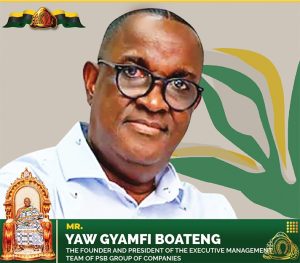
MR YAW GYAMFI
Another award recipient, Mr. Prince Kumi, Chief Executive Officer of Maxi De Car Dealer, shared a more personal reflection on the journey of life and business. Speaking in a relaxed tone that drew nods from several attendees, he reminded the audience that success rarely comes without challenges.
“Life has its ups and downs,” he said. “But if you remain trustworthy, it becomes the secret to growing your business.”
He also spoke about the values that shaped his character. According to him, his sense of generosity was something he inherited from his mother while growing up.
The programme also had the honour of welcoming Nana Afia Serwaa I, Paramount Queen Mother of the Goaso Traditional Area, who was also among the distinguished award recipients. Her presence added a strong traditional voice to the event.
Addressing the youth, the Queen Mother spoke firmly about the growing social challenges affecting young people today. She urged them to stay away from drugs and other forms of substance abuse, warning that such habits destroy promising futures.
She also had special advice for young women and girl students, encouraging them to protect their future by avoiding early and unwanted pregnancies that could interrupt their education and life ambitions.
Beyond the speeches, the event blended celebration with culture. Traditional music and performances reminded guests of the deep heritage of Asanteman, while networking moments allowed honourees and guests to connect and share ideas.
By the close of the programme, one message had clearly emerged: the progress of Asanteman depends not only on successful individuals but on values—hard work, generosity, discipline and service to community.
For many who attended, the Asanteman Nkosuo Honorary Awards 2026 served as both recognition of achievement and a reminder that the future of the Asante people lies in nurturing responsible leadership and community spirit among the next generation.
The bus was engulfed in flames and gutted in the small Swiss town
At least six people have been killed and others injured after a bus caught fire in a town in western Switzerland, according to police.
The incident took place at around 18:25 local time (19:25 GMT) on Tuesday in the centre of Kerzers – known in French as Chiètres – in Fribourg canton, about 20km (12 miles) from the capital, Bern.
At least three people were taken to hospital, police said, and there were reports that a rescuer was also hurt.
The cause of the fire is not yet known but local police said the fire was believed to have been started deliberately.
There have been reports that a person doused themselves in gasoline but the authorities said they could not immediately confirm this.
While the act is thought to be intentional, there is no evidence it was terror related, a spokesperson for Fribourg police told Swiss national broadcaster RTS on Wednesday.
Romain Collaud, a local politician, also confirmed to RTS that “we have no indication that suggests we might be dealing with a terrorist attack”.
Video posted by local media shows a bus in flames, and a local resident described seeing a thick column of smoke.
The bus involved had reportedly travelled from the Düdingen municipality, 17km south of Kerzers.
Stefan Regli, the head of the bus company Postauto, described the incident as a terrible tragedy and expressed his condolences in a statement.
In a post on X, Swiss President Guy Parmelin said that it “shocks and saddens me that people have lost their lives in a serious fire in Switzerland”.
Forty-one people were killed in a deadly fire that broke out in a Swiss ski resort on New Year’s Eve.