Justice Kocuvie-Tay is expected to deliver her ruling on March 16, 2026.
The Paramount Chief of Ada Traditional Area in the Greater Accra Region, Nene Abraham Kabu Akuaku III, has constituted a committee to investigate the growing concern of land guard activities in the area.
The committee is headed by the District Police Commander and his National Intelligence Bureau counterpart.
The decision was taken after he convened a meeting on Wednesday March 4, 2026 at his palace, which was attended by chiefs, opinion leaders and security bosses in both Ada East and West Districts.
The Chronicle’s publication on February 16, 2026 with the caption LAND GUARDS ON RAMPAGE IN ADA, compelled the respected Chief to summon the gathering.
On February 26, 2026, Mr Jonathan Dokutso, Secretary to the Paramount Chief wrote a letter to all the stakeholders inviting them to an important meeting.

The letter reads: I am directed by the Paramount Chief of the Ada Traditional Area, Nene Abraham Kabu Akuaku III to officially write and invite you to a stakeholders meeting on Wednesday March 4, 2026 at the residence of the Paramount Chief, Tetsonya, Big Ada, at 10:00am.The agenda to be discussed include -The operations of landguards in the Ada Traditional Area -and other matters.
Nene Ada hopes all invitees will attend this important meeting.
Though some of the stakeholders had doubted The Chronicle publication about the activities of land guards in the area, it was confirmed during the meeting that indeed, land guards were attempting to establish a safe haven in the geographical area.
A source close to the meeting, who preferred anonymity, told this reporter that some individuals were accused of being the brains behind the land guard activities, which is tarnishing the image of the traditional area.
The constituted committee included the Ada Divisional Police Commander and his National Intelligence Bureau (NIB) counterpart.
Both District Chief Executives (DCEs) for Ada East and West, who head the District Security Councils (DISEC) were not present, as they attended another important meeting in Accra.
For more news, join The Chronicle Newspaper channel on WhatsApp: https://whatsapp.com/channel/0029VbBSs55E50UqNPvSOm2z
Government has announced a series of major reforms aimed at improving transparency, accountability and efficiency in the administration of public lands across the country.
Addressing a press conference on Wednesday, March 11, 2026 the Deputy Minister for Lands and Natural Resources, Yusif Sulemana, said the reforms are part of directives issued by Cabinet and are currently being implemented by the Ministry of Lands and Natural Resources, in collaboration with the Lands Commission to restore integrity and public confidence in the management of state lands.

A key component of the reforms is the introduction of a new premium framework for public land leases. Under the new arrangement, at least 70 percent of the assigned market value of public land must be paid up front, while the remaining 30 percent will be spread over the duration of the lease as ground rent.
According to the Deputy Minister for Lands and Natural Resources, the policy is designed to enhance revenue mobilisation for the state and eliminate inconsistencies in land pricing that previously resulted in different individuals paying widely varying premiums for similar parcels of public land.
The Deputy Minister further announced the revision of the Public Land Application Form, popularly known as Form 5.
The updated form will now serve as the single mandatory application instrument for all public land transactions nationwide.

He explained that the revised Form 5 will be used for both new applications and reapplications by individuals whose earlier applications were cancelled during the recent review exercise.
To improve accessibility and streamline the application process, the Lands Commission has also been directed to publish the form on its official website. This will allow prospective applicants to download, complete and submit their applications electronically.
Dr Sulemana also disclosed that the Ministry has undertaken a comprehensive review of the internal processes used by the Lands Commission in allocating public lands. Under the new framework, each stage of the application process has been clearly defined, with stronger internal verification and monitoring mechanisms introduced to enhance transparency and traceability in decision-making.
As part of the reforms, no public land will be allocated without the prior approval of the sector minister. The Deputy Minister noted that this measure is intended to strengthen oversight and ensure that land allocations are consistent with national policy objectives.
Another significant initiative announced at the briefing is the standardisation of land market values for estates across the country. Dr Sulemana revealed that the Ministry and the Lands Commission have compiled reliable market values for several prime estates, including more than 30 estates within the Greater Accra Region.
He said these values will soon be published on the Lands Commission’s website to guide the assessment of land premiums and eliminate discretionary pricing, thereby ensuring fairness and value for money in all public land allocations.
The Deputy Minister also announced plans to establish a Public Land Protection Taskforce to safeguard state lands. The taskforce will be mandated to prevent encroachment on public lands, halt unauthorised developments and ensure that offenders are prosecuted in accordance with the law.
As part of efforts to promote transparency, Dr Sulemana disclosed that the list of all public land applications reviewed during the recent exercise—covering more than 8,000 cases—will soon be published on the websites of the Ministry and the Lands Commission. Publication will begin with applications in the Greater Accra Region before extending to other parts of the country.
He further indicated that the temporary suspension placed on public land transactions has now been lifted. However, all land administration services will operate strictly under the newly introduced reforms.
Yusif Sulemana also revealed that the Ministry has initiated the procurement process for the national digitalisation of Ghana’s land administration system.
The project, which will largely be financed through the internally generated funds of the Lands Commission, is expected to modernise land services, reduce human interference and improve efficiency in land transactions nationwide.
For more news, join The Chronicle Newspaper channel on WhatsApp: https://whatsapp.com/channel/0029VbBSs55E50UqNPvSOm2z
Parliament witnessed a sharp but substantive debate yesterday as the Minority Leader, Alexander Afenyo-Markin, and the Majority Leader, Mahama Ayariga, presented sharply contrasting assessments of the State of the Nation Address (SONA) delivered by President John Dramani Mahama.
The debate followed the President’s address to Parliament on February 27, 2026 delivered in accordance with Article 67 of the Constitution of Ghana, which mandates the President to present a message on the state of the nation at the beginning of each session of Parliament.
While the Minority described the address as incomplete and overly rhetorical, the Majority defended it as a truthful account of a nation recovering from severe economic distress.
Delivering the Minority Caucus’ concluding remarks, Mr. Afenyo-Markin argued that the President’s nearly two-hour speech failed to provide what he described as a realistic account of the challenges confronting Ghanaians.
Quoting former U.S. President Thomas Jefferson on the importance of protecting minority rights in democratic governance, the Efutu MP said the opposition had a duty to interrogate government claims and present what he termed the “true state of the nation.”
According to him, several pressing national issues, including electricity tariff increases, unemployment challenges and the environmental damage caused by illegal mining were either inadequately addressed or omitted entirely from the President’s address.
A key point raised by the Minority Leader concerned what he described as the government’s spending priorities.
He questioned reports that government was considering acquiring a presidential jet while critical infrastructure projects such as hospitals remain unfinished.
“How can a government say it has no money to continue building hospitals, yet suddenly find money to purchase a private jet for the President?” he asked adding “No money for hospitals, no money for farmers, yet money for jets.”
According to Mr. Afenyo-Markin, such decisions risk undermining public confidence in government priorities.
The Minority Leader also challenged the government’s repeated reference to inherited economic difficulties from the previous administration led by the New Patriotic Party.
He argued that the current administration frequently attributes challenges to the past while claiming credit for improvements.
Mr. Afenyo-Markin maintained that some of the stabilisation measures currently yielding results were initiated by the previous government, particularly the decision to seek support from the International Monetary Fund.
He also claimed that certain policies currently promoted by government, such as the gold-for-oil initiative originated under the previous administration and were championed by former Vice President Mahamudu Bawumia.
The Minority Leader further argued that farmers across several sectors were struggling due to limited market access and unfulfilled policy promises.
He cited cocoa farmers, rice producers and yam farmers as groups experiencing economic pressure.
Mr. Afenyo-Markin also raised concerns about the government’s artificial intelligence-driven recruitment system for security agencies, saying it had frustrated many young applicants.
According to him, unreliable internet access and technical challenges had created barriers for applicants in rural areas.
“Technology should work for the people and not become a barrier between them and opportunity,” he said, calling for a review of the system.
Responding to the Minority’s criticisms, Majority Leader, Mahama Ayariga, rejected the suggestion that the President’s address failed to reflect the true state of the nation.
He argued that the government inherited a deeply troubled economy following Ghana’s 2022 sovereign debt default and had since taken difficult decisions to stabilise the country.
“On December 19, 2022, Ghana declared a debt default,” he told the House.
“We inherited an economy with inflation above 50 percent, depleted reserves and enormous energy sector debt.”
According to Mr. Mahama Ayariga, the government’s economic recovery programme has begun to produce measurable results.
The Majority Leader pointed to several macro-economic indicators, which he said demonstrate improvement in the economy.
He cited declining inflation rates, improved foreign reserves and currency appreciation as signs that Ghana’s economic fundamentals were strengthening.
Mr. Mahama Ayariga also noted that Ghana had honoured a €709 million Eurobond obligation ahead of schedule, which he said had contributed to improved international confidence in the country’s financial management.
“This is not a story of survival anymore, it is a story of revival,” he said.
The Majority also defended a number of government programmes highlighted in the President’s address.
These include the “No Fees Stress Initiative,” which he said has enabled more than 150,000 first-year university students to enrol without paying academic user fees, as well as the “Mahama Cares” programme designed to support treatment for chronic diseases.
He further cited the government’s 24-hour economy policy as a key initiative aimed at expanding productivity and job opportunities.
According to him, the policy seeks to extend economic activity beyond traditional working hours to increase employment and industrial output.
For more news, join The Chronicle Newspaper channel on WhatsApp: https://whatsapp.com/channel/0029VbBSs55E50UqNPvSOm2z
The Minority in Parliament has called on the government to provide urgent clarification over claims that Ghana’s territory was used by the United States to launch airstrikes against ISIS targets in northern Nigeria.
The issue was raised by the Ranking Member on Parliament’s Foreign Affairs Committee, Samuel Abu Jinapor, who said the alleged development raises serious concerns about Ghana’s foreign policy posture and national security.
Speaking to journalists at Parliament House yesterday, Samuel Abu Jinapor said the Minority was responding to remarks reportedly made by the Minister for Foreign Affairs, Samuel Okudzeto Ablakwa, during a panel discussion at Chatham House in London.
According to the Minority, the Foreign Affairs Minister suggested during the discussion that Ghana cooperated with the United States Government in December 2025 by allowing its territory to be used as a base for airstrikes targeting the extremist group, Islamic State (ISIS), in northern Nigeria.
Samuel Abu Jinapor said Members of Parliament and the Ghanaian public first became aware of the alleged arrangement through the minister’s comments abroad, a development he said raises questions about transparency and accountability.
“This is a matter of grave national concern with far-reaching implications for the foreign policy position of our country and the national security of Ghana,” he stated.
He further questioned the legal and policy framework under which such a military operation could have been conducted from Ghanaian territory.
According to him, the Minority wants to know whether there exists any formal agreement between Ghana and the United States that authorise the use of Ghana’s territory to launch military attacks against targets in another country.
Mr. Samuel Jinapor noted that under Ghana’s Constitution, international agreements of that nature must receive parliamentary approval before they can take effect.
“If there was any such agreement, why has the government not brought it before Parliament for ratification or otherwise?” he asked.
The Minority also expressed concern about the potential security implications of the alleged collaboration.
The former Lands minister warned that permitting Ghana to be used as a base for military action against terrorist groups could expose the country to possible retaliatory attacks.
“Does Ghana become a target for ISIS or other terrorist organisations? What measures have been put in place to ensure the safety of our citizens?” he queried.
Adding his voice to the concerns, former Defence Minister and Member of Parliament for Bimbilla, Dominic Nitiwul, said previous defence cooperation agreements between Ghana and the United States did not authorise the use of Ghanaian territory as a launch pad for military strikes against other countries.
He explained that earlier agreements, including the United States–Ghana Defence Cooperation Agreement governing the presence of U.S. forces in Ghana, did not permit such operations.
“In all these agreements, at no point was the United States or any other country allowed to use the territory of Ghana as a launch pad to attack any individual, nation, group or organisation,” he said.
Mr. Dominic Nitiwul added that even the deployment of armed military aircraft in Ghana would require explicit authorisation from the government.
He cautioned that if the alleged arrangement was carried out without a formal agreement, it could place Ghana at risk, particularly at a time when extremist groups remain active across several countries in West Africa.
The former Defence Minister pointed out that terrorist organisations currently operate in parts of Nigeria, Mali, Burkina Faso and Togo, making it important for Ghana to avoid actions that could attract the attention of such groups.
The Minority is, therefore, demanding that the Foreign Affairs Minister appear before Parliament to brief the House on the circumstances surrounding the reported collaboration with the United States.
They also want assurances from the government that Ghana has not been unnecessarily exposed to security threats as a result of the alleged military operation.
For more news, join The Chronicle Newspaper channel on WhatsApp: https://whatsapp.com/channel/0029VbBSs55E50UqNPvSOm2z
According to a story published by myjoyonline.com, the contractors working on the expansion of the Accra–Tema Motorway have suspended a planned traffic diversion at the Tetteh Quarshie Interchange, after commuters endured hours of severe congestion.
The diversion had been introduced to allow Engineers to expand the bridge at the interchange, as part of the larger motorway expansion project, which aims to increase the bridge capacity to ten lanes, by adding three new lanes on each side.
According to the Project Manager, Ing. Ben Sackey, the traffic management plan had been carefully simulated before implementation. However, once the diversion took effect, the situation on the ground proved significantly worse than anticipated. Motorists were trapped in gridlock for two to three hours, particularly during peak periods, as traffic backed up across major routes feeding into the interchange.
Recognising the scale of disruption caused to the commuting public, the Contractors decided to suspend the diversion while they reassess the traffic management strategy. Ing. Ben Sackey acknowledged that although the decision may affect the project timeline, Contractors must remain accountable to the public and consider the challenges faced by motorists.
The suspension provides temporary relief to commuters while authorities deliberate on alternative approaches that will allow the project to continue without causing the level of congestion witnessed earlier this week.
The Chronicle is of the view that the decision to suspend the diversion at the Tetteh Quarshie Interchange is both sensible and necessary. Since Monday, the situation on the roads around the interchange had become almost unbearable.
Commuters driving through one of the busiest transport corridors in the capital spent between two to three hours stuck in traffic. Workers arrived late at their offices, commercial drivers lost valuable income and thousands of residents endured unnecessary stress.
Anyone familiar with traffic in Accra knows that the interchange already operates at near-capacity during rush hour. Introducing a diversion in such a sensitive traffic zone without a workable contingency inevitably would create chaos. The simulations may have suggested that the diversion could work, but real-life traffic conditions often differ from theoretical projections. The reality on the ground quickly exposed the limitations of the plan.
To their credit, the Contractors acknowledged the problem and acted quickly to suspend the arrangement. Infrastructure development is essential and the expansion of the Accra–Tema Motorway remains a critical project for the country’s economic and transport future. However, development cannot come at the cost of paralysing an entire city.
That said, suspending the diversion should not mean halting progress indefinitely. Instead, authorities and Contractors must explore alternative working arrangements that allow construction to continue without disrupting daily traffic.
One practical solution would be to shift the most disruptive construction activities to late-night hours. Working between 11:00 p.m. to 4:00 a.m. could significantly reduce the impact on commuters. During those hours, traffic volumes in Accra drop considerably, allowing Engineers to undertake complex tasks such as launching bridge beams, repositioning equipment, or temporarily closing lanes without causing citywide gridlock.
Night-time construction is not unusual in major urban centres around the world. Cities with dense traffic often adopt this strategy, precisely to balance infrastructure development with public convenience. While night operations may increase cost slightly due to lighting, logistics and labour adjustments, the benefits to the public would likely outweigh these expenses.
Authorities must also strengthen coordination with traffic management agencies and ensure clearer communication with motorists. Early warnings, proper signage and real-time updates can help drivers plan alternative routes and reduce confusion when diversions become unavoidable.
Ultimately, the motorway expansion is a necessary investment in Ghana’s transport infrastructure. But the events of this week serve as an important reminder that, infrastructure planning must place commuters at the centre of decision-making. With better scheduling, improved coordination and a willingness to adapt, the project can move forward without bringing the city to a standstill.
For more news, join The Chronicle Newspaper channel on WhatsApp: https://whatsapp.com/channel/0029VbBSs55E50UqNPvSOm2z
On March 8, what should have been an ordinary day in the quiet farming community of Abrabra in the Sefwi-Wiawso Municipality turned into a painful reminder of a troubling reality many children in Ghana continue to face—violence at the hands of those meant to protect them.
Twelve-year-old Vida Kwarteng reportedly endured a brutal assault by her mother, Diana Kwarteng, following a disagreement over the sale of plantain harvested from their family farm. According to information gathered by Adom News, Vida had sold part of the harvested plantain for ₵10 while her mother was away, hoping to buy food for herself and her sibling. Instead of understanding the circumstances that drove the young girl’s decision, her mother allegedly responded with rage, beating the child with a cane.
The assault reportedly left Vida with severe bruises stretching from her neck down to her waist. As of the time of reporting, the suspect had not yet been arrested by the Ghana Police Service.
While shocking, this incident is unfortunately not isolated. Across Ghana, many cases of child abuse occur behind closed doors, often hidden by cultural norms, economic stress, or silence within families and communities. The story of Vida Kwarteng is emblematic of a larger, more entrenched problem: the persistent normalization of violence as a form of discipline.
The Thin Line Between Discipline and Abuse
In many Ghanaian households, corporal punishment is widely accepted as a disciplinary tool. For generations, the phrase “spare the rod and spoil the child” has shaped parenting practices. However, when discipline crosses into physical harm, it becomes abuse—leaving both physical scars and long-term psychological trauma.
Child protection advocates warn that the normalization of harsh punishment often prevents communities from recognizing abuse when it occurs. A beating that leaves a child with severe injuries, like in Vida’s case, is not discipline, it is violence.
Poverty, Stress, and Family Pressures
Underlying many cases of child abuse in Ghana are deeper social challenges. Poverty, food insecurity, and economic hardship frequently create intense stress within households. For families already struggling to make ends meet, even minor disputes—such as the sale of farm produce—can escalate into violence.
Vida’s reported attempt to sell plantain for ₵10 to buy food for herself and her sibling highlights the difficult realities some children face. It raises critical questions about hunger, parental stress, and the vulnerability of children in low-income rural communities.
When basic needs go unmet, children often find themselves caught in the crossfire of frustration and desperation.
The Role of Law Enforcement and Institutions
Ghana has laws designed to protect children from abuse, including the Children’s Act and various provisions within the criminal justice system that criminalize assault and child cruelty. Institutions such as the Domestic Violence and Victim Support Unit (DOVVSU) of the Ghana Police Service were established specifically to handle such cases.
Yet enforcement gaps remain a concern. In many reported incidents, delays in investigations, reluctance to report family members, and social stigma hinder swift action. In Vida’s case, the fact that no arrest had been made at the time of reporting raises questions about accountability and the urgency with which such cases are handled.
For child protection laws to be meaningful, communities must trust the systems meant to enforce them.
Community Silence: A Hidden Enabler
Another challenge in tackling child abuse in Ghana is the culture of silence that often surrounds domestic matters. Neighbors, relatives, and community members may witness or suspect abuse but hesitate to report it, fearing backlash or believing it is a “family issue.”
This silence allows abuse to persist unchecked.
Breaking this cycle requires stronger community awareness and a shift in mindset—recognizing that protecting children is a collective responsibility.
Protecting Ghana’s Future
Children represent the future of any nation. When they grow up in environments of fear, violence, or neglect, the long-term consequences extend beyond individual families to society as a whole.
Child abuse can lead to lifelong emotional trauma, poor academic outcomes, and increased vulnerability to further violence. In extreme cases, it can even perpetuate cycles of abuse across generations.
Preventing such outcomes requires more than reactive law enforcement. It demands proactive education on positive parenting, stronger social support systems for struggling families, and accessible reporting mechanisms for victims and witnesses.
A Call for National Reflection
The painful story of Vida Kwarteng should not fade into the long list of disturbing headlines that briefly capture public attention before disappearing. Instead, it should serve as a catalyst for national reflection.
How many children suffer in silence? How many incidents go unreported? And what can be done to ensure that every child grows up in a safe and nurturing environment?
Ending child abuse in Ghana will require collective action from parents, community leaders, educators, policymakers, and law enforcement agencies. It will also require confronting uncomfortable truths about discipline, poverty, and societal attitudes toward children.
For Vida and countless other children, the hope is simple: that their pain will not be ignored and that their stories will inspire the change needed to protect the most vulnerable among us.
The views expressed in this article are the author’s own and do not necessarily reflect The Chronicle’s stance.
For more news, join The Chronicle Newspaper channel on WhatsApp: https://whatsapp.com/channel/0029VbBSs55E50UqNPvSOm2z
A Chartered Accountant at the Komfo Anokye Teaching Hospital, in Kumasi, has called for the establishment of professorial positions in the Teaching Hospitals in Ghana.
Mr. Gabriel Nyame noted that Teaching Hospitals remain central to Ghana’s healthcare delivery and medical education systems and provide essential clinical training for medical, nursing, radiography, sonography and other health science students across the country.
In a petition to the GTEC, the Rector, Ghana College of Physicians and Surgeons (GCPS); the Minister for Health (MOH), All Boards of Teaching Hospitals; Ghana Medical Association; Ghana Medical and Dental Council; KNUST Council and the University of Ghana Council, Mr. Nyame said, also drive critical research, offer highly specialised clinical care and train postgraduate residents who form the backbone of specialist healthcare delivery in Ghana.
Mr. Gabriel Nyame, however, said despite these substantial academic and clinical contributions, consultants within teaching hospitals currently lack an internal academic progression pathway.
According to him, unlike their counterparts in university settings, hospital-based consultants , many of whom hold PhDs, MPhils, specialty board certifications, extensive senior-level experience and strong research and publication records, cannot be promoted to professorial ranks such as Assistant Professor, Associate Professor, Full Professor, Honorary Professor, or Professor of Practice.
Mr. Gabriel Nyame observed that many leading academic medical centres operate through such structured affiliations, and cited Singapore General Hospital (SGH).
He mentioned that the University College London Hospital (UK), in collaboration with University College London (UCL), supports honorary and substantive academic appointments for senior clinicians, while Harvard Medical School (USA), through its affiliated hospitals, appoints clinicians to ranks such as Assistant Professor, Associate Professor and Professor.
The University Hospital Basel and University Hospital Zurich (Switzerland) are also said to similarly grant professorial titles to clinical experts through well-established university partnerships.
These models, Mr. Gabriel Nyame said, have proven effective in enhancing research output, elevating institutional prestige, motivating clinicians and improving retention of senior specialists-outcomes that Ghana’s teaching hospitals urgently need.
The Chartered Accountant noted that this structural gap in Ghana on the other hand significantly diminishes motivation, undermines retention, and creates inequity between hospital-based trainers and university faculty, even when both groups meet equivalent academic and professional standards, which situation can compel experienced specialists to migrate to universities where their academic achievements can be formally recognised.
In the circumstance, he argued that a real threat could be posed to the sustainability of expert-led clinical care, mentorship and specialist training within our teaching hospitals.
The Chartered Accountant at the Komfo Anokye Teaching Hospital has, therefore, recommended the urgent need to establish an academic promotion framework within teaching hospitals or to strengthen formal collaboration with affiliated universities, particularly between Komfo Anokye Teaching Hospital (KATH) and the Kwame Nkrumah University of Science and Technology (KNUST), to safeguard excellence in healthcare delivery and to maintain the quality of clinical education.
He has appealed to the Hospital Boards, the Government and all relevant stakeholders to support the creation of a clear and equitable pathway for academic progression within teaching hospitals.
The Kumasi-based chartered accountant contended that establishing such a framework will recognize excellence, retain experienced clinicians, and strengthen our collective mission to deliver world-class healthcare and medical education across Ghana.
“Such a system”, he noted, “would allow deserving consultants to be conferred academic titles in acknowledgment of their scholarly output, teaching contributions, clinical expertise and service to national development”.
For more news, join The Chronicle Newspaper channel on WhatsApp: https://whatsapp.com/channel/0029VbBSs55E50UqNPvSOm2z
A Two-day capacity-building Workshop on Constitutional Reform for Civil Society Organisations (CSOs) and the Media has been held in Kumasi.

It was organised by CDD-GHANA and Star Ghana Foundation, in partnership with UK International Development to mobilise Civil Society and Media support for the constitutional reform processes.
The aim is to strengthen civil society engagement in Ghana’s ongoing constitutional review process by enhancing CSOs and Media understanding of the review process and also to equip participants with practical advocacy and engagement skills.
Ms Vera Abena Addo, Programmes Officer at CDD-Ghana explained that the ongoing review process is the third attempt at constitutional review in the Fourth Republic and CSOs do not want to leave the process in the hands of government alone.

She said CSOs fully support the process because recommendations of the Constitution Review Committee (CRC) were not different from the CSOs, but there was the need for the citizenry to understand the recommendations and, therefore, the need to go round the regions and bring everybody on board in the constitutional review process.
The good aspect of the current review process, Abena Addo said, is that President John Dramani Mahama himself is championing or leading the process and it is the expectation of CSOs and citizens that the review process would be completed by the end of tenure of President Mahama so that it shall be his legacy.
Madam Rebecca Ekpe, the Vice President of the Ghana Journalists Association (GJA), stated that the Constitution has seen over thirty years of practice without any major review and admonished journalists to read the CRC report thoroughly to be able to properly disseminate the contents to the people.
The participants were drawn from Ashanti, Bono, Bono East and Ahafo regions and were taken through the major recommendations in the CRC report by Dr. Kwabena Oteng Acheampong, a lecturer at GIMPA Law School and also at Law and Development Associates and Ms. Anita Awuku, the Projects Officer at Star Ghana Foundation.
From Thomas Agbenyegah Adzey, Kumasi
For more news, join The Chronicle Newspaper channel on WhatsApp: https://whatsapp.com/channel/0029VbBSs55E50UqNPvSOm2z
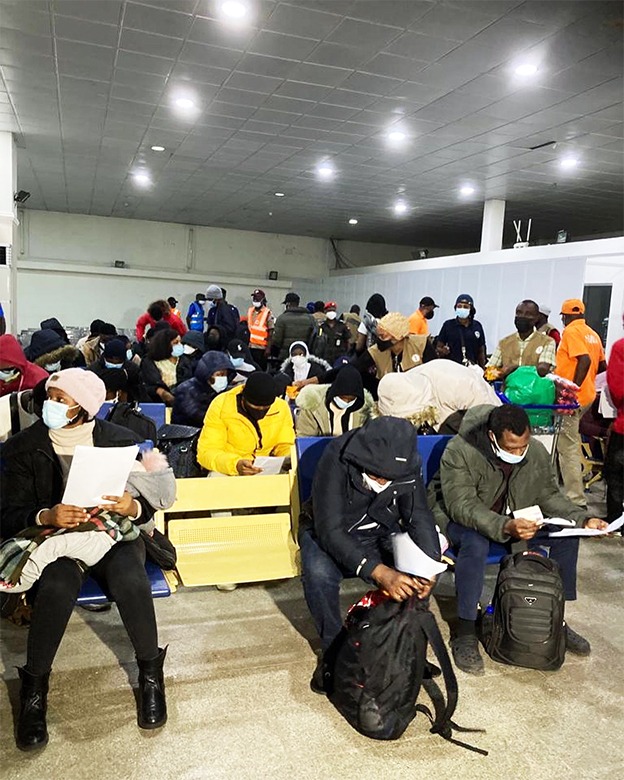
The Federal Government has begun evacuating willing Nigerians in Iran, escorting them across the Armenian border to ensure their safety amid escalating tensions in the Middle East.
The evacuation follows the growing crisis that began on February 28 after coordinated military strikes on Iran by the United States and Israel.
The attacks triggered retaliatory missile and drone strikes across parts of the region, raising fears of a wider conflict.
Chairman and Chief Executive Officer of the Nigerians in Diaspora Commission (NiDCOM), Abike Dabiri-Erewa, disclosed this in a post on her X handle on Tuesday.
She said officials of the Nigerian Embassy in Tehran are coordinating the evacuation of Nigerians who wish to leave the country and are facilitating their safe passage into Armenia.
Dabiri-Erewa also reassured that no Nigerian in Iran has so far been affected by the ongoing tensions, noting that embassy officials remain stationed at the border to receive and assist evacuees.
Her post read, “Willing Nigerians being escorted across the Armenian border by officials of the Nigerian embassy in Iran for safe passage. No Nigerian in Iran has been affected by the war as officials remain at the border to receive all who want to leave.”
The development comes as tensions in parts of the Middle East continue to raise concerns over the safety of foreign nationals residing in affected areas.
For repatriation flights, the NiDCOM chair said the airspace is currently unsafe but assured Nigerians in the Middle East that the Federal Government team is on standby to evacuate them.
Credit: channelstv.com