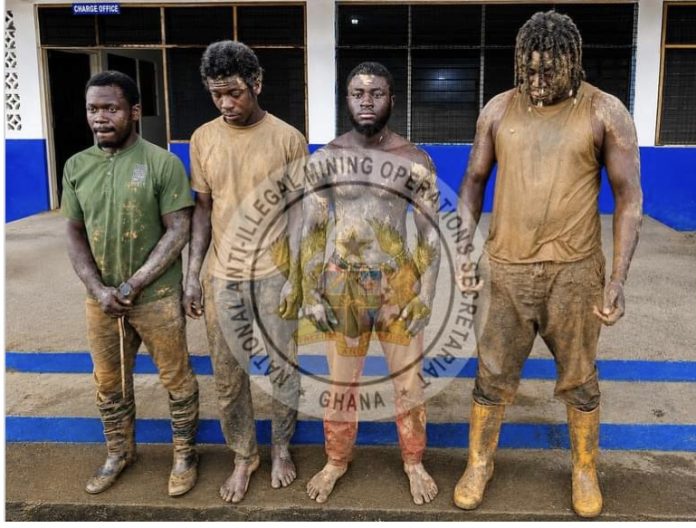
Four alleged armed illegal miners, described by authorities as thugs providing security for a galamsey operation, have been arrested by the National Anti-Illegal Mining Operations Secretariat (NAIMOS) at Dominase in the Nzema East Municipality of the Western Region.
The suspects, according to NAIMOS, were apprehended during a routine anti-galamsey patrol conducted along the Ankobra River on Wednesday, May 20, 2026.
A statement issued by the Secretariat and shared by the Ministry of Lands and Natural Resources said the task force encountered an active illegal mining site at about 3:25 p.m., where the suspects were allegedly operating with pump-action guns and machetes.
The suspects were identified as Alpha Musa, 28; Rahaman Rojer, 29; Laji Bengali, 25; and Mohammed Agana, 25.
According to the statement, the armed men resisted arrest and attempted to obstruct the operation when the task force arrived at the site.
“The armed thugs resisted arrest and refused to surrender to the task force. Instead, they violently attempted to obstruct the operation and prevent their arrest,” the statement noted.
However, the task force reportedly overpowered and arrested the suspects after a confrontation.
NAIMOS disclosed that preliminary interrogation of the suspects revealed claims that they were allegedly operating under the protection of certain persons said to be National Security operatives identified only as “Ras,” “Mambo,” and “Nana Teku,” all believed to be from Prestea.
The names, according to the Secretariat, have since been handed over to the Police to support ongoing investigations.
Authorities further accused the suspects of causing extensive environmental destruction in the area, including pollution of the Ankobra River and degradation of surrounding forest lands through illegal mining activities.
Items retrieved from the site included two pump-action guns, eighty-two AA cartridges, three machetes, one water pumping machine and two SDLG excavator control boards.
The task force also discovered two excavators at the mining site. Due to the unavailability of low-bed transport services, the excavators were immobilised on-site after their control boards were detached.
NAIMOS said the arrested suspects, together with their mobile phones and talisman, were subsequently handed over to the Esiama District Police for further investigations and prosecution.
Assistant Superintendent of Police (ASP) Asiedu of the Esiama District Police reportedly received the suspects.
The Secretariat reiterated its resolve to intensify anti-galamsey operations nationwide despite increasing threats posed by armed groups protecting illegal mining sites.
“NAIMOS continues to intensify anti-galamsey operations across the country despite the risks posed by armed criminal elements,” the statement stressed.
The Secretariat also warned illegal miners against resisting arrest and appealed to the public to continue volunteering intelligence to support the fight against illegal mining.
The Tema Circuit Court ‘A’ presided over by Her Honour Maame Yaa Amoakoaa Kusi Mensah has remanded 35-year-old Anaglate Mends Edem Kwashie into lawful custody, for allegedly defiling a 14-year-old 2026 JHS graduate.
Anaglate Mends, a husband and a father of three, is the Administrator of Ridoana Comprehensive School at Atadeka, where the victim (name withheld) was a student.
Brief Fact
Inspector Linda Adenyo, prosecuting, told the court that after the victim’s last BECE exams on May 8, 2026 Lawrencia Ahorsu, the complainant and older sister of the victim, went to pick her younger sister from school.
Inspector Linda said the complainant noticed some sadness on the face of the victim and when she wanted to know why the strange mood, the victim did not utter a word.
Later at home, the prosecutor said Anaglate Mends Edem called the victim on a phone number she previously used, but the complainant picked up.
Immediately, Anaglate Mends Edem pleaded with the victim, the 14-year-old JHS graduate, not to break up with him.
Inspector Linda said Anaglate Mends Edem expressed his readiness to resolve any lingering issues there might be between him and the victim.
Suspicious, the complainant picked the victim’s phone messages and while inspecting her Snapchat, she saw a series of sexual conversations and encounters with Anaglate.
When the complainant confronted the victim, the latter confirmed her amorous relationship with the accused and an intimacy between them at a location she could not remember.
According to the prosecutor, the accused used different winding routes to a Guest House, where he allegedly had sex with the victim.
Hearing about how her younger sister had been sexually abused, Lawrencia Ahorsu reported the matter to the Atadeka Police, who dragged Anaglate Mends Edem Kwashie to court.
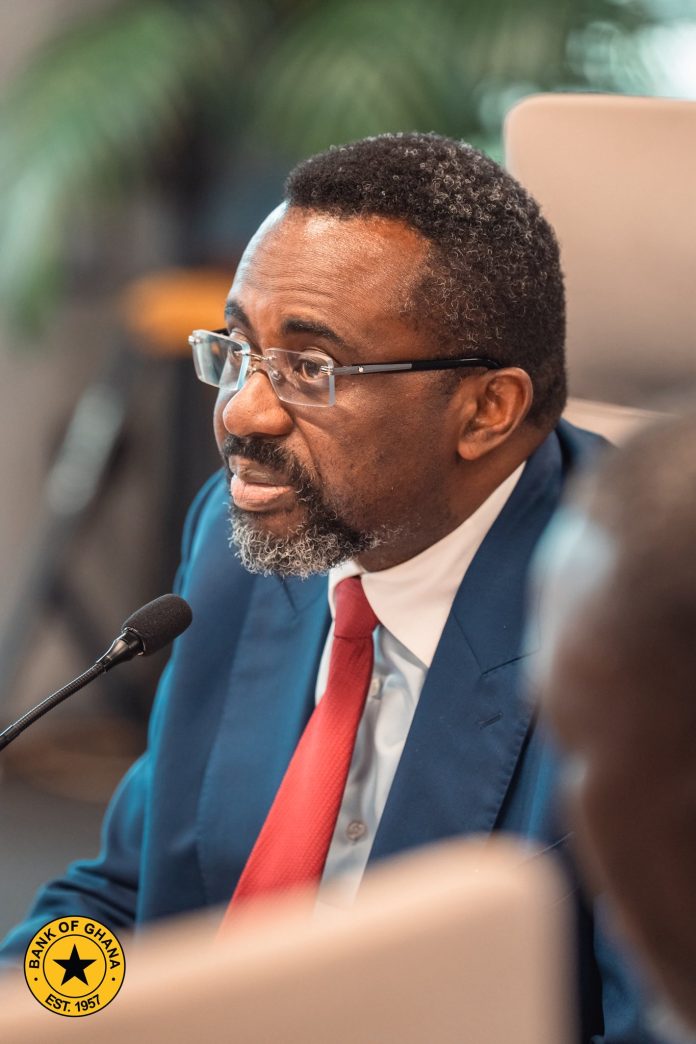
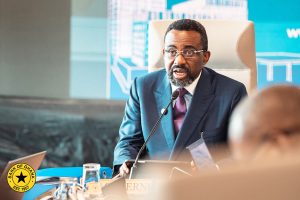
The Governor of the Bank of Ghana, Johnson Pandit Asiamah, has defended the decision by the Monetary Policy Committee (MPC) to maintain the policy rate at 14 percent, insisting that lingering geopolitical tensions in the Middle East continue to pose serious risks to Ghana’s inflation outlook and economic stability.
Governor Asimah and his team at the MPC
Responding to questions from journalists during the 130th MPC press briefing in Accra yesterday, Dr. Asiamah described the ongoing Middle East conflict as the “elephant in the room” influencing the central bank’s cautious policy stance.
According to him, although current economic indicators suggest there is room for further monetary easing, the MPC decided to pause and monitor developments because of uncertainties surrounding the global crisis.
“The committee evaluated other forms of risks. The elephant in the room here is the Middle East crisis,” the Governor stated. “Up to this time, one is not sure whether it is temporary or whether it is going to be long-lasting. If we assume that it will be a longer-lasting one, then you can imagine the impact on inflation expectations and the so-called second-round effects,” he added.
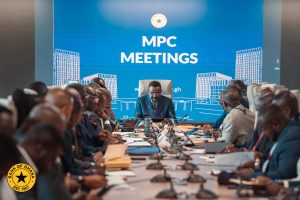
Members of the MPC
Dr. Asiamah explained that while real interest rate trends indicated possible space for further rate cuts, the MPC considered both domestic improvements and external shocks before arriving at its decision. “That is why, in the wisdom of the committee, it was decided to pause and evaluate all incoming data so that at the next MPC round, the committee would take an appropriate decision,” he added.
The Governor also responded to concerns about the slow reduction in commercial bank lending rates despite falling benchmark interest rates.He explained that the current low-interest-rate regime remained relatively new to banks, forcing them to gradually adjust their portfolios and lending strategies.
“When interest rates are falling, it may take a while. You don’t just rush into giving loans. There has to be adequate bankable projects and you don’t compromise your credit appraisal standards,” he said. According to him, banks were acting cautiously to avoid excessive credit risks, but indicated that lending rates would eventually adjust downward once the low-interest-rate environment is sustained.
Dr Pandit Asiamah, Governor of BoG
Dr Asiamah further justified the MPC’s additional policy measure to revise the dynamic cash reserve ratio to a uniform 20 percent reserve requirement in domestic currency, effective June 4, 2026.
He explained that the decision followed a review of earlier liquidity management measures introduced about a year ago. “In the wisdom of the committee, we think this will go a long way to complement our open market operations,” he noted.
The Governor disclosed that the central bank would hold meetings with Chief Executive Officers of commercial banks next week to explain the implications of the new policy measures. On the recent oversubscription of Treasury bill auctions, Dr. Asiamah declined to directly comment on government borrowing strategies, saying such matters were best addressed by the Ministry of Finance.
“You know it’s a market; it’s an auction. The banks and treasuries make those decisions based on market conditions and what they forecast going forward.”
Addressing concerns about the depreciation of the cedi, the Governor stressed that Ghana operates a managed floating exchange rate regime and not a fixed exchange rate system. “The cedi is expected to move. It can depreciate or appreciate. Our concern is to avoid excessive volatility,” he said.
MPC meeting in session
Dr. Asiamah attributed recent depreciation pressures mainly to increased foreign exchange demand arising from higher crude oil prices and dividend repatriation by multinational companies during the April-May reporting season.
“The same volume of crude oil is costing about twice more by way of foreign exchange,” he explained. Despite the pressures, the Governor assured the public that the central bank had adequate foreign exchange reserves to maintain stability in the market.
“The good part of it all is that we have the buffers. We are building them on a daily basis,” he stressed. He disclosed that Ghana’s Net International Reserves had increased from US$10.9 billion in April to US$12.43 billion currently.
“We should be able to do what we have to do. What we will ensure is that we won’t see a return to the kind of volatility we saw in previous years,” he assured.
Touching on credit distribution, Dr. Asiamah said commerce continued to receive the largest share of bank credit, but indicated that all sectors of the economy would benefit if the ongoing growth in private sector lending is sustained.
He revealed that the central bank was also advancing plans for a digital credit framework that would allow individuals and businesses to access small loans through mobile phones under a regulated system.
“So very soon, no matter which sector you are involved in, you can just raise a loan on your mobile phone,” he disclosed, adding that the system would be properly supervised to avoid abuse.
Gold coin
The Governor also announced that Ghana could witness the launch of its first non-interest banking institution before the end of the year. According to him, the regulatory framework for non-interest banking was being carefully developed to meet international best practices. “That is something dear to my heart,” he stated.
On the banking sector’s non-performing loans (NPLs), Dr. Asiamah said the central bank had already issued directives to commercial banks to reduce bad loans by the end of 2026.
He revealed that although the gross NPL ratio stood at 18 percent, the net figure after provisions was around eight per cent. “We don’t just erase fully provisioned loans because of moral hazard,” he explained, urging banks to continue pursuing loan defaulters to recover outstanding debts.
Regarding disruptions to Ghana’s gold exports due to the Middle East crisis, the Governor disclosed that temporary challenges affecting shipments to the United Arab Emirates had been resolved through alternative export arrangements. “The Gold Board has been able to find a way around it,” he said. “Shipments are ongoing,” he added.
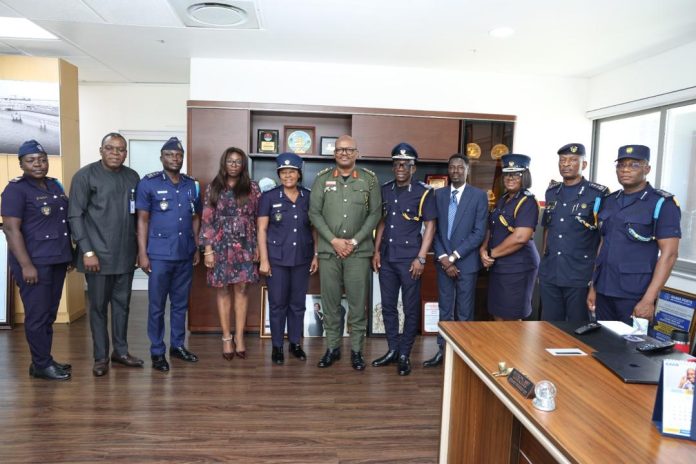
The Commissioner of the Customs Division of GRA, Mr Aaron Kanor and staff of GPHA
The Commissioner of the Customs Division of the Ghana Revenue Authority (GRA), Mr Aaron Kanor, has paid a friendly working visit to the Tema Port, to discuss strategies for maximizing national revenue.
Discussions during the meeting focused on transit trade operations and explored ways in which both institutions can deepen cooperation to promote seamless trade facilitation and enhance Ghana’s competitiveness as a preferred trade and transit hub within the sub-region.
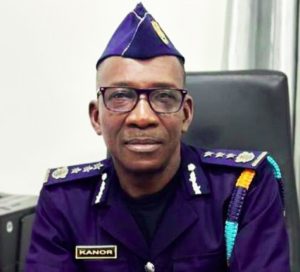
Commissioner of the Customs Division of the Ghana Revenue Authority (GRA), Mr Aaron Kanor
During the visit, Mr Kanor urged customs officials to collaborate closely with his leadership team to drive operational progress, block revenue leakages and streamline port processes.
In a warm reception, the port’s customs officials pledged their full support and commitment to working with him to achieve the state’s targets, proudly noting that because Mr. Kanor is “one of their own” who rose through the ranks, they are fully united behind his vision for the division.
The visit formed part of ongoing engagements between the two institutions aimed at strengthening collaboration within Ghana’s trade and logistics ecosystem.
The Customs
Commissioner noted that the Port of Tema plays a critical role in revenue mobilisation for the state and stressed the need for the two Authorities to work closely together to achieve the country’s revenue targets.
Major General Tanye-Kulono, head of GPHA reaffirmed his outfit’s commitment to working closely with the Customs Division and all key stakeholders to ensure efficient port operations and a smooth cargo clearance process that supports economic growth and regional integration.
Prior to visiting the Director General, the Commissioner paid a courtesy call on the Director of Port, Tema, Mr. Tebon Zumah Esq.
A small-scale mining company, Kofreze Construction & Engineering Limited, has petitioned the Minerals Commission (MC) to urgently intervene in what it describes as an unlawful invasion of its licensed mining concession by illegal miners at Wasa Dadieso in the Wasa Amenfi East Municipality of the Western Region.
In a petition dated April 24, 2026 and addressed to the Chief Executive Officer of the Minerals Commission, in Accra, the company said unidentified illegal miners had forcibly taken over its concession and commenced unauthorized mining activities, resulting in environmental degradation and destruction of property.
The company, which identified itself as a duly licensed operator under the Minerals and Mining Act, 2006 (Act 703), said the situation was threatening lawful mining operations and creating security concerns within the host community.
“KOFREZE CONSTRUCTION & ENGINEERING LIMITED remains dedicated to operating within the law, supporting responsible mining practices, and cooperating with the Minerals Commission and all stakeholders,” the petition stated.
According to the company, its internal security team first detected the alleged invasion about three weeks ago, prompting management to conduct an assessment that confirmed ongoing illegal mining activities on the concession.
The company further claimed that the continued occupation of the site by illegal miners posed serious risks to public safety and peaceful coexistence in the area.
Management warned that the situation could escalate into conflict if urgent enforcement action was not taken by state authorities.
The company which is also a member of the National Association of Hard Rock and Underground Miners (NAHRUM) said it remained committed to complying with environmental, safety and community protection obligations under Ghana’s mining regulations.
In the petition, Kofreze Construction & Engineering requested five urgent actions from the Minerals Commission and allied security agencies.
These include immediate verification of the company’s concession and license documentation, coordinated security operations to evict the illegal miners, prevention of further illegal activities on the site, investigations into breaches of mining laws and measures to prevent additional environmental damage.
The company stressed that the activities of illegal miners were undermining lawful investment and weakening compliance efforts by legitimate operators within the sector.
It further appealed to the Minerals Commission to provide a written response outlining timelines for enforcement and intervention measures.
Copies of the petition were also forwarded to the Deputy Chief Executive Officer of the Minerals Commission, the Director of Small-Scale Mining, the Tarkwa District Office and officials of the National Association of Hard Rock and Underground Miners.
The issue of illegal mining, popularly known as galamsey, continues to pose a major challenge to Ghana’s mining sector, with repeated concerns over environmental destruction, loss of state revenue and insecurity in mining communities.
Former Local Government Minister, Prof Kwamena Ahwoi, has charged the media to play a frontline role in strengthening Ghana’s decentralisation and local governance system by shifting greater attention to Metropolitan, Municipal and District Assemblies (MMDAs).
According to him, the success of Ghana’s decentralisation agenda would largely depend on how effectively the media educates citizens, scrutinises local governance institutions and promotes accountability at the grassroots level.
Prof. Ahwoi made the call at a media engagement organised by the Inter-Ministerial Coordinating Committee on Decentralisation (IMCCoD) Secretariat, under the theme: “Advocating Ghana’s Decentralisation Agenda: The Role of the Media in Promoting Decentralisation and Accountability.”
The engagement focused on Ghana’s proposed new National Decentralisation Policy and Strategic Framework (NDPS) 2026-2030, expected to guide the next phase of local governance reforms in the country. Addressing journalists and stakeholders, Prof. Ahwoi argued that the media’s concentration on national political actors often weakens accountability within local governance structures.
“We hear our colleagues in the media are very interested in what takes place at the national level, even if it is a local issue. We want to hear from the minister, we want to hear from the Mayor of Accra, but we fail to put the spotlight on the people at the local level, who actually implement the policies,” he observed.He explained that Ghana’s decentralisation laws deliberately confer substantial powers on local government institutions and officials, making them the appropriate centres of implementation and accountability.
According to him, central government institutions are primarily responsible for policy formulation, monitoring and evaluation, while the actual execution of development programmes takes place at the district level.“If you do not go to the local level to interview the people and put them on the spot, but rather continue putting pressure only on policy formulators in Accra, then we are losing something important,” he stressed.
Prof. Ahwoi, therefore, urged journalists to intensify coverage of local assemblies, decentralised departments and district chief executives in order to deepen democratic governance and improve service delivery.
Earlier, Executive Secretary of the IMCCoD, Dr. Gameli Dominic Hoedoafia, described the media as a “formidable partner” in advancing Ghana’s decentralisation reforms.
He said the committee had over the years institutionalised collaboration with the media to strengthen public communication and awareness on local governance issues.
According to him, the IMCCoD had previously sponsored the Best Journalist award winner to the United Kingdom and also created a decentralisation category within the Ghana Journalists Association awards scheme, as part of efforts to encourage sustained media interest in local governance.
Mr. Hoedoafia noted that the current media engagement comes at a critical moment as government prepares to unveil the National Decentralisation Policy and Strategic Framework 2026-2030.
He described the framework as a transformative blueprint aimed at deepening democratic decentralisation, strengthening accountable public sector service delivery, accelerating local innovation and empowering communities.“Strong local governance structures are the very foundation of inclusive development, democratic participation and resilient communities,” he stated.
He further stressed that accountability within decentralisation was both a constitutional and ethical obligation, particularly through what he described as “diagonal accountability” involving the media and civil society organisations. “The media occupies a very strategic position in our governance ecosystem. It serves as the bridge between government and citizens, reinforcing accountability and enabling informed public dialogue,” he noted.
Dr. Hoedoafia called on journalists to help promote public awareness on the functions of MMDAs, local participation mechanisms, fiscal decentralisation and citizens’ responsibilities in governance. He maintained that decentralisation reforms would only succeed if citizens understood, owned and actively participated in the process through effective civic engagement and public communication.
The IMCCoD engagement also brought together experts in decentralisation and local governance to deliver technical presentations aimed at strengthening media understanding of Ghana’s evolving decentralisation framework and accountability systems.
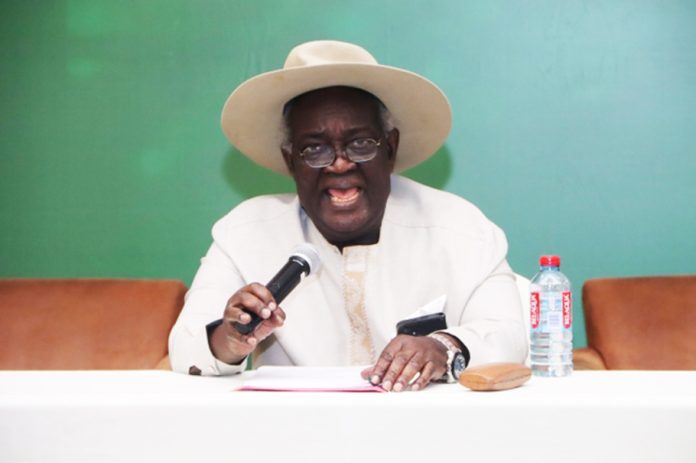
The District Chief Executive for Fanteakwa North, Abubakar Osman
A deepening rift has emerged within the ruling National Democratic Congress (NDC) in the Fanteakwa North Constituency of the Eastern Region, as constituency executives have openly appealed to President John Dramani Mahama to intervene in what they describe as the “uncooperative and divisive” leadership style of the District Chief Executive (DCE), Abubakar Osman.
The growing tension, which threatens to shake the party’s unity at the constituency level, came to public attention during a news conference held on Monday, where executives accused the DCE of sidelining party structures, neglecting grassroots supporters and failing to work in harmony with the very executives who toiled for the party’s electoral victory.
The Fanteakwa North Constituency Communication Officer, Mohammed Awal, flanked by Constituency Chairman Mr. Daniel Amoafo Mayele and several branch and constituency executives during the press conference.
Addressing the media, the Fanteakwa North Constituency Communication Officer, Mohammed Awal, flanked by Constituency Chairman, Mr. Daniel Amoafo Mayele and several branch and constituency executives expressed frustration over what they described as a continuous pattern of disrespect towards the party leadership in the constituency.
According to the executives, major government projects are being executed within the district without the knowledge, consultation or involvement of constituency executives, a development they believe undermines the authority and relevance of the party at the grassroots level.
They specifically cited the government’s flagship 24-hour economy market project, alleging that the project had already been awarded to a contractor, without any official briefing or consultation with constituency executives.
The executives argued that such actions create unnecessary suspicion and dissatisfaction among party supporters, many of whom actively campaigned for the NDC during the 2024 general elections, with the expectation of inclusive governance and transparent leadership.
“We are shocked that critical projects are ongoing in our district and yet the very executives who worked tirelessly for the party are left completely in the dark,” one executive lamented during the press conference.
The aggrieved executives further accused the DCE of failing to undertake a constituency-wide familiarization tour since his appointment nearly a year ago by President Mahama.
According to them, several grassroots supporters across communities within the district have never had the opportunity to interact with or even formally meet the DCE.
They stated that repeated concerns raised by branch executives and party faithful regarding the DCE’s absence and perceived inaccessibility have yielded no positive response.
The executives warned that the situation is gradually creating disaffection among party supporters and weakening the NDC’s grassroots structures ahead of future political contests.
Another major concern raised at the press conference centered on the District Road Improvement Programme (DRIP) equipment allocated to the district.
The executives alleged that the DRIP machines have remained parked at the district assembly premises for months while roads across many communities continue to deteriorate, causing frustration among residents and commuters.
According to them, the inability to deploy the machines for road rehabilitation was damaging the image of the government and giving political opponents ammunition to criticize the NDC administration.
They also accused the DCE of failing to actively participate in important social activities within the constituency, including funerals, weddings, and community gatherings.
The executives stressed that political leadership at the local level requires visible interaction with the people, especially during social events that strengthen bonds between party leaders and the grassroots.
They claimed the DCE’s absence from such activities has created a perception that he is disconnected from the people and uninterested in constituency affairs.
The executives therefore called directly on President John Dramani Mahama to step in and caution the DCE before the internal dissatisfaction escalates into a full-blown political crisis capable of affecting the fortunes of the party in the constituency.
“We are appealing to President Mahama to intervene immediately because this situation, if not addressed, could negatively affect the unity and electoral strength of the NDC in Fanteakwa North,” the executives stated.
DCE Fires Back, Rejects Allegations
In a swift response to the allegations, Abubakar Osman, the District Chief Executive, firmly denied claims that he has neglected party structures or sidelined constituency executives in the administration of the district.
Speaking in response to the accusations, the DCE insisted that he had consistently maintained communication with party leadership and executives through established party channels.
According to him, during periods when the substantive constituency chairman was unavailable, he regularly engaged the acting chairman on matters concerning the district.
He further explained that constituency communication platforms have consistently been used to share updates on government activities and district developments with party executives.
“Every major decision and activity have always been communicated to the party leadership,” the DCE maintained.
Mr. Osman also highlighted several initiatives he says demonstrate his commitment to supporting party members and strengthening the NDC base within the district.
Among the examples he cited was the awarding of one of the district’s biggest contracts – a 16-unit classroom block project – to persons affiliated with the party.
He further disclosed that during the Christmas festivities, he facilitated the distribution of bag of rice to about 1,161 branch executives through constituency executives to support party members across the district.
The DCE acknowledged that disagreements existed during the process leading to his nomination and confirmation as DCE, noting that some constituency executives openly supported another candidate for the position.
However, he emphasized that political differences should not destroy party unity, adding that “Even though you supported someone and that person did not get the position, we are still one and can still work together”.
Responding to concerns about the idle DRIP machines, Mr. Osman rejected suggestions that the equipment had been abandoned, disclosing that, the machines inherited from the previous administration required urgent servicing before they could be deployed for road works.
According to him, the district is currently facing serious Internally Generated Funds (IGF) challenges following the division of Fanteakwa into two separate districts, making it difficult to immediately finance repairs and maintenance.
He disclosed that letters had already been sent to contractors responsible for servicing the equipment, while interim measures had been introduced to address the worsening road conditions.
“In the meantime, we have collaborated with the Highways Department to reshape some of the deplorable roads within the district,” he explained.
On the controversial 24-hour economy market project, the DCE clarified that the original site proposed by traditional authorities failed to meet the technical requirements needed for the project.
He explained that a state-appointed consultant assessed the location and declared it unsuitable due to zoning limitations and lack of network connectivity.
According to him, a new site was subsequently selected after extensive consultations with stakeholders, including market women and community leaders.
Some years ago, a tree fell at the Kintampo Water Falls.
Unfortunately, the fall coincided with the visit of some students from the University of Energy & Natural Resources among others to the facility. Scores suffered various degree of injuries and few lost their lives.
Investigations thereto revealed that the incident could have been averted or mitigated if the authorities had sat up. This is to say, if periodic audits were conducted on the trees in the catchment area by experts from the Parks & Gardens, Forestry etc. They, with their speciality and trained minds, could have advised on which tree was likely to fall and proactive measures taken to stem same.
Yah, officials therein failed to think outside the box and do the needful, thus the needless lost of innocent lives. l must add here that, not a single soul was held to account, after all, it’s God who gives and takes, aka, Fama Nyame.
PAST INCIDENTS
– A tree fell killing a reverend minister, his wife and kid at the Kanda enclave in Accra.
– Another tree fell on a couple of vehicles at University of Ghana campus. Thankfully, there was no causality.
– Last year a big “Oyina” tree fell unto the main entrance/exit stretch of the GIMPA campus. Here too, thankfully, there was no causality.
– Again, a tree fell within the Accra Airport catchment area, causing considerable damage to properties.
LATEST DEVELOPMENT
Last Sunday rains accompanied by strong winds hit the capital with its heart wrenching stories left, right and centre. In its wake, a giant Nim tree which has been standing on the Y intersection for years on the Achimota School/Hospital junction – Kissiman stretch in Accra was uprooted.
Again, thank God, no casualties were recorded save some bills on the junction and the impact of its fall on the road infrastructure.
Admittedly, l am not a staff of the Parks & Gardens, Foresty Commission nor possess any knowledge in a related discipline but at least, God gave me some common sense which l have added to discern real and apparent dangers.
The tree in question, located in the Forestry Commission enclave was danger personified even to the uninitiated minds. One could discern clearly that the top (numerous branches and leaves) outweighed the base, reminiscent of a well-built man with tiny legs, thus this incident was expected. As to why the danger posed by this tree was not caught on the wide and good lenses of personnel of the Forestry Commission who transverse the stretch daily to and from work remains a big mystery – note that in our part of the world, people are paid just for not executing their mandate.
Recall some years back, in the same enclave, l identified two dead trees standing right by the road side posing danger to all and sundry, but who cared?
Numerous promptings to the OkaiKoi North Municipal Assembly (ONMA) whose head office was less not 150 metres from the danger fell on deaf ears till one fell on its own. Thankfully no causality was recorded and it took months thereafter before the other was brought down by whosever.
As l write, a big cotton tree (Oyina) whose under soil has been scooped to pave way for the construction of a Court Complex at Akuapim Akropong in the Akuapim North Municipality “stands tall” at the lone entrance/exit of the Court Complex as if it’s no one’s business. I have taken the trouble to hint the Registrar therein with my okro mouth and penetrating eyes and await action thereon. Had l known should be the last vocabulary in this instance.
MY BELIEF
I am of the conviction that the dangers trees standing at highly populated areas especially by roadsides have not caught the attention and lenses of the populace, more especially of those salaried, tasked and charged statutorily to nose for such dangers and act thereon. Here, I am referring to National security, Parks & Gardens and Forestry Commission, among others.
None can discount the importance and relevance of trees in our daily life, however, this must situated properly in the context of public safety.
Again, it is my contention that we, as Ghanaians, have not learnt any lessons from past and recent falls of trees. This is to say, Nature has its own way of throwing in harbingers of impending and imminent dangers and the recent fall of trees earlier referred to, l believe, is one of such warnings.
MMDAs, WAKE UP
Taking a cue from the findings from the Kintampo Water Falls report, the Metropolitan, Municipal & District Assemblies (MMDAs) must be up and doing. Institute proactive measures by profiling and prioritizing the audit of all trees in their catchment areas, prune, trim etc as and where recommended and cut it down and, if necessary, to avert same falling on its own with real potency of wreaking havoc.
The Assemblies have had the benefit of recent falls and my prompting. They must act now to safeguard the citizenry who they claim are the heart of their heartbeats.
Again, l have unequivocally thrown the tomatoes into the skies and hope and pray it is caught appropriately.
I rest my Fractured Peace.
Wriiten by Osei Kwabena Esq., Etia Street, Asante Effiduase
Editor’s note: Views expressed in this article do not represent that of The Chronicle
According to a story published by myjoyonline.com, the Government of Ghana has announced a comprehensive support package for citizens being evacuated from South Africa, following renewed xenophobic attacks against foreign African nationals. The website quoted a statement issued by the Ministry of Foreign Affairs, which assured affected Ghanaians that measures had been put in place to ensure their safe return and smooth reintegration into society.
According to the statement, returnees will receive a “Welcome Home Financial Package” to provide immediate relief upon arrival. The government will also offer transportation support to help evacuees travel to their various destinations across the country.
Beyond these emergency interventions, the state has pledged to provide reintegration allowances to assist returnees in rebuilding their lives, after being forced to leave South Africa under distressing and traumatic circumstances.
Recognising the emotional and psychological impact of xenophobic violence, the government further announced plans to include evacuees in a special database aimed at linking them to employment opportunities and startup support programmes.
The intervention, according to the Ministry, forms part of the government’s broader commitment to protecting the welfare and dignity of Ghanaian citizens abroad, particularly during periods of crisis and uncertainty. The initiative has been widely viewed as a humane and responsible response to the plight of affected citizens.
The Chronicle shares the view that the decision by the Government of Ghana to provide financial and reintegration support for citizens evacuated from South Africa deserves commendation. At a time when many Ghanaians caught up in xenophobic attacks may be returning home traumatised, uncertain and financially broken, the intervention sends a strong message that the state has not abandoned its people in moments of distress.
For years, xenophobic violence in South Africa has remained a painful stain on African unity. Many foreign nationals, including Ghanaians, have suffered harassment, intimidation, destruction of property and even loss of life simply because they sought better economic opportunities outside their home countries. The latest attacks once again expose the dangers many young Africans face in their desperate search for survival abroad.
In this regard, the government’s “Welcome Home Financial Package,” transportation assistance and reintegration allowance are timely and compassionate measures. These interventions will help returnees settle more comfortably and reduce the immediate hardship associated with forced displacement. Starting life afresh after such a traumatic experience is never easy, especially for individuals who may have invested years of labour and resources in another country.
However, beyond financial support, authorities must pay serious attention to the psychological wellbeing of these returnees. Many of them may return with deep emotional scars after experiencing violence, fear and rejection. Some may have witnessed attacks or lost businesses and livelihoods overnight. Without proper counselling and mental health support, reintegration could become extremely difficult. Government agencies, faith-based organisations and mental health professionals must, therefore, collaborate to provide counselling, therapy and emotional rehabilitation for affected citizens.
More importantly, the recurring migration of Ghanaian youth in search of greener pastures must force policymakers to confront the deeper economic challenges at home. The uncomfortable truth is that many young people do not leave Ghana because they want to, but because they feel they have no viable opportunities here. High unemployment, limited entrepreneurial support and economic hardship continue to push many into risky migration journeys and uncertain lives abroad.
While reintegration programmes are commendable, the ultimate solution lies in creating sustainable jobs and economic opportunities within Ghana itself. The government must invest more aggressively in youth employment, skills training, industrialisation and support for small businesses. If young people are able to build decent lives and careers at home, the desperation to travel under difficult and dangerous conditions will significantly reduce.
This situation should, therefore, serve as a wake-up call. Ghana cannot continue to celebrate the resilience of its youth while failing to create an environment where they can thrive. The country’s greatest resource is its young population, and protecting them must go beyond emergency evacuations during crises abroad.
The government has taken a humane and responsible step by supporting the evacuees from South Africa. The next challenge is to ensure that returning home becomes not a symbol of failure, but the beginning of renewed opportunity, dignity and hope.
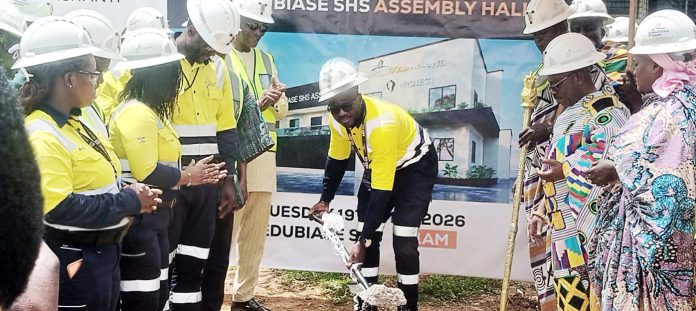
Edmund Oduro Agyei (middle) breaking the ground for commencement of the project
A ground breaking ceremony has taken place for the construction of a Multi-Purpose Assembly Hall for the New Edubiase Senior High School (SHS) in the Adansi South District of Ashanti region.
Stakeholders and students in a group picture
The 1,500 capacity Assembly Hall is being financed by AngloGold Ashanti (AGA) Obuasi Mine, at a cost of GHC13,151,236.00.
A local contractor, AA Engineering and Construction is building the facility and it is to be completed in 17 months’ time.
The Assembly Hall, when completed, will comprise an18-Seater Conference room for meetings and planning sessions, 24-Seater Staff Common Room and a Headmaster’s and Assistant Headmaster’s suites.
The facility is also expected to enhance the school’s capacity to host examinations and large gatherings. Mr. Edmund Oduro Agyei, Director Sustainability Management of AGA noted that provision of infrastructure for schools was part of the Company’s 10-Year Socio-Economic Development Plan, hence the construction of the monumental edifice for the New Edubiase SHS.
He called for support towards the continuous existence of the mine to enable the company to continue to give the needed support to the people in its catchment areas.
An Artist’s impression of the new Assembly hall
The Edubiasehene, Guahyia Oduro Panin Birikorang, expressed delight that at long last Edubiase SHS was going to benefit from the use of such magnificent structure, and on behalf of the school and the Edubiase community thanked AGA for the support.
The Adansi South DCE, Oheneba Kobena Andoh, also thanked Edubiasehene for championing the construction of the facility and wished the Contractor a happy stay to complete the project on schedule.