Former Local Government Minister, Prof Kwamena Ahwoi, has charged the media to play a frontline role in strengthening Ghana’s decentralisation and local governance system by shifting greater attention to Metropolitan, Municipal and District Assemblies (MMDAs).
According to him, the success of Ghana’s decentralisation agenda would largely depend on how effectively the media educates citizens, scrutinises local governance institutions and promotes accountability at the grassroots level.
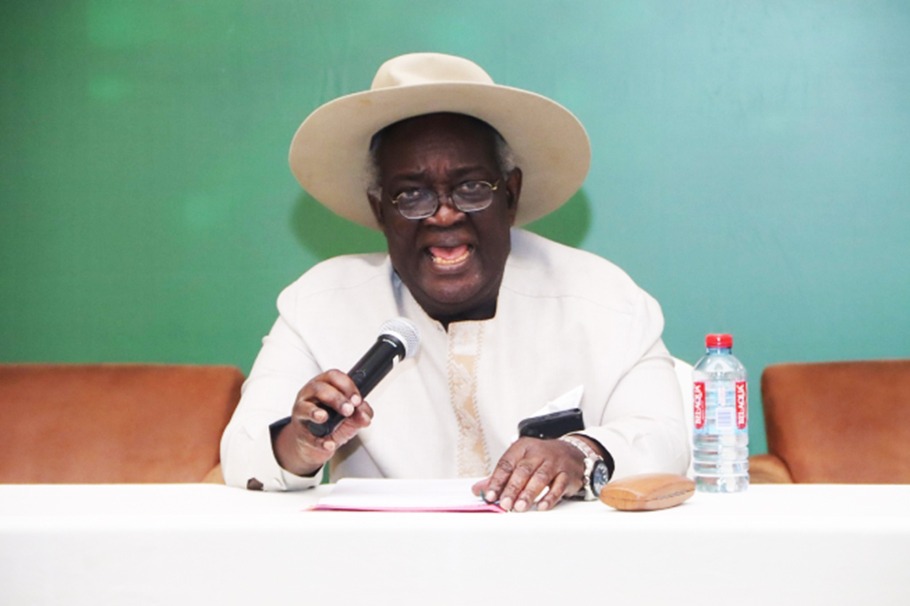
Prof. Ahwoi made the call at a media engagement organised by the Inter-Ministerial Coordinating Committee on Decentralisation (IMCCoD) Secretariat, under the theme: “Advocating Ghana’s Decentralisation Agenda: The Role of the Media in Promoting Decentralisation and Accountability.”
The engagement focused on Ghana’s proposed new National Decentralisation Policy and Strategic Framework (NDPS) 2026-2030, expected to guide the next phase of local governance reforms in the country. Addressing journalists and stakeholders, Prof. Ahwoi argued that the media’s concentration on national political actors often weakens accountability within local governance structures.
“We hear our colleagues in the media are very interested in what takes place at the national level, even if it is a local issue. We want to hear from the minister, we want to hear from the Mayor of Accra, but we fail to put the spotlight on the people at the local level, who actually implement the policies,” he observed.He explained that Ghana’s decentralisation laws deliberately confer substantial powers on local government institutions and officials, making them the appropriate centres of implementation and accountability.
According to him, central government institutions are primarily responsible for policy formulation, monitoring and evaluation, while the actual execution of development programmes takes place at the district level.“If you do not go to the local level to interview the people and put them on the spot, but rather continue putting pressure only on policy formulators in Accra, then we are losing something important,” he stressed.
Prof. Ahwoi, therefore, urged journalists to intensify coverage of local assemblies, decentralised departments and district chief executives in order to deepen democratic governance and improve service delivery.
Earlier, Executive Secretary of the IMCCoD, Dr. Gameli Dominic Hoedoafia, described the media as a “formidable partner” in advancing Ghana’s decentralisation reforms.
He said the committee had over the years institutionalised collaboration with the media to strengthen public communication and awareness on local governance issues.
According to him, the IMCCoD had previously sponsored the Best Journalist award winner to the United Kingdom and also created a decentralisation category within the Ghana Journalists Association awards scheme, as part of efforts to encourage sustained media interest in local governance.
Mr. Hoedoafia noted that the current media engagement comes at a critical moment as government prepares to unveil the National Decentralisation Policy and Strategic Framework 2026-2030.
He described the framework as a transformative blueprint aimed at deepening democratic decentralisation, strengthening accountable public sector service delivery, accelerating local innovation and empowering communities.“Strong local governance structures are the very foundation of inclusive development, democratic participation and resilient communities,” he stated.
He further stressed that accountability within decentralisation was both a constitutional and ethical obligation, particularly through what he described as “diagonal accountability” involving the media and civil society organisations. “The media occupies a very strategic position in our governance ecosystem. It serves as the bridge between government and citizens, reinforcing accountability and enabling informed public dialogue,” he noted.
Dr. Hoedoafia called on journalists to help promote public awareness on the functions of MMDAs, local participation mechanisms, fiscal decentralisation and citizens’ responsibilities in governance. He maintained that decentralisation reforms would only succeed if citizens understood, owned and actively participated in the process through effective civic engagement and public communication.
The IMCCoD engagement also brought together experts in decentralisation and local governance to deliver technical presentations aimed at strengthening media understanding of Ghana’s evolving decentralisation framework and accountability systems.
For more news, join The Chronicle Newspaper channel on WhatsApp: https://whatsapp.com/channel/0029VbBSs55E50UqNPvSOm2z