Home Blog Page 689

I don’t enjoy being an artiste -Amerado

0
Ghanaian rapper Amerado

Ghanaian rapper Amerado has revealed that he doesn’t truly enjoy being an artiste, explaining that he entered the music industry out of a need for survival rather than passion.

Speaking to DJ Slim on Daybreak Hitz, Amerado opened up about the struggles that come with being in the limelight.

“The main reason I got into music was to survive—I just wanted to eat,” he admitted. “Most of the time, I don’t even enjoy being an artiste.”

He pointed to the many restrictions that come with the profession as a key reason for his lack of enthusiasm. One of the biggest challenges, he said, is the constant pressure to give money to fans in public settings, especially while stuck in traffic.

“I feel restricted,” he said. “Whenever you’re in public, especially in traffic, you’re expected to hand out money to fans.”

Despite the drawbacks, Amerado shared that performing on stage remains one of the few moments he truly enjoys his career, as it allows him to connect with fans and feel the impact of his work.

“The maintenance no be easy,” he added, stressing the demands and expectations that come with life as a musician.

When asked what other path he might have taken if not music, Amerado revealed that he would have pursued a career in football.

Credit: myjoyonline.com

Musk criticises Trump’s tax bill as ‘disgusting abomination’

0
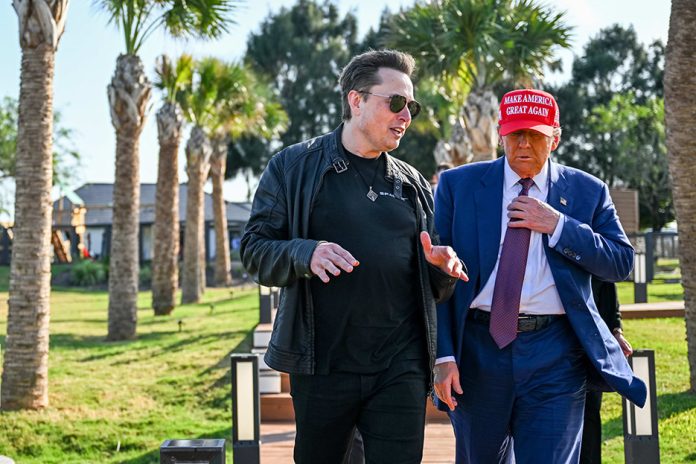
Elon Musk and Trump in good times

Elon Musk has hit out at President Donald Trump’s signature tax and spending bill, describing it as a “disgusting abomination”, in a widening rift between the two.

The tech billionaire posted on X that the bill would add to the US budget deficit and saddle Americans with “crushing” debt.

The budget, which includes huge tax breaks and more defence spending, was passed by the House of Representatives last month and is now being considered by senators.

“Shame on those who voted for it,” said Musk, hinting that he may try to unseat the politicians responsible at next year’s midterm elections.

The bill has the backing of President Donald Trump and would be the legislative linchpin of his second-term agenda if it passes Congress.

Musk left the administration abruptly last week after 129 days working to cut costs with his team, known as Doge.

The comments mark his first public disagreement with Trump since leaving government, after having previously called the plan “disappointing”.

The South African-born tech billionaire’s time in the Trump administration came to an end on 31 May, although Trump said that “he will, always, be with us, helping all the way”.

In its current form, the bill – which Trump refers to as the “big beautiful bill” – has been estimated to increase the budget deficit – the difference between what the government spends and the revenue it receives – by about $600bn (£444bn) in the next fiscal year.

In a series of posts on X on Tuesday, Musk said that the “outrageous, pork-filled” spending bill will “massively increase the already gigantic budget deficit to $2.5 trillion (!!!) and burden America [sic] citizens with crushingly unsustainable debt”.

In American politics “pork” refers to spending on projects in lawmakers’ constituencies.

Musk has previously vowed to fund campaign challenges against any Republican that votes against Trump’s agenda. But on Tuesday he fired a warning to those who backed the bill.

“In November next year, we fire all politicians who betrayed the American people,” he wrote.

Credit: bbc.com

Cologne evacuates 20,000 people after three World War II bombs discovered

0
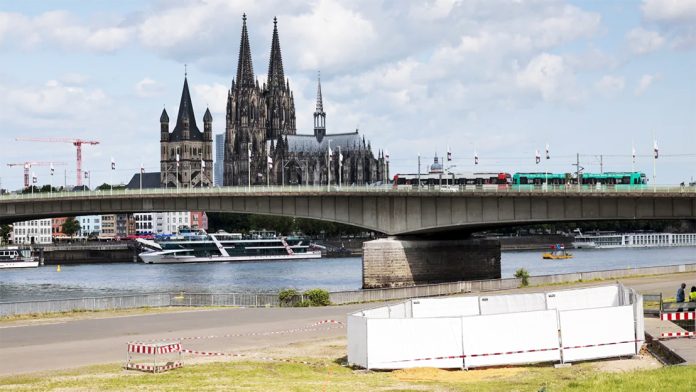
Thousands are being evacuated from central Cologne

The German city of Cologne is moving 20,500 people in its largest evacuation since World War II, after officials discovered three massive, unexploded bombs.

The American bombs – two 20-ton weapons and another that weighs 10 tons – were found in a shipyard on Monday, the city said, causing a huge “danger zone” to be sealed off on Wednesday morning.

A hospital, two retirement centers and the city’s second largest train station were among the facilities emptied out. Schools, churches, museums and two of the city’s cultural landmarks – the Musical Dome theater and the Philharmonic Hall – also fell within the evacuation zone.

The discovery of unexploded weapons is a frequent phenomenon in Cologne, which was decimated by Allied bombing during World War II, but no operation of this size has been carried out since the end of the war, the city said.

The city told residents to “stay calm (and) prepare yourselves” for the evacuation, recommending they visit friends or family and avoid workplaces in the sealed-off area.

Officials said they “cannot make any reliable predictions” about how long the operation will take, adding that specialists cannot begin to defuse the bombs until the entire area has been evacuated.

Credit: cnn.com

South Korea’s new president has a Trump-shaped crisis to avert

0
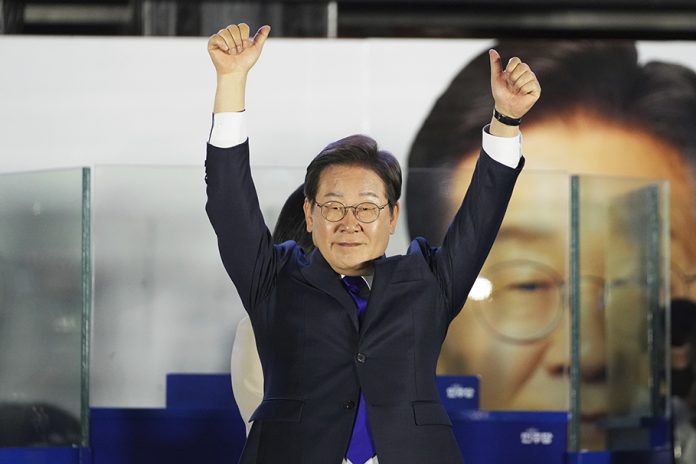
South Korea new president, Lee Jae-myung

South Korea’s new president, Lee Jae-myung, has secured a storming victory, but his honeymoon will barely last the day.

The former opposition leader is not getting to enjoy the two-month transition period usually afforded to new leaders, so they can build their team and nail down their vision for the country.

Instead he is entering office immediately, to fill the hole left by the impeachment of the former president, Yoon Suk Yeol, who last December tried and failed to bring the country under martial law.

In electing Lee, with almost 50% of the vote, South Koreans have vehemently rejected the military dictatorship that was almost forced upon them. Lee campaigned on the promise that he would strengthen South Korea’s democracy and unite the country, after a divisive and tumultuous six months.

But that will have to wait. First, he has a Donald Trump shaped crisis to avert. In the coming months, Trump has the power to destabilise South Korea’s economy, its security, and its volatile relationship with North Korea.

South Koreans were dismayed when Trump slapped 25% tariffs on all Korean imports in April, after already hitting the country with aggressive tariffs on its core industries – steel and cars. They had assumed that being longstanding military allies from the days of the Korean War, and having a free-trade agreement with the US, would spare them.

If these tariffs take effect “they could trigger an economic crisis”, a seasoned advisor to Lee’s Democratic Party, Moon Chung-in, said.

Credit: bbc.com

Iran’s supreme leader criticises US proposal for nuclear agreement

0
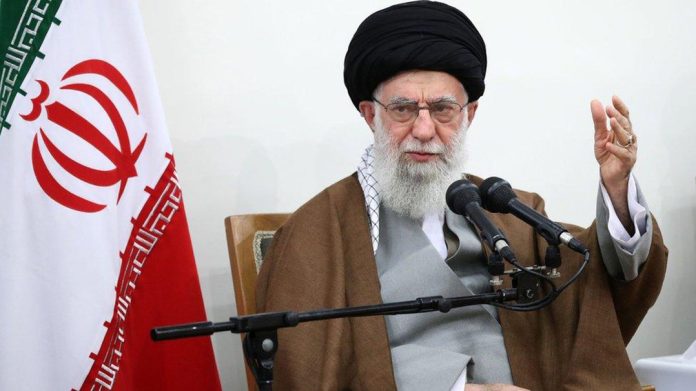
Iran Supreme Leader Ayatollah Ali Khamenei

Iran’s Supreme Leader Ayatollah Ali Khamenei has criticised the US proposal for a new nuclear agreement, reiterating that it will not stop enriching uranium.

Iranian negotiators are set to respond in the coming days to what the White House called a “detailed and acceptable” plan presented at talks last Saturday.

US reports say it proposes that Iran halt all production of enriched uranium – which can be used to make reactor fuel but also nuclear weapons – and instead rely on a regional consortium for supplies.

As supreme leader, Khamenei has final say on the country’s most important issues, including a potential nuclear deal.

In a speech marking the anniversary of the death of the Islamic Republic’s founder, Ayatollah Ruhollah Khomeini, he said that was “100% against the idea of ‘We can'” – a famous slogan of Khomeini.

“Uranium enrichment is the key to our nuclear programme and the enemies have focused on the enrichment,” he added.

“The rude and arrogant leaders of America repeatedly demand that we should not have a nuclear programme. Who are you to decide whether Iran should have enrichment?”

Khamenei was speaking days after US President Donald Trump insisted that Iran would have to halt uranium enrichment.

Trump has warned Iran that it could face US and Israeli military action if the negotiations are not successful.

Iran insists its nuclear activities are entirely peaceful and that it will never seek to develop or acquire nuclear weapons. However, it has increasingly breached restrictions of the existing nuclear deal in retaliation for the sanctions.

Credit: bbc.com

Kwabenya Land Dispute Turns Violent: Pensioner, Contractor Charged with Causing Unlawful Damage

0
Dansoman Circuit Court

A 68-year-old pensioner and a building contractor have been charged with conspiracy and multiple counts of unlawful damage and trespass following a dramatic land dispute in Kwabenya, Greater Accra Region, that led to the demolition of several structures valued in thousands of cedis.

Rosaline Adjeley Ankonum, 68 years, and Godfred Yaw Ntifafa Tsorxe, 44 years, are facing four charges at the Dansoman Circuit Court. A third accused, Peter Nii Ngleshie Addy, is currently at large.

The prosecution, led by Chief Inspector Christopher Wonder told the trial Circuit Court Dansoman that on March 28, 2025, the accused persons, along with unidentified accomplices, entered a contested parcel of land at Kwabenya accompanied by armed men in military-style uniforms and a bulldozer.

They proceeded to destroy a range of property including fence walls, a concrete mixer, a single-room structure, and building materials belonging to multiple individuals.

The property owners, Kofi Agyemang, Managing Director of Paytell Company Ltd and Michael Norman, an Accountant, had acquired and developed portions of the land over the years, after securing a favourable court judgment and land certificate.

Agyemang had initially acquired the land from the Odai Ntow Family of Teshie in 2002 and erected a perimeter wall to ward off encroachers.

However, the Nii Ngleshie Addy family later laid claim to the land, leading to a protracted legal battle which ultimately ended in favor of Agyemang. The land was officially registered under his name.

Despite this, the accused allegedly entered the land with heavy equipment and demolished structures put up by the complainants and other developers.

Rosaline Adjeley Ankonum admitted to the act in her police statement and presented a now-invalidated land certificate in her late father’s name, purportedly issued by the same Ngleshie Addy family.

Investigations revealed that this certificate had been expunged and official documentation recognised Agyemang as the rightful owner.

The prosecution told the court that the damage caused is still being assessed by the Architectural and Engineering Services Limited (AESL).

The accused pleaded not guilty to the charges.

The court, presided over by Her Honour Halimah El-Alawa Abdul-Baasit, remanded the accused into custody to allow police to complete their investigations and arrest the remaining suspects.

The case has been adjourned to June 9, 2025.

Abdul Kadir Nasir wanted over alleged involvement in forex fraud

0
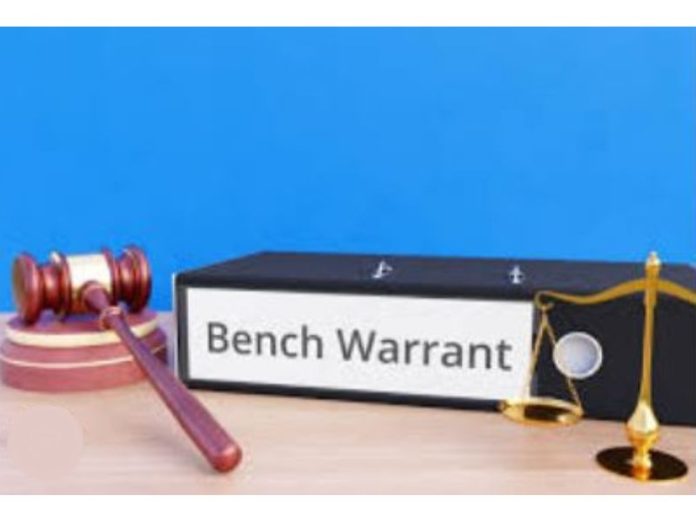
Bench Warrant

The Circuit Court at Dansoman,a suburb of Accra and presided over by Her Honour Halimah El-Alawa Abdul-Baasit has issued a bench warrant for the arrest of Abdul Kadir Nasir after he failed to appear in court despite receiving a hearing notice.

The warrant was issued following a request by Chief Inspector Christopher Wonder, after Nasir failed to honour court summons on two separate occasions – May 12 and June 2, 2025.

The court has adjourned the case to June 25, 2025 instructing the police to arrest the accused and present him in court on the next hearing date.

The case involves several complainants, all foreign exchange traders at Tudu in Accra, who allege that on March 8, 2025 Abdul Kadir Nasir, claiming to be a businessman with clients in need of both local and foreign currency, approached them individually.

Based on this representation, the traders entrusted him with substantial sums of money in both Ghana cedis and US dollars.

According to Detective Chief Inspector Bashiru Salifu Zibo, who is leading the investigation, the accused received the following amounts: US$5,200 from Mohammed Osman, US$500 from Abdul Rahman Seidu, and GH¢50,000 from Musah Zibo.

He also took GH¢65,000 from Safiyan Iddriss, GH¢110,000 from Jibril Adams, GH¢25,000 from Sumana Munkaila and GH¢15,000 from Bilyamin Abdul Rahman

However, after collecting the funds, Nasir allegedly vanished. When later confronted by the complainants, he claimed the money had been transferred to his mobile money account but was subsequently lost to an unknown Nigerian, through online sports betting.

So far, only GH¢10,000 has been recovered and handed over to the police during the investigation.

Nasir is facing multiple counts of fraudulent breach of trust, contrary to Section 128 of the Criminal Offences Act, 1960 (Act 29). Each charge corresponds to the specific sums allegedly misappropriated from the individual complainants.

The prosecution asserts that Nasir dishonestly appropriated the funds entrusted to him under the guise of facilitating currency exchange transactions.

The bench warrant aims to ensure the presence of the accused at trial and to facilitate the continuation of the judicial process.

Further proceedings are scheduled for June 25, 2025.

Singaporean Businessman remanded for allegedly defrauding Chinese Investor of $3M in Ghana

0
Remanded

A Singaporean national, Toh You Kang, has been remanded into custody by the Dansoman Circuit Court for allegedly defrauding a Chinese Investor of US$3 million under the pretence of establishing a cable business in Ghana.

Toh You Kang, 33, has been formally charged with defrauding by false pretences, contrary to Section 131(1) of the Criminal Offences Act, 1960 (Act 29) but pleaded not guilty.

The case, presided over by Her Honour Halimah El-Alawa Abdul-Baasit, saw the accused remanded pending further investigations.

The court also directed that the investigations be expedited due to the large sum involved and cross-border implications.

The matter has since been referred to the Attorney General’s Office for advice, as the amount involved exceeds the prosecutorial jurisdiction of the Ghana Police Service.

According to Chief Inspector Christopher Wonder and Chief Inspector Kwadwo Aboagye, who presented the preliminary facts to the court, the accused allegedly used a Ghanaian national, Emmanuel Nii Ashie-Moore, as bait to convince the Chinese Investor of his credibility.

Between May and August 2024, the accused reportedly introduced himself to Ashie-Moore as an expert in the cable market and proposed a joint business venture in Ghana. Trusting this representation, Ashie-Moore approached a Chinese investor who agreed to finance the venture.

The Investor then transferred $3 million USD into an account controlled by Toh You Kang, with the understanding that the funds would be used by Ashie-Moore for setting up the business.

However, investigations revealed that Toh absconded with the funds and falsely claimed to the investor that the money had been handed over to Ashie-Moore.

Toh was subsequently arrested on May 28, 2025, upon arrival at the Kotoka International Airport by the Accra Regional CID. During interrogation, the accused admitted receiving the funds but claimed they were not intended for Ashie-Moore.

The case is expected to resume on June 11, after advice from the Attorney General’s Office is received and investigations are concluded.

Heat Exhaustion: Causes, Symptoms & Prevention

0

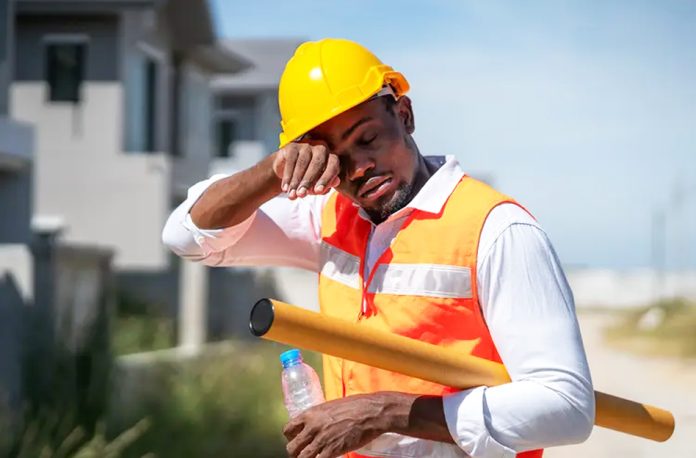
Heat exhaustion is an illness that can happen when your body gets too hot and can’t cool itself. It’s a response to losing too much water and salt, usually because of too much sweating. It can happen when you work or exercise outside on a hot, humid day or spend too much time in a very hot environment, such as a home or factory without air conditioning during a heat wave.

Heat exhaustion is one of three major heat-related illnesses. The other two are heat cramps, which are less serious, and heat stroke, which is the most serious.

Because these conditions can progress from one to another, they are sometimes described as the three stages of heat illness.

Heat Exhaustion vs. Heat Stroke

Heat exhaustion and heat stroke are different conditions, but they are related. If you have symptoms of heat exhaustion and don’t take quick steps to cool your body down, you can develop heat stroke.

Heat stroke is a very serious, potentially deadly condition that, unlike heat exhaustion, can permanently damage your brain and other vital organs. When you see symptoms of heat stroke, it’s an emergency and you should call 911.

Some symptoms that could point to heat stroke, rather than heat exhaustion, include:

  • Body temperature at or above 104 F.
  • Confusion, agitation, or aggression
  • Hallucinations
  • Slurred speech
  • Fainting
  • Not being able to sweat

Is sunstroke the same thing as a heat stroke?

Yes, sunstroke is a name some people use for heat stroke.

Heat Exhaustion Symptoms

Heat exhaustion symptoms may start rapidly or come on slowly, with signs of milder heat illness showing up first. You might get a red heat rash or painful heat cramps, often in your arms and legs.

Once heat exhaustion sets in, symptoms can include:

  • A body temperature over 100 F (though it’s possible to have heat exhaustion with a normal temperature)
  • Dizziness or faintness
  • Cool, moist skin with goosebumps
  • Blurred vision
  • Fatigue
  • Headache
  • Nausea and vomiting
  • Heavy sweating
  • Rapid heartbeat
  • Rapid shallow breathing
  • Swollen ankles, feet, or hands (heat edema)
  • A drop in blood pressure when you stand

Symptoms of heat exhaustion in babies

Babies and young children are at especially high risk of heat illnesses, such as heat exhaustion and heat stroke. That’s because they sweat less, making it harder for them to cool off.  But they might not be able to tell you how they are feeling. And they may show no clear early signs, other than seeming fussy and unwell.

But signs of heat exhaustion in a baby might include:

  • Paler skin than usual — which might be most noticeable on the palms of hands, nails, eyes, gums, or tongue
  • Cooler than usual skin
  • Increased thirst and other signs of dehydration, such as peeing or crying less
  • A rise in body temperature

What Causes Heat Exhaustion?

Usually, you can count on your sweat to act as your body’s air conditioner: As your sweat dries, it carries heat away from your skin. But when the air is hot and moist, sweat is slower to evaporate and your body struggles to stay cool, especially when you’re active. The more you sweat, the more you deplete your body’s fluids and essential minerals (electrolytes), such as sodium and potassium. Those losses of water and minerals cause the main symptoms of heat exhaustion.

Heat exhaustion is strongly related to the heat index, which is a measurement of how hot you feel when the effects of relative humidity and air temperature are combined.

The risk of heat-related illness dramatically increases when the heat index climbs to 90 degrees or more. So it’s important, especially during heat waves, to pay attention to the reported heat index and remember that the heat index is even higher when you are in full sunshine.

Treatment for Heat Exhaustion

If you have symptoms of heat exhaustion, it’s essential to immediately get out of the heat and rest, ideally in an air-conditioned room. If you can’t get inside, try to find the nearest cool and shady place.

  • Drink water or sports drinks (avoid caffeine and alcohol) — taking small sips rather than big guzzles over about an hour
  • Remove any tight or unnecessary clothing
  • Take a cool shower, bath, or sponge bath
  • Apply other cooling measures such as fans or ice towels

If you don’t feel better within an hour, seek medical help, because untreated heat exhaustion can progress to heat stroke. If your temperature rises or your symptoms get worse, don’t wait — call 911 or go to an emergency room.

If you are showing signs of heat stroke, you may be put in an ice bath or cooling blanket or, if those aren’t available, misted with cool water. You might also get medication to help you stop shivering.

How long does it take to recover from heat exhaustion?

Heat exhaustion usually goes away with rest and fluids. You should feel better within an hour.

Still, you’ll probably be more sensitive to high temperatures during the following week. So, it’s best to avoid hot weather and heavy exercise until your doctor tells you that it’s safe to resume your normal activities.

Credit: webmd

Feature: The case for Ghana’s new energy sector levy

0
Fuel

On 3rd June 2025, Parliament passed the Energy Sector Levy (Amendment) Bill, introducing a GHS1 increase in the levy on petroleum products. The objective is to raise an additional GHS5.7 billion to support the energy sector—specifically to reduce the country’s growing energy debt and ensure a stable power supply.

According to Finance Minister Dr. Cassiel Ato Forson, Ghana’s energy sector debt currently stands at $3.1 billion, and approximately $3.7 billion is required to clear all arrears. Although the decision to impose a new levy may seem unpopular, it is in fact both justified and timely, given Ghana’s economic conditions and the structural challenges facing the sector.

Ghana’s energy sector debt is not a new problem. It has accumulated over the years due to a mix of policy missteps, poor financial management, and external shocks. For long periods, electricity tariffs were set below cost-recovery levels, leading to persistent revenue shortfalls. The Electricity Company of Ghana (ECG), Volta River Authority (VRA), and other state institutions have struggled to cover operational costs, let alone meet obligations to independent power producers (IPPs).

The problem worsened in the aftermath of the 2012–2016 power crisis. In a bid to address the energy shortfall, the government entered into long-term contracts with several IPPs. Many of these agreements included “take-or-pay” clauses, which require ECG to pay for power capacity whether or not it is utilized. While this helped to restore power supply in the short term, it created long-term financial burdens that persist today.

Other structural weaknesses further deepened the sector’s debt profile. These include high transmission and distribution losses, non-payment by public institutions, weak revenue collection, and the volatility of the Ghana cedi. Since most of Ghana’s power sector contracts are denominated in U.S. dollars, any depreciation of the cedi significantly increases the cost of servicing energy-related obligations.

In recent years, the government has taken steps to address the crisis. The Energy Sector Recovery Programme (ESRP) was introduced to improve efficiency, transparency, and financial viability. The Cash Waterfall Mechanism was also rolled out to ensure fair and transparent distribution of revenues across the sector. Despite these reforms, the financial hole remains deep—and progress has been constrained by the lack of sufficient revenue to clear legacy debts.

It is within this context that the new energy levy must be understood. It is not an arbitrary tax; it is a strategic policy tool designed to tackle a systemic crisis. More importantly, the timing is right. In the past month, the Ghana cedi has appreciated significantly, by over 30% against the U.S. dollar. This has already led to a reduction in fuel prices and provided some relief to consumers. Introducing the levy now, when fuel prices are relatively low, allows for a smoother adjustment with less direct impact on the public.

Moreover, a stronger cedi means the government can get more value out of every cedi collected through the levy when repaying dollar-denominated debts. It also helps prevent future energy crises. IPPs have already signaled frustration over delayed payments. Without intervention, some may reduce power supply or pull out altogether—threatening the reliability of Ghana’s power system and damaging investor confidence in the sector.

Beyond the technical rationale, there is also a broader issue of equity and sustainability. Ghana cannot continue to rely on external financing and emergency bailouts to fix its energy problems. These debts eventually fall back on the taxpayer, either through budget reallocations, cuts in social spending, or inflationary pressures. By introducing a modest GHS1 levy, the government is asking citizens to contribute to a solution—a small sacrifice today to avoid a bigger crisis tomorrow.

Understandably, many Ghanaians are frustrated by the rising cost of living and weary of new levies. But this energy levy is not being introduced in a vacuum. It comes at a time when global oil prices are stable, the cedi is strong, and the space exists to take corrective action. It is a bold but necessary step—one that reflects fiscal responsibility, policy foresight, and a commitment to long-term energy security.

In conclusion, while no new tax is ever welcomed with open arms, the Energy Sector Levy (Amendment) Bill, 2025 is a measured and justified response to a longstanding structural crisis. It reflects the reality that Ghana’s energy future cannot be built on debt and arrears. Rather, it must be financed through a shared national commitment to sustainability and reform. The time to act is now—while we still have the room to do so.

By Prof. Fred Dzanku, ISSER

Source: myjoyonline.com

The Ghanaian Chronicle