Home Blog Page 62

Everton fan arrested for alleged Semenyo racist abuse

0
Antoine Semenyo

Merseyside Police arrested an Everton fan during his side’s match against Manchester City for alleged racist abuse towards Antoine Semenyo.

The supporter was apprehended at the Premier League fixture between the sides at the Hill Dickinson Stadium on Monday, which finished 3-3.

Police said a 71-year-old man from Nottinghamshire was arrested “on suspicion of a racially aggravated public order offence” after “supporters and stewards reported that racist abuse was shouted by a fan”.

“An investigation into the incident during the match remains ongoing and we continue to work closely with Everton FC,” said a police statement.

“He has now been bailed with conditions, which includes not to go within one mile of any designated sports stadium in a period of up to four hours before kick-off, during the match and up to four hours after the game has ended.”

Everton said in a statement that “behaviour of this nature will not be tolerated”.

“Racism and discrimination in all forms are completely unacceptable. They have no place in our stadia, our sport or in society,” the club said.

It is the second time Ghana international Semenyo, 26, has been the target of racist abuse this season.

While playing for former club Bournemouth in the opening Premier League match of this season, Semenyo reported being racially abused by a spectator during their 4-2 defeat at Liverpool.

Semenyo subsequently said more should be done to tackle racism in football, including possible prison sentences for those convicted of abuse.

Credit: bbc.com

Bayern Munich welcome PSG to the Allianz Arena

0
Harry Kane, Bayern Munich

Eight days on from an extraordinary opening encounter in the French capital, Bayern Munich and Paris Saint-Germain reunite at the Allianz Arena today in the second leg of their colossal Champions League semi-final.

The Bavarians and Parisians played out the highest-scoring UCL semi-final match in history at the Parc des Princes, where PSG held off a late turnaround from Wednesday’s hosts to emerge 5-4 winners.

An epic watch for the neutrals and nerve-wracking viewing for fans of either team, the PSG-Bayern pendulum swung back and forth during last week’s record-breaking first leg, in which defensive diligence was not on the agenda for either team.

Ousmane Dembele, PSG

Indeed, of the 10 previous occasions where Bayern have lost the first leg of a European semi-final, they have been eliminated nine times.

A nine-goal Champions League semi-final does not mean that both teams were bad at defending, in the eyes of current title holder Luis Enrique, who slammed that opinion when reflecting on his side’s narrow, but potentially priceless first-leg victory.

Prevailing by any scoreline in the opening fixture usually means success for Les Parisiens, who have won 36 of their 43 UEFA two-legged ties when triumphing in the first leg, and 14 of their 17 when that victory came by a single goal.

The away-day statistics make for extremely joyful reading for the PSG faithful, though, as the reigning European champions have won each of their last six games on the road in all competitions, while keeping clean sheets in each of their last five.

However, PSG shutting out Bayern on Wednesday would be the shock of all Champions League shocks at the Allianz Arena.

Both sides are also just a few strikes away from breaking Barcelona’s single-season record of 45 goals in the 1999-00 Champions League – PSG have netted 43 times and Bayern 42 – and either Arsenal or Atletico Madrid could have their work cut out in Budapest against Wednesday’s winner.

Bayern have no new injury concerns to worry about for the second leg, and Kompany is also hopeful that teenage sensation Lennart Karl will make a full recovery from a torn thigh muscle in time to be involved.

In contrast, PSG suffered a serious fitness blow in last week’s nine-goal spectacular, as flying full-back Achraf Hakimi pulled up with a hamstring injury, which will sideline him for a few weeks.

All of the evidence points towards another goal-laden affair between two worthy European champions, but the absence of Hakimi – the best defender in the world in the eyes of some – could prove devastating in an attacking and defensive sense for PSG.

Bayern have scored four goals in five of their last seven home games, and we back Kompany’s troops to put on another four-midable display, crush PSG’s dreams of successive Champions League titles, and advance to the final at the end of a 15-goal extravaganza.

Credit: sportsmole.co.uk


KsTU Students build Ghana’s First Self-Charging Electric Car from Dustbins and Plywood

0

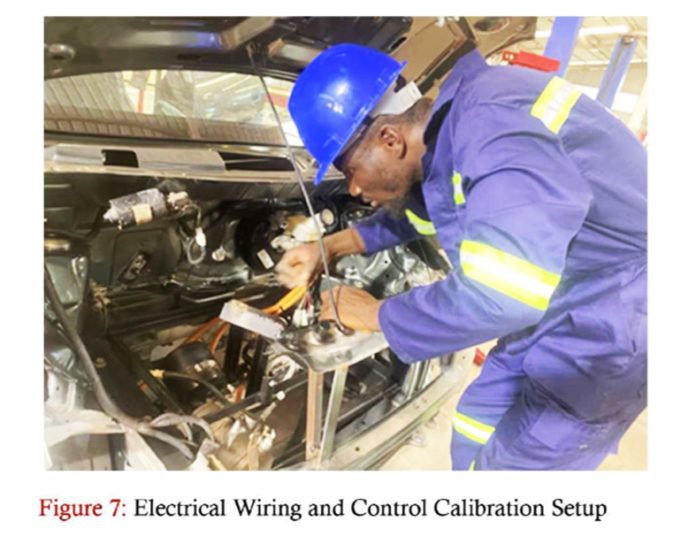
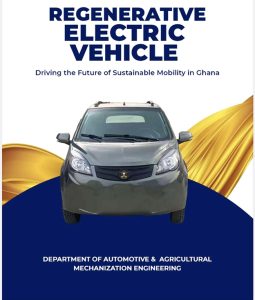
Three final-year engineering students at Kumasi Technical University (KsTU) have achieved a milestone by building Ghana’s first electric vehicle with self-charging capabilities. Dubbed the Nimdea Hyren REV—drawing from the Akan phrase “Knowledge Shines”—this prototype generates power on the move, extending its range and addressing a core barrier to EV adoption in Ghana.

Led by Boaneges Safo Nyansaba Jnr., with Jacob Gyan and Nathaniel Bamfo, the team worked under Prof. Ing. Prince Owusu-Ansah, Head of KsTU’s Automotive and Agricultural Mechanization Engineering Department, built mostly from local scrap, the car travels about 150 km per charge.

In a nation where innovative ideas often stall on paper, this one drives and rigorous performance tests prove its real-world viability.

Nyansaba Jnr and Prof. Owusu-Ansah shared insights in interviews with The Chronicle, detailing the physics, build challenges and the innovation’s precarious future.

Ghana’s EV hesitation stems from sparse charging infrastructure and “range anxiety”, the dread of a dead battery mid-journey. Unlike petrol vehicles refuelable anywhere, EVs demand outlets, which are rare outside urban hubs.

“The fear of stranding discourages even eco-conscious drivers,” Nyansaba Jnr explained. Anticipating global EV dominance, the team targeted this pain point: a vehicle that recaptures energy during deceleration, mimicking nature’s efficiency.

The Science of Self-Charging

The innovation hinges on regenerative braking, a proven technology in premium EVs like Teslas, but ingeniously adapted here. When decelerating, kinetic energy normally lost as brake heat, is converted to electricity.

The Nimdea Hyren REV employs dual mechanisms, Braking regeneration, Pressing the brake reverses the electric motor into a generator, feeding power back to the lithium-ion battery pack.

Coasting regeneration: Easing off the throttle triggers motor drag, harvesting energy from momentum alone.
This enables one-pedal driving: accelerate with the pedal, release to brake and recharge. In Kumasi or Accra’s stop-go traffic, frequent decelerations yield significant top-ups, potentially 10-20% range extension in urban cycles, per team estimates.

A custom Battery Management System (BMS) safeguards operations, monitoring voltage, temperature, and charge flow to prevent overvoltage or thermal runaway.

The monocoque body, where the plywood-and-plastic shell doubles as chassis slashes weight, boosting efficiency.

Performance Testing Validates Design

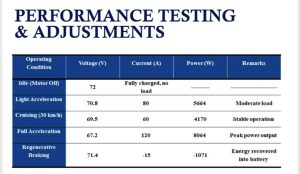
Real-world tests confirm the REV’s engineering prowess. Under controlled conditions, the 72V system delivered stable outputs across operating modes.

These metrics highlight efficiency: cruising sips 4.2 kW at 30 km/h, while regen braking actively recovers 1 kW—directly feeding the battery. Voltage dips under load (to 67.2V at peak), but rebounds during recovery (71.4V), proving the BMS’s smarts. Adjustments post-testing refined motor control for smoother coasting regen.

Grit Amid Setbacks

Construction was gruelling. An initial steel frame drained the battery too fast. “The chassis weight killed our range,” Nyansaba Jnr said.

They scrapped it for a lightweight plywood unibody, delaying timelines, but enabling the tested performance.

The monocoque body, where the plywood-and-plastic shell doubles as chassis slashes weight, boosting efficiency.Prof. Owusu-Ansah acknowledge that further work is required before commercialisation, including regulatory certification, durability testing and potential upgrades to battery technology.

Policy, Funding and the Future of Innovation

Prof. Owusu-Ansah used the project to highlight broader systemic challenges in Ghana’s innovation ecosystem, particularly limited funding and weak industrial support for student-led engineering projects.

“We have the ideas, but many remain on the shelves due to lack of support. If there is deliberate investment in technical education and innovation, projects like this can transform into industries,” he argued.

The team is currently seeking partnerships with both government and private sector actors to scale the project, with plans to develop larger vehicle models such as pickups or SUVs in future iterations.

A Test Case for Ghana’s Industrial Ambition

The Nimdea Hyren REV is more than a student project; it is a test case for whether Ghana’s technical institutions can translate academic knowledge into industrially relevant technology.

Its success — or stagnation — will depend less on engineering feasibility, which has been demonstrated, and more on whether the country’s policy and investment environment can support its transition from workshop innovation to commercial product.


For more news, join The Chronicle Newspaper channel on WhatsApp: https://whatsapp.com/channel/0029VbBSs55E50UqNPvSOm2z

Otumfuo Charges GPHA Board: Complete Boankra Project!  …To Avoid Waste Of Public Funds

0
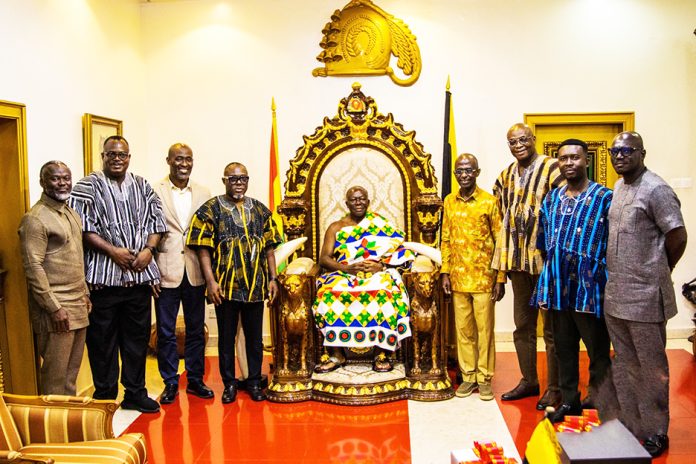
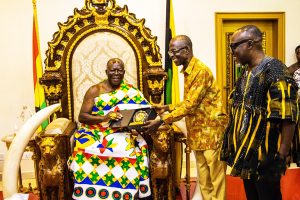
The GPHA Board in a pose with Otumfuo

Otumfuo Osei Tutu II, the Asantehene, says to avert massive waste of public funds the Mahama government must do everything possible to ensure completion of the Boankra Integrated Logistics Terminal (Boankra Inland Port).

According to him, neglect of the project that has been on the drawing board for years could result in a breakdown of investor trust in Ghana’s infrastructure capabilities.

General Mosquito presents a souvenir to the King

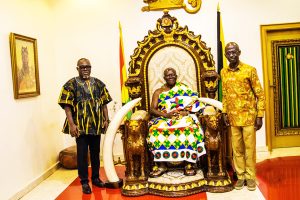
The Ashanti Overlord gave the admonition when a delegation from the Ghana Ports and Harbours Authority (GPHA), led by the Board Chairman, Johnson Asiedu Nketiah, called on him at the Manhyia Palace in Kumasi.

During a high-level meeting at the Manhyia Palace, Otumfuo expressed dissatisfaction with the current pace of work, urging stakeholders, specifically the Shippers Authority and the GPHA, to treat the terminal with renewed urgency.

He noted that in the event of neglect, significant public resources already invested would be squandered.

According to him, Investor confidence would be eroded as serious investors only commit capital when they see “tangible improvement” and “steady construction” on-site.

The King also expressed concern over the Economic Impact of the project, noting that

beyond logistics the port is viewed as a vital engine for youth employment and a catalyst for both local and foreign direct investment.

“Attracting serious investors depend largely on visible progress on site… without consistent funding and tangible improvement, it would be difficult to convince partners to inject fresh capital,” Otumfuo Osei Tutu II emphasised.

Otumfuo flanked by GPHA Board Chair Asiedu Nketia (right) and Ghana Shippers Authority CEO Prof. Gyampo (left)

Responding to the Asantehene’s concerns, Johnson Asiedu Nketia assured the King that the GPHA Board is proactive and has observed recent improvements in construction activity.

He said the Board will first focus on the main terminal facilities and outlined a strategic shift in the project’s execution by prioritising core infrastructure to ensure the port becomes operational as soon as possible.

Mr. Asiedu Nketia revealed that the railway component, which is vital to the project, requires substantial funding that could delay the entire project if pursued simultaneously.

In the interim, the focus will be on finishing the core port so that cargo will initially be moved by road, while the government continues to seek specific investment for the rail connection.

The Boankra Integrated Logistics Terminal, which remains a cornerstone of Ghana’s economic transformation, is designed to serve as a critical “dry port” near Kumasi, offering several logistical advantages such as relieving the mounting pressure and cargo volumes at the Tema Harbour.

It will also facilitate the efficient transport of goods for faster processing and distribution to the northern parts of Ghana and neighbouring landlocked countries and also reducing cost of overall transport and logistics for businesses operating outside the coastal regions.

Meanwhile, management of Justmoh Construction Limited, the contractor, has assured that with the backing of the government, it will mobilse local expertise to position the project to become a pillar of West African trade, provided the current momentum is sustained.

Editorial: John Mahama’s Stance On The OSP Is Laudable

0
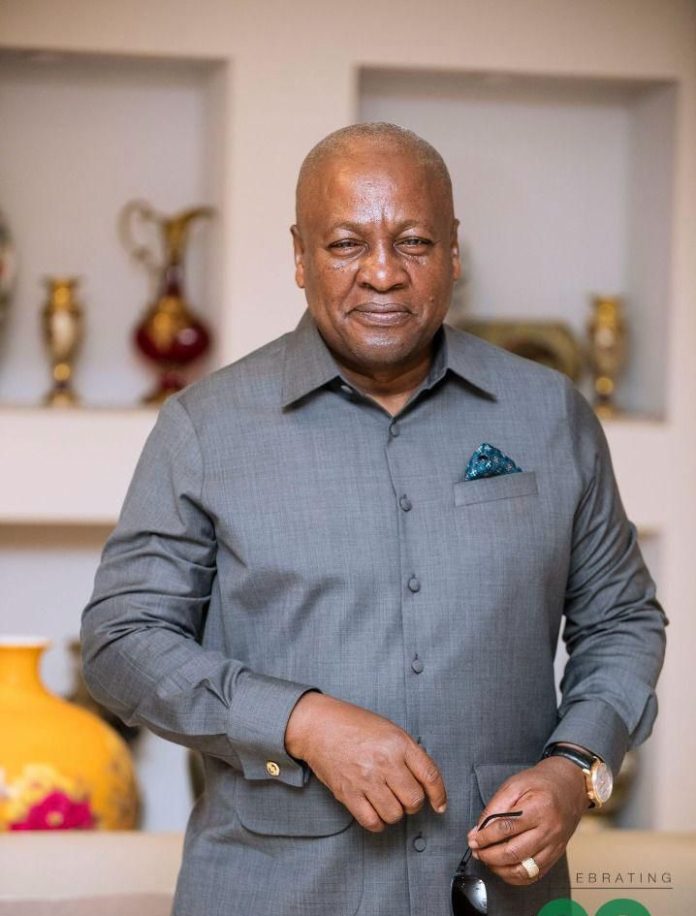
Prez John Dramani Mahama

Ghana’s fight against corruption has always been a test, not just of laws and institutions, but of leadership. In recent weeks, that test has once again come into sharp focus and this time, the signals from the very top are encouraging.

Only a few weeks ago, The Chronicle took a firm and unapologetic stance against attempts by elements within the political class to dismantle the Office of the Special Prosecutor (OSP). We argued then that any move to weaken or abolish the OSP was not only misguided, but deeply troubling, as it struck at the heart of accountability in public life.

Today, we return to the subject but with a different tone. This time, it is to commend President John Dramani Mahama for demonstrating the kind of leadership Ghana needs at this critical moment.

Speaking at the 2026 May Day celebrations in Koforidua, President Mahama made it clear that while legal questions surrounding the OSP’s prosecutorial powers are rightly before the courts, there remains ample room to strengthen the institution. His call for an “effective Office of the Special Prosecutor with special powers of prosecution” is not just a policy position, it is a statement of intent.

It is also a refreshing departure from the troubling posture adopted by some within the political establishment, who have either openly or subtly sought to clip the wings of the very institution designed to hold them accountable.

The President’s intervention must be seen in the context of the ongoing legal tussle over whether the OSP has the authority to independently prosecute corruption-related offences. A recent High Court ruling cast doubt on that authority, asserting that such powers are constitutionally vested in the Attorney-General. The matter now awaits final determination by the Supreme Court and even though the President has no say in the decision by the court, his comments alone is very commendable.

Yet, even as the judiciary performs its constitutional role, the executive has a responsibility to set the tone and President Mahama has done precisely that. By acknowledging the legal process while simultaneously affirming the need to empower the OSP, he has struck the right balance between respect for the rule of law and commitment to institutional effectiveness.

This is what leadership looks like.In mature democracies, anti-corruption bodies are not treated as inconveniences to be discarded when they become uncomfortable. They are strengthened, protected and insulated from political interference. That is because corruption is not a partisan issue but a national crisis. Countries that have made meaningful progress in combating corruption have done so by empowering independent institutions with the authority and autonomy to act without fear or favour.

So why should Ghana be any different?The earlier attempt by the NDC majority in Parliament to abolish the OSP in 2025, an effort that was halted only through presidential intervention, remains a stain on our democratic conscience.

It exposed a worrying willingness among some politicians to undermine accountability mechanisms for short-term convenience. That episode should not be forgotten, but neither should it define the future.

What matters now is the direction we choose to take.The OSP was established in 2017 precisely because Ghana needed a specialised, independent body to tackle corruption, particularly at the highest levels of public office. Since becoming operational, the office has demonstrated that it can deliver results, recovering significant sums of money, disrupting criminal networks and introducing innovative tools to measure corruption risk across public institutions.

But its effectiveness has always been tied to one critical factor – independence.As Special Prosecutor Kissi Agyebeng rightly observed, an anti-corruption institution that depends on the goodwill of politicians for its survival is inherently vulnerable. That vulnerability is not theoretical, it has been borne out by history, from the resignation of the first Special Prosecutor, Martin Amidu, to the persistent political pressure faced by his successor.

This is why President Mahama’s latest comments are so significant. They signal a recognition that the OSP must not only exist, but must be empowered to function fully. Anything less would render it ineffective and a watchdog in name only.

Of course, support for the OSP must go beyond rhetoric. It must translate into concrete legal and constitutional reforms that clearly define and protect its prosecutorial authority. The ongoing constitutional review process presents a unique opportunity to do just that. Ghana cannot afford ambiguity in a matter as critical as the fight against corruption.

At the same time, it must be emphasised that no institution is above scrutiny. The OSP itself must remain transparent, accountable, and open to independent evaluation. Its credibility will ultimately depend not just on the powers it wields, but on how responsibly and effectively it uses them.Still, the broader principle is non-negotiable: Ghana needs a strong, independent anti-corruption body.

The cost of corruption to this country is simply too high to ignore. Billions of dollars are lost annually, resources that could otherwise be invested in healthcare, education, infrastructure, and job creation. The ordinary Ghanaian bears the brunt of this loss, while a privileged few benefit from systemic weaknesses. This is why the fight against corruption cannot be left to institutions alone. It requires political will and that is where leadership matters most.

President Mahama has, in this instance, shown that leadership. By publicly backing the strengthening of the OSP, he has aligned himself with the aspirations of millions of Ghanaians who want a country where accountability is not selective and justice is not negotiable.

The challenge now is for others within government, Parliament, and civil society—to rise to the occasion. Ghana stands at a crossroads. One path leads to weakened institutions, entrenched corruption, and declining public trust. The other leads to stronger systems, greater accountability, and a more just society.

The choice should not be difficult.

ECG Deploys High-Capacity Transformers To Strengthen Kumasi Power Supply

0
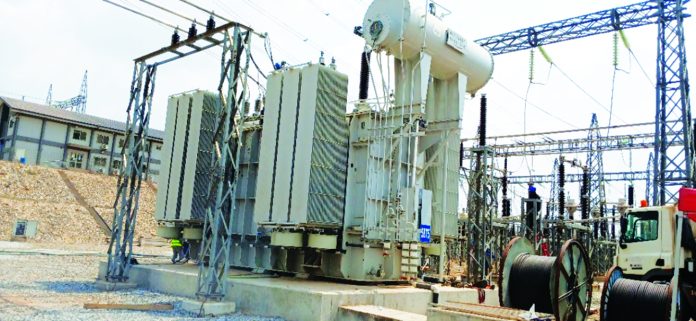
ECG transformers

‎The Electricity Company of Ghana (ECG) has commenced the installation of two high-capacity power transformers at the Ridge Bulk Supply Point in Kumasi, towards reinforcing supply reliability across the Kumasi metropolis.

‎The project replaces two existing 20/26MVA transformers with upgraded 30/39MVA units to boost station capacity and ease pressure on the network.

‎The upgrade directly addresses recent intermittent outages and voltage fluctuations in parts of Kumasi, said to have been driven by rising demand rather than generation shortfalls.

Teams from Accra and Ashanti Sub-Transmission Divisions are jointly coordinating the installation scheduled to for May 6 and 7, 2026 with energisation planned shortly after, the ECG has indicated.

According to a press statement, Transformer 2 will be replaced and energised on May 6, 2026 while Transformer 1 will also be replaced and energised on May 7, 2026.

To ensure smooth safety operations, ECG will implement controlled outages by temporary shutdown of sections of the 33kV network and managed load distribution on 11kV feeders on May 6 and 7, 2026 between the hours of 9am and 3pm.

‎“Kumasi is expanding, and electricity demand is rising with it. This upgrade ensures our infrastructure keeps pace so customers can enjoy more stable and reliable power,” ‎ECG’s Acting Managing Director has emphasized.

‎According to Site Manager for Substation & Switchgear Maintenance for Ashanti Sub-Transmission, “The existing transformers are under pressure and that complex and urgent as they are these new units give the system breathing room and improve overall stability.”

ECG assured customers that the interruptions are carefully planned and limited in duration.

‎”We understand the inconvenience, but these are necessary steps to deliver a more reliable system,” Collins Manu, Communications Officer of Ashanti Sub-Transmission assured.


For more news, join The Chronicle Newspaper channel on WhatsApp: https://whatsapp.com/channel/0029VbBSs55E50UqNPvSOm2z

GH¢44bn BoG Loss Misleading – Majority

0
Bank of Ghana headoffice

The Majority Caucus in Parliament has strongly defended the Bank of Ghana’s 2025 audited financial statements, rejecting allegations by the Minority that the central bank manipulated its accounts, concealed losses and pursued misguided monetary policies that worsened the country’s economic situation.

In a statement issued on Monday, May 4, 2026 by the MP for Sagnarigu and a Member of the Finance Committee, Atta Issah, the Majority accused the Minority of misinterpreting technical accounting data and central banking practices, warning that such claims risk misleading the public and undermining confidence in critical state institutions.

According to the Majority, the Minority’s assertion that the Bank of Ghana is “policy insolvent” due to its reliance on a GH¢9.6 billion gain from gold sales is fundamentally flawed.

The caucus argued that gains from gold transactions are a legitimate part of reserve management and are standard practice among central banks worldwide.

“The Bank is not speculating in gold, but prudently rebalancing its reserves to ensure liquidity and macroeconomic stability in a challenging environment,” the statement said, adding that non‑recurring income does not make such gains illegitimate.

The Majority also dismissed claims that the Bank rushed to sell half of its gold reserves to hide financial distress, noting that the audited accounts show no evidence of distress sales and that Ghana continues to pursue policies aimed at increasing gold reserves through domestic purchases.

On the widely cited figure of a “true loss” of up to GH¢44 billion, the Majority said the Minority had combined accounting categories that are internationally treated as separate.

It explained that the officially reported loss for 2025 stands at GH¢15.63 billion, as audited, while other comprehensive income largely reflects unrealised, non‑cash valuation changes driven by exchange rate movements and asset price fluctuations.

“These valuation effects are not operating losses and cannot be added to profit or loss under any recognised accounting framework,” the statement said, describing the Minority’s calculations as methodologically flawed and misleading.

Addressing concerns about the Bank’s negative equity position, which rose to about GH¢93 billion, the Majority acknowledged the figure, but stressed that central banks are not commercial entities and can operate effectively with negative equity due to statutory backing and sovereign support.

It attributed the increase to cumulative effects of debt restructuring, exchange rate revaluations, and policy measures taken to stabilise the economy during and after the recent crisis.

The Majority further rejected suggestions that the Bank’s accounts were improperly prepared outside International Financial Reporting Standards (IFRS).

It clarified that the financial statements follow a legally mandated accounting framework under the Bank of Ghana Act, which modifies IFRS treatment for certain monetary policy items.

The Caucus emphasised that the external auditors issued an unmodified opinion, confirming that the statements fairly present the Bank’s financial position within the stated framework.

On monetary policy, the Majority defended the GH¢16.7 billion cost incurred from open market operations in 2025, describing it as the unavoidable cost of disinflation in a high‑interest‑rate environment.

“When inflation is high, sterilising excess liquidity is expensive. That cost is not a policy failure but the price of restoring stability”, the statement noted.

It also challenged claims that the abolition of the dynamic Cash Reserve Ratio and the cedi equivalent reserving requirement led to higher costs, arguing that these regulatory tools are blunt, distortionary and unsuitable for sustained liquidity management during a disinflation phase.

Market‑based instruments, the Caucus said, offer greater precision, transparency, and policy credibility.

Responding to accusations that interest payments to banks amounted to a wealth transfer from the public to private institutions, the Majority maintained that such payments are the normal mechanism through which monetary policy operates, not discretionary handouts.

It added that without aggressive liquidity control, inflation would have remained elevated, eroding purchasing power and worsening economic hardship.

While acknowledging the difficult living conditions facing many Ghanaians, the Majority insisted that macroeconomic stabilisation is a necessary first step toward recovery.

“You cannot have sustainable jobs, affordable credit, and business growth without  first stabilising inflation and the exchange rate,” the statement said, pointing to declining inflation and currency stability as signs that the foundation for recovery is being laid.

The Majority accused the Minority of selective reading and political framing, urging the public to rely on the audited accounts and established economic principles rather than alarmist interpretations.

“The issue here is not transparency. It is interpretation. That interpretation must be grounded in facts, not politics,” the Majority asserted.

By Stephen Larbi

World Bank lauds Mahama’s health policies

0

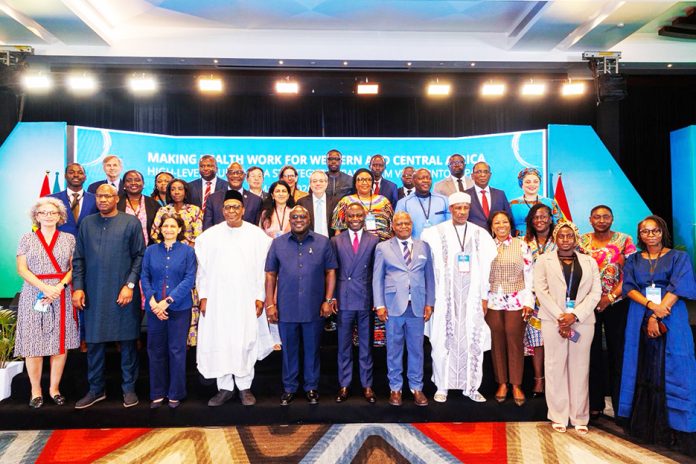
The World Bank has launched its “Fit to Prosper” strategy aimed at strengthening health systems and driving job creation across West and Central Africa, as countries in the region face mounting pressure from rising disease burdens and constrained financing.

The strategy was unveiled at a high-level event in Accra, hosted at the Mövenpick Ambassador Hotel, and attended by ministers of health and finance, development partners and regional stakeholders.

Opening the event, the Minister for Health, Kwabena Mintah Akandoh, described the strategy as timely, noting that the region’s health challenges from communicable diseases and malnutrition to rising non-communicable diseases and climate-related risks—require coordinated and forward-looking solutions. He stressed that no country can build a strong economy on a weak health system and called for sustained investments in accessible, affordable and quality healthcare.

He highlighted key government interventions, including the Free Primary Healthcare initiative and the Ghana Medical Trust Fund (MahamaCares), aimed at reducing financial barriers and strengthening the continuum of care.

Delivering welcome remarks, World Bank Division Director, Robert Taliercio praised Ghana’s leadership in health sector reforms and its role in shaping regional dialogue. He pointed to Ghana’s progress in reducing childhood stunting and improving health outcomes as evidence that sustained investments in health deliver measurable results.

He also commended President John Dramani Mahama’s “Accra Reset” initiative, describing it as a strong signal of political commitment to reshaping global health financing and strengthening African ownership of development priorities.

In remarks delivered on behalf of the Presidency, the Chief of Staff emphasised that health must be seen as a core economic strategy, stressing that a healthy population is essential for productivity, innovation and resilience.

She noted that the World Bank’s regional health portfolio—spanning over 20 countries with billions of dollars in financing—has contributed significantly to improving maternal and child health outcomes and strengthening pandemic preparedness across the region.

The Chief of Staff further highlighted Ghana’s own efforts to strengthen its health system, including reforms to boost domestic financing, the uncapping of the National Health Insurance Levy, and the rollout of the Free Primary Healthcare initiative. She also announced plans to launch a Country Compact with the World Bank to align resources and reforms under a unified national vision.

She underscored the importance of regional cooperation, noting that health security cannot be achieved by countries acting alone, and called for stronger collaboration in disease surveillance, emergency response and local manufacturing of essential health products.

The “Fit to Prosper” strategy seeks to help countries prioritise high-impact health investments within constrained fiscal space, while advancing job creation and economic growth. It aligns with broader efforts to achieve Universal Health Coverage and support local production of essential medicines under the Africa Initiative for Medical Access and Manufacturing.

Participants at the event stressed the need for effective implementation, accountability and sustained commitment to ensure the strategy delivers tangible improvements in people’s lives.


For more news, join The Chronicle Newspaper channel on WhatsApp: https://whatsapp.com/channel/0029VbBSs55E50UqNPvSOm2z

Stanbic Bank Donates 50 Laptops to support KNUST VC’s initiative

0
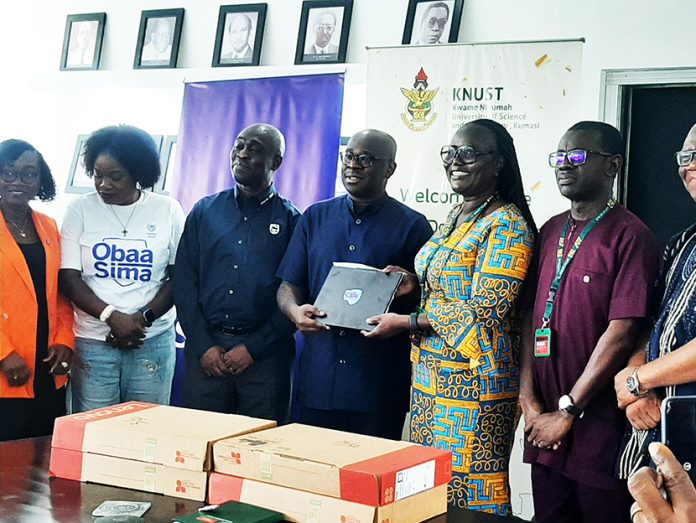
KNUST Vice-Chancellor receiving the donation from Stanbic MD

Stanbic Bank Ghana has donated 50 laptops to the Kwame Nkrumah University of Science and Technology (KNUST) in support of the Vice-Chancellor’s ‘Support One Needy Student with One Laptop’ (SONSOL) initiative.

The gesture reflects the Bank’s unwavering commitment to driving Ghana’s growth by investing in the development of Human capital, particularly young people.

The presentation brings to 400, the total number of laptops donated by the bank to KNUST, since the initiative was introduced in 2020, directly supporting students in advancing their academic pursuits and bringing their aspirations closer to reality.

The contributions underscore Stanbic’s belief that empowering youth with the right tools and skills is essential to building a resilient and prosperous future.

Mr Kwamina Asomaning, Managing-Director, Stanbic Bank Ghana, disclosed that any good agenda in a country would happen when you have the right set of institutions, such as KNUST, that is focused on developing  the human resource base of the country to become its very best, which falls squarely within the Bank’s purpose as a group, hence the donation.

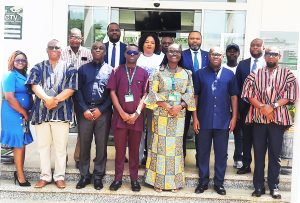
Group picture of management of Stanbic Bank and KNUST officials

He disclosed that the world had become a lot more digital and its transitioning requires a more digital interface, noting that as one thinks about growth, one has to think about how to equip the human resource to be able to deal with a world that is increasingly becoming more digital, based on the needs of its people.

To him, STEM education agenda fits in, for which Stanbic is privileged to be part of the SONSOL initiative.

Touching on the Obaasima initiative by the bank, the Managing-Director explained that it looks at providing better access to women as it relates to finance and business facilitation and service, as well recognise that women are quite a marginalised group when it comes to STEM education.

He disclosed that 40 of the 50 laptops donated will go to female students as a means of bridging the gap in STEM education, stressing that the Bank goes beyond just providing computers.

He noted that the provision of computers alone without making effort cannot bridge the gap between academia and industry, which ends up producing students who are not fit for the workplace. This, according to him, is the reason why his outfit has embarked on a number of initiatives to bring students over for internships, and thereafter their graduation, a few of them come and undertake their national service with Stanbic.

Receiving the donations, Prof. Mrs. Rita Akosua Dickson, Vice-Chancellor, KNUST disclosed that Stanbic are always there to support, noting that Stanbic has been part of the successful journey of KNUST in churning, nourishing, and training the brains, the hearts, and the hands of these young people.

The VC commended Stanbic for the vision of supporting SONSO and noted that it is not just donating or giving tools to bridge the digital divide, which is “very cardinal” to KNUST, as a science and technology university, but for the support that these students receive, which changes the stories of students.

From Oswald P. Freiku, Kumasi


For more news, join The Chronicle Newspaper channel on WhatsApp: https://whatsapp.com/channel/0029VbBSs55E50UqNPvSOm2z

The Chronicle Eastern Regional correspondent honoured for Excellence in Journalism, et al

0
Mr. Isaac Akwetey-Okunor receiving his award from a member of the Diamond excellence awards.

In a glowing recognition of distinguished service to journalism and national development, the Eastern Regional Correspondent of The Chronicle, Mr. Isaac Akwetey-Okunor, has been honoured with a prestigious Pure Diamond Award at the 5th Edition of the Diamond Excellence Awards, in acknowledgment of his immense contribution to societal transformation through impactful journalism.

The honour, presented during a colourful ceremony on May 1, 2026 at Birim, in the Eastern Region, placed Mr. Akwetey-Okunor among a select group of exceptional Ghanaians whose work continues to influence communities, shape public discourse and inspire national progress.

At the heart of the recognition was a powerful citation celebrating his steadfast commitment to truth, ethical journalism and developmental reporting.

The citation read;

“For your remarkable contributions to journalism and the pursuit of truth, your insightful reporting and editorial leadership at The Chronicle have played a vital role in informing our communities and upholding the excellence of the Fourth Estate.”

The citation further acknowledged his role as a voice for marginalised communities and a journalist whose work consistently champions social development, accountability and national transformation.

With over two decades of active journalism practice since 2005, Mr. Isaac Akwetey-Okunor has carved a respected niche in Ghana’s media landscape as a developmental journalist, whose reporting goes beyond headlines to influence policy, shape attitudes and advocate practical solutions to national challenges.

Known widely for his incisive coverage of politics, agriculture, rural development, youth empowerment and public policy, his journalism has consistently reflected a deep commitment to social progress.

Unlike conventional reportage that merely highlights problems, Mr. Akwetey-Okunor’s work has often focused on solutions journalism, bringing national attention to opportunities in agriculture, youth employment and sustainable development.

His reporting has strongly promoted the modernisation of agriculture in Ghana, challenging the long-held notion that farming is a last resort occupation. Through numerous articles, analyses and feature stories, he has consistently advocated that agriculture should be viewed as a viable business venture, a source of wealth creation and a strategic pathway for youth employment.

He has particularly championed initiatives such as school farm competitions and university-led agricultural entrepreneurship programmes as transformative models capable of changing perceptions among graduates and repositioning farming as a profitable enterprise.

Champion of Youth Empowerment and Social Transformation

Beyond the newsroom, Mr. Akwetey-Okunor has distinguished himself as an educator and mentor.

As a lecturer at All Nations University, he has contributed significantly to shaping young minds, particularly in communication, leadership and national development discourse.

His academic and leadership credentials are equally noteworthy. He previously served as secretary of the Graduate Students Association of Ghana chapter at All Nations University, where he demonstrated organisational leadership and advocacy on issues affecting graduate students and academic advancement.

As a committed member of the Ghana Journalists Association, he has upheld professional standards and contributed meaningfully to the advancement of journalism in Ghana.

Through his writings and community engagements, he has become a recognisable voice advocating rural transformation, youth inclusion and sustainable economic empowerment.

“I Never Knew My Little Contribution Was Being Watched”

Receiving the award, a visibly humbled Mr. Akwetey-Okunor described the recognition as both surprising and deeply touching.

According to him, although he has received honours in the past, the Diamond recognition carried a unique emotional significance because it reflected society’s appreciation of sincere service often rendered quietly and without expectation of reward.

He remarked that he never imagined that his “widow’s mite” toward societal development was being keenly observed, adding that the honour has renewed his commitment to responsible journalism and service to humanity.

He expressed profound gratitude to the organisers, particularly Daniel Opoku Walker, for identifying and celebrating individuals whose contributions continue to positively shape Ghanaian society.

Mr. Akwetey-Okunor also used the platform to send a strong message to fellow journalists, urging practitioners in the media fraternity to approach their work with integrity, caution and a sense of responsibility.

“Journalists must be guided and circumspect in the discharge of their duties. We may never know who is watching, whose life is being impacted, or how our work may one day be remembered. Let us uphold truth, fairness, and professionalism at all times,” he advised.

Diamond Excellence Awards: Celebrating Ghana’s Changemakers

The Diamond Excellence Awards, an initiative of Danny’s Entertainment, has over the years grown into one of Ghana’s notable recognition platforms for honoring individuals and institutions whose dedication, innovation, and excellence are making meaningful impacts in society.

Under the leadership of CEO, Daniel Opoku Walker, the awards continue to spotlight achievers in sectors including media, business, arts, entrepreneurship, traditional leadership, and community development.

This year’s ceremony featured notable honourees from across Ghana’s professional and social landscape, including distinguished media personalities, business executives, civil society leaders, and grassroots changemakers.

The event also featured performances by celebrated Ghanaian artists, including Jack Alolome, adding cultural vibrancy to an evening dedicated to honoring excellence.

Mr Isaac Akwetey dedicated the award to the management, staff and colleagues at “your authoritative” newspaper, The Chronicle, most especially the Managing Editor, Mr. Emmanuel Akli and the late Mr Richard Kofi Attinkah.


The Ghanaian Chronicle