Home Blog Page 61

Ghana Police Arrests Four Suspected Armed Robbers in Bolgatanga

0

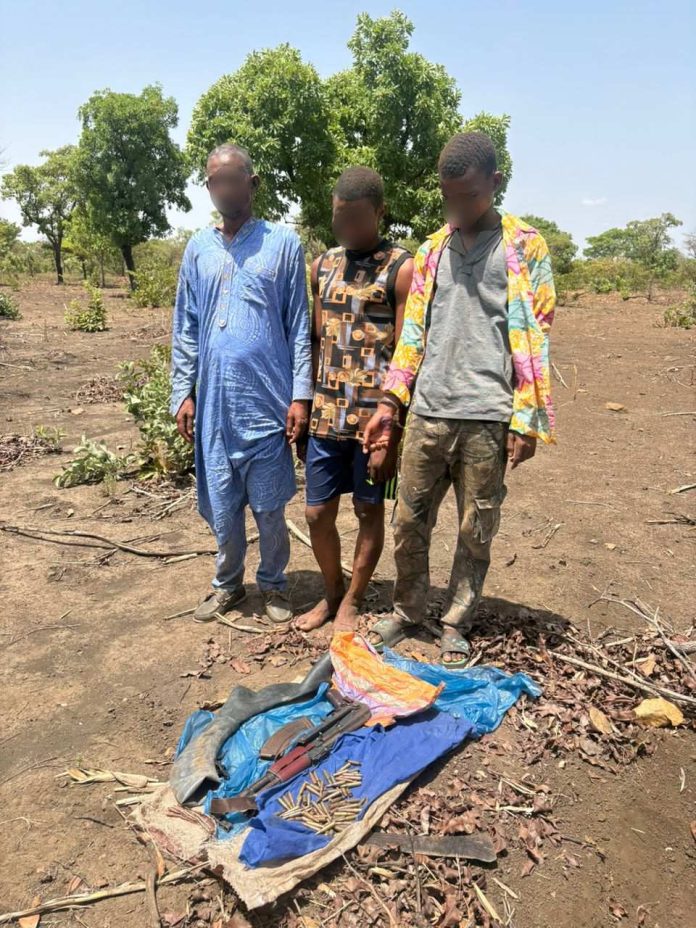
The Ghana Police Service has arrested four suspected armed robbers following an intelligence led operation in Bolgatanga, in the Upper East Region.

The suspects, identified as Abdulai Ibrahim, Amadu Rahman, Amadu Sulemana (alias Saaga), and Adu Yakubu, were arrested on May 5, 2026.

Investigations indicate that on May 4, 2026, the suspects converged at Gbane, a mining community in the Talensi District, having travelled from Yagaba and Fumbisi to execute a robbery operation. During the operation, they robbed four motorcyclists of their motorbikes and seized several mobile phones from victims.

Upon interrogation, the suspects admitted to a series of robberies within the Talensi District, including incidents along the Yagaba Fumbisi road and the Yagaba Nanguruma road in the North East Region.

They also confessed to an armed robbery at the Vikandi Phone Shop in Bolgatanga on March 22, 2025, an incident captured in a widely circulated video in which the perpetrators were seen brandishing an AK47 assault rifle.

The suspects further admitted to multiple robberies at Gbane mining sites, during which gold and large sums of cash were taken from victims.

The suspects subsequently led police to a farm near Biung, in the vicinity of Gbane, where the gang leader, Amadu Rahman, had concealed an AK47 rifle. A search of the location resulted in the recovery of the weapon, bearing serial number 68100563, along with 87 rounds of live ammunition, which had been hidden inside a fertiliser sack.

During the search operation, suspect Amadu Rahman collapsed and was immediately transported to the Bolgatanga Regional Hospital, where he was pronounced dead on arrival.

His remains have been deposited at the hospital morgue pending preservation and autopsy.The three remaining suspects are currently in police custody and will be arraigned before court to face the full rigours of the law.


For more news, join The Chronicle Newspaper channel on WhatsApp: https://whatsapp.com/channel/0029VbBSs55E50UqNPvSOm2z


3i Africa Summit: Partnerships Driving Ghana’s Digital Finance Success — GhIPSS

0

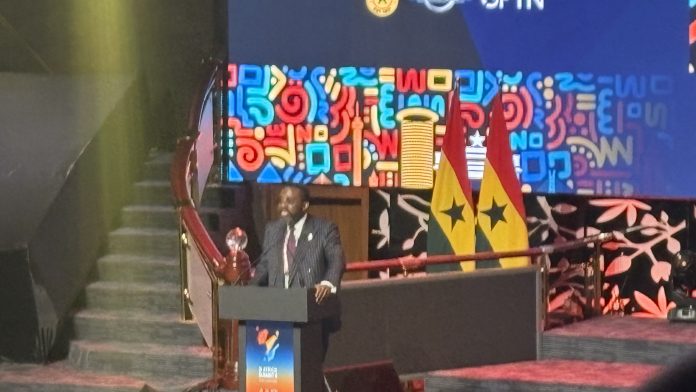
The Chief Executive of the Ghana Interbank Payment and Settlement Systems, Clara B. Arthur, has underscored the critical role of partnerships and infrastructure in driving Ghana’s digital finance transformation.

Delivering a keynote address at the 2026 3i Africa Summit in Accra, she said Ghana’s progress in digital payments is the result of deliberate collaboration among regulators, financial institutions and fintech players.

The three-day summit has brought together policymakers, central bank governors, fintech leaders and investors to explore how innovation, investment and collaboration can shape Africa’s financial future.

Mrs. Arthur illustrated Ghana’s progress with a simple example from Makola Market, where a trader expressed preference for mobile money without concern for the sender’s platform.

“That expectation is the result of interoperability,” she said, explaining that seamless transactions across banks and mobile wallets reflect years of coordinated effort led by GhIPSS in partnership with industry players and the Bank of Ghana.

She noted that since its establishment in 2007, GhIPSS has led the development of a connected national payments ecosystem, including systems such as gh-link, mobile money interoperability, instant payments and cheque clearing platforms.

According to her, these systems have significantly improved access, reduced transaction costs and strengthened trust in digital financial services across the country.

“As the industry evolves, sustaining this progress will require deeper collaboration and leadership guided by innovation,” she said.

Mrs. Arthur announced that GhIPSS is migrating Ghana’s payment infrastructure to the ISO 20022 global messaging standard to enhance efficiency and enable seamless cross-border transactions.

She added that the organisation is also positioning to work with virtual asset service providers following recent regulatory developments, to support innovation within a structured framework.

Beyond Ghana, she stressed the importance of continental integration, noting that the future of digital finance lies in connecting payment systems across Africa.

“GhIPSS is ready to connect with other instant payment systems across the continent,” she said.

She further called on financial institutions and fintech firms yet to connect to the national switch to come onboard, stressing that shared infrastructure is key to reducing duplication and achieving scale.

Mrs. Arthur concluded that Ghana’s digital finance success story is rooted in leadership and partnership, noting that collaboration remains essential to sustaining growth and delivering real impact.

3i Africa Summit: Africa Must Move Beyond Payments – BoG Governor

0

The Governor of the Bank of Ghana, Dr. Johnson Asiama, has called for a decisive shift in Africa’s digital finance agenda, urging stakeholders to move beyond basic payment systems towards value-driven financial solutions.

Speaking at the opening of the 2026 3i Africa Summit in Accra, he said the continent’s progress in financial inclusion must now translate into real economic impact.

The three-day summit, running from May 6 to 8, has brought together policymakers, central bank governors, fintech leaders and investors to explore how innovation, investment and collaboration can drive Africa’s financial transformation.

“The next phase of digital finance will not be defined by payments alone,” Dr. Asiama stated. “The opportunity now lies in building the next layer of value.”

Citing data from the World Bank, the Governor noted that about 49 per cent of adults in sub-Saharan Africa now have access to digital financial accounts, describing it as significant progress.

“We are starting from momentum. The task now is to make it count,” he said.

Dr. Asiama outlined the next frontier of financial development, pointing to areas such as digital credit, embedded finance, supply chain finance and cross-border services as critical to deepening inclusion.

He explained that these innovations are essential to meeting the needs of small businesses, women, young people and the informal sector, who remain underserved despite gains in access.

The Governor emphasised that while mobile money and branchless banking have laid a strong foundation, Africa must now build more sophisticated systems that deliver tangible value.

He also highlighted the importance of effective regulation, noting that it must both protect the financial system and support innovation.

“Regulation and growth are not opposing forces. They must reinforce each other,” he said.

To support this transition, the Bank of Ghana is advancing new frameworks, including guidelines for digital credit, open banking initiatives, and measures to support cross-border fintech activity.

He further stressed the need for stronger digital identity systems and improved coordination among institutions to build trust and reduce risks such as fraud.

Dr. Asiama urged stakeholders to work together to unlock the full potential of digital finance, stressing that Africa must move beyond participation to shaping the future of global finance.

For more news, join The Chronicle Newspaper channel on WhatsApp: https://whatsapp.com/channel/0029VbBSs55E50UqNPvSOm2z


Police Choppers Now ‘Flying Coffins’ … COP Bright Oduro (Rtd) Calls For Probe Into Acquisitions

0
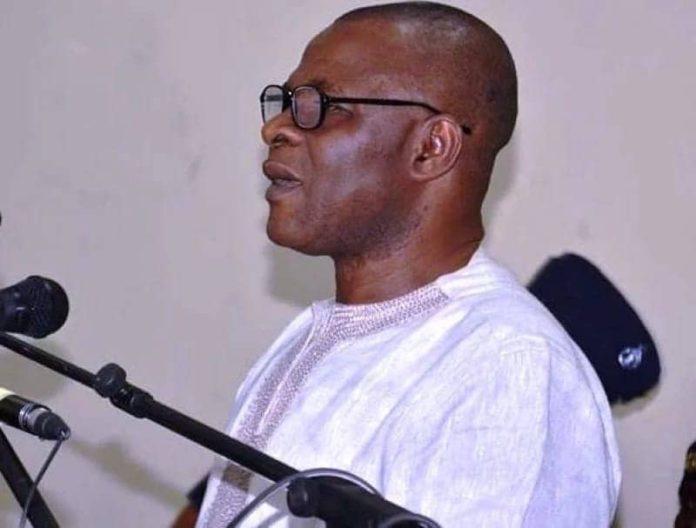
COP Bright Oduro, former CID boss

Independent inquisition carried out by The Chronicle suggests that police personnel are reluctant to fly three H125 helicopters, which were acquired in 2023 due to concerns over their age.The helicopters, each with a maximum capacity of four (4) persons, made their first public appearance on March 6, 2023 during that year’s Independence Day Anniversary celebration in Ho.

One of the police choppers

Our checks revealed that the Choppers were supplied by South African firm, PARAMOUNT, and were over fifty (50) years at the time of purchase.They were procured for millions of dollars few months to that year’s independence anniversary.

Some of the Service Personnel who spoke to The Chronicle on condition of anonymity wondered whether the decision to purchase was for the ‘anniversary fanfare’, to depict that fighting crime in Ghana had assumed high-tech or the true operational needs of the police service.

These questions, according to the Interviewees, were based on the fact that apart from being overaged, the Choppers could carry only four passengers.

The Chronicle has been reliably informed that after being flown to Ho for the Independence Day celebration, the Choppers have remained in the Hangar at the National Police Training School, Tesano, Accra.

A deep-throat source within the police service confided in this reporter that the officers want the H125 helicopters to be swapped for larger helicopters, such as the MI 17, which can carry up to eighteen (18) persons and used mainly by Special Forces.

Beyond the safety concerns, the personnel are also questioning the maintenance cost of these Choppers.

Officers argue that given the limited capacity of the H125, the funds could have been better used to procure more armoured vehicles and motorbikes to strengthen the ground operations.

A former Director General of the Criminal Investigation Department (CID), Commissioner of Police (COP), Mr Bright Oduro, when contacted by The Chronicle for comment on the story, regarding the acquisition of the Choppers, did not hesitate to call for an independent probe into their purchase.

According to him, the said probe would unearth the purpose and relevance for the acquisition of helicopters with limited capacities for the police.

Even if it becomes necessary for such acquisition, they must be deployed to only high risk zones for tactical operations, but the capacities of these craft do not warrant it, he said.


For more news, join The Chronicle Newspaper channel on WhatsApp: https://whatsapp.com/channel/0029VbBSs55E50UqNPvSOm2z

BoG Loss Saved Businesses From Collapse –Majority

0
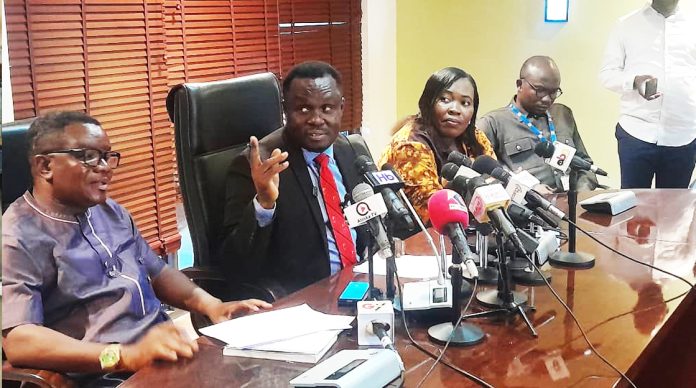
The Majority addressing the media

The Majority Caucus of Parliament has said the financial losses recorded by the Bank of Ghana (BoG) in 2025 were a decisive factor in preventing widespread business collapse and deeper economic hardship across the country.

Addressing a news conference in Accra on Tuesday, May 5, 2026 the Chairman of Parliament’s Committee on Economy and Development and Member of Parliament for Amenfi West, Eric Afful, argued that the BoG’s negative equity position should be understood not as institutional failure, but as the price paid to stabilise the economy and protect Ghanaian enterprises during an exceptionally difficult period.

“The Bank of Ghana absorbed the shock so Ghanaian businesses would not collapse. If these losses had not been incurred through decisive policy interventions, many firms, especially small and medium-sized enterprise would simply not have survived,” Eric Afful noted.

The BoG reported a net loss of GH¢15.6 billion in 2025, alongside deterioration in its equity position.

These figures have triggered renewed public debate with many, especially the opposition New Patriotic Party (NPP) and the Minority Caucus, arguing that the actual Bank of Ghana loss is GHS44billion.

However, Mr. Afful maintained that focusing solely on the accounting numbers ignores the broader impact of the Bank’s actions on the real economy.

According to the Amenfi West MP, one of the most significant benefits to Ghanaians and businesses is the sharp reduction in inflation, which had previously driven up production costs and eroded consumer spending.

“High inflation was choking businesses. Prices were rising faster than incomes, demand was collapsing and margins were being wiped out,” he said.

The Amenfi West MP added that “by aggressively tightening monetary conditions, the Bank brought inflation down to single digit, giving businesses room to recover and plan again.”

Mr Afful noted that the cost of open market operations (OMO), which contributed heavily to the BoG’s losses, was necessary to mop up excess liquidity and prevent a full-blown price spiral that could have crippled firms across manufacturing, trade and services.

He also pointed to the sharp appreciation of the Ghana cedi in 2025, as a “lifeline” for businesses dependent on imported inputs or servicing foreign currency obligations.

“When the cedi stabilised and strengthened, businesses importing raw materials, machinery and fuel got immediate relief,” Mr. Afful said, adding “Yes, the Bank recorded valuation losses on its foreign assets, but those same movements saved companies from massive exchange losses that would have pushed them into insolvency.”

Mr Afful further argued that the Domestic Debt Exchange Programme (DDEP), while reducing the Bank’s interest income, was critical in easing pressure on interest rates and supporting private sector credit.

“Without restoring debt sustainability, government borrowing would have crowded out businesses completely. The pain was shared, but the alternative would have been far worse – a total freeze in credit and widespread business failures,” he underscored.

While acknowledging the hardship the programme caused, particularly for some bondholders, he said it ultimately prevented the collapse of the financial system on which businesses depend.

The Chairman of the Committee on Economy and Development emphasised that central banks do not operate like commercial entities and should not be judged by profit alone.

“Central banking losses in times of crisis are like an insurance premium. The Bank of Ghana’s balance sheet took the hit so factories could keep operating, traders could restock, jobs could be preserved and confidence could return,” he noted.

He pointed to improving indicators such as lower inflation, stronger reserves, easing interest rates and renewed growth as evidence that the strategy worked.

“As Legislators, our responsibility is to look beyond headlines. The real story is not the loss on the BoG’s books, but the businesses that are still standing today, because the Bank stepped in when the economy needed it most,” he stressed.

Mr. Afful said Parliament would continue to exercise its oversight role while supporting efforts to recapitalise the central bank over the medium term, noting that a stable and credible BoG remains essential for sustained private sector growth.

By Stephen Larbi


For more news, join The Chronicle Newspaper channel on WhatsApp: https://whatsapp.com/channel/0029VbBSs55E50UqNPvSOm2z

Gold Fields Makes Compelling Case For Tarkwa Mine Lease Extension

0
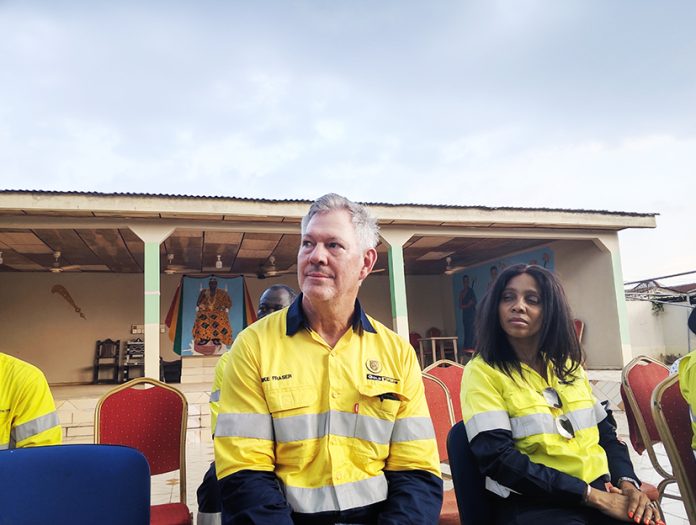
Mike Fraser, CEO of Goldfields Tarkwa Mine

The Chief Executive Officer of Goldfields, Mike Fraser, has declared that the company will not back down in its pursuit of a lease extension for its flagship Tarkwa mine, signalling a major long-term investment plan tied to the asset. The Tarkwa mine lease expires in April 2027.

Speaking during a historic and landmark visit to the chiefs of Apinto, the traditional landowners of Tarkwa, Mr Fraser emphasised the strategic importance of the mine to the company’s global operations and its deep-rooted commitment to Ghana.

“We are not going to give up in any way on Tarkwa,” he stated firmly, revealing that Goldfields submitted an application in November last year, seeking a lease extension that would allow mining operations to continue for at least another 20 years.

According to him, the proposed extension will require substantial reinvestment, including the acquisition of additional equipment, expansion of operational capacity and increased manpower to sustain production levels over the long term.

The Tarkwa mine is a cornerstone asset for Gold Fields, contributing approximately 20 percent of the company’s global gold output.

Mr. Fraser described Ghana as a critical hub within the firm’s international portfolio, noting that the country’s operations represent a significant share of its production.

The CEO’s remarks come against the backdrop of recent developments involving the Damang Mine, where the Government of Ghana declined to extend the company’s lease.

Mr. Fraser said though the government recently failed to renew the lease for the Damang Mine,

Tarkwa remains a top priority, with the company actively engaging key stakeholders, including the Ministry of Lands and Natural Resources, the Minerals Commission and the Ministry of Finance, to make its case for renewal.

A significant part of those engagements, he indicated, involves demonstrating the company’s broader value beyond gold production.

Goldfields, he said, is focused not only on delivering returns to shareholders, but also on making a “meaningful difference” in host communities.

“Our strategy is not just about mining gold. It is about creating lasting impact in the communities where we operate,” Mr. Fraser told the chiefs, highlighting ongoing investments in local development and the company’s efforts to build strong community relations.

He underscored that global mining success increasingly depends on social partnerships, citing the company’s operations in countries such as Chile, Peru, Australia and Canada, where agreements with host communities are central to project development.

Mr. Fraser also apologised to the Apinto traditional authorities for the delay in his visit, acknowledging the importance of direct engagement with local stakeholders as a cornerstone of Goldfields’ operational philosophy.

“We believe that if we do not make a positive impact, we will not be welcomed,” he said, reaffirming the company’s commitment to strengthening its relationship with the Tarkwa community.

Goldfields has operated in Ghana for over 30 years and continues to position itself as a key player in the country’s mining sector.

The outcome of the Tarkwa lease discussions is expected to have significant implications for employment, local economic activity and investor confidence in Ghana’s extractive industry. Mike Frazer was accompanied by Jongisa Magagula, EVP for external Affairs.


For more news, join The Chronicle Newspaper channel on WhatsApp: https://whatsapp.com/channel/0029VbBSs55E50UqNPvSOm2z

Nine pregnant girls write BECE in Volta Region

0
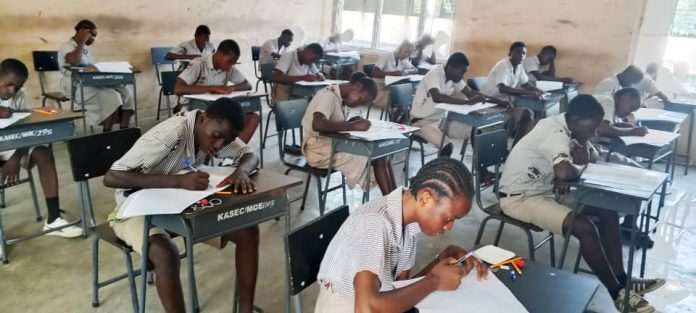
BECE in Anloga

Six pregnant girls are among the 1,640 registered candidates who are writing the ongoing 2026 Basic Education Certificate Examination (BECE) in the Anloga District of the Volta Region.

According to the Anloga District Education Directorate, all candidates, security personnel, as well as invigilators and supervisors were all available for the smooth conduct of the examination.

Togbi Doda III (Appoh John), the District Chief Inspector of schools, revealed that a total of 1,640 candidates, comprising 827 males and 813 females, were present across eight examination centres in the district.

“The eight centres, assigned centres include Anlo Technical Institute, Zion College Anloga, Anlo Senior High School, TegbiKpota EP, Anyanui LA Junior High School, Kaledzi Memorial JHS, Agortoe EP Basic and Atito EP Basic,” he said.

He noted that among the eight the centres, Anlo Senior High School recorded the highest number of candidates with 298 pupils, followed by Zion College, Anloga, with 297 candidates, while Agortoe EP Basic recorded the least number of candidates at 77.

He said that the statistics indicated that a total of eight supervisors and four assistant supervisors have been deployed across the eight examination centres, with 57 invigilators assigned to ensure smooth conduct of the examination.

“The figures also show that 320 candidates made up of 148 males and 172 females have registered for the French language paper, which reflected a growing interest in the subject among basic school pupils in the area.”

Additionally 1,619 candidates, comprising 788 males and 831 females were registered to write the Information and Communication Technology (ICT) paper, which shows near-universal participation in the subject area across all eight centres.

Togbi Doda encouraged pregnant mothers and other candidates to focus on the examination, adding that,” the journey of your education success begins from here and that is why you need to be more focused and determined.”

He acknowledged the perseverance, dedication and the spirit of learning among the girls and urged them not to use their pregnancy as an excuse for the rest of the exams, but rather pursue their educational goals.

Education authorities in the district are yet to confirm the number of expectant girls who are currently writing the BECE in the area.

The Ghana Education Service in Anloga has also urged all registered candidates, including those in special circumstances such as pregnancy to make adequate preparations towards the exams and assured them of the necessary support to enable them to write under conducive conditions.

Meanwhile, another report from Adaklu Waya, also in the Volta Region indicates that three pregnant girls were among the 565 candidates, who on Monday began writing their Basic Education Certificate Examination (BECE) at three centres in the Adaklu district.

The centres are Adaklu Senior High School (SHS) at Adaklu Waya, Adaklu Abuadi Junior High (JHS) School ‘A’ and ‘B’.

Mr Mac-Peter Dumatonu, the Adaklu District Director of Education, disclosed this to the Ghana News Agency in a telephone interview on Monday.He said the candidates who were made up of 289 boys and 276 girls were from 33 public and three private schools.

The Director told the GNA that the three private schools presented a total number of 31 candidates made up of 14 boys and 17 girls whilst the public schools presented 534 candidates made up of 275 boys and 259 girls.

He said 285 candidates consisting of 149 boys and 136 girls were writing the examination at the Adaklu SHS Centre.

Mr Dumatonu stated that 151 candidates made up of 74 boys and 77 girls were at the Adaklu Abuadi JHS ‘A’ Centre whilst those at the Adaklu Abuadi JHS ‘B’ Centre consisted of 66 boys and 64 girls totaling 130.

He said one candidate was absent at the Adaklu SHS Centre when the examination started.

The Director said there were no reported incidents at the three centres at the time of his visit.

He urged the candidates to stay focused, relaxed and do independent work adding that they should see the examination as their normal classroom work.

From Evans Worlanyo Ameamu, Anloga

GNA


Amin Adam: BoG’s 2025 Accounts Signal Fiscal Pressures

0
Amin Adams, Former Minister for Finance

The Member of Parliament for Karaga, Dr. Mohammed Amin Adam, has called for careful policy attention, following the release of the Bank of Ghana’s audited 2025 financial statements, noting that certain trends could have implications for Ghana’s fiscal outlook and post-programme economic management.

In a communication to the International Monetary Fund (IMF) Mission Chief, Dr. Amin Adam acknowledged the progress made under Ghana’s Extended Credit Facility (ECF) programme, particularly in stabilising inflation and strengthening external reserves.

However, he emphasised the importance of safeguarding these gains as the country transitions into a post-programme phase.

A key issue raised relates to the Bank of Ghana’s balance sheet position. The central bank’s negative equity widened from GH¢61.32 billion in 2024 to GH¢96.28 billion in 2025.

While this reflects the lingering effects of recent economic shocks and policy interventions, the MP noted that it may require a structured and transparent recapitalisation plan over the medium term.

“Even if addressed gradually, this remains an important consideration for fiscal planning,” he indicated, pointing to the need for clarity on the scale, timing and financing approach for any recapitalisation efforts.

Operating Costs and Financial Performance

The central bank’s financial results also show an increase in losses, from GH¢9.49 billion in 2024 to GH¢15.63 billion in 2025, despite growth in operating income.

This development, Dr. Amin Adam explained, appears to be driven largely by higher costs associated with monetary policy operations, including liquidity management and exchange rate-related adjustments.

In particular, the cost of Open Market Operations (OMO), a key instrument for managing inflation, rose to GH¢16.73 billion in 2025, up from GH¢8.60 billion the previous year.

While such costs are often part of efforts to stabilise prices, he noted that their scale warrants ongoing monitoring to ensure sustainability.

The MP also drew attention to the role of gold-related transactions in shaping the Bank’s financial position. The accounts show a significant gain from refined gold sales, which contributed to a reported positive policy solvency position.

However, he suggested that distinguishing between recurring operational income and one-off gains could provide a clearer picture of the Bank’s underlying financial strength. He also encouraged enhanced disclosure around gold transactions to improve transparency and public understanding of their economic impact.

Another area highlighted is the movement in the Bank’s revaluation reserves, which declined sharply in 2025 due to exchange rate and asset valuation changes. While such adjustments are consistent with international accounting standards, they underscore the sensitivity of the Bank’s balance sheet to market conditions.

Broader Fiscal Considerations

Dr Amin Adam further noted that developments within the central bank have broader implications for fiscal policy.

He explained that potential recapitalisation requirements, together with other financial sector obligations, should be factored into medium-term fiscal planning.

This, he said, would help ensure that sufficient fiscal space is preserved for priority areas such as infrastructure, healthcare, and education.

He also emphasised the importance of viewing fiscal performance in a broader context beyond the central government budget to include central bank operations and other contingent liabilities.

To support long-term stability, the MP proposed a number of policy considerations, including the development of a transparent recapitalisation framework for the Bank of Ghana, enhanced reporting of quasi-fiscal operations, and the publication of a clearer measure of policy solvency that excludes one-off items.

He also encouraged continued adherence to safeguards that limit monetary financing of government expenditure, as well as ongoing engagement with international partners to strengthen policy credibility.

Dr. Amin Adam concluded by reaffirming the importance of maintaining policy discipline as Ghana exits the IMF programme. While acknowledging the progress achieved in recent years, he stressed that careful management of emerging risks would be key to sustaining macroeconomic stability and supporting inclusive growth.

The observations come at a time when Ghana is preparing for its next phase of economic management, with policymakers seeking to consolidate recent gains while navigating a complex global and domestic environment.


For more news, join The Chronicle Newspaper channel on WhatsApp: https://whatsapp.com/channel/0029VbBSs55E50UqNPvSOm2z


PMI Global Summit Series heads to Cape Town

0
George Asamani, MD, PMI SSA.jpg

Following a landmark gathering in Kigali that brought together over 1,000 project professionals, industry leaders, and government officials, the PMI Global Summit Series will take place in Cape Town from 14 to 15 September 2026 at the Cape Town International Convention Centre. Hosted by Project Management Institute (PMI) Sub-Saharan Africa, the Summit has become Africa’s largest platform for advancing project delivery, leadership, and innovation.

Cape Town provides a fitting backdrop for this year’s Summit. As one of Africa’s leading hubs for business, infrastructure, and innovation, the city reflects the scale of ambition and execution required to deliver transformative projects across the continent. Building on the momentum of last year’s event in Rwanda, the Cape Town edition will be anchored in a bold and timely theme – Africa Delivers M.O.R.E Together.

The theme reflects a fundamental shift in how projects are delivered today. At its core, M.O.R.E. is a mindset that encourages project professionals to go beyond execution, manage perceptions, own project success, respond to change, and expand their focus to the broader impact of their work. In Africa, however, the theme carries an even deeper meaning.

Africa Delivers MORE Together reflects the continent’s longstanding progress, says George Asamani, Managing Director, PMI Sub-Saharan Africa. “From regional blocs such as the Economic Community of West African States (ECOWAS), Southern African Development Community (SADC), and the East African Community (EAC), to transformative initiatives like the African Continental Free Trade Area (AfCFTA) and Mission 300, Africa’s greatest achievements have been built through partnership, coordination, and shared purpose.

This spirit of collective progress echoes the philosophy of Ubuntu, ‘I am because we are’, reinforcing the idea that Africa’s success is inherently interconnected. As the Summit moves to Cape Town, it aims to translate this philosophy into practical action by aligning governments, industries, and communities to deliver projects that create lasting value.

The urgency of this message was evident at last year’s Summit in Kigali, where leaders from the African Development Bank (AfDB) emphasised that Africa’s greatest obstacle is not a shortage of capital, but a shortage of bankable projects, well-prepared, investable opportunities capable of unlocking funding and delivering impact.

This challenge is further compounded by a widening talent gap. According to PMI’s Talent Gap report, global demand for project professionals is set to rise significantly, with as many as 30 million additional professionals needed by 2035. In Sub-Saharan Africa alone, demand is projected to grow by up to 75%, underscoring the urgent need to build project management capacity across the region.

“Without the right skills and capability, even the most promising initiatives stall. The Global Summit Series Cape Town is designed to change that, moving beyond conversation to build the talent and expertise Africa needs to deliver at scale,” adds Asamani.

The Kigali edition convened some of the continent’s most influential voices, including Dr. Akinwumi Adesina, then President of the African Development Bank, who underscored the need for projects to move beyond plans and deliver meaningful impact. Featured speakers included Armand Nzeyimana and Eric Ogunleye from the African Development Bank, Pierre Kayitana, Zipline Rwanda, and Kusobile Kamwambi, Government of Zambia, alongside globally recognised figures such as Dr Moses Adoko, formerly with NASA, entrepreneur and artist Olubankole Wellington (Banky W), and Guinness World Record holder Tunde Onakoya.

The programme was further enriched by leading academic perspectives, including Professor Kayihura Muganga Didas, Acting Vice Chancellor of the University of Rwanda, Dr Sanele Nhlabatsi, Senior Lecturer, UNISA, and Prof Lavagnon Ika, Telfer School of Management.

Together, these leaders shared practical insights on delivering complex, high-impact projects in an increasingly dynamic environment, highlighting the importance of collaboration, adaptability, and value-driven execution. As the Summit arrives in Cape Town, it will build on these conversations with a renewed focus on delivering impact at scale.

Attendees will engage with practical tools for managing mega-projects, explore AI applications in African infrastructure, and network with the continent’s leading project delivery experts. “Critically, the Summit will continue to redefine what success looks like. In today’s context, project success is no longer measured solely by timelines and budgets, but by the value it creates, whether in economic growth, social inclusion, environmental sustainability, or improved quality of life,” adds Asamani.

Early-bird registration is now open, with discounted rates available until 12 May 2026.

Celebrating ten years of convening the region’s project leaders, the PMI Global Summit Series comes full circle. From its first edition in Johannesburg to this year’s gathering in Cape Town, the journey reflects a decade of growth, connection, and impact.


For more news, join The Chronicle Newspaper channel on WhatsApp: https://whatsapp.com/channel/0029VbBSs55E50UqNPvSOm2z


Top of Form

Bottom of Form

Top of Form

Bottom of Form


Editorial: Gov’t Must Find Solution To Accra-Kumasi Road Palaver

0
Editorial

The Accra–Kumasi National Highway (N6) has, in recent weeks, returned to the spotlight for the wrong reasons – Its steadily deteriorating condition. As a critical economic corridor linking Ghana’s two most important commercial hubs, the state of the N6 is no minor inconvenience, it is a national concern. The worsening condition of the road is not only compromising commuter safety, but also disrupting economic activity and, increasingly, affecting the physical and mental well-being of road users.

Despite being one of the busiest highways in the country, large sections of the N6 remain in disrepair. The 250 kilometres (160 miles) road is riddled with potholes, uneven surfaces and in many areas, abandoned or incomplete construction works. The result is a corridor that has effectively become a chokepoint for both passenger and freight transport.

Journeys that should ordinarily take four to five hours are now stretching between six and ten hours or even longer. The situation is particularly dire around Nkawkaw and Nsawam, where traffic congestion has reached intolerable levels. Heavy-duty trucks, frequent vehicle breakdowns, road crashes and a sharp increase in vehicular traffic all combine to worsen the gridlock.

The consequences are far-reaching. Beyond the obvious discomfort to commuters, the extended travel time translates directly into lost productivity, increased transport costs and wear and tear on vehicles. For businesses that rely on timely movement of goods between Accra and Kumasi, the inefficiencies on the N6 are a significant economic burden.

It must be emphasised that the challenges confronting the N6 are not new. They have persisted for years and have, in fact, been one of the justifications for the proposed Accra–Kumasi expressway project, which many Ghanaians eagerly anticipate. However, the promise of a future expressway cannot be an excuse to neglect the existing road.

While the country awaits new infrastructure, the current lifeline between the south and the middle belt must not be allowed to deteriorate further. Allowing the N6 to decay while waiting for an expressway risks deepening the hardships already being experienced by commuters and businesses alike.

Over the past three weeks, The Chronicle has taken note of the alarming condition of the highway. One of the most pressing concerns is the number of partially completed bypasses, particularly around Nkawkaw. These bypasses were intended to divert traffic from congested town centres, reduce travel time and minimise accidents within communities.

Yet, in their current incomplete state, they offer little to no relief. Instead, they compound the problem, leaving motorists to navigate confusing and often unsafe road conditions.

We believe it is imperative that government prioritises the completion of these ongoing projects. There is little sense in initiating new infrastructure while existing ones remain unfinished. Completing these bypasses would provide immediate, tangible relief to road users and improve traffic flow along critical sections of the highway.

The Chronicle, therefore, urges the authorities to expedite work on the N6 as a matter of urgency. Addressing the current challenges on the highway is not just about convenience, it is about safeguarding economic efficiency and national productivity.

The prolonged travel hours on the N6 are not merely an inconvenience, they represent lost man-hours, increased operational costs and heightened stress for commuters. These are costs the nation can ill afford.

While we welcome the government’s commitment to constructing a new expressway, the N6 must not be relegated to the background. It continues to play a pivotal role in the country’s transport network and will remain relevant even after the expressway is completed, particularly for communities in the Eastern and Ashanti regions.

President John Dramani Mahama has assured the nation that the N6 will not be abandoned. That assurance must now be matched with decisive action. The distress on the N6 is real, persistent and costly. It is time for the government to move beyond assurances and deliver practical solutions that restore efficiency and dignity to one of Ghana’s most important highways.


For more news, join The Chronicle Newspaper channel on WhatsApp: https://whatsapp.com/channel/0029VbBSs55E50UqNPvSOm2z


The Ghanaian Chronicle