Home Blog Page 60

Nigerian Government bans honorary degree holders from using ‘Dr’ title

0
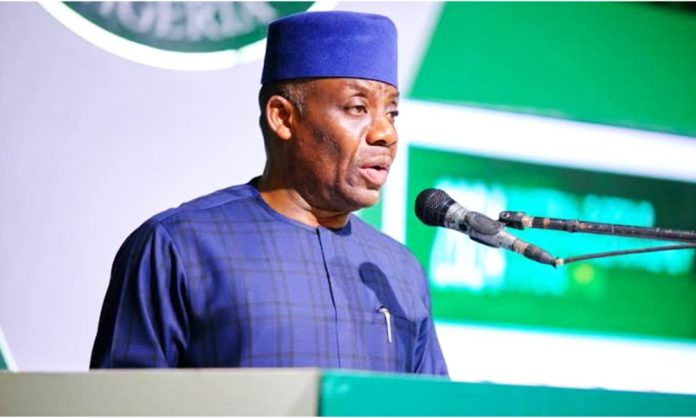
Minister of Education, Tunji Alausa

The Federal Government has banned the use of the prefix ‘Dr’ by honorary degree holders in official, academic or professional contexts.

Minister of Education, Tunji Alausa announced this on Wednesday at the Presidential Villa, Abuja, while briefing State House correspondents after a Federal Executive Council meeting.

According to him, “The recent trend we’ve seen with the award of honorary degrees has revealed a growing abuse and politicisation of this academic privilege.

“We’ve seen awards being used for political patronage, for financial gain, as well as the conferral of awards on serving public officials, which, as part of the ethics of honorary degree awards, should not happen.”

Under the new directive, individuals who receive honorary degrees will no longer be permitted to use the title ‘Dr’ before their names.

Instead, they are required to state the full honorary designation after their names.

Credit: dailypost.ng

Nigerian Protesters storm MTN office in Abuja

0
Nigerian Protesters

Activists and other protesters on Wednesday stormed MTN Nigeria’s head office in Abuja over high cost of service.

The protesters led by popular Nigerian activist, Omoyele Sowore, were heard shouting “MTN Ole!”

At the telecom company’s premises, the protesters were heard demanding urgent action over what they described as exploitative pricing.

“We demand that MTN immediately stop all the exorbitant charges, we need quality service in the country.

“Last week, someone complained that he paid a huge amount of money but he was not given the data. That’s the story of many Nigerians,” one of the protesters said.

This is coming as the leadership of the National Association of Nigerian Students, NANS, on Wednesday announced plans to picket South African businesses, MTN and MultiChoice, over the xenophobic attacks going on in the country.

Credit: dailypost.ng

Ponzi scheme: Nigeria Police arrests, repatriates suspect to China

0
Chinese suspects

The Nigeria Police Force, through the INTERPOL National Central Bureau, NCB, Abuja, has arrested and repatriated a Chinese fugitive, Xu Qing, back to China.

Qing is to face charges related to large-scale illegal absorption of public deposits through a Ponzi scheme.

A statement signed by DCP Anthony Okon Placid, Force Public Relations Officer
Force Headquarters, said the repatriation followed a formal request from Chinese authorities, who declared the suspect wanted in Beijing for his alleged involvement in a financial fraud scheme estimated at over $245 million.

The statement said that investigations revealed that the suspect fled China to Nigeria on 5th November 2024 in an attempt to evade arrest, following which a warrant was issued against him on 12th November 2025 by the Shinan Sub-Bureau of Qingdao Public Security.

Placid said that acting on intelligence and sustained surveillance operations, operatives of INTERPOL NCB Abuja successfully tracked and arrested the fugitive at a factory located in Olowotedo, Siun Village, Obafemi Owode Local Government Area of Ogun State on 24th April 2026 after which the suspect was repatriated to the People’s Republic of China on 28th April 2026 through bilateral police cooperation arrangements to face prosecution for the offences.

He said that the Inspector-General of Police, IGP Olatunji Rilwan Disu, has reaffirmed the commitment of the Nigeria Police Force to strengthening international cooperation in the fight against transnational organised crime.

The IGP further advised Nigerian employers and business entities to conduct due diligence, including background checks through the police, before engaging foreign nationals in business or employment relationships.

The Nigeria Police Force said it remains resolute in its commitment to combating transnational crime and ensuring that Nigeria does not serve as a safe haven for fugitives.

Credit: dailypost.ng


2026 BECE: Two Invigilators arrested in Bono Region

0
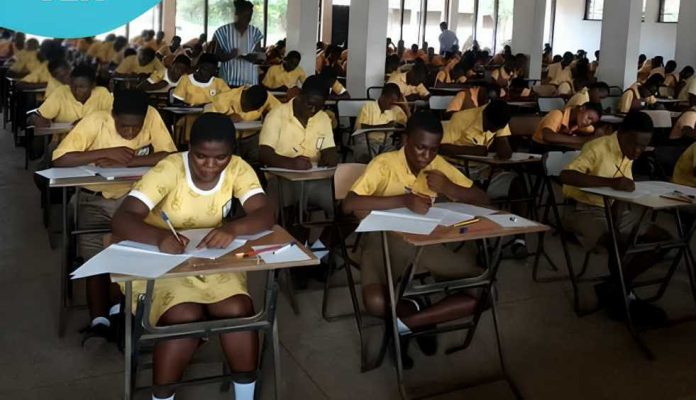
2026 BECE

The Police have arrested two invigilators at some examination centers in the on-going Basic Education Certificate Examination (BECE) in the Bono Region, Mr Luke Mensah, the Public Relations Officer at the Bono Regional Directorate of Education has said.

In an interview with the Ghana News Agency (GNA) in Sunyani, Mr Mensah said one of the suspects, Kwabena Twum, was arrested when he attempted to use his mobile phone to take pictures of the question papers.

He said, Twum, also as teacher at the Odomase Seventh Day Adventist Junior High School, was apprehended at the Fiapre Notre Damme Senior High School (SHS) examination center in the Sunyani West Municipality on Monday, May 4, 2026.

Twum has since been granted bail and is assisting the Police in their investigations.
Mr Mensah said the other suspect, yet to be identified, was also picked at the Sunyani Senior High School examination center for a similar offence on Tuesday May 5, 2026 and had also been granted Police enquiry bail, assisting investigations.
Nonetheless, he said the conduct of the BECE was progressing smoothly at the 88 designated centers, spread across the 11 politically administrative districts and municipalities in the region.

He said 25,000 candidates comprising 12,250 and 12,750 females drawn from 833 public and private schools in the region were writing the BECE in the region.
Mr Mensah said 3,061 and 741 of the candidates were writing French and Arabic respectively, saying that the region had 138 schools offering French and 28 schools doing Arabic.

He said 88 supervisors and 882 invigilators were overseeing the smooth conduct of the examination in the region, saying that the directorate had also intensified monitoring to stem examination malpractices and potential infractions.

GNA


NPC Boss calls for localised Peace Index

0
National Peace Council

Dr David Esinu Yao Normanyo, the Volta Regional Executive Secretary of the National Peace Council (NPC) has called for the development of a localised Ghana Peace Index to strengthen peace building and development at the grassroots level.

Dr Normanyo, made the call on Wednesday, in a keynote address to mark the 2026 World Press Freedom Day at the Volta Press Centre in Ho, on the theme: “Shaping a Future of Peace.”

He stated that, while Ghana’s national ranking on the 2025 Global Peace Index (GPI) remained a source of pride, peace was lived locally and must be measured beyond global averages.

“According to the 2025 GPI, Ghana ranked 61st globally, with an overall score of 1.898 and 7th most peaceful in Sub-Saharan Africa after Mauritius, Botswana, Namibia, The Gambia, Sierra Leone and Madagascar,” he said.

Dr Normanyo noted that while Ghana maintained a high peace status, the broader Sub-Saharan region had recorded 0.17 per cent deterioration in peace, which underscored the need for vigilance among citizens.

He warned that Ghana was identified as one of only 14 countries globally involved in five or more external conflicts, primarily through peacekeeping operations and stressed that the country’s peace was not isolated from global security dynamics.

He explained that a Ghana Peace Index would rank all 16 regions and 261 Metropolitan, Municipal and District Assemblies (MMDAs) on their state of peacefulness and urged stakeholders and all individuals to prioritise peace for better development.

“Such index will also identify fragile regions and districts for proactive intervention, track how local reportage influenced tensions and provide data to tailor development projects to specific peace dynamics.”

Dr Normanyo emphasised that peace journalism was critical to development and noted that journalists could act as catalysts by choosing words that de-escalate tensions to give voice to the marginalised and ensure a free and peaceful press.

He urged the media to use their freedom to shape a future of Peace, adding that “by embracing peace journalism, the journalist will protect national development and keep Ghana a beacon of hope.”

Dr Normanyo, a seasoned leader with over 29 years’ experience in public administration, peacebuilding, and law enforcement, is currently a fellow of The Hague Academy for Local Governance and an IEP Global Peace Index Ambassador.

GNA


Editorial: Monetary Rewards For VRA Engineers? We Beg To Differ 

0
Editorial

A few weeks ago, this paper used this column to highlight the gravity of the disruption caused by the fire outbreak at the Akosombo substation of GRIDCo, an incident that plunged large parts of the country into darkness and reignited fears of a return to ‘dumsor.’ At the time, we did not mince words about the structural weaknesses exposed by the crisis. Today, however, it is both necessary and appropriate to acknowledge the significant progress that has since been made.

The efforts by engineers and technical teams from GRIDCo and VRA, working under immense pressure, have led to a steady restoration of power across many parts of the country. Generation units have been brought back online, stability is gradually returning to the grid, and the worst fears of a prolonged nationwide outage have, at least for now, been averted. This level of responsiveness deserves commendation.

Equally, the government’s emergency interventions, though not without their challenges, have demonstrated a sense of urgency that the situation demanded. The coordination between institutions, the visible presence of technical teams on the ground and the continuous work to stabilise supply all point to a system that, when tested, is capable of responding.

For this, we say well done. But even as we commend these efforts, it is important to emphasise that the task is not yet complete. For many people, power supply remains inconsistent and the full restoration of stable electricity across the country must remain the immediate priority. Progress is meaningful, but completion is what ultimately matters. The country cannot afford a situation where ‘almost fixed’ becomes the new normal.

This episode should also serve as a reminder not just of the sector’s vulnerabilities, but of its potential when the right attention and urgency are applied. The same commitment that has been shown in responding to this crisis must now be redirected toward preventing the next one. Investments in infrastructure, timely maintenance, and forward-looking planning are no longer optional; they are essential.

It is within this broader discussion that we take note of suggestions by a lawyer, George Agyekum, who has recommended that engineers and technicians involved in the restoration efforts should receive special financial rewards or honoraria.

While the sentiment behind this call may be understandable, particularly given the visible sacrifices made by technical teams, we believe caution must be exercised.

The work carried out by these engineers, commendable as it is, falls squarely within their professional mandate. These are skilled individuals employed to manage and maintain, and when necessary restore the nation’s power systems. Their response to this crisis reflects competence and dedication, qualities that should be expected and sustained across the public sector.

This is not to diminish their efforts, far from it. Ghana owes much of its current stability to their expertise and commitment. However, turning such performance into a basis for additional financial rewards risks setting a precedent where public duty is seen as exceptional, rather than expected.

Recognition, in our view, should take forms that strengthen the system as a whole, better tools, improved working conditions, continuous training and sustained investment in the institutions they serve. These are the measures that will ensure not just momentary success, but long-term resilience.

The argument that foreign consultants might have cost the country more only underscores the importance of building and trusting local capacity, not necessarily rewarding it on a case-by-case basis.

Ultimately, this moment should be one of cautious optimism. Ghana has demonstrated that it can respond effectively to crisis when it must. The challenge now is to carry that same energy into long-term reform.

We commend the progress made so far. We applaud the dedication of those on the front lines. But above all, we urge those in charge to finish what has been started, restore power fully, stabilise the system completely and ensure that the lessons from this episode are not forgotten.

Because in the end, the true measure of success will not be how well we responded to this crisis, but whether we prevent the next one.


For more news, join The Chronicle Newspaper channel on WhatsApp: https://whatsapp.com/channel/0029VbBSs55E50UqNPvSOm2z


Callistus Mahama: Before The Race Begins; A Call For Discipline, Reflection, And Duty

0
The Writer Callistus Mahama

There is a quiet danger that sometimes creeps into political life, not with noise, but with whispers. It begins subtly, like a conversation here, a suggestion there, and a quiet alignment of interests. Before long, attention shifts from the work at hand to the question of “what comes next.” That moment appears to be approaching far too early.

When John Dramani Mahama took office in January 2025, the country stood at a difficult crossroads. The economic headwinds were not abstract; they were real, immediate, and deeply felt by ordinary Ghanaians. Expectations were high, but so too were the constraints. The task before his administration was not simply to govern, but to steady a nation, restore confidence, and chart a credible path forward. That work is still underway.

Barely a year and a half into this mandate, it is sobering to reflect on how quickly attention can drift. The conversation, subtle as it may be in some quarters, about succession in 2028 risks arriving before the foundations of recovery have even been firmly laid.

The weight of the present moment

Governance, especially in times of recovery, demands concentration. It demands a certain humility – the recognition that the work before us is larger than any one individual’s future ambitions.

President Mahama still has more than two and a half years to deliver on the commitments made to the Ghanaian people. Those years are not excess time; they are the core of the mandate, that is to say, what is done or left undone within this period will shape not only the judgment of this administration, but the credibility of those who may seek to lead after it. To turn, even partially, from that task toward personal political calculations is not just premature; it is a quiet form of neglect.

A party yet to complete its own journey

Within the National Democratic Congress, the internal democratic journey is itself incomplete. At the most basic level, the branch, the party has yet to renew its structures through elections. From there will come the constituency, regional, and ultimately national processes.

These are not procedural formalities; they are the lifeblood of the party’s legitimacy. Leadership, if it is to endure, must emerge from this order, not from anticipation of it, and certainly not from attempts to outpace it.

There is something deeply instructive in this moment: even the foundation has not yet been settled, yet thoughts are already drifting to the summit.

The burden of responsibility

For those entrusted with roles in government, the obligation is even clearer and heavier.

Public office is, at its core, a trust. It demands presence, attention, and a full measure of commitment. It does not lend itself easily to divided focus. The pursuit of personal ambition, when it begins to compete with the demands of governance, creates a quiet erosion of performance, discipline, and ultimately trust. It must be said plainly: those who cannot subordinate ambition to duty risk doing injustice to both.

And where that tension becomes irreconcilable, there is honour, not weakness, in stepping aside. The nation deserves full service; ambition deserves honest pursuit. The two must not be confused.

The fragility of a national reset

The reset agenda that underpins this administration is not indestructible. It is fragile in its early stages and depends on consistency, discipline, and collective alignment. It requires that those entrusted with responsibility act not as individuals advancing separate interests, but as custodians of a shared national project.

To fragment that focus, to reduce it to parochial platforms or emerging factions, is to place the entire effort at risk. Nations have lost momentum this way before: not through dramatic failure, but through gradual distraction.

A time for reflection, not positioning

There will be a time, inevitably, for leadership contests, for ideas to be tested, for ambition to find its proper expression. That time will come through the party’s structures and the rhythms of the democratic process. But this is not that time.

This is a time for quiet discipline, for reflection, for work that is often unglamorous but essential, and for an understanding that the legitimacy of tomorrow’s leadership will be built on the integrity of today’s service.

Conclusion

There is something sobering in recognising how easily focus can be lost, not through crisis, but through premature anticipation. The question before us is not who leads in 2028. The question is whether, by 2028, we would have delivered enough, done enough, steadied enough, to justify the trust that was placed in this administration in 2025.

Discipline is what will answer that question. The clock is not yet ticking toward succession; it is ticking toward delivery, and for now, discipline must prevail over ambition.

By Callistus Mahama 

Source: Myjoyonline

Editor’s note: Views expressed in this article do not represent that of The Chronicle

US, Ghana Sign Bilateral Debt Restructuring Agreement

0

The United States and Ghana have signed a bilateral debt agreement to restructure the sovereign debt Accra owes to the Export-Import Bank of the United States (US Exim Bank).

The agreement, signed on May 6, 2026, forms part of Ghana’s broader debt restructuring programme, which the country has been pursuing following its sovereign default in 2022.

The US Mission in Accra, announcing the development, stressed that the timely servicing of American debt obligations remains a prerequisite for continued US economic engagement in Ghana.

It further urged Accra to make demonstrable progress in clearing outstanding arrears owed to US private sector companies and American higher education institutions operating in the country.


For more news, join The Chronicle Newspaper channel on WhatsApp: https://whatsapp.com/channel/0029VbBSs55E50UqNPvSOm2z

3i Africa Summit: Partnerships Driving Ghana’s Digital Finance Success — GhIPSS

0

The Chief Executive of the Ghana Interbank Payment and Settlement Systems, Clara B. Arthur, has underscored the critical role of partnerships and infrastructure in driving Ghana’s digital finance transformation.

Delivering a keynote address at the 2026 3i Africa Summit in Accra, she said Ghana’s progress in digital payments is the result of deliberate collaboration among regulators, financial institutions and fintech players.

The three-day summit has brought together policymakers, central bank governors, fintech leaders and investors to explore how innovation, investment and collaboration can shape Africa’s financial future.

Mrs. Arthur illustrated Ghana’s progress with a simple example from Makola Market, where a trader expressed preference for mobile money without concern for the sender’s platform.

“That expectation is the result of interoperability,” she said, explaining that seamless transactions across banks and mobile wallets reflect years of coordinated effort led by GhIPSS in partnership with industry players and the Bank of Ghana.

She noted that since its establishment in 2007, GhIPSS has led the development of a connected national payments ecosystem, including systems such as gh-link, mobile money interoperability, instant payments and cheque clearing platforms.

According to her, these systems have significantly improved access, reduced transaction costs and strengthened trust in digital financial services across the country.

“As the industry evolves, sustaining this progress will require deeper collaboration and leadership guided by innovation,” she said.

Mrs. Arthur announced that GhIPSS is migrating Ghana’s payment infrastructure to the ISO 20022 global messaging standard to enhance efficiency and enable seamless cross-border transactions.

She added that the organisation is also positioning to work with virtual asset service providers following recent regulatory developments, to support innovation within a structured framework.

Beyond Ghana, she stressed the importance of continental integration, noting that the future of digital finance lies in connecting payment systems across Africa.

“GhIPSS is ready to connect with other instant payment systems across the continent,” she said.

She further called on financial institutions and fintech firms yet to connect to the national switch to come onboard, stressing that shared infrastructure is key to reducing duplication and achieving scale.

Mrs. Arthur concluded that Ghana’s digital finance success story is rooted in leadership and partnership, noting that collaboration remains essential to sustaining growth and delivering real impact.

CIPA Holdings Founder honoured at GEA 2026 as Gulf News feature highlights role in Ghana’s renewable energy transition

0

The Founder and Chief Executive Officer of CIPA Holdings Group, Kwaku Osei-Sarpong, has been named Most Respected Entrepreneur in Renewable Energy for 2026 at the Ghana Entrepreneurs & Corporate Executives Awards held at the Movenpick Ambassador hotel on 25th April 2026, further reinforcing the company’s growing influence in Ghana’s energy and infrastructure landscape.

The recognition comes at a time when CIPA Holdings is also gaining international visibility, following its recent feature in the Gulf News UAE Global FDI Report (Focus on Ghana), a flagship publication connecting investors from the Gulf region to high-growth opportunities across emerging markets.

Together, these milestones reflect a broader validation of CIPA’s role, both locally and internationally, in advancing renewable energy deployment and structuring investment-ready infrastructure in Ghana.

“This recognition speaks to the importance of trust, execution and long-term thinking in the energy transition,” Osei-Sarpong said. “At CIPA, our focus is on building platforms that can attract capital and translate it into infrastructure that delivers real impact.”

The Gulf News feature places CIPA among a select group of institutions engaging investors from the United Arab Emirates and the wider Gulf region, where capital is increasingly being directed toward renewable energy, low-carbon technologies and climate-aligned infrastructure.

As these economies expand their focus beyond hydrocarbons and strengthen their role in the global energy transition, markets such as Ghana are emerging as attractive destinations for long-term capital deployment.

In this context, the ability to structure and execute bankable projects has become critical. CIPA’s integrated model, which combines project development, financing and delivery, positions it as a platform through which such capital can be deployed effectively.

Over the past several years, the company has delivered renewable energy solutions across industrial, commercial and public-sector clients, deploying solar, battery storage and hybrid systems that improve reliability while reducing energy costs and carbon emissions.

A key part of this strategy is its focus on industrial decarbonization, where renewable energy is aligned with productivity and competitiveness. By enabling businesses to transition to clean energy without upfront capital investment, CIPA is helping to shift sustainability from a compliance requirement to a commercial advantage.

“At the core of our work is the belief that sustainability must be economically viable,” Osei-Sarpong noted. “When clean energy supports business performance, adoption becomes scalable.”

Beyond distributed energy solutions, CIPA is also advancing utility-scale renewable energy projects aimed at strengthening Ghana’s energy security and supporting industrial expansion. At the same time, the company is developing electromobility infrastructure, integrating clean energy with emerging transport and logistics systems.

This combined focus reflects a broader view of the energy transition as an interconnected system, linking power generation, industrial demand and mobility.

For local stakeholders, the GEA recognition provides an important signal of institutional trust. Awards such as the Ghana Entrepreneurs & Corporate Executives Awards are widely regarded as reflections of peer recognition and industry credibility, reinforcing confidence in companies that are actively delivering results.

“For investors, credibility is built not just on vision, but on execution,” said Bright Yamoah, Chief Financial Officer of CIPA Holdings. “Our role is to ensure that projects are structured to meet both market needs and investor expectations, with transparency and long-term value at the core.”

The latest recognition adds to a growing list of honours for Osei-Sarpong and CIPA Holdings, including a Forbes Africa feature, Rising Star of the Year at the Ghana Energy Awards 2024, the 40 Under 40 Award for Environmental and Climate Sustainability, and listings among Africa’s 100 Most Influential Young Leaders and the 100 Ghanaians of Noble Disposition.

Taken together, these milestones position CIPA as a Ghanaian institution with both local credibility and international relevance, capable of bridging global capital with Africa’s infrastructure opportunities.

As Ghana continues to advance its renewable energy and industrial development agenda, the role of companies that can combine credibility, financing capability and execution will become increasingly important.

“Ghana presents a compelling opportunity,” Osei-Sarpong said. “Our responsibility is to ensure that this opportunity is translated into infrastructure that drives growth, attracts investment and delivers long-term impact.

The Ghanaian Chronicle