Home Blog Page 544

Mahama’s Encounter with CSOs was a publicity stunt –Minority

0
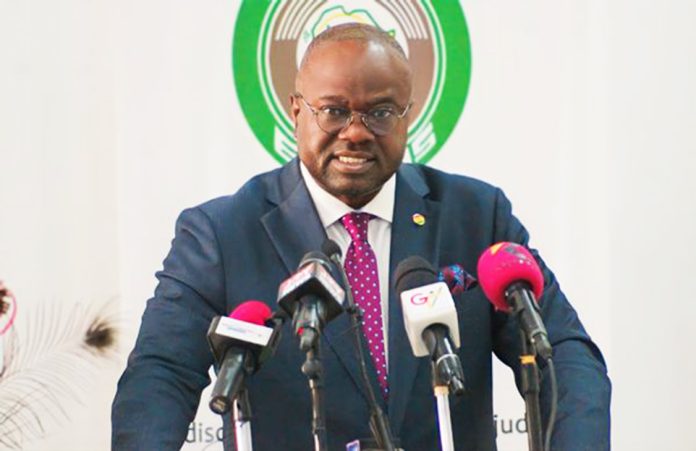
Mr Kwaku Ampratwum-Sarpong

The Minority in Parliament has described President John Dramani Mahama’s recent engagement with selected Civil Society Organisations (CSOs) on illegal mining as nothing more than a “publicity gimmick” aimed at covering up what it calls the government’s “failed attempts” at dealing with the galamsey menace.

In a statement issued by Kwaku Ampratwum-Sarpong, Member of Parliament for Mampong and Ranking Member on the Lands and Natural Resources Committee, the Minority said the so-called CSO encounter was “a publicity stunt calculated to cover up the Government’s failed attempts at dealing with illegal mining.”

The statement expressed disappointment that despite worsening environmental conditions, including the browning of water bodies, soil contamination and destruction of forest reserves, President Mahama could “look into the eyes of Ghanaians and tell us he is winning the fight against illegal mining.”

According to the Minority, the illegal mining situation has kept worsening by the day, contrary to claims by the government that it is making progress.

It cited findings from a joint report by Pure Earth and the Environmental Protection Authority (EPA), which confirmed heavy contamination of soils and food crops across the country.

“It is obvious that the galamsey menace keeps worsening by the day. We are, therefore, surprised that amid increasing turbidity levels and the glaring browning of our water bodies, the heavy contamination of soils and food crops, the wanton destruction of our forest resources and the indiscriminate degradation of our lands, the President of the Republic could look into the eyes of Ghanaians and tell us he is winning the fight against illegal mining,” the statement said.

The Minority further accused the Mahama-led government of lacking the political will to address the crisis, arguing that the administration has resorted to renaming policies and programmes introduced by the previous Akufo-Addo government, instead of implementing real reforms.

“Without a doubt, this Government lacks the political will to fight galamsey and has merely resorted to the renaming of policies and programmes introduced by the Akufo-Addo Government,” the statement noted.

It recalled that when the Akufo-Addo administration took office in 2017, the galamsey menace had reached alarming levels, prompting warnings that Ghana could soon be forced to import water if the trend continued.

To confront the issue, the previous government implemented a six-month moratorium on small-scale mining activities — both legal and illegal — which was later extended to a total of 18 months.

During that period, the statement highlighted the Akufo-Addo government introduced several initiatives, including the establishment of the Inter-Ministerial Committee on Illegal Mining (IMCIM) to coordinate the fight against galamsey and the launch of Operation Vanguard to rid water bodies and forest reserves of illegal mining activities.

Additionally, the government partnered with the George Grant University of Mines and Technology (UMaT), Tarkwa, to train 4,000 small-scale miners on responsible and environmentally-sound mining practices and amended the Minerals and Mining Act, 2006 (Act 703), to enhance punishments for mining-related offences.

“These measures helped the then Government to come to grips with the illegal mining menace,” the Minority’s statement said, adding that the Akufo-Addo administration “adopted a two-pronged approach combining law enforcement with regulatory, operational and policy reforms.”

Among the law enforcement measures outlined were the declaration of water bodies as Red Zones for all mining activities and a ban on reconnaissance and exploration in forest reserves except under exceptional circumstances.

The statement noted that, these restrictions remained in place until the Akufo-Addo government left office and have now been rechristened as security zones.

It also mentioned the introduction of Operation Halt II, in partnership with the Ministry of Defence, to rid river bodies and forest reserves of illegal mining, the acquisition of five speed boats for the Ghana Navy and the training of 200 river guards to protect water bodies.

“These guards were not deployed before leaving office, but have now been deployed and renamed Blue Water Guards,” the Minority observed.

Other measures cited included the recruitment of additional mine inspectors, establishment of small-scale mining committees in all 83 mining districts, and the passage of the Minerals and Mining (Minerals Operation – Tracking of Earthmoving and Mining Equipment) Regulations, 2020 (L.I. 2404), which introduced tracking devices for mining machinery.

The statement also mentioned the establishment of a control room at the Minerals Commission to monitor mining equipment movements and the organisation of training sessions for judges in mining areas to ensure strict enforcement of the law.

In addition to law enforcement, the Minority recalled several policy and regulatory interventions by the previous government, including the revamping of the Community Mining Scheme, introduction of mercury-free gold processing technology (Gold Kacha) and decentralisation of the Minerals Commission to improve accessibility and monitoring.

Other reforms listed were the creation of the Small-Scale Miners Award Scheme, the introduction of online applications for small-scale mining licenses, and the National Alternative Employment and Livelihood Programmes (NAELP), which have now been renamed Responsible Cooperative Mining and Skills Development Programme (rCOMSDEP).

The statement maintained that the current government’s approach has been largely cosmetic and has failed to address the root causes of illegal mining.

“It is becoming increasingly clear that the Government of President Mahama has failed to demonstrate the level of resolve required to address the galamsey crisis in a comprehensive and effective manner,” the Minority said.

It warned that as a result of government’s inaction, the nation now faces “escalating health and environmental dangers,” including dangerously high turbidity levels in rivers, contamination of food and water, degradation of forest reserves and destruction of railway lines in mining zones.

“Turbidity levels in our rivers are now dangerously high, vital organs of citizens are being irreparably damaged by contaminated food and water, railway lines have become unsafe, and our forest reserves are being degraded into mining enclaves,” the statement noted.


Why I admire Justice Richmond Osei Hwere –Appeal Court Judge

0
Opinion

Last Thursday, as I read the news about the swearing-in of newly promoted Appeal Court judges, I was both curious and eager to see one particular name — Justice Dr. Richmond Osei Hwere.

Paragraph after paragraph, I scanned the story with a pounding heart, hoping to find his name among the promoted judges. And indeed, there it was — Justice Osei Hwere had been elevated to the Appeals Court.

As a journalist, I came to know him while covering cases at Sekondi High Court 1, where he served as the presiding judge. He was later transferred to Accra shortly after the 2024 general elections. From the very beginning, I had formed a lasting impression of him and decided that one day, upon his transfer or promotion, I would write this piece. That day has come.

In my years of reporting from Magistrate, District, Circuit, and High Courts, I had never been as affected by a judge’s transfer as I was when Justice Osei Hwere left Sekondi for Accra. This is the first time I have felt compelled to put such reflections into writing.

I first encountered Justice Osei Hwere’s work when I began covering proceedings at Sekondi High Court 1 — and I must confess, I “fell in love” with his style of justice. To be clear, I had no personal relationship with him, though I often hoped to meet him beyond the courtroom.

The first major case I covered in his court was Joshua Kwofie vs Dorcas Affo-Toffey, a politically charged suit. The petitioner, Joshua Kwofie, challenged the eligibility of DorcasAffo-Toffey, the Member of Parliament for Jomoro, arguing that she held dual citizenship at the time she filed her nomination on the ticket of the National Democratic Congress (NDC). Kwofie was represented by lawyer Frank Davies, while Affo-Toffey’s legal team was led by lawyer Edudzi Tamakloe.

Covering this case, along with several chieftaincy and civil matters, deepened my admiration for Justice Osei Hwere. He embodied the legal maxim:“Justice must not only be done but must also be seen to be done.”

This principle, famously articulated by Lord Chief Justice Hewart in R v Sussex Justices, ex parte McCarthy, was vividly alive in his courtroom. If anyone ever doubted Ghana’s judiciary, observing Justice Osei Hwere at work would restore their faith.

His speeches, mannerisms, and body language exuded fairness, impartiality, and hope. His judgments and rulings were always thoroughly researched and nearly impossible to overturn on appeal.

For instance, in the KwofievsAffo-Toffey case, he ordered the respondent to produce her citizenship renunciation certificate, following her admission that she had previously held dual citizenship. When lawyer Edudzi Tamakloe contested this ruling — arguing that “he who alleges must prove” — the Appeal Court upheld Justice Osei Hwere’s decision.

Similarly, in AwulaeAttibrukusu& 6 Others vsSekondi House of Chiefs (ex parte Angmatuo Gyan), lawyer Israel Ackah challenged Justice Osei Hwere’s decision to nullify a House of Chiefs election over quorum issues. Once again, the Appeal Court affirmed his ruling.

Among lawyers in Sekondi, there’s a shared sentiment: “You contest Justice Osei Hwere’s rulings at your own risk.” Lawyer Ekow Amua Sekyi told me on my first day in his courtroom, “He is a very fair, firm, and brilliant judge.” Over time, I became a living witness to this statement.

But beyond his legal brilliance, what stood out to me was his humanity. Justice Osei Hwere was respectful, humble, and treated witnesses, parties, and lawyers with dignity. I often wondered if he ever got angry, as he remained calm in situations where other judges might have lost their temper.

His soft yet firm voice commanded respect. His rulings were always read audibly, ensuring everyone in the courtroom could follow proceedings — something that made my work as a court reporter significantly easier.

Justice Dr. Richmond Osei Hwere is truly a gem — a judge who represents integrity, fairness, and professionalism. His promotion to the Appeals Court is not just a personal achievement; it is a beacon of hope for Ghana’s judiciary.Your Lordship, continue to shine. Ghana’s justice system needs more like you.


Editorial: HPV Vaccination Is Not Optional, It Is Essential

0
Editorial

Yesterday, The Chronicle reported on the Ashanti Regional Health Directorate’s organisation of a stakeholders’ engagement on Human Papillomavirus (HPV) vaccination introduction in Ghana. The Chronicle welcomes and fully supports the nationwide Human Papillomavirus Vaccination campaign, which was recently launched by the Ghana Health Service (GHS), as part of efforts to reduce the burden of cervical and other HPV-related cancers in the country.

The initiative is part of a broader national effort to protect girls aged 9 to 14 years against HPV, the virus responsible for the majority of cervical cancer cases. HPV is a highly common viral infection, primarily transmitted through skin-to-skin sexual contact. In addition to causing genital warts, the virus can lead to precancerous changes and various forms of cancer, including cervical, vaginal, vulvar, anal, penile and oropharyngeal (throat) cancers.

The vaccination campaign, scheduled to take place from October 7 to 11, 2025 aims to immunize 2.4 million adolescent girls nationwide, with 379,609 girls targeted in the Ashanti Region alone. Vaccination sites will include schools and community outreach centers, ensuring accessibility for girls in both urban and rural communities.

According to Dr. Fred Adomako-Boateng, the Ashanti Regional Director of Health Services, the integration of the HPV vaccine into Ghana’s routine immunization programme represents a major public health achievement. He emphasized that this is not just another health intervention, but a national responsibility to safeguard the future of Ghanaian girls and women.

Cervical cancer remains one of the leading causes of cancer-related deaths among women in Ghana and across Africa. Fortunately, it is also one of the most preventable. The HPV vaccine provides an essential opportunity to build immunity in girls before they are ever exposed to the virus, drastically reducing their risk of developing cervical and other HPV-related cancers later in life.

According to the HPV Information Centre, Ghana has an estimated 10.6 million women aged 15 years and older who are at risk of developing cervical cancer. Each year, 2,797 women are diagnosed and 1,699 die from the disease. These sobering statistics place cervical cancer as the second most frequent cancer among women in Ghana, particularly those between the ages of 15 and 44.

Although nationwide data on HPV prevalence in the general population is limited, studies from West Africa suggest that about 4.3% of women carry high-risk HPV strains, particularly HPV types 16 and 18 – responsible for over 55% of cervical cancer cases in the region.

With this context, the urgency and importance of the vaccination campaign cannot be overstated. Vaccines are among the most effective tools in disease prevention. Administering the HPV vaccine to girls between the ages of 9 and 14 years before they become sexually active, is the most effective way to protect them from developing HPV-related cancers in the future.

The Chronicle applauds this initiative and call on all Ghanaians parents, guardians, teachers, traditional leaders, community health workers and policy makers to fully support the campaign. We encourage parents and guardians to ensure their eligible daughters receive the vaccine and we urge educators and community leaders to play their part in spreading accurate information and dispelling myths or misinformation surrounding the vaccine.

This is a pivotal moment in our public health journey. Let us unite behind this national effort to secure a healthier, cancer-free future for our girls and women.

KKMA joins national cleanup exercise  

0

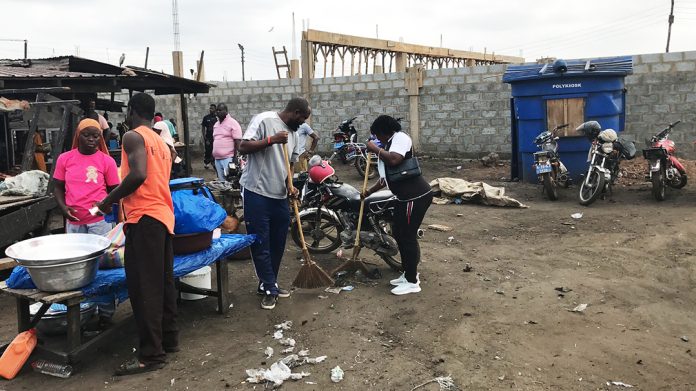
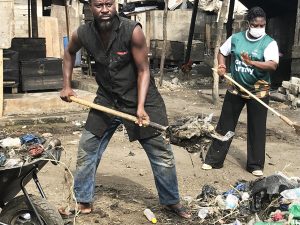
The Kpone-Katamanso Municipal Assembly (KKMA) has organised a cleanup exercise within the various communities in the municipality as part of the National Sanitation Day.

The exercise was participated in by drivers, traders, chiefs, assembly members and staff from the municipal assembly.

Mr. Samuel Tetteh Kwarshie Morton, the Kpone-Katamanso Municipal Chief Executive (MCE), speaking to the Ghana News Agency (GNA), said the turnout for the sanitation day and cleanup exercise was encouraging, as announcements were made by the assembly members and opinion leaders of the community.

Mr. Morton noted that the national exercise would be carried out every first Saturday of the month and the assembly would ensure that a weekly one is additionally carried out in the municipality.

He stated that during the exercise, they noticed that most traders have taken over portions of the gutters and drains where they have put up their structures, causing severe flooding and damage around those areas, especially when it rains.

He said the assembly, over the years, did not enforce the laws regarding pedestrian walkways, leading to the traders encroaching on those areas, adding that caution has been sent to them to vacate the place.

The MCE expressed appreciation to the traders and community members who joined the exercise for their enthusiasm and dedication to the cleanup, adding that the assembly would fully equip them with the necessary tools.

He also pledged to frequently visit the timber market and the meat market at Tulaku to ensure they keep the environment clean always.

Mr. George Freeman, the Kpone-Katamanso Municipal Environmental Health Director, said that the exercise is a directive from the Greater Accra Regional Coordinating Council aimed at cleaning the communities every first and last Saturday of the month.

Mr. Freeman noted that sanitation, which is a collective responsibility, keeps the communities clean and free from any outbreaks of diseases and pests.

He appreciated the community, especially those around the Timber market and the Tulaku Meat market, for participating in the exercise and urged them to continue keeping their various surroundings clean to avoid any further outbreaks.

Mr. Ibrahim Zakari, the Chairman of the Tulaku Youth Association, appealed to the assembly to provide them with the materials to work to keep the environment, especially the meat market, clean.

He further appealed to them to provide a proper slaughterhouse for the butchers and traders to always provide the country with fresh and clean meat, as the meat market is the biggest in the country.

GNA

There are many unqualified Teachers in Nigeria, TRCN raises alarm

0
Nigerian Teacher

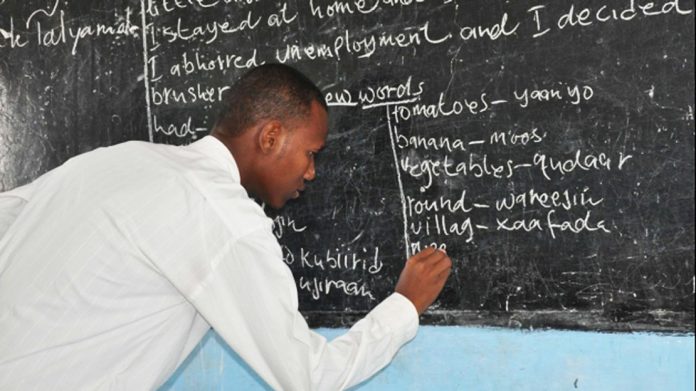
The Teachers Registration Council of Nigeria (TRCN) has decried the lack of qualified teachers in Nigeria as one of the reasons for the drop in educational standards in the country.

The Chief Executive Officer of the Council, Dr Ronke Soyombo, raised the alarm while appearing as a guest on Channels Television’s The Morning Brief on Monday, in celebration of the 2025 World Teachers Day.

While speaking on this year’s theme, ‘Recasting Teaching As A Collaborative Profession’, Dr Soyombo noted that while there were teachers without required qualifications, there were also those with genuine interest in the profession but could not be enrolled due to lack of qualifications.

She, however, said the Council is currently taking steps to tackle shortage of teachers in the profession.

“There are many unqualified teachers in the profession. We have those teaching in classrooms but don’t have the teaching qualifications, particularly in private schools.

“Again, it is one thing for you to say you have been to teacher’s college, and it is another thing to be able to break it down to the level of the students to soothe their specific needs. This challenge has to be addressed, and as soon as we have the accelerated programme, that is going to bring a lot of teachers in, because they don’t want to come to public schools. And what is stopping them is that they don’t have education degrees.”

Credit: channelstv.com

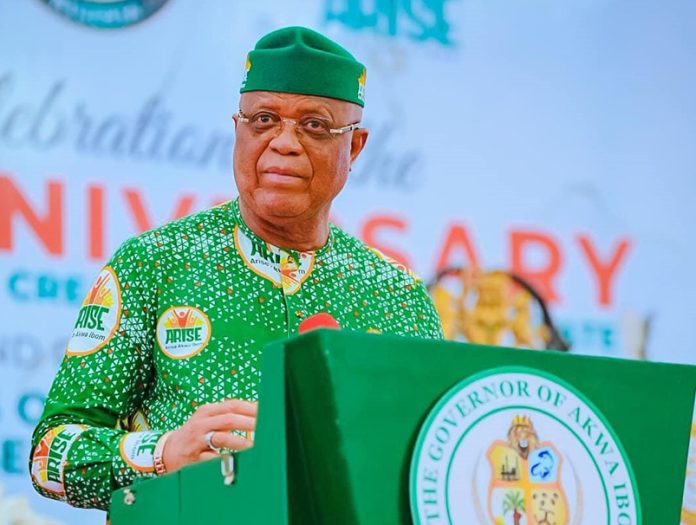
Eno denies withdrawal of Ex-Gov Emmanuel’s security details

0
Governor Umo Eno

The Akwa Ibom State Government has denied reports alleging that Governor Umo Eno ordered the withdrawal of security personnel attached to his predecessor, Udom Emmanuel.

Briefing journalists at the Government House in Uyo, the state Commissioner for Information, Aniekan Umanah, described the reports as false and misleading.

He insisted that the deployment or withdrawal of police officers does not fall within the powers of any governor.

“The deployment, reassignment, or withdrawal of police officers is the exclusive responsibility of the Inspector-General of Police and the Commissioner of Police in each state, not the duty of any governor,” Umanah said.

“I can tell you on good authority that Governor Umo Eno did not issue any directive to withdraw security operatives from the immediate past governor.”

The commissioner added that all former governors of Akwa Ibom State continue to enjoy their security details as approved by law.

“To the best of our knowledge, there has been no complaint or report from any former governor or their media aides about the withdrawal of security personnel. The rumour exists only in the imagination of those peddling it,” Umanah said.

He urged members of the public to disregard what he called “baseless propaganda,” stressing that Governor Eno remains focused on promoting peace, unity, and good governance across the state.

Emmanuel, who played a key role in Eno’s emergence as governor under the Peoples Democratic Party in 2023, is regarded as his political mentor.

However, their relationship is believed to have strained in recent months following Eno’s reported defection to the All Progressives Congress.

Credit: channelstv.com

Nigeria needs new constitution –Deputy Speaker Kalu

0
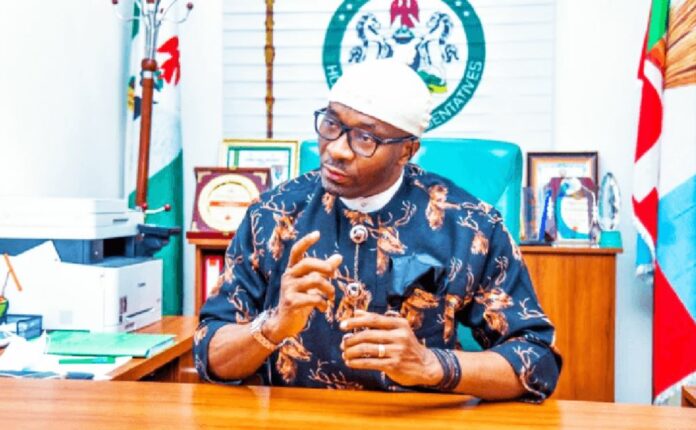
Deputy Speaker, Benjamin Kalu

The Deputy Speaker of the House of Representatives, Benjamin Kalu, says Nigeria needs a constitution capable of allowing its democracy to thrive.

Kalu stated this at a consultative session with the National Chairmen, secretaries and women leaders of the registered political parties in Abuja on Monday.

Addressing the audience, Kalu, who is also Chairman of the House Committee on Constitution Review, said although the nation has witnessed a giant leap in its democratic journey since 1999, more needs to be done to make democracy work not only on paper but in reality, for the benefit of Nigerians.

DAILY POST reports that the 10th House of Representatives under Tajudeen Abbas, in conjunction with the Senate, is reviewing identified clauses of the 1999 Constitution in a bid to deepen governance and make democracy count for the people.

The Kalu-led committee embarked on a nationwide tour of the six geo-political zones recently, holding stakeholders’ engagements with various groups, having identified such areas as power devolution, independent candidacy, local government autonomy, state police and special seats for women.

The Committee has promised to make available the final draft of a reviewed constitution to the parliament for consideration and adoption in December 2025.

Credit: dailypost.ng


Ex-President Jonathan dragged to court over bid to participate in 2027 election

0
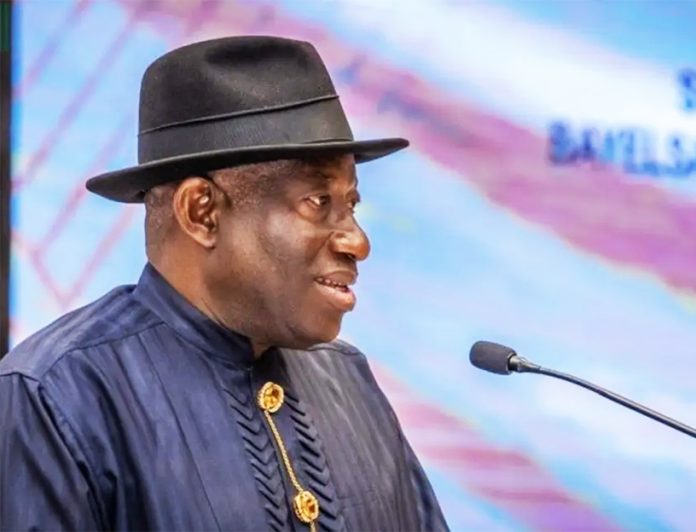
Former President Goodluck Jonathan

The Federal High Court in Abuja, was Monday, asked to issue an order of perpetual injunction, restraining former President Goodluck Jonathan from presenting himself to any political party in the country for the purpose of contesting the 2027 presidential election.

The court was equally urged to bar the Independent National Electoral Commission, INEC, from accepting from any political party, Jonathan’s name or publishing same as a duly nominated candidate for the presidential contest.

While ex-President Jonathan was cited as the 1st defendant in the matter, both INEC and the Attorney General of the Federation, were listed as 2nd and 3rd defendants, respectively.

Specifically, the suit, marked: FHC/ABJ/CS/2102/ 2025, hich was brought before the court by a lawyer, Mr. Johnmary Chukwukasi Jideobi, posed a lone question for the court to determine:

“Whether in view of the combined provisions of the entirety of Sections 1(1), (2) & (3) and 137(3) of the 1999 Constitution of the Federal Republic of Nigeria as amended and their conflated interpretation, the 1st Defendant is eligible, under any circumstances [whatsoever] to contest for the office of the President of the Federal Republic of Nigeria?”

Upon the determination of the question, the plaintiff, sought four principal reliefs, to wit:

“A declaration of this Honourable Court that upon an intimate reading and complete understanding of the entirety of Sections 1(1), (2) & (3) and 137(3) of the 1999 Constitution of the Federal Republic of Nigeria as amended the first Defendant [GOODLUCK EBELE JONATHAN] is ineligible to stand for or occupy the office of the President of the Federal Republic of Nigeria.

“A declaration of this Honorable Court that in view of the entirety of Sections 1(1), (2) & (3) and 137(3) of the 1999 Constitution of the Federal Republic of Nigeria as amended the 2nd Defendant [the INEC] lacks the constitutional power to receive from any political party the name of the first defendant or publish same as the candidate of any political party for the election into the office of the President of the Federal Republic of Nigeria holding in 2027 and other years to come.

“An order of perpetual injunction of this Honourable Court restraining the first Defendant [Goodluck Ebele Jonathan] from presenting himself to any political party in Nigeria for nomination as its candidate for the general election into the office of the President of the Federal Republic of Nigeria holding in 2027 and other years to come.

“An order of perpetual injunction of this Honourable Court restraining the 2nd Defendant [INEC] from either accepting from any political party in Nigeria the name of the 1st Defendant [Goodluck Ebele Jonathan] or publishing same as a candidate for election into the office of the President of the Federal Republic of Nigeria holding in 2027 and other years to come.”

Credit: dailypost.ng

Betterland Ghana’s mining investment in danger

0
Betterland Ghana

A 100 percent Ghanaian-owned large-scale mining company’s plan to commence commercial operations in the Gwira Forest has been thrown into uncertainty following government’s decision to review the Minerals and Mining laws, particularly those governing mining in forest reserves.

The company, Betterland Ghana, had projected to begin full-scale mining in the first quarter of 2025 on a 62-square-kilometre concession acquired in the Gwira Banso Forest in the Western Region.

However, the government’s latest policy, which includes moves to declare forest reserves as security zones, effectively halts the company’s planned investment.This development could render the investments made by the shareholders of Betterland Ghana worthless.

Prior to the policy shift, Betterland Ghana had secured an entry permit from the Forestry Commission (FC) to undertake pre-mining activities in the forest.

In December 2024, the company held a media engagement to court public support.At that event, the Chief Executive Officer of Betterland Ghana, Isaac Osei, stated that the company had followed all legal procedures to acquire the concession.

“We have a full entry permit to undertake pre-mining activities. Forestry Commission took us through a rigorous process before eventually granting us the permit. FC will not issue a permit if our mining activities pose environmental risks,” he explained.

Osei stressed that the company is entirely Ghanaian-owned and called on the media to support its operations, while welcoming constructive criticism. He, however, declined to disclose the identities of the Ghanaian shareholders during a question-and-answer session.

“I can tell you Betterland is 100% owned by Ghanaian businessmen, and I am one of the shareholders,” he said.

He also acknowledged that the GwiraBanso concession is the company’s first mining project, adding that a strong team had been assembled to ensure the project’s success.

Project Manager of Betterland Ghana, David William Alan Thomas, assured that the company’s operations would combine both mining and reclamation activities to minimize environmental impact.


Rural Banks CEOs plead with BoG to reverse directive on tenure limits

0
Alhaji Hayatudeen Awudu Ibrahim

Alhaji Hayatudeen Awudu Ibrahim, the President of Rural and Community Banks (RCBs) Chief Executive Officers (CEOs) Group, has called on the Bank of Ghana (BoG) to reverse its 2021 corporate governance directive which limits RCBs CEOs to a maximum of three four-year terms.

According to him, the directive contravened Article 107 (b) of the 1992 Constitution, and that nearly all the seasoned CEOs who had served their banks and the industry with distinction would be compelled to step down in the next six months due to the implementation of the directive.

Speaking in an interview, Alhaji Ibrahim stated that while, they recognised the directive’s essential role in safeguarding the financial system and enabling innovation, they continued to contend that the transitional arrangement on tenure of office of CEOs in the directive was against the law.

He said: “Over the past three and half years, we have pursued constructive dialogue and engagement with the BoG, with the hope that they would revisit and amend paragraph 78 of the directive.

“However, a letter from the Head of Other Financial Institutions Supervision Department, in May this year on the matter suggested the said paragraph 78, which affects some of our CEOs’ tenure and potentially forces them into compulsory retirement, would not be revisited or revised.”

Alhaji Ibrahim expressed concern that the adverse consequences the rural banking industry would face would far outweigh any perceived benefits if the directive were not revised.

He thus implored the BoG to reconsider its stand on the matter and adopt a more prudent and inclusive approach in line with the laws of the country to help foster the growth and prosperity of the rural banking industry.

Meanwhile, he said: “To ensure clarity and fairness, we will explore all lawful avenues to seek redress and guidance as necessary, including legal recourse if required, to protect our members’ rights in accordance with the laws of Ghana.”

This, Alhaji Ibrahim noted, was crucial to preserving the institutional capacity, continuity, and strategic leadership that the RCBs needed to remain competitive and innovative in the financial ecosystem.

From Emmanuel Gamson, Takoradi

GNA

The Ghanaian Chronicle