Home Blog Page 543

Supreme Court Justice calls for comprehensive redefinition of legal education in Ghana

0

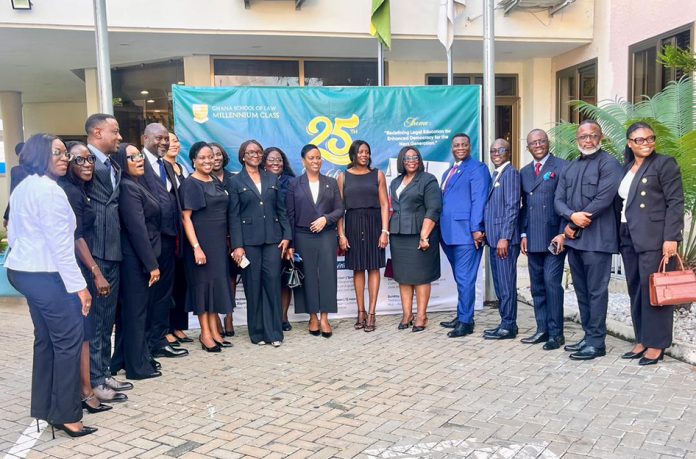
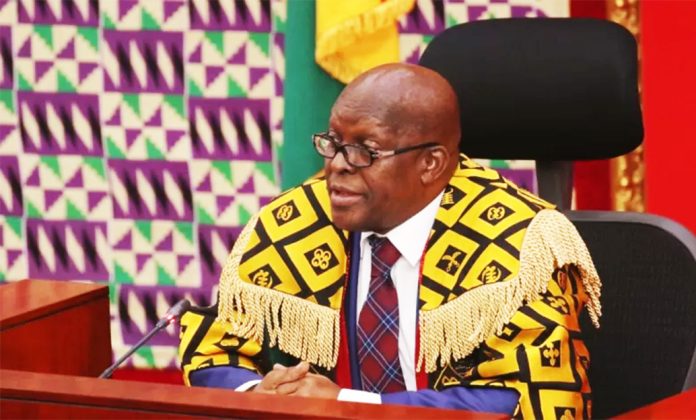
Justice Ernest Yao Gaewu, a Supreme Court Judge, has called for a comprehensive redefinition of legal education in Ghana, arguing that the current model is inadequate for preparing lawyers to meet contemporary democratic challenges and protection of constitutional governance.

Justice Gaewu said this during the launch of the 25th Anniversary celebration of the Ghana School of Law Millennium Class of 2000 on Monday, where he spoke on the theme: “Redefining Legal Education for Enhanced Democracy for the Next Generation.”

He stated that across the world, democratic norms were eroding with judicial independence under threat, largely because of disinformation and misinformation in public discourse and subordination of the rule of law to political expediency.

The current model of legal education in Ghana was not fully equipping the next generation to meet those challenges because it was centred on technical proficiency; case law, statutes, and procedural rules, Justice Gaewu noted.

“These are vital but not sufficient. To redefine legal education for the future, we need lawyers who are not only legal technicians but also civic leaders, critical thinkers, ethical actors, and empathetic advocates,” he said.

“In this landscape, the role of the legal profession is not merely to interpret laws. It is to safeguard democratic institutions, amplify marginalised voices, and uphold justice in its most inclusive sense.”

The Supreme Court Justice challenged legal educators and practitioners to fundamentally reconsider the purpose of legal training by asking: “What kind of lawyers does democracy need today?”

He provided four pillars for reformed legal education – democratic literacy, access to justice and public interest law, interdisciplinary approaches and ethical and moral reasoning.

“Law Schools must teach students the foundational principles of democratic governance, not just in constitutional law classes but across the curriculum…

“Students must understand how laws shape and are shaped by social power and political structures,” he explained.

Justice Gaewu called for clinics, legal aid projects, and pro bono work to be embedded in the curriculum not as electives but as core experiences, noting that their relevance in enhancing access to justice delivery could not be overstated.

Regarding interdisciplinary approaches, he said “Tomorrow’s legal minds must be fluent in economics, political science, technology, environmental science, and history, because the problems they will face – AI and privacy, climate change justice, global inequality – do not respect disciplinary boundaries.”

Justice Gaewu also encouraged Ethical and Moral Reasoning in the legal fraternity, urging practitioners to cultivate knowledge but wisdom and make legal education elevate character and integrity as much as it does intellect.

“Democracy is not self-sustaining. It relies on guardians – on those who understand the law, who believe in justice, and who are brave and fearless enough to act when others remain silent. Legal education is the seedbed where such guardians are grown,” he stated.

Ms Isabel Boaten, President, Greater Accra Bar Endorses, a member of the Millennium Class, noted that the voices of lawyers were most important at a time where democratic development was being pursued.

She said legal education must recognise Ghana as part of a near-trillion-dollar global industry, spinning on the axis of a multipolar world, with technology and AI in a spiral, enhancing the global competition.

“As lawyers in academia, the bench, private practise, as corporate counsel, we have the privilege to be part of the connected thinking… and can contribute meaningfully to the redefinition of legal education in Ghana,” Ms Boaten said.

By Francis Ntow 

GNA 


Tarkwa Circuit Court Remands 12 Over Destruction of Takoradi–Nsuta Rail Line

0
A court gavel

Twelve individuals accused of engaging in illegal mining activities that led to the destruction of portions of the Takoradi–Nsuta railway line have been remanded into prison custody by the Tarkwa Circuit Court.

The suspects — Lari Kwaku, 30; Ali Asumah, 33; Yindari Mombe, 19; Dennis Adom, 29; Alex Kofi Acquah, 27; Jonathan Agandor, 30; Lambing Noyisi, 38; Isaac Arhin, 33; Nurudeen Kwabena, 22; Kwame Simo, 27; Jude Azum, 20 and Combat Daniel, 18, are all residents of Akyem.

They have been charged with conspiracy to commit crime, undertaking mining operations without a licence and causing unlawful damage.

ASP Beatrice Turkson, Police Public Affairs Director for the Western and Central Police Command in a press statement indicated that, during Tuesday’s court proceedings, the pleas of the accused were not taken.

The prosecution prayed the court to refer the case docket to the Attorney-General’s Department for legal advice. The presiding judge subsequently remanded all 12 accused persons into prison custody for two weeks.

They are scheduled to reappear in court on October 21, 2025.The accused arrest followed the circulation of a viral video showing extensive illegal mining activities dangerously close to the railway tracks, as well as the assault of a Ghana Railway Company staff member.

A joint police team comprising personnel from the Regional Operations Unit, Police Intelligence Directorate (PID), and the Formed Police Unit (FPU) swiftly moved to the site. Upon arrival, the team discovered deep mining pits and trenches dug directly beneath sections of the railway line, leaving parts of the track hanging and unsupported.

Three water pumping machines were retrieved from the scene as exhibits, while several chanfan machines used in the illegal mining operation were destroyed.

How Weather Changes Affect Your Eczema

0

Weather can be tough on anyone’s skin, especially if you have eczema. But which weather is worst? That depends on the person. Hot, cold, humid, and dry — any type of weather can cause an eczema flare-up in some people.

Find out how to prepare for your itchy weather — and the ways that weather can trigger your symptoms.

How Weather Affects Your Skin

Healthy skin acts as a barrier to protect you — the way a good coat of paint guards your house from the summer heat and winter snow.

But when you have eczema, that barrier just doesn’t work as well. It leaks moisture, so your skin can get dried out and gets more irritated by heat, cold, humidity, wind, and more.

Weather also can affect your eczema indirectly. For example, a warm, windy day can blow pollen into the air and onto your skin. If you’re allergic, that means an itchy flare-up. The weather can change your own behavior as well. If you’re outside more in the warmer months and huddled under a blanket in the winter, you’ll be exposed to different eczema triggers in different seasons.

Eczema in Hot, Humid Weather

For some people with eczema, warm, sunny, and humid weather brings relief. Others find that the hot weather triggers prickly heat and a frenzy of scratching. To ease symptoms, try these tips:

Don’t get too sweaty. Sweating dries out your skin, and the salt in sweat can sting and irritate it. So try to stay cool. Take it easy on hot days and stick to indoor activities. Use air conditioning or a fan if you need one.

Wear soft, breathable clothing. Keep your skin cool by staying away from nylon, wool, rough linen, or any fabric that’s stiff or itchy. Generally, cotton is best.

Know how the sun affects you. Sunlight can be a salve for eczema. In fact, people with severe cases can benefit from ultraviolet ray treatments. But others find that sunlight is a trigger. If you’re one of them, shield yourself with clothes and a hat.

Prepare before you swim. Chlorine in pools or the salt in seawater can be irritating for some people with eczema. Apply a layer of lotion before you dive in to see if it helps.

Rinse off possible triggers. Take a quick, cool shower to soothe your skin and wash away sweat, chlorine, salt water, pollen, or other triggers. Gently pat yourself dry and apply cream right away.

Watch the sprays and lotions. Sunscreens and bug sprays can have chemicals that trigger symptoms. Opt for sunscreens that physically block the ultraviolet rays with the minerals zinc oxide or titanium dioxide. Test a sample on your arm before you slather it all over your body.

Eczema in Cold, Dry Weather

Winter air can be hard on your skin, drying it out and triggering an eczema flare-up. Here’s what you can do:

Keep showers tepid. It’s especially hard in the winter, but you always need to use lukewarm water in the shower or bath. Hot water can trigger symptoms, especially if you’re changing temperatures quickly — like coming inside from shoveling snow and hopping into a hot bath.

Moisturize! You should already be doing it daily — ideally right after you bathe — year round. But it’s especially important when the weather is cold. Make sure you apply the cream or ointment your doctor recommends on any body parts that might be exposed to cold air, like your face and hands. Think of cream as an extra barrier you need to help lock in moisture and protect your skin.

Guard against itchy clothes. Your cozy wool sweater can be an eczema trigger. If you do wear wool, use a cotton shirt underneath to cover your skin. Wear cotton gloves under your winter gloves or mittens.

Don’t overheat. When you’re bundled up in a heavy coat, it’s easy to break out in an itchy sweat. Wear layers, and take them off and put them on as needed to stay comfortable.

Watch out for indoor allergens. If you’re cooped up inside in winter weather, you may be surrounded by indoor allergens — like pet dander, dust mites, and more. If allergies are a trigger for your eczema, take steps to control them. Keep pets out of your bedroom, put dust mite-proof covers on your mattress and pillows, remove carpeting, and wash sheets and blankets regularly.

When to See a Doctor

If you feel like you’re losing the battle with Mother Nature over your weather-related symptoms, see your doctor or dermatologist. They can help you pinpoint the causes and can also prescribe different or more powerful remedies, including corticosteroid creams or ointments and antihistamines.

Credit: webmd

Feature: If We Trade Confirmation For Conjecture, We Mortgage Credibility…

0
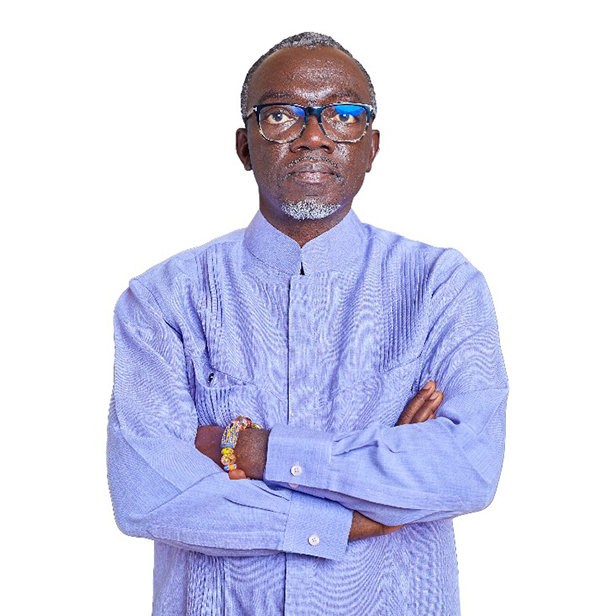
Professor Douglas Boateng - the writer

When truth becomes a spectator in public debate, credibility collapses, and nations quietly lose their moral balance.

Ghana stands at a delicate crossroads where facts must reclaim their rightful place above factions. Over the last fourteen months, our national dialogue, especially around some state institutions such as MIIF, has shown how easily perception can masquerade as proof.

The media’s role remains indispensable, and so too is its responsibility to verify before amplifying. As a nation that is increasingly striving for transparency and progress, we cannot allow conjecture to replace confirmation or let alternative facts fracture institutional credibility. Truth must be told, traced, verified, and protected.

As the former non-executive chair of a number of institutions, including MIIF and the now further transformed Labadi Beach Hotel, I remain invested in their fortunes because stewardship does not end with tenure.

Even well-run bodies pursue continuous improvement through dialogue with proven past executives and supervisory leaders. That is the spirit of Kaizen. Progress implies learning, not wrongdoing.


WHY MEDIA ENGAGEMENT MATTERS

It serves the public interest for media houses to invite current and former chief executives, including those at MIIF, individually or jointly, to present clear accounts to the public or, where necessary, in private. Investigations into potential wrongdoing must proceed. They are strongest when principals place documents, timelines, and decisions on the table for all to see. Transparency grows when all voices are heard, not in anger, but in accountability. Journalism is not the amplification of suspicion. It is the clarification of truth.

Anyone mentioned or implicated should be approached and afforded the opportunity to present their side of the facts before their names enter the headlines. Due process is not a courtesy. It is the foundation of trust and credibility.

Ghana’s media space is admired for its freedom and vibrancy. Freedom must walk with fairness. A democracy that weaponises perception risks turning truth tellers into targets and institutions into casualties.

On 4 October, during a JoyNews programme, a representative from the Bank of Ghana called in to correct an alternative fact about MIIF. It was unfortunate and regrettable. I felt for the distinguished interviewer who was placed in a difficult position in real time.

Such moments, even when unintentional, show the need for evidence based dialogue in our national discourse. Media remains one of democracy’s greatest guardians. With that power comes a duty to report with accuracy, balance, and fairness. Before any public institution or individual is discussed, it is right and ethical to approach the parties concerned to clarify or present their side of the facts. Balanced reporting requires facts, not fragments.


THE CONSEQUENCES OF ALTERNATIVE FACTS

A single broadcast can illuminate or inflame. When conjecture replaces confirmation, institutions suffer, reputations erode, and public trust falters. The spread of alternative facts is already affecting some state institutions and private citizens.

If left unchecked, it may discourage capable Africans from accepting national duty and from transferring critical skills to the public sphere. Ghana’s media landscape has the talent and influence to set a higher standard, one where integrity in reporting becomes the oxygen of national progress rather than a casualty of political heat. Credibility must never be sacrificed for sensational reach.

IMANI and some of its researchers and Fellows deserve commendation for aspects of their work that have contributed to national awareness and accountability. At the same time, all civic actors must remain cautious about the reliability and motivation of sources.

The critical question for every whistleblower or informant is simple. Are they acting in the national interest, or in pursuit of personal or political gain? Investigative and policy advocacy communities should work together for the common good, not for institutional applause.

Oversight must be objective, not opportunistic. Otherwise, even well-intended initiatives can erode confidence in state institutions and weaken the collective pursuit of good governance.

Whistleblowers who peddle falsehoods for selfish interests should be publicly exposed to deter the furnishing of watchdogs and media houses with alternative facts that advance private agendas.

Where the law so provides, they should be held accountable, including possible prosecution for causing reputational or economic harm to state institutions and individuals. Truthful whistleblowing strengthens democracy. Dishonest whistleblowing poisons it. The legitimacy of transparency depends on the authenticity of those who claim to defend it.


CONTINUITY AND GOVERNANCE PRACTICE

In many state institutions, current and former non-executive chairs and chief executives have yet to meet face-to-face. MIIF is among them. In my capacity as former Chairman of MIIF, I have formally requested such a meeting with my successor.

I am still waiting and looking forward to the meeting. The absence of a meeting does not prevent investigation. It does, however, create room for confusion and weakens institutional memory. Good governance requires more than handover notes. Outgoing and incoming leaders should meet to discuss long term obligations, risk registers, projects in progress, and matters of continuity. This discipline preserves facts, limits speculation, and protects national value.

Over the last 36 weeks, multiple narratives have circulated across television, radio, and social media. However unintended, they risk harming MIIF’s credibility and, by extension, Ghana’s reputation for continuity, integrity and predictability. Markets price uncertainty, and citizens ultimately bear the cost of it.

When narrative outpaces evidence, risk premia rise, partnerships stall, and managers spend time responding to noise rather than delivering results. Truth delayed can become opportunity denied.

Misinformation may garner applause in the short term, but it ultimately inflicts lasting damage. Nations build trust through facts, not factions. Institutions like MIIF form part of the scaffolding for future prosperity.

We should not chip away at that structure with politicisation or partial information. The Ghana brand and its associated institutional brands must be protected by facts, not by alternative facts.


NATIONAL INSTITUTIONS, NOT POLITICAL TROPHIES

State institutions are not assets of the government of the day, and they are not trophies for the opposition. They belong to Ghana and therefore to all of us. We cannot spend years building credibility with one hand and then weaken it with misinformation and partisanship with the other.

The public interest is best served when facts lead and when all parties respect due process. Today, former chairs and chief executives may be under the spotlight. In four or eight years, current leaders could face the same scrutiny. All deserve fair treatment.

Those found guilty of deliberate wrongdoing should face the consequences. Accountability must rest on actual facts, not on alternative or self-serving narratives.


GOVERNANCE IS ABOUT CONTINUITY, NOT CONTROL

Governance is not about control. It is about continuity. It is not about who occupies the seat, but about whether the seat serves the people. Leadership is tested not by the defence of power, but by the defence of process. When facts are buried beneath political dust, institutions stumble and nations lose their rhythm of progress.

Respected newsrooms can help move the national conversation from heat to light. The best journalism promotes understanding rather than echo. A balanced, fact led discussion may not resolve every question at once, but it will sharpen debate, model accountability, and rebuild confidence. This is a service to citizens and to those who carry responsibilities on the nation’s behalf.

This is not theatre, and it is not trial by microphone. It is responsible reporting in the public interest. It safeguards reputations where warranted and exposes wrongdoing where proven. Either outcome serves Ghana. Standards and fairness are not obstacles to truth; they are the pathway to it.


A SHARED DUTY TO LOWER THE TEMPERATURE AND RAISE THE STANDARD

This is a respectful request to media leaders, public officials, private citizens, and all who care about our democracy. We are duty-bound to help the current administration govern well by doing what is right, because when any government fails, the cost is borne by everyone and by future generations. Suffering does not choose a party.

Let us therefore lower the temperature and raise the standard. Let us listen more carefully, document more faithfully, and verify more completely. Let us invite those who know to speak on the record, and let us publish the full record for the nation to examine. We are one people. We should not allow politics to divide us where facts can unite us.


FINAL REFLECTION AND A HOPEFUL NOTE

Real facts, not alternative facts, must set the pace.

Let documents speak.

Let truth breathe.

Let fairness guide our words and our work.

Ghana has the talent, the institutions, and the democratic culture to get this right.

If we choose patience over haste, evidence over conjecture, and country over faction, we will strengthen trust at home and respect abroad. That is the surest path to shared progress. Ghana deserves nothing less, and with calm minds and steady hands, Ghana will achieve nothing less.

By Professor Douglas Boateng

Professor Douglas Boateng is a social entrepreneur and governance and industrialisation strategist

Today’s CAF World Cup Qualifiers Fixtures & Previews

0
Jordan Ayew, Ghana

Black Stars travel away to face Central African Republic

By Jesse Otoo

The Black Stars of Ghana travel away to face the Central African Republic, in their quest to seek qualification for the 2026 World Cup.

Coach Otto Addo would be looking to keep his job, and to do so, he has to qualify the Black Stars for the World Cup after missing out on the African Cup of Nations.

He has come under criticism recently and needs to deliver the necessary results to earn the support of the fans.

Ghana sits top of the table after eight matches played and also have scored the most goals. Ghana was impressive in their last two games and would seek to build upon it.

Black Stars have lost once in the qualification, and it was against Comoros, so they are really motivated going into this game.

Next year’s tournament would be historic as it is the first time three countries would host the tournament simultaneously. The players shining in their respective clubs would help the team going into this match.

Jordan Ayew is on form in the qualifiers with six goals to his credit and would look to bag in more in this encounter. It is going to be a tough encounter as this match can either secure Ghana’s qualification or hinder it.

The Central African Republic has had the worst form in this qualification. They have won one match of the eight matches played, lost 5 matches and two matches ended in a draw. There isn’t any light at the end of the tunnel for them. They go into this game to play for their pride and see if they can get a better result against the heavyweights in Africa (Ghana).

The Central African Republic has conceded twice the number of goals they’ve scored, which shows how sloppy they are defensively.

The last time these two teams met, Ghana won, but it wasn’t as easy as the Central African Republic gave the Black Stars a run for their money. The match, which was played in Accra, ended in a 4-3 scoreline, which went in favor of the hosts, Ghana.

The scenario remains promising for Ghana’s qualification prospects. If Madagascar beats Comoros, the latter will be out of contention for the top spot, and Ghana would only need a draw against the Central African Republic (CAR) to advance.

Conversely, a victory for Comoros over Madagascar would mean Ghana’s qualification is secured with a win against CAR. Even in a more challenging scenario, if Madagascar wins and Ghana also triumphs, the team’s chances of qualification are still high, considering their points and remaining fixtures.

Madagascar’s next encounter is against Mali, and it would be a tough match, and so the Black Stars’ chances of qualifying are high, and they need to be focused and also do away with any complacency.


Comoros and Madagascar lock horns on neutral grounds in Abidjan

Comoros and Madagascar will lock horns at the neutral Felix Houphouet-Boigny Stadium in Abidjan on Wednesday in a high-stakes penultimate clash in the race for a 2026 World Cup spot.

Warren Caddy, Madagascar

Only one point separates both nations, with Les Coelacantes — the nominal hosts for this encounter — sitting third on 15 points, just behind Barea, who trail leaders Ghana by three.

Whether the race for a direct ticket goes down to the wire will depend on the results from matchday nine in Group D’s fiercely competitive bracket, with Ghana hoping for a slip-up from Madagascar, though a share of the spoils in this fixture would best favour Mali, who are fourth on 12 points.

Should either scenario unfold and the Black Stars win their own game against the Central African Republic, they would seal direct qualification, while a stalemate in Abidjan would keep the Eagles’s playoff hopes alive ahead of their final-day clash, provided they beat Chad.

This makes Wednesday’s game a crucial one for both Comoros and Madagascar, as each side looks to build on victories from the previous outing, with Les Coelacantes heading into the clash on the back of a 2-0 away success over the CAR that continued a curious pattern of winning the second match of their double headers after losing the first.

While a trip to Bamako on the final day is never an easy task, Madagascar’s immediate challenge lies against a side that has proved to be a bone in the neck in recent encounters.

This is a high-stakes affair where both sides have everything to play for, and with their attacking strengths on display throughout the campaign, a tightly contested draw with goals on either side looks the most likely outcome.

Credit: sportsmole.co.uk


Mali face already-eliminated Chad

Mali make the trip to Mandjafa to face already-eliminated Chad on Wednesday evening in the penultimate match of the 2026 World Cup qualifying series in Africa, with hopes of securing a vital win to keep their fading playoff ambitions alive.

The Eagles can no longer achieve automatic qualification as they sit seven points behind Group I leaders Ghana, though being four adrift of second-placed Madagascar offers a faint glimmer of possibility for an indirect route to the mundial.

Yves Bissouma, Mali

Mali have never reached the global stage, and their hopes of a first-ever World Cup appearance suffered a setback last time out.

The Eagles entered matchday eight in second position, aiming to close the gap at the top, but a narrow 1-0 defeat away to Ghana ended hopes of a direct ticket and saw them drop down the standings.

Victories for Madagascar and Comoros in their respective fixtures compounded the woes of Tom Saintfiet’s men, who slipped to fourth, now four and three points adrift of both nations, who will also lock horns as Les Aigles face Chad.

While the Eagles no longer have full control over their destiny, the runners-up standings only make their task harder, with Mali’s 12 points (W3, D3, L2) leaving them three adrift of the lowest-ranked side among the four best runners-up.

This is a must-win encounter for Mali, who know any slip-up would end their playoff hopes, so anything short of a comfortable victory against a struggling Chad side they have beaten with ease in previous meetings would come as a major shock.

Credit: sportsmole.co.uk


Group A

Ethiopia 13:00 Guinea-Bissau 

Djibouti 16:00 Egypt

Sierra Leone 16:00 Burkina

Group D

Eswatini 13:00 Angola

Libya 13:00 Cape Verde

Mauritius 13:00 Cameroon 

Group E

Niger 19:00 Congo

Tanzania 19:00 Zambia

Group I

Central African Republic 16:00 Ghana

Chad 16:00 Mali

Comoros 16:00 Madagascar

Ghana’s Parliament Is Broke? …Speaker postpones commencement of 3rd Meeting of the First Session indefinitely

0

The Speaker of Parliament, Rt. Hon. Alban Sumana Kingsford Bagbin, has announced that the commencement of the Third Meeting of the First Session of the Ninth Parliament of the Fourth Republic has been deferred indefinitely, citing “circumstances beyond my control.”

However, sources have confirmed to The Chronicle that the real reason behind the indefinite postponement is that Parliament is ‘broke’.

It would be recalled that Parliament went on recess on Friday, August 1, 2025 after weeks of intense legislative business, which included the passage of several key bills, approval of agreements and debates on matters of national importance.

The House was expected to reconvene on Monday, October 6, 2025 for the Third Meeting of the First Session of the Ninth Parliament.

However, a statement issued and signed by the Speaker on October 6, 2025 announced that the resumption had been deferred until further notice.

“Pursuant to the Notice to Summon Parliament dated 29th September, 2025, I, Alban Sumana Kingsford Bagbin, Speaker of Parliament, hereby give notice that the commencement of the Third Meeting of the First Session of the Ninth Parliament of the Fourth Republic is deferred until further notice, due to circumstances beyond my control,” the Speaker stated.


Accra High Court Grants Chairman Wontumi GH¢15 Million Bail

0
Bernard Antwi Boasiako (Chairman Wontumi)
By Bernice Bessey

The Ashanti Regional Chairman of the New Patriotic Party (NPP), Bernard Antwi Boasiako, popularly known as Chairman Wontumi, has been granted bail in the sum of GH¢15 million by the Criminal Division of the Accra High Court.

Presided over by Justice Audrey Kocuvie-Tay, the court ordered Chairman Wontumi to produce three sureties, two of whom must justify their bail with landed property. All three sureties are required to submit copies of their Ghana Cards and digital addresses to the court’s registry.

As part of the bail conditions, Chairman Wontumi is to deposit his passport(s) with the court registry and report to the case investigator twice monthly — on the first and third Mondays of each month.The investigator has been directed to file evidence of the accused’s compliance with the reporting requirement.

Chairman Wuntumi has been charged alongside with his company Akonta Mining Company Limited and Kwame Antwi who is currently at large.Chairman Wontumi and his company has pleaded not guilty to assignment of mineral rights without approval and purposely facilitating an unlicenced mining operation. The case has been adjourned to October 28, 2025.


Jakpa’s Allegation Against Me Is Baseless -Dame

0
Godfred Yeboah Dame

Former Attorney-General and Minister for Justice, Godfred Yeboah Dame, has strongly dismissed allegations by businessman Richard Jakpa, now Director of Special Operations at the National Security Secretariat, describing them as “baseless,” “sour grapes” and “a desperate ploy to obstruct justice.”

Mr. Dame made the remarks in a 50-point statement delivered to the Criminal Investigations Department (CID) on Monday, October 6, 2025 in response to claims by Mr. Richard Jakpa, the third accused person in the ongoing ambulance procurement case, involving former Majority Leader and current Finance Minister, Dr. Cassiel Ato Forson.

The former Attorney-General rejected accusations that he fabricated evidence in the case titled – “Republic v 1. Cassiel Ato Forson, 2. Dr. Sylvester Anemena and 3. Richard Jakpa.”

He insisted that the charges leveled against him were entirely unfounded. “None of the ingredients of the offence have been made out in the charge against me,” he stated.

Denial of Fabrication Allegation

Mr. Dame categorically denied any wrongdoing in the presentation of evidence before the High Court.

“I did not fabricate any evidence led in that criminal trial. I have not been shown any piece of evidence adduced in the matter, either by the prosecution or the defence, which is alleged to be fabricated by me,” he explained.

He further emphasised that he “never attempted to influence the testimony of Richard Jakpa and indeed, he was not influenced at all when giving evidence in the case in question.”

The former Attorney-General went on to clarify the legal meaning of the alleged offence, noting:

“The offence of fabrication of evidence entails causing a circumstance to exist, making a false entry in a book, record, account or forging a document adduced as evidence at the trial, with intent to mislead a judge, juror or public officer acting in a judicial capacity. No act of mine borders on the doing of anything that will constitute fabrication of evidence.”

According to him, the so-called evidence cited by Mr. Jakpa was “a secret recording of a telephone conversation between himself and me on 26 March, 2024.”

However, Mr. Dame pointed out that “that telephone conversation actually took place on 9 April, 2024 and not 26th March, 2024 as he alleges.

“I am unable to respond to an allegation based on an alleged conversation on 26 March, 2024 since no conversation took place between us on that day.”

Context of the Telephone Call

Explaining the context, Mr. Dame stated that by the time the phone call occurred, “the prosecution had long filed and made available to the defence and even gone ahead to tender in evidence all the documents it sought to rely on.”

He added that those documents had been submitted as far back as “14th February, 2022” and that the High Court had ruled on “30th March, 2023” that a prima facie case had been established against the accused persons.

At that stage, “the first accused, Dr. Ato Forson, had closed his case,” while “the second accused’s case had been discontinued due to ill health.”

Mr. Jakpa, he said, “was in the process of testifying” after dismissing his lawyer. According to him, the phone call was simply procedural.

“I called Jakpa merely to discuss the possibility of adjourning proceedings for that day since I had to finish up preparations for an international arbitration hearing in London,” he said.

He added that, “in the course of the discussion, he revived his disagreement over the meaning of the contract in question and the implications of using Letters of Credit as payment for the ambulances, which were proven to be not fit for purpose.”

No Fabrication, Just Resentment

Mr. Godfred Dame described the complaint as one born out of frustration. “This complaint by Richard Jakpa is just sour grapes, as he felt aggrieved by my refusal to yield to his representations, in those meetings with Justice Kulendi, for me to discontinue his prosecution,” he stated.

He further alleged that both Jakpa and the other accused persons had exerted pressure on him to halt the case.

“He was hugely disgruntled and resentful of me following my insistence on proceeding with this prosecution despite the pressure he and the other accused persons brought on me to halt their prosecution,” he said.

According to the former Attorney-General, “the first accused person, Dr. Cassiel Ato Forson, had personally visited my residence in 2023 to make representations and impress upon me to stop his prosecution. This, I refused to oblige.”

Role of Justice Kulendi

Mr. Dame confirmed that his only interactions with Jakpa occurred in open court or at the home of Supreme Court Justice Yonny Kulendi, whom he described as “a respected senior colleague for many years, even before he was appointed to the Supreme Court.

“The fact remains that there would have been no ‘Dame–Jakpa’ without Justice Kulendi,” he stated. He clarified that his visits to Justice Kulendi’s residence were out of professional courtesy.

“It is inconceivable for a lawyer, more so the Attorney-General, to refuse invitations by a Justice of the Supreme Court to visit or to decline to give him audience when requested,” he said.

However, he stressed that his attendance at such meetings did not compromise his independence.

“I did not reasonably think that honouring invitations to his residence would entail any danger or prejudice, and I maintained independence of thought on all issues discussed in Justice Kulendi’s house, including matters related to Richard Jakpa’s prosecution.”

High Court Ruling on the Matter

Mr. Dame underscored that the allegations were false and had already been “judicially considered and pronounced upon by the High Court, Accra.”

Citing pages 24, 31, and 32 of the June 6, 2024 ruling by Justice Afia Serwaa Asare-Botwe, he quoted: “After listening to the conversation between A3 and A1, the issue of whether the Attorney-General actually told A3 to implicate A1 is not borne out by the evidence.

The declaration that A3 was innocent and going through ordeal … was not made by the Attorney-General, but was made by A3, to which the Attorney-General responded at minute 10:20, ‘I am not asking you to help me.’”

He added that the court further ruled that: “After listening to the recording … there is no actual evidence that the Attorney-General as the prosecutor has behaved in such an egregious manner that the 1st Accused/Applicant’s right to a fair trial is in jeopardy.”

He, therefore, maintained that “the instant complaint seeks to relitigate issues already adjudicated upon by the High Court, Accra, in respect of which there is no appeal. The matters in issue have become res judicata.”

Timeline of Contact with Jakpa

Mr. Dame detailed his limited engagement with Jakpa, saying: “I have never met Mr. Richard Jakpa anywhere apart from inside the courtroom and the residence of a Justice of the Supreme Court, His Lordship Justice Yonny Kulendi.”

He said their first contact was when Justice Kulendi visited his office on 18 January 2022, after Jakpa’s arraignment, to plead for the accused’s temporary release pending bail verification — a request he granted out of respect.

He revealed that Jakpa later obtained his contact from Justice Kulendi and sent him 68 WhatsApp messages, to which he replied only twice, a fact Jakpa admitted in court.

“In light of the above, I say that the allegation of fabrication of evidence is totally baseless and springs only from the fertile imagination of Richard Jakpa,” he declared.

Concluding his statement, the former Attorney-General reiterated that his April 9, 2024 phone call with Jakpa was purely procedural.

CPS Appoints Adu-Sarkodie As Executive Director

0
Dr Adu-Sarkodie

The Centre for Policy Scrutiny (CPS), a new-generation policy research and advocacy think tank, based in Ghana, has appointed distinguished Economist and Academic, Dr. Adu Owusu Sarkodie, as its Executive Director.

The appointment marks a major step in the Centre’s quest to strengthen evidence-based policymaking and foster data-driven development across Ghana and the African continent.

In his acceptance remarks, Dr. Adu Owusu Sarkodie expressed deep gratitude to the Board of Directors of CPS for the confidence reposed in him, describing the appointment as both a new chapter and a new challenge in his professional journey.

“I was overwhelmed when the chairman of the Board of Directors of CPS approached me and offered me this opportunity.

“It means they believe in me and my potential. I gladly accepted the offer and promised to help grow the centre,” he said.

He pledged to align fully with CPS’s core mission of producing high-quality applied socio-economic research and policy analyses that inform decision-making and drive national transformation.

“CPS’s objective of enhancing the production of evidence-based research that addresses the pillars of economic transformation resonates deeply with me.

“I see this as a chance to blend theory with practice through engagements with academics, policymakers, industry players and development partners,” he noted.

Dr. Adu Owusu Sarkodie, a Senior Lecturer at the Department of Economics, University of Ghana, brings to his new role a wealth of experience in development and Applied Economics.

He holds both M.Phil and Ph.D. degrees in Economics from the University of Ghana and is a proud product of the African Economic Research Consortium (AERC).

Over the years, he has built an impressive career that bridges academia and policy with numerous scholarly papers to his credit in Development Economics, Health Economics and Public Finance.

Dr. Sarkodie’s appointment comes at a time when CPS is seeking to amplify its influence through rigorous, data-driven policy engagement.

Under its current strategic direction, the Think Tank plans to intensify public engagement through innovative platforms such as CPS Explains video series, youth research clubs and digital data challenges aimed at making research relatable and practical.

It also intends to strengthen collaborations with the media, civil society organisations and policymakers through initiatives like media fellowships, data drop mornings and thematic policy roundtables.

Commenting on his vision for the institution, Dr. Sarkodie said he looks forward to transforming CPS into a “go-to source for evidence-based analysis” and fostering stronger partnerships across sectors.

“This opportunity will give me the chance to work closely with academics, the media, and policymakers to ensure that good data and sound analysis inform our national decisions. This is the Lord’s doing and it is marvellous in our eyes,” he added.

He said his leadership will focus on helping CPS in bridging the gap between academic research and policy action, helping Ghana and Africa chart a sustainable path toward inclusive growth and development.


Feature: What Does National Lotto Act, 2006 Say?

0
Razak Kojo Opoku

Public Education About National Lotto Act, 2006 (Act 722) & Lottery Regulations, 2008(L.I. 1948) of National Lottery Authority(NLA): Razak Kojo Opoku(PhD) Writes

Many people out of ignorance of the lottery industry have stated that NLA should rather operate NLA 5/90 USSD and Web online lottery instead of Third Party Companies and Collaborators.

They argue that the NLA is also the only body mandated to operate lottery under Section 4 of the National Lotto Act, 2006(Act 722).

Respectfully, I would like to use this Article to correct the misleading accounts, misinformation, disinformation, and misinterpretation of the Act 722 being championed by some media houses such us the Fourth Estate and Mr. Sulemana Briamah against the NLA-KGL license agreement because they think that NLA-KGL deal is not in the best interest of Ghana.

I will start by breaking down the practical implementation of Act 722 and the Lottery Regulations, 2008(L. I. 1948):

Powers of NLA under Act 722 and L. I. 1948

The National Lottery Authority(NLA) under National Lotto Act, 2006(Act 722) and Lottery Regulations, 2008(L. I. 1948) has six main powers. They include:

  1. Operational Powers
  2. Regulatory Powers
  3. Supervisory Powers
  4. Management Powers
  5. Collaboration/Partnership/Joint Venture Powers
  6. Powers of the Board of NLA


These aforementioned powers can be seen under:

  1. Section 4(1) of Act 722 which states that, “A person other than the Authority shall not operate any form of lottery”.
  2. Section 35(1) of Act 722 which states that, “The Authority shall regulate, supervise, and manage National Lotto and ensure the enforcement of the laws relating to National Lotto”.

Operational Powers of NLA under Act 722 & L. I. 1948

The operational powers of the National Lottery Authority(NLA) are captured under:

(a). Section 2(2) of Act 722 which states that, “the National Lottery Authority established under Part II(see Section 34 of Act 722) shall be the institution to conduct national lotto.

(b. Section 4(1) of Act 722 which states that, “A person other than the Authority shall not *operate* any form of lottery”.

To operate lottery in Ghana to the public is NOT the same as to sell lottery products to the public or to regulate and supervise lottery by NLA.

Section 2(2) and Section 4(1) of Act 722 are implemented by using:

(1). Section 3 of Act 722 (Time and place for conducting National Lotto).

(2). Section 23 of Act 722 (Draw of National Lotto).

(3). Section 24 of Act 722 (Supervision of draw).

(4). Regulation 1 of L.I. 1948 (Lottery Draw Committee).

(5). Regulation 21 of L. I. 1948 (Draw of national lottery).

(6). Regulation 22 of L. I. 1948 (Supervision by the Lottery Draw Committee).


Hence, the operational powers of the National Lottery Authority (NLA) under Act 722 and Lottery Regulations, 2008 (L. I. 1948) is strictly about the Conduct and Supervision of Lotto Draws, and it has absolutely nothing to do with the sale of lottery tickets or products. 

I wish to state categorically that, the argument put forward by Sulemana Briamah and Fourth Estate using Section 4(1) of Act 722 (Prohibition of lottery) to draw a conclusion that NLA has the sole power to sell Lotto directly to the public using the USSD and Web online instead of KGL Technology Limited is absolutely FALSE and totally misleading to the Public.

To operate lotto under Act 722 and L. I. 1948 means “to conduct and supervise lotto draws”, and it is solely the responsibility of the National Lottery Authority (NLA) to conduct and supervise Lotto Draws in this country.

For the avoidance of any form of doubt, KGL Technology Limited has NOT breached the operational powers of NLA since the company has NEVER conducted or supervised its own Lotto Draws.

KGL Technology Limited ONLY uses the numbers drawn and supervised by the National Lottery Authority (NLA).

*Regulatory Powers of NLA under Act 722 and L. I. 1948*

The regulatory powers of the National Lottery Authority(NLA) involve:

  1. Licensing of Lotto Marketing Companies and Collaborators.
  2. Licensing of Private Lotto Operators using Veterans Administration Ghana(VAG), Act 844.
  3. Ensuring Compliance and Enforcement of Act 722, L. I. 1948, and Section 22 of Act 844.

The regulatory powers of the National Lottery Authority(NLA) are implemented using:

  1. Section 5 of Act 722 (Licensing of Lotto Marketing Companies).
  2. Section 6 of Act 722 (Application for Lotto Marketing Companies).
  3. Section 7 of Act 722 (Grant of license and license fee)
  4. Section 8 of Act 722 (Requirements for Lotto Marketing Companies).
  5. Section 9 of Act 722 (Duties of Lotto Marketing Companies.
  6. Section 10 of Act 722 (Publication of Lotto Marketing License).
  7. Section 11 of Act 722 (Suspension or revocation of license).
  8. Section 12 of Act 722 (Renewal of license).
  9. Section 13 of Act 722 (Non-transferability of license).
  10. Section 14 of Act 722 (Offences in respect of a Lotto Marketing license).
  11. Section 18 of Act 722 (Prohibition in relation to coupons).
  12. Section 19 of Act 722 (Offences in relation to a coupon).
  13. Section 20 of Act 722 (Participation in National lotto and purchase of coupons).
  14. Section 27 of Act 722 (Offences in relation to National Lotto Draw).
  15. Section 29 of Act 722 (Foreign lottery).
  16. Section 30 of Act 722 (Repeated Offences).
  17. Section 31 of Act 722 (Seizure and forfeiture of objects used for or relating to Offence).
  18. Regulation 2 of L. I. 1948 (Licensing of Lotto Marketing Companies).
  19. Regulation 3 of L. I. 1948 (Renewal of a license).
  20. Regulation 5 of L. I. 1948 (Grounds for suspension or revocation of a license).
  21. Regulation 12 of L. I. 1948 (Online lottery).
  22. Regulation 17 of. L. I. 1948 (Offences relating to sale of coupons).


KGL Technology Limited was licensed to sell NLA 5/90 lottery products via USSD and Web online under the regulatory powers of the National Lottery Authority(NLA) especially based on: Sections 5, 6, 7, 8, 9, 10, 12, and 13 of Act 722, as well as Regulations 12 of L. I. 1948.

Therefore, any argument put forward by the Fourth Estate and Sulemana Briamah against the NLA-KGL license Agreement is completely BOGUS, and without any form of legal justification.

Supervisory Powers of NLA under Act 722 and L. I. 1948

The supervisory powers of the National Lottery Authority are implemented using:

  1. Section 15 of Act 722 (Issue of Coupons).
  2. Section 16 of Act 722 (Supply of coupons to Lotto Marketing Companies).
  3. Section 17 of Act 722 (Validity of Coupons).
  4. Section 21 of Act 722 (The duties of a participant in National lotto).
  5. Section 22 of Act 722 (Acceptance of a stake).
  6. Regulation 6 of L. I. 1948 (Prohibitions).
  7. Regulation 7 of L. I. 1948 (Sale of lottery).
  8. Regulation 10 of L. I. 1948 (Official closure of lottery game).
  9. Regulation 18 of L. I. 1948 (Duties of staker).
  10. Regulation 19 of L.I.1948 (Acceptance of stakes).
  11. Regulation 20 of L. I. 1948 (Deposit of counterfoil books).
  12. Regulation 26 of L. I. 1948 (Supply of identification numbers).
  13. Regulation 27 of L. I. 1948 (Forfeiture of security).
  14. Regulation 30 of L.I.1948 (Discontinuance of existing lottery and introduction of new lottery).
  15. Regulation 31 of L.I.1948 (Suspension of lottery activity).

It is only the Board of the National Lottery Authority(NLA) that supervises the business activities of KGL Technology Limited, and appropriately reviews the existing agreements between the Authority and KGL Technology Limited.

Therefore, the allegations by Sulemana Briamah and Fourth Estate should be completely ignored.

Mr. Sulemana Briamah and the Fourth Estate have also FAILED to establish any form of corruption or suspected corruption regarding the NLA-KGL License Agreement.

Management Powers of NLA under Act 722 and L. I. 1948

According to Section 35(2) of the National Lotto Act, 2006(Act 722), “The Authority *SHALL NOT RETAIL* Lotto coupons to lotto stakers”.

Clearly, Section 35(2) of Act 722 completely defeats the arguments put forward by Sulemana Briamah and Fourth Estate regarding the NLA-KGL deal.

How would NLA manage the NLA 5/90 USSD and Web online lottery since Section 35(2) of Act 722 doesn’t give any power to NLA to retail lottery products to the staking public?

However, the management powers of the National Lottery Authority(NLA) are implemented using:

  1. Section 25 of Act 722 (Winnings).
  2. Section 26 of Act 722 (Prizes).
  3. Section 28 of Act 722 (Commission).
  4. Section 32 of Act 722 (Lotto Account).
  5. Section 33 of Act 722 (Deficit in Lotto Account to be a charge on Consolidated Fund).
  6. Regulation 4 of L. I. 1948 (Security deposit for license).
  7. Regulation 8 of L. I. 1948 (Instant lottery and scratch lottery).
  8. Regulation 9 of L. I. 1948 (Procedures for claim of instant prizes).
  9. Regulation 11 of L. I. 1948 (Instant ticket validation requirements).
  10. Regulation 32 of L. I. 1948 (Prize disbursement account).


Collaboration/Partnership/Joint Venture Powers of NLA under Act 722 and L. I. 1948

The National Lottery Authority(NLA) under:

  1. Section 2(4) of Act 722 can operate any other game of chance or enter into collaboration, partnership or joint venture with any person, society, association, or corporate entity, to operate a game of chance in accordance with existing laws but losses from the game of chance, the collaboration, partnership or joint venture shall not be compensated for by the State or from the Lotto Account provided for under section 32.

Based on the provisions under Section 2(4), there is absolutely no basis for the brouhaha coming from Sulemana Briamah and Fourth Estate regarding the collaboration and partnership between NLA and KGL.

Also, if through this partnership, all the losses are on the head of KGL, why must we then create an impression that KGL benefits more than the State?

  1. Regulation 12 of L. I. 1948 states that, “the Board may authorise the Director-General to select, operate, and contract for the operation of online lottery which shall be subject to some conditions as stated in the Lottery Regulations.

The NLA-KGL deal is strongly backed by Regulations 12, 13, and 14 of Lottery Regulations, 2008(L. I. 1948).

Based on the provisions captured under Regulations 12, 13 and 14 of L. I. 1948, the Fourth Estate and Sulemana Briamah have absolutely NO case against the NLA-KGL deal. This gives strong backing to the public perception that KGL was targeted by some faceless financiers of Sulemana Briamah and Fourth Estate.

Powers of the Board of NLA under Act 722 and L. I. 1948

The Board of National Lottery Authority(NLA) has been given the power to devise methods to help maximize the revenue generated by the Authority for the State(Section 37(d) of Act 722) in full alignment with Section 2(1) of Act 22 which states that, “National lotto shall be conducted for the purpose of raising revenue for the nation and for other purposes stated in this Act.”

The NLA-KGL deal is so far the best license agreement ever issued by the Board of the National Lottery Authority(NLA).

The record speaks for itself as compared to some licenses issued to other Lotto Marketing Companies, Private Lotto Operators, and Collaborators.

Absolutely, none of the license agreements issued by the National Lottery Authority(NLA) to private companies have been able to deliver massive financial resources to the NLA which is higher than what KGL has delivered to the NLA from 2019 up-to-date.

I would like to boldly state that, for the first time, Sulemana Briamah and the Fourth Estate have completely and totally gotten it WRONG with their investigation regarding NLA-KGL License Agreement.

The NLA-KGL deal is the best so far, and we all must encourage the partnership between these two entities with the patriotic aim of demanding more money for the State as the business of KGL Technology Limited keep expanding.

We should not tolerate or encourage unnecessary commentaries against the NLA-KGL license Agreement from Sulemana Briamah and Fourth Estate because it seems they are doing so out of ignorance or perhaps personal agenda borne out of bitterness, envy, and jealousy.

*Wrong Interpretation of Section 2(3) of Act 722 by Fourth Estate and Sulemana Briamah*

According to the Fourth Estate, money meant for the poor and mentally afflicted were given away to the rich, citing Section 2(3) of Act 722, which states that, “there shall be conducted as *part of the operation* of National Lotto, a *lottery with the object* of providing care and protection for the physically or mentally afflicted, needy, the aged, orphans and destitute children”.

Per Section 2(3) of Act 722, the NLA as part of its operation(*not full operations*) is supposed to introduce a lottery product with the specific objective of raising revenue to provide care and protection for the physically or mentally afflicted, the needy, the aged, orphans and destitute children. This does not mean that all revenues generated by NLA are meant for the physically or mentally afflicted, the needy, the aged, orphans and destitute children.

Since the enactment of Act 722, the NLA has NOT been able as part of its operations to conduct a lottery with the object of providing care and protection for the physically or mentally afflicted, the needy, the aged, orphans and destitute children as stated in Section 2(3) of Act 722.

The NLA 5/90 is NOT a lottery product conducted for the purposes of raising revenue to satisfy the provision of Section 2(3) of Act 722. If NLA want to satisfy the provisions of Section 2(3), the Authority has to conduct a new lottery with that specific objective but unfortunately the Authority has NOT been able to implement Section 2(3) of Act 722.

Therefore, it doesn’t make sense for Fourth Estate and Sulemana Briamah to LIE to the general public that NLA revenue is strictly for providing care and protection to the poor, physically or mentally afflicted, the needy, the aged, orphans and destitute children.

If Fourth Estate and Sulemana Briamah are honest and fair enough then they should do flyers to highlight ALL the beneficiaries of the NLA Good Causes Foundation and share such flyers with the Ghanaian people through their various social media platforms.

The decision of Sulemana Briamah and Fourth Estate to deliberately design flyers and write stories about selected few beneficiaries of NLA Good Causes Foundation, leaving out the rest of the beneficiaries amount to the highest level of unprofessionalism and unethical journalism.

It is very important to state that, revenues generated by NLA are meant for the Consolidated Fund as captured under Section 32(4) of Act 722, not strictly for the physically or mentally afflicted, the needy, the aged, orphans, and destitute children.

Also, National Lottery Authority(NLA) shall meet its operational and capital expenditure from the Lotto Fund as stated in Section 50 of Act 722.

Finally, the Facts and Data proves that, NLA has NEVER generated GHS 3 billion business in a single year in the absence of KGL License Agreement. It is therefore misleading to state that NLA has given away GHS 3 billion Business to KGL, because KGL itself started operations from zero, it took huge investments, IT Infrastructure development, Systems Integration, and marketing to reach where they are now with absolutely ZERO investments and support from the National Lottery Authority(NLA).


The only thing NLA does for KGL is the issuance of License and conduct of Lotto Draws.

It is equally important for Fourth Estate and Sulemana Briamah to consider also, the 60-70% of the GHS 3 billion which goes into payment of winners of national lotto.

For instance, NLA used 8years from 2013-2020 to generate GHS 2, 766, 159, 507(GHS 2.7 billion) and out of this GHS 2.7 billion, the NLA used GHS 1, 378, 104, 374(GHS 1.3 billion) to pay Winners of National Lotto.


Also, out of that same GHS 2.7 billion, the NLA:

  1. Transferred GHS 182, 009, 000(GHS 180 million) to the Consolidated Fund, an amount which is far less than what KGL has paid to NLA even within a 2-year period of 2024-2025.
  2. Used GHS 553, 014, 988(over GHS 500 million) to pay commission to Lotto Marketing Companies.

The Lotto Marketing Companies earned more money than the Consolidated Fund and the NLA itself based on the existing revenue sharing agreement between Lotto Marketing Companies and the National Lottery Authority(NLA).

  1. Used GHS 153, 302, 459(over GHS 150 million) to pay fees to the Technical Service Providers such as Lots Services Ghana Limited and Simnet Ghana Limited.


For the purpose of education, it is well noted that:

(a). Lots Services Ghana Limited has 15 years contract with NLA subject to renewal for another 15 years after expiration.

(b). Simnet Ghana Limited has 10 years contract with NLA subject to renewal for another 10 years after expiration.

(c). NLA has also signed 10-15years license agreement with some Private Lotto Operators in 2024.

  1. used the rest of the revenue for payment of GPRS Fees to Telecos, Suppliers of Thermal Paper Rolls, and Administrative & General Expenses of the Authority.

Asking for value for money should not mean that we should become mischievous, and diabolical in our demands for public accountability.


Real Problems at the NLA

The real problems at NLA that Fourth Estate and Sulemana Briamah should take an interest in if they are indeed serving the interest of the public and not their personal agenda are as follows:

  1. illegal lottery operators and agents controlling about 80% of the lottery industry across the country who pays absolutely nothing to NLA and GRA.

Some of these illegal lottery operators have been in the industry for the past 30-40years without any records of payments to NLA and GRA.


  1. Procurement contracts to some Technical Service Providers whereby they are freely enjoying 6% on every gross revenue generated by NLA via the Point of Sale Terminals.
  2. Payment of 25% Commission to the Lotto Marketing Companies based on the gross revenue generated by NLA. This is very outrageous when compared to other countries operating lottery.

I am seriously surprised that, Sulemana Briamah and Fourth Estate are not interested in the aforementioned 3 real problems at the NLA but rather wasting their energy and time on KGL which is giving value to NLA and GRA concurrently.

Even if KGL cease running NLA 5/90 USSD and Web Online lottery right now, which section(s) of Act 722 and L. I. 1948 has  stated that, NLA  by itself can retail 5/90 lottery via USSD and Web online lottery? Absolutely none.

The NLA would still have to rely on another Lotto Marketing company to run the NLA 5/90 USSD and Web online lottery if KGL cease the running of the NLA 5/90 USSD and Web Online lottery.

So, where from this useless noise from Fourth Estate and Sulemana Briamah against NLA-KGL deal?

The Ghanaian Chronicle