Home Blog Page 507

Court to Determine Fate of Ablekuma North Rerun Rioters on Friday

0
Court

The Circuit Court 2 in Accra, presided over by His Honour Isaac Addo, will on Friday, August 29, 2025, sentence eight individuals for offensive conduct during the Ablekuma North parliamentary rerun held earlier this year.

The accused — Mohammed Abubakari (32), Tijani Mahamudu (38), Prince Dzakpasu (39), Anas Mohammed (42), Mohammed Hamda (35), Darko Otibu Samuel (33), Musah Muntari (46), and Ali Saeed alias Bomba (43) — were arraigned before the court on Tuesday and charged with two counts of assault, contrary to Section 84 of the Criminal Offences Act, 1960 (Act 29).

According to the prosecution led by Chief Inspector Jonas Lawyer, the incident occurred on July 11, 2025, at Odorkor, in the Greater Accra Region, where the eight men unlawfully assaulted Majeed Mohammed Saana and Chris Lloyd Nii Kwei during the by-election process.

All eight pleaded guilty to the charges, prompting the court to defer sentencing to Friday, August 29, 2025, to allow for further judicial consideration.

Despite their guilty pleas, the accused were granted bail in the sum of GH¢80,000 each, with one surety, pending the sentencing hearing.

The case has drawn public interest due to heightened concerns over political violence and misconduct during electoral events. The court’s final ruling on Friday is expected to send a strong signal regarding electoral-related offenses.

Suspected Soldier Kidnapper detained … by the Military on orders of court

0
Accra Circuit Court

Corporal Bernard Bortey of the Ghana Armed Forces, along with six alleged civilian accomplices, has once again been remanded by the Accra Circuit Court in connection with an armed robbery and kidnapping incident involving a fuel tanker.

The accused first appeared before His Honour Samuel Bright Acquah on August 11, 2025, where they all pleaded not guilty to four charges: conspiracy to commit robbery, robbery, kidnapping, and abetment of robbery.

During proceedings held yesterday, Cpl. Bortey (A1) submitted a bail application, which the court has scheduled for hearing on Wednesday. Until then, he will remain in military custody. The other six accused are to be held by the Ghana Police Service.

Their remand follows bail applications by defence counsel which were opposed by the prosecution due to the seriousness of the charges and the ongoing investigations.

The other accused persons are: Mark Abito (A2), 34, fuel tanker driver, Ganiu Abdulai (A3), 31, driver, Atiiga Banabas (A4), 26, unemployed, Awine Ibrahim (A5), 25, tanker driver’s mate,

Muniru Ayebo (A6), 19, tanker driver’s mate and Shaibu Adams (A7), 27, tanker driver’s mate

Arrest and Prosecution

According to police prosecutors led by ASP Issah Achibari, who held brief for ASP Emmanuel Heligah, the robbery occurred on August 6, 2025, at Pampaso Number 1 in the Eastern Region.

Cpl. Bortey, stationed at the Ghana Armed Forces Teaching and Doctrine College, is alleged to have conspired with at least four other individuals, some still at large to trail a fuel tanker transporting diesel from Tema.

The tanker, belonging to Petroland Ltd., was intercepted at gunpoint. The driver, Jerry Kawuo, and his mate, Desmond Owusu Junior, were abducted and forced into a green pickup truck (registration number GX 2881-22).

The stolen tanker, a DAF diesel truck with registration number GT-2493-20, was carrying 54,000 litres of diesel valued at GH¢769,500.00.

It was allegedly driven to the Pacific Fuel Station at Bunso Junction, where the suspects attempted to siphon the fuel into another tanker (GN 804-13) using a pumping machine.

However, a swift police intervention led to their arrest.

Dramatic Arrest

Cpl. Bortey was arrested around 12:30 a.m. on August 7, 2025, at a police checkpoint at Ablekuma Borkorborkor.

He was dressed in his military uniform, and the two kidnapped victims were still handcuffed in the back of the pickup. They managed to alert officers, leading to Cpl Bortey’s arrest.

Subsequent investigations led to the apprehension of the six other accused individuals at Bunso Junction.

The court also granted a prosecution request to release the impounded fuel tanker and its contents to Petroland Ltd., the lawful owner, citing safety concerns.

Mr. Appiah Kubi appeared in court on behalf of the company. The vehicle and fuel had been held at a police station, prompting concerns about the risk of theft or tampering.

The prosecution revealed that the operation was carefully planned, with the suspects dividing into two teams—one to track the tanker’s movement from Tema, and another, allegedly led by Cpl. Bortey, to carry out the hijacking.

The prosecution further informed the court that they require more time to complete their disclosure before trial proceedings begin.

The case has been adjourned to August 27, 2025, while police continue their efforts to apprehend the remaining suspects: Raphael Amartey, a man identified only as Arhin and two others currently on the run.


Ghana Sets Bold Vision to Become Africa’s Digital Trade Hub at National ICT Week

0
Dr. Mark-Oliver Kevor, Director-General NITA

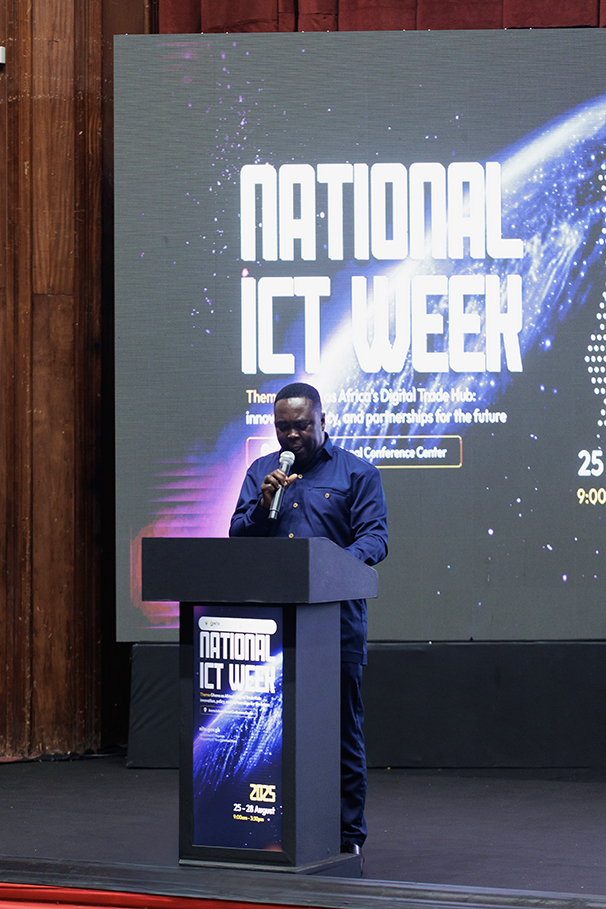
Ghana reaffirmed its ambitious goal to become Africa’s premier digital trade hub at the official opening of the 2025 National ICT Week, held at the Accra International Conference Centre under the theme: “Ghana as Africa’s Digital Trade Hub: Innovation, Policy and Partnerships for the Future.”

Her Excellency Professor Naana Jane Opoku-Agyemang, the Vice President conveyed this vision in a speech delivered on her behalf by Mr. Samuel Ofosu-Ampofo, Policy Advisor at the Office of the Vice President.

She boosted of Ghana’s strategic investments in digital infrastructure, youth skills development and policy reform as the foundation for digital transformation and regional leadership.

“Ghana stands tall in West Africa for her remarkable record of stability and peaceful democratic transitions. With a diverse and dynamic economy, Ghana is well-positioned to lead the continent in digital trade,” she said.

Key government initiatives were spotlighted, including the 24-Hour Economy Initiative, aimed at boosting productivity through extended business operations, and the One Million Coders Project, which is equipping Ghana’s youth with vital digital and software development skills.

These initiatives align with the objectives of the African Continental Free Trade Area (AfCFTA), headquartered in Accra, positioning Ghana as a digital enabler of intra-African commerce.

Infrastructure and Innovation

Ghana’s nationwide expansion of broadband and fiber-optic networks is connecting both urban and rural communities, transforming service delivery across sectors like education, health and commerce.

The Ghana.Gov platform was praised as a model of e-governance, providing a centralised digital access point for services such as passport applications, tax filing and business licensing thus improving efficiency, transparency and public revenue.

Additionally, Ghana has pioneered a fully interoperable instant payment system, the first of its kind on the continent that enables seamless transactions between banks and mobile money platforms.

This has significantly boosted financial inclusion and supported the growth of the digital economy.

Policy and Digital Trust

The Vice President’s representative underscored the importance of digital trust and robust governance frameworks.

He underscores Ghana’s Data Protection Act and the role of the Data Protection Commission as crucial safeguards for privacy and responsible data usage.

Ghana also reiterated its support for the AfCFTA Digital Trade Protocol, advocating for a harmonised, secure, and trusted digital trade environment across Africa.

Mr. Samuel Ofosu-Ampofo issued a rallying call to stakeholders entrepreneurs, investors, academia, development partners, and the Diaspora to join forces in achieving Ghana’s digital vision.

“To our entrepreneurs: continue to innovate and scale your solutions.

To the private sector and investors: expand your presence and invest in Ghana’s digital market. To our development and technology partners: collaborate and support ventures that will transform lives.

“Together, through shared innovation, sound policy, and steadfast partnership, we will make Ghana the undisputed digital trade hub of Africa,” he, on behalf of the vice president told gathering.

Minister Outlines Government’s Digital Roadmap

Mohammed Adam Sukparu, Deputy Minister for Communication, Digitalization, Technology and Innovation, on his part outlined the government’s comprehensive digital strategy.

He emphasised the rising number of tech startups and fintech solutions in Ghana, powered by initiatives such as the Ghana Tech Lab and the One Million Coders Programme. The upcoming Innovations and Start-up Bill, he said, will further support this ecosystem with legal and financial incentives.

Sukparu also revealed that NITA will this week unveil Ghana’s Certifying Authority, marking the launch of Public Key Infrastructure (PKI)—a critical move to enhance digital trust, security, and authentication across all national digital platforms.

Other priorities highlighted included legal and regulatory modernization, digital infrastructure expansion, affordable access to digital services, skills development, regional integration under AfCFTA and strengthening digital trust systems.

“Ghana can and will become Africa’s digital trade hub. But this destiny will not be achieved by government alone,” he noted, calling on stakeholders to actively support the national agenda.

The Director-General of the National Information Technology Agency (NITA), Dr. Mark-Oliver Kevor who addressed the forum reiterated NITA’s role in leading Ghana’s digital transformation through infrastructure development, regulation, capacity building, and digital trust systems.

“This celebration is not just about technology, it is a national call to action to build an inclusive, innovative, and secure digital economy for Ghana and the African continent.”

The Future of Learning: Is the higher education landscape shifting?

0
Dr. Linda Deigh, Higher Education Consultant

The transformation of education and skill requirements are changing worldwide, but not at the same rate. Different countries and regions are adapting, largely influenced and shaped by their social and economic priorities and conditions.

Are traditional degrees becoming obsolete?

There was the era of ‘employability’ in the UK in the early 2000’s for post-1970 institutions where degree programmes had to go through extensive overhauls and transformation to meet the graduate outcome of employability. The process required consultation with industry stakeholders including relevant subject specific accreditation bodies to ensure professional skills-set were being met in the curriculum. The introduction and integration of numeracy and science in business was crucial. For example, with subjects such as data analytics for market research and big data insights, digitisation and internationalisation for a more global perspective.

In the last 10 years, a similar shift has been observed in the higher education landscape on the African continent. In Ghana, perhaps more obvious with the private institutions, but certainly across the sector where specialization and integration into higher education has become clearer and more precise over time.

Undoubtedly, there is the affirmation of the education system and the strength of the public institutions which is shown by unwavering loyalty of several generations of families. However, we cannot lose sight of a few private institutions which have stood the test of time and remained relevant to industry needs. There are also those institutions – the underdogs – which have been revolutionary in their specialized approach to higher education and are succeeding, nevertheless.

Unbundling and decolonising degrees

On broad terms, there has been an increase in independent postgraduate or professional schools for specific career paths. The shift has also realized the unbundling of degrees which involves the breakdown of the traditional degree into smaller, more specialized components. Whereas the unbundling process has been fueled by demand in certain subject areas such as science, public health, technological advancements, sustainability development and the changing workforce; in some cases, the high cost, limited time and accessibility of degrees are the reasons. Thus, a rise of micro-credentials obtained through short courses, executive education, specialized bootcamps which are intensive training programmes for specific skills in demand on the job are thriving with well-established institution brands.

Another interesting shift is the move towards decolonising the curriculum – challenging, reclaiming and transforming the ways in which western colonial perspectives have dominated knowledge and learning, involving what is taught, how it is taught and who is involved in the process. This is where the underdogs exist! The smaller, perhaps, unassuming specialised institutions are committed to preserving the indigenous skills and narrative in a way that is sustainable and relevant to the modern industry.

Some institutional commonalities

An example is Nkinkyim Museum, which is expanding into an educational institution of spoken and visual language, promotes apprenticeship as a legitimate form of learning. Its focus is on creating and adapting knowledge for learners through oral traditions and culture. The aim of this institution is what may be described as radical – to strip African dexterity of colonial language, culture and influence.

The purpose is to restore and reintroduce pure creativity as a standard – intentional and deliberate for advancement. For example, the visual culture’s silent education should transcend into Ghanaian fashion which considers factors such as the African climate, spirituality and aesthetics. According to the founder Kwame Akoto-Bamfo, “The language – spoken or visual – is created by Ghanaians for Ghanaians and adapted accordingly on the basis of development and research, without obligation to western pedagogy as compensation for inferiority or low self-esteem.

To be able to achieve this, I have to interrogate and decipher the roots of thought, thought patterns, and culture by engaging with oral culture”. Thus, the museum is in regular dialogues and conversations about way of life, technology, and education which are gleaned and preserved. This data will inform higher education curriculum, ensuring it is authentic and free of colonial language.

Another example is Kokrobitey Institute which focuses on sustainability education and social entrepreneurship by exploring and integrating traditional knowledge systems with regenerative resourceful design practices to inform multiple disciplines across the arts and sciences such as fashion, architecture and agriculture. Learners include designers, researchers, and innovators from industry, multidiscipline and educational institutions.

The founder, Renee Neblett stresses the importance of environmental literacy – that is – the ability to read, understand and respect our environment and its inhabitants to approach design in a way that sustains us all. For example, waste glass bottles are upcycled into decorative home accessories, and secondhand clothing transformed into iconic fashion pieces.

Finally, Design & Technology Institute (DTI Africa) is another example where job opportunities are created in the industrial and prototype space through technical and vocational training – specifically in design and innovation, precision welding and fabrication and entrepreneurship for work-ready skills.

The commonalities across these institutions are clear – entrepreneurship and a drive to build and preserve local and indigenous knowledge through skills development.

These changes in higher education are expected to guide the nation toward clearer professional skills and resources for workforce development. Amid rising de-globalisation and inward-looking policies worldwide, it is timely to deepen our understanding of who we are and the ecosystems that sustain us, so we can shape our own narrative for greater productivity and resourcefulness. This calls for both emerging and established institutions to remain agile, fostering cross-institutional partnerships that strengthen professional practice and meet industry labour demands which drive social and economic impact.

 By Dr. Linda Deigh, Higher Education Consultant

The views expressed in this article are the author’s own and do not necessarily reflect The Chronicle’s stance.

Editorial: Police Must Clamp Down On Drivers Who Disregard The Safety Of Passengers

0
Editorial

It has come to The Chronicle’s notice that some commercial drivers plying the Ofankor Barrier to Asofan route have adopted a worrying practice at night. The drivers operate their vehicles without the assistance of mates. In doing so, these drivers deliberately leave the doors of their minibuses (trotros) wide open throughout the journey, so that passengers can alight without requiring the driver to stop and open the door.

While this may seem convenient to the drivers, it poses grave risks to the safety of passengers, especially at night, when visibility is poor. Passengers alighting from moving vehicles or navigating open doors on speeding buses risk severe injuries and in worst case scenario, fatalities.

For many commuters who rely on trotro as their main mode of transport, this disregard for safety has become a source of anxiety.

Public transport in Ghana plays a vital role in moving millions daily, but safety must never be sacrificed in the name of convenience. The recent reports of trotro drivers plying the Ofankor Barrier to Asofan stretch at night without mates and leaving their doors wide open for passengers to board and alight at will, should alarm us all.

This practice is reckless, dangerous and completely unacceptable. A moving vehicle with doors ajar is an accident waiting to happen. Passengers can easily fall off while attempting to get down, especially the elderly, children or those carrying heavy loads. Should such an accident occur, the consequences would be devastating, leaving families broken and communities in grief.

Even more troubling is the fact that this takes place under the noses of the police. There is a barrier along that very stretch, yet this glaring breach of safety regulations appears to be ignored. If our police cannot enforce the most basic road safety standards, then one must question the seriousness with which we approach the protection of lives on our roads.

Commercial drivers must be reminded that transporting human beings is not the same as carrying sacks of goods. Every passenger has a right to safe travel and it is the duty of drivers to ensure this. The excuse of working without mates does not justify leaving doors open while driving. If drivers cannot operate safely without their mates, then they should not ply those routes at all.

We call on the Motor Traffic and Transport Department (MTTD) of the Ghana Police Service to take immediate action. Patrol teams and officers at checkpoints must clamp down on this menace before disaster strikes. Transport unions must also discipline their members and insist on strict adherence to safety standards.

Passengers, too, have a role to play. They must refuse to board trotros that operate with open doors. It is better to endure the inconvenience of waiting a few minutes longer for a safer bus than to risk one’s life.

Ghana has witnessed far too many needless road tragedies. This is an issue we can easily prevent if the right authorities act swiftly. We cannot wait for blood to be spilled before taking corrective measures. Passenger safety must come first.

Schweitzer Engineering holds 2nd Technology Exchange Seminar in Tema

0
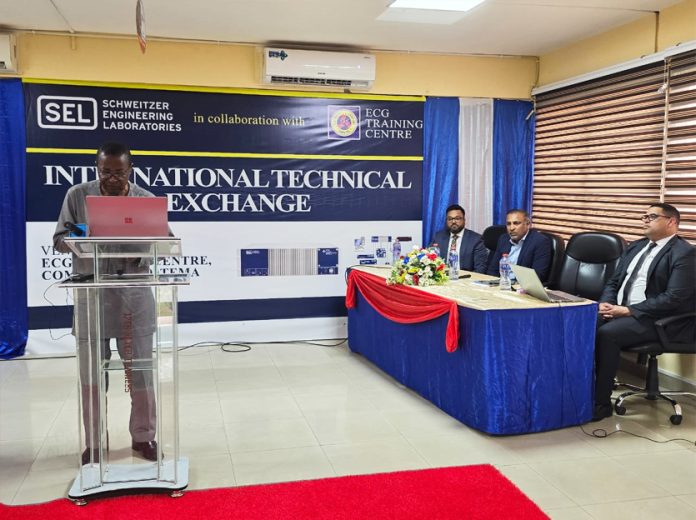
Ing Godfried Mensah, Director of the Tema ECG Training Center, speaking at the seminar. Looking on is the team from SEL

Schweitzer Engineering Laboratories (SEL), a leading manufacturer for protection relays, substation automation systems, as well as the production of computers for industrial usage, has

organised a day’s seminar and technology exchange programme at the ECG Training Centre in Tema in the Greater Accra Region.

Participants are the SEL Tech Exchange seminar

A  press  release from the Tema Regional ECG and copied to The Chronicle, said drawing the participants from organisations in Ghana’s energy sector across the generation, transmission and distribution sector, the seminar, the second of its kind, showcased some new technologies of SEL including modern generator protection and synchronisation using their relays.

Sthit Sharma, one of the top officials of SEL and a facilitator, said the company produces different kinds of equipment used in the energy sector including generation, transmission and distribution. He made a presentation detailing the company’s operation.

On his part, Ing Godfred Mensah, who is the Director of the Tema ECG Training Centre, appreciated the collaborative relationship between SEL and the ECG Training Centre.

Mr Mensah explained that the centre has various courses aimed at refreshing the knowledge-base of technical professionals in the power sector, both within the country and outside of it, hence, partnerships such as this with SEL helps the Centre in achieving one of its aims.

He added that tailored programmes are often designed specifically for various groups and organisations, in line with industry needs.

He gave a corporate overview of the SEL organisation, showing some of their improved technologies.

Mr Herbert Martin, also from SEL, took participants through some of their technological developments for renewable energy plants and some innovative solutions.

Health Director Calls for Stronger Primary Care to contain rising maternal mortality

0
Dr. Fred Adomako-Boateng, Ashanti Regional Health Director

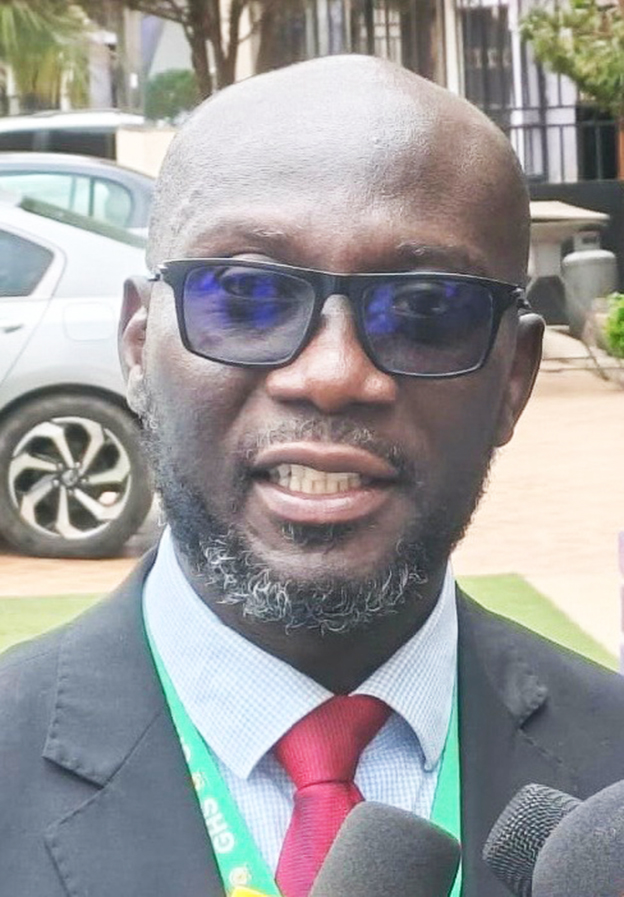
Maternal mortality is on the rise in the Ashanti Region, with new figures showing institutional deaths climbing steadily over the past three years, the Regional Health Director, Dr. Fred Adomako-Boateng, has revealed.

Speaking at the Mid-Year Review Programme of the Ashanti Regional Health Directorate, Dr. Adomako-Boateng disclosed that institutional maternal mortality ratios have worsened significantly. “For the first half of 2023, there were 144 maternal deaths per 100,000 live births. This increased to 158 in the first half of 2024, and further surged to 232 in the first half of 2025,” he stated.

The programme was held under the theme: “Strengthening Primary Health Care (PHC) through Networks of Practice (NoP) towards Universal Health Coverage (UHC): The Role of Stakeholders.”

An analysis of the figures by The Chronicle shows that within the last two years (2023–2025), the region has recorded 534 maternal mortalities. Between 2023 and 2024, deaths rose from 144 to 158 per 100,000 live births, a 9.7% increase.

From 2024 to 2025, the figure jumped sharply from 158 to 232, a 46.8% rise, translating into 74 more deaths. In total, maternal mortality in the region has increased by about 61%, well above the national target of 125 deaths per 100,000 live births.

Dr. Adomako-Boateng further revealed that the proportion of deliveries attended by trained health workers remains below target.

In 2023, it stood at 59%, dropped to 52.5% in 2024, and slightly improved to 53.7% in the first half of 2025 against a national target of 65%.

He linked the worrying trend to persistent weaknesses in Ghana’s three-tier Primary Health Care (PHC) structure. This system—comprising community (CHPS zones), sub-district (health centres), and district hospitals—is expected to address over 80% of the population’s health needs.

However, he observed that many minor illnesses are still referred to secondary and tertiary facilities, overburdening them and affecting service delivery.

“Looking at the maturity of Community-Based Health Planning and Services (CHPS) in the region, the proportion of functional CHPS was 62% in 2023, 81% in 2024, and 70.5% in the first half of 2025 against a target of 80%,” he explained.

According to him, Ghana cannot meet its health goals by 2030 without fixing these structural gaps. “Without a proper gatekeeper system and filters, well-resourced CHPS and health centres, our quest for universal coverage through PHC will remain a mirage.

“Stakeholders must support with accommodation, security, equipment and accountability to make this work.”

Despite the rise in maternal mortality, the director highlighted some successes. He noted that the institutional malaria case fatality rate for children under five has remained consistently at 0% for the first halves of 2023, 2024, and 2025.

He also indicated that PHC facilities have helped keep non-communicable diseases relatively under control. The incidence of diabetes (using OPD attendance as a proxy) stayed below 1% to 0.7% in 2023, 0.9% in 2024, and 0.7% in 2025—compared to a target of 1–5%.

Hypertension rates were also stable: 1.9% in 2023, 2.1% in 2024, and 1.9% in 2025, against a target of 5–10%.

On logistics, Dr. Adomako-Boateng raised concerns about the state of the Regional Medical Store, built in 1978. “It is 47 years old now.

At the time, Ghana’s population was about 8.5 million and the Ashanti Region had only about 1.37 million people.

“Many of the hospitals we see today did not exist then. The warehouse as it stands now can no longer serve its purpose, we must expand and modernise the infrastructure,” he emphasised.

On his part, the Chief Executive Officer (CEO) of Komfo Anokye Teaching Hospital (KATH), Dr. Paa Kwesi Baidoo, acknowledged the strain on the hospital as a major referral point. He confirmed that the Ashanti Regional Health Director had engaged him on strategies to improve health outcomes, particularly maternal mortality.

Dr. Baidoo revealed that discussions are at an advanced stage for a mentorship and collaboration framework between KATH and the Ghana Health Service.

Under this arrangement, KATH will provide technical expertise, while GHS supports facilities at the district and sub-district levels.

“For example, if a health facility has an Intensive Care Unit (ICU) but lacks the personnel to manage it, KATH will deploy its experts to provide the needed support. We have agreed with the Regional Health Directorate that Komfo Anokye will step in to provide such services wherever expertise is needed,” he explained.

Experts Call for Review of Ghana’s PPP Regulatory Framework

0
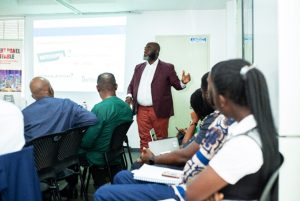
Dr Ofori-Kuragu, welcoming participants

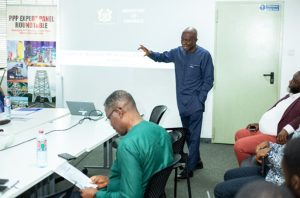
An expert panel of policymakers, academics, private sector leaders, and civil society organizations has called for urgent reforms to Ghana’s Public-Private Partnership (PPP) regulatory framework in order to accelerate infrastructure delivery and attract greater private sector investment.

The call was made at the 2nd PPP Expert Panel Roundtable, held at the British Council in Accra under the theme “Revamping PPP Delivery in Ghana: Policy, Reform, and Acceleration.” The event was organized by Innovation Inc. (UK) in collaboration with Project Excellence and Innovation Ghana, Anglia Ruskin University (UK), and CUTS West Africa.

Reform and Stronger Frameworks

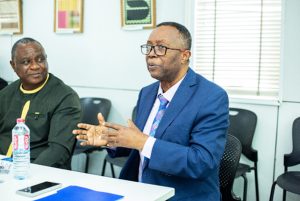
Opening the session, Dr. Joseph K. Ofori-Kuragu, PPP expert from Anglia Ruskin University and President of Innovation Inc., stressed the urgent need to review and strengthen Ghana’s PPP ecosystem. He argued that robust policies, institutional frameworks, and streamlined processes are critical to ensure more projects reach financial close, thereby boosting investor confidence and participation in Ghana’s infrastructure agenda.


Dr Frederick Addo-Abedi, Chairperson for the roundtable

Chairing the discussions, Dr. Frederick Addo-Abedi, former Deputy CEO of the Ghana Highways Authority, emphasized bold and strategic reforms. He highlighted the need to empower government agencies with greater autonomy to execute PPPs effectively and called for political leaders to deepen their understanding of PPPs as a long-term tool for development rather than short-term financing alternatives.

Lessons from History and Future Directions

Delivering the keynote address, Dr. David Ofosu-Dorte, Senior Partner at AB & David Africa, drew lessons from historical PPP projects such as the Suez Canal and Ghana’s Akosombo Dam. He emphasized that PPPs should not be viewed as substitutes for public borrowing but as effective vehicles to mobilize private capital responsibly.

Dr David Ofosu-Dorte, Senior Partner, AB & David Africa, giving his keynote address

He also underscored four foundational pillars for successful PPPs: a strong institutional framework, effective financing mechanisms, a robust legal system, and clearly defined political will. Dr. Ofosu-Dorte further stressed the importance of climate resilience and innovative financing instruments, such as Sovereign Wealth Funds, to strengthen Ghana’s PPP environment.

Government Commitment and Challenges

Representing the Ministry of Finance, Mr. Anthony Dzadra, Director of the Public Investment and Assets Division (PIAD), noted that Ghana has made progress with PPP legislation, including the introduction of new PPP Regulations in Parliament. These are expected to operationalize the PPP Act by clarifying processes related to unsolicited proposals, small-scale projects, and the integration of climate resilience in planning.

Mr Anthony Dzadra, Director, PIAD, delivering his address

He, however, acknowledged persistent challenges such as limited institutional coordination, insufficient understanding of the regulatory environment, and the absence of standardized guidelines. He called for harmonization of sector-specific laws with the national PPP framework, coupled with targeted capacity-building and transparent financing mechanisms.

Ensuring Action Beyond Dialogue

Mr. Appiah Kusi Adomako, West Africa Director of CUTS International, urged stakeholders to ensure that the roundtable does not remain a talk-shop. He proposed convening a national dialogue on PPPs involving government leaders, policymakers, and private sector actors to establish concrete steps that would entrench PPPs as a dominant model for infrastructure delivery in Ghana.

Building Momentum for Change

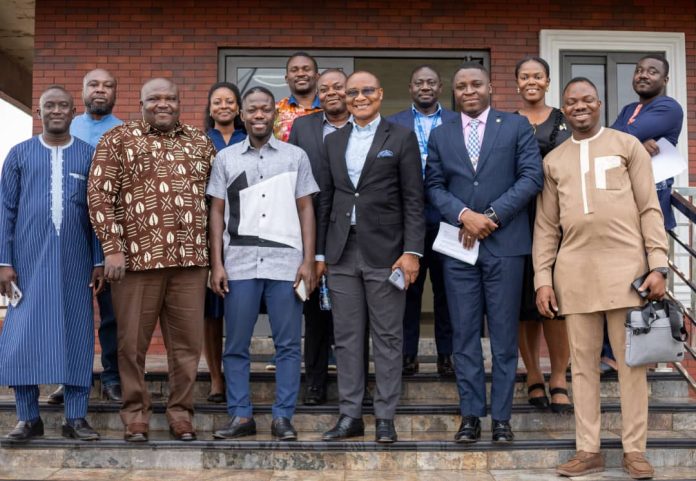
At the conclusion of discussions, participants agreed on the need to decentralize decision-making, enhance institutional capacity, improve project preparation, and strengthen transparency and policy consistency. These reforms, they argued, are essential for rebuilding investor confidence and positioning Ghana as a regional leader in sustainable infrastructure delivery through PPPs.

The roundtable marked a milestone in Ghana’s PPP agenda, reinforcing the importance of collaboration between the public and private sectors. With reform, commitment, and accountability, Ghana can establish a resilient PPP framework that delivers long-term value to its citizens and serves as a model for the region.

ECG Strengthens Partnership With Brainsfield To Boost Metering Innovation

0

The Electricity Company of Ghana (ECG) is partnering Brainsfield Company Limited to reaffirm its commitment to advancing the country’s power sector.

During a recent working visit to Brainsfield’s facility at Pokuase-ACP Estate, in the Ga North Municipality, Accra, ECG Board Member, Simon Akotli, who led the delegation, commended the company for its significant contribution to ECG’s transformation efforts.

Mr Akotli noted that Brainsfield’s involvement in the supply and installation of electronic prepaid meters has played a vital role in improving operational efficiency, reducing power losses and enhancing customer service delivery.

“The presence of Brainsfield is not only supporting our metering systems, but also contributing to job creation and reducing unemployment,” he said.

He added that the current administration remains committed to fostering private-sector partnerships under the broader “Resetting Ghana” initiative.

Brainsfield CEO, Mr. Winfred Kumah Apawu, expressed gratitude for the ECG visit and emphasised the company’s readiness to deepen collaboration in delivering modern, tech-driven solutions for Ghana’s energy sector.

“Our aim is to support ECG with reliable, advanced metering technologies while promoting local employment and knowledge transfer,” Mr. Apawu stated.

The visit underscores ECG’s continued focus on leveraging local expertise as it expands the nationwide rollout of smart metering systems—an initiative expected to modernize energy distribution and support Ghana’s long-term energy efficiency goals.

Mr. Apawu also confirmed ECG’s commitment to settling outstanding debts owed to its partners to ensure smooth operations and the continued delivery of reliable, efficient services.

Lil Nas X arrested after being found loitering on streets in underwear

0
Lil Nas X

Award-winning rapper Lil Nas X has been arrested following an altercation with police in Los Angeles, authorities have confirmed.

According to the Los Angeles Police Department (LAPD), officers were called to Ventura Boulevard at around 05:30 local time (12:30 GMT) on Thursday after receiving reports of a man walking in the street wearing only underwear.

When officers arrived at the scene, they allege that the Old Town Road singer “charged” at them, leading to his arrest on suspicion of battery. Police spokesman Charles Miller said the rapper, whose real name is Montero Lamar Hill, was subsequently taken to hospital for treatment for a possible overdose. The BBC has contacted his representatives for comment.

Unverified footage published by TMZ on Thursday appeared to show the star dancing in the street in just his underwear and cowboy boots, urging passers-by to “come to the party.”

The rapper is expected to release his highly anticipated second studio album Dreamboy later this year, having teased new material on Instagram in recent weeks.

Lil Nas X rose to prominence in 2019 with Old Town Road, which won two Grammy Awards and broke the record for the longest-running number one single on the Billboard Hot 100, spending 17 consecutive weeks at the top. He also made history as the first openly gay man to win a Country Music Association award.

Throughout his career, the singer has been no stranger to controversy. His 2021 hit Montero (Call Me By Your Name) sparked outrage among conservative groups in the United States, who labelled the video “depraved” and “evil.” In response, Lil Nas X posted a mock apology video on YouTube that cut into the lap-dancing scene featured in the video, and tweeted that he wanted his critics’ tears to “fill my Grammy cup.”


The Ghanaian Chronicle