Home Blog Page 50

African Economies to grow by 4.2% in 2026

0
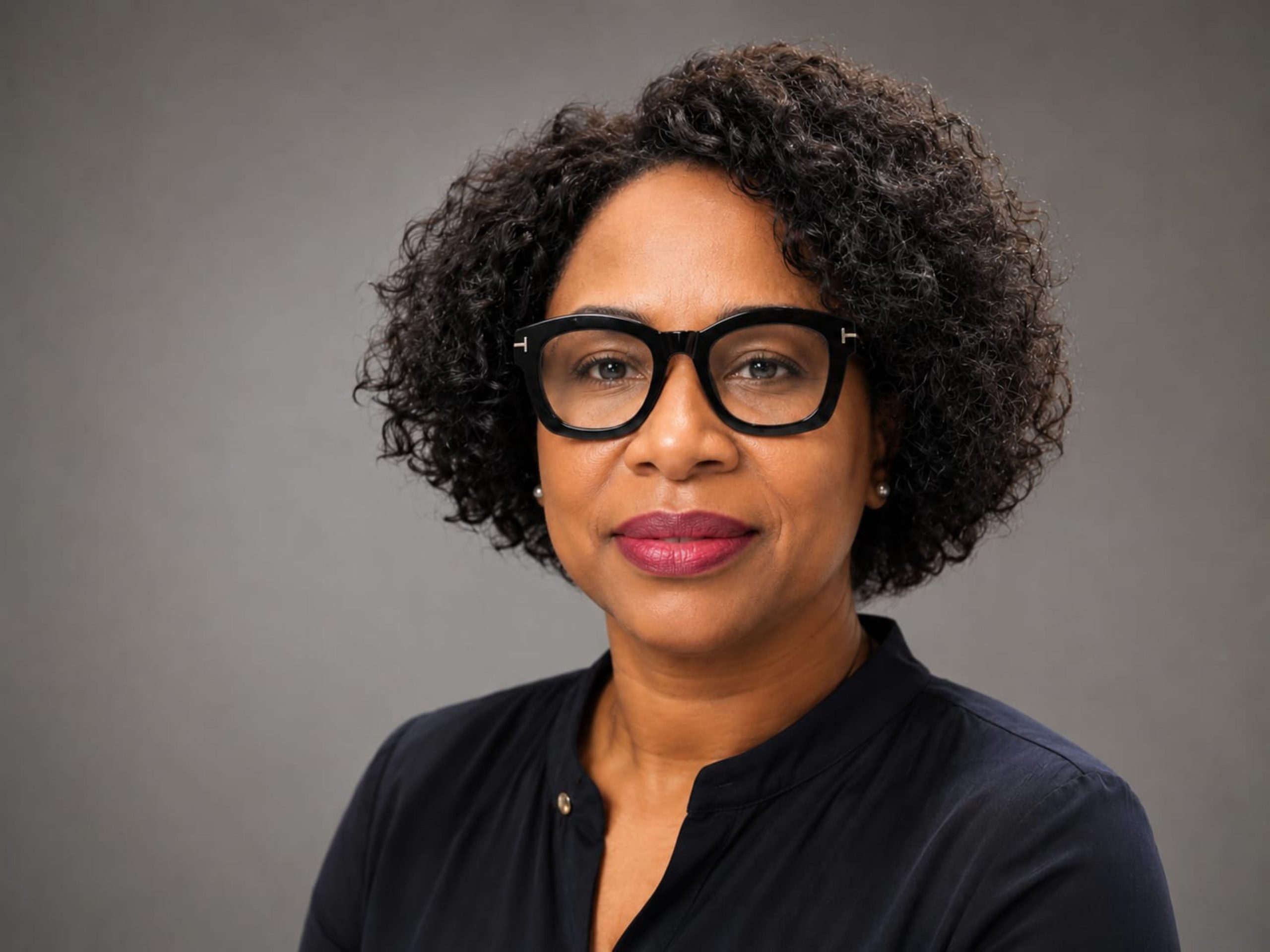
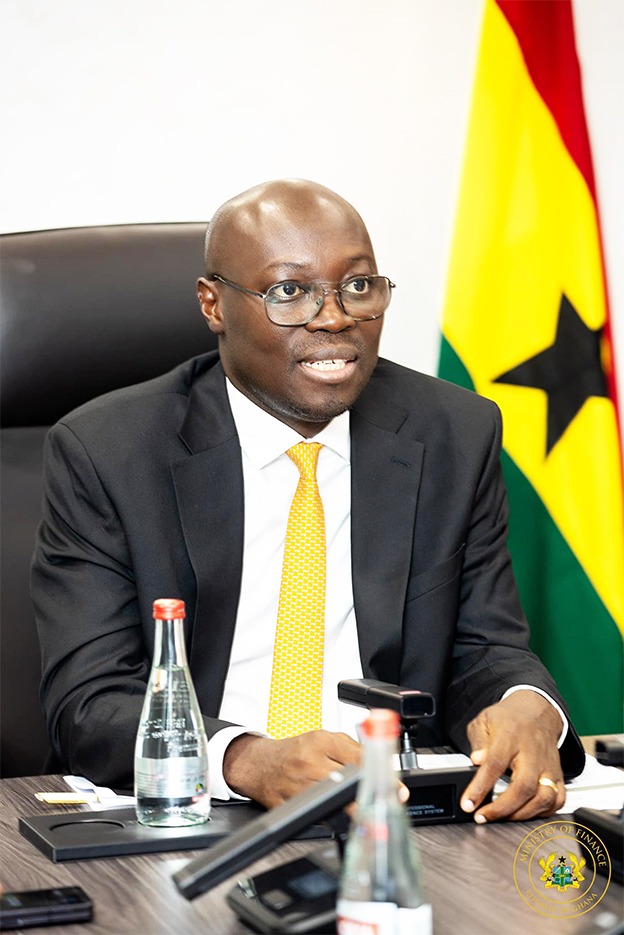
Dr. Cassiel Ato Baah Forson, Minister for Finance

Africa’s economies are projected to grow at 4.2 per cent in 2026, moderating slightly from 4.4 percent in 2025, before rebounding to 4.4 per cent in 2027, according to the 2026 African Economic Outlook (AEO).

The Outlook was released on Tuesday at the African Development Bank Group Annual Meetings in Brazzaville, Congo. The findings, shared with Ghana News Agency (GNA) underscored the continent’s resilience despite geopolitical tensions, tighter global financial conditions, and supply chain disruptions.

Growth in 2025 was supported by improved macroeconomic management, stronger agricultural output, elevated commodity prices, and ongoing structural reforms. Africa remains one of the world’s fastest-growing regions, with 22 countries projected to grow above five percent in 2025.

Published under the theme: “Mobilizing Africa’s Development Financing at Scale in a Fragmented World”, the report stresses that sustaining faster, inclusive, and resilient growth requires mobilizing and deploying capital at scale. This includes strengthening domestic resource mobilisation, deepening financial integration, expanding capital markets, and enhancing Africa’s agency in global finance.

Mixed Regional Outlook 

East Africa: Expected to remain the fastest-growing region, though growth will ease from 6.6 per cent in 2025 to 5.9 per cent in 2026, before rebounding to 6.4 per cent in 2027, as rising energy and import costs weigh on performance.

West Africa: Growth projected at 4.7 per cent in 2026, broadly in line with 4.8 per cent in 2025, supported by agriculture and infrastructure investment.

North Africa: Forecast to grow at 4.0 per cent in 2026, down from 4.4 per cent in 2025, reflecting weaker tourism demand and global supply chain disruptions.

Central Africa: Growth expected to rise slightly to 3.8 per cent in 2026, buoyed by sustained high oil prices.

Southern Africa: Growth subdued at 2.1 per cent in 2026, down from 2.3 per cent in 2025, due to weaker mining and agriculture output and higher energy costs.

Downside risks remain significant. Inflation is projected at 10.4 per cent in 2026, posing challenges to macroeconomic stability. Geopolitical tensions, supply chain disruptions, and energy price volatility could further strain fiscal balances. Exchange rate depreciation and financial market volatility may amplify debt vulnerabilities, while global fragmentation could intensify pressures on external financing flows.

Closing Africa’s Financing Gap 

The report highlights Africa’s annual $1.3 trillion financing shortfall to meet the Sustainable Development Goals. The deficit stems from low domestic resource mobilisation, weak financial intermediation, and tightening external financing conditions.

Yet, with reforms, Africa could unlock up to $1.43 trillion annually through improved revenue collection, efficient public investment, tackling illicit financial flows, deeper capital markets, expanded public-private partnerships, diaspora financing, and better use of natural capital.

Key opportunities include: $469 billion in additional annual revenues from stronger tax and non-tax mobilization and $299 billion in potential savings from improved public investment efficiency.

Public-private partnerships, where each dollar of public investment could attract $1.40 in private investment.

Institutional investors manage around $4 trillion in assets, but less than 2.7% is allocated to Africa’s infrastructure and productive sectors — a major untapped potential.

The report calls for accelerated efforts to strengthen Africa’s financial systems through pan-African banks, integrated capital markets, and innovative instruments such as climate and Islamic finance. A central pillar is the New African Financial Architecture for Development (NAFAD), designed to leverage over $4 trillion in assets within Africa’s financial ecosystem.

The launch of the African Credit Rating Agency in January 2026 is highlighted as a tool to address perceived biases in sovereign risk assessments. While Africa’s stock market capitalization reached $1.2 trillion in 2024 — nearly sixfold growth over two decades — activity remains concentrated in South Africa, Egypt, Nigeria, and Morocco, underscoring the need for broader market integration.

The report also emphasizes advancing continental initiatives such as the African Financing Stability Mechanism, aimed at easing liquidity pressures, strengthening financial stability, and helping countries manage debt refinancing risks at lower cost.

GNA
 

Mahama Confronts Drug Menace, Charges Youth to Stay Clean at Eid Celebration

0
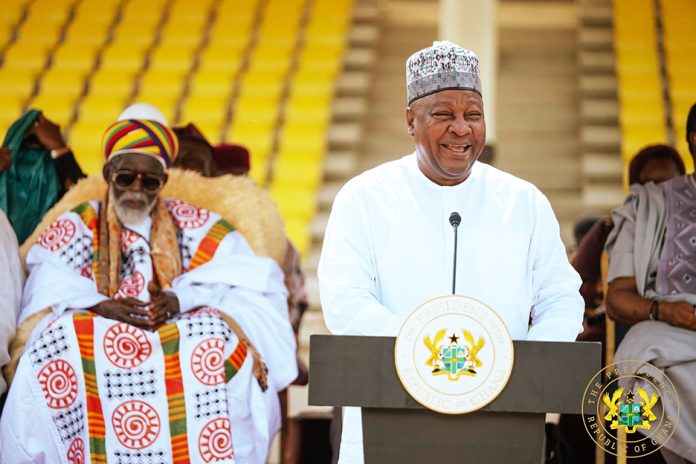
President John Dramani Mahama addressing congregants at the Eid celebrations in Accra.

President John Dramani Mahama used Ghana’s Eid al-Adha celebrations in Accra yesterday to deliver a blunt charge to the country’s youth to stay off drugs and remain focused on building their future and contributing to national development.

“I urge you to avoid drug addiction,” he told thousands of faithful gathered before the National Chief Imam,  Sheikh Osman Nuhu Sharubutu, and Muslim leaders across the country. “Our nation needs young people who are focused on education, skills, hard work, entrepreneurship, and service to humanity.”

The President’s warning resonates powerfully against the backdrop of a revelation made just days earlier by Interior Minister, Mohammed  Muntaka Mubarak, who disclosed that out of 100,000 applicants screened for Security Service Medicals, more than 4,000 failed drug tests while an additional 2,000 were disqualified on mental health grounds, a combined total of over 6,000 rejected applicants.

President John Dramani Mahama exchanging pleasantries with the National Chief Imam,Osmanu Nuhu Sharubutu, during the Eid celebration in Accra, as both shared broad smiles.

The figures paint a sobering picture of a generation under siege, and lend the President’s Eid admonition a weight that goes far beyond religious observance.

Drawing on the spiritual lessons of Eid al-Adha, which commemorates Prophet Mohamed’s supreme act of obedience, sacrifice, and self-restraint, Mahama tied personal discipline directly to national progress.

“The occasion calls on us to sacrifice, be selfless, not hate one another, not to be greedy,” he said, urging young Ghanaians to channel the same spirit of submission and devotion into their civic conduct and daily choices.

He also held up the National Chief Imam as a living example of the virtues worth emulating, “humility, compassion, simplicity, tolerance, and peace-building”, and called on youth to remain “disciplined, law-abiding, respectful, and responsible citizens.”

The President further pointed to his government’s 24-hour economy policy, apprenticeship programmes, and industrial transformation agenda as concrete pathways available to young Ghanaians who choose discipline over destruction.

Ghana Has Capacity to Feed Itself, Compete Globally – FAGE President

0
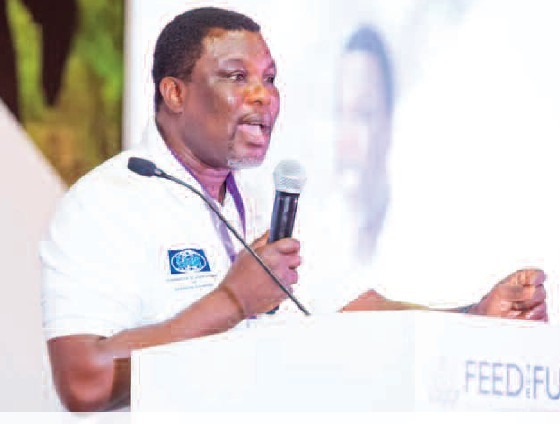
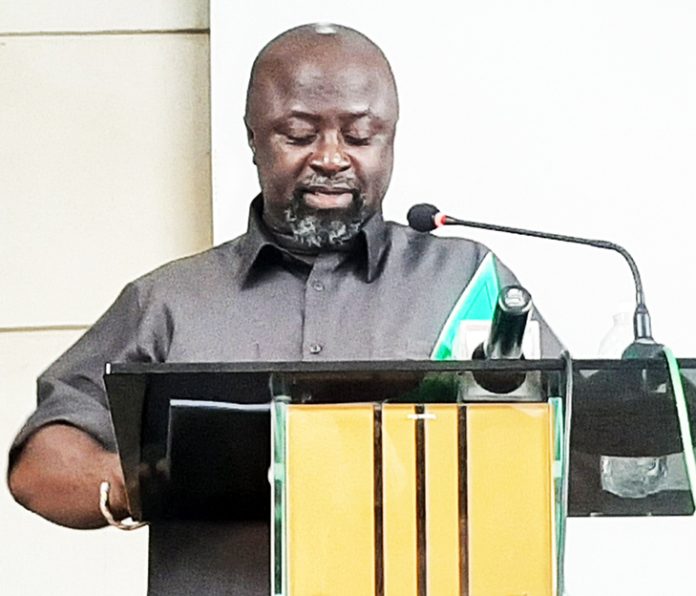
Davies Narh Korboe

The President of the Federation of Ghanaian Exporters (FAGE), Davies Narh Korboe, has underscored Ghana’s potential to achieve food self-sufficiency and become a competitive force in global agriculture.

Speaking ahead of the third edition of the Ghana Horticulture Expo 2026, scheduled for June 11 to 13, Mr. Korboe said Ghana’s fertile land, favourable climate, and industrious population provide a solid foundation for strengthening food security and expanding agricultural exports.

“Ghana possesses the land, the people, the climate, and the potential to feed itself and compete globally. Agricultural self-reliance is not merely an economic ambition; it is a national responsibility,” he stated. He added that innovation, partnerships, and strategic investments remain critical to building a resilient agricultural sector capable of meeting domestic needs while supplying international markets.

The three-day Expo will take place at the Forecourt of the State House in Accra and is expected to bring together key stakeholders across the agricultural value chain, including farmers, exporters, agribusinesses, investors, researchers, policymakers, students, and consumers.

The event is being organised by FAGE in collaboration with the Ghana Export Promotion Authority (GEPA) and the Ghana Export-Import Bank. It will be held under the theme: “From Soil to Sovereignty: Building Ghana’s Agricultural Self-Reliance through Innovation.”

Organisers say the 2026 edition builds on the success of previous expos and is expected to be more impactful, particularly at a time when global food systems are under increasing pressure.

Despite Ghana’s abundant agricultural resources, stakeholders acknowledge that significant

opportunities within the horticultural sector remain untapped. The Expo is, therefore, positioned as a strategic platform to drive innovation, promote value addition, enhance export growth, and attract investment into the sector.

Participants will have the opportunity to explore exhibitions showcasing fresh fruits, vegetables, spices, herbs, processed goods, greenhouse technologies, irrigation systems, agritech solutions, packaging innovations, and export-ready products.

The programme will also feature business-to-business networking sessions, market linkages, and policy dialogues aimed at strengthening Ghana’s agricultural value chain and improving its competitiveness on the global stage. Beyond the commercial focus, the Expo is expected to inspire young entrepreneurs and highlight agriculture as a viable pathway for job creation, economic growth, and national development.

As Ghana pushes towards agricultural self-reliance and export excellence, the Ghana Horticulture Expo 2026 is being positioned as a timely initiative to transform the country’s vast agricultural potential into tangible economic gains.

Akyem Pano Presby pupils demonstrate  over human waste in classrooms

0
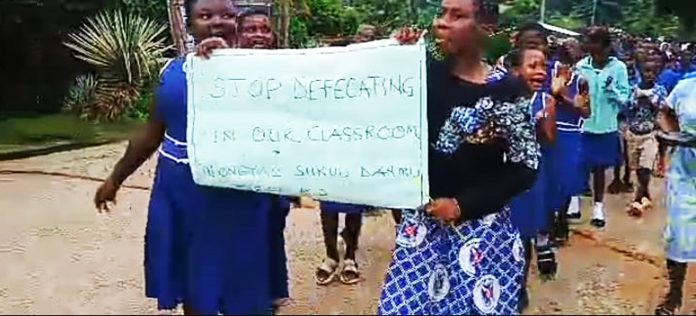
The children registration their displeasure of the situation.

Pupils and teachers of Akyem Pano Presbyterian Basic School in the Abuakwa South Municipality of the Eastern Region on Tuesday poured onto the streets in a peaceful but emotionally charged demonstration to protest against the persistent defecation in their classrooms by unknown individuals.

The unusual protest, which attracted the attention of residents, traders, motorists, and community leaders, saw scores of schoolchildren dressed in their uniforms with red armbands tied around their wrists as a symbol of distress and frustration.

The Parent-Teacher Association (PTA) Chairman, Alhaji Issah Alhassan, popularly known in the community as Shaibu Tettey

Holding placards with bold inscriptions such as The Kids Are Tired of Scrubbing Toilets Every Morning,” “Stop Defecating in Our Classroom,” and “We Need a Safe Learning Environment,” the pupils marched through the principal streets of Akyem Pano chanting solidarity songs and appealing for immediate intervention.

The demonstration highlighted what both school authorities and residents described as a worsening sanitation crisis that is seriously affecting academic activities and the emotional well-being of pupils and teachers.

According to information gathered, unknown persons have repeatedly broken into classrooms at night to defecate on classroom floors, leaving behind unbearable stench and filth that pupils and teachers are compelled to clean before lessons can begin each morning.

Residents say the shameful practice has persisted for several months despite repeated complaints to opinion leaders, community stakeholders, and the Municipal Education Directorate.

The situation has generated widespread anger within the community, especially because the school is located close to a functioning public toilet facility, making the repeated acts even more disturbing.

Some residents who spoke during the protest described the development as a disgrace to the community and called for urgent collective action to identify and punish those behind the acts.

“This is not only inhuman but also dangerous to the health of the children,” one resident lamented adding “the classrooms are meant for learning, not for human waste. The entire community must rise against this.”

Teachers at the school reportedly arrive each morning to scenes of contamination, with some pupils forced to participate in cleaning exercises before academic work starts, a situation, according to parents, has disrupted effective teaching and learning and exposed the children to serious health risks, including possible infections and psychological trauma.

Addressing the demonstrators, the Parent-Teacher Association (PTA) Chairman, Alhaji Issah Alhassan, popularly known in the community as Shaibu Tettey, condemned the acts in strong terms and warned that the school would no longer tolerate such behaviour.

He disclosed that the matter had become a major source of worry for both parents and staff and stressed that decisive measures would now be taken to protect the school environment.

According to him, anyone found loitering around the school premises after 7:00 p.m. would be arrested and handed over to the police for prosecution, as he further cautioned individuals who use the school compound as a sleeping place at night to desist immediately.

“We cannot continue to allow innocent schoolchildren to suffer this humiliation every morning. The school environment must be protected, and those behind these shameful acts must know that enough is enough,” he said.

The protest coincided with a community durbar organized by the Pano Diamond Ladies Club in collaboration with Femicare Ghana to educate basic school pupils on menstrual hygiene and adolescent health issues.

Speaking at the event, the headmistress of the school, Madam Darko Kyerewaa, explained that the demonstration became necessary after several appeals failed to yield results.

She noted that teachers and pupils endure painful and humiliating experiences every morning as they are compelled to clean human waste from classrooms before academic work can commence.

Madam Kyerewaa expressed concern over the negative impact the situation is having on education in the school, stressing that no child should study under such degrading and unhealthy conditions.

She, therefore, appealed passionately to traditional authorities, assembly members, security agencies, the Municipal Assembly, and all well-meaning residents to support efforts aimed at ending the practice permanently.

“Our children deserve a clean, safe, and conducive environment to learn,” she stressed adding “Education can only thrive where there is dignity, hygiene, and security.”

Many residents who joined the protest called for the installation of security lights, reinforced classroom doors, and night patrols around the school to help identify perpetrators and prevent further occurrences.

Others also urged parents and guardians within the community to educate their children and relatives on proper sanitation practices and the importance of protecting public property.

The incident has since sparked intense discussions across the community, with many describing it as a wake-up call for stronger communal responsibility and improved sanitation enforcement.

Education stakeholders say unless swift intervention is taken, the continued desecration of the classrooms could undermine academic performance, affect school attendance, and expose pupils to avoidable health dangers.


For more news, join The Chronicle Newspaper channel on WhatsApp: https://whatsapp.com/channel/0029VbBSs55E50UqNPvSOm2z

Mahama Urges Universities To Adopt German-Style Technical Training Model

0
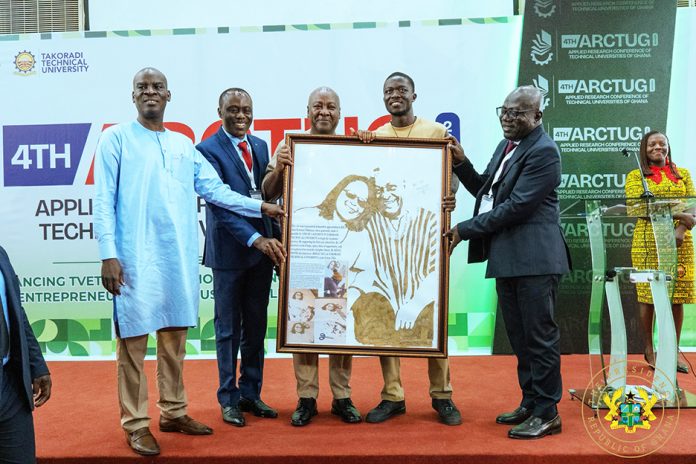
Authorities at the event present a citation to President John Dramani Mahama, featuring an image of the First Family, Mr. and Mrs. Mahama.

President John Dramani Mahama has called on Ghana’s technical universities to emulate the German model of competence-based technical education as part of efforts to transform the country’s higher education system into a driver of industrialisation and job creation.

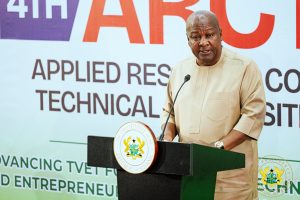
President John Dramani Mahama delivering an address at the 4th Biennial Applied Research Conference of Technical Universities in Takoradi.

Addressing the 4th Biennial Applied Research Conference of Technical Universities in Takoradi on Tuesday, President Mahama stressed that Ghana’s universities must move beyond theory-driven instruction and embrace practical, industry-oriented training that equips students with employable and entrepreneurial skills.

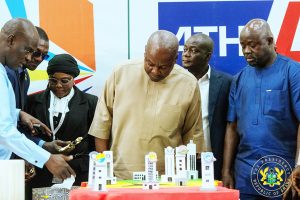
President John Dramani Mahama being taken through artistic works and innovations exhibited by technical universities during the conference event.

According to him, the future of Ghana’s economic transformation depends heavily on institutions that can bridge the gap between academia and industry through applied science, engineering, and technology.

“You must focus on hands-on, competence-based technical and vocational training aligned with the German model,” the President emphasised.

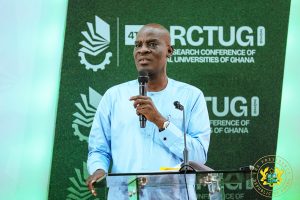
Education Minister Haruna Iddrisu addressing participants at the conference event.

He explained that the German approach, which integrates classroom instruction with industrial attachment and practical problem-solving, offers Ghana a viable pathway to reducing graduate unemployment and building a skilled workforce capable of driving industrial growth.

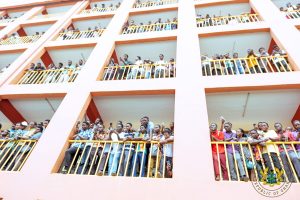
Students observe proceedings from a higher vantage point at the event centre during the conference.

The President noted that technical universities must position themselves as the engine of Ghana’s knowledge-based economy by prioritising practical innovation, research commercialisation, and strong collaboration with industry.

A section of stakeholders and invited guests seated during the event proceedings.

As part of government’s commitment to strengthening technical education, President Mahama announced that each of the ten public technical universities would receive GHS10 million under the 2027 national budget to improve infrastructure, laboratories, and training equipment.

The investment, he indicated, is intended to help the institutions fulfil the mandate envisioned when polytechnics were converted into technical universities about a decade ago.

A section of students seated attentively during the event proceedings.A section of students seated attentively during the event proceedings.

He further disclosed plans to establish two new technical universities at Jasikan in the Oti Region and Techiman in the Bono East Region, alongside a new University of Science and Technology in the Savannah Region.

The expansion, according to him, is aimed at increasing access to science and technology-based higher education, particularly in underserved parts of the country.

President John Dramani Mahama exchanging pleasantries with a section of authorities at the event.

President Mahama also announced plans for the establishment of a national TVET Fund to support science-based and technical education across Ghana.

President John Dramani Mahama, Education Minister Haruna Iddrisu, and other dignitaries seated during the conference event.

“The new universities will be the bridge between the world of science and industry. They will forge a symbiotic relationship with industry by utilising industrial resources for innovation and technological advancement,” he stated.

Touching on youth unemployment, the President argued that technical universities remain central to reversing the trend by producing graduates with industry-relevant competencies rather than purely academic qualifications.

President John Dramani Mahama at the 4th Biennial Applied Research Conference of Technical Universities in Takoradi.

He stressed that the national focus must shift from producing job seekers to nurturing job creators capable of establishing enterprises and supporting Ghana’s industrial transformation agenda.

President Mahama also referenced previous government investments in engineering education, including the provision of advanced laboratories and training equipment worth $5 million each for the Takoradi and Kumasi technical university campuses.

Stakeholders and participants seated during the programme proceedings at the conference.

The facilities, he noted, support specialised training in electronics, advanced manufacturing, solar energy, and wind technology, all of which are critical to Ghana’s future industrial competitiveness.


For more news, join The Chronicle Newspaper channel on WhatsApp: https://whatsapp.com/channel/0029VbBSs55E50UqNPvSOm2z

Editorial: Until Mahama Cracks The Whip, Accra Will Continue To Flood

0
Editorial

For years, residents of Accra have endured the devastating consequences of flooding whenever heavy rains fall. Once again, persistent downpours over the past few days have left homes submerged, roads inaccessible, businesses disrupted, and frightened residents scrambling for safety in communities such as Dansoman, Mallam Junction, and parts of the Weija Gbawe Municipality.  Sadly, what should be an emergency situation has now become a predictable yearly occurrence.

But beyond the rainfall itself lies a more troubling question: who must be held accountable for Accra’s worsening flooding crisis? For far too long, authorities have treated flooding as though it is solely a natural disaster caused by heavy rains. The truth, however, is that much of the destruction witnessed across the capital is the result of human failures, institutional neglect, and weak enforcement of laws. Flooding in Accra is no longer just about rainwater; it is about poor governance, indiscipline, and years of planning failures.

This is why Metropolitan, Municipal and District Chief Executives (MMDCEs), Assembly Members, city authorities, and sanitation agencies must all be questioned seriously about their roles in this longstanding crisis. Residents deserve answers. Why are drains still heavily choked despite annual desilting exercises? Why are illegal structures allowed to spring up on waterways and wetlands? Why are sanitation by-laws rarely enforced until disaster strikes?

Across many communities, drains remain blocked with plastic waste, sand, and debris. In some areas, drains have virtually disappeared under unauthorized structures and unregulated development. Yet these developments do not happen overnight. Buildings are erected in full view of local assemblies, assembly members, physical planning departments, and traditional authorities. The unavoidable question therefore is: where were the authorities when these illegal activities were taking place?

Assembly Members, who are closest to the communities, cannot escape responsibility. They are expected to identify sanitation challenges, report illegal developments, and engage residents on environmental cleanliness. Unfortunately, in many electoral areas, enforcement appears weak or non-existent until flooding exposes the consequences.

Municipal and Metropolitan Chief Executives must also be held accountable. Every year, assurances are given about preparedness ahead of the rainy season, yet the same communities continue to flood repeatedly. If drains are still choked and waterways obstructed despite these promises, then authorities must explain what exactly has been done differently over the years.

The Accra Metropolitan Assembly and other local assemblies across the capital cannot continue operating in a reactive manner. Rushing to affected communities only after homes are submerged is not enough. Leadership must focus on prevention rather than public relations after disasters occur.

Equally concerning is the culture of poor waste disposal by some residents. Many gutters have become dumping sites for refuse, especially plastics, which eventually block the free flow of water. Citizens also have a responsibility to protect the environment and maintain cleanliness within their communities. Flood prevention cannot succeed if people continue to dump waste indiscriminately into drains and waterways.

However, while citizens must change their attitudes, authorities must enforce the law without fear or favour. Sanitation offences must attract strict punishment. Illegal structures on waterways must be removed decisively, regardless of the influence of those involved. Selective enforcement only encourages more indiscipline.

Another critical issue is long-term urban planning. Accra’s population continues to grow rapidly, but infrastructure development has not kept pace. Many drainage systems are outdated, narrow, and unable to handle the increasing volume of water during heavy rains. This situation is further worsened by climate change, which is contributing to more intense rainfall patterns.

The time has come for government and city authorities to move beyond temporary measures and invest in modern drainage infrastructure, improved waste management systems, and effective urban planning. Flood prevention should become a continuous national priority and not merely a seasonal conversation whenever disaster strikes.

Accra’s flooding crisis has persisted for far too long because too many warnings have been ignored and too many responsibilities have been neglected. The suffering of residents cannot continue to be treated as normal. Authorities, including MMDCEs, Assembly Members, sanitation agencies, and city planners, must all be held accountable for their roles in this crisis.

If decisive action is not taken now, the destruction will only worsen with every rainy season. Preventing floods will always be far better, safer, and cheaper than repeatedly counting losses after the damage has already been done.


For more news, join The Chronicle Newspaper channel on WhatsApp: https://whatsapp.com/channel/0029VbBSs55E50UqNPvSOm2z

To What Degree Can Universities Alone Save Africa?

0
George Asamani, MD, PMI SSA

The first is scale. Africa is home to the world’s youngest and fastest-growing population, with more than 400 million people aged 15–35 and is expected to have the world’s largest workforce by 2040. Yet tertiary enrolment remains around 9%, far below the global average of 38%.

Despite growth in university enrolment, higher education capacity is still struggling to keep pace with demographic demand, with some estimates suggesting capacity would need to expand nearly twelvefold by 2035.

The second crisis is a crisis of expectation. It is not difficult to see why many African families place such a high premium on university education. A degree has long been associated with a life-changing opportunity and a pathway to better job prospects, higher income, and social mobility.

This belief has quietly become a burden African youth carry, because when university becomes the only door to success, young people who don’t get in don’t just lose a place; they feel as though they have lost a future.

Universities are globally recognised as producers of knowledge that contribute significantly to national economic development. Consequently, university graduates are strongly associated with a pipeline of emerging professionals, researchers, and innovators who are essential to national progress.

This is evident in rapidly developing nations such as China and South Korea, where knowledge, innovation, and higher education policies remain central drivers of national development strategies.

Therefore, Africa absolutely needs strong universities, and we must continue investing in them. But we must also confront a hard truth: when access remains limited, a single-pathway mindset amplifies pressure, anxiety, and a sense of failure among young people who are simply navigating a persistently high-demand, limited-supply system that has become increasingly competitive.


Across the continent, there are far too many young adults competing for too few seats, and South Africa shows what that looks like in real terms: for the 2026 academic year, the public university system could only offer about 235,000 first-year places, while more than 245,000 candidates obtained bachelor-level passes in the 2025 National Senior Certificate examinations. That gap shut the door of the future on at least 10,000 young people.

The situation at South African private universities is even more acute, with more than 100,000 applications competing for fewer than 10,000 coveted spots. This is before accounting for the structural and socio-economic challenges of affordability, limited student accommodation, and other barriers to access.

Societal pressure has resulted in generations of young people believing that university admission is the primary proof of potential and that anything else is second best. This belief has sustained and continues to fuel the growing appeal for higher education. That narrative is deeply out of step with where the global economy is heading.

Today, the world is being shaped by volatility, rapid technological change, geopolitical, and geoeconomic uncertainty. The future demands flexibility, particularly as advances in AI continue to reshape the nature of work. Traditional knowledge-based careers are giving way to a skills-based economy, where individuals increasingly apply their expertise across multiple projects and dynamic work environments rather than remaining in fixed, long-term roles.

The World Economic Forum’s Global Risks Report 2026 captures the mood of this moment, noting that 50% of global leaders anticipate a turbulent or stormy outlook over the next two years, which is expected to rise further over the next decade. The report also highlights the lack of economic opportunity and unemployment as major risks shaping the global outlook.

In that context, preparing young people for a future where everything depends on a single pathway is not only outdated but also risky. The goal cannot simply be “to get into university.” The goal must be to build employability, enabling young people to earn an income, grow, and adapt to changing conditions.

The defining career advantage in the decade ahead will not be one based on a higher education qualification only. It will be the ability to re-skill and re-enter the economy repeatedly, moving between roles, industries, and opportunities in a technology-based, radically transforming labour market.

There are alternative, non-linear avenues to success, and Africa must begin to treat them as first-class pathways, requiring a fundamental national shift in mindset and focus.

Across the continent, the countries that will succeed are those that build strong skills-based ecosystems, where young people can advance through multiple credible routes, including TVET and technical qualifications aligned to jobs, apprenticeships, learnerships linked to real work experience, entrepreneurship, work-integrated learning programmes, and globally recognised professional certifications that signal competence and portability.

In project management, for example, young people can build a career through certifications straight out of high school. They can begin with the foundational Certified Associate in Project Management (CAPM) as an early-career professional certification. The certification can open doors to employability or entrepreneurial opportunities.

The pursuit of a higher education qualification can be targeted for a later phase, informed by a real-world knowledge base requirement. As they gain experience, they can progress toward globally recognised advanced certifications such as the Project Management Professional (PMP).

The reality is unavoidable: even the best universities cannot admit everyone. Expanding and legitimising alternative pathways has the potential to equip the continent’s youth with the skills needed to drive innovation, accelerate economic growth, and advance sustainable development. Africa’s future will not be built by a single educational route, but by an ecosystem of pathways that recognise skills, competence, adaptability, and lifelong learning.


Authors: George Asamani, MD, PMI Sub-Saharan Africa & Dr. Sanele W Nhlabatsi, Senior Lecturer, Project Management, UNISA


About Project Management Institute (PMI): PMI is the leading authority in project management, dedicated to guiding the way to project success. Since 1969, PMI has shone a light on the power of project management and the people behind the projects. With a global community, gold-standard professional certifications, and career-long learning opportunities, PMI empowers current and aspiring project professionals, as well as organisations, with knowledge and resources to lead effectively and create an impact in the communities they serve. Join PMI in elevating our world – one project at a time. Connect with us at www.pmi.org, LinkedIn, Facebook, Instagram, and on X.


PMI Trademarks: Project Management Institute and PMI are trademarks and/or registered marks of Project Management Institute, Inc., in the US and/or in other countries.

For more news, join The Chronicle Newspaper channel on WhatsApp: https://whatsapp.com/channel/0029VbBSs55E50UqNPvSOm2z

Technical Universities Ready to Drive Ghana’s Industrial Transformation -Appiah Adinkrah

0
Prof Appiah Adinkrah (right)

The Chairman of Vice-Chancellors of Technical Universities in Ghana, Prof. Appiah Adinkrah, has made a passionate call for greater national investment in technical and vocational education, describing Technical and Vocational Education and Training (TVET) as the cornerstone for Ghana’s industrial transformation, innovation, and sustainable development.

Delivering a powerful address at the opening of the Fourth Applied Research Conference of Technical Universities in Ghana, Prof. Adinkrah said the country’s growing infrastructure deficits, low industrial productivity, and rising demand for employable skills require urgent research-driven and technology-oriented solutions.

The conference, hosted by the Technical University sector and attended by President John Dramani Mahama as Special Guest of Honour, brought together researchers, academics, students, captains of industry, policymakers, and development partners from Ghana and beyond.

Speaking under the theme “Advancing TVET for Innovation, Technology Transfer and Entrepreneurship for Sustainable Development,” Prof. Adinkrah stressed that technical universities remain strategically positioned to help solve Ghana’s developmental challenges through practical education, applied research, and industry collaboration.

“Technical universities are not only centres for knowledge transmission. Our responsibility extends to developing skills, innovation, practical solutions, and entrepreneurship in ways that directly impact society and industry,” he said.

Prof. Adinkrah noted that the Technical Universities Act, 2016, and its subsequent amendment, mandate technical universities to provide competency-based training, practical-oriented teaching, industrial collaboration, innovation, and applied research tailored towards national development.

According to him, the conference represents the practical execution of that mandate.

He explained that the conference seeks to showcase applied research and innovation emerging from Ghana’s technical universities while strengthening collaboration among academia, industry, and government institutions.

“The conference promotes the translation of research into practical solutions that support national development and industrial transformation,” he said. The chairman further highlighted the increasing global recognition of TVET as a critical driver of economic growth, citing UNESCO’s position that technical and vocational education remains central to achieving sustainable development goals, particularly in quality education, decent work, and economic growth.

Prof. Adinkrah said Ghana’s technical universities must, therefore, reposition TVET as a catalyst for entrepreneurship, innovation, and industrial competitiveness.

He also underscored the broad scope of discussions at the conference, covering areas such as engineering, STEM education, artificial intelligence, digital transformation, FinTech, maritime studies, agriculture, entrepreneurship, tourism, environmental management, creative arts, and media technology integration into technical education.

Describing the conference as a major intellectual and national platform, he revealed that participation had exceeded expectations, with thousands of delegates expected to engage in research presentations, networking, and policy discussions.

Prof. Adinkrah used the occasion to commend President Mahama for his commitment to technical and vocational education and for personally attending the conference. He described the President’s presence as a strong signal of support for TVET and national transformation.

“This conference gives technical universities the opportunity to tell their own story and demonstrate their impact over the years,” he declared.

He expressed optimism that deliberations at the conference would produce evidence-based solutions, deepen innovation, and strengthen partnerships capable of accelerating Ghana’s industrial and technological advancement.

The Applied Research Conference of Technical Universities has increasingly become one of Ghana’s leading academic and innovation gatherings, serving as a platform for bridging the gap between research, industry, and national development priorities.


For more news, join The Chronicle Newspaper channel on WhatsApp: https://whatsapp.com/channel/0029VbBSs55E50UqNPvSOm2z

Kejetia Phase II Market Project suffers another hitch…as 150 workforce laid off

0
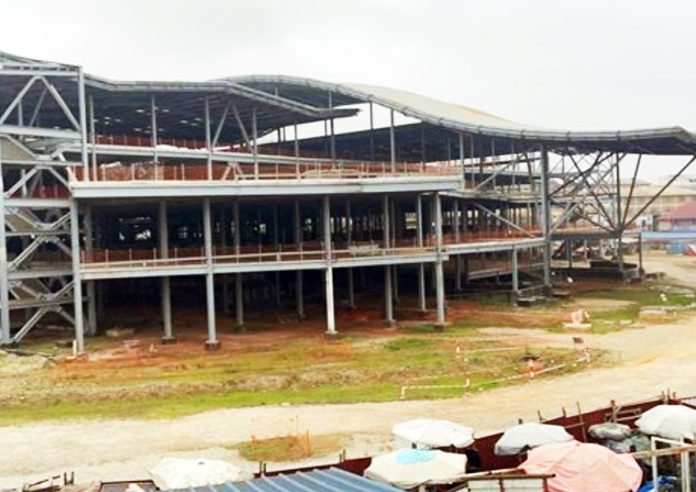
The stalled Kejetia Phase II project

About 150 workers comprising engineers, technicians and labourers, representing nearly two-thirds of the total workforce on the Kejetia Phase II Market Project in Kumasi have been laid off by construction firm.

Mr. Emmanuel Danso, the Community Liaison Officer of CONTRACTA, the construction firm, who confirmed this said the decision follows months of inactivity at the project site.He said Workers have stayed home while still receiving monthly salaries despite construction works being halted.

He said an agreement existed between the Government of Ghana and Contracta Construction UK Limited for government to subsidize part of the workers’ salaries during the downtime.

According to Mr. Danso, the agreement is yet to be honoured, placing a heavy financial burden on the company. The Kejetia Phase II Project, designed to complement the redeveloped Phase I market, has remained stalled since 2024.

The Kejetia Phase Two Project was slightly above 58 percent complete when construction was suspended, with certified interim payments exceeding €27 million still unpaid. Early this month, the Minister for Local Government, Chieftaincy and Religious Affairs, Ahmed Ibrahim, disclosed the prolonged suspension and contractor demobilisation significantly increased the overall project cost.

The Minister said the sharp increase in cost was caused by mounting suspension-related claims and delays in payments to contractors following the halt of work in 2024.He said delays, unpaid contractor claims and project suspensions have driven up costs on the project to over €305 million.

The redevelopment of the Kumasi Central Market at €248 million is being financed by the Deutsche Bank of Germany, with export credit guarantee from the United Kingdom Export Finance (UKEF).

The second phase of the project is expected to house 6,500 leasable commercial spaces, 5,400 closed stores; 800 kiosks, 50 restaurants and 210 fishmonger and butcher stores, 40 livestock stores, among others as well as provide 900 direct jobs and 2,500 indirect jobs to improve the lot of residents.

Residents, traders and workers feel frustrated and have appealed to government to release funds for work to resume to enable workers earn decent livelihoods for their families.


For more news, join The Chronicle Newspaper channel on WhatsApp: https://whatsapp.com/channel/0029VbBSs55E50UqNPvSOm2z

KMA vows to ensure occupation of official residence by MCEs

0
Richard Ofori-Agyeman Boadi addressing the Assembly

The Kumasi Metropolitan Assembly (KMA) has held its First Ordinary Meeting of the 3rd Session of its 9th Assembly, at Prempeh Assembly Hall, which proposed a resolution  to compel Mayors to reside in their official residence.

Last Monday’s Meeting, which coincided with the unveiling of the newly elected Town Council Chairpersons of the various electoral areas, was presided over by Mr Patrick Kwame Frimpong, who doubles as the Assembly Member for Krofrom East Electoral area.

The Presiding Member proposed a resolution to force Mayors to reside in their official residence when renovation works are  completed in two weeks’ time.

Hon. Patrick Kwame Frimpong – KMA Presiding Member

The No. 7 Ellis Avenue at Nhyiaeso in Kumas, the official residence of the Chief Executive Officer of the Kumasi Metropolitan Assembly (KMA) has undergone several renovations since 2000.

The three-bedroom No 7. Ellis Avenue apartment had accommodated past mayors including Maxwell  Kofi Jumah, Miss Patricia Appiagyei under Kufuor-led NPP, Samuel Sarpong  and Kojo Bonsu under the NDC.

In most cases the facility had been renovated at huge cost to the assembly before occupation by each of the mayors. In 2014, some members of the Kumasi Metropolitan Assembly were  angry about the Chief Executive’s continuous stay outside his official residence.
According to them, GHc95,000 out of GHc110,000 voted in the 2013/2014
budget had already been spent to renovate the residence yet then mayor Kojo Bonsu declined to move into the official bungalow. The residence has not been occupied since 2017.

The newly elected Town Council Chairpersons

It is the hope of Presiding Member Patrick Frimpong that this time round after the renovation in two weeks’ time, the Mayor, King Zuba as he is known, would reside there hence the proposition to compel all mayors to occupy the official residence on assumption of office.

The General meeting also deliberated on roadblock issues within the Metropolis and recommended that   Sub-Metro Engineers must inform/notify various Assembly members upon issuing a permit to keep them (Assembly Members) in the known and that the engineers must ensure that the blocked streets are cleaned after every event by the acquirer of the said permit.

The meeting also discussed  absenteeism by some government appointees and MPs from KMA General meetings, sanitisation issues at Kumasi Secondary Technical School, redevelopment of Santasi market, revenue improvement,  ban on tricycle in CBD core areas, extension of contracts and competence of contractors, maintenance of Prempeh Assembly Hall and the Sokoban Wood village, among others.

Delivering the Sessional address, Richard Ofori-Agyeman Boadi, the mayor, indicated that  in line with KMA’s commitment to deepening decentralization and strengthening sub-structures for improved service delivery, the assembly  had reconstituted the Town and Sub-Metropolitan District Councils. This, according to him, was in accordance with the relevant provisions of the Local Government (Kumasi Metropolitan Assembly) (Establishment) Instrument, 2017 (L.I. 2260) and the Sub-Metropolitan District Councils of Metropolitan Assemblies Instrument, 2015 (L.I. 2223).

He said a two-day workshop was organised in April 2026 for members to equip them with the requisite knowledge, skills, to enhance their legislative and oversight responsibilities.

Touching on security and public safety, the Mayor disclosed that while the Metropolis remains generally peaceful, certain areas are experiencing an increase in street robberies and thefts for which police patrols have been intensified in these hotspots.  The Assembly is also engaging with relevant stakeholders to support the adoption and rehabilitation of dilapidated police posts and containerised stations, thereby strengthening police visibility, improving rapid response, and enhancing overall security.

Boadi indicated that during the year under review, KMA-NADMO recorded a notable reduction in disaster incidents, particularly flooding, despite the heavy rains experienced.

He said the Assembly, through the Metro NADMO and in collaboration with the Regional NADMO, provided relief support to affected victims, and directed the Metro NADMO Director to undertake regular weekly monitoring of major market centres as a proactive measure to minimise the incidence of fire outbreaks and other related emergencies.

As part of proactive flood mitigation efforts, major drains across the Metropolis, including Airport Roundabout, Moshie Zongo, Akwatia Line, WAEC area, Ahodwo, Nhyiaeso, Atafoa and Duase, were desilted, in partnership with the Regional NADMO, contributing significantly to the decline in flood cases.

The Mayor indicated that the Assembly remains committed to strengthening its Internally Generated Revenue (IGF) through innovative, transparent, and technology-driven revenue mobilisation strategies.

The Assembly, he disclosed, has adopted measures aimed at improving revenue collection efficiency, minimising leakages, and enhancing public confidence in the management of KMA’s revenue sources to build on the gains made in 2025

As part of these measures, the Assembly successfully implemented an electronic billing system, under which bills were dispatched to businesses within the Metropolis by the second week of January 2026.

This initiative, the mayor noted, has improved accuracy in revenue administration, minimised challenges associated with boundary disputes, and reduced unauthorised revenue collection activities.

The digital platform also provides rate payers with convenient channels to engage the Assembly on billing, payments, and business information updates, thereby strengthening trust and voluntary compliance.

Hon. Boadi disclosed that while significant progress had been made, behavioural change remains the most persistent and difficult challenge confronting the Assembly. Indiscriminate littering and the illegal disposal of waste at unauthorised sites continue to undermine sanitation efforts.

To address this, intensified monitoring, during early morning and late-night operations, led to the apprehension of 26 individuals who were prosecuted before the Prempeh Assembly District Court and fined between 100 and 120 penalty units (GHC1,200 to GHC1,440), noting that The Assembly would continue to strengthen monitoring and enforcement, intensify public education campaigns, and collaborate with stakeholders to foster a culture of environmental responsibility.

From Oswald P.  Freiku, Kumasi


For more news, join The Chronicle Newspaper channel on WhatsApp: https://whatsapp.com/channel/0029VbBSs55E50UqNPvSOm2z

The Ghanaian Chronicle