Home Blog Page 49

Temi Otedola, Mr Eazi Expecting First Child

0
Temi Otedola and Mr Eazi

Nollywood actress and fashion influencer Temi Otedola and Afrobeats star Mr Eazi are expecting their first child together.

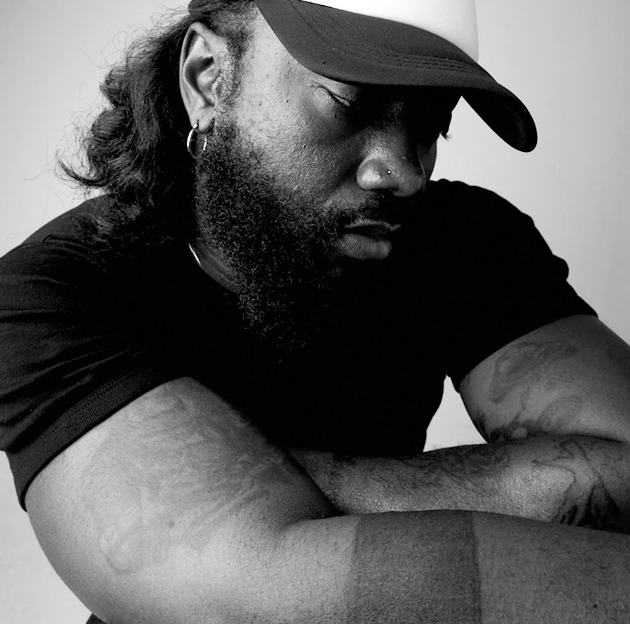
The couple announced the news on Thursday through a joint Instagram post, sharing a series of elegant black-and-white maternity photographs and a video from their pregnancy shoot.

The announcement immediately drew widespread reactions from fans, friends and celebrities across social media.

In the caption accompanying the post, Temi quoted a Bible verse from Jeremiah 1:5, writing: “Before I formed you in the womb I knew you, before you were born I set you apart.”

The heartfelt message added a personal and spiritual tone to the announcement, with many well-wishers flooding the comments section to congratulate the couple on the new chapter in their lives.

Among celebrities who reacted to the post were DJ Cuppy, Sharon Ooja, Nancy Isime, Falz, Banky W and Toke Makinwa.

The pregnancy announcement comes less than a year after the couple’s widely celebrated wedding ceremonies in 2025.

Their union began with a civil wedding in Monaco on May 9, before a lavish traditional Yoruba ceremony in Dubai in July. The celebrations concluded with an intimate white wedding in Iceland on August 8, 2025.

Temi, now known as Temi Ajibade, is the youngest daughter of billionaire businessman Femi Otedola.

Credit: channelstv.com

People think I’m joking even when I give serious answers -Pappy Kojo

0
Pappy Kojo

Pappy Kojo believes many people in Ghana misunderstand him anytime he speaks publicly.

During his chat on the Sincerely Accra podcast, the rapper said his personality often causes people to treat serious comments like jokes.

According to him, he gets frustrated when interviewers laugh at answers he genuinely means.

“Sometimes I’ll say something serious and people start laughing. I’m like, bro, that’s the truth,” he said.

The rapper explained that because many people see Fante speakers as naturally funny, almost everything he says gets turned into entertainment.

“People think I’m trying to joke all the time, but I mean the things I say,” he added.

Pappy Kojo also pushed back against claims that he intentionally gives controversial answers, insisting some interview questions simply do not make sense to him.

Reflection: The Missing Link in School Improvement

0
Wisdom Klu, the writer

An important feature of effective teaching, learning and educational leadership is building a space for reflection. This feature offers learners, teachers and school leaders an opportunity to  critically think about their experiences with the aim of improving future actions and outcomes. In reflective practice, you analyse your strengths, weaknesses and your learning process and apply lessons learned to new skills. Consequently, reflection serves meaningful learning outcomes, better teaching and professional development as well as being dynamic features of a school as a learning organization.

That being said, it appears immeasurable number of schools do not put enough spotlight on reflective practice as they do to learner performance in examination or completion of the curricula.


Reflection and Meaningful Learning

A major issue impacting school improvement is surface learning, which occurs when learners resort to rote memorisation where knowledge acquired in class is transferred directly from the page onto an exam paper without really understanding concepts or applying knowledge in real-world scenarios.

This difficulty is met by reflective learning, which prompts students to consider critically what they have learned and how they learned it and how learning can be improved. According to Machost and Stains (2023), reflective practice facilitates deep learning by allowing learners to make connections between existing knowledge and new ideas that are being considered.

For instance, after engaging in a science activity, students might reflect on the difficulties they encountered and how these relate to situations they may face outside the school. This discourages rote memory and prepares them towards a true understanding of content. Through  activities such as conversations, interrogations, journals and team-building, learners’ essential thinking skills, creativity, communication capabilities get enhanced, which finally impacts positively on the improvement of the school.


Reflection and Metacognitive Development

One other critical concern is that a lot of learners do not develop metacognitive skills as required. Most students are not actively led to track their thinking, assess their learning progress and identify useful learning strategies.

It is important to indicate that, reflective practice promotes  metacognitive awareness by making the learner able to manage their thinking cycles and develop psychological autonomy. In fact recent research by Machost & Stains, (2023) indicates that reflective learning boosts self-regulated learning, learner autonomy and critical thinking which are all pre-requisites for educational success as well as lifelong learning.

For example, after a mathematics test, the learner may reflect and establish that poor time management or ineffective revision strategies led to uneven performance. This awareness aids the learner to follow appropriate study habits for their further assessments.

This metacognitive development makes learners more accountable for learning. Also, students who engage in regular reflection are better able to identify weaknesses and positive improvement as they become more confident in their ability to learn. Ultimately, this means schools that actively encourage reflective and metacognitive practices are much better equipped to further bolster student achievement and pass rates.


Reflection and Instructional Improvement

The process of reflective practice is closely aligned to instructional quality, as effective teaching demands from educators to assess what occurs in the classroom and reconstruct how an instruction would occur with their students. But too often, it seems, some teachers simply deliver content and smile, seemingly oblivious to clarity of the lessons or whether teaching methods are working.

So, reflective teaching involves reflecting on the administrative strategies that teachers expound as well as their interaction with the students in order to enhance teaching effectiveness. According to “Reflective Practice in Teaching and Learning” (2025), research suggests that reflective teaching leads to professional development, higher quality instruction, and better learner outcomes. A teacher noticing that learners engage more actively during group discussions than using lecture methods might therefore decide to incorporate more learner-centred strategies in their subsequent lessons.


Reflection and School Leadership

The base of reflective school cultures and leadership practices, impacts school improvement. Leaders who do not critically evaluate their school policies, instructional practices, and their own decision making in light of such data may find themselves unable to surmount many pressing educational challenges. Reflective leadership builds accountability, teamwork, adaptability, and learning within schools.

Moreover, research into school self-evaluation reinforces the finding that reflective evaluation practices enable schools to recognise weaknesses and improve quality of instruction and educational outcomes (Reflections on a Paradigm for School Improvement 2024). This is to conclude that, leaders who embrace reflection create opportunities for conversations, mentorship and professional learning foster team problem-solving and school growth.

For example, a head teacher who reflects on poor academic performance may hold staff meetings to uncover possible reasons for bad results, and work together towards solutions. This indicates that reflective leadership can empower and build trust in the school community to work together for collective responsibility. Let me hasten to say that reflective leadership on schools leads to educational improvement that is more likely sustainable while also attracting appropriate responses to emerging challenges.


Recommendations

  1. Integrate reflective practice into classroom instruction via journals, reflective discussions, questioning techniques, peer evaluations and portfolios.
  2. Offering continual professional development training on reflective teaching strategies and metacognitive instruction may lead to greater classroom effectiveness and learner implemented engagement.
  3. School leaders must develop reflective school cultures by ensuring mentoring, collaboration, dialogue and professional learning communities among the teachers and other staff.
  4. Reflective practice needs to be embedded in the planning and monitoring of school improvement so that it is used by schools as a way of identifying weaknesses in provision, tracking progress and deploying appropriate interventions.
  5. Instead of failure, schools should cultivate environments where students can take risks and experience growing pains, exploration, innovation and improvement.


Conclusion

One of the most potent and poorly used school-improvement strategies- reflection. Reflective practices provide authentic learning opportunities, enhance metacognitive development as they are essential in the improvement of effective instructional and educational leadership.

Purposefully embedding reflection in teaching, learning, assessment and leadership practices can position schools to pursue sustainable improvement. With the many demands and challenges facing education systems, reflective practice needs to be at the forefront of educational reform as well as school improvement continuity.

By Wisdom Koudjo Klu,

Educationist/Columnist,

Greater Accra Region.

wisdomklu@gmail.com


For more news, join The Chronicle Newspaper channel on WhatsApp: https://whatsapp.com/channel/0029VbBSs55E50UqNPvSOm2z

Showbiz Players mourn Beverly Afaglo

0
Beverly Afaglo

Following the shocking demise of Actress Beverly Afaglo on Sunday May 24, 2026, showbiz players have shared some memorable times with their 42 year colleague and also poured out tributes on their social media pages.

In a heartfelt message, Actor and politician John Dumelo looked back on how they first met nearly 20 years ago while working on the TV series About to Wed in Dzorwulu.

According to him, that moment became the beginning of an important friendship and working relationship that later helped shape his acting career.

“That’s when I met Beverly Afaglo, Prince David Osei and Yvonne Okyere. We starred in one of the best TV series and Bev brought out the best in me,” he wrote.

“That’s how I got to star in ‘King is Mine’ and the rest they say is history,” he said.

The actor thanked Beverly for the role she played in his life and career, saying he would never forget her kindness and support.

“Thanks so much Bev for playing a significant role in my acting career,” he added.

Also reacting to the demise of Beverly was Actress Nadia Buari who reflected on how quickly life can change and reminded people not to take time with loved ones for granted.

“One day someone is laughing with you, and the next moment they are gone,” she wrote on social media.

“Then you start wondering how life continues moving when theirs has stopped.”

According to Nadia, many people go through personal struggles quietly without others knowing what they are facing.

“You never really know what someone is carrying inside,” she stated. “That is why kindness matters.”

“A simple message or checking up on someone can mean a lot,” she wrote. “Sometimes people are using their last strength just to show up.”

Media personality Ohemaa Woyeje has shared an emotional message following the death of actress Beverly Afaglo.

In a post shared online, Ohemaa Woyeje described Beverly as more than a friend, saying she had been “a sister and a true one” throughout the years.

According to her, Beverly even contributed with her real-life experiences and voice to her upcoming book titled ‘Life Beyond Opinions.’

“You have been a sister and a true one over the years,” she wrote emotionally. “Since this morning when I heard the news, I have not stopped crying.”

Ohemaa Woyeje revealed that she and people close to her had been praying for Beverly in recent days after they noticed she had stopped responding to calls and messages.

“I told people around me to keep you in prayers when you were no longer replying texts and calls,” she said. “I never imagined you would leave this soon.”

The media personality also praised Beverly for being strong and hardworking despite life’s challenges.

Davido’s manager reacts after Phyna calls him impotent

0
Israel DMW and Phyna

Davido’s Logistics Manager and socialite, Israel Afeare, popularly known as Israel DMW, has blasted former BBNaija winner, Phyna, for calling him an impotent man.

It all started when Phyna attributed her fallout with VeryDarkMan to her refusal to sleep with him.

In response to the allegations, Israel claimed that Phyna’s private part is smelling.

However, responding to a commenter that said, “VeryDarkMan has knack you tire”, Phyna during a Livestream on Sunday evening alleged that Israel is an impotent man who can’t father a child.

Phyna said in Pidgin English, “No, I no dey knack man wey dey knack his fellow men, you won make he give me pile? Israel DMW, that one wey don loose. Fool at 40, wey be fool for ever.

“Israel dey go comment say Phyna toto dey smell. At least now, shey as e dey smell, I still sey go. What of you wey be impotent? Israel wey no go fit father pikin. Israel can’t even father still born or imbecile . Israel that’s 52 years old,” she said in the video.

Reacting in a series of posts on his Instagram page, Israel stated that he is yet to have a child because of his wish to have all his kids with his legally married wife and not with a baby mama.

Sharing Phyna’s picture on his page, he wrote, “You automatically becomes impotent in Nigeria, as a public figure who has chosen to be legally married with one wife with kids from one woman, and not the baby mama. Wahala. Mumu.”

Credit: dailypost.ng

Feature: The Land Is Tired, The Soil Is Sick, And The Vultures Are Gone

0
Nana Annor Amihere II

How chemical fertilizers, weedicides and GMO seedlings are quietly dismantling Ghana’s organic heritage — and what we must reclaim before the cocoa premium itself collapses

A warning from the soil

There is a quiet emergency unfolding beneath our feet, and most of us are not paying attention. The soil that fed our grandparents, that produced the cocoa beans which built Ghana’s name on the international market, that nourished the snails and mushrooms and cocoyams of our childhoods, is dying.

It is being killed slowly, deliberately, and with our own hands, by the chemical fertilizers, weedicides, pesticides and genetically modified seedlings that have crept into every corner of our farming communities. As an environmental professional who has spent decades observing this transformation, and as a custodian of stool lands in the Eastern Nzema, I write today not as an alarmist but as a witness.


What we have lost: the wisdom of shifting cultivation

In the 1960s and 1970s, peasant farming in Ghana operated on a discipline that modern agronomy is only now rediscovering and calling “regenerative.” Our farmers practised shifting cultivation. A plot was farmed for a season or two, then deliberately rested, allowed to fallow, while another portion of land was brought into use.

During the rest period, the soil rebuilt itself. The biodiversity returned. Earthworms aerated the earth. Fungi colonised the leaf litter. Decomposed vegetation became natural compost. The land healed itself because we gave it time.

Equally important, our peasant farmers preserved organic seeds from one season to the next. The seed was a sacred inheritance, not a purchased commodity. Tomatoes had seeds inside them because tomatoes are supposed to have seeds inside them. A farmer could harvest, eat, and replant from the same fruit. That single fact tells you everything about food sovereignty.


The cocoa premium was built on organic farming

It is no accident that Ghana cocoa commands a premium on the international market. In the early 1900s, when the cocoa industry took root in this country — initially at Aiyinasi, where my ancestor Joseph Crosby Annan established Ghana’s first cocoa experimental farm — the peasant farmers who carried the industry on their backs did not use chemical fertilizer. They did not spray weedicide. They weeded by hand with cutlass and hoe. They composted. They allowed the forest canopy to shade the young trees. The flavour profile that earned Ghana her global reputation is the chemical signature of that organic husbandry.

Today, we are dismantling the very foundation of that premium. Cocoa farms are saturated with synthetic fertilizer, repeatedly sprayed with broad-spectrum weedicides, and increasingly planted with hybrid seedlings whose long-term suitability for our soils and our flavour heritage has never been honestly debated in public. The international buyers know. They are already testing for residues. The day our cocoa fails a residue test at the port of Hamburg or Amsterdam is the day the premium evaporates.


The GMO question and the death of the seed

The introduction of Monsanto-style hybrid and genetically modified seedlings, which travel hand in hand with the chemical fertilizer regime, has changed our food system in ways the ordinary consumer barely understands. Consider the humble tomato. The organic tomato of my childhood lasted three days on the shelf because it was a living fruit with viable seeds inside. The Monsanto tomato of today sits on the shelf for three months because it has been engineered to do so. It is a product, not a fruit. Its seeds, where they exist, do not reliably reproduce the parent plant. The farmer must return to the seed merchant every season. The cycle of self-renewal that defined peasant agriculture has been broken.

The day our cocoa fails a residue test at Hamburg is the day the premium evaporates.


The weedicide generation

Perhaps the most dangerous shift of all is cultural. The youth of today do not want to weed. Manual weeding, the discipline that built our farming villages, is now considered beneath dignity. In its place we have the indiscriminate spraying of glyphosate-based and paraquat-based herbicides on cocoa farms, on food-crop farms, along roadsides, and in our water catchments. The consequences are devastating and they are already visible to anyone with eyes to see.

The fungi-dependent foods of our heritage — the mushrooms, the snails that fed on the undergrowth, the cocoyams that thrived in the shade — are vanishing. Vultures, the silent scavengers that cleaned our environment of carrion and disease, are now classified as endangered, in some regions effectively extinct. Bees, butterflies, frogs, the entire web of pollinators and decomposers, are collapsing. When the vultures disappear, the carcasses do not. They rot in the open, breeding pathogens. The ecological accounting is brutal and it is unforgiving.


A public health emergency in slow motion

The human health consequences are equally grave. Residues from agrochemicals accumulate in the food chain, in surface and ground water, in breast milk, in the tissues of unborn children. The rising incidence of cancers, kidney disease, neurological disorders and unexplained infertility in our farming communities cannot honestly be separated from this chemical saturation. We are conducting an uncontrolled experiment on our own population, and we have not bothered to design the safeguards. As a safety and environmental professional, I say without hesitation: this is the single biggest existential threat facing rural Ghana today.


What must be done

First, the Environmental Protection Authority, the Food and Drugs Authority and the Ministry of Food and Agriculture must move from quiet tolerance to active regulation. Glyphosate, paraquat and the most hazardous Class 1 pesticides must be reviewed, restricted and where necessary banned, as several West African neighbours have already done.

Second, COCOBOD must mount an honest, evidence-led defence of the organic character of Ghana cocoa, including residue surveillance at the farm gate, not only at the export terminal.

Third, the National Biosafety Authority must subject every GMO release to public scrutiny rather than quiet ministerial approval.

Fourth, and most importantly, we must rebuild the agronomic knowledge of the village. The composting techniques, the shifting cultivation cycles, the seed preservation practices of our grandparents must be documented, taught in our agricultural colleges, and incorporated into extension services. Traditional rulers, who hold the stool lands on which most peasant farming takes place, must lead this restoration. I am committing the Aiyinasi-Basake Stool to that work.


The cost of forgetting

The land does not forget. The soil keeps a memory of every drum of herbicide poured upon it, every season of monoculture, every seed that was never returned to the earth. We have one generation, perhaps two, before the damage becomes irreversible. If we act now — farmers, chiefs, regulators, scientists and government acting together — we can still pull back. If we do not, then the silence of the vultures will be followed by a silence far harder to explain to our grandchildren.

* The writer is the Immediate Past National President, Ghana Institute of Safety and Environmental Professionals (GhISEP).

Written By Nana Annor Amihere II

Mandimase (Overlord), Aiyinasi-Basake Stool Lands, Eastern Nzema


For more news, join The Chronicle Newspaper channel on WhatsApp: https://whatsapp.com/channel/0029VbBSs55E50UqNPvSOm2z

Ghana Premier League Ends With Drama across Venues

0
Asante Kotoko captain Samba O’niel

The 2025/26 Ghana Premier League season ended dramatically with title celebrations, survival battles, controversy, and standout performances marking an unforgettable final day.

All Blacks Shock Kotoko to Escape Relegation

Asante Kotoko ended their season on a sour and controversial note after suffering a shocking 2-1 home defeat to Swedru All Blacks in a tense final-day encounter that carried huge relegation implications.

Coming into the match, All Blacks were firmly trapped in the relegation battle and needed victory at all cost to preserve their top-flight status. The pressure surrounding the fixture was already intense before kickoff, especially following allegations that a match official had reportedly facilitated a meeting between representatives of the visitors and Kotoko officials prior to the game. Although no evidence has been produced and no official report has confirmed wrongdoing, the final result is likely to fuel further speculation among supporters and observers.

Kotoko appeared to be in control in the opening half and took the lead in the 45th minute through an own goal by Tutu Clement, sending the home crowd into celebration at halftime. However, the complexion of the match changed dramatically after the break as the desperate visitors responded with urgency and determination.

Richard Mensah restored parity in the 56th minute before William Danquah completed the turnaround with the winning goal in the 68th minute, silencing the Kotoko faithful and handing All Blacks a priceless victory that ultimately secured their survival.

The defeat capped a disappointing campaign for Kotoko, who finished 8th on the table with 49 points despite boasting one of the league’s best defensive records. For All Blacks, the victory lifted them to 15th place with 45 points, completing a remarkable escape from danger on the final day.

Tension boiled over after the final whistle as angry home supporters reacted furiously to the outcome. The atmosphere around the stadium reportedly became hostile, forcing Kotoko players to be escorted out secretly in an ambulance for their safety amid fears of crowd trouble.

While the result officially stands as a crucial survival victory for All Blacks, the controversy and allegations surrounding the game are certain to dominate post-season discussions unless clarity is provided by the relevant football authorities.

Chelsea Edge Bechem in Five-Goal Thriller

Berekum Chelsea ended their Ghana Premier League campaign with a hard-fought 3-2 victory over regional rivals Bechem United in an entertaining final-day clash.

With both sides safely clear of relegation and out of the title race, the match was about finishing strongly and improving their final league positions. Chelsea rose to the occasion, moving up to seventh place with 50 points, while Bechem finished 10th after a difficult season.

The hosts took control in the first half through a quick double from Abubakar Seidu in the 35th and 37th minutes. Bechem pulled one back before halftime through Augustine Okrah.

Chelsea restored their two-goal cushion in the 85th minute via Owusu Marvin before Okrah added a late consolation. Chelsea held firm to seal the win.

Atta Kumi Hits Six as Gold Stars Run Riot

Bibiani Gold Stars ended their Ghana Premier League campaign in sensational fashion with a dominant 8-3 victory in a breathtaking final-day encounter highlighted by a historic individual performance from Samuel Atta Kumi.

Samuel Attah Kumi, Bibiani Gold Stars

The high-scoring contest exploded into life after a competitive first half that ended 2-1, but the second half turned into a one-sided attacking exhibition as Gold Stars completely overwhelmed their opponents with six additional goals to close the season emphatically.

At the centre of the destruction was Atta Kumi, whose extraordinary six-goal haul instantly became one of the standout individual performances of the Ghana Premier League season. The prolific forward displayed ruthless finishing, intelligent movement, and remarkable composure in front of goal as he repeatedly punished the opposition defence throughout the contest.

His remarkable tally not only powered Gold Stars to victory but also secured him the league’s top scorer award, crowning what has been a superb campaign for the striker. Scoring six goals in a single top-flight match is a rare achievement and further underlines his growing reputation as one of the most exciting attacking talents in Ghanaian football.

Phobians Hit Four past Champions Medeama

Hearts of Oak produced one of their finest performances of the season as they defeated newly crowned champions Medeama 4-2 in an entertaining Ghana Premier League final-day showdown.

Augustine Okrah, Bechem United

The result ensured Hearts finished third on the table with 54 points, rounding off the season with renewed confidence and momentum ahead of the next campaign.

Hearts made a dream start when Issah Hamza. opened the scoring just four minutes into the game, setting the tone for an energetic display from the hosts. The forward doubled his tally in the 56th minute after Hearts had carried their slim first-half advantage into the break.

Although Medeama responded through Braye Kingsley. in the 63rd minute to reduce the deficit, Hearts continued to attack with purpose and intensity. An own goal in the 78th minute restored the home side’s two-goal cushion before Wayo Mawuli. added a fourth in the 86th minute to effectively put the contest beyond reach.

Medeama managed a late consolation through Mensah Jacob. deep into stoppage time, but it did little to take away from Hearts’ dominant display.

Despite suffering defeat, Medeama still finished top of the table with 62 points after an impressive title-winning campaign that saw them record 17 victories and score 52 goals.

Nations Win But Still Go Down

Nations FC closed their Ghana Premier League campaign with a hard-fought 1-0 victory, but the result ultimately proved insufficient as they still suffered relegation on a heartbreaking final day.

Knowing only a win would give them any chance of survival; Nations approached the encounter with urgency and determination. Their positive start paid off in the 15th minute when Sarpong Antwi found the breakthrough goal, sending hope and belief through the team and supporters as the pressure mounted elsewhere in the relegation battle.

The early strike separated the two sides at halftime, with Nations showing resilience and discipline to protect their advantage heading into the second half. Despite creating a few promising moments after the break, they were unable to extend their lead, leaving the outcome of their survival hopes dependent on results from other venues.

Table

The visitors pushed hard for an equalizer in the closing stages, but Nations defended resolutely and managed to hold on for all three points in what became a tense and emotional contest.

Despite their victory, Nations still finished inside the relegation zone and were condemned to the drop after an inconsistent campaign that saw them struggle to build momentum throughout the season.

By Jesse Otoo


gpl rESULTS

Asante Kotoko 1:2 Swedru All Blacks

Berekum Chelsea 3:2 Bechem United

Bibiani Gold Stars 8:3 Eleven Wonders

Hearts of Oak 4:2 Medeama

Holy Stars 1:4 Dreams

Karela 0:1 Nations FC

Vision 3:0 Aduana

Young Apostles 2:0 Samartex

Heart of Lions 3:0 Hohoe United

Cambodia’s former opposition leader receives royal pardon for 27-yr sentence

0
Cambodia's ​former opposition leader Kem Sokha

Cambodia’s ​former opposition leader Kem Sokha, who was serving a 27-year sentence for treason, has been pardoned, the country’s former prime minister said.

Hun Sen, ​who is currently Cambodia’s acting head of state, signed a decree pardoning his political rival on behalf of King Norodom Sihamoni.

Sokha, the former leader of the now-dissolved Cambodian National Rescue Party (CNRP), was first arrested in 2017 over a video where he said he had received support from US pro-democracy groups.

He has been held under house arrest since he was found guilty of treason in 2023. The charges have been widely derided as politically motivated by human rights groups.

Hun Sen posted on Facebook that Sokha had been “pardoned”, alongside a photo of the royal decree signed by him.

The pardon came after an appeal against Sokha’s sentence was rejected last month. But it did not include overturning a ban on the politician leaving Cambodia for five years.

Sokha’s CNRP party came close to securing a shock victory in the 2013 general election victory over Hun Sen’s Cambodian People’s Party (CPP) despite accusations of vote-rigging and intimidation.

As the next election approached, Sokha’s party was the only viable threat to Hun Sen’s rule.

The opposition leader was arrested in 2017, less than a year ahead of the crucial vote, which the CNRP was eventually banned from contesting, making Cambodia a de facto one-party state.

His arrest coincided with a crackdown on government critics.

Credit: bbc.com

EasyJet flight diverts to Rome over power bank in luggage

0
EasyJet flight

A UK-bound EasyJet flight was diverted to Rome after a power bank was found to be charging in a passenger’s luggage, it has been revealed.

Flight EZY2618 from Hurghada in Egypt to London Luton landed in the Italian capital on Tuesday night as a “precaution”.

The airline said the captain had decided to divert “in line with safety regulations” after a passenger informed crew during the flight that the portable charger was in the hold of the aircraft. Many airlines have toughened rules on power banks, often requiring that they be stored in hand luggage because of the risk of lithium-ion batteries catching fire.

The flight touched down safely at Rome Fiumicino and was rescheduled to the next day.

Data from FlightRadar24 showed the flight cruising at 36,000ft when almost three hours into its journey, over the Adriatic Sea, it took a sharp left-hand turn and landed 20 minutes later.

It is understood there was no issue with the power bank, but regulations state power banks are not allowed to be charging in the hold during a flight.

A spokesperson for the airline said: “The aircraft landed safely and passengers disembarked routinely and we provided hotel accommodation and meals where available. As some customers remained in the airport, they were provided with refreshments.

“The safety of its passengers and crew is EasyJet’s highest priority and EasyJet operates its fleet of aircraft in strict compliance with all manufacturers’ guidelines.                                                                  “We would like to apologise to all passengers for any inconvenience caused by the diversion and subsequent delay.”

EasyJet’s rules state that power banks are accepted on aircraft in cabin baggage only but are “prohibited from use” and “must not be used to charge other devices”.

A maximum of two power banks per customer are allowed, they must not exceed 160 Watt-hour (Wh) for lithium batteries and they must be individually protected such as in their original packing or a plastic bag.

Announcements are often made by cabin crew warning against their use.

Other airlines have brought in similar rules.

Credit: bbc.com

Police fire shots in air to disperse angry crowds at DR Congo Ebola treatment centre

0
Red Cross volunteers are conducting safe burials for Ebola victims to prevent the virus from spreading

Police in the east of the Democratic Republic of Congo fired shots in the air after angry crowds attempted to reclaim the bodies of loved ones who had died at an Ebola treatment centre in Mongwalu, two local journalists told the BBC.

Sunday’s unrest continued throughout the day, the reporters said.

The treatment centre, in a hospital compound, was the same place that was targeted overnight on Friday into Saturday, when an isolation tent was set ablaze.

The body of a dead Ebola victim is highly infectious and can lead to the virus spreading further when prepared for burial.

There have been more than 900 suspected Ebola cases in the current outbreak and 220 suspected deaths, officials say.

According to Mongwalu General Hospital’s medical director Dr Richard Lokudu, Sunday’s attackers demanded the bodies of two people be given to their families.

He told the Associated Press news agency that the hospital was on “general alert”.

One of the dead was a Catholic shepherd, who was a “well-known local figure – a religious leader”, a hospital official told AFP news agency.

Suspicion of the authorities and scepticism about the cause of death has led to deep distrust among some in the communities currently affected by Ebola.

On Thursday, crowds set fire to isolation tents in hospital in Rwampara – a town 85km south-east of Mongwalu where cases are also concentrated – after they were prevented from taking the body of a man thought to have died from Ebola, away for burial.

Red Cross volunteers are carrying out safe burials under police protection to stop the virus spreading.

Three volunteers have also died from suspected Ebola likely caught while managing dead bodies, according to the organisation.

Credit: bbc.com

The Ghanaian Chronicle