Ghanaian actress and musician, Efia Odo has dismissed long-standing claims that she negatively impacts artistes’ careers whenever she affiliates herself with them.
Speaking in an exclusive interview with Ghana Weekend on Tuesday, September 9, she reacted to suggestions that her closeness to artistes like Kwesi Arthur and King Promise coincided with a decline in their progress.
Critics have also warned that her association with Mr. Drew could spell similar doom for him.
But Efia Odo strongly rejected the notion, stressing that she has always supported artistes rather than harmed them.
“Was I not the same person promoting Kwesi Arthur’s songs all the time? I’ve also worked with Likee. Has Likee stopped what he’s doing? I’m close to Shatta Wale. Has he stopped doing music? I’ve supported so many people in the industry, from Darkovibes to Gyakie to Black Sherif,” she said.
Efia Odo described such speculations as “negative projections” from people with the wrong mindset about her. According to her, whatever struggles artistes face have more to do with themselves than with her influence.
Nigerian musician Tiwa Savage has expressed discomfort with being labelled the “Queen of Afrobeats”, a title often attached to her name by fans and some creative arts personalities.
The award-winning artiste argued that there are many other female artistes who deserve such a title.
“Yeah, they call me the Queen of Afrobeats, but there are a lot of us that are Queens,” she noted.
Tiwa Savage explained that accepting such a label often comes with pressure which is not comfortable with.
“Personally, I don’t like that tag, it’s uncomfortable because I feel like if I start accepting it, I need to be humble and secondly, it doesn’t make sense to me. So, I don’t accept it,” she said.
While she may not embrace the title, Tiwa expressed gratitude to her fanbase for recognizing her impact and contributions to the genre.
According to her, the title is probably because she was one of the first Nigerian female acts to break through on a major level.
” But I appreciate it. I do appreciate it because it’s not something I came up with. I think it’s because I’m one of the first female artistes in Nigeria to breakthrough. I do appreciate that, and I’m not taking it for granted,” she added.
Nollywood actor Segun Arinze has dismissed claims that Nigeria has banned foreign models and voice-over artists from its advertising space.
Arinze, who is President of the Association of Voice Over Artists in Nigeria said reports of a blanket ban were misleading.
Speaking in an interview with Kwame Dadzie and Doreen Avio on Accra-based Hitz FM, he explained that the directive had been misinterpreted.
“CNN had an interview with me on that. So this is it. We said ‘stop taking it out of the country. The Director General of the Advertising Regulation Council of Nigeria called me and said this is what they were going to do. I knew what they were going to do.
He said they were tired of advertising agencies taking the jobs to the UK and South Africa to shoot. Because they were trying to make money and then you were leaving the young talents. So why don’t leave all those things here, do them here? No voice-over talent in America will come to Naija to come and produce or shoot the advert. They won’t, unless it’s intentional. Unless there is a reason for it,” he told Kwame and Doreen on Daybreak Hitz.
“It wasn’t like a blanket ban. We just said please stop taking them out for now. Even for modelling, do them. Why would take Ghanaian for like ‘bofrot’ to the UK and go and shoot [an advert for] it with white kids and bring it back and say ‘bofrot.’ So how do the kids relate to it. So you do it in such a way that you shoot it in Ghana here so the kids can relate. So that is what exactly the Advertising Regulation Council was saying,” he further explained.
Ghanaian actor and playwright Andrew Tandoh Adote, who was also on the show, confirmed that adverts he voiced are currently running in Nigeria.
Background
In August 2022, the Federal Government of Nigeria, through the Advertising Regulatory Council of Nigeria (ARCON), announced a ban on the use of foreign models and voice-over artists in advertisements targeted at or exposed on the Nigerian market.
The directive, which took effect from 1st October 2022, is backed by the Advertising Regulatory Council of Nigeria Act No. 23 of 2022. ARCON says the law gives it authority to enforce the measure.
Under the rules, all adverts and marketing communications in Nigeria must use only Nigerian models and voice-over artists.
Ghanaian rapper Nana Yaw Adjei Yeboah Maradona, popularly known in showbiz as Guru, has announced that he is ready to relaunch his music career after completing his final examinations at the University of Ghana.
Speaking in an interview with Myjoyonline’sAlbert Kuzor on the university campus during an event on Thursday, the Lapaz Toyota hitmaker revealed that balancing academic work, family life and his music career had been a challenging experience, but one he valued greatly.
“It hasn’t been easy combining academic and music and also combining academic with student leadership…. these collaborative things has really empowered me.”
He said that with his exams now behind him, fans should expect his full return to the showbiz scene. “I just wrote my final exams, I am done and I am still going back to the show business.”
“I am coming all out, I have to because this is me, this is my life, my life is also centred on three major things, family, music and also leadership role, so I am coming all out.” he added.
Guru also disclosed that he recently released a track titled Ashawo, adding to his catalogue of hits. “I have a new song called Ashawo, it will be coming out shortly and hopefully I will be coming back for more content”
According to him, his return is expected to inject fresh energy into Ghana’s music industry as he reconnects with his audience and builds on his legacy as one of the country’s celebrated artistes.
In 2021, he gained admission to the University of Ghana (Legon) to further his education. The songwriter, under the record label NKZ, studied Bachelor of Science in Information Technology.
In last year, Guru won the Students’ Representative Council (SRC) presidential election at the University.
The king of South Africa’s large Zulu community has challenged a professor and cultural expert to a stick fight, saying he had been insulted, along with the entire Zulu nation.
King Misuzulu kaZwelithini issued the challenge to Prof Musa Xulu in front of thousands of people who had gathered at his newly built royal palace for the annual Reed Dance.
“We are angry and we will do anything to protect and preserve our cultures,” he said, according to the Timeslive news site.
Prof Xulu told the BBC he took the king’s personal challenge as a joke, however he said he was worried for his safety in case he was attacked by other Zulus.
“I have received threats from hired assassins,” he said, adding that he had lodged a formal complaint with the police.
King Misuzulu did not specify exactly what Prof Xulu had said to anger him but he was quoted as saying: “It pains me to see another man telling me how to do my job.”
Prof Xulu told the BBC he believes the king was angered by an interview he gave to local media, in which he said that the move to the new eMashobeni palace could be seen as wasteful, given that 152 million rand ($9m; £6.5m) had been spent on renovating the Enyokeni palace where the reed dance had been held since 1984, when the ceremony was introduced to South Africa.
But “talking about public finance is not an insult,” he said.
On the question of stick-fighting, he said this was part of Zulu culture but those fighting had to be equals and “I’m not equal to the king”.
The 64-year-old professor also said he had not done any stick-fighting since before he was a teenager.
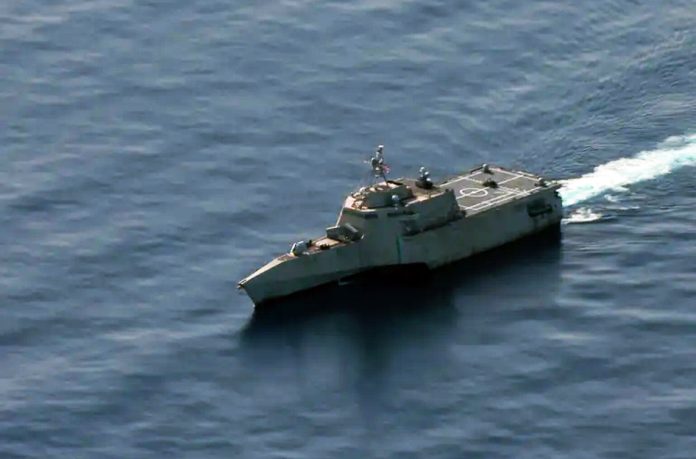
China’s military has warned the Philippines against any provocations in the tense South China Sea as it continues to launch patrols and advance plans to solidify its control of the area.
A spokesperson for the Chinese military’s Southern Theater Command issued a statement directed at the Philippines that referenced joint drills with the United States and Japan in the major waterway carrying more than $3 trillion of annual commerce.
“We sternly warn the Philippine side to immediately stop provoking incidents and escalating tensions in the South China Sea, as well as bringing in external forces for backing such efforts that are destined to be futile,” the spokesperson said.
Philippine maritime and military authorities have not commented immediately.
The warning comes after the US Asia Pacific Command said in a statement that Japan, the Philippines and the US conducted joint maritime exercises in the Philippine Exclusive Economic Zone from Thursday to Saturday to strengthen regional cooperation and support a free and open Asia Pacific region.
This comes days after China’s State Council on Wednesday revealed its intention to establish a nature reserve spanning 3,500 hectares (8,650 acres) on the disputed islet of Scarborough Shoal, a contested territory claimed by both China and the Philippines in the South China Sea.
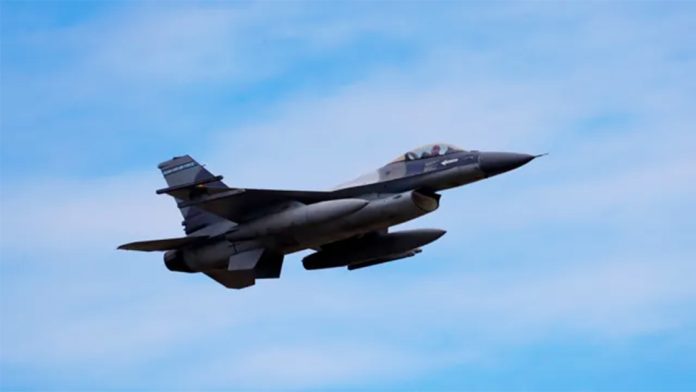
F-16 aircraft detected a Russian drone in Romanian airspace
Romania says a Russian drone has breached its airspace – the second Nato country to report such an incursion. Romanian fighter jets were in the air monitoring a Russian attack in Ukraine on Saturday and were able to track the drone near Ukraine’s southern border, the defence ministry said in a statement.
Ukrainian President Volodymyr Zelensky said the incursion could not be a mistake – it was “an obvious expansion of the war by Russia”. Moscow has not commented on the Romanian claims.
On Wednesday, Poland said it had shot down at least three Russian drones which had entered its airspace.
In its statement, Romania’s defence ministry said it detected the Russian drone when two F-16 jets were monitoring they country’s border with Ukraine, after “Russian air attacks on Ukrainian infrastructure on the Danube”.
The drone was detected 20km (12.4 miles) south-west of the village of Chilia Veche, before disappearing from the radar. But it did not fly over populated areas or pose imminent danger, the ministry said.
Poland also responded to concerns over Russian drones on Saturday. “Preventative operations of aviation – Polish and allied – have begun in our airspace,” Prime Minister Donald Tusk said in a post on X. “Ground-based air defence systems have reached the highest state of readiness.”
Earlier this week Russia’s defence ministry said there had been “no plans” to target facilities on Polish soil.
Belarus, a close Russian ally, said the drones which entered Polish airspace on Wednesday were an accident, after their navigation systems were jammed.
On Sunday, the Czech Republic announced it had sent a special operations helicopter unit to Poland.
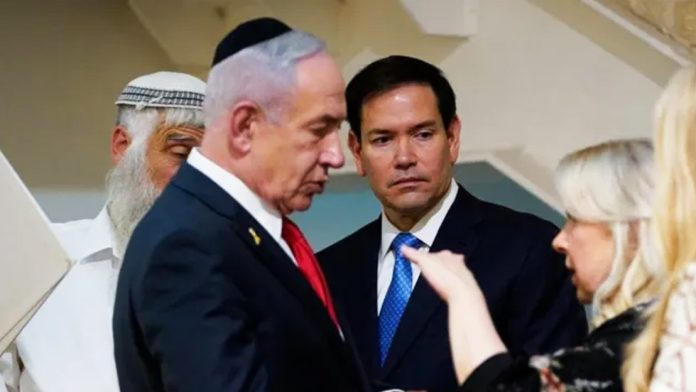
Rubio and Netanyahu visited the Western Wall in Jerusalem
US Secretary of State Marco Rubio has arrived in Israel to discuss the war in Gaza following Israel’s attack on Hamas members in Qatar, which has drawn international condemnation.
Before his departure, Rubio said US President Donald Trump was unhappy with the Israeli strike on the key US ally, but stressed that the US-Israeli relationship was “very strong”.
“Obviously we’re not happy about it, the president was not happy about it. Now we need to move forward and figure out what comes next,” Rubio said.
His visit comes as Israeli forces continue to destroy residential buildings in Gaza City, forcing thousands to flee ahead of an expected ground offensive to seize the city.
In his remarks at Joint Base Andrews, Rubio added that Trump’s priority remained the return of all hostages and an end to the war. Hamas members had been in Doha to discuss the latest US proposal for a ceasefire in Gaza when Israel launched its strikes.
When asked whether the strike on Doha complicated Qatar’s willingness to work with the US, Rubio said “they’ve been good partners on a number of fronts”.
Qatar – a key US ally in the region and the location of a major American air base – will host an emergency Arab-Islamic summit on Monday to discuss next moves.
Doha has condemned Israel’s attack as “cowardly” and a “flagrant violation of international law”. Israeli Prime Minister Benjamin Netanyahu said the move was “fully justified” because it targeted senior Hamas leaders who organised the 7 October 2023 attacks.
Some 48 Israeli hostages, of whom 20 are believed to remain alive, are being held by Hamas in Gaza. Their families have said Netanyahu is the “one obstacle” preventing their return and reaching a peace deal.
A senior lecturer at the Department of Environmental Science at the Kwame Nkrumah University of Science and Technology (KNUST), Prof. Isaac KowTetteh, has called for the creation of a dedicated National Action Plan to tackle PFAS contamination in Ghana, warning that the country currently lacks a focused policy framework to deal with the emerging threat posed by so-called “Forever Chemicals.”
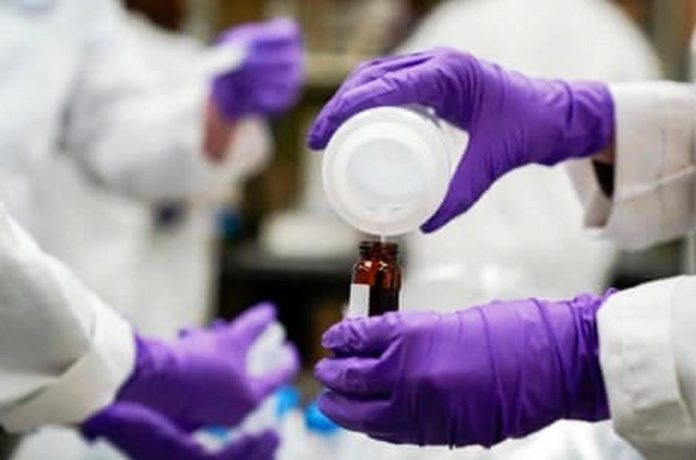
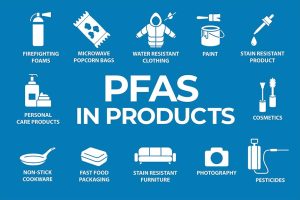
PFAS—Per- and Polyfluoroalkyl Pubstances—are synthetic chemicals widely used in consumer and industrial products because of their water, grease, and stain-resistant properties. Known for their persistence in the environment and the human body, PFAS can take decades to break down, and have been linked to a range of health problems including cancer, liver damage, thyroid dysfunction, infertility, and developmental disorders.
PFAS
“Ghana does not currently have a specific National PFAS Action Plan. While there are broader environmental efforts that indirectly address PFAS, such as the National Plastic Action Partnership (NPAP) and the Hazardous and Electronic Waste Control and Management Act (Act 1124), these initiatives are not tailored to the scale and complexity of PFAS pollution,” Prof.Tetteh told The Chronicle in response to written questions.
Legal Framework and Monitoring Capacity
Ghana’s Environmental Protection Agency (EPA), under Act 1124, has the legal mandate to prevent, reduce, and eliminate pollution, which provides a basis for PFAS regulation. The Hazardous Chemicals Committee (HCC) within the EPA monitors the importation, use, and disposal of hazardous chemicals, including PFAS.
Prof.Tetteh explained that Ghana already has some technical capacity for PFAS detection through SociétéGénérale de Surveillance (SGS Ghana), which conducts PFAS sampling and testing using international standards such as the EPA Method 1633. This capacity, he argued, should be scaled up and institutionalized to support nationwide surveillance and policy action.
Current Water Treatment Methods Are Ineffective
Despite Ghana’s efforts to improve water safety, conventional water treatment methods such as chlorination, coagulation, sand filtration, ultrafiltration, and UV oxidation have proven ineffective at removing PFAS from drinking water.
“The carbon-fluorine bond in PFAS is among the strongest in organic chemistry. It resists most treatment processes, which is why PFAS can pass through traditional systems and remain in water consumed by the public,” Prof. Tetteh explained.
He noted that more advanced treatment technologies including granular activated carbon filtration, ion exchange resins, reverse osmosis, and nanofiltration have demonstrated much higher efficiency in removing both long-chain and short-chain PFAS, as well as other organic and inorganic impurities.
Low Public Awareness a Major Barrier
Another key concern, according to Prof. Tetteh, is the lack of public education campaigns specifically addressing PFAS exposure in Ghana.
“There is no structured public awareness campaign on PFAS, despite scientific evidence confirming its presence in our environment. This gap in public health communication is dangerous because it limits community-level protective actions and delays policy pressure,” he warned.
He cautioned that many Ghanaians might unknowingly expose themselves to PFAS through consumer products, cosmetics, contaminated water, or e-waste, and urged policymakers to launch nationwide awareness programmes to empower individuals to make informed choices.
Given the complexity of PFAS contamination, Prof.Tetteh recommended a collaborative approach involving government agencies, industry, researchers, and the public. He suggested that industries could support research at institutions like KNUST to identify cost-effective and sustainable solutions for PFAS mitigation, while communities must cooperate in monitoring and adopt behavioral changes to reduce exposure.
The KNUST researcher also drew attention to the scarcity of baseline PFAS data in Ghana and Africa at large. Few studies have measured PFAS concentrations in environmental matrices such as soil, air, and water, or in biological samples including human blood, breast milk, and wildlife tissues.
He pointed out that Ghana lacks advanced analytical tools like high-resolution mass spectrometry, trained personnel, and legal thresholds for PFAS in water and soil. Also missing are studies on how Ghanaians are exposed outside of e-waste sites and what the long-term health effects may be.
Ghana’s Stockholm Convention Commitments
Prof.Tetteh disclosed that the ongoing update of Ghana’s National Implementation Plan (NIP) under the Stockholm Convention on Persistent Organic Pollutants (POPs) now includes PFAS as a target chemical.
“This inclusion is significant. The NIP offers a structured national mechanism to plan, fund, and implement PFAS research, surveillance, and control. It can become the main tool to drive change if supported politically and financially,” he emphasized.
He further noted that Ghana has a strong record of international cooperation on environmental issues and urged that these partnerships be extended to cover PFAS. Existing collaborations with UNEP, UNIDO, WHO, and the US EPA, he said, could provide technical expertise, funding, and training for PFAS detection and remediation.
“No matter how useful these chemicals are, if they harm the population, we must choose safer alternatives. If we value lives, we must act,” Prof.Tetteh said.
Time for Action
The message from Prof.Tetteh is clear: Ghana cannot afford to delay action on PFAS. He called for the urgent development of a National PFAS Action Plan, stronger regulation, public awareness campaigns, investment in advanced water treatment technologies, and expanded research and monitoring programmes.
Without these measures, he warned, the invisible threat of Forever Chemicals will continue to quietly undermine Ghana’s public health, environment, and the wellbeing of future generations.
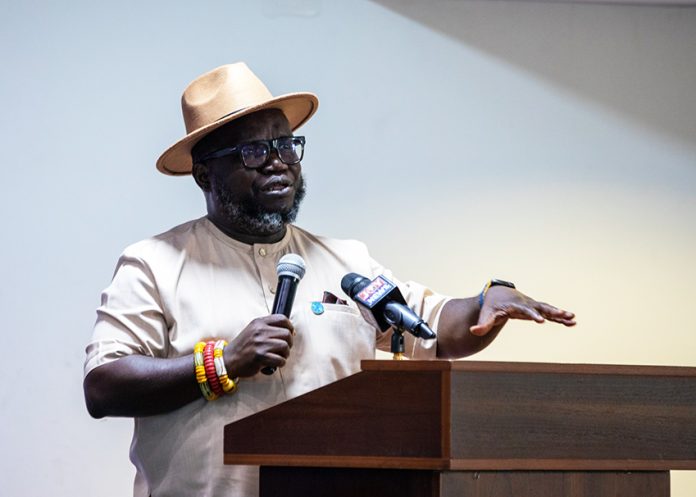
Mr Ken Ashigbey, Member of anti-galamsey coalition
The Ghana Coalition Against Galamsey (GCAG) has issued a scathing critique of President Mahama’s recent statement on illegal mining, accusing the government of failing to confront the galamsey crisis with the urgency and severity it demands.
In a powerful response to the President’s comments during the “Presidential Media Encounter” on September 10, GCAG argued that the government’s posture on the issue was alarmingly passive, downplaying what has become one of Ghana’s most destructive environmental and social crises.
The Coalition, which represents a broad spectrum of society including media organizations, labour unions, youth groups, traditional leaders, businesses, and civil society organizations emphasized the escalating damage caused by illegal mining activities, which have ravaged over 60% of the country’s water bodies, devastated forest reserves, and displaced countless farmers.
GCAG’s statement on Wednesday morning called out the President for his failure to grasp the scale of the environmental “terrorism” being inflicted on the nation. “The President’s remarks were woefully inadequate. The seriousness of the galamsey disaster cannot be overstated. Our water bodies are poisoned with heavy metals, our forests are decimated, and we are staring at the potential collapse of our agricultural sector,” the Coalition said.
A Crisis of Urgency and Leadership
GCAG’s condemnation focused primarily on President Mahama’s perceived indifference to the urgency of the crisis. “What the President failed to acknowledge was that we are in the midst of an environmental catastrophe. Every day we delay, the damage grows irreparably,” said a spokesperson for the Coalition. He added that “his statement lacked the urgency needed to pull us back from the brink. This is no longer just a political issue—it’s a life-or-death situation for future generations.”
One of the most contentious points raised by GCAG was the President’s comments on the police’s role in curbing galamsey activities. Mahama suggested that law enforcement had failed to distinguish between legal and illegal miners, and subsequently pulled police forces out of anti-galamsey operations. GCAG, however, pushed back, arguing that the police had shown considerable courage and progress in confronting illegal mining.
“We saw first-hand how the police, though not perfect, made significant strides in controlling the galamsey menace. They were fearless in their efforts, and now, the President’s decision to withdraw them only emboldens those operating outside the law,” the Coalition asserted.
A Call for Accountability
In a direct challenge to the President, GCAG demanded that the government name a single licensed small-scale mining operation that is operating responsibly and in line with the law. They also questioned whether newly established bodies like the National Alternative Initiatives for Miners (NAIMOS) are adequately funded and equipped to address the problem.
“There is no doubt that the government has failed to provide the necessary resources to combat illegal mining. We welcome initiatives like NAIMOS, but we ask: has the government truly committed to supporting them with the capacity needed to make a tangible difference?” GCAG questioned.
The Coalition further argued that the President’s assertion that alternative livelihoods must be provided before taking action against illegal miners effectively justifies the widespread lawlessness, allowing criminals to continue destroying the environment without consequence.
“It’s unacceptable to suggest that illegal activities can be allowed to continue until an alternative is provided. This is a dangerous justification for the destruction of our land, our water, and our future,” GCAG declared.
An Unfolding Environmental Crisis
The President’s speech also touched on the government’s reluctance to declare a state of emergency in response to the growing crisis. GCAG was unequivocal in its stance, claiming that the failure to declare such a measure, despite the deteriorating conditions, shows a government that is either out of touch or unwilling to act.
“The government’s refusal to declare a state of emergency is a slap in the face to Ghanaians who are watching their livelihoods and futures vanish in real time,” said a GCAG member. The Coalition cited a report from the Managing Director of the Ghana Water Company Limited (GWCL), who confirmed that turbidity levels at the Kwanyarko Water Treatment Plant had surged to a staggering 32,000 NTU—a dangerously high level that rendered the water unfit for human consumption.
On the same day, the Central Regional Minister confirmed the closure of the plant, underscoring the crisis’s deepening impact on public health and access to clean water.
The Path Forward: A Call to Action
GCAG is not backing down. They have announced a ‘Comprehensive Media Briefing’ scheduled for Monday, September 15, 2025, at the International Press Center, where they will provide further evidence of the government’s failings and outline a more forceful approach to tackling the galamsey crisis.
“We will continue to hold the government accountable. We are uniting every sector of society to demand immediate, decisive action,” GCAG said in its statement. “The government’s inaction is failing us all—farmers, businesses, children, and the environment. Our very future is at stake.”