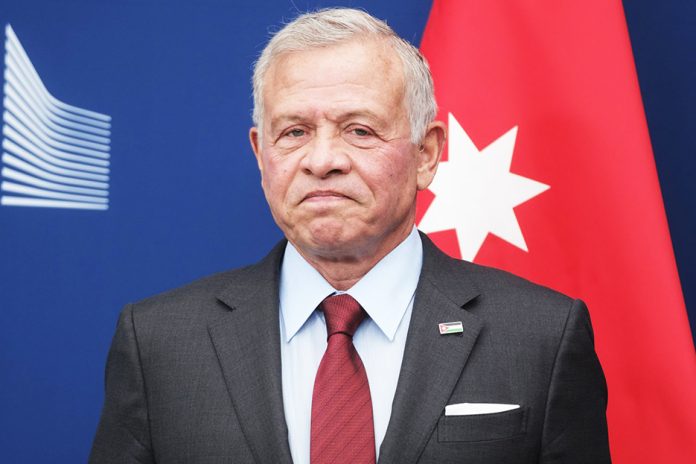
Countries would reject being asked to “enforce” peace in Gaza if deployed under the Trump ceasefire plan, King Abdullah of Jordan has told the BBC.
“What is the mandate of security forces inside of Gaza? And we hope that it is peacekeeping, because if it’s peace enforcing, nobody will want to touch that,” said King Abdullah in an exclusive interview for BBC Panorama.
“Peacekeeping is that you’re sitting there supporting the local police force, the Palestinians, which Jordan and Egypt are willing to train in large numbers, but that takes time. If we’re running around Gaza on patrol with weapons, that’s not a situation that any country would like to get involved in.”
The King’s comments reflect concern from the US and other nations about being dragged into a continuing conflict between Hamas and Israel, or Hamas and other Palestinian groups. According to the UN, peace enforcement uses coercive measures including military force, while peacekeeping operates with the consent of the parties to a conflict and troops only use force in self-defence and defence of their mandate.
Under US President Trump’s 20-point peace plan, Arab states and international partners are to commit stabilisation forces that “will train and provide support to vetted Palestinian police forces in Gaza, and will consult with Jordan and Egypt who have extensive experience in this field.” Hamas is to disarm and give up political control of the territory.
King Abdullah said he would not send Jordanian forces into Gaza because his country was “too close politically” to the situation. More than half of Jordan’s population is of Palestinian descent, and over decades, the country has taken in 2.3 million Palestinian refugees fleeing earlier wars with Israel – the largest number in the region.
The National Anti-Illegal Mining Operations Secretariat (NAIMOS), in collaboration with the Ashanti Regional Security Council (REGSEC), has dismantled entrenched illegal mining networks within the Oda River Forest Reserve in the Ashanti Region, in an intelligence-driven operation.
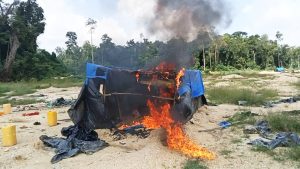
The mining site set ablaze
On October 23, 2025 the NAIMOS Taskforce, working jointly with operatives from the Ashanti Regional Security and with some logistical support from the Ashanti REGSEC, launched a coordinated mission that resulted in the arrest of some illegal miners and nine armed imposters posing as National Security operatives.
The operation, in which NAIMOS deployed three tactical teams across the forest to secure access routes and apprehend suspects, aimed at restoring law and order in one of Ghana’s most environmentally degraded reserves.
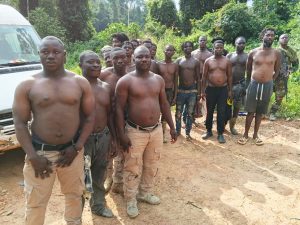
Acting on a tip-off by local informants, NAIMOS operatives arrested 15 illegal miners and intercepted several illegal miners attempting to flee the reserve on motorbikes on hearing of the taskforce’s approach.
During the operation, NAIMOS operatives also encountered nine armed men dressed in khaki uniforms who falsely identified themselves as National Security personnel.
Upon interrogation, the suspects, claimed to be acting under the command of a certain Major Jabari.
Arrested illegal miners
A search of the men uncovered one pistol with three rounds of ammunition, one toy pistol, one pump-action shotgun with three cartridges, two handcuffs and eight pouches, all of which were seized as exhibits for further investigation.
In a separate development, NAIMOS intelligence operatives foiled an attempted bribery by individuals who arrived in a Toyota Tundra and a Ram pick-up, claiming they were associates of the arrested illegal miners.
The men approached the taskforce under the pretext of “greeting” the officers and “pleading” for the release of their associates.
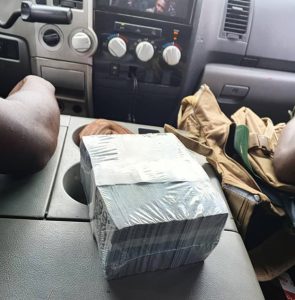
During the engagement, they offered GH₵100,000 as bribe and an additional GH₵20,000 as “chop money.”
The operatives tactically feigned interest before arresting the suspects for attempting to bribe law enforcement officers.
Following the arrests, the taskforce proceeded further into the Oda River Forest Reserve to assess the extent of environmental damage.
Bribe Money on display
The once reclaimed forest, previously replanted with trees and palm trees, had been severely destroyed by renewed illegal mining with vast tracts of land degraded, vegetation cleared and water bodies heavily polluted.
Further inspection revealed that illegal miners had established a makeshift settlement deep within the reserve, consisting of numerous wooden structures and tents serving as living quarters and operational bases.
The taskforce, acting under environmental protection directives, dismantled and set the illegal structures and equipment ablaze to prevent future reoccupation.
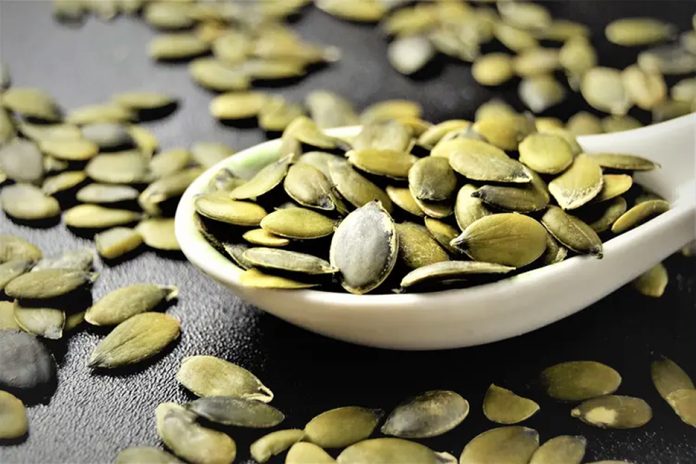
Pumpkin seeds are edible seeds from pumpkins and other varieties of gourd squash. The seeds are cream colored, flat, and oval with a nutty, slightly sweet flavor. They are roasted, salted, and eaten as a snack in many parts of the world.
You can scoop seeds out of a carving pumpkin and roast them yourself or buy roasted pumpkin seeds from a grocery or health food store. You may see them labeled “pepitas.” Pumpkin seeds and pepitas are basically the same thing except that pepitas have their cream-colored shells (hulls) removed and they come from specific varieties of pumpkin.
Pumpkins are native to Central and South America, and have been used by Native Americans for centuries as food, as well as medicine. Pumpkin seeds are filled with nutrients, such as unsaturated fats like omega-3s and minerals like magnesium.
Because they are so nutritious, pumpkin seeds have a long history of use dating back to the Oaxaca Highlands of Mexico over 7,500 years ago. Across many cultures, they’ve been used as a folk remedy to treat:
Pumpkin seed oil is either steam distilled or cold pressed from pumpkin seeds. It’s a dark green oil that’s a rich source of polyunsaturated fats and antioxidants (substances that fight cell damage), such as polyphenols and carotenoids. You can use it for cooking, baking, as well as in marinades and salad dressings. Or, you can find it as capsules to take as a supplement or serum to put on your skin or hair.
You can buy pumpkin seed oil in different forms from grocery and health food stores.
Health Benefits of Pumpkin Seeds
Pumpkin seeds are a rich source of protein, unsaturated fatty acids, vitamins, and minerals that may reduce your risk of getting chronic diseases, such as cancer.
Some potential health benefits include:
Anti-inflammatory effects
Pumpkin seeds are rich in many antioxidants, which protect your cells from disease-causing damage and reduce inflammation in your body. When they have their hulls, they’re also a great source of dietary fiber, which can boost this effect. Studies show that anti-inflammatory foods can help you prevent chronic diseases, such as type 2 diabetes and heart disease.
Laboratory studies show that pumpkin seeds can stop the growth of breast and prostate cancer cells.
Improved prostate health
Several studies have shown that pumpkin seeds may help ease the symptoms of benign prostatic hyperplasia (BPH). BPH is a condition where your prostate gland is swollen. This can cause it to press against your urethra and irritate your bladder. People with BPH may feel as if they have to pee all the time or they may be unable to completely empty their bladder.
Study showed that 500 milligrams of pumpkin seed extract twice a day reduced lower urinary tract symptoms and improved overall quality of life.
Ease the symptoms of overactive bladder
A couple of studies have shown that pumpkin seed oil can improve the symptoms of overactive bladder. Overactive bladder makes you need to pee suddenly and often. Some people may need to get up from bed to pee several times at night. In one study, 45 people with overactive bladder took 10 grams of pumpkin seed oil per day for 12 weeks, and their symptoms improved on a questionnaire.
In another study, 117 people who were assigned female at birth (AFAB) took a combination of pumpkin seed oil, sumac bark, and hops extract for 12 weeks. The number of times they needed to pee decreased, both during the day and at night, and their quality of life significantly improved.
Healthy heart function
The high magnesium content in pumpkin seeds helps lower your blood pressure and keep it steady. Thanks to this effect, diets high in magnesium are linked to a lower risk of stroke and death from heart disease.
Studies show that the antioxidants in pumpkin seeds also increase nitric oxide levels in your body. This molecule works to keep your blood vessels smooth, flexible, and healthy, improving blood flow and reducing the risk of heart and circulation problems.
Better sleep
Snacking on pumpkin seeds before bed may help you get a better night’s rest. Pumpkin seeds are a natural source of tryptophan, an amino acid that promotes sleep. The zinc, copper, and selenium in pumpkin seeds can also affect sleep duration and quality. Finally, studies show that magnesium can help reduce stress and anxiety, contributors to insomnia.
Improved sperm count
A study in mice that had lost the ability to produce sperm due to treatment with a chemotherapy drug showed that pumpkin seeds helped restore their ability to make sperm.
In a bold move to reshape Ghana’s infrastructure landscape, President John Mahama recently relaunched the National Infrastructure Plan (NIP), a 30-year blueprint aimed at transforming the country’s economic and social fabric. Anchored on nine strategic pillars—including energy, water, transport, and housing—the plan promises a coordinated and disciplined approach to infrastructure delivery.
Accra-Kumasi Highway
This follows a recent announcement of roads which will benefit from the Big Push programme. Very conspicuously absent from the government’s grand vision is the existing Kumasi–Accra highway, a vital artery that connects Ghana’s two largest cities, serves as a lifeline for millions, and literally holds Ghana together, and has been for many years.
A puzzling and deeply concerning omission
The Kumasi–Accra corridor is more than just a road. It is the economic spine of Ghana, linking the political capital with the commercial hub. Every day, tens of thousands of Ghanaians—traders, students, farmers, civil servants—travel this route, many of whom cannot afford the luxury of air travel.
The road is also a key conduit for goods and services, facilitating trade between the north and south, and connecting Ghana to its neighbours through the ECOWAS corridor.
Yet, despite its importance, the road has become a symbol of neglect. Potholes, poor signage, inadequate lighting, and dangerous overtaking lanes have turned it into a death trap. Accidents are frequent and often fatal. The human cost is staggering, and the economic cost—through lost productivity, vehicle damage, and delayed deliveries—is incalculable.
The government’s preference for a new multi-lane expressway may seem visionary, but it risks overlooking a more immediate and cost-effective solution: completing and upgrading the existing Kumasi–Accra highway. This is not an either-or scenario. As seen in many developed countries, multiple high-quality roads can—and should—coexist to serve different segments of the population and economy.
Whilst there has been no categorical statement to say the existing road will not be completed, the lack of a plan for completing it, and the preference for a new multi-lane expressway, as expressed by both the President and the Minister for Roads and Highways, clearly show that the existing road does not feature much in their thinking and p; planning.
The argument that completing the existing road is too expensive does not hold up under scrutiny. While initial estimates for the new expressway may appear lower, Ghana’s infrastructure history suggests that project costs often escalate due to delays, inflation, and scope changes. In contrast, upgrading the existing road is a known quantity. The right-of-way is already secured, the alignment is established, and much of the groundwork has been laid. It is, in many ways, a low-hanging fruit.
Financing upgrades to the existing highway
One of the most compelling ways to finance the completion of the existing road is through a Public-Private Partnership (PPP). This model allows the private sector to design, finance, build, and maintain the road, while recouping its investment through tolls over an agreed period. Crucially, this approach does not add to the government’s debt burden—a key consideration in today’s fiscally constrained environment.
Tolling sections of the road, especially high-traffic zones, can generate steady revenue streams. With proper regulation and transparency, this can be a win-win: the private sector gets a fair return, and the public gets a safer, faster, and more reliable road. If the cost of the project is high, the concession period can simply be extended to ensure viability.Moreover, PPPs bring with them a culture of efficiency and accountability.
Unlike traditional government-led projects, which are often plagued by delays and cost overruns, PPPs are performance-based. The private partner has a vested interest in delivering quality work on time and maintaining the road to high standards.
Fixing the Kumasi–Accra highway would not only save lives and boost economic activity—it would also be a political masterstroke. In an era where infrastructure is increasingly seen as a measure of government competence, delivering a tangible, high-impact project like this could significantly enhance the administration’s image.
The public is watching. Ghanaians are not opposed to new expressways, but they are rightly sceptical of grand promises that ignore pressing realities. The Kumasi–Accra road is a daily pain point for millions. Addressing it would send a powerful message: that the government listens, that it cares, and that it can deliver.
The National Infrastructure Plan rightly seeks to align with the African Union’s Agenda 2063 and the United Nations Sustainable Development Goals (SDGs). But these lofty ambitions must be grounded in practical action. SDG 9, for instance, calls for building resilient infrastructure and fostering innovation. What could be more aligned with this goal than rehabilitating a critical national asset using innovative financing models?
Similarly, the government’s Big Push agenda aims to catalyse economic transformation through infrastructure. Yet, bypassing the Kumasi–Accra road undermines this objective. No infrastructure push can be truly “big” if it ignores the country’s most important transport corridor.
The time to act is now. The government must revisit its priorities and include the Kumasi–Accra highway in its infrastructure agenda. This does not mean abandoning the new expressway project, but rather complementing it with a pragmatic, people-centred approach.Here’s my recommendation of what needs to happen if the repair and upgrade of the existing highway is to become a reality:
Commission a feasibility study for completing and upgrading the existing road using a PPP model.
Engage stakeholders, including local communities, transport unions, and private investors, to build consensus and ensure transparency.
Establish a Value Engineering group of experts to explore alternatives to delivering the most affordable option that presents value-for-money.
Develop a phased implementation plan, starting with the most dangerous and congested sections.
Establish a regulatory framework led by the private sector to oversee tolling, maintenance, and service standards.
Communicate clearly with the public to build trust and manage expectations.
Conclusion
To conclude, let me state that infrastructure is not just about concrete and steel—it’s about people. It’s about connecting communities, enabling commerce, and improving lives. The Kumasi–Accra highway embodies all these values. Ignoring it in favour of a shiny new expressway is not just short-sighted, it is also unjust.It is hoped that the next budget to be presented in the next couple of weeks will take this all-important road into account and provide a plan for its completion. Ghana deserves better. And it starts with fixing the road that connects its heart to its soul.
By Dr Joseph K. Ofori-Kuragu
The Author is a PPP expert based at Anglia Ruskin University, UK. He is a Director at Project Excellence and Innovation, and can be reached via email:joseph.ofori@aru.ac.uk
Interim head coach of Bibiani Gold Stars, Nana Yaw Amankwah, has described Gold Stars forward Samuel Attah Kumi as one of the top players in the Ghana Premier League.
He said this after Attah Kumi scored a brace in Gold Stars’ 2-2 draw with Accra Hearts of Oak at the Accra Sports Stadium. His scoring output ended Hearts of Oak goalkeeper Benjamin Asare’s six game clean sheet run.
Attah Kumi’s brace took his tally to six goals in the league; the 26 year old picked up the Man of the Match Award for the defending league champions.
Speaking after the game, the former Hearts of Oak and Medeama assistant coach Nana Amankwah, praised Kumi for his performances.
“Attah Kumi now is in form. He is one of the top players now in the season.” “I think he deserves a lot. He is working hard and we are very grateful for him” Nana Amankwah said.
Despite sacking head coach Stephen Frimpong Manso and having their request to Maxwell Konadu turned down, Gold Stars rank fourth in the league with four wins, a draw and two losses in seven games.
Credit: citisportsonline
Interim head coach of Bibiani Gold Stars, Nana Yaw Amankwah, has described Gold Stars forward Samuel Attah Kumi as one of the top players in the Ghana Premier League.
He said this after Attah Kumi scored a brace in Gold Stars’ 2-2 draw with Accra Hearts of Oak at the Accra Sports Stadium. His scoring output ended Hearts of Oak goalkeeper Benjamin Asare’s six game clean sheet run.
Attah Kumi’s brace took his tally to six goals in the league; the 26 year old picked up the Man of the Match Award for the defending league champions.
Speaking after the game, the former Hearts of Oak and Medeama assistant coach Nana Amankwah, praised Kumi for his performances.
“Attah Kumi now is in form. He is one of the top players now in the season.” “I think he deserves a lot. He is working hard and we are very grateful for him” Nana Amankwah said.
Despite sacking head coach Stephen Frimpong Manso and having their request to Maxwell Konadu turned down, Gold Stars rank fourth in the league with four wins, a draw and two losses in seven games.
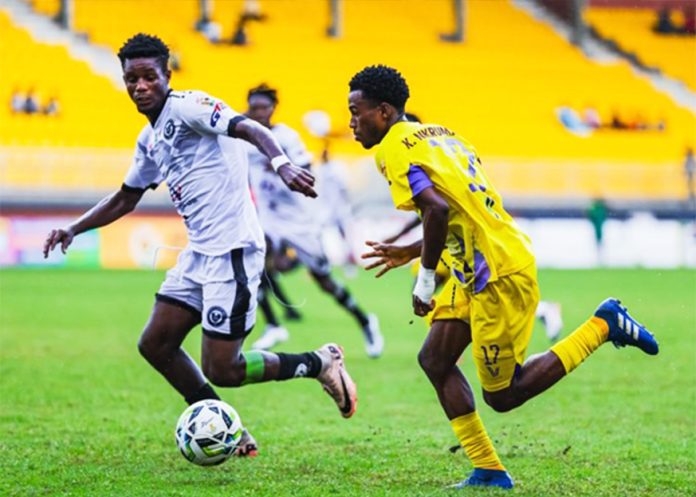
Medeama Sporting Club head coach Ibrahim Tanko says his club’s performance in the first half of a Ghana Premier League game against Swedru All Blacks was the worst since he took over head coaching duties of the Tarkwa based club midway through the 2024-2025 season.
He said this after Medeama bagged a 1-0 win over All Blacks at the TNA Stadium to stay on top of the GPL standings with 16 points and have a point advantage over second ranked Aduana Stars. Medeama have five wins, a loss and a draw in seven games.
Speaking after the tough win over All Blacks to the club’s media, Ibrahim Tanko stated that despite the win, his team’s performance was poor in the first half.
“A really tough game; I must admit this is the worst first half we’ve played since I’ve been here but it’s part of football but the most important thing is to have the three points at the end of the day.”
“Even though it was really hard, I congratulate the boys for fighting to get the Defender Kamaradini Mamudu scored the winning goal in the 73rd minute. three points” Tanko said.
Ghana defender Mohammed Salisu buttressed his uptick in performance in recent weeks by scoring the winning goal in AS Monaco’s win over Toulouse.
Monaco bagged the 1-0 win over Toulouse this past weekend with the Black Stars player scoring the goal via a header in the third minute.
Salisu’s goal is the fastest for Monaco this season and the first win for recently appointed head coach Sebastien Pocognoli. Pocognoli replaced Adi Hutter earlier this month.
Speaking after a brilliant performance against Francis Abu’s Toulouse side that earned Salisu the Man of the Match Award, the former Southampton player talked through his goal stating to Monaco media that, “I just tried to take the ball and I think it came to the right place. I’m also well positioned in the six-yard box, so I made sure to put it at the near post.”
The Minister of Sports and Recreation, Kofi Adams, says the decision to retain or dismiss Otto Addo as head coach of the Black Stars does not fall under his authority.
Addo recently guided Ghana to a second consecutive World Cup qualification, securing a spot at the 2026 tournament. However, his tenure has come under scrutiny from sections of fans and pundits who have criticised the team’s inconsistent performances.
Despite the criticism, Ghana Football Association (GFA) President Kurt Okraku has reaffirmed that the 50-year-old coach will lead the national team to the World Cup, which will be co-hosted by the United States, Canada, and Mexico next summer.
When asked if he shared Okraku’s stance, Mr. Adams, who also serves as the Member of Parliament for the Buem Constituency, clarified that the appointment or dismissal of national team coaches is not part of his ministry’s responsibilities.
“The Sports Minister is not responsible for appointing coaches, but rather the Minister pays the coach, so the conversation of appointment of coaches and as to whether he [Otto Addo] will be sacked or not, is beyond me as the Sports Minister,” Adams told Asempa FM.
The Black Stars are set to learn their group-stage opponents for the 2026 FIFA World Cup on December 5. Before that, they will play international friendlies against Japan and South Korea on November 14 and 18, respectively.
After failing to advance beyond the group stage at the 2022 tournament in Qatar, Ghana will be aiming for a stronger showing at next year’s global showpiece.
Ghana Football Association (GFA) President Kurt Okraku on Monday morning visited the Black Queens camp at the Erata Hotel to hold discussions with the players amid the ongoing dispute over unpaid bonuses.
Sources close to the team indicate that the meeting was aimed at resolving the standoff that has disrupted preparations for the second leg of Ghana’s 2026 Women’s Africa Cup of Nations (WAFCON) qualifier against Egypt.
The Black Queens are reportedly considering a return to training later this afternoon after initially staging a boycott in protest over outstanding bonuses. Each player is owed $9,500 from their 2024 WAFCON campaign in Morocco.
The development follows reports that Sports and Recreation Minister Kofi Adams allegedly told the players they were free to leave if they refused to play, remarks that heightened tensions within the camp.
The GFA President’s visit is seen as an attempt to calm nerves and ensure Ghana’s participation in Tuesday’s crucial qualifier at the Accra Sports Stadium. Ghana holds a three-goal advantage from the first leg in Ismailia and will advance to the next round with a positive result.
Defending champions Liverpool are struggling this season through a lack of leadership, says former England striker Wayne Rooney.
The Reds have lost four consecutive Premier League matches, and are in seventh place – seven points behind leaders Arsenal.
Beaten 3-2 by Brentford on Saturday, Arne Slot’s side were thoroughly outplayed as a disappointing defeat followed those against Crystal Palace, Chelsea and Manchester United in a worrying opening nine league games.
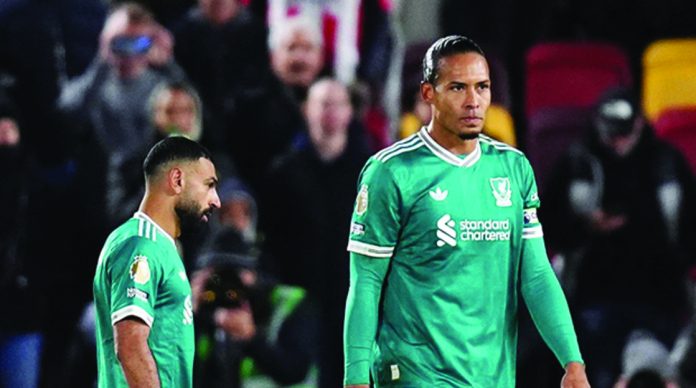
Speaking in the latest episode of The Wayne Rooney Show, the five-time Premier League winner said the body language of captain Virgil van Dijk and talismanic forward Mohamed Salah during Liverpool’s troubled spell was a “big concern”.
“No-one has seen this coming, it’s hit them quick, it’s hit them hard and I think they’re struggling to find a way out of it,” he added.
“This is a time where the manager and the leaders in the team need to figure it out very quickly.
“Virgil van Dijk and Mohamed Salah, they’ve signed new deals but I don’t think they’ve really led that team this season.
“I think body language tells you a lot, and I think we’re seeing slightly different body language from the two of them. They are the top two players in that team and if their body language is not right, that affects everyone else.
“I might be wrong on this, but if I was a Liverpool fan or the manager, that would be a big concern for me.”