Six Canadian members of parliament, along with a delegation of 24 other people, were denied entry by Israel to the occupied West Bank on Tuesday while trying to cross the border from Jordan.
The group were attempting to enter as part of a trip to Israel and the West Bank sponsored by non-profit organisation The Canadian-Muslim Vote (TCMV).
The Israeli ambassador to Canada said the group of 30 had been denied entry because TCMV had links to Islamic Relief Worldwide, a non-governmental organisation proscribed by Israel as a terrorist group.
The Canadian affiliate of Islamic Relief has strongly denied that characterisation. TCMV also hit out, saying its funding came from qualified donors only.
Israeli military body Cogat, which oversees the Allenby border crossing, told CBC News that the group had been denied entry “for security reasons”, after they arrived at the Allenby border crossing “without prior co-ordination”.
The denial was described as “deeply troubling” by the National Council of Canadian Muslims (NCCM), who said its staff members and community leaders were in the delegation alongside the MPs.
Five of the six MPs who were denied entry were from the governing Liberal Party. They were Fares Al Soud, Iqra Khalid, Aslam Rana, Gurbux Saini and Sameer Zuberi.
The sixth MP was Jenny Kwan, from the left-leaning New Democratic Party. Kwan called the situation “completely unacceptable” and rejected the suggestion that the lawmakers posed a public safety risk.
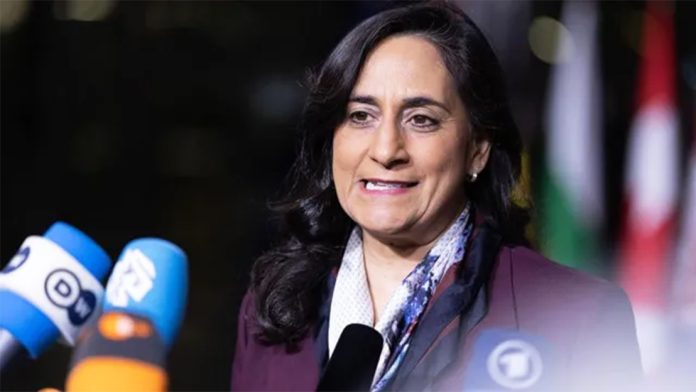
Canadian Foreign Affairs Minister Anita Anand confirmed the delegation had been denied entry in a statement on X on Tuesday afternoon.
She added that her ministry “expressed Canada’s objections regarding the mistreatment of these Canadians while attempting to cross”.
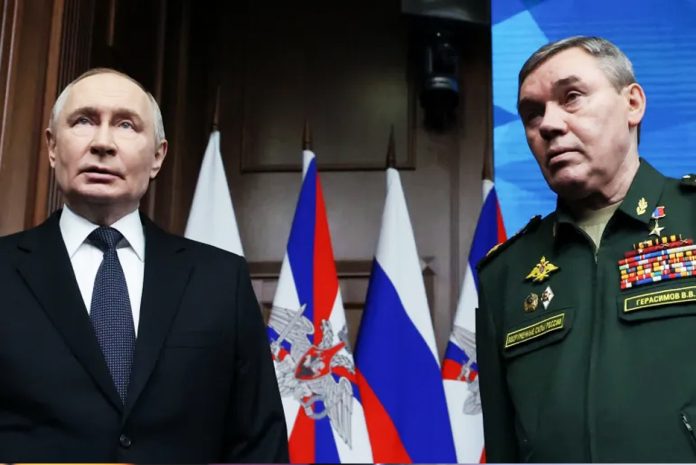
President Vladimir Putin and Chief of the General Staff Valery Gerasimov
Russia’s President Vladimir Putin has said Moscow will achieve its objectives and rejected war with the West as the European Union considers seizing Russian monies to fund Ukraine, as the war is now in its fourth punishing winter.
During a high-level meeting on Wednesday with Ministry of Defence officials, Putin was quoted by state media as describing calls in the West to prepare for war with Russia as “hysteria and a lie”.
However, he emphasised that the Kremlin’s war goals will “undoubtedly” be achieved, adding that 300 territories were “liberated” over the past year.
The Russian president repeated Moscow prefers to deal with what it calls the root causes of the conflict through diplomacy, but remains prepared to “achieve the liberation of its historical lands by military means” if the West refuses substantial talks.
The comments come a day before European Union leaders are to gather for a summit to see if they can agree on using some of the 210 billion euros ($246bn) in assets of the Russian central bank in Europe to advance Ukraine’s economic and military needs.
“One thing is very, very clear,” European Commission President Ursula von der Leyen told EU lawmakers on Wednesday. “We have to take the decision to fund Ukraine for the next two years in this European Council.”
European Council President António Costa, who will chair the summit, has pledged to keep the leaders negotiating until an agreement is reached, even if it takes days.
EU officials want to use the frozen assets to underwrite a 90 billion euros ($105bn) “reparations loan” to Ukraine.
Mastercard has announced plans to register 15 million users in Africa within five years, as part of its broader strategy to expand financial inclusion and strengthen the continent’s digital economy. The announcement comes in a statement issued by the company detailing its achievements and future plans.
The statement disclosed that in 2025, Mastercard’s acceptance network in Africa grew by 45%, a milestone that brings millions more consumers and small businesses into the formal digital economy. According to the company, this accelerated progress reflects an unprecedented surge in digital payments adoption, technology deployment, and innovation, a transformation that traditionally would have taken several years.
The statement quoted Mr Mark Elliott, Division President, Africa as saying that “2025 has been a defining year for MasterCard in Africa. From acceptance growth to new digital capabilities, our focus has been on solutions that bring people and small businesses into the heart of the digital economy.
“These initiatives will drive greater financial inclusion and economic opportunity as we collectively look towards a $1.5 trillion digital economy by 2030.”
Expanding Footprint and Strengthening Local Capability
Over the past two years, Mastercard has accelerated its Africa expansion by opening offices in Ghana, Uganda and Mauritius, with additional markets slated for launch in 2026.
The company increased its employee base by almost 20%, strengthening local capabilities to co-create digital payment solutions tailored to the specific needs of African communities and merchants.
Investments in infrastructure included tokenisation upgrades, digital identity capabilities, and enhancements to virtual card offerings, all designed to improve the security, safety, and convenience of digital transactions.
“North Africa’s fintech ecosystem and strong infrastructure make it a critical engine for digital commerce,” said Mohamed Benomar, Country Manager, North West Africa.
“Mastercard’s investments strengthen support for governments, consumers and SMEs alike,” he added.
SMEs at the Center of Growth
Small and medium-sized enterprises (SMEs) form a key focus of Mastercard’s strategy, given their role as the backbone of Africa’s economy.
With consumer spending rising across major markets, including Kenya (4%), Morocco (3.4%), Nigeria (6%) and South Africa (1.9%), the demand for digital payment tools has surged.
In Nigeria, Mastercard’s QR-on-card solutions with UBA and WEMA now enable 1.8 million SMEs and gig workers to accept seamless digital payments. Zenith Bank USD cards support over 50,000 SMEs in cross-border trade.
In South Africa, partnerships with financial institutions and fintechs have addressed access-to-credit challenges, empowering tens of thousands of SMEs to scale with confidence. In Morocco, the company co-developed the nation’s first Digital Marketplace with BCP, the Ministry of Handicrafts, and Paysky, benefiting 2.3 million artisans. In Kenya, Mauritius, and Tanzania, collaborations with NMB, AfrAsia, Family Bank, and KCB have provided over 200,000 SMEs with digital tools for payments, business management, and virtual card issuance.
Folasade Femi-Lawal, Country Manager, West Africa, said “West Africa is one of the continent’s fastest-growing digital corridors. Mastercard’s security-led innovations and acceptance expansion have helped more SMEs and young entrepreneurs access modern payments and grow their businesses.”
Shehryar Ali, SVP & Country Manager, East Africa & Indian Ocean Islands, added: “East Africa continues to lead the world in digital financial inclusion. This year, we scaled cross-border solutions, virtual cards, and acceptance growth to enable more trusted digital engagement.”
Gabriel Swanepoel, Country Manager, Southern Africa, noted: “With South Africa driving Mastercard’s real-time payments capability globally, 2025 was a breakthrough year for innovation. Our collaboration on digital identity further strengthened secure, frictionless digital commerce.”
Driving Financial Inclusion in Underserved Communities
Mastercard is using Community Pass to extend access to financial services in rural and underserved communities. The social enterprise initiative connects remote populations to governments, NGOs, and private-sector services, with the goal of registering 15 million users in Africa within five years.
Community Pass has already reached 1.2 million smallholder farmers in Uganda, demonstrating Mastercard’s commitment to financial empowerment.
Through the Mobilizing Access to the Digital Economy (MADE) Alliance in Kenya, Mastercard has been actively expanding access to digital services for farmers and cooperatives.
The program has provided affordable high-speed internet and digital training to 13 cooperatives, reaching more than 10,000 farmers.
In addition, the Farm Pass initiative has digitized the profiles of over 80,000 farmers, enabling them to participate more effectively in the digital economy.
Beyond connectivity and digital records, the program has also focused on capacity building, equipping 250,000 farmers with the knowledge and skills needed to leverage digital tools for improved productivity and market access.
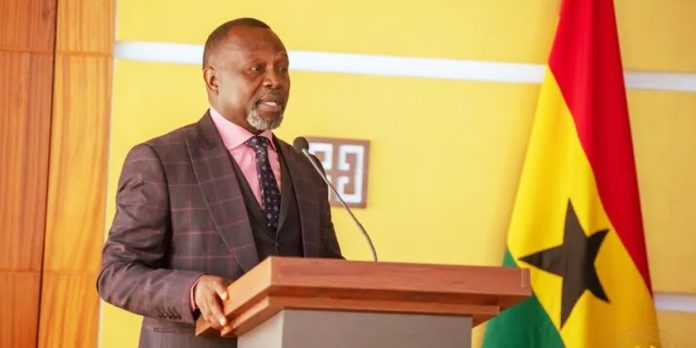
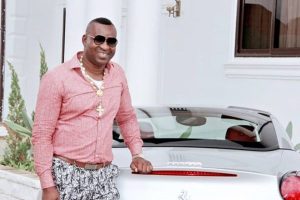
The State has filed the full set of documents it intends to rely on in prosecuting Bernard Antwi Bosiako, popularly known as Chairman Wontumi, the Ashanti Regional Chairman of the New Patriotic Party (NPP).
The disclosures were made by the prosecution team, led by State Attorney, Priscilla Lartey, before the High Court, presided over by Her Ladyship Audrey Kocuvie-Tay.
Chairman Wontumi
According to the prosecution, the documents filed include evidence relating to an amount of GH¢157,000, live BB cartridges, an investigation caution statement dated April 18, 2025 and charged statements of Michael Badu Ayisi.
Also included are a caution statement of Chairman Wontumi dated May 26, 2025 and a charged statement dated July 1, 2025 and an investigative report into a fire outbreak at Samreboi, near the Samatex Company.
The State further disclosed that it has filed a witness statement from Michael Badu Ayisi dated October 31, 2025 as well as that of another witness, Henry, among others.
“These form the entirety of the documents filed per our disclosures,” the prosecution told the court.
Following the completion of disclosures and in the absence of any application from the defence, the court ruled that the matter is now set for the reception of evidence.
The prosecution is expected to call its first witness on January 12, 2025. Additional hearing dates have been scheduled for January 13, 15, 19, 20, 26 and 29, as well as February 3, 4, 10, 12 and 15.
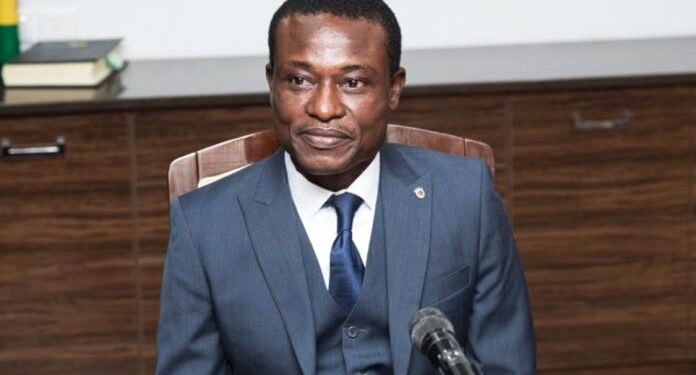
The Attorney-General
According to Article 88(3) of the 1992 Constitution, the Attorney-General of Ghana is in charge of initiating and overseeing the prosecution of all criminal offences. Additionally, Article 88(4) stipulates that the Attorney-General or any other person designated by him in compliance with any legislation may bring legal action for any acts prosecuted in the name of the Republic of Ghana.
Except for the Attorney General or someone designated by the AG to do so, no one else has the ability to begin criminal proceedings on behalf of the state for the purposes of this constitutional
clause.
In all legal procedures involving the enforcement of the law and the assertion or defence of public rights, the Attorney-General also serves as the public’s advocate. The Attorney-General is nonetheless required by the Constitution to prosecute public officials who may have committed any type of criminal offence.
It is significant to remember that, in accordance with Article 88(1), the Attorney-General serves as both the government’s primary legal counsel and a minister of state. That being said, it begs the question of whether the Attorney-General, whose appointment is required by the Constitution, would be motivated to bring legal action against certain prominent public figures.
2.The OSP
Now that the Ghanaian constitution of 1992 has established the Attorney-General’s authority, weneed to take a closer look at the Act that created the Office of Special Prosecutor.
The Office of Special Prosecutor Act, 2017, Act 959, created the Office of the Special Prosecutor. The Special Prosecutor is tasked with looking into and prosecuting certain cases of alleged or suspected corruption and acts related to corruption, as per the Special Prosecutor Act (Act 959). (See Act 959, Sec. 2(a)).
This clause raises a few important issues that need clarification:
• Who determines the specific cases to be investigated and prosecuted by the Special
Prosecutor?
• What are the criteria for determining the cases that qualify to be investigated and
prosecuted by the Special Prosecutor?
It is clear that the types of suspected corruption or acts related to corruption that the Special Prosecutor can look into and prosecute are limited.
Concerning this clause in relation to Act 959’s section 3(c), which states that: “the Special Prosecutor will look into and prosecute cases of alleged or suspected corruption and offences related to it involving public officials, politically exposed individuals, and private sector participants in the commission of the offence under any other applicable law”,will the Special Prosecutor be acting in conflict with the Attorney-General in terms of Article 88(3) of the Constitution?
The Public Procurement Act, 2003 (Act 663) and the Criminal Offences Act, 1960 (Act 29) both require the Special Prosecutor to prosecute cases of alleged or suspected corruption and corruption-related offences; however, section 3(1)(a)(b) renders this list non-exhaustive by allowing him to prosecute under any other applicable law.
This is an important point to note. This implies that the issue of who gets to decide on the limitation with regard to the “Specific cases” is still open.
“a person”
Act 959’s Section 4 declares that the Office is not subject to the direction or control of “a person” or authority when carrying out its duties, unless otherwise stated in the Constitution.
The Office of the Special Prosecutor is obviously not under the authority of “a person.”
This indicates that someone or some authority has the ability to direct or govern the Office. The term “a person” is used to denote that the Office is accountable to an authority or to someone else.
We have to contrast the 1992 Constitution’s provisions regarding the Electoral Commission’s independence. According to Article 46, the Electoral Commission shall not be subject to the direction or control of “any person” or authority when carrying out its duties, unless otherwise specified in this Constitution or in any other law that does not conflict with it.
The law makes it clear in this article that the Electoral Commission is totally independent and cannot be controlled by any person or authority. However, the law refers to “a person” or “an authority” in relation to the special prosecutor, implying that there is an unidentified person or authority that it is subject to.
Section 4(2) of Act 959, which states that, subject to clause (3) of Article 88 of the Constitution, the Office shall be authorised by the Attorney-General for the purposes of this Act to initiate and conduct the prosecution of corruption and corruption-related offences, is crucial to understanding the provision in section 4(1) with a great deal of certainty. Without the Attorney-General’s consent, the special prosecutor is not permitted to begin or carry out the prosecution of any corruption or offences related to corruption for the purposes of this section.
This makes it clear that the Attorney-General has jurisdiction over the Office of the Special Prosecutor. This is the rationale for the Act’s drafters’ choice of “a person” in the Special Prosecutor’s case rather than “any person,” as specified by the Constitution in the matters of the Electoral Commission.
According to section 4(2) of Act 959, the Attorney-General oversees the Office of the Special Prosecutor, and it functions within his jurisdiction. This makes it impossible for the Special Prosecutor to carry out the mission for which it was created on their own.
The law that established the Office of the Special Prosecutor did not grant complete independence, but the primary goal of the office’s founding was to impartially look into and prosecute cases involving corruption in order to safeguard the public coffers.
Act 959’s creators obviously intended for the Office of Special Prosecutor to report to the Attorney-General and the Minister of Justice.
Then, how can a Special Prosecutor operatingunder the Attorney-General’s jurisdiction, bring legal action against certain powerful publicfigures and members of his party who violate the law if the Attorney-General is unable to do so due to political considerations and other issues?
It is a well-known legal truth that the Special Prosecutor cannot take any action without the Attorney-General’s approval.
Concluding Remark
The aforementioned analysis makes it clear that the nation’s constitution governs the independence of the Office of the Special Prosecutor or public prosecution. Certain nations, such as Kenya, Uganda, and the Republic of Ireland, have constitutions that explicitly separate the prosecution of criminal cases from the office of the Attorney-General, and allow for the establishment of the public prosecution office through statute.
However, several nations’ Constitutions place the office of public prosecution within the Attorney-General’s office, giving the Attorney-General supervision over the office’s operations. Among these nations are Ghana, Australia, Singapore, and Rwanda.
Article 88(4) of Ghana’s 1992 constitution states that the only individual authorised to prosecute on behalf of the state is the Attorney-General. Sections 2, 3, and 4 of the Office of the Special Prosecutor Act 2017 (Act 959), upheld this legal stance and placed the OSP under the Attorney-General’s supervision.
Only by amending Article 88(4) to separate the prosecution’s powers, as in the case of Kenya, can the office of the Special Prosecutor become independent? We now have to be aware that the Special Prosecutor is not as independent as the average person believes him to be because the law creating the Office prohibits the Special Prosecutor from initiating or carrying out any prosecution without the Attorney-General’s consent.
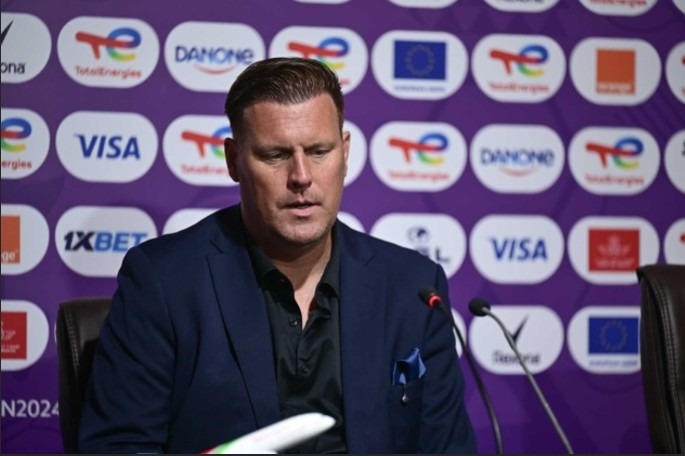
Black Queens head coach Kim Lars Björkegren has expressed satisfaction with the progress of the team in 2025.
The Swedish tactician took charge in February after replacing Nora Hauptle, who left to coach the Zambia women’s national team.
Under his guidance, the Black Queens clinched a bronze medal at the Women’s Africa Cup of Nations and also secured qualification for the next edition of the tournament.
Ghana wrapped up the year with a narrow 1-0 friendly loss to England at St Mary’s Stadium in Southampton.
“I feel that we are doing extremely well right now,” he told the Ghana FA.
“We used the first couple of friendlies to rotate a lot to take a look at the squad, to give some of the players who had been in the squad before a chance, and since then, we have been giving a lot of other players a chance.”
“Some of the players grabbed the opportunity. But at the end of the day, we found a really good squad going into the WAFCON.
“We had a pre-camp before, where we grew a lot as a group, enjoyed our time on the pitch, and worked hard through many meetings.”
Björkegren and his players will now turn their attention to the 2026 Women’s Africa Cup of Nations in March.
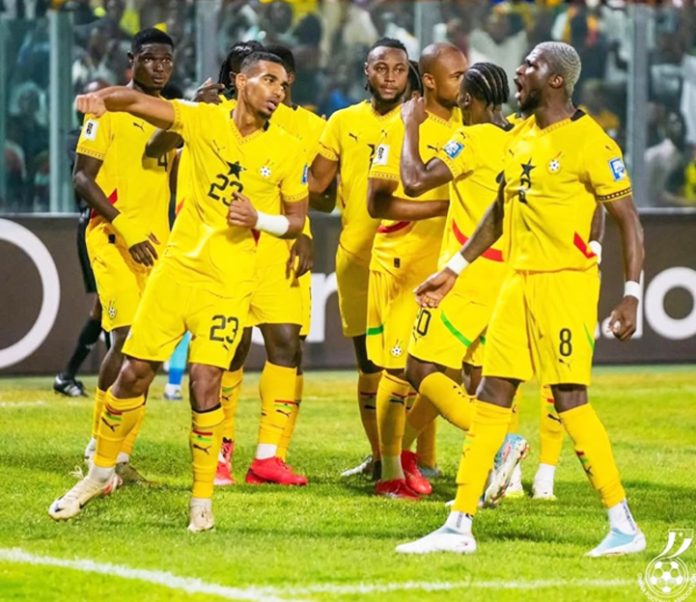
Ghana is set to receive at least USD 10.5 million following its confirmed qualification for the FIFA World Cup 2026, after the FIFA Council approved a record-breaking funding package for the expanded 48-team tournament.
With the Black Stars already through to next year’s global showpiece, Ghana is guaranteed USD 9 million in participation prize money, alongside an additional USD 1.5 million allocated to cover team preparation costs.
This places Ghana among the beneficiaries of FIFA’s historic USD 727 million distribution plan – the largest financial payout in World Cup history and a 50 per cent increase on the funds shared at Qatar 2022.
Ghana has been drawn into Group L, where they will face England, Croatia and Panama in what promises to be one of the most competitive groups of the tournament.
Beyond the sporting challenge, the financial rewards attached to participation and performance add another layer of significance to the Black Stars’ campaign.
The guaranteed USD 10.5 million provides the Ghana Football Association (GFA) with a major opportunity to strengthen national team logistics, enhance technical preparation and improve player welfare ahead of the tournament.
More importantly, the funds offer room for long-term investment, particularly in youth development, infrastructure and grassroots football – areas critical to sustaining Ghana’s competitiveness on the global stage.
Prize money will increase significantly with progression. Teams reaching the round of 16 will earn USD 15 million, while a quarter-final finish is worth USD 19 million, with the champions set to receive USD 50 million.
As Ghana prepares to return to the world’s biggest football stage, FIFA’s expanded financial commitment ensures that qualification delivers not only pride and visibility, but also substantial resources capable of shaping the future of Ghanaian football.
Crystal Palace will be aiming to secure their spot in the last 16 of the Conference League when they welcome Finnish outfit KuPS to Selhurst Park for their final League Phase fixture today.
Crystal Palace remain in contention to secure a top-eight finish in the 36-team table, while KuPS can ill-afford to drop points if they wish to seal a playoff spot.
A total of 14 teams will battle it out for the final 11 places in the Conference League knockout rounds and Crystal Palace are one of those still in contention to qualify, with KuPS seeking to avoid an early elimination in their debut European campaign.
A draw on Thursday will be enough for Crystal Palace to secure at least a place in the knockout playoff round, but claiming maximum points is what KuPS and co will be aiming for, as they are keen to advance automatically to the last 16 and avoid playing another two games in an already-congested fixture schedule.
Both teams have something to play for on Thursday, yet it is hard to look beyond Crystal Palace claiming maximum points on home soil. KuPS will back themselves to be competitive at Selhurst Park, but the superior quality throughout Glasner’s squad should see the Eagles soar to victory.
Credit: sportsmole.co.uk
Breidablik visit Stade de la Meinau to face Strasbourg
Needing a win to have any hope of making the knockout stage of the Conference League, Breidablik will visit Stade de la Meinau on Thursday for a date with Strasbourg.
Sam Amo-Ameyaw, Strasbourg
The French side are top of the League Phase table after claiming a narrow 1-0 triumph at Aberdeen on matchday five, while Blikar are two points below the knockout playoff line in 27th, thanks to a 3-1 win over Shamrock Rovers.
Heading into the final matchday of the League Phase, Liam Rosenior has the comfort of knowing his side are guaranteed a place in the last 16 of this competition with 13 points.
Strasbourg are one of only two sides in the League Phase without a defeat thus far and could become only the second French team to end this stage unbeaten after Lille in 2023-24.
Lately, there have been two sides to them, one which is winless in four straight domestic outings with only one goal scored, while the other in Europe has seen them win three in a row by a combined margin of 5-2.
Heading into this contest, they are winless in their last two competitive games at Stade de la Meinau but have suffered only one defeat in their previous seven games played in Strasbourg (2-1 versus Brest).
Although the visitors are the ones with everything to play for, Strasbourg will want to use this as a confidence boost for Ligue 1 and go into the next phase of this tournament on a winning note.
Credit: sportsmole.co.uk
Lausanne Sport, Fiorentinalock hornsin Conference League
Fighting for a place in the Conference League’s knockout stage, Fiorentina and Lausanne Sport will lock horns on Thursday evening.
The Italian side enter this week’s league-phase finale one point ahead of their Swiss hosts, with both occupying a playoff spot.
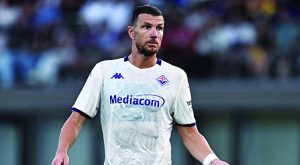
Edin Dzeko, Fiorentina
In contrast to their recent Conference League campaigns – which all ended in the semis or final – crisis club Fiorentina have limped through this term’s competition so far.
Stuck to the foot of Serie A, the Viola started well enough in Europe, but consecutive defeats – to Mainz and AEK Athens – left them in some trouble ahead of last week’s game against Dynamo Kyiv.
Having failed to fire this term, strike pair Moise Kean and Albert Gudmundsson both gained some redemption by finding the net at Stadio Franchi, and Fiorentina hung on for a 2-1 win.
Ahead of the sixth and final matchday, that leaves the Tuscan club tucked inside the playoff places, trailing the all-important top eight by just one point.
So, depending on results elsewhere, victory on Thursday could see Paolo Vanoli‘s struggling side go straight through to the last 16.
Both teams have been guilty of missing chances throughout this season’s league phase, so it could be a low-scoring encounter.
A draw would probably suit either side, surely booking their place in the playoffs – albeit Fiorentina will be more frustrated to miss out on the top eight.
Credit: sportsmole.co.uk
Drita travel away to face Rayo Vallecano
On Thursday, Rayo Vallecano and Drita will lock horns in the final round of fixtures in the League Phase of the Conference League.
The Spanish side head into matchday six in seventh position, while the visitors are sitting in 19th place in the standings.
Gerard Gumbau, Rayo Vallecano
Rayo have performed well in their first appearance in a main draw of European competition since they reached the UEFA Cup quarter-finals in 2000-01.
Inigo Perez‘s side have won three of their five League Phase games (D1, L1), including a narrow 2-1 victory in last Thursday’s away clash against Jagiellonia Bialystok, thanks to goals from Sergio Camello and Pacha Espino.
Having qualified for the knockout rounds, Rayo know that a win on Thursday will guarantee a top-eight finish and secure progression straight to the last 16, although a failure to claim all three points will put them at risk of dropping below eighth spot.
Los Franjirrojos will enter their final League Phase game on the back of the goalless draw in Monday’s home clash against Real Betis.
Rayo will be frustrated with the fact that they have now gone six La Liga games without a win (D4, L2), although Monday’s result at least extended their unbeaten home run to six competitive matches (W3, D3).
Rayo have won all three of their European home games this season, and we think that the Spanish hosts will make full use of home advantage again to pick up all three points and seal a top-eight finish in the League Phase.
Suffering bouts of nervousness or struggling to concentrate in mid-life could be an early warning sign of dementia, experts claim.
British scientists who tracked more than 5,000 adults over the age of 55 for more than two decades found that people showing clusters of specific depressive symptoms were significantly more likely to develop the condition later in life.
Those most at risk had five or more out of six warning signs, including worsening anxiety, difficulty concentrating, an inability to face up to problems, a lack of warmth or affection towards others, and a loss of self-confidence.
Another red flag was dissatisfaction with how everyday tasks were carried out.
Researchers said the findings, published in The Lancet Psychiatry, could give doctors a way to spot people at risk of dementia years before memory loss and confusion set in.
Almost one million people in the UK are currently living with dementia – a figure expected to soar as the population ages.
The condition has no cure, but experts say identifying those at risk as early as possible could allow doctors to encourage lifestyle changes that may help slow its progression.
Depression has long been known to be common in people with dementia, but the researchers said this was one of the first studies to track specific mental health symptoms over decades to see how they relate to the disease later in life.
Dr Philipp Frank – a research fellow in the mental health of older people at University College London and the study’s lead author – said the findings suggest dementia risk is linked to specific depressive symptoms, rather than depression as a whole.
‘Our findings show that dementia risk is linked to a handful of depressive symptoms rather than depression as a whole,’ he said.
‘This symptom-level approach gives us a much clearer picture of who may be more vulnerable decades before dementia develops.
‘Everyday symptoms that many people experience in midlife appear to carry important information about long-term brain health.
‘Paying attention to these patterns could open new opportunities for early prevention.’
In the study, researchers analysed health data from 5,811 adults aged between 45 and 69, with an average age of 55.
Participants were asked detailed questions about their mental health, covering 30 common depressive symptoms. Over a follow-up period of 23 years, 586 people went on to develop dementia.
Those who reported five or more of the six key depressive symptoms were found to have a 27 per cent higher risk of developing the condition compared with people who did not report low mood.
In particular, volunteers who reported that they had lost confidence in themselves in midlife appeared to carry a 51 per cent increased risk of dementia in later life.
People who said they were ‘not able to face up to their problems’ had a 49 per cent increased risk.
Reporting ‘not feeling warmth and affection for others’ had a 44 per cent raised risk while feeling nervous and ‘strung up’ held a 34 per cent rise of a third in risk of dementia later in life.
Those who were not satisfied with the way tasks are carried out had a 33 per cent increased risk of dementia more than 20 years later, while those who reported difficulties concentrating had a 29 per cent elevated risk.
Writing in The Lancet Psychiatry, the scientists said: ‘A distinct set of midlife depressive symptoms was associated with an increased risk of dementia, suggesting that these symptoms might be early markers of underlying neurodegenerative processes.’
Commenting on the paper, Dr Richard Oakley, associate director of research and innovation at Alzheimer’s Society, said: ‘The connection between dementia and depression is complicated.
‘It’s encouraging to see this new observational study begin to unpick how dementia and depression are interlinked.
‘However, more research is needed to confirm whether these six symptoms also apply to women and ethnic minorities.
‘It’s important to note that not everyone who has depression will go on to develop dementia, and people with dementia won’t necessarily develop depression.’
Dementia claims 76,000 lives each year and is the UK’s biggest killer — usually from problems arising from a weakened immune system, such as pneumonia or difficulty swallowing.
Costs to the UK economy, including that of the round-the-clock care many need as dementia takes hold, is an eye-watering £42 billion a year, according to the charity Alzheimer’s Society.
That figure will double by 2040, it warns.
Earlier this month, the Daily Mail launched its Defeating Dementia campaign, in association with Alzheimer’s Society, to raise awareness of the disease, increase early diagnosis, boost research and improve care.
Scientists now believe around 45 per cent of all cases of dementia may be preventable or — at the very least — that the symptoms can be delayed, in some cases for many years, allowing everyone to live longer, healthier lives.
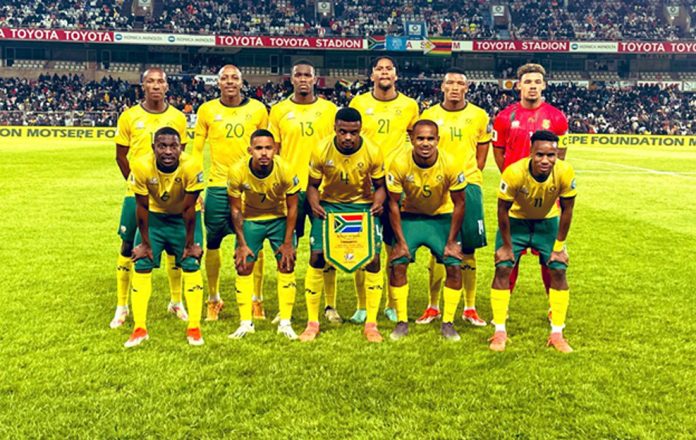
Black Galaxies coach Kasim Mingle says Bafana Bafana will be among the contenders for the 2025 Africa Cup of Nations (AFCON) title.
This comes after Ghana suffered a 1-0 loss against South Africa on Tueday at the Dobsonville Stadium.
Despite the defeat, Mingle was full of praise for his side as he only had a couple of weeks to prepare a team.
“It’s a very good performance from our boys. We have only three weeks to come here, and they put up a very good performance,” he told SABC Sport.
“I’m happy for them and the way they played. Having only three weeks in camp and coming to play against Bafana Bafana, so I’m satisfied with what I’ve seen.
“It’s a new team that were are building, a young team. We should have equalised, So I’m satisfied with the performance.”
The former Bechem Uunited and Nations FC gaffer also revealed that they did their home work on Hugo Broos’ men before the friendly.
“They are very solid, very tactical. We watched some of their clips and we were able to block some of their moves, that’s why they couldn’t play. We were expecting a higher performance from them, but we neutralised their tactics.
“We blocked the way they play, free-flowing to the wings. The goal they scored was a gifted goal from a our mistake. Bafana is a very strong team.”
When asked about Bafana’s chances at AFCON, he added, “I’m sure they are one of the contenders of the AFCON, so I think they can do better at AFCON.”
South Africa have been housed in Group B alongside Egypt, Zimbabwe and Angola.