Home Blog Page 369

Feature: The Rising Jihadi Terrorism Threat Across West Africa: A Case For The Re-Examination Of Ghana’s Response Strategies

0
Feature

The rising incidence of jihadi terrorist attacks within the West African sub-region has caused considerable concern to both leaders and the general citizenry within and outside the region. From the marauding band of Boko Haram insurgents in northern Nigeria to the more sophisticated Jama’at Nusrat al-Islam wal-Muslimin (JNIM) and its splinter variations across the Sahel, the progressive expansion and sophistication of these jihadist groups threaten the very foundations of democratic states.

These organizations have unleashed an unprecedented wave of terrorist activities in recent times, posing a serious threat to peace, progress, and development in West Africa, including Ghana. This article examines the jihadi terrorism threat landscape in West Africa, its effects, and the national, regional, and international responses to it. It concludes by highlighting the need to re-examine Ghana’s response strategies in light of the evolving nature, scope, and patterns of jihadi terrorism across the sub-region.

Overview of the Jihadi Terrorism Threat Landscape Terrorism has become a deadly phenomenon that is undermining and altering existing structures underpinning accepted global norms. Various forms of terrorism exist, with differing interests and objectives. Jihadi terrorism is one of the most dangerous forms, thriving on extreme interpretations of Islamic texts to unleash violence, largely in pursuit of political outcomes.

Denounced by mainstream Islamic adherents, these groups operate in the shadows, seeking to achieve their political goals through a distorted Islamic ideology. Although the Sahel remains the primary hotspot of their activities, it is increasingly evident that states along the West African coast are not immune to this scourge, as demonstrated by the first attack on the Ivorian seaside resort city of Grand Bassam in March 2016.

The 2025 West Africa Early Warning Outlook report by the West African Network for Peacebuilding (WANEP) showed a steady rise in terrorism-related and armed attacks in the region, increasing from 1,601 incidents in 2022 to 1,715 in 2023, and surging to 2,197 in 2024.

Except for Ghana, coastal states such as Benin, Côte d’Ivoire, and Togo have experienced a marked increase in attacks targeting civilians and security personnel in their northern regions. This trend is corroborated by the 2025 Global Terrorism Index (GTI), which highlights a growing escalation of terrorist activity across coastal West Africa, particularly in Benin and Togo.

In Togo alone, ten attacks were recorded in 2024, resulting in 52 deaths, representing a sharp increase in fatalities compared to 2023. Meanwhile, Burkina Faso, situated at the intersection of the Sahel and coastal West Africa, was identified by the GTI as the most affected country globally in terms of both attacks and fatalities.

Clearly, the jihadist threat poses a significant challenge that requires collective attention and concerted action, especially in West Africa. While activities of jihadi groups have existed in West Africa for a considerable time, the scope, scale, and potency of their attacks were previously limited.

However, most analysts attribute the upsurge and proliferation of these groups to the precipitous collapse of the Libyan state following the fall of its long-serving leader, Colonel Muammar al Gaddafi, in 2011. With easy access to arms smuggled from Libya, groups with longstanding grievances exploited the weak security architecture across much of West Africa to engage in violent attacks.

Additionally, many states in the region, such as Mali, Burkina Faso, and Niger, have diverse social, political, religious, and economic demographics that provide opportunities for exploitation by jihadist groups. Widening economic inequality and widespread youth unemployment have further created fertile ground for recruitment and radicalization.

The inability of national and regional actors to conclusively resolve lingering political conflicts, coupled with the limited presence of state security in vast areas of many countries, has further enabled jihadist groups to gain footholds. JNIM, in particular, has exploited internal tensions and conflicts to launch attacks and advance its agenda.

The withdrawal of international counterterrorism and stabilization missions, including France’s Operation Barkhane, the Takuba Task Force, and the UN Multidimensional Integrated Stabilization Mission in Mali (MINUSMA), alongside the weakening or collapse of regional frameworks such as the G5 Sahel Joint Force and the Accra Initiative, has heightened concerns about the expansion of jihadist activities across the region.

Effects of Jihadi Terrorism in West Africa While terrorism results in the needless loss of invaluable human lives, it also adversely affects the economic, social, and political governance of states. Economic productivity in affected countries has declined as investors and economic operators lose confidence in the state’s ability to guarantee security. The targeting of Europeans and other Western nationals through kidnapping has severely affected the tourism industry, resulting in substantial revenue losses.

The 2024 Kearney Foreign Direct Investment Confidence Index found that lack of security and rising geopolitical risks were significant factors driving investors toward more stable markets. This reflects the dire state of efforts to improve investment climates and attract foreign direct investment in the region. Another troubling consequence is the disproportionate reallocation of national budgets toward security expenditure at the expense of social intervention programmes. Many already challenged states devote substantial portions of their budgets to military procurement instead of critical social services.

The displacement of populations has led to growing numbers of internally displaced persons and refugees, destabilizing communities and placing additional burdens on governments. Cross-border trade is disrupted, agricultural production declines, and long-term socio-economic consequences multiply. National, Regional, and International Responses to Jihadi Terrorism In response to the threat of jihadist terrorism, various national, regional, and international initiatives have been implemented.

Vulnerable states have adopted counterterrorism strategies and deployed joint security forces to affected areas. Although Ghana has not experienced direct terrorist attacks, it adopted the National Framework for Preventing and Countering Violent Extremism and Terrorism (NAFPCVET) in 2019.

The framework focuses on four pillars: prevent, pre-empt, protect, and respond. It emphasises inter agency cooperation, intelligence sharing through the National Counterterrorism Fusion Centre, community engagement, and addressing root causes such as youth vulnerability and conflict.

Ghana has also deployed Operation Conquered Fist to border areas to deter transnational crime and potential attacks. Regionally, mechanisms such as the G5 Sahel Joint Force, the Multinational Joint Task Force (MNJTF), and the Accra Initiative were established to counter terrorism. The G5 Sahel Joint Force was created in 2017 by Burkina Faso, Chad, Mali, Mauritania, and Niger.

The Accra Initiative, launched the same year, initially included Ghana, Benin, Togo, Côte d’Ivoire, and Burkina Faso, later expanding to Mali and Niger, with Nigeria as an observer. The MNJTF, comprising Cameroon, Chad, Nigeria, Benin, and Niger, was formed to combat Boko Haram in the Lake Chad Basin. At the international level, France’s Operation Barkhane, launched in 2014 and concluded in November 2022, played a central role in supporting national armed forces across the Sahel.

However, except for the MNJTF, most regional and international operations have ceased following military coups in Mali, Burkina Faso, and Niger between 2020 and 2023. This situation has been worsened by the withdrawal of the Alliance of Sahel States from ECOWAS, weakening regional coordination.

The alignment of these states with non-Western partners has further complicated international cooperation. Conclusion and Way Forward While recognizing efforts to confront jihadist terrorism, it is clear that military responses alone are insufficient, especially for Ghana.

A more holistic and long-term strategy is required, addressing economic inequality, unemployment, corruption, poor governance, and non-inclusive policymaking. The government should prioritise vocational skills training for youth, promote tolerance through political and religious leadership, and strengthen constitutional principles of inclusion.

Ghana’s tradition of religious coexistence, intercultural engagement by traditional leaders, inclusive political appointments, conflict resolution mechanisms, and open civic dialogue all serve as critical buffers against radicalization.

Efforts must also focus on resolving internal conflicts, enhancing national dialogue, strengthening media freedom, implementing targeted communication campaigns, developing de-radicalization programmes, and cutting off financial support to jihadist groups.

Indigenous civil society groups such as the Northern Development and Democratic Institute (NDDI), which has a wide network of coverage in Northern Ghana, can play useful roles in this regard. Such a campaign would also require the collaboration of religious and community leaders to succeed. Ultimately, transparent and equitable governance that guarantees freedoms and opportunities remains the most effective defence against extremism.

These measures, collectively implemented, would strengthen Ghana’s resilience and contribute to regional stability across West Africa.

By Ambassador Fawaz Aliu
Why Antoine Semenyo escaped red card in Man United clash

0
Semenyo escapes red card

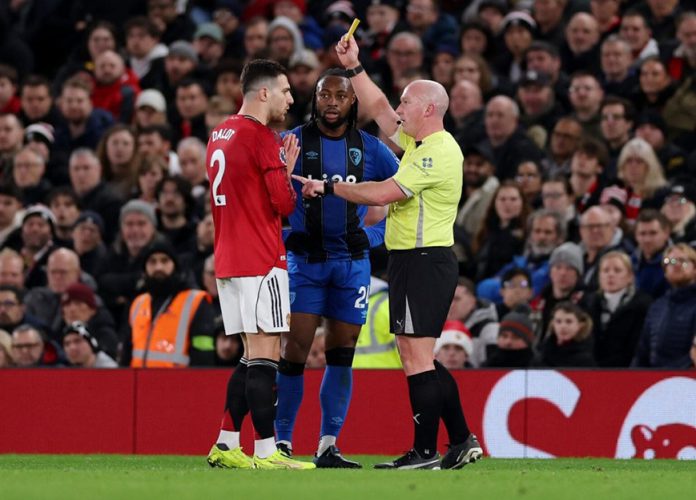
Former Premier League referee Mark Clattenburg has offered a detailed explanation in defence of the decision not to send off Antoine Semenyo during Bournemouth’s dramatic 4-4 draw with Manchester United, amid widespread debate over the incident at Old Trafford.

Semenyo was shown a yellow card after raising his hand towards United defender Diogo Dalot following a foul, a moment that sparked strong reactions from sections of the home support.

Comparisons were quickly drawn with previous incidents where similar actions resulted in red cards.

Clattenburg, however, believes the referee made the correct judgement based on the nature of the contact.

“Antoine Semenyo was issued a yellow card for raising his hand to Diogo Dalot after a foul had been awarded,” Clattenburg said.

“The yellow card was the correct decision as it was a brief touch and not a grasp to the throat, which could have had an element of malice.”

He explained that intent and force are key factors officials consider in such situations.

“If that was the case, it could have upgraded the yellow card to a red card,” he added.

Clattenburg’s assessment aligns with views expressed by other analysts, who noted that while Semenyo took a risk, the contact lacked the severity required for dismissal.

Credit: ghanasoccernet.com

Ghana suffer 1-0 loss against South Africa in international friendly

0
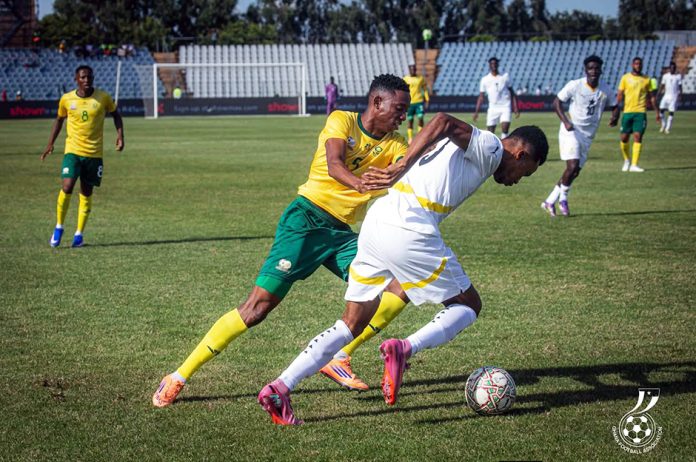
South Africa and Ghana player in a battle for the ball

Ghana’s Black Galaxies put up a spirited second-half performance but were edged 1–0 by South Africa’s Bafana Bafana in an international friendly on Tuesday.

Kasim Mingle’s boys conceded in the second half after 57 minutes and were not able to find the back of the net to restore parity.

South Africa used the game as part of preparations for the 2025 Africa Cup of Nations which starts on Sunday.

The Galaxies struggled to gain a foothold in the first half as South Africa controlled possession and dictated the tempo on home soil.

Despite the pressure, Ghana remained compact at the back and went into the break level, with the opening 45 minutes ending goalless.

South Africa made changes at the start of the second half and soon found the breakthrough.

In the 57th minute, Sipho Mbule scored the only goal of the match with a well-struck effort to give Bafana Bafana a deserved lead.

Ghana responded positively after conceding and grew into the game as the second half progressed.

The Black Galaxies created several clear chances and came close to equalising on two occasions, hitting the goalpost twice.

The South African goalkeeper was also called into action, producing a fine save to push a goal-bound effort over the bar.

Despite the late pressure and improved attacking display, Ghana were unable to find the equaliser before the final whistle.

Credit: myjoyonline.com

Man United coach clears air over Antoine Semenyo’s special player comment

0
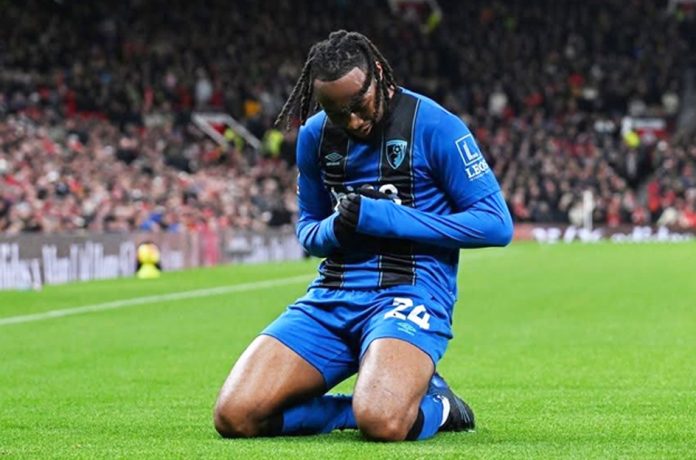
Antoine Semenyo, Bournemouth

Manchester United manager Rubin Amorim has cleared the air over Antoine Semenyo’s special player comment before the crucial Premier League clash against AFC Bournemouth on Monday night.

Amorim had labelled Semenyo as a special player prior to the high-stake clash at Old Trafford. The Black Stars attacker excelled as Bournemouth held the Red Devils to a 4-4 draw.

Quizzed if he would like to have the Ghanaian international in his squad after labeling him a special player, Amorim said, “No, I didn’t say that for that reason. I think there are many exceptional players in the league.

“What I feel, to sum up, is that they have a top-level coach, a top-level team, I really like that team and I think their best player is a special player.”

The former Bristol City star ended his eight-game goal drought in the Premier League after netting in the thrilling 4-4 stalemate against Manchester United. It was his third consecutive goal against the Red Devils.

Semenyo has been outstanding for Bournemouth in the ongoing Premier League campaign, scoring seven goals and delivering three assists.

As the winter window approaches, the Ghanaian international has emerged as a top transfer target for several European clubs including Liverpool, who view him as a possible replacement for Mohammed Salah.

Credit: ghanasoccernet

Eddie Nketiah, Hudson-Odoi inclusion will make Ghana stronger -Nii Lante Vanderpuye

0
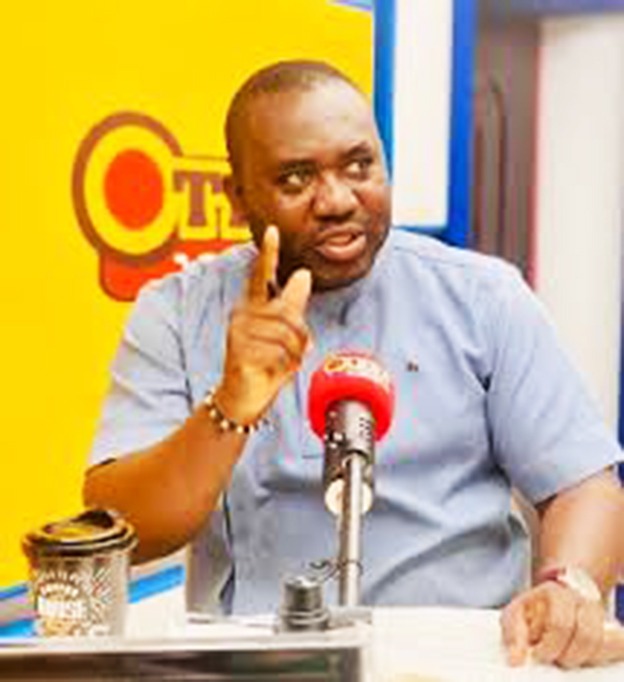
Edwin Nii Lante Vanderpuye

Former Sports Minister Edwin Nii Lante has argued for the inclusion of Eddie Nketiah and Callum Hudson-Odoi in the final squad of the Black Stars ahead of the 2026 World Cup. 

Ghana will make their fifth Mundial appearance next summer in the USA, Canada and Mexico after topping their group with 25 points.

After Black Stars qualify for the global showpiece, multiple reports have suggested that Nketiah and Hudson-Odoi are prepared to play for the West African country despite playing for England at various levels.

Despite calls to overlook them and other players who did not feature in the qualifiers, Mr Vanderpuye maintained that players with Ghanaian roots are now more crucial than ever, particularly given that Ghana have been drawn in the same group as England.

“The good thing is that we are going to play against England,” the former Member of Parliament for Odododiodio Constituency said on Onua TV.

“It will rather give us a psychological advantage over them. They won’t have that overconfidence.

“Imagine having Jordan [Ayew], [Antoine] Semenyo, Eddie Nketiah and Hudson-Odoi in attack! It makes us stronger,” he added.

The Black Stars have been drawn into Group L, where they will face Panama, England and Croatia.

Ghana will open their campaign against Panama on June 17 in Toronto, face England in Boston on June 23, and conclude the group stage against Croatia in Philadelphia on June 27.

Credit: ghanasoccernet

Today’s League Cup and Copa Del Rey Fixtures & Previews

0
Erling Haaland, Manchester City

Manchester City and Brentford battle at the Etihad Stadium

The first of three all-Premier League EFL Cup quarter-finals, Manchester City and Brentford do battle at the Etihad Stadium on Wednesday evening.

The Sky Blues eased past Swansea City 3-1 to reach the last eight of the competition, while the Bees put five past Grimsby Town without reply.

While there are Premier League and Champions League trophies to be won, the EFL Cup may not rank high on the priority lists of Man City supporters, but Pep Guardiola and co have former glories to restore in this particular competition.

Memorably winning six of the eight editions of the competition between 2013-14 and 2020-21, City have not claimed another EFL Cup honour since defeating Tottenham Hotspur in the latter final; in fact, they have not even been beyond the quarter-finals since.

Progression to the semis on Wednesday would therefore be a wonderful omen for the Sky Blues, who have gone on to lift the trophy after winning each of their last six quarter-final ties, although they were dumped out at this stage by Southampton in 2022-23.

EFL Cup glory would hold much greater significance for Brentford than Man City, and that ought to be reflected in the two teams’ starting lineups, but Andrews’s big-hitters were nevertheless largely found wanting at home to Leeds.

Credit: sportsmole.co.uk


Newcastle, Fulham lock horns at St James’ Park

St James’ Park will play host to an intriguing EFL Cup affair this evening, as Premier League rivals Newcastle United and Fulham lock horns in the quarter-finals.

Nick Woltemade, Newcastle

Newcastle have beaten Bradford City and Tottenham Hotspur in the competition thus far, while Fulham have overcome Bristol City, Cambridge United and Wycombe Wanderers.

Newcastle will enter Wednesday’s match off the back of a 1-0 defeat to Sunderland in the Premier League, with the result leaving the Magpies down in 12th spot in the Premier League table, four points off fifth-placed Crystal Palace.

The loss to their biggest rivals was a major setback for Newcastle, and Eddie Howe‘s side have struggled for consistency in the opening months of the 2025-26 campaign.

The Magpies are the holders of the EFL Cup, having beaten Liverpool in the 2024-25 final, with the competition bringing their first domestic trophy since the 1954-55 FA Cup.

Newcastle recorded a 4-1 victory over Bradford City in their first match in this season’s competition before beating Tottenham 2-0 last time out, and Howe’s team will now be aiming to secure a spot in the semi-finals of the competition.

The Magpies have only ever faced Fulham on three previous occasions in the League Cup, with their last two meetings coming in 1981, and it was the London club that won 4-1 on aggregate over the two legs of the second-round fixture.

Fulham are more than capable of picking up a huge win on Wednesday, as Newcastle have been inconsistent this season. That said, with home advantage, we are expecting the Magpies to secure their spot in the semi-finals of the tournament.

Credit: sportsmole.co.uk


Real Madrid tackle Talavera in Copa del Rey

Real Madrid will be expecting to book their spot in the last-16 stage of the Copa del Rey when they tackle CF Talavera in the competition today.

Los Blancos are naturally one of the favourites to claim the prize this season, and it would be one of the biggest shocks in the tournament’s history if they were eliminated in the round of 32 by their opponents, who play their league football in Spain’s third tier.

Kylian Mbappe, Real Madrid

Talavera have impressed in the Copa del Rey this season, beating Rayo Majadahonda 4-1 in the first round of the tournament at the end of August before running out 2-1 winners over Malaga in the second round of the competition at the start of December.

Alejandro Sandroni’s side will enter this match off the back of a 2-1 victory over Merida AD, with the result leaving them seventh in their domestic table, boasting 24 points from 16 games.

The home side, who were only founded in 2011, have never played higher than Spain’s third tier, and they secured a return to that level from the fourth tier last term.

Real Madrid will not be in the mood to hand out any favours in this match, with head coach Xabi Alonso needing positive results to hold off questions on his future.

Talavera can take encouragement from the fact that Real Madrid will rest a number of important players on Wednesday, but the team will still be full of quality, and we are expecting Alonso’s side to comfortably book their spot in the next round.

Credit: sportsmole.co.uk


Intercontinental Cup final: PSG take on Flamengo

Making their first appearance in the Intercontinental Cup final, Paris Saint-Germain will take on Flamengo for the title on Wednesday at the Ahmad bin Ali Stadium in Qatar.

As reigning Champions League winners, Les Parisiens earned an automatic berth into this game while the Brazilians defeated Pyramids 2-0 to claim the Challenger Cup and earn a spot in the final.

Ousmane Dembele, PSG

A season after winning nearly everything possible, the French giants are discovering how difficult it is to lift trophies yet again.

They were denied their first world trophy over the summer when Chelsea beat them in the Club World Cup final (3-0), while they are behind Lens in the Ligue 1 title race by a single point after 16 matchdays.

Luis Enrique’s men enter this encounter on a  three-match unbeaten run across all competitions, posting two clean sheets over that stretch.

PSG have points in eight of their last nine competitive games played outside the Parc des Princes, but dropped points on four of those occasions.

It has been a long time since Flamengo have been this close to the Intercontinental Cup, but they earned their place in the final, putting the Egyptians on their heels from the early going.

Having played so many elite teams and being pushed domestically should serve as a message to PSG not to be complacent, something we believe will enable the French side to be at their best for this match.

Credit: sportsmole.co.uk


English League Cup Fixtures

Quarter-finals

Manchester City 19:30 Brentford 

Newcastle United 20:15 Fulham 


Spanish Copa Del Rey Fixtures

Last 32

Cultural Leonesa 17:00 Levante

Albacete 18:00 Celta Vigo

Atlético Baleares 18:00 Atletico Madrid

Huesca 18:00 Osasuna

Racing de Santander 18:00 Villarreal

Alavés 20:00 Sevilla

Talavera 20:00 Real Madrid 

No Prima Facie Case Against Justice Kulendi – Chief Justice Tells President

0
Justice Emmanuel Yonni Kolendi

The Chief Justice has determined that a petition filed against Supreme Court Justice Yonny Kulendi does not disclose a prima facie case, effectively halting any further constitutional inquiry into the matter.

The clarification was contained in a statement issued by Felix Kwakye Ofosu, Minister of State in charge of Government Communications, on his official X (formerly Twitter) page.

According to the statement, the petition against Justice Kulendi was duly submitted to President John Dramani Mahama, who acted in line with Article 146 of the 1992 Constitution by forwarding it to the Chief Justice for assessment.

“Upon receipt of the petition, the President forwarded it to the Chief Justice to determine whether a prima facie case had been established,” the statement explained.

After reviewing the contents of the petition, the Chief Justice formally communicated her findings to the President, indicating that the allegations did not meet the constitutional threshold required to trigger further proceedings.

“The Chief Justice wrote to the President indicating that the petition did not disclose a prima facie case,” Mr. Kwakye Ofosu stated.

For more news, join The Chronicle Newspaper channel on WhatsApp: https://whatsapp.com/channel/0029VbBSs55E50UqNPvSOm2z

Grandmother Arrested Over Child Abuse Video at Agona Jamasi

0
Grace Mensah, the grandmother arrested by police

A 75-year-old woman has been arrested at Agona Jamasi in connection with a viral video showing the physical abuse of an 11-year-old girl.

The arrest followed the detection of the footage during routine cyber patrols by the Inspector-General of Police’s Special Cyber Vetting and Enforcement Team.

The video, which circulated widely on TikTok and other social media platforms, showed a young girl being assaulted by a young man in the presence of an elderly woman.

Preliminary investigations revealed that the footage was first posted by a TikTok user identified as Tina Adjei, with the handle @tina.adjei7, prompting public calls for police intervention.

Godfred Osei-Akoto, who been arrested by police.

The child’s name has been withheld for ethical and legal reasons.Further investigations led to the arrest of Godfred Osei Akoto, the man seen in the video assaulting the child.

In his statement to police, Osei Akoto said the incident occurred on December 6, 2025, after the girl, who lives with her grandmother, left home and did not return.

He told investigators that he later found the child around 12:12 a.m. near the Presbyterian School in the area and claimed that the grandmother authorised him to punish her.

This account was corroborated by Grace Mensah during police interrogation.

The victim has since beenu rescued and placed under protection, while both suspects have been handed over to the Mampong Regional Domestic Violence and Victim Support Unit (DVVSU) to assist with ongoing investigations and possible prosecution.


For more news, join The Chronicle Newspaper channel on WhatsApp: https://whatsapp.com/channel/0029VbBSs55E50UqNPvSOm2z


Police Interdict Five Officers Over Social Media Misconduct

0
Ghana Police

The Ghana Police Service has interdicted five officers for acts of misconduct involving the unauthorized use of police uniforms on social media.

In a press release, the Police said the affected officers are No. 45545 G/Sgt. Samuel Agbemanyale; No. 50300 G/Cpl. Isaac Mpere; No. 51816 G/Cpl. Samuel Agbo; No. 56563 G/Cpl. Charles Oduro; and No. 14494 PW/Const. Elizabeth Dicka Korkor.

According to the Police Service, the officers engaged in various forms of misconduct by using their official uniforms for purposes not approved by the Service on social media platforms.

The statement said the officers have been referred to the Police Professional Standards Bureau (PPSB) for further investigations and appropriate disciplinary action in line with police regulations.

The Police Service reiterated its commitment to maintaining professionalism, discipline, and ethical conduct among its personnel, particularly in the use of social media.


For more news, join The Chronicle Newspaper channel on WhatsApp: https://whatsapp.com/channel/0029VbBSs55E50UqNPvSOm2z

Solving The Congestion Conundrum: Removing Capital From Accra Is Not The Answer -KNUST Don

0
Dr. Stephen Appiah Takyi, Senior Lecturer at the Department of Planning, Kwame Nkrumah University of Science and Technology (KNUST)

A Senior Lecturer at the Department of Planning, Kwame Nkrumah University of Science and Technology (KNUST), Dr. Stephen Appiah Takyi, has cautioned that creating a new capital city is not a long-term solution to the growing congestion in Accra.

Accra – Ghana’s capital city

“Relocating a capital city without addressing the root causes of congestion simply shifts the problem to a new location,” Dr. Stephen Takyi said, citing Nigeria’s experience with Abuja, which continues to face traffic and infrastructural challenges despite being a newly planned city.

During the 2024 General Elections, President John Dramani Mahama proposed to establish a “Green Digital City” to serve as a secondary administrative and commercial hub, intended to decongest Accra.

While Accra would remain the official capital, President Mahama suggested relocating select government ministries and agencies to the new city.

According to him, the envisioned city could span parts of Greater Accra, Eastern and Volta regions near the Volta Lake.

He envisions it as a green, digital metropolis featuring industrial parks, financial services, and tourist attractions operating as a 24-hour economy.

Despite these proposals, The Chronicle sought the expert opinion of a KNUST academic, Dr Stephen Takyi, who cautioned that relocating government functions without accompanying structural reforms and a strategic redistribution of public services could merely transfer Accra’s challenges to another location, rather than resolve them.

Is Accra Truly Overpopulated?

Dr. Stephen Takyi disputes the notion that Accra’s congestion is primarily due to overpopulation.

“When you compare Accra or Kumasi to global megacities like Tokyo, Shanghai or New York, it is difficult to describe our cities as overpopulated,” he said. He added that cities fail not because of their population size, but due to poor planning and weak governance.

“Cities are deliberately designed systems. When they fail, it is usually because planning principles are ignored or poorly enforced,” he explained.

Unmanaged Growth and Urban Disorder

According to Dr. Stephen Takyi, decades of uncontrolled urban expansion have contributed significantly to Accra’s congestion.

“Our cities have grown organically, without strict zoning, strong regulation or long-term spatial vision. When growth is unmanaged, disorder is inevitable.”

He noted that effective cities are guided by principles such as efficiency, sustainability, land-use control, and integrated transport.

When these principles collapse, congestion, urban sprawl, and infrastructural strain quickly follow.

According to him, Nigeria built Abuja from scratch, yet it is already experiencing congestion because the same planning logic that overwhelmed Lagos was never dismantled.

Accra as a Multifunctional Capital

A key challenge, Dr. Takyi explained, is that Accra is a multifunctional capital. Unlike cities that serve primarily political functions, such as Ottawa, Accra simultaneously hosts political, commercial, educational, entertainment, military, religious, and diplomatic activities.“When all these roles are concentrated in one city, congestion is unavoidable,” he argued.

Structural Roots of Congestion

Dr. Takyi stressed that Accra’s congestion is a physical expression of deeper national planning failures. Ministries, state agencies, military installations, corporate headquarters, and religious institutions are heavily concentrated in the capital. For example, the Burma Camp alone houses between 30,000 and 50,000 people, effectively operating as a city within a city.

Foreign direct investment (FDI) is also disproportionately concentrated in Accra. “About 86 percent of FDI entering Ghana is concentrated in Accra,” Dr. Takyi noted adding “Jobs, wealth creation, and services follow investment. Congestion is, therefore, a planning problem, not an engineering one.”

The ‘Accralisation’ of Ghana

Dr Takyi described Ghana’s development pattern as the gradual “Accralisation” of the national economy, where governance, finance, religion, culture, and opportunity are increasingly concentrated in the capital.

He questioned why key national institutions remain headquartered in Accra. “What is COCOBOD doing in Accra when cocoa is not produced there? Why is GNPC in Accra? Why are almost all major corporate and religious headquarters located in one city?”

Such concentration, he argued, deprives other regions of growth and relevance, reinforcing regional imbalances and overburdening Accra.

Rather than relocating the capital, Dr. Takyi advocates functional decentralisation. “The solution is to redefine Accra as a political capital and deliberately distribute other national functions across regional capitals,” he said.

Under this model: he suggested that Kumasi could serve as the commercial hub, as Tamale could host military headquarters. He proposed that Sunyani could become an entertainment and cultural center, adding that other cities could focus on sports, education, or industrial development.

“This approach reduces pressure on Accra while promoting spatial equity and balanced national development,” Dr. Takyi explained.

Urban Renewal Over Relocation

Dr. Stephen Takyi maintains that urban renewal combined with strategic redistribution of opportunity offers a more sustainable solution than building a new city.

“I have never supported capital relocation as a solution to congestion. Urban renewal and functional decentralisation are far more effective,” he said.

He stressed that Ghana already had the urban foundation needed for reform; what is missing is political will and coordinated planning.

Dr. Stephen Takyi urged policymakers to rely on research rather than political symbolism. “These views are based on academic research, including my own published work, not conjecture,” he said.

He warned that unless Ghana carefully defines the type of capital it intends to create, congestion will persist. “If the new city becomes another multifunctional capital like Accra, congestion will simply reappear,” he noted.

“The real question is not whether Ghana should build a new city. It is whether we are willing to change how we plan, distribute opportunity, and define the role of our cities. Without that shift, congestion will follow wherever the capital goes,” Dr. Stephen Takyi concluded.


For more news, join The Chronicle Newspaper channel on WhatsApp: https://whatsapp.com/channel/0029VbBSs55E50UqNPvSOm2z

The Ghanaian Chronicle