Home Blog Page 368

Former NSS Boss Bail Varied From GH¢800 Million To GH¢623 Million

0
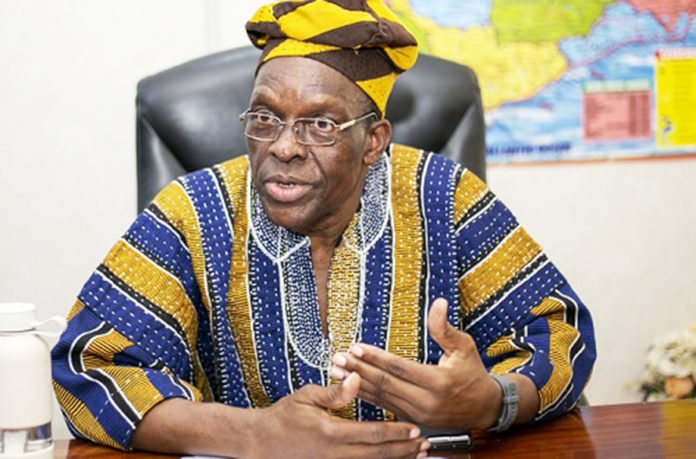
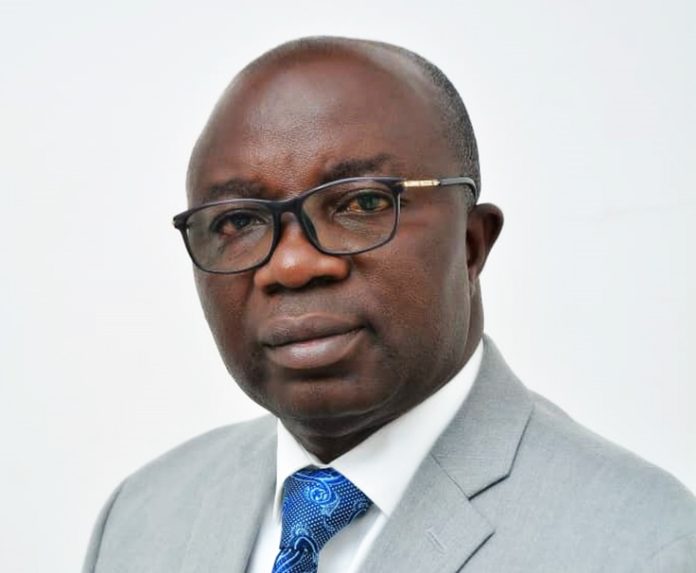
Former Executive Director of the NSS, Osei Assibey Antwi

The Criminal Division of the Accra High Court has reviewed and reduced the bail amount for former Executive Director of the National Service Scheme (NSS), Osei Assibey Antwi, from GH¢800 million to GH¢623 million, while maintaining all other bail conditions.

The court made the decision after hearing arguments from both defense counsel and the prosecution.

Osei Assibey Antwi, a former Deputy Ashanti Regional Minister and ex-Mayor of Kumasi, is standing trial on 14 counts, including causing financial loss to the state, stealing, and money laundering.

Prosecutors allege that between 2021 and 2025, he orchestrated payments to more than 60,000 ghost national service personnel, causing losses exceeding GH¢500 million to the state.

He is further accused of diverting over GH¢100 million meant for the Kumawu Farm Project and personally receiving GH¢8.2 million through an e-zwich account linked to his biometrics.

In his application, defense counsel argued that the GH¢800 million bail sum was practically impossible to meet, describing it as “a record in the history of the court.”

He explained that, using an exchange rate of GH¢10 to US$1, the bail value translates to US$80 million, the equivalent of about 80 Grade-A houses in Accra’s East Legon or over 1,000 homes in Kumasi, each valued at GH¢500,000.

Counsel added that the substantive purpose of the bail, eliminating flight risk, had already been met, as the accused had deposited his passports with the court and been placed on the Ghana Immigration Service stop list.

“At this point, the applicant is only an accused person, not a convict. Bail should not be used as punishment even before trial,” counsel argued.

However, Principal State Attorney Dufie Prempeh opposed the request for variation, stating that while the prosecution was not opposed to bail itself, it objected to any change in the conditions.

She argued that the bail terms were reasonable and aimed to ensure that the accused appeared for trial.

“The accused is a former Deputy Regional Minister and former Deputy KMA Mayor. He can find men and women to stand as sureties for him,” she told the court.

In delivering the ruling, the court noted that bail assessment must consider the value of property and assets in relation to the charges faced.

The court, therefore, found merit in slightly varying the sum to GH¢623 million, while keeping all other terms intact.

The six sureties are required to justify the amount with landed properties of equal value and deposit copies of their identification documents with the court.

The accused must continue to report to the National Intelligence Bureau (NIB) on the first and third Wednesday of every month, remain on the no-fly list, and keep all passports with the court registry.

Mr. Osei Assibey Antwi, who left the NSS in January 2025, has denied all allegations, expressing confidence that he will clear his name during the trial.
Poultry industry gets a major push with “Nkoko Nketenkete” launch 

0
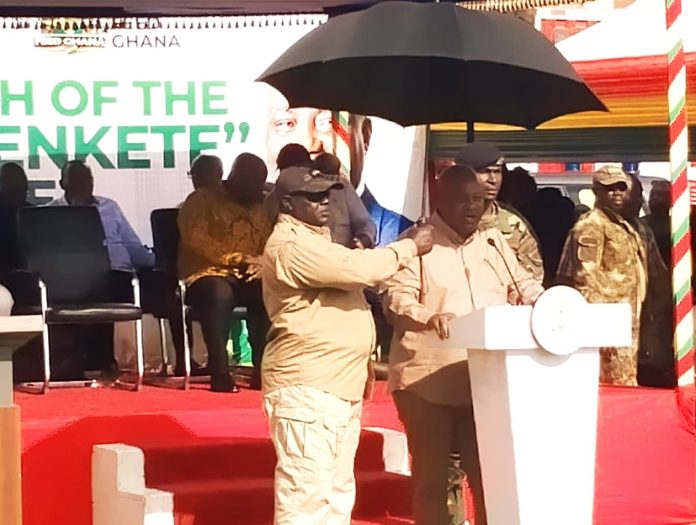
President John Dramani Mahama addressing the gathering

Ghana’s poultry industry got a big boost with the launch of the “Nkoko Nketenkete” agricultural flagship programme initiated by President John Dramani Mahama in Kumasi yesterday.

The programme, which is critical to the government’s resetting agenda, is in fulfilment of the President’s campaign promise to ensure that thousands of commercial and household poultry farmers from across the nation benefit from the initiative, which is expected to create jobs and reduce the importation of poultry products in Ghana.

President John Dramani Mahama, at the ground-breaking event, disclosed that the initiative had been piloted in 13 districts before the national roll out for 13,000 beneficiaries.

According to him, 50 anchor poultry farmers would receive 80,000 birds, logistics and technical support, while 4 million birds would be supplied to 500 Small and Medium scale poultry farmers. Also, 3 million birds will be going to 60,000 household poultry farmers nationwide with feed, logistics and technical support.

He said the “Nkoko Nketenkete” initiative was a national effort to avoid food scarcity and sustain livelihood under a national plan for agriculture transformation.

It will also help the country to move away from over reliance on imports of over $300 million annually.

He said government was poised to reverse this trend and that Ghanaians must consume what is produced locally, with the hope that local production which stands at 12% will increase to 75% by 2028.

President Mahama said increased production would be accompanied by efficient processing and marketing to help boost the poultry industry.

He said 3 million birds would be distributed across 276 constituencies under the household poultry farmers with each constituency receiving 10,000 birds.

The President assured that the government will provide enabling environment for the successful implementation of the initiative.

According to him, success of the programme would depend on collective efforts of Ghanaians and urged traditional leaders to champion the ideals of the initiative in their localities and help grow the local poultry industry.

Meanwhile, the President has directed that the Ministry of Finance releases about GHC300 million to the Buffer Stock for the purchase of maize to rescue maize farmers.

He also said that the School Feeding Secretariat (SFP) would now have to add eggs to meals for the children under the SFP.

The Minister for Food and Agriculture, Mr. Eric Opoku, who is also the Member of Parliament for Asutifi South, said the initiative would help cushion the over $300 million used for the importation of chicken from China, the Netherlands, Brazil and the USA.

The Agric Minister disclosed that out of the 324,000 tons of chicken consumed in 2022, only 15,000 tons (4.6%) were produced locally with 95% being imported.

He noted that India recorded 37% of its total poultry production from backyard poultry and hoped Ghana could emulate this as a major tool for employment and grow the industry.

The Ashanti Regional Minister, Dr. Frank Amoakohene, said 470,000 birds are expected to be distributed to various poultry groups with each constituency and registered household poultry farmer getting10,000 and 50 birds respectively.

The Asafohene and Otumfuo’s Akwamuhene, Achamfuour Asafo Boakye Agyemang Bonsu, who represented the Asantehene, Otumfuo Osei Tutu II at the launch, expected that the programme would engage the youth in employment and that it would not be a nine day wonder.

CenPOA blasts NDC’s ‘No Fees Stress’ Initiative as misplaced priority

0
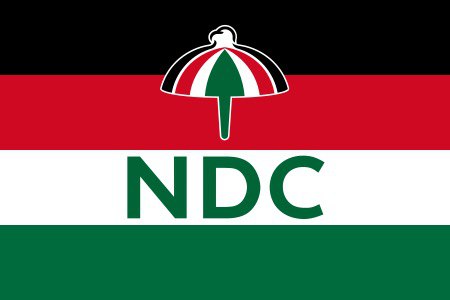
The flag of the NDC

The Center for Public Opinion and Awareness (CenPOA) has criticised the National Democratic Congress’ (NDC) “No Fees Stress” policy, describing the plan to fund free tertiary education with 2.5% of Ghana’s oil revenue as a misplaced priority, and a populist move that could worsen existing challenges in the education sector.

In a statement signed by Michael Donyina Mensah and released on September 8, 2025 CenPOA said while education remains central to Ghana’s development, the proposal by Education Minister Haruna Iddrisu to divert oil revenue for the programme, was “not a deliberate, pragmatic policy for long-term national development.”

“Government’s obligation to provide free education should reasonably extend only up to the Senior High School (SHS) level,” the group stated, arguing that by that stage, citizens would have attained sufficient literacy and numeracy to contribute productively to society.

The organisation further noted that tertiary education should remain optional, supported primarily by individuals, with government assistance provided through targeted scholarships or special interventions.

“Even in many advanced economies, tertiary education is not entirely free but supported through mixed models of funding, grants and private investment,” the statement said.

CenPOA warned that with Ghana still battling fundamental problems such as schools operating under trees, poor infrastructure at the basic level and ongoing concerns about the sustainability of the Free SHS programme, allocating scarce oil revenue to fund tertiary education could deepen the strain on national resources.

“Diverting scarce oil revenues to fund tertiary education under the ‘No Fees Stress’ initiative risks worsening these pressing concerns,” the statement noted, describing the proposal as “a populist promise aimed at electoral gains.”

Instead, CenPOA urged government to focus on investing in sustainable industries and job creation to address unemployment among graduates and to strengthen the economic base.

“Expanding productive sectors of the economy will not only provide employment but also generate real demand for tertiary education in a manner that is sustainable and growth-driven,” the organisation added.

They have called on policymakers, stakeholders, and the public to treat the proposal with caution and to prioritise foundational education and economic growth as the true drivers of long-term national progress.

Recruitment into GAF must be a continuous process –Speaker Bagbin

0
Speaker of Parliament, Albana Sumana Kingsford Bagbin

The Speaker of Parliament, Albana Sumana Kingsford Bagbin, is calling for a continuous process of enlistment and recruitment into the Ghana Armed Forces (GAF).

According to him, the current system of annual or biennial recruitment and enlistment results in the accumulation of potential personnel, which comes with its security issues.

“What prevents this country from having a continuous recruitment or enlistment process? We don’t have to wait and do it once every year or sometimes two years, so that you can accumulate so many people and they have to rush to try and get recognition and end up not leaving,” Speaker Bagbin lamented.

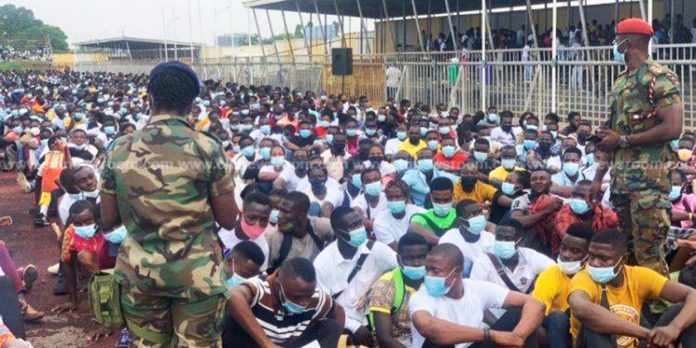
He made these remarks on the floor of Parliament on Wednesday, 12 November 2025, after news broke of the unfortunate tragedy at the screening process by the GAF at the Elwak Sports Stadium in Accra.

Thousands of people had thronged the ElWak Stadium on Wednesday to undergo the body selection process for recruitment into the GAF.

Speaker Bagbin, who recalled he once went through such a process but failed, added his voice to commentary on statements made by the Minority Chief Whip, Frank Annor Dompreh; the Acting Minister for Defence, Cassiel Ato Forson and Eric Edem Agbana, MP for Ketu North, on the incident.

OPPORTUNITY

He acknowledged that the serious challenge confronts the nation with regards to the process of enlistment, recruitment, and employment in the public service, adding that the El-Wak incident offered “an opportunity for us to rethink about the whole process…”

Peter Toobu Lanchene, MP, Wa West, commenting on the statement, referenced the recruitment process of the Ghana Police Service and recommended it to the GAF.

He stated that the last police recruitment handled 4,000 people in a single day, preventing overcrowding and maintaining orderliness.

“How was it happening? At 6 o’clock 500 people were invited; at 8 o’clock in the morning another 500. Within a two-hour interval, people were invited on a daily basis. Gradually you can deal with 2,000 people in the day without seeing a crowd.

He continued that “These are all best practices that we need to learn, and with the inclusion of technology, I am quite sure this is not a very difficult thing to do.

“We are all surprised that the crowd surged and became very violent, to the point that they lost control and we lost these six people.”

Meanwhile, the Speaker of Parliament has directed the Committee on Defence to look into the matter and report to the House.

The leadership of Parliament, led by the Speaker, moved to the 37 Military Hospital to visit those on admission.


For more news, join The Chronicle Newspaper channel on WhatsApp: https://whatsapp.com/channel/0029VbBSs55E50UqNPvSOm2z

Businesswoman in Court for Allegedly Selling Drinks Laced with Narcotic Drugs

0
Court

A 44-year-old businesswoman, Millicent Asamoah Ampofo, has been arraigned before the Accra Circuit Court for allegedly selling beverages and confectioneries suspected to be laced with narcotic substances.

Millicent Asamoah Ampofo appeared before His Honour Kwabena Kodua Obiri Yeboah on Monday, charged with unlawful control of a narcotic drug, contrary to Sections 37 (1) and (2)(b) of the Narcotics Control Commission Act, 2020 (Act 1019).

She pleaded not guilty to the charge and was granted an open bail of GH¢50,000 with one surety.

According to the prosecution, led by Detective Chief Inspector Abel Amanie, personnel from the Intelligence Unit of the CID Headquarters in Accra conducted an intelligence-led operation at Taifa on November 5, 2025 where the accused was arrested at her drinking spot.

A search conducted on the premises allegedly led to the discovery of 47 plastic bottles of Sobolo drinks, 20 bottles of mango drinks, 23 bottles containing a liquid substance, one blue mini drum with similar liquid, and two containers of dried plant material.

The others are two rubber bags with powdered substance, and one hundred and eighty (180) pieces of brown toffees – all suspected to be infused with narcotic drugs.

During investigations, the accused allegedly admitted ownership of the items and reportedly mentioned one Richard, said to be based in Accra, as her source of supply for the suspected cannabis used in preparing the drinks and toffees.

Millicent Asamoah Ampofo is said to have told investigators that she sold a bottle of the sobolo drink for GH¢5, a bottle of the mango drink for GH¢20 and each toffee for GH¢5 to customers.

Detective Amanie informed the court that efforts were underway to apprehend the said Richard. The court also ordered the prosecution to submit the forensic report on the seized substances for examination.

The case has been adjourned to December 10, 2025, for further hearing.

President Mahama Cuts Sod for Wa-Han-Tumu-Navrongo Road Project

0
President Mahama cuts sod for the construction of the Wa-Han-Tumu-Navrongo, and Hamile Road

The President of Ghana, John Dramani Mahama, has officially cut the sod for the construction of the Wa-Han-Tumu-Navrongo and Hamile roads in the Upper West Region, marking the start of a transformative infrastructure project in the northern corridor.

Kwame Agbogza, Roads and Highways Minister

Spanning over 260 kilometers across the Upper West and Upper East Regions, the project represents a GHC3.7 billion investment, making it the largest road development initiative in the area in recent history.

It forms part of the government’s Big Push infrastructure program, aimed at improving road networks, enhancing regional connectivity and boosting economic development.

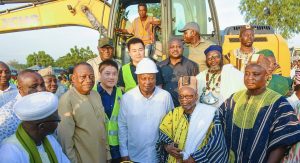
President Mahama poses for the camera with chiefs and road engineers

The works include significant upgrades within Wa, such as the dualisation of the Wa-UDS-City Centre Road, aimed at easing traffic congestion and beautifying the capital.

In the wider region, the project covers the Wa-Bulenga-Yaala and Wa-Han roads, Tumu-Han-Lawra and Navrongo-Tumu-Sandema regional links, as well as border access roads connecting Tumu to Hamile, Sissili, Chuchuliga and Navrongo.

Addressing chiefs and residents at Guli, a suburb of Wa, President Mahama emphasised the transformative impact of the project.

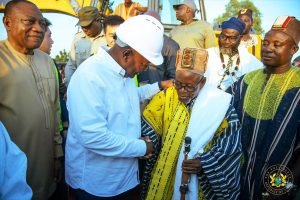
Kwame Agbogza, Roads and Highways Minister and President Mahama in a chat

“For years, these roads have been in deplorable condition. Farmers have struggled to move their produce. Traders have lost goods. Children have spent long hours commuting to school. But no more. Today, we are saying, ‘enough is enough,’” he said.

President Mahama assured that the government had put in place measures to ensure quality construction and timely completion, noting that contractors had been pre-qualified to meet high standards.

He also highlighted the wider benefits, including reduced travel time, lower transport costs, and improved access to education and healthcare.

The project is expected to generate over 2,500 direct jobs and 7,000 indirect jobs for local communities. The government has allocated GH¢13.8 billion for this year and reserved GH¢30.8 billion for next year to ensure uninterrupted progress.

Minister for Roads and Highways, Kwame Governs Agbodza, reminded contractors to deliver quality work on time and within budget, warning against shoddy construction or inflated claims.

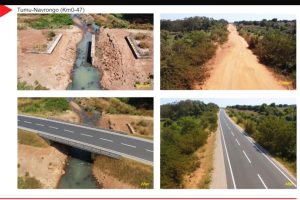
The Wa-Han-Tumu-Navrongo, and Hamile Road

Meanwhile, the Upper West Regional Minister, Charles Lwanga Puozuing, expressed the readiness of chiefs, youth, farmers, and traders to support the project.

“This road is not just a development project; it is a symbol of unity, progress, and national integration. When completed, it will open up the Upper West Region to greater trade, tourism, and agricultural expansion,” Hon. Puozuing said.

He described the road as a lifeline connecting farms to markets, patients to hospitals and families to opportunities, reinforcing the government’s vision of equitable development across Ghana.

Editorial: El-Wak Tragedy And The Unemployment Time Bomb

0
Recruitment at El-Wak Stadium

The tragic death of six young women at the El-Wak Sports Stadium during a Ghana Armed Forces (GAF) recruitment exercise is more than a national tragedy, it is a mirror reflecting the deep cracks in Ghana’s social and economic foundation. This painful incident is not merely about overcrowding or poor organisation.

It exposes the despair of a generation of young people who see enlistment into the military as one of the last viable hopes for a stable future.

According to official accounts, at least six applicants lost their lives and several others sustained injuries after thousands of desperate job seekers thronged the El-Wak Stadium in Accra.

Preliminary reports from the Ghana Armed Forces indicate that the stampede occurred when a surge of applicants breached security barriers around 6:20 a.m. leading to chaos and loss of lives.

Eyewitness videos show a sea of youth many clutching brown envelopes under the scorching sun pushing and struggling for entry. They were not criminals. They were citizens seeking an honest chance to serve their country.

The military has since expressed deep regret, offering condolences and promising investigations. President John Dramani Mahama’s swift visit to the 37 Military Hospital demonstrates concern, but Ghana must go beyond sympathy and ceremonial responses.

The El-Wak incident must ignite a national debate about the chronic unemployment crisis that continues to threaten our collective stability.

For decades, successive governments have promised job creation through various flagship programmes, yet the results remain marginal. The rising desperation among graduates from nurses and teachers waiting years for postings to engineers and scientists roaming the streets paints a bleak picture of a nation unable to harness its human capital.

It is no surprise, then, that a military recruitment drive can attract thousands for a few hundred slots. When hope disappears from the job market, even the most strenuous professions become a lifeline.

This tragedy also raises hard questions about institutional planning and accountability. Why were so many applicants allowed to gather at a single venue? Could the recruitment not have been staggered regionally or digitized to avoid human congestion?

The Ghana Police Service has, in recent years, improved its recruitment management through technology. The military high command must learn similar lessons to protect lives and uphold its own reputation as a disciplined and organised institution.

Beyond the immediate tragedy, the El-Wak disaster exposes the growing inequality and disillusionment among Ghana’s youth.

Employment in the public sector is often perceived as being reserved for the well-connected a system where meritocracy has given way to patronage.

Meanwhile, critical public institutions such as the National Petroleum Authority, Ghana Gas and the Petroleum Commission are reportedly overstaffed, while trained professionals in teaching and nursing remain jobless. This imbalance fuels resentment and erodes faith in national systems.

Ghana’s leaders from Jubilee House to Parliament must treat the youth unemployment crisis as a national emergency.

The consequences of inaction are already visible: rising social tension, cyber fraud, political exploitation of jobless youth, and now fatal desperation.

A comprehensive national employment framework, rooted in industrial expansion, vocational skills development and entrepreneurship support is urgently needed.

The El-Wak tragedy should never have happened. But its memory must not fade into yet another news cycle of condolences and blame.

It should become a moral turning point compelling those in authority to recognise that behind every brown envelope clutched at that stadium was a story of hope, hardship, and hunger for dignity.

Ghana’s youth deserve more than sympathy; they deserve opportunity, fairness, and a government that values their potential before tragedy strikes again.


For more news, join The Chronicle Newspaper channel on WhatsApp: https://whatsapp.com/channel/0029VbBSs55E50UqNPvSOm2z

IMF Warns of Deep Fiscal Governance Gaps in Ghana

0
Logo of IMF

A new assessment by the International Monetary Fund (IMF) has raised serious concerns about Ghana’s fiscal governance, warning that persistent budget credibility problems and growing expenditure arrears are eroding discipline and creating conditions for corruption.

The IMF Governance Diagnostic Assessment on Ghana released in November 2025 was jointly prepared by the Fund’s Legal Department, Fiscal Affairs Department, Monetary and Capital Markets Department, and the IMF Ghana Technical Assistance Mission.

The report underscores that Ghana’s weak public financial management (PFM) systems continue to undermine integrity, transparency, and accountability in public spending. It cautions that while reforms such as the Public Financial Management Act and the Ghana Integrated Financial Management Information System (GIFMIS) have improved oversight, budget credibility remains weak, leading to fiscal inefficiencies and governance risks.

According to the IMF, Ghana has struggled to align its revenue forecasts with actual outcomes, particularly in non-tax revenue performance.

“Revenue shortfalls against budgets have undermined budget credibility in recent years,” the report observed.

The result, the IMF noted, has been the accumulation of expenditure arrears, which reached 6.3 percent of GDP in 2023. Ministries, Departments, and Agencies (MDAs) were found to frequently commit beyond available resources, resulting in stalled projects, unpaid contractors, and a growing debt burden on the public purse.

Arrears breeding corruption risks

The report links the persistent build-up of arrears to corruption vulnerabilities within Ghana’s fiscal system. Citing World Bank analysis, it explained that limited cash resources often compel officials to decide which invoices to pay first — a process that can be influenced by bribery.

“This creates opportunities for corruption, where bribes can influence the prioritization of the settlement of particular invoices and arrears,” the IMF warned.

The Fund described such discretion as a governance failure that undermines transparency, distorts budget execution, and weakens confidence in fiscal management.

Reform efforts stalling

While acknowledging government efforts to address the problem through an Arrears Clearance and Prevention Strategy, the IMF found that implementation has been slow and incomplete.

The strategy, introduced in mid-2023, seeks to strengthen fiscal discipline through tighter commitment controls, improved cash forecasting, standardized contracting, and expanded GIFMIS coverage. However, as of the IMF mission, the report noted that the document had not been published, and the Arrears Clearance Committee tasked with oversight had yet to meet or finalize its terms of reference.

Plans for the Ghana Audit Service to verify arrears before payment had also not been carried out.

Urgent reforms required

The IMF urged the government to implement the strategy swiftly and undertake broader institutional reforms to restore fiscal credibility.

“Plans to strengthen fiscal institutions can enhance budget credibility,” the report emphasized, calling for urgent action to clear existing arrears and prevent their future accumulation.

The IMF stressed that addressing Ghana’s fiscal governance weaknesses is critical not only for effective public service delivery but also for curbing corruption and promoting sustainable economic management.


For more news, join The Chronicle Newspaper channel on WhatsApp: https://whatsapp.com/channel/0029VbBSs55E50UqNPvSOm2z

Ok Ghana Must Not Stay Silent -An Open Letter to the U.S. Ambassador to Ghana

0
Seth Kwame Awuku

Your Excellency,

Recent statements from Washington, particularly under President Donald Trump, suggest a push to label Nigeria a “Country of Particular Concern.” The claim is that Christians are under threat and must be protected. Yet beneath this moral language lies a familiar pattern – a pretext for intrusion.

Nigeria has not fully achieved the religious tolerance seen in Ghana. Tensions between Christian and Muslim communities, and extremist violence, are real. Yet these internal challenges do not justify external manipulation. Re-designating Nigeria as a “Country of Particular Concern” on these grounds is troubling.

Religious intolerance is not unique to Nigeria. The U.S. State Department reports that allies such as Saudi Arabia and Egypt impose severe restrictions on religious freedom. Yet they face no similar condemnation. This selectivity exposes the inconsistency of Washington’s moral posture: religion here serves as a strategic pretext, not a genuine concern.

This is not about saving Christians. It is about creating legitimacy for intervention. Like Venezuela, Nigeria’s vast oil and mineral wealth makes it a target for control, not compassion. Indeed, the tone and timing of Washington’s posture reveal a deeper game – a geopolitical strategy dressed in the robes of faith. Religion is turned into a tool of manipulation, with Christian persecution as moral cover.

Your Excellency, Nigeria is Africa’s most populous nation and the anchor of West African stability. Weakening it endangers the entire subregion. One would expect Washington to partner with Nigeria in combating insurgents and strengthening security. Instead, help comes with conditions – or worse, as boots on the ground. That is not assistance; it is intervention by another name.

True partnership respects sovereignty. It builds capacity, not dependency. If the goal were genuinely to protect lives and promote peace, the U.S. would support Nigeria’s intelligence, logistics, and community resilience – not threaten punitive measures that weaken institutions.

Beneath the rhetoric lies a contest for Nigeria’s resources — oil, gas, lithium, cobalt, and other critical minerals essential to the global energy transition. History shows that “protection” quickly becomes intervention, as in Venezuela, Iraq, and Libya.

To weaponize religion for political gain is morally hollow and dangerous. It risks igniting sectarian tensions across West Africa. The Middle East shows the cost of proxy wars: nations rarely recover quickly from externally engineered conflicts.

Your Excellency, Ghana cannot remain silent. A destabilized Nigeria would trigger a humanitarian crisis, displacing millions across borders. Ghana would inevitably bear the brunt – through refugee inflows, economic strain, and threats to West African stability.

In such a scenario, Ghana would be compelled to invoke the jurisdiction of the UNHCR, WHO, and other international agencies to manage the humanitarian and public health consequences. Early international attention is essential.

For these reasons, Ghana must raise its strongest diplomatic protest against any effort – overt or covert – to invade, sanction, or politically isolate Nigeria under moral pretenses. The peace of one African nation is the security of all.

Africa does not need new wars. It needs respect – for sovereignty, African-led solutions, and genuine partnership. Cooperation must be rooted in fairness, not paternalism.

If Washington truly wishes to engage Africa, then, it must cease such threats for indeed, such threats of invasion are gradually causing the United States to lose hegemonic respect in West Africa, shifting influence in the subregion toward China and Russia.

True friendship requires listening, not lecturing; cooperation, not coercion. The world is watching whether the United States treats Africa as a partner in progress or merely as a pawn in global power competition.

Respectfully,

Seth Kwame Awuku

Takoradi, Ghana

📧 sethawuku.sa@gmail.com


About the Author:

Seth Kwame Awuku is a Ghanaian writer and analyst with a background in Law, Political Science, and International Relations. He writes on governance, leadership, diplomacy, and African affairs.


For more news, join The Chronicle Newspaper channel on WhatsApp: https://whatsapp.com/channel/0029VbBSs55E50UqNPvSOm2z

BoG Introduces New Foreign Exchange Operations Framework

0
Dr Johnson Asiamah, Governor Of Bank Of Ghana

The Bank of Ghana (BoG) has announced the introduction of a new Foreign Exchange (FX) Operations Framework aimed at enhancing transparency, strengthening market confidence and maintaining macroeconomic stability under the country’s inflation-targeting regime.

In a statement issued on November 11, 2025 the Central Bank said the new framework seeks to clarify the objectives and guiding principles of its FX operations while maintaining a flexible, market-determined exchange rate system.

According to the statement, the framework is built around three main objectives. First, to support reserve accumulation as a buffer against external vulnerabilities.

Second is to dampen excessive short-term volatility in the foreign exchange market without undermining exchange rate flexibility.

Third, to intermediate FX flows in a market-neutral and transparent manner using inflows from initiatives such as the Gold Purchase Programme and export surrender requirements.

The BoG emphasised that its new approach would be rule-based, allowing market forces to determine exchange rates, while limiting short-term volatility.

FX interventions will follow a “structured discretion-under-constraint” approach, addressing market disruptions rather than targeting specific exchange rate levels.

Under the new system, FX operations will be conducted through competitive, variable-rate and fixed-amount auctions.

To promote transparency, auction amounts will be pre-announced and results will be published on the same day.

Additionally, twice-weekly FX operations will be scheduled in advance each month, while interventions to control market volatility will be announced either on the same day or a day before execution.

The BoG also pledged to publish aggregated monthly FX data within five business days after each month, providing details on operational objectives to help the public and market participants understand the intent behind its actions.

The Bank described the new framework as a reflection of its “commitment to transparency, market confidence and macroeconomic stability,” adding that it aims to strengthen Ghana’s economic resilience while preserving the flexibility of the exchange rate regime.


For more news, join The Chronicle Newspaper channel on WhatsApp: https://whatsapp.com/channel/0029VbBSs55E50UqNPvSOm2z

The Ghanaian Chronicle