Home Blog Page 335

US, Russia envoys meet in Davos as Ukraine reconstruction plan postponed

0
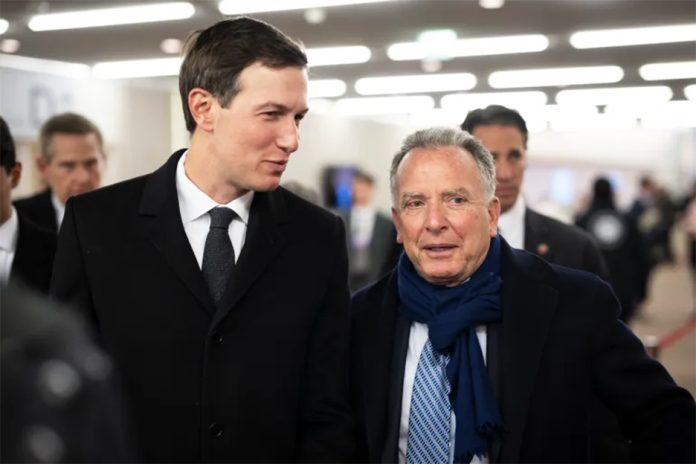
Jared Kushner (L) and Steve Witkoff at the World Economic Forum in Davos

Envoys for United States President Donald Trump and Russian President ‍Vladimir Putin have met at the World Economic Forum in Davos, Switzerland, amid reports that the signing of a $800bn “prosperity plan” was postponed due to tensions over Greenland.

Kremlin ‌spokesman Dmitry Peskov ‍on Wednesday said Moscow would not comment on ⁠talks in Davos, but stressed the importance for Russia of receiving information on discussions between ‌the US, European leaders and Ukraine.

Russian state-run news agency TASS reported that US special envoy Steve Witkoff, Trump’s son-in-law Jared Kushner and Russian special envoy Kirill Dmitriev met on ‍Tuesday ⁠for more than two hours on the forum’s sidelines.

The agency quoted Witkoff as saying the talks had been “very positive”.

Later, Witkoff told The Associated Press news agency that he and Kushner were planning to meet Russian President Vladimir Putin and the Ukrainian delegation on Thursday.

The Kremlin confirmed that the meeting that will take place in Moscow was on Putin’s schedule.

Meanwhile, the United Kingdom’s Financial Times (FT) newspaper reported on Wednesday that tensions in the NATO alliance over Trump’s bid to acquire Greenland had derailed the signing of a Ukraine reconstruction plan, which was originally scheduled to take place in Davos.

The so-called “prosperity plan” to be agreed between Ukraine, Europe and the US was not being shelved indefinitely and could still be signed at a later date, the newspaper added.

Ukrainian President Volodymyr Zelenskyy said on Tuesday he would travel to Davos only if documents on security guarantees with the US and a “prosperity plan” were ready to be signed there.

The president said he would instead remain in Kyiv to oversee relief efforts, as Russian missile and drone attacks continued to batter Ukraine’s energy system.


Credit: aljazeera.com

Tips to Manage Migraines during Menopause

0

How Menopause Impacts Migraine

Research shows a strong link between your hormones and migraine. The good news is that after menopause (when your periods stop for good), migraine attacks often become less frequent and intense. But perimenopause, when your body begins to slowly shift into menopause, can actually make migraine worse. You can keep hormone-related symptoms from triggering episodic migraines, and work to take care of yourself when they do happen.

Keep Track of Your Cycle

Before menopause, you can go through perimenopause for four to eight years. During this stage, you’ll still have periods, but they could be heavier or less regular than before. Keep track of when you do get your period, along with your migraine days and symptoms. This can help your doctor see the role that your changing hormones play and decide if they need to adjust your migraine treatment plan.

Balance Your Hormones

Low estrogen can trigger a migraine. It can also cause frustrating symptoms like mood swings and insomnia. Hormone replacement therapy (HRT) replaces the estrogen your body no longer makes. That can improve menopause symptoms, and it may help with migraine. Talk to your doctor about HRT. They’ll discuss your options and whether the benefits outweigh the risks. They may also suggest other treatments. Sometimes, HRT can make migraine worse.

Keep Cool

Hormone shifts can cause uncomfortable hot flashes and night sweats. These sudden body temperature changes can stress you out and keep you from sleeping, setting you up for an episodic migraine. To prevent hot flashes, limit spicy foods, hot drinks, alcohol, and caffeine. Dress in layers you can quickly remove. At night, wear lightweight pajamas and use light blankets on your bed. Sleep with a fan and keep an ice pack handy.

Ask Your Doctor About Supplements

If over-the-counter migraine and menopause remedies sound too good to be true, they probably are. They aren’t regulated by the FDA, so you can’t be sure what’s in them or if they work. Talk to your doctor about supplements that could help. For instance, riboflavin (vitamin B2) may prevent migraines and protect your health during menopause. Magnesium supplements may also help relieve both migraine and menopause symptoms.

Keep Moving

Exercise can help make migraines less frequent and intense. It can also ease hormonal symptoms like joint pain and mood swings. Different workouts offer their own benefits. For instance, walking or biking is good for your heart. Pilates and tai chi improve balance and help keep you flexible. Lifting weights or using resistance bands builds strength. Low-impact activities like gardening count, too. Find activities you enjoy so you do them often.

Get Enough Rest

You need sleep to help prevent migraines, but hormone changes can get in the way. Insomnia is a common menopause symptom, and night sweats and needing to pee more can also keep you up. To get enough rest, try to go to bed and wake up at the same time every day. Cut out alcohol and caffeine before bed. Instead, create a calm nighttime routine like listening to music, reading, or meditating. Still can’t sleep? Talk to your doctor.

Get Support

Living with migraine and perimenopause/menopause can take a toll on your mental health. Connecting with others can make a difference. Join a support group or seek out advice through online forums. Keep in regular touch with your doctor and let them know when you feel overwhelmed. Studies show that cognitive behavioral therapy (CBT) – a kind of talk therapy – can also help improve migraine and menopause symptoms.

Manage Fatigue

It’s common to feel wiped out after an episodic migraine. Fatigue can also be a menopause symptom. Take care of yourself when you’re exhausted. Drink plenty of water and eat healthy foods like fruits, vegetables, lean protein, and whole grains. It might feel good to use a heating pad or do light exercise, like a gentle yoga class. Don’t try to “power through” fatigue. Doing so could bring on another migraine attack.

Take Things Day by Day

You can’t predict how perimenopause or menopause will affect your migraines. Everyone is different. Remember, these hormone changes are a natural part of aging. They shouldn’t feel painful or derail your life. Let your doctor know how you’re doing. They know your health best and can suggest medications, lifestyle changes, or other treatments that can make you more comfortable.

Credit: webmd.com

feature: US Visa Freeze: A Measured Perspective  on Ghana’s Diplomatic Position

0
Seth Kwame Awuku - The writer

The Minority has called for the dismissal of Ghana’s Minister for Foreign Affairs, Samuel Okudzeto Ablakwa, over the reported U.S. visa freeze. This position misrepresents both diplomacy and the nature of U.S. policy.

Visa decisions under President Donald Trump and U.S. immigration policy more broadly are driven by domestic political priorities, election-cycle pressures, and executive discretion. They are not reflections of the competence or temperament of Ghana’s Foreign Minister, nor a measure of Ghana’s international standing.

The Minority’s emphasis, in Parliament, on past diplomatic leaders – Kofi Annan, Muhammad Mumuni, and Shirley Ayorkor Botchwey – invites a misleading comparison. These figures did not build Ghana’s influence by avoiding difficult positions or seeking external approval; they earned respect through clarity, consistency, and careful engagement.

Diplomacy requires a balance of restraint and assertiveness, and measured negotiation is often more effective than public criticism or theatrical protest.

Ghana operates within a global environment defined by power asymmetries. U.S. visa policies are not subject to bilateral negotiation, and sudden policy changes have affected countries across Africa, Europe, and Asia. To attribute such decisions to the style of Ghana’s Foreign Minister is a misreading of international relations.

Rather than focusing on blame, attention should be directed to practical strategies for citizens affected by visa restrictions: robust consular support, clear public information, and sustained engagement with international partners.

Ghana should also strengthen regional mobility through ECOWAS and the African Continental Free Trade Area and diversify educational and professional partnerships beyond Western corridors.The U.S. visa freeze presents an opportunity for strategic reflection, not partisan point-scoring.

Criticism of Ghana’s foreign policy should be grounded in evidence and global realities, not personal attacks or selective historical narratives. Constructive engagement, clear communication, and consistent international dealings are the pillars of effective diplomacy – qualities that must be encouraged, not undermined.

In conclusion, Ghana’s foreign ministry has acted within the limits of its authority and in accordance with professional diplomatic practice. Calls for Hon Minister Ablakwa’s removal overlook structural realities and risk politicizing complex international matters. A measured, strategic approach, focused on national interest, citizen support, and international engagement remains the most effective path forward.

By Seth Kwame Awuku

Author bio:

Seth Kwame Awuku is a Ghanaian writer and policy analyst. He writes on law, political development, diplomacy, and international relations. He is Head of Awuku Consult.

Email: sethawuku.sa@gmail.com


For more news, join The Chronicle Newspaper channel on WhatsApp: https://whatsapp.com/channel/0029VbBSs55E50UqNPvSOm2z

Feature: Ghana Is Losing Its Libraries – and  the Consequences Are National 

0
Seth Kwame Awuku

“A nation that invests in ports, roads etc must invest equally in libraries, where minds are built for the future.”

Across Ghana, development discourse often centres on roads, ports, oil, and industrial expansion. Yet one of the most powerful engines of human development is quietly slipping from public attention: public libraries.

In Sekondi–Takoradi, the Western Regional Library in Sekondi and the Takoradi Public Library once nurtured generations of disciplined readers, writers, and professionals. Today, both struggle with outdated collections, ageing infrastructure, and declining patronage.

This decline, however, is not unique to the twin city. It reflects a wider national challenge. Despite commendable efforts by the Ghana Library Authority, the Rebecca Foundation, and other partners, major supply gaps persist. Ghana’s public library network remains insufficient, unevenly distributed, and under-resourced relative to population growth and educational demand. Sekondi–Takoradi merely mirrors a national problem.

Beyond Ghana, the public library crisis is global. The rise of the internet and digital media has challenged traditional library use worldwide.

Yet in countries that lead in innovation and human capital development, powerful voices in the public sphere continue to defend public libraries as essential civic institutions. The difference is not the presence of technology, but the presence of political will. Where libraries remain accessible, modernised, and attractive, they coexist productively with digital tools, anchoring literacy, critical thinking, and lifelong learning in ways the internet alone cannot.

After school hours and during long vacations, many young people in Ghana lack safe, structured spaces for reading and intellectual engagement. This is not a failure of ambition or ability, but a failure of access. Public libraries nurture literacy, digital competence, civic awareness, and imagination- foundations essential to employability, responsible citizenship, and innovation. They are among the most cost-effective public investments a society can make, strengthening human capital just as physical infrastructure strengthens economic connectivity.

This imperative aligns closely with President John Dramani Mahama’s recent remarks at the United Nations General Assembly, where he underscored Ghana’s youthful demographic profile and the urgency of investing in young people. A nation in which the majority of the population is youth cannot afford to neglect a library culture. Investment in public libraries is, fundamentally, investment in the intellectual formation of the demographic that will drive Ghana’s economic competitiveness and democratic resilience.

Practical solutions are within reach. Access can be decentralised through modest community libraries or reading centres in underserved urban and peri-urban areas, using places like Sekondi–Takoradi, including Beach Road, Chapel Hill, New Takoradi, Kwesimintsim, Effia-Kuma, and Anaji, as pilot models.

Existing libraries must be modernised with current books, digital resources, reliable internet connectivity, and engaging programmes such as reading clubs, writing workshops, and vacation learning camps. Strategic partnerships with the Ghanaian diaspora, civil society, and local media can further strengthen a national reading culture.

Parliamentary intervention should be framed nationally. A motion on revitalising public libraries across Ghana, using Sekondi–Takoradi as a compelling case study, would elevate the issue beyond regional lines and attract the policy attention it deserves.

The Western Regional Minister and Members of Parliament for Sekondi and Takoradi are well placed to lead this advocacy within the broader education and human capital agenda.

Cultural festivals like Ankos rightly celebrate heritage and identity. But the quiet erosion of public libraries deserves equal urgency. Reviving public libraries is not nostalgia; it is sound public policy. The time to act is now.

By Seth Kwame Awuku


For more news, join The Chronicle Newspaper channel on WhatsApp: https://whatsapp.com/channel/0029VbBSs55E50UqNPvSOm2z
Today’s UEFA Europa League Fixtures & Previews

0
Ollie Watkins, Aston Villa

Aston Villa travel to Turkey to face Fenerbahce 

Fresh from last weekend’s setback in the Premier League, Aston Villa will endeavour to return to winning ways when they travel to Turkey to face Fenerbahce in their penultimate League Phase fixture in the Europa League today.

The two teams butt heads for the first time since the first round of the 1977-78 UEFA Cup when Villa claimed an emphatic 6-0 aggregate victory on their way to reaching the quarter-finals.

After winning 11 matches in a row at Villa Park in all competitions and scoring 23 goals in the process, Aston Villa came up short in a disappointing 1-0 home defeat to Everton on Sunday and missed the opportunity to move to within four points of Premier League leaders Arsenal.

Villa are already one of six Europa League teams who are guaranteed at least a knockout round playoff place, as they currently sit third in the 36-team standings.

Emery’s men most recently beat Basel 2-1 in Switzerland on December 11 and Villa will back themselves to claim another three points on Thursday, as they have won four of their previous six encounters with Turkish opposition.

An intriguing contest between two of the Europa League’s strongest teams is set to be played out in Istanbul, and Fenerbahce’s recent run of form should provide them with a real confidence boost in a game that they arguably need to win more than their opponents.

Credit: sportsmole.co.uk


Roma host Stuttgart in the penultimate round

There is a lot to play for at Stadio Olimpico on Thursday, as Roma host Stuttgart in the penultimate round of the league phase of the Europa League.

Paulo Dybala, Roma

While both clubs — placed ninth and 10th in the 36-team standings — are outside the coveted top-eight places, this week’s victor could rise into the automatic qualification positions.

Gian Piero Gasperini‘s side have all but sealed their place in the knockout round playoffs, but the capital club have reason to aim higher, considering the table before matchday seven.

The Giallorossi are 10th in the table, level with Thursday’s opponents, and a point behind seventh-placed Braga and Porto in eighth (both have 13 points).

Their prospects of finishing even higher are bolstered by knowing the top three — Lyon, Midtjylland and Aston Villa — have 15 points and the following clubs — Real Betis, Freiburg and Ferencvaros — have 14.

Victory on home turf at Stuttgart’s expense this week could elevate them in the table, even if fans in the Eternal City will be wary heading into their club’s final match in the capital, given their mixed results at the Olimpico.

Credit: sportsmole.co.uk


Celta Vigo play host to Lille 

Two teams experiencing contrasting runs of form meet at Estadio de Balaidos on Thursday night, as Celta Vigo play host to Lille in their penultimate League Phase fixture in the Europa League.

Olivier Giroud, Lille

Los Celestes and Les Dogues have never faced each other in a competitive match before, but the latter did claim a 3-1 friendly win over the former in July 2024.

Celta Vigo have made a perfect start to 2026, as they have won three La Liga matches out of three against Valencia, Sevilla and Rayo Vallecano, scoring 11 goals and conceded only one in the process to boost their hopes of securing a top-six finish this season.

In the Europa League, Celta Vigo are down in 19th place in the 36-team standings, level on points and just one place above Thursday’s opponents Lille, after experiencing an inconsistent League Phase campaign to date, winning three and losing three of their first six games.

While securing an automatic last-16 qualification spot is seemingly a tall order for Vigo, as they sit four points behind the top eight with only two games remaining, Claudio Giraldez’s side remain hopeful of sealing a knockout round playoff spot. However, dropping points against Lille would put them in danger of slipping out of the top 24 heading into their final match away against Red Star Belgrade.

Goals are to be expected on Thursday given that five of Celta Vigo’s six Europa League games have seen both teams score this season, while all six have produced at least three goals.

Credit: sportsmole.co.uk


Young Boys and Lyon clash at Stadion Wankdorf

Both looking in shape to qualify for the knockout stages of the Europa League, Young Boys and Lyon clash at Stadion Wankdorf today.

YB have struggled over the festive and January period domestically, whilst Les Gones are aiming to upset the odds at the summit of France’s Ligue 1.

Endrick, Lyon

Since a 2-0 home win at Stadion Wankdorf over Luzern on December 14, Young Boys have suffered a three-game losing run in the Swiss Super League, conceding an eye-watering 12 goals across those contests.

Focusing on continental matters for a few days, Young Boys have won three and lost three of their opening six matches in the Europa League, leaving them 21st in the league phase table, two points ahead of 25th-placed Dinamo Zagreb.

A former Championship striker with Hull City in England, Chris Bedia is the star man at the top of the pitch for YB this season, with the Union Berlin loanee netting 12 goals from just 19 Super League contests.

Struggling massively on the domestic scene, Young Boys will be fearing the visit of table toppers Lyon this Thursday.

Les Gones are breezing past French opposition so far in 2026 and should have no issues collecting maximum points at Stadion Wankdorf.

Credit: sportsmole.co.uk

FIXTURES

Bologna 17:45 Celtic

Brann 17:45 Midtjylland

Fenerbahçe 17:45 Aston Villa

Feyenoord 17:45 Sturm Graz

Freiburg 17:45 Maccabi Tel Aviv

Malmö FF 17:45 Red Star Belgrade

PAOK 17:45 Real Betis

Viktoria Plzeň 17:45 Porto

Young Boys 17:45 Olympique Lyonnais

Celta Vigo 20:00 Lille

Dinamo Zagreb 20:00 FCSB

Ferencváros 20:00 Panathinaikos

Nice 20:00 Go Ahead Eagles

Rangers 20:00 Ludogorets Razgrad

Red Bull Salzburg 20:00 Basel

Roma 20:00 Stuttgart

Sporting Braga 20:00 Nottingham Forest

Utrecht 20:00 Genk 

Technology Breakthrough For Ghana: Margins To Build ID System For The Gambia

0
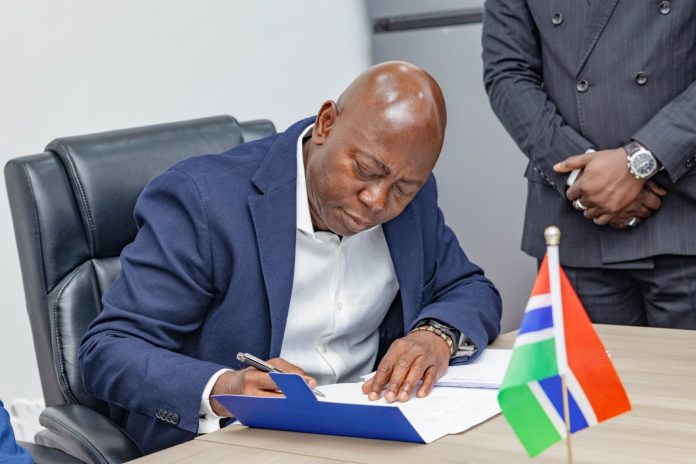
Chief Executive Officer of Margins ID Group, Mr. Moses Kwesi Baiden Jnr signing the contract

The Government of The Gambia has awarded Ghanaian technology firm, Margins ID Group, a landmark contract to deliver a comprehensive National Identification System and Integrated Digital ID Platform, marking a major breakthrough for African-led digital transformation.

Under the agreement, Margins ID Group will design, build, finance, co-operate and transfer the national identity infrastructure, making it the first African-owned company to successfully export a full-scale national and digital identity system outside its home country.

The development is being hailed as a significant milestone for Ghana’s technology sector and a broader demonstration of Africa’s growing capacity to develop, deploy and sustain critical digital infrastructure.

The contract followed an international competitive tender launched on July 22, 2024 which attracted 11 global firms.

After rigorous technical and financial evaluations, three companies were shortlisted with Margins ID Group emerging as the successful bidder on the strength of its technical design, security architecture and proven delivery capacity.

As part of the selection process, several Gambian government delegations undertook extensive technical due diligence in Ghana.

This included inspections of Intelligent Card Production Systems (ICPS), Margins’ high-security card manufacturing facility, as well as Margins ID Systems Applications Limited, the Group’s technology subsidiary responsible for software development and systems integration.

The delegations also reviewed Margins’ international certifications and observed live operations of Ghana’s National Identification System, which the company designed, built, financed and currently co-operates in partnership with the National Identification Authority.

Founder and Chief Executive Officer of Margins ID Group, Mr. Moses Kwesi Baiden Jnr., described the agreement as a defining moment for African innovation.

“This is a historic milestone. It demonstrates that African technology can be trusted, competitive and scalable across borders,” he said at the signing ceremony.

He stressed that the Gambian system is not a replica of Ghana’s national ID platform but an evolved solution.

A dummy of The Gambian national ID card

“What we are deploying in The Gambia incorporates enhanced security controls and a more advanced architecture informed by experience,” Mr. Baiden said, adding “It is designed to promote inclusion, lawful identity, financial access and seamless service delivery.”

The Permanent Secretary of The Gambia’s Ministry of Interior, Mr. Matar Ceesay, said the project had undergone extensive government-wide scrutiny.

“We have carried out our due diligence thoroughly. Our repeated visits to Ghana have shown us what is possible and we are confident in Margins’ capabilities,” he noted.

The Minister of Interior for The Gambia, Hon. Abdoulie Sanyang, described the signing as a turning point for his country, noting that it represents the country’s third attempt at establishing a national identification system.

“We got it wrong twice,” the Minister admitted. “This time, we carefully examined every aspect to ensure the system is secure, reliable and sustainable.”

Referencing Ghana’s experience, he described the Ghana Card as a continental benchmark and expressed optimism that the partnership with Margins would deliver lasting results. He also underscored the importance of knowledge transfer and local capacity-building as part of the project.

The signing ceremony attracted broad representation from across The Gambian government, including officials from the Ministry of Interior, Immigration Service, Police Service, Ministry of Digital Economy, Ministry of Justice and the Directorate of Public-Private Partnerships, reflecting a whole-of-government approach to the initiative.

Mr. Moses Kwesi Baiden and his staff in a group photograph with The Gambian officials

Once implemented, the new identification system is expected to modernise governance in The Gambia, improve access to healthcare, education, financial services and digital public services, while strengthening data protection and privacy.

The project also aligns with the objectives of the African Continental Free Trade Area (AfCFTA), serving as a practical example of Africa-to-Africa trade and cooperation driven by indigenous technology.

Margins ID Group is a Ghanaian-owned technology firm with more than 35 years’ experience in secure identity solutions.

Headquartered in Accra, the Group operates subsidiaries covering biometric enrolment, secure card production and digital verification, and it is the architect of Ghana’s National Identification System, which has registered over 19.2 million citizens and is integrated across 262 public and private institutions nationwide.


For more news, join The Chronicle Newspaper channel on WhatsApp: https://whatsapp.com/channel/0029VbBSs55E50UqNPvSOm2z

Mahama Takes Bold Decision To Refine Gold In Ghana

0
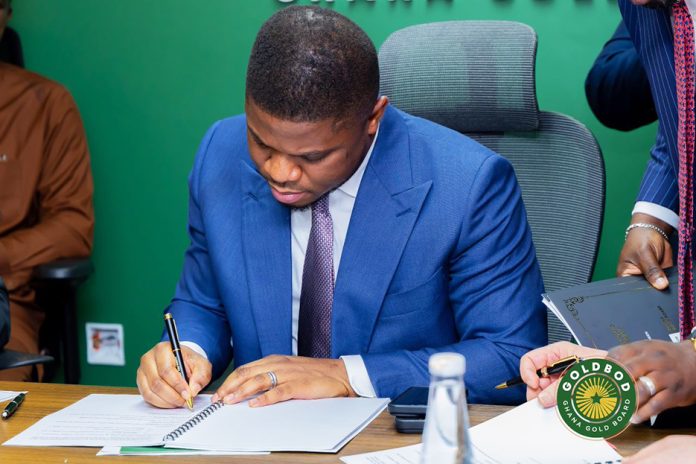
Sammy Gymafi signing the agreement

Ghana has taken a major step toward ending the export of unrefined gold after the Ghana Gold Board (GoldBod) signed an agreement with Gold Coast Refinery to process one metric tonne of gold locally each week, starting February 1, 2026.

The deal, signed in Accra, is expected to strengthen domestic value addition in the gold sector and position the country to establish its first refinery accredited by the London Bullion Market Association (LBMA).

Chief Executive Officer of GoldBod, Mr. Sammy Gyamfi, said the agreement forms part of a broader government strategy to ensure that Ghana derives maximum economic benefit from its gold resources.

He noted that despite hosting one of the largest gold refineries in the sub-region, Ghana continues to export more than 99 per cent of its gold in raw form.

“This situation was clearly unsustainable,” Mr. Gyamfi said, explaining that a visit by GoldBod officials to Gold Coast Refinery last year revealed the facility was operating far below capacity due to the country’s heavy reliance on foreign refineries.

The agreement brings in Rand Refinery of South Africa—the only LBMA-accredited refinery in Africa—as a technical and commercial partner.

According to Mr. Gyamfi, Rand Refinery’s involvement will enhance technical expertise, strengthen management systems, and accelerate efforts to establish an LBMA-accredited refinery in Ghana.

He said the partnership demonstrates government’s commitment to responsible and traceable gold refining in line with international standards, adding that it would be implemented in phases with the long-term goal of refining all gold exported from Ghana locally.

Under the arrangement, gold refined in Ghana will meet a minimum purity of 99.5 per cent, with capacity for higher grades.

The state will also hold a 15 per cent free carried interest in Gold Coast Refinery, held in trust by GoldBod.

Mr. Gyamfi said local refining would save the country millions of dollars currently paid to foreign refineries, increase tax revenues, generate foreign exchange, and create both direct and indirect employment opportunities in line with government’s 24-hour economy policy.

He further noted that the agreement would resolve persistent challenges related to gold valuation by allowing fire assay—the internationally accepted gold testing method—to be conducted locally before and after refining, ensuring accurate pricing of Ghana’s gold.

Mr Sammy Gyamfi and the investors exchanging documents after signing the agreement

Chief Executive Officer of Gold Coast Refinery, Dr. Said Deraz, described the agreement as a turning point for the facility, which was commissioned in November 2016, but has faced operational difficulties in the past.

He said the refinery is a modern, fully licensed facility with the capacity to process up to 180 metric tonnes of gold annually from ethical and responsible sources.

Dr. Deraz confirmed that Gold Coast Refinery has concluded a comprehensive technical, operational and commercial partnership with Rand Refinery, which he said would significantly advance Ghana’s ambition to host its first LBMA-accredited gold refinery.

“With this agreement, gold supplied by the Ghana Gold Board will be refined locally before export, creating jobs, increasing export earnings and supporting Ghana’s industrialisation drive,” he said.

He also expressed appreciation to President John Mahama, the Ministry of Finance, the Ministry of Lands and Natural Resources and GoldBod for their support, noting that the initiative could serve as a benchmark for other countries in the sub-region.

The signing ceremony brought together key industry players, including the Chief Executive Officer of the Ghana Chamber of Mines, Mr. Ken Ashigbey; Deputy Minister of Lands and Natural Resources, Alhaji Yusif Sulemana; Board Chairman of GoldBod, Mr. Kojo Fynn and representatives of Rand Refinery and other stakeholders in the gold value chain.


For more news, join The Chronicle Newspaper channel on WhatsApp: https://whatsapp.com/channel/0029VbBSs55E50UqNPvSOm2z


Reckless Diplomacy Has Cost Ghana Billions -Minority

0
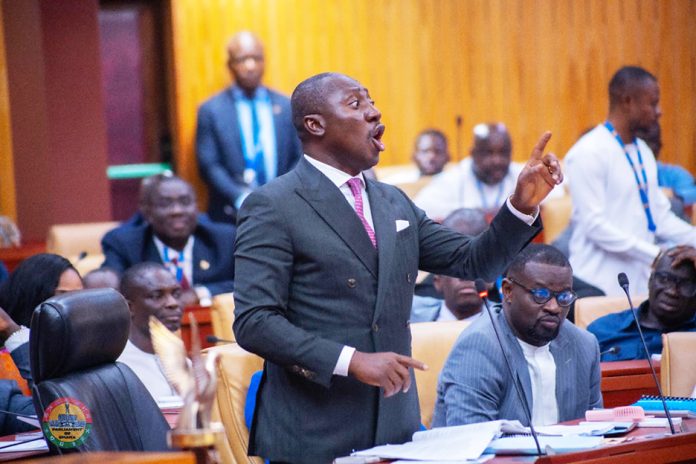
Mr Alexander Afenyo-Markin, Minority Leader

The Minority Caucus in parliament has accused Foreign Affairs Minister, Samuel Okudzeto Ablakwa, of reckless diplomacy they say has pushed Ghana onto a United States list of countries facing an indefinite pause in immigrant visa processing, with potentially devastating economic consequences.

Addressing an emergency press conference in Accra on Tuesday, January 20, 2026 the Foreign Affairs Committee of the Minority Caucus described the U.S. decision as a national embarrassment and warned that it threatens billions of dollars in annual remittances, fractures family reunification efforts and undermines Ghana’s hard-earned reputation as a stable and reliable international partner.

The Minority said the January 13, 2026 announcement by the U.S. Department of State has left Ghana in “ignominious company,” a situation it argued is wholly inconsistent with the country’s long-standing record of honouring international obligations.

“This is not a technical inconvenience that can be explained away. This decision translates into families separated, careers frozen and livelihoods placed in limbo.”

Economic Lifeline Under Threat

At the heart of the Minority’s concern is the potential impact on Diaspora remittances, a pillar of Ghana’s economy.

According to the Committee, Ghanaians abroad remit between $3.7 billion and $6.6 billion annually, with the United States accounting for the largest share.

“These are not loans or aid. They are the sweat and sacrifice of Ghanaians abroad, sustaining families, paying school fees, covering medical bills and keeping businesses alive,” the Minority stressed.

The visa pause, they warned, risks choking this lifeline by preventing lawful migration and family reunification that underpin stable employment and regular remittance flows.

Minister in the Firing Line

In an unusually blunt language, the Minority laid the blame squarely at the feet of Mr. Okudzeto Ablakwa, accusing him of prioritising public confrontation and social media theatrics over quiet, professional diplomacy.

They argued that long-standing technical issues raised by Washington, particularly around deportation cooperation, documentation and consular engagement, should have been handled through sustained behind-the-scenes engagement with U.S. authorities.

Instead, the Minority said the Minister chose public rebuttals and confrontational rhetoric, failing to anticipate the likely consequences under an administration known for using visa restrictions as leverage.

“He chose theatre over diplomacy,” the Committee charged, warning that such an approach inevitably attracts punitive responses.

Israel Deportation

The Minority also cited the December 2025 Israel deportation incident as evidence of what it described as a dangerous pattern of escalation.

Following the deportation of three Ghanaians from Israel and the detention of members of a Ghanaian parliamentary delegation, the Foreign Minister ordered the immediate deportation of Israeli nationals from Accra, publicly framing the move as reciprocal action.

While acknowledging Ghana’s right to defend the dignity of its citizens, the Minority described the response as impulsive and diplomatically unsound.

“It was not strength; it was petulance,” the Committee said, warning that turning ordinary travellers into bargaining chips damages trust and portrays Ghana as unpredictable.

The Minority questioned how Ghana could move from being praised by the European Union as a strategic partner to being flagged by Washington as a migration risk within months.

According to the Committee, the shift reflects not a decline in Ghana’s credibility, but a failure of diplomatic strategy and execution. They argued that Ghana should have mobilised European allies and leveraged trade and security partnerships to buffer against punitive measures.

Instead, they said, unilateral posturing and absolutist public positions made allied advocacy difficult, leaving Ghana exposed.

The Minority extended its criticism to Ghana’s Ambassador to the United States, Victor Emmanuel Smith, accusing him of failing to engage decisively with U.S. officials at a critical moment.

They alleged that the Ambassador had been distracted by domestic political messaging rather than lobbying Congress, the State Department and relevant agencies to avert or reverse the visa freeze, and called for his immediate recall.

Demands and Call for Removal

The Minority issued a series of demands, including a full public briefing by the Foreign Ministry within seven days on communications with the United States, disclosure of the reasons Ghana was placed on the list, and a clear strategy for securing removal.

They also called for the establishment of a high-level technical working group with U.S. authorities, the withdrawal of any “tit-for-tat” deportation policy, and the appointment of a special envoy on diaspora and migration affairs.

Most significantly, the Minority formally called on President John Mahama to remove Mr. Okudzeto Ablakwa from office, arguing that the national interest demands a change in leadership at the Foreign Ministry.


For more news, join The Chronicle Newspaper channel on WhatsApp: https://whatsapp.com/channel/0029VbBSs55E50UqNPvSOm2z
 

I offer leadership with clean hands and a clear conscience –Agyapong

0
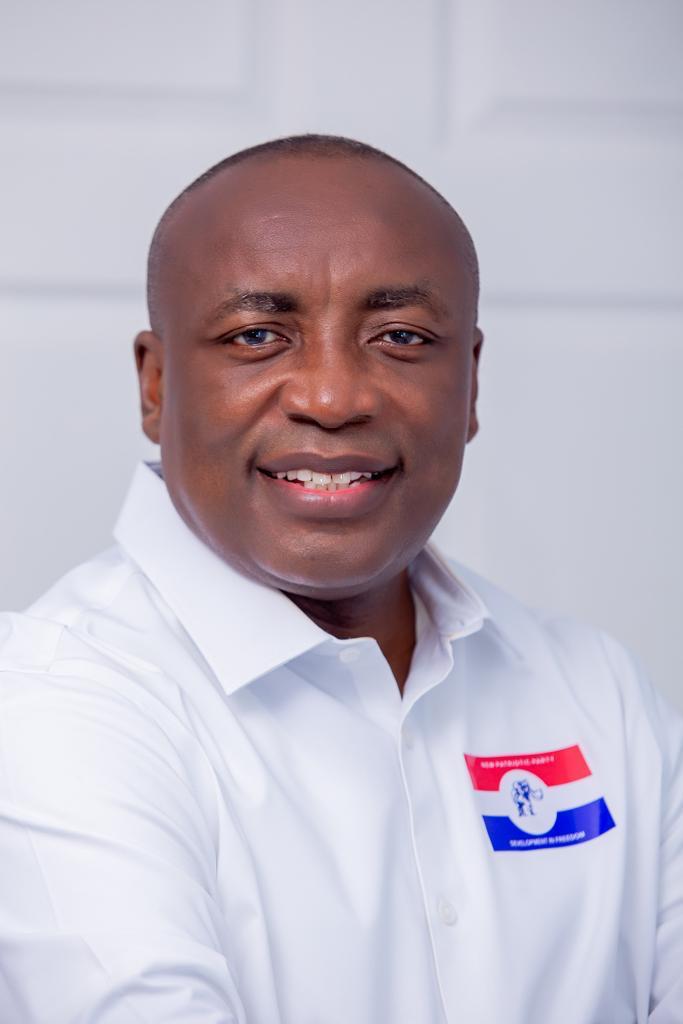
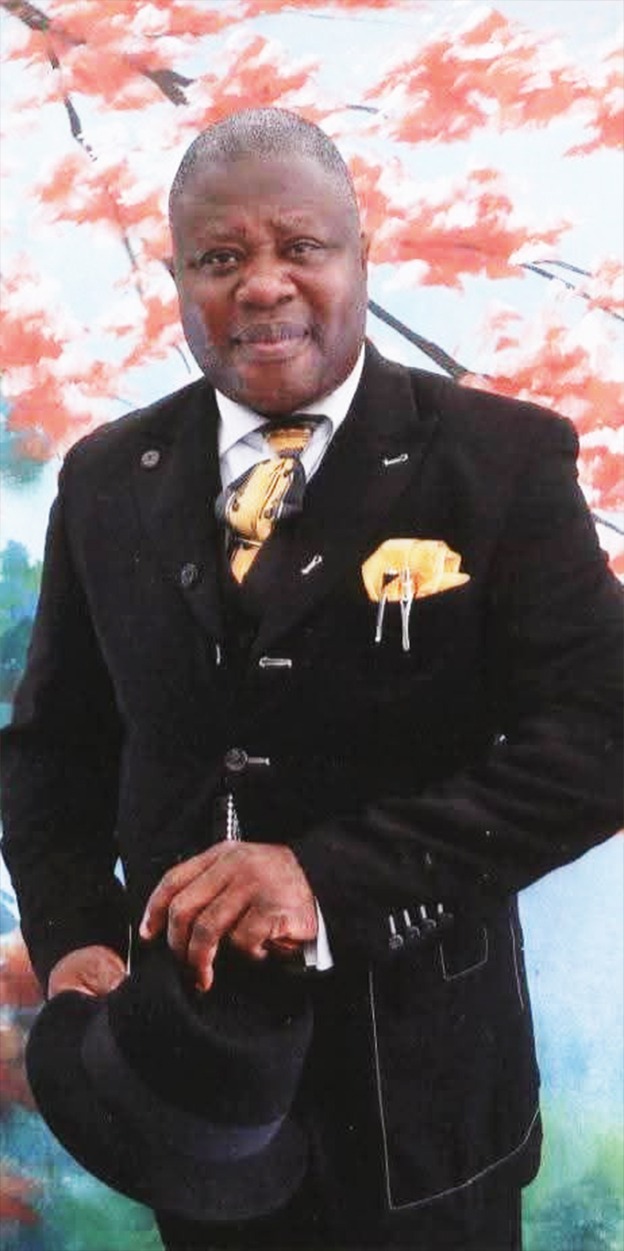
Ing Kwabena Agyei Agyapong

New Patriotic Party (NPP) flagbearer aspirant, Ing. Kwabena Agyapong, has made a forceful appeal to party delegates to entrust him with the party’s presidential ticket, arguing that Ghana’s current economic, social and institutional challenges demand leadership anchored in integrity, discipline and competence.

Addressing party faithful at his Policy Day on Tuesday, January 20, 2026 Ing Agyapong said Ghana has drifted far from the ideals that inspired independence, insisting that only leaders with credibility and moral authority can restore public confidence in governance.

“I offer leadership with clean hands and a clear conscience, leadership that understands the pain of ordinary Ghanaians and is prepared to make difficult but necessary decisions in the national interest,” he said.

According to the former NPP General Secretary, Ghana’s problems are no longer theoretical, but deeply felt in the daily struggles of citizens, particularly the youth and unemployed graduates.

“We see the statistics, but beyond the numbers we feel the reality in the frustration of young people who have done everything right yet cannot find work, and in communities that continue to live without dignity despite decades of democratic governance,” he noted.

Ing. Agyapong argued that nearly seven decades after independence, the promise of Ghana’s founding vision remains unfulfilled.

“This is not the Ghana our Martyrs died for and this is certainly not the destiny they imagined for us. Democracy was supposed to bring hope, opportunity and fairness, but for too many of our people, those dividends have not arrived,” he said.

He cited rising unemployment, persistent poverty, poor sanitation, unsafe healthcare, unchecked urban sprawl and environmental degradation through galamsey as clear evidence that the country is off track.

According to him, these failures are rooted in weak systems, poor enforcement of laws and a political culture that too often rewards loyalty over competence.

Turning his focus inward, the NPP flagbearer aspirant admitted that the party itself must accept responsibility for its current state.

“Our party is not in a good place, and we must be honest enough to admit that to ourselves. If we are to regain the trust of the Ghanaian people, then we must first reunite around a clear purpose and a credible plan for national renewal.”

He cautioned delegates against voting based on factional alignment or personal relationships, urging them instead to consider who is best positioned to reconnect the party with the grassroots and present a believable alternative to the electorate.

“I am asking you to judge me not by slogans or promises, but by the clarity of my plans and my record of service to this party and country,” he said.

Ing Agyapong stressed that clean leadership must translate into disciplined governance, particularly in the use of public resources.

“There shall be no more abandoned hospitals, no more uncompleted roads and no more waste of scarce public funds. Every cedi collected from the Ghanaian people must work for them, and leadership must be prepared to enforce that without fear or favour,” he said.

He pledged to complete existing projects before initiating new ones and to institutionalise rigorous value-for-money audits across public procurement.According to him, fiscal indiscipline has eroded public trust and must be decisively addressed.

One of the most emphatic sections of Kwabena Agyapong’s address focused on restoring professionalism in the civil and public services.

“For too long, promotions and appointments have been driven by connections rather than competence.

“Under my leadership, merit will rule again, and hardworking public servants will be empowered to do their jobs without political interference,” he said.

He proposed downsizing government to improve efficiency and reducing wasteful spending on seminars and retreats, insisting that the public service must return to implementation and results.

Ing Kwabena Agyapong also directed part of his message to traders, artisans and small-scale entrepreneurs, whom he described as the backbone of the economy.

“Our informal sector is the soul of this country, yet it operates in fear and uncertainty. We will not punish them with harassment or excessive taxation. We will bring them into the formal economy with dignity, protection and access to credit.”

He said this approach would broaden the tax base fairly while strengthening livelihoods and productivity.


For more news, join The Chronicle Newspaper channel on WhatsApp: https://whatsapp.com/channel/0029VbBSs55E50UqNPvSOm2z

Editorial: Government Should Expedite Action On Transport Crisis

0
Editorial

Last week, Vice President Naana Jane Opoku-Agyeman met stakeholders to address the growing public transport challenges confronting the country.

The engagement followed sustained media attention on Ghana’s failing transport system, which has exposed how drivers and their mates continue to exploit commuters through unapproved fares and poor service delivery.

Following the meeting, the Vice President proceeded to the Ministry of Transport, where she held a high-level engagement with other key stakeholders.

There, she announced that government would provide buses for the Greater Accra Passenger Transport Executive (GAPTE), operators of the Bus Rapid Transit (BRT) system, popularly known as Aayalolo.

This announcement was presented as confirmation of government’s commitment to supplying high-occupancy buses to help modernise public transportation.

The Vice President further assured Ghanaians that government would introduce high-capacity buses to ferry passengers safely and efficiently to their destinations as part of broader transport sector reforms.

The Chronicle welcomes this assurance, coming at a time when the transport crisis has engulfed the entire country, particularly during rush hours in major urban centres.

However, we must point out that this response only partially addresses the concerns raised in our recent editorials, including “Ghana’s Cities Are Suffocating Under Decades of Policy Failure” and “The GPRTU Cartel: Why Ghana’s Public Transport Is Broken.”

We, therefore, urge the state to expedite action, as Ghana’s current transport system remains in a deplorable condition.

More than 70 per cent of Ghanaians, especially those in urban areas such as Accra, depend heavily on public transport.

Informal minibuses, popularly known as trotros, remain the backbone of daily commuting due to their affordability and accessibility for the working class. However, the system is poorly regulated, overstretched and grossly inadequate.

Every day, millions of Ghanaians heading to work and other important engagements are trapped in traffic, losing valuable productive hours.

A journey that should take 30 minutes often lasts an hour or more. This frustration is worsened by the exploitation of commuters by drivers and their mates, who impose unapproved fare increases on passengers who have already endured long queues.

Equally troubling is the issue of safety. Most trotros currently in operation are converted cargo vehicles originally designed to transport goods rather than people.

Passenger seats are poorly constructed often by roadside welders without engineering standards, adequate cushioning or protective mechanisms.

Many of these vehicles lack basic safety features such as headrests, exposing passengers to serious risk in the event of accidents.

When government speaks of modernising public transport, it must go beyond rhetoric. A truly modern system must include high-capacity buses and dedicated lanes to ensure smooth movement, strict safety standards and effective regulation.

The Chronicle also urges the state to confront the excessive influence of transport unions such as the GPRTU, which over the years have become an albatross around the necks of commuters, by resisting reform and perpetuating inefficiencies.

Any modern public transport system must operate on dedicated lanes, similar to the Aayalolo BRT lanes that were abandoned after President John Dramani Mahama left office in 2017. Additionally, such a system should integrate digital solutions, including e-ticketing and smart card access, to improve efficiency, transparency and accountability.

The transport challenge in Ghana is real. It is not exaggerated, and it must not be trivialised. The Chronicle, therefore, urges the Presidency and government at large to attach the utmost seriousness to the transport crisis.

This is not merely a transport issue it is a national economic and productivity challenge affecting the lives of Ghanaians from Bawku to Axim.


For more news, join The Chronicle Newspaper channel on WhatsApp: https://whatsapp.com/channel/0029VbBSs55E50UqNPvSOm2z

 

The Ghanaian Chronicle