Home Blog Page 332

Madness In The Name Of Revenge … Ehi Residents Attack Police Station, Beat Suspect Unconscious, Set Car Ablaze

0
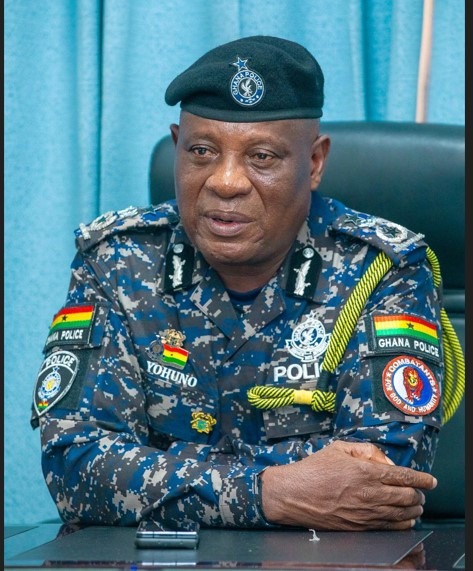
Mr Tetteh Yohuno-IGP

A Police Station at Ehi, a village in the Ketu North municipality of Volta Region was vandalised by an irate mob in the night of Monday November 3, 2025.

A suspect, who was on detention over his alleged involvement in a murder case, was removed to a secret location by the police to avoid being lynched.

The attackers, who got hint of the secret location of the suspect went to the place, brought him out from the room he was being temporary detained and beat him (suspect) unconscious, after overpowering the police. Thinking that he was dead, the mob dumped him into a nearby gutter.

The Ketu Divisional Police Commander, Chief Superintendent Mr Alfred Kudah confirmed the story to The Chronicle, in a telephone conversation.

According to him, the incident occurred around 8:30pm on Monday, when a certain Agbavitor Kofi engaged another man in a fight over a lady.

He added that Agbavitor reportedly used a jack knife to  stab Julius Sablah, 32, aka D-Black, to death, who had only gone to separate the fight.

Suspect Agbavitor then fled to the Ehi Police Station in the Dzodze district seeking protection but the mob followed and pressurised the police to hand over the suspect to them.

When the police refused, the mob attacked, pelting officers with stones and other objects. It was this development that forced the police to remove the suspect from the police station to another location.

The Dzodze District Police Commander, Chief Superintendent William Gyamfi and his Crime Officer, Assistant Superintendent of Police (ASP) Emmanuel Habada, who rushed to the scene found the ongoing mob action volatile, and as such fell on the Ketu Divisional Headquarters at Tokor, a suburb of Denu for assistance.

He continued that, the attack on the station and personnel intensified forcing the divisional police command to dispatch a squad of heavily armed patrol men as reinforcement to the village.
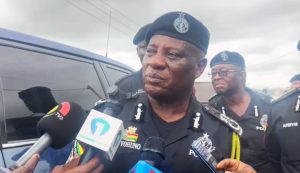
IGP Christian Tetteh Yohuno

Upon hearing that police reinforcement team was on the way to the place, the Ehi community members blocked both ends of the Penyi-Ehi road with burning lorry tyres, thereby rendering it impassable, while subjecting the station to severe attacks.

The police special formation, however, tactically went through the obstacle, but was greeted with much hostility at the scene.

Chief Superintendent William Gyamfi, Inspector Augustine Tawiah and Constable Adu Foster suffered various degrees of injury.

The station was vandalised with rooftops damaged, doors to the station destroyed, the Criminal Investigation Department (CID) office broken into and stationery torn into pieces.

The mob also smashed the television set in the room. A broken down vehicle parked at the station was also set ablaze.

The commander further told The Chronicle that liquid substance that smells like petrol was seen placed at the Charge Office for unknown reason.

In that state of confusion, police rescued suspect Agbavitor to a secret place, but themob detected the location, overpowered the police and beat the suspect with offensive weapons.

Thinking that he had died, the mob dumped the suspect in a gutter and fled the scene.

For the second time, police rescued the suspect, with head injuries and multiple abrasion on his body.

He was rushed to the St Anthony Hospital at Dzodze, Ketu North Municipal capital and admitted under heavy armed guard pending his recuperation to assist with the investigation into the murder of Julius Sablah.
Tang Wei Hits Back: I Have Not Encroached On Panbros Land

0
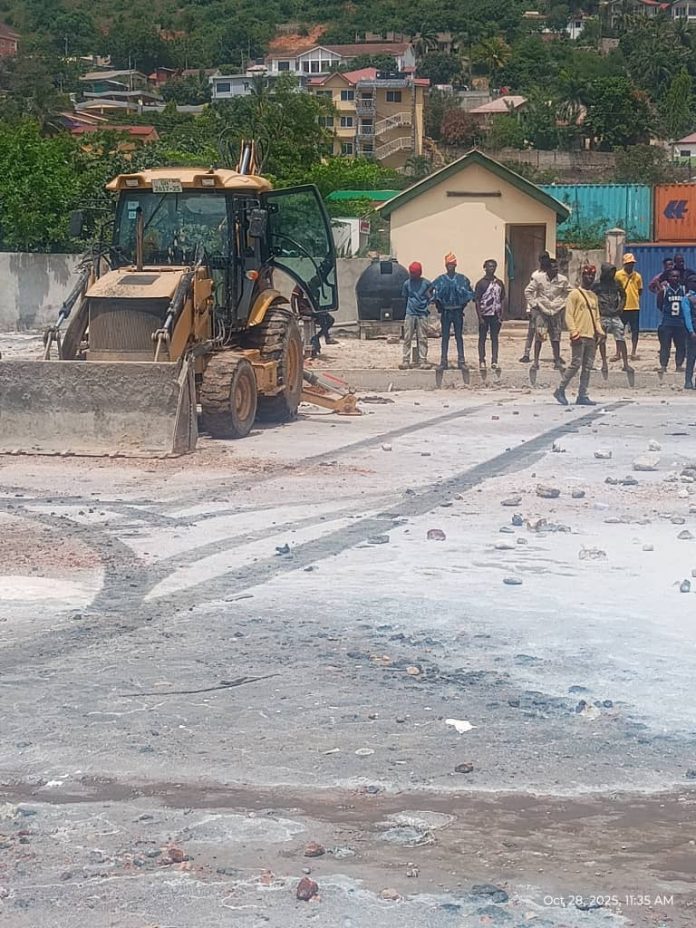
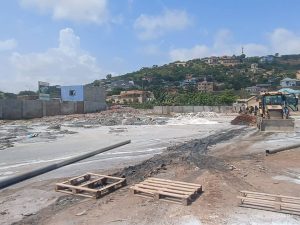
The land Tang Wei is developing

A Ghanaian-Chinese investor, Robert Tang Wei, has strongly denied claims that he has on a parcel of land allegedly belonging to Panbros Industries Limited, a salt-producing company located at Gbawe-South West in the Greater Accra Region.

Recent media reports suggested that Panbros Industries was the rightful owner of the land currently being developed by Mr. Tang Wei, accusing the investor of harassment and illegal takeover.

However, speaking to the Media, Mr. Tang Wei refuted the allegations, describing them as completely unfounded. He presented documentary evidence, including a verified Land Title Certificate, to support his ownership of the property.

Official documents from the Lands Commission (Land Registration Division), which The Media has sighted, confirmed that the investor legally acquired the 116.88-acre land from the Gbawe Kwartie Family. The land has been duly registered under certificate number GA 76798.

Sources indicate that the management of Panbros Industries began raising objections only after Mr. Tang Wei commenced the development of a multi-million-cedi industrial and residential project, which includes a plastic factory and a roofing sheet manufacturing plant.

Mr. Tang Wei, who has lived in Ghana since 1998 and has since become a naturalised Ghanaian citizen, is known for his wide-ranging investments in the hospitality, transportation, manufacturing, and retail sectors. His ventures reportedly employ thousands of Ghanaians and contribute significantly to the national economy through taxes.

According to the investor, his current project aims to benefit the surrounding communities by creating more employment opportunities and stimulating local development.

Harassment Allegations Unfounded

Mr. Tang Wei also dismissed claims that he brought in heavily armed officers from the Special Weapons and Tactics (SWAT) Unit of the Ghana Police Service and the National Security Secretariat to intimidate workers of Panbros Industries.

He clarified that he lawfully acquired the land and only requested security protection after experiencing persistent interference and threats from some workers of the salt company.

“As a naturalised Ghanaian and legitimate investor, I have the right to protect my legally acquired property. My business can only thrive in a peaceful environment, and that is why I sought assistance from the security agencies to maintain order,” he said.

Checks by The Media confirm that the National Security Secretariat verified the ownership of the disputed land before extending any form of assistance to the investor.

In a letter dated August 27, 2025, signed by C/SUPOL Osman Alhassan, Director of Investigations, and addressed to the Executive Secretary of the Lands Commission, the Secretariat requested verification of the land title’s authenticity and ownership.

Part of the letter reads: “The National Security Council Secretariat presents its warmest greetings and requests assistance in determining the actual ownership of a parcel of land at Gbawe-South West in the Greater Accra Region, which has become a subject of dispute under investigation.

We would appreciate confirmation of the authenticity of the attached Land Title Certificate and clarification on whose name it has been registered.”

Lands Commission Confirms Ownership

In response, the Lands Commission, through a letter dated September 4, 2025, and signed by SURV. Angelina Awa, Acting Director, confirmed the authenticity of Mr. Tang Wei’s Land Title Certificate after reviewing the original copy submitted for verification.

The Commission’s letter stated: “We have verified the original Land Certificate and hereby confirm its authenticity with the following details: Name: Tang Wei, Certificate Number: GA 76798, Volume: 09, Folio:1730,Survey Plan No:X4136Locality: Gbawe-South West.

The Lands Commission concluded by expressing hope that the information provided would assist the National Security Secretariat in resolving the dispute appropriately.

Minority Censor Ministers For Failing To Answer Parliamentary Questions

0
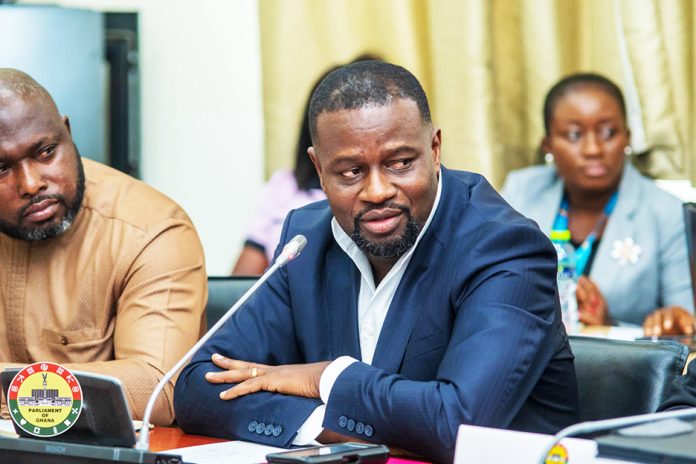
Frank Annoh-Dompreh, MP for Nsawam-Adoagyiri

A heated debate erupted in Parliament on Tuesday after the Minority Caucus accused ministers from the ruling National Democratic Congress (NDC) of showing blatant disregard for parliamentary business, by consistently failing to appear before the House to respond to questions.

The Minority Chief Whip and Member of Parliament for Nsawam-Adoagyiri, Frank Annoh-Dompreh, led the charge, describing the ministers’ continued absence as a “disturbing culture of absenteeism” that undermines parliamentary oversight.

According to him, several ministers have repeatedly ignored invitations from Parliament to answer questions, frustrating the House’s constitutional mandate to hold the Executive accountable.

“This trend is becoming very worrying. Ministers are supposed to come here to respond to questions not the other way around. Parliament should not be chasing ministers for accountability,” Mr. Annoh-Dompreh lamented.

The Minority Chief Whip, who also serves on the Business Committee, revealed that despite raising the issue on several occasions, little progress has been made.

He disclosed that some ministers casually claim to be unavailable without officially informing the Speaker or seeking permission in writing.

“When a minister says ‘I’m not available,’ that’s fine. But you must write formally to the Speaker. It is Parliament not the minister that determines whether the excuse is acceptable,” he emphasised.

Mr. Annoh-Dompreh noted that such disregard for procedure has led to a backlog of unanswered questions and disruptions to the House’s agenda.

He reminded ministers that when a substantive minister cannot attend, it is standard practice for their deputy to appear on their behalf.

He, however, commended the Minister for Roads and Highways, describing him as one of the few who regularly honours parliamentary sittings.

“With the greatest respect, the Roads Minister is almost always present. The rest of them should learn from his example,” he remarked.

His comments drew wide support from other Minority MPs, many of whom accused the NDC administration of fostering ‘lazy governance’ and disrespecting the separation of powers by disregarding parliamentary authority.

The Minority Chief Whip also reacted sharply to a suggestion by the Majority Leader that MPs engage in overly long debates. He described the comment as “most unfortunate,” stressing that every contribution made in the House has merit.

“This is the Parliament of Ghana. We determine our own business. Every debate here matters. Calling our discussions long-winded is disrespectful,” he said.

Calling for stronger enforcement, Mr. Annoh-Dompreh appealed to the Speaker of Parliament, Alban Bagbin, to ensure ministers comply with the Standing Orders requiring them to appear before the House when summoned.

“This is not a favour, it’s a constitutional duty. Ministers must be accountable to Parliament and, ultimately, to the people of Ghana,” he insisted.

Galamsey Violence: Asutifi North MP Granted 150k Bail

0
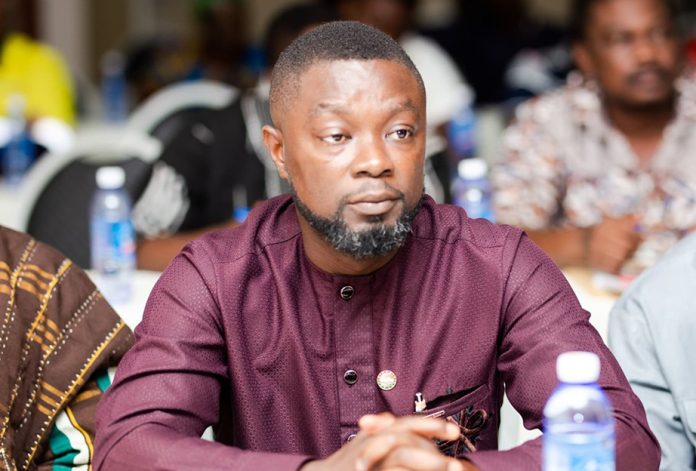
MP for Asutifi North, Ebenezer Kwaku Addo

The Circuit Court in Accra has issued a stern caution to the Member of Parliament (MP) for Asutifi North, Ebenezer Kwaku Addo, ordering him to refrain from any conduct that could impede ongoing police investigations into illegal mining related disturbances at Hwidiem in the Ahafo Region.

The court, presided over by Her Honour Basilia Adjei-Tawiah, on Monday granted the lawmaker bail in the sum of GH¢150,000 with one surety to be justified.

The MP for Asutifi North is also barred from leaving the Greater Accra Region without notifying the case investigator and must report to the investigator every two weeks until trial commences or the order is reviewed.

“The accused is cautioned to desist from any behaviour likely to frustrate investigations,” the judge warned and adjourned the case to December 1, 2025.

Prosecution objects to bail

Prosecutors had urged the court to remand the MP, arguing that the matter had assumed national interest and the Criminal Investigations Department (CID) had taken over the case.

The prosecution maintained that, Ebenezer Kwaku Addo, described as influential, could interfere with witnesses, citing widely circulated videos purportedly showing how the incident unfolded. They insisted remand was necessary to safeguard the investigation.

“The accused is influential and capable of interfering with witnesses and evidence,” the prosecutor said.

Lawyers for the legislator opposed the remand request, telling the court that the MP had voluntarily submitted himself to police.

They reminded the court that the MP is a sitting legislator with a fixed place of abode and responsibilities, including a family with a newborn baby. “He has nowhere to abscond to,” counsel argued.

They further stressed the constitutional presumption of innocence, stating that the prosecution had not demonstrated any credible basis to deny bail.

After hearing both sides, the court declined the prosecution’s plea for remand, noting that proper arraignment was yet to be completed and the accused’s plea had not been taken.

Offences and facts

Although the charges were not formally read in court, documents filed by prosecutors indicate that the MP and accomplices – two of whom are reportedly at large – face multiple counts including: conspiracy to assault a public officer, assault on a public officer, conspiracy to cause unlawful damage, causing unlawful damage and rioting with weapons.

According to the brief facts, military personnel with the National Anti-Illegal Mining Operations Secretariat (NAIMOS) were returning from a reconnaissance mission when they allegedly encountered illegal miners near Hwidiem.

Two suspects were arrested, but the MP allegedly arrived at the scene with a group of armed individuals and forcibly freed the suspects and later led a crowd estimated at over 600 to the Hwidiem Police Station.

The mob reportedly vandalised two vehicles belonging to NAIMOS and the Zongo Chief, demanded the release of seized exhibits including a pistol, ammunition and vehicles, and sought to “discipline” the security officers.

Ebenezer Kwaku Addo was later arrested after reportedly honouring a police invitation.Police say efforts are ongoing to arrest the remaining suspects.


For more news, join The Chronicle Newspaper channel on WhatsApp: https://whatsapp.com/channel/0029VbBSs55E50UqNPvSOm2z

Muntaka presents election related violence report –suspects pencilled for prosecution

0
Minister for the Interior, Alhaji Muntaka Mubarak

The Minister for the Interior, Alhaji Muntaka Mubarak, has expressed deep concern over the persistent use of lethal weapons by security personnel during Ghana’s elections, describing it as a grave threat to democracy and human security.

Addressing the media on the findings of a Special Investigative Task Force established to review electoral violence during the 2020 and 2024 general elections, the Minister said the government would pursue all cases of election-related violence to their logical conclusion to ensure justice for victims and accountability for perpetrators.

“As Minister for the Interior, I want to assure the public that the government, under the leadership of His Excellency President John Dramani Mahama, remains committed to upholding the rule of law and ensuring that all those responsible for the violence are held accountable,” he declared.

Alhaji Muntaka condemned the increasing militarization of Ghana’s elections, saying the heavy deployment of armed officers at polling and collation centres undermines public confidence and endangers lives.

“The investigations revealed worrying patterns of security excesses, including indiscriminate firing and the use of live ammunition as a means of crowd control. Such actions are unacceptable in a democratic state,” he stressed.

According to the Minister, the task force identified 12 major incidents nationwide — six each from the 2020 and 2024 elections — which resulted in 15 deaths and over 40 injuries.

These incidents were recorded in Greater Accra, Bono, Bono East, Northern, Central, Savannah, and Ashanti regions.

The report cited multiple cases where soldiers and police officers used live bullets to disperse crowds, leading to fatalities. “Three of the deaths were linked to military interventions, while another four were caused by police officers who fired directly at fleeing civilians,” he revealed.

Systemic Failures and Breaches of Conduct

The Minister lamented that in several instances, security personnel acted without proper command supervision.

“The use of firearms was not done under the command of a senior officer who could have ensured that the appropriate rules of engagement were observed. This lack of discipline and accountability must never be repeated,” he said.

He noted that some officers violated operational protocols, failed to retrieve spent shells from shooting scenes, and, in some cases, fabricated charges against civilians instead of pursuing those responsible for killings.

The investigative task force, through witness interviews, crime scene reconstructions, and forensic analyses, identified 21 suspects and built 11 new case dockets.

The report, now before the Attorney-General, contains recommendations for prosecutions and compensation for victims and bereaved families.


Human Security and Democratic Accountability

Alhaji Muntaka emphasised that the excessive use of force during elections represents a serious violation of citizens’ rights to life and participation. He noted that protecting human life must always take precedence over political contestations.

“The injuries and deaths recorded during these elections could have been avoided if security forces had adhered to professional standards. No election is worth the life of any Ghanaian.”

The Minister added that the government would fully implement the recommendations of the Ayawaso West Wuogon Commission of Inquiry and other task force reports to reform electoral security operations and prevent future militarization of polls.

He explained that election-related security interventions should be based on intelligence and crowd management strategies, not intimidation or force.

“Elections are a civic exercise, not a battlefield. Our democracy cannot thrive where guns, not ballots, determine the will of the people,” he stated firmly.

Commitment to Justice

Alhaji Muntaka assured victims and bereaved families that investigations would continue until justice is served.

He said the government would collaborate with the Ghana Police Service, the Armed Forces, and the Electoral Commission to adopt human security-centered policing models during elections.

He further revealed that the Ministry of the Interior would introduce strict electoral security guidelines to prohibit the use of live ammunition in crowd control and promote non-lethal options such as rubber bullets and tear gas in exceptional cases.

“The state has a moral and constitutional duty to protect life. We cannot continue to lose citizens simply because of election-related violence. The pain, trauma, and loss suffered by families must not be repeated in our national history,” he emphasised.

The Minister reaffirmed the government’s determination to rebuild public confidence in the security services and to ensure that future elections are conducted in an atmosphere of safety, trust and transparency.


For more news, join The Chronicle Newspaper channel on WhatsApp: https://whatsapp.com/channel/0029VbBSs55E50UqNPvSOm2z

Editorial: So Far So Good; Let’s Rally Behind NAIMOS

0
Editorial

The recent violent attack on the Director of Operations of the National Anti-Illegal Mining Operations Secretariat (NAIMOS) and his team at Bronikrom, in the Ahafo Region, should trouble every well-meaning Ghanaian. This is not just another security incident it is a dangerous signal that the fight against illegal mining, or galamsey, is being sabotaged from within the political establishment.

According to reports, the NAIMOS Director and his team were assaulted on November 1, 2025 while conducting an anti-galamsey operation. Their mission, which led to the arrest of sixteen illegal miners and the seizure of weapons, vehicles and cash, was violently interrupted by a group allegedly led by the Member of Parliament for Asutifi North, Ebenezer KwakuAddo. Eyewitnesses say the MP stormed the operation site with a mob to demand the release of the suspects, an act that escalated into chaos.

The mob later besieged the Hwidiem Police Station, vandalised police property and destroyed a Toyota Hilux pickup belonging to the NAIMOS Director. It took police reinforcements, the military and the Zongo Chief of Hwidiem, Alhaji Mohammed BashiruZarikyi, to restore calm and safely evacuate the officials. Though no deaths were recorded, the incident marks a grave assault on the rule of law.

The Chronicle strongly condemns this shameful act of interference and intimidation. Ghana cannot win the war against environmental destruction if elected officials who should know better act as defenders of lawbreakers. The alleged involvement of a Member of Parliament in obstructing an official anti-galamsey operation is an affront to democracy, governance and environmental justice.

We commend the bravery and professionalism of the NAIMOS operatives. In a country where corruption and compromise too often define the enforcement of environmental laws, the NAIMOS officers stood their ground. They put Ghana first, even at the risk of their own lives. A video circulating on social media shows some of the arrested miners attempting to bribe the officers to gain their freedom. Their refusal to yield to such temptations deserves national recognition.

Yet, what this incident reveals is more alarming. It exposes the deep-rooted political complicity sustaining galamsey. Successive governments have declared war on illegal mining, yet the menace persists because powerful individuals, some wearing political colours, continue to shield perpetrators for personal or electoral gain. The assault on NAIMOS is, therefore, not just an attack on an institution, but an attack on the state itself.

Let us not deceive ourselves, galamsey is not only destroying our rivers and forests, it is poisoning our future. Harmful chemicals like mercury and cyanide are contaminating water bodies, killing aquatic life and entering the food chain. The once fertile lands of Ghana’s mining belts are now toxic wastelands. Reports from some communities indicate that women are giving birth to deformed babies because of heavy metal contamination. These are not isolated tragedies —they are national emergencies.

We are, therefore, appalled that while such irreversible damage continues, some public officials would choose to defend or abet these environmental crimes. The President, His Excellency John Dramani Mahama, must treat this incident as a critical test of his administration’s sincerity in the fight against galamsey.

The government must act decisively, not with rhetoric, but with justice. Any MP or public officer found to have obstructed an official operation must face the full rigours of the law. The Chronicle is happy to hear that the Member of Parliament for Asutifi North, Ebenezer Kwaku Addo, has been arraigned before court, after being accused of interfering with the work of NAIMOS. This surely is the way to go.

About a fortnight ago, The Chronicle called on President Mahama to go after the “big wigs” behind the illegal mining network. That call remains relevant. The events at Bronikrom have presented the President with a golden opportunity to demonstrate that no one, regardless of political affiliation  is above the law.

Ghanaians are watching closely. The credibility of the national campaign against galamsey depends on whether the state can protect those fighting on its behalf. NAIMOS represents the hope of millions who still believe Ghana can reclaim its lands, rivers and dignity.This is not the time for political compromise. It is time to rally behind NAIMOS — not with words, but with decisive national action.


For more news, join The Chronicle Newspaper channel on WhatsApp: https://whatsapp.com/channel/0029VbBSs55E50UqNPvSOm2z

Why I left the GJA

0
Opinion

In 2017, I left the Ghana Journalists Association (GJA) and have since not been a member. I left because the association fought me for fighting corruption.

I had published an investigation that resulted in the cancellation of a $74 million fraudulent contract awarded to the Jospong Group.

The GJA President issued a press statement attacking my story. The press statement did not state anything wrong with the investigation, which was adjudged the overall best story in the 2018 West Africa Media Excellence Awards (WAMECA).

The GJA’s statement was concerned that a so-called profitable Ghanaian business was affected, saying such businesses should not be destroyed “in the name of investigative journalism.”

Last month, the GJA again offered its platform for a similar attack against The Fourth Estate, which had published a report on the KGL contract with the National Lotteries Authority (NLA). That contract diverted the income that should have been coming to the NLA to the private company, while the NLA gets only peanuts.

I am yet to see any rebuttal to the substance of The Fourth Estate report, but at the GJA’s award launch, the Executive Chairman of the KGL Group, Mr. Alex Apau Dadey, said, among others:

“The tendency to undermine our own across the country is worrying. The default reaction to successful local champions is often suspicion rather than celebration. Why do we cheer foreign conglomerates but question the success of local ones?”

Of course, he mentioned The Fourth Estate and referenced the publication on the NLA-KGL contract.

This is unfortunate, and the GJA should not follow money and allow private businesses caught in accountability journalism to spread this tired and false narrative that seeking accountability for public resources means destroying local businesses.

Such false narratives incite the public against journalists and media houses doing accountability journalism. It paints the journalists as enemies of the state, enemies of Ghanaian interests.

I don’t remember the GJA awards ever being named together with a sponsor, but this year’s event goes by the joint name GJA/KGL Awards. Irrespective of KGL’s sponsorship package, its officials shouldn’t be given the platform to undermine the very journalism that the GJA awards were created to honour.

Besides, it is not true that Ghanaian journalists are against local businesses. There are thousands of local businesses that have been built with the support of the media. There are also so-called businesses that sprout overnight, connive with politicians to sign obscene contracts that are detrimental to the interests of the state.

To say that the media should not expose them because they are local businesses is like saying a thief or an armed robber who attacks you should be set free if he is a Ghanaian.

Exposing corruption or unconscionable business dealings is not synonymous with targeting Ghanaian businesses. I have been reporting on Zoomlion’s operations since 2013, but not once have I reported on its contracts with private companies.

If, for instance, a private bank signs a private with Zoomlion, it is that bank’s responsibility to ensure that Zoomlion delivers. If the bank decides to pay Zoomlion for no work done, that is the bank’s problem.

However, if a business enters into a contract that involves public funds, it should be prepared to account to the public. It should not see accountability as an attack on Ghanaian business. Being a Ghanaian business doesn’t mean corruption.

If KGL thinks the publication got any facts wrong, the company should point it out. The company has the right to a rejoinder. And they have other remedies.

Using a GJA platform to dampen the spirit of the few media houses doing accountability journalism with such false and sweeping claims is detrimental to journalism.

The GJA must resist corporate capture and act in the interest of its members and good journalism.

By Manasseh Azure Awuni  

Credit: myjoyonline.com

The views expressed in this article are the author’s own and do not necessarily reflect The Chronicle’s stance.

After 6hrs gridlock:  Heavy mining equipment yet to reach Tarkwa

0
Evidence of MONPE Trucks carting the heavy machines

A convoy of massive mining equipment that caused a six-hour traffic nightmare on the Takoradi–Agona Nkwanta road has still not reached Tarkwa, The Chronicle can confirm.
The heavy-duty consignment, being hauled by MONPE Ventures, a leading heavy haulage and equipment rental company, sparked public outrage last week after its slow movement virtually crippled vehicular traffic along the busy highway, linking the twin city of Sekondi-Takoradi to the mining hub of Tarkwa.

Oncoming cars bypassing the truk carting the heavy machines

As at Tuesday morning, this week, around the hours of 8:00am, exactly seven days after the infamous gridlock, the convoy had only reached only Apimenim, a small town located just beyond Agona Nkwanta, far from its final destination in Tarkwa.
Residents and motorists who frequently ply the route described the week-long journey as an indication of the extraordinary size and weight of the equipment being transported.

“For such heavy machines to take a whole week to move from Takoradi to Tarkwa says a lot about how massive they are,” one driver told The Chronicle.

A Week of Frustration
On the day of the incident, scores of motorists, passengers and schoolchildren were left stranded for hours in the scorching sun, as traffic backed up for several kilometers between Takoradi and AgonaNkwanta. Some frustrated commuters abandoned their vehicles and continued their journeys on foot.
Commercial drivers, especially those operating the Takoradi–Tarkwa route, lamented the lack of prior public notice or traffic control measures to manage the situation.

“It was pure chaos. We didn’t even know why the road was blocked. There was no police or road marshal to direct us,” recounted a taxi driver who was stuck in traffic for nearly five hours.
According to eyewitnesses, the convoy occupied both lanes of the narrow road, leaving no room for oncoming or overtaking vehicles.

The movement of the oversized load was so slow that it often came to a complete halt at sharp curves or inclines, further worsening the situation.

A Change in Strategy
Following the public uproar and inconvenience caused, MONPE Ventures appears to have adjusted its transportation strategy.

One of the heavy equipments on the road

This reporter observed that the company is now moving the equipment in smaller batches rather than attempting to transport the entire convoy in one stretch, as was done earlier.
Currently, the equipment is being hauled from Apimenim toward Tarkwa in phases, a move that has significantly reduced the risk of severe traffic build-up.

Unlike the previous chaotic scene, vehicles travelling in both directions can now navigate past the slow-moving trucks with relative ease.
“This new approach is far better. At least, cars can still pass and the traffic doesn’t hold everyone hostage for hours like before,” said a commuter who regularly uses the route.

While the new plan appears to be easing congestion along the Apimenim–Tarkwa stretch, transport experts and local drivers warn that Tarkwa’s inner roads, known for their narrow lanes and heavy vehicular activity, could pose an even greater challenge for the convoy.

Areas such as Ahwetieso Junction, Bogoso Junction and the Market Circle are notorious for traffic jams, especially during peak hours when commercial and mining vehicles share the same narrow roads with traders and pedestrians.
“If they move those giant machines through Tarkwa during the day, they’ll definitely paralyze traffic in the town,” said a resident of Tarkwa.

To him, the only way to avoid another gridlock is to move them at night when the roads are relatively empty.
Industry observers believe MONPE Ventures may have no option but to schedule night-time haulage for the remaining leg of the journey.

The company could coordinate with the Police Motor Traffic and Transport Department (MTTD) to escort the convoy safely through congested urban sections of Tarkwa.
Night transport would not only reduce the impact on daytime traffic, but also enhance safety, as pedestrians and public transport vehicles are fewer on the roads in the night.
Such large-scale movements of mining machinery are common in the Western Region, where several multinational and local companies operate gold, bauxite and manganese mines.

However, logistical challenges, including narrow highways, aging road infrastructure and limited bypass routes often lead to disruptions when heavy-duty haulage operations are not carefully managed.

Calls for Coordination and Road Safety Measures
The incident has reignited calls for better coordination between haulage companies, the Ghana Highway Authority, and the Police Service whenever large mining equipment is being transported.

Some transport operators argue that companies moving oversized cargo should be required to issue public travel advisories and work closely with local authorities to minimize inconvenience.
“We are not saying they shouldn’t transport their machines,” said one GPRTU official in AgonaNkwanta.

“But they should plan ahead and let us know when and how they’re moving. That way, we can adjust our schedules,” he added.
Experts also emphasise the need for wider shoulders and dedicated bypass lanes on major mining corridors such as Takoradi–Tarkwa, which have become economic lifelines for Ghana’s extractive industry but are still largely single-lane roads.
For now, traffic has eased on the Takoradi–AgonaNkwanta stretch, thanks to the revised phased movement of the convoy.

But with the equipment yet to reach its final destination in Tarkwa, residents remain cautious, fearing another round of disruptions if the company does not continue to handle the operation with care.
As the mammoth machinery inches closer to Tarkwa, all eyes will be on MONPE Ventures and local authorities to ensure the remainder of the journey does not repeat the chaos witnessed the previous week.


For more news, join The Chronicle Newspaper channel on WhatsApp: https://whatsapp.com/channel/0029VbBSs55E50UqNPvSOm2z


Government unveils Sugarcane scheme to boost local production

0
Sugarcane plantation

The Nigerian government through the National Sugar Development Council (NSDC) has unveiled its Sugarcane Outgrower Development Programme (SODP), a flagship initiative aimed at accelerating local sugar production and driving Nigeria closer to self-sufficiency.


According to the Executive Secretary of NSDC, Mr Kamar Bakrin, the programme is a key component of the Nigeria Sugar Master Plan (NSMP II) and has been designed to scale up local sugarcane production, reduce the nation’s reliance on imports, and stimulate inclusive economic growth, particularly within rural communities.


Mr Bakrin further emphasised that this is a pioneering initiative in Nigeria’s sugar sector.

The Nigerian government through the National Sugar Development Council (NSDC) has unveiled its Sugarcane Outgrower Development Programme (SODP), a flagship initiative aimed at accelerating local sugar production and driving Nigeria closer to self-sufficiency.


According to the Executive Secretary of NSDC, Mr Kamar Bakrin, the programme is a key component of the Nigeria Sugar Master Plan (NSMP II) and has been designed to scale up local sugarcane production, reduce the nation’s reliance on imports, and stimulate inclusive economic growth, particularly within rural communities.


Mr Bakrin further emphasised that this is a pioneering initiative in Nigeria’s sugar sector.

“The SODP is designed to boost local sugarcane cultivation, reduce Nigeria’s dependence on sugar imports, and create opportunities for inclusive economic growth by integrating outgrower farmers into the industry’s supply chain.


“This campaign is about reaching every stakeholder, from large-scale operators to smallholder farmers, and ensuring that everyone has a fair opportunity to contribute to Nigeria’s journey towards self-sufficiency in sugar production.”


Speaking on the programme framework, the Head of Out-Grower Management at the NSDC, Mrs Lade Offurum, explained that the SODP will engage three key categories of farmers.

According to her application, the initiative closes on 21st November 2025.

Credit: dailypost.ng

Court Clears PDP To Hold Scheduled National Convention

0
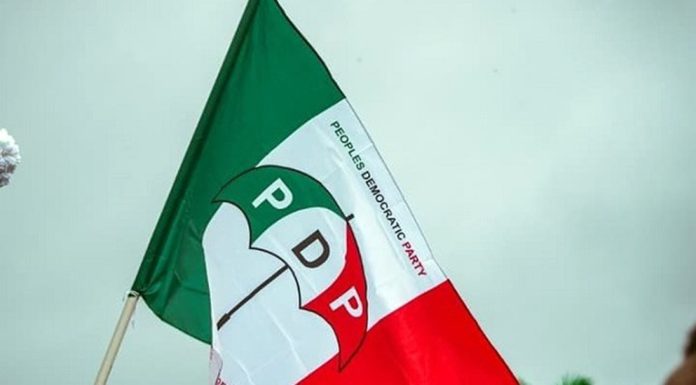
PDP flag

The Oyo State High Court sitting in Ibadan has cleared the Peoples Democratic Party (PDP) to proceed with its scheduled elective National Convention on November 15 and 16, 2025.

In a ruling delivered by Justice A. L. Akintola, the court granted an interim order allowing the party to hold the convention as planned in Ibadan, Oyo State.

The court also directed the Independent National Electoral Commission (INEC) to attend, monitor, and observe the exercise pending the hearing and determination of the substantive motion on notice.

The ruling followed an ex-parte application filed by Folahan Adelabi against the PDP, its Acting National Chairman, Umar Damagum; Governor Umaru Fintiri (representing the National Convention Organising Committee); and INEC.

Adelabi, the claimant, had urged the court to restrain the defendants from truncating, frustrating, or disrupting the timetable, guidelines, and schedule of activities leading to the convention.

After hearing the motion on Monday, Justice Akintola held that the claimant successfully demonstrated the need for urgent judicial intervention.

“The court finds merit in the claimant’s motion ex-parte. The same succeeds and is hereby ordered as prayed,” the judge ruled.

He consequently granted the interim orders sought, restraining any interference with the PDP’s timetable and schedule of activities, and compelling the defendants to hold the national convention as fixed.

Justice Akintola further adjourned the hearing of the motion on notice for interlocutory injunction to November 10, 2025.

The court’s order, dated November 3, 2025, was issued under the seal of the Oyo State High Court and signed by the Principal Registrar, S. O. Hammed.

On Friday, Justice James Omotosho of the Federal High Court in Abuja stopped the planned 2025 National Convention of the PDP until the party complies with the statutory requirements of the party, the Constitution and the Electoral Act are met. Credit: channelstv.com

The Ghanaian Chronicle