Home Blog Page 325

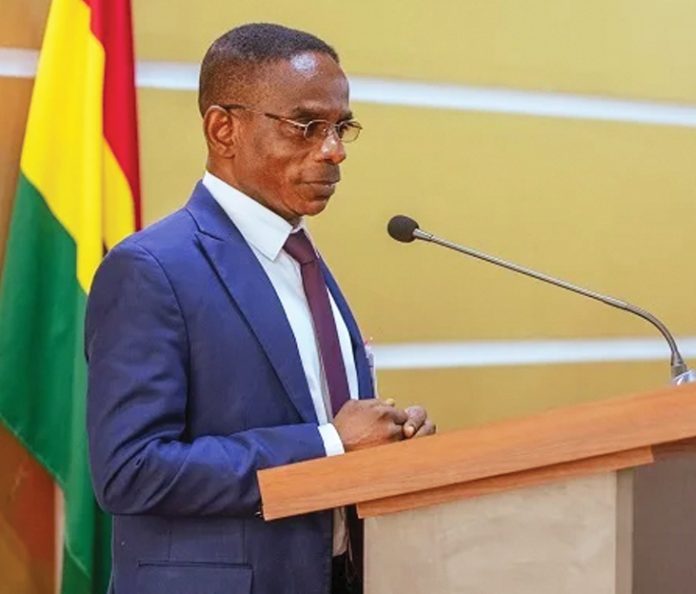
A just transition is a talent transition

0

Africa stands at a pivotal juncture, urged to decarbonise for the planet’s sake even as it struggles to power its own growth. With 600 million people still lacking access to electricity, and coal providing cheap, reliable energy, the continent faces a significant paradox: the green transition is critical to global climate goals, but for Africa, it could come at a substantial cost.

The International Energy Agency warns that under net-zero pathways, about 13 million fossil-fuel jobs could disappear globally even as 30 million new clean-energy roles emerge by 2030. The catch is that most of those new jobs will be created in countries that already manufacture and install renewable-energy technologies. In much of Africa, where local production and technical training remain limited, job losses could easily outpace early gains.

Nowhere is this tension clearer than in South Africa, where around 100,000 coal miners and power-plant workers could face redundancy as coal is phased out. Many are semi-skilled, with years of technical and operational experience that aren’t automatically transferable to renewable-energy projects. For these workers, reskilling, not rhetoric, will determine whether the green transition is truly just.

A just transition must do both, protect those who stand to lose and prepare those who will build what comes next. This means designing policies that cushion affected workers through retraining, while simultaneously developing a pipeline of project talent to lead the rollout of renewable energy. A coal plant supervisor already manages complex schedules, safety protocols, and multidisciplinary teams, core project-management competencies that, with the right certification, translate directly to overseeing renewable projects.

Across Africa, deliberate reskilling is already underway. In Nigeria, engineers from the oil and gas sector have been redeployed to solar and energy-efficiency projects through national transition initiatives. In Kenya, the expansion of geothermal energy has created new opportunities for technicians formerly employed in thermal power. In Rwanda and Morocco, energy workforce programmes have successfully redeployed engineers and technicians from mining and fossil sectors into hydropower and wind operations. In Ghana, the Bui Power Authority has retrained hydropower and thermal engineers to manage the country’s growing solar and hybrid projects, demonstrating how energy expertise can evolve in response to market demands.

Much of the global climate conversation to date has focused on policy and finance. But the real make-or-break factor lies elsewhere, in human capability. Without a deliberate plan for reskilling, the continent’s green shift could end up creating as many redundancies as green jobs. This perspective is rarely viewed through the lens of talent: How will this transition impact those employed in the fossil-fuel economy, and how will new talent be developed to build and manage the industries of the future?

According to the PMI Talent Gap Report (2025–2035), Sub-Saharan Africa will need between 1.6 million and 2.1 million additional project professionals by 2035, an increase of up to 75%. Yet education and training systems across the continent aren’t keeping up. The result is a skills deficit that threatens to stall progress in the very sectors most central to the energy transition: construction, energy, infrastructure, and technology.

Data from the Project Management Institute suggests that about 10% of global project investment is lost annually due to poor performance. In Africa’s infrastructure pipeline, that translates into billions in wasted investment. This is where project management becomes the unsung cornerstone of Africa’s green economy. A just transition demands talent transformation, the deliberate effort to retrain and redeploy workers from the old energy economy into the new one.

Africa’s green transition will not succeed solely on goodwill. Governments, development partners, and businesses must act now to integrate project management training into climate finance and just transition plans. Building capability must be accompanied by building capacity. If climate investments continue to outpace human investments, the gap between ambition and delivery will only widen.

PMI is already collaborating with governments, academia, and industry across Africa to strengthen project delivery capability. These partnerships are embedding project management frameworks into public infrastructure initiatives, while universities are integrating PMI-aligned curricula to prepare a new generation of professionals for project-based roles in the green economy. By prioritising skills development alongside climate ambition, Africa can ensure that its energy transition is not only visionary but viable.

(Ends)

About Project Management Institute (PMI): PMI is the leading authority in project management, dedicated to guiding the way to project success. Since 1969, PMI has shone a light on the power of project management and the people behind the projects. With a global community, gold-standard professional certifications, and career-long learning opportunities, PMI empowers current and aspiring project professionals, as well as organisations, with knowledge and resources to lead effectively and create an impact in the communities they serve. Join PMI in elevating our world – one project at a time.

Source: George Asamani, MD, Project Management Institute, Sub-Saharan Africa
NDC Officials Neck- Deep In Galamsey … Says Former Defence Minister

0
Hon Dominic Nitiwul

Former Minister for Defence and Member of Parliament for Bimbilla, Dominic Aduna Bingab Nitiwul, has accused the ruling National Democratic Congress (NDC) of being “neck-deep” in illegal mining, commonly known as galamsey, saying the government’s silence and inaction exposes its complicity in the destruction of Ghana’s natural resources.

The opposition lawmaker made these remarks on the floor of Parliament during a heated debate on a statement presented by Akwasi Konadu, MP for Manhyia North, which drew attention to the worsening impact of illegal mining on rivers, forests and farmlands.

In his submission, Mr. Nitiwul said the current administration has failed to demonstrate political will in dealing with the menace despite holding overwhelming power.

“The people of Ghana have given you power, not just power, but overwhelming power. Why are you not arresting the people doing galamsey?

“It is because you are complicit. You are not arresting them because you are the ones doing it,” he charged.

The former Defence Minister alleged that one of NDC’s Member of Parliament had previously been arrested for obstructing security operations against illegal miners, yet the party has continued to blame the opposition for the nation’s environmental crisis.

“Your own MP led thugs to attack security officers because of galamsey. And you have the audacity to accuse us? You are not arresting them because the people doing it are your own,” he added.

Setting the Record Straight

Mr. Dominic Nitiwul’s comments came in response to the member for Bolgatanga Central, Isaac Adongo, who had accused the former New Patriotic Party (NPP) administration under ex-President Nana Addo Dankwa Akufo-Addo of failing to end illegal mining, despite publicly declaring that he would put his presidency on the line.

Isaac Adongo had claimed that President Akufo-Addo’s statement was made in 2024, but Mr. Nitiwul swiftly corrected him, insisting the declaration was made in 2017, during the early stages of the NPP government’s anti-galamsey campaign.

“Let us set the record straight. President Akufo-Addo came to this House in 2017, not 2024, as Adongo claimed,” Nitiwul clarified.

He further accused the previous NDC administration, led by John DramaniMahama, of allowing galamsey activities to spiral out of control to the extent that AngloGold Ashanti (AGA) was forced to suspend operations in 2014.

“In 2014, AngloGold Ashanti closed down because of galamsey under the NDC. Their communications director died in the field when his pickup ran over him while illegal miners chased him. They lost jobs because of galamsey, and that happened under President Mahama,” he recalled.

Calls for a State of Emergency

Mr.Dominic Nitiwul challenged the NDC government to take bold action by declaring a state of emergency in illegal mining areas and banning all forms of surface mining for at least one year, measures he said were implemented during his tenure as Defence Minister under the NPP administration.

“If you want to fight galamsey, do what we did, we banned all small-scale mining for eight months and later extended it to twelve months. You can do the same if you are serious,” he told the Majority side.

He lamented the devastation caused by illegal mining, describing the situation in galamsey-prone communities as “heartbreaking.”

“If you ever visit a galamsey community, it is not a good sight. You can’t even get clean water to drink. The youth are being destroyed, and cocoa farms are being wiped out,” he said.

Citing a specific case, Mr.Nitiwul disclosed that the cocoa farm of former First Deputy Speaker of Parliament, Joe OseiOwusu, had been completely taken over by illegal miners.

“He cannot even visit his own farm because galamsey operators have seized it. If that can happen to a former Speaker, what about the ordinary farmer in the village?” he asked.

Ban All Surface Mining

In his concluding remarks, Dominic Nitiwul reiterated his call for the government to ban all surface mining for one year, arguing that Ghana’s environment and future generations are at stake.

“Our land is being destroyed, our rivers are poisoned, and livelihoods are being lost. The solution is simple, ban all surface mining. We did it before; you can do it again,” he urged.

The Bimbilla MP emphasised that unless the government takes drastic and immediate steps, the galamsey menace will continue to devastate Ghana’s environment, destroy cocoa farms and deprive communities of potable water.

What AdongoSaid

In a counter-response, Isaac Adongo dismissed Nitiwul’s accusations, insisting that the NPP has no moral right to lecture the current administration on galamsey, given its record in government.

“We are in this country, where people said they would put their presidency on the line, but ended up leaving us with galamsey,” he said.

Mr.Adongo alleged that some officials in the former government benefited financially from illegal mining, using it as a political fundraising tool.

The Bolgatanga Central legislator maintained that the current government under the NDC is taking concrete steps to end the menace, including revoking mining permits in forest reserves and tightening enforcement of environmental laws.

According to him, the ruling government was not interested in pontification but rather implementing solutions and that the laws that enabled people to mine in forest areas are being revoked.

He further accused the opposition of hypocrisy, saying their sudden activism against galamsey is politically motivated.

“Their newfound love for the fight against galamsey is welcome, but Ghanaians remember their path, their actions, and the destruction they caused. They cannot suddenly become holier than thou,” he retorted.

Background

Illegal small-scale mining, or galamsey, continues to pose one of the gravest threats to Ghana’s environment and economy. Despite years of national campaigns, military interventions, and legal reforms, the practice persists, leaving rivers polluted, forests destroyed, and thousands of farmlands abandoned.

The renewed parliamentary exchanges between the ruling NDC and the opposition NPP signal a deepening politicisation of the galamsey fight, even as citizens in mining communities struggle daily with contaminated water and eroded livelihoods.


For more news, join The Chronicle Newspaper channel on WhatsApp: https://whatsapp.com/channel/0029VbBSs55E50UqNPvSOm2z


NPP Prez Primary: E/R Chair Declares Support For Bryan

0
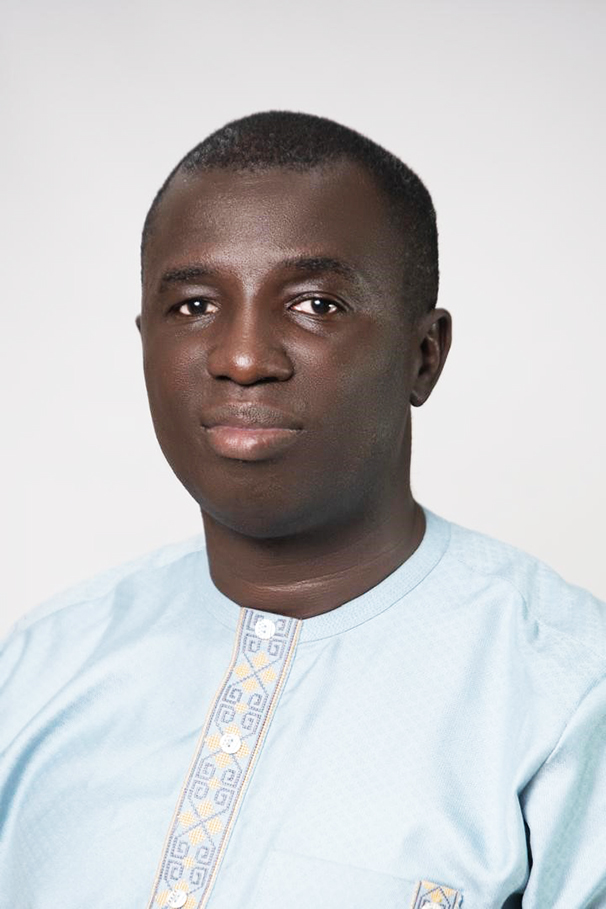
Dr. Bryan Acheampong

The Eastern Regional Chairman of the New Patriotic Party (NPP), Jeffery Konadu, has declared his support for Dr. Bryan Acheampong, former Minister for Food and Agriculture, as the party prepares for the 2026 presidential primary.

Speaking during a tour of the Volta Region, Chairman Konadu said his endorsement is based on personal experience and a deep appreciation for Dr. Acheampong’s leadership and contributions to the party.

He described the Abetifi MP as a dependable and results-oriented figure who has consistently delivered for both the region and the NPP.

“I can vouch for Bryan’s leadership because I’ve seen the work he’s done—not just for the Eastern Region, but for the party as a whole,” Konadu stated.

He likened his support to that of a parent cheering on a child in competition, emphasizing that loyalty and firsthand knowledge of a candidate’s capabilities should guide political choices.

“If you have a son who is going to play a football match, what will you do? Are you not going to support and watch him? Every good parent will do that and that is exactly what I’m doing for Dr. Bryan Acheampong,” he added.

Chairman Konadu urged delegates across the country to consider Dr. Acheampong’s track record and rally behind his bid, describing him as the party’s “surest bet” for victory in the 2028 general elections.

The 2026 NPP presidential primary is shaping up to be highly competitive, with contenders, including former Vice President Dr. Mahamudu Bawumia, former Assin Central MP Kennedy Ohene Agyapong, Education Minister Dr. Yaw Osei Adutwum and former NPP General Secretary Ing. Kwabena Agyapong.

Dr. Acheampong’s campaign has gained momentum, with internal polls indicating strong delegate support across multiple regions. His message centers on party unity, internal welfare and pragmatic leadership.

As MP for Abetifi, Dr. Acheampong has led efforts to modernise Ghana’s agricultural sector and stimulate economic growth.

His supporters cite his blend of public service, private sector experience, and grassroots engagement as key assets for national leadership.

Political observers say endorsements like Chairman Konadu’s could significantly influence the direction and energy of the primaries.


For more news, join The Chronicle Newspaper channel on WhatsApp: https://whatsapp.com/channel/0029VbBSs55E50UqNPvSOm2z

Illegal Miners Attack Lake Bosomtwe

0
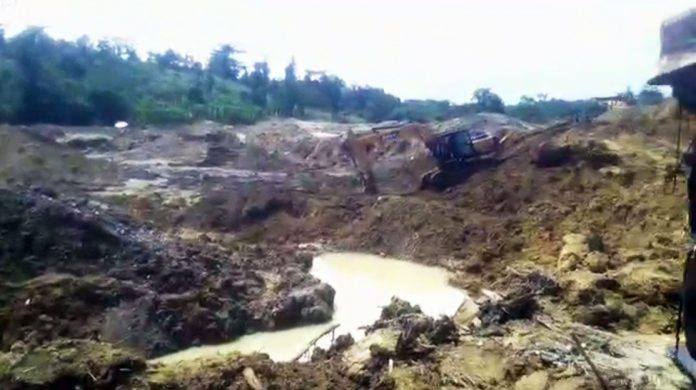
The mined area at Beposo

Ghana’s only natural lake, Lake Bosomtwe, which serves as a recreational and a major tourist destination, is under threat of extinction and depletion from illegal mining activities and pollution.

Lake Bosomtwe, located 30 km South East of Kumasi, Ashante region, is a UNESCO biosphere reserve, to conserve biodiversity and promote sustainable use of resources.

The Taskforce at the site

However, reports reaching The Chronicle from the Bosomtwe enclave indicate that illegal mining activities have hit Beposo, Amakom and Konkoma communities, where miners have degraded the land and left the area without reclaiming the mined areas, thus setting death traps for local folks.

The Chronicle has learnt the Bosomtwe District Assembly Assembly Taskforce has seized a mining equipment (being kept at Beposo Primary school) belonging to a miner, mentioned simply as Rasta, until mined areas are reclaimed.

The District Chief Executive (DCE) for Bosomtwe, Ing. Abdulla Hamidu, has confirmed to the paper that the Regional Security Taskforce embarked on an operation in the area a fortnight ago to ascertain the extent of damage done to the environment, including school premises for the necessary action to be taken.

Illegal mining activities have added to existing challenges of environmental degradation, deforestation and erosion from human activities.

An excavator in operation at a mining site

The lake’s water levels have been steadily declining due to a combination of climate change, reduced rainfall and human activities such as deforestation and unsustainable farming practices, resulting in declining of fish stock and decrease in fish populations, affecting livelihoods of resident.

The lake’s shorelines are receding, causing difficulties in accessing clean water by the people and putting its ecosystem at risk is affected.

This development comes to stall efforts and packages including supporting local fisher folks and planting trees along the banks as well as stocking it with catfish and tilapia to protect the Lake from extinction.

Concerned residents in the area have called for pragmatic measures to safeguard lives and livelihoods in the area.

They complained that the extraction of gold with cyanide and Mercury in the Agyaman Valley which stretches into the Bosome-Freho district run into Anum River, which joins Banku River at Tebeso, before joining the Lake which has no outlet.

Communities like Yaase, Adwafo and Gyapaadu are likely to be victims of contaminated water.

There are complaints that the colour of the water in the Lake is changed to green and that fish stock has reduced lately from contamination of chemicals that wash into the Lake from mining activities uphill.

The residents are pointing accusing fingers at politicians with the connivance of some chiefs of perpetrating the nuisance and called on the Ministry of Environment, Science and Technology and Innovation to run a test to ascertain the quality of the water in the Lake as soon as practicable to protect the Lake as a national asset.

They suggested that measures must be put in place to ensure that garbage are not thrown into the water bodies, felling of trees along the buffer zone and building in water ways are stopped.

At Abono, the gateway of the cluster of 22 communities dotted around the Lake, the concerned residents appealed to the government to provide a reliable lake transport and improved road network to facilitate movement of people and farm produce to urban centres to market their goods to improve their livelihoods.


For more news, join The Chronicle Newspaper channel on WhatsApp: https://whatsapp.com/channel/0029VbBSs55E50UqNPvSOm2z

Togo crisis: Ghana adopts security plan to protect citizens

0
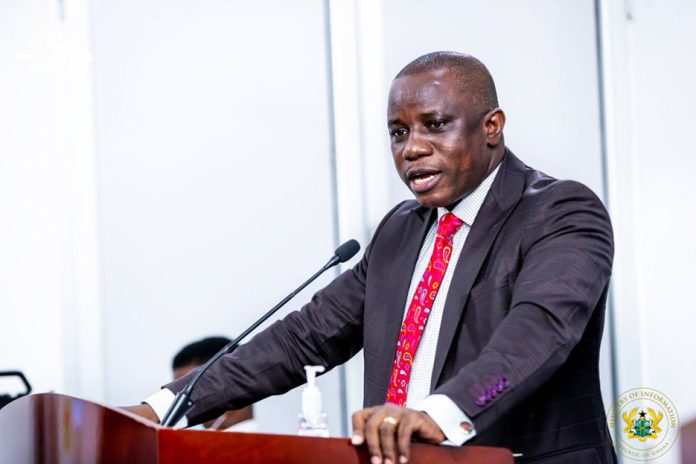
Ernest Brogya Genfi, Deputy Minister for Defence

Deputy Minister for Defence, Ernest Brogya Genfi, has assured Parliament that the government has put in place a multi-dimensional security plan to protect the country from any potential threats arising from the political instability in neighbouring Togo.

Appearing before the House yesterday, Mr.Brogya Genfi said the recent disturbances in Kutobo, Togo, posed potential “security, social and economic risks” to Ghana, including possible refugee inflows, cross-border crime and destabilising effects on local communities.

“The Ministry of Defence, working closely with other security and intelligence agencies has, therefore, adopted a comprehensive contingency framework to pre-empt and respond to any adverse effects of this risk,” he stated.

Explaining further, the Deputy Minister said the Ghana Armed Forces, in collaboration with other security and intelligence bodies, had intensified joint patrols along the Ghana-Togo border, particularly around Aflao, Denu and Petoi to deter infiltration and protect the country’s territorial integrity.

He told the House that the plan also includes humanitarian preparedness and civil-military cooperation, with logistics already being pre-positioned at designated reception centres to manage any refugee inflows.

“The Ghana Armed Forces Coordination Teams will work with NADMO and the United Nations High Commissioner for Refugees to ensure that displaced persons are registered, screened, and cared for in accordance with humanitarian standards,” Mr. Brogya Genfi said.

He added that the process would not only provide care and assistance but also “help identify, prevent, and arrest potential troublemakers.”

Mr.Brogya Genfi further disclosed that the Ministry had issued “firm but measured instructions” to troops to exercise maximum restraint and only engage when faced with a “direct and imminent threat.”

He also highlighted the Armed Forces’ strategic communication activities aimed at sensitising border communities on the purpose and scope of the deployments.

“Our communication is being carried out in local languages to deepen trust and deter misinformation,” he said.

Following the Deputy Minister’s submission, Member of Parliament for Bosome Freho, Nana Asafo Adjei Ayeh, commended the Minister for what he called an “all-encompassing response,” but pressed for more details.

“I am only seeking some specifics. What changes have been made to the Ghana Armed Forces’ operational deployment along the Eastern Corridor, including the use of rapid response task forces, surveillance drones and forward operational bases?” he said.

Before the Deputy Minister could respond, Majority Leader MahamaAyariga intervened, cautioning against seeking or disclosing operational military details in open Parliament.

“Detailed operational issues — how many drones are being used, how many soldiers are deployed, and where — cannot and should not be discussed in this chamber,” he said.

He argued that such discussions could compromise national security and violate Order 86 of Parliament’s Standing Orders, which warns against statements that may undermine foreign relations.

“When we describe the situation in Togo as political instability, we are discourteously referring to a foreign country. People there are demonstrating, and their government is managing the situation. We should not interfere,” he said.

The Minority Leader, Alexander Afenyo-Markin, disagreed sharply with Mr.Ayariga’s interpretation, insisting that the supplementary question fell within parliamentary rules.

“With respect, Mr. Speaker, the Majority Leader has mixed the issues. The Honourable Member’s supplementary question does not seek to refer discourteously to any country.

“It only seeks clarification from the Minister based on what he himself has told the House,” he said.

Mr.Afenyo-Markin argued that since the Speaker had already admitted the question as urgent, under Order 85, it was procedurally proper for the Member to seek clarification.

“If the Minister believed certain matters were sensitive, he should not have introduced them in his main answer,” he contended.

He maintained that the Minority was only exercising its constitutional duty to ensure accountability.

“The question has been admitted, the Minister has answered, and the Member is following up within the rules,” he said.

After listening to the exchanges, First Deputy Speaker Bernard Ahiafor, who presided, ruled that delving into operational specifics would endanger security protocols.

“It is not for any reason that members of our Security and Intelligence Committee take an oath to operate within the ambit of that committee. Stretching this matter into detailed operational activities would take security issues too far into the public domain,” he ruled.


For more news, join The Chronicle Newspaper channel on WhatsApp: https://whatsapp.com/channel/0029VbBSs55E50UqNPvSOm2z


GH¢3.14bn NIA Claim Flagged for Validation

0
Auditor-General, Johnson Akuamoah Asiedu

A GH¢3,138,634,860.00 claim submitted for the registration of Ghanaians aged 15 years and above by the National Identification Authority (NIA) and Identity Management Systems II has been listed as a major item pending validation in the Auditor-General’s latest audit of government commitments and claims.

The Auditor-General’s publication prepared with inputs from PricewaterhouseCoopers (PwC) and Ernst & Young (EY),and covering commitments as at 31st December, 2024 states that the NIA claim was priced in US dollars (US$1,222,171,258.00) and converted to cedis at a rate of GH¢15.55 (February 2025).

The file places the conversion and the resulting cedi claim squarely in the Ministry of the Interior section of outstanding items awaiting verification.

The multi-billion cedi entry is among several large claims and commitments across ministries that the Auditor-General has flagged for validation before any payment is authorised.

The report makes it clear that the exercise carried out from May to October 2025 engaged MDAs, contractors and suppliers to verify and validate the claims.

The Auditor-General, Johnson Akuamoah Asiedu, notes in the preface that the window for submitting justifications and supporting documentation will run until 7th November 2025, after which any arrears, commitments rejected or pending validation “shall be treated as permanently expunged from the list of Government arrears and commitment stock.”

Other sizeable claims and commitments featured in the audit include, but are not limited to:

  • Rayzone Group Ltd – Service provider claim under the Ministry of Communication, Digital Technology and Innovations: GH¢315,555,516.30 (claims pending validation) and a commitments entry for Rayzone of GH¢235,605,300.00 listed in the same ministry’s commitments.
  • MEI Energy Solutions (Meienrgy Company Ltd) – Independent Power Producer claim: GH¢184,473,409.00 (claims pending validation).
  • RONOR MOTORS – Release of funds for payment of forty (40) LED vans under the Office of Government Machinery retooling programme: GH¢78,740,512.10 (commitments pending validation).
  • MLNR – Accra-Adentan (State Housing site) — Claim by Agri Cattle – Lakeside Estate Ltd: GH¢96,073,510.00 (claims pending validation).
  • Hospital Infrastructure Group (HIG) – Lead consultant invoice for project management and coordination of government priority health infrastructure projects under Agenda 111: GH¢92,822,512.00 (listed under Agenda 111 claims pending validation).
  • MEI Energy, Cenpower and Tullow- Other IPP entries include GH¢36,406,112.00(CenpowerTwinCity Energy) and GH¢30,500,000.00 (Tullow) respectively, also listed as claims pending validation.
  • Zoomlion/Local government-related items – the Ministry of Local Government, Rural Development and Decentralisation entries show large management and service agreements and contracts listed under commitments and pending validation, such as GH¢69,760,336.00 for the Redevelopment and Modernisation of the Kumasi Central Market (Phase 2) and sizeable tipping-fee and sanitation management arrangements with amounts recorded under commitments.

The Auditor-General’s report emphasises that the details presented are claims, bank transfer advices (BTAs) and commitments that are either rejected or pending justification. It also invites contractors, suppliers and implementing agencies to submit all relevant documentation through their MDAs to the Ghana Audit Service for final validation.

The appearance of the NIA claim alongside numerous other high-value entries underscores the breadth of the validation exercise, which spans energy, communication, local government, lands and health sectors. The Auditor-General’s notice makes the stakes clear: failure to justify claims within the prescribed window could see them permanently removed from the arrears register.

Parliament’s Public Accounts Committee (PAC) and other oversight bodies are expected to follow up on the publication as ministries and contractors respond to the validation demand. For now, the NIA claim and a raft of multi-million cedi items remain in limbo as the audit process continues.


For more news, join The Chronicle Newspaper channel on WhatsApp: https://whatsapp.com/channel/0029VbBSs55E50UqNPvSOm2z

Editorial: REGSEC’s Indecision At Atuabo– A Risky Gamble With Peace

0
Editorial

The Chronicle may not claim to be experts in security matters, but we dare say that the recent decision by the Western Regional Security Council (REGSEC) to approve a Kundum Festival celebration by a claimant to the Atuabo stool, was a risky gamble that could have endangered the peace of the area.

Reports indicate that Awulae Amihere Kpanyile has long been the gazetted chief of Atuabo. However, his nephew, Egya Ackah, was recently enstooled as paramount chief under the stool name Awulae Blay. Despite not being gazetted, the new claimant decided to celebrate the Kundum Festival, a move that sparked strong protests from the local chiefs.

In response, REGSEC quickly intervened, holding separate meetings with both Awulae Amihere Kpanyile and the claimant to the stool. The outcome of these meetings was that the new chief could celebrate the festival, but without riding in a palanquin.

“REGSEC is not interested in who is the rightful chief and who is not. Our priority is to ensure peace in the area,” REGSEC Chairman Joseph Nelson told The Chronicle in a telephone interview.

While REGSEC’s intervention may have been well-intentioned, its members should have realised that dealing with an ungazetted chief could set a dangerous precedent. In this regard, we agree entirely with the former Western Regional Minister, Kwabena Okyere Darko, who stated that permission should never have been granted to the new claimant to celebrate the Kundum Festival.

As Mr. Kwabena Okyere Darko rightly noted, “There are clear rules governing chieftaincy and traditional institutions. I will be shocked if REGSEC is aware that someone who is not a gazetted paramount chief is being allowed to celebrate Kundum in that capacity.”

Indeed, the Kundum celebration, which REGSEC approved, had the potential to throw the traditional area into confusion and conflict. The Chronicle recalls several occasions in the past when REGSEC took swift and decisive action to halt similar celebrations due to the risk of clashes.

For instance, in the long-standing dispute over the jurisdiction of Toromu, a farming community in the Ahanta West Municipality, REGSEC intervened to stop the Kundum celebrations of both Lower and Upper Dixcove because of the potential for violence. For years, REGSEC prudently suspended the festival in those communities to prevent bloodshed.

In contrast, REGSEC’s handling of the Atuabo situation may have temporarily calmed tensions, but it sends the wrong message that anyone can defy lawful traditional authority and still be granted official permission to operate under the guise of peace. By not halting the Kundum celebration outright, REGSEC may have inadvertently legitimised an illegitimate claim.

It must be remembered that chieftaincy disputes in Ghana have often escalated into violence, displacement and even death. Only recently, at Asemkow, in the Ahanta West Municipality, a conflict between Asemkow and Butre left hundreds displaced, one person dead and the chief of Butre injured by a cutlass attack.

The Western Region has in recent years enjoyed relative peace compared to other parts of the country. That peace must be jealously guarded, not jeopardised through indecision or ill-considered compromises.

REGSEC must, therefore, act with consistency and firmness in matters relating to traditional authority. In its quest to preserve peace, it should avoid actions that could embolden illegitimate claimants or undermine lawful authority. Peace built on compromise with confusion is fragile and history has shown that such peace seldom lasts.


For more news, join The Chronicle Newspaper channel on WhatsApp: https://whatsapp.com/channel/0029VbBSs55E50UqNPvSOm2z


When PhDs from the Black Market Invade the Town and the Gown

0
Appiah Kusi Adomako, Esq

“The society that scorns excellence in plumbing because plumbing is a humble activity and tolerates shoddiness in philosophy because it is an exalted activity will have neither good plumbing nor good philosophy. Neither its pipes nor its theories will hold water.”-John W. Gardner-

Across Ghana today, the title “Doctor” is no longer reserved for those who have laboured through years of intellectual inquiry, rigorous research, and peer review. It is increasingly worn as an ornament of status. The Ghana Tertiary Education Commission (GTEC) recently drew national attention to this crisis by publishing a list of unaccredited universities and warning of the proliferation of dubious doctoral degrees.


The Rise of the Instant PhD from the Black Market

The idea that one can “earn” a PhD through a weekend seminar or a short online course is both absurd and dangerous. Yet the demand for such shortcuts is strong. Institutions both foreign and local, have capitalized on this craving for recognition by offering “executive PhDs and DBAs” and “honorary doctorates” at a price. The exchange of money for titles has become a small but thriving industry.

In 2015, I personally received an email from a so-called Commonwealth University inviting me to a two-day seminar that promised an honorary doctorate for a fee of 4,000 dollars. I declined. But many others accepted, and some even placed newspaper adverts celebrating their new titles in the Daily Graphic. What was once a symbol of scholarship has in many cases become a bought distinction.


The Regulator’s Burden

The Commission cannot escape its own share of responsibility. Some of the very institutions it has now blacklisted were previously approved by the then National Accreditation Board (now GTEC), and several Ghanaians pursued doctoral degrees there with official clearance and, in some cases, government bursaries. It is therefore understandable that many faculty members now feel betrayed.

When a regulator approves a programme and later revokes that approval, it raises questions of fairness. Those who pursued such degrees in good faith have suffered what lawyers call detrimental reliance. They trusted a public authority and made life-altering decisions on that basis.

I am sure that every court of equity would estop the GTEC from taking any action to invalidate their qualification. Of course, there is nothing wrong when a regulator after taking a second look at an already approved matter and upon further evidence, it is found out that the approval was made in error, to remedy the situation.

A practical and balanced approach would be to allow affected academics to regularise their qualifications through recognised local universities such as the University of Ghana, KNUST, UCC, or UPSA. They could complete their PhDs by dissertation while remaining at their post. This would preserve institutional integrity while avoiding unnecessary human costs.


The Psychological Toll of a Lost Title

There is also a human side to this issue that deserves empathy. Some individuals who proudly carried the title “Doctor” for years did not obtain it through deceit but through honorary conferments that were once celebrated. To abruptly strip them of the title without any form of transitional support is harsh.

Public identity is deeply psychological. When someone has been publicly addressed as “Dr.” for a decade, a sudden order to desist can feel like a personal humiliation. Regulators and professional bodies should therefore pair enforcement with compassion. The Ghana Psychology Council and GTEC could collaborate to design a short transition and counselling programme to help affected individuals adjust, restore their confidence, and reintegrate into professional life with dignity.


The Cost to Learning and Problem-Solving

The infiltration of fake and substandard PhDs has wider implications for education and national development. A genuine doctoral programme is designed to train the mind to question, analyse, and solve problems. It demands discipline, patience, and originality. When shortcuts replace scholarship, the outcome is mediocrity dressed in academic regalia. If universities hire lecturers whose research credentials are questionable, teaching quality suffers.

Regulatory Responsibility and Public TrustGTEC’s current measures must therefore go beyond naming and shaming. The Commission should establish a standing accreditation portal where the public can verify institutions in real time. It should also strengthen partnerships with foreign regulators to confirm transnational qualifications before they are accepted. Regular audits of dissertations and academic theses, particularly at the doctoral level, should become part of its oversight.

Moreover, GTEC must address a quiet but equally damaging malpractice within Ghana: students paying others to write their theses. This intellectual fraud undermines the purpose of higher education as much as fake degrees from abroad. Some of our local universities have also seen tertiary education as a commodity with no quality assurance system.

Reclaiming the Value of a PhD

A genuine PhD is not simply a piece of paper; it is evidence of a journey through intellectual struggle and discovery. Those who truly earn it know the sleepless nights, the failed experiments, the rewritten chapters, and the joy of finally adding something new to human knowledge. The title “Doctor” should therefore be celebrated, but it must be earned.

Society too bears responsibility. We must stop glorifying titles over competence. It is time to value intellectual humility over ceremonial prestige. If we continue to reward shortcuts, we will raise a generation more obsessed with recognition than with results.

Conclusion

Ghanaians have a strong appetite for learning and higher education. For some, it’s only about the academic titles. If we do not ensure a strong quality control system in our education, the value of education will become negligible, as it becomes available only to those who can afford to pay. We go to school to learn and to learn how to solve problems.

Now, everybody is chasing a PhD qualification simply because they have a master’s degree. This is what has taken people to countries like Cambodia, Nicaragua, Bermuda, Costa Rica, Fiji, Liberia, Andorra, Mexico, Barbados and the like for a PhD. The sad thing is that those in academia who should know the path to a credible PhD programme are now in the black market looking for PhD titles.

The Commission must ensure that our local universities do not become “diploma mill institutions” just for admitting students and printing diplomas, degrees, or PhDs for them at the end of the day.

NB: The writer is an economist, a lawyer, and a public policy expert. He is the Director of the West Africa Regional Centre of CUTS International. He can be contacted via email: apa@cuts.org or www.cuts-accra.org.

Appiah Kusi Adomako, Esq

Editor’s note: Views expressed in this article do not represent that of The Chronicle


For more news, join The Chronicle Newspaper channel on WhatsApp: https://whatsapp.com/channel/0029VbBSs55E50UqNPvSOm2z

Court Remands 7 Over Alleged Fake Online Food Delivery Scam

0
Court

The Circuit Court 11 in Accra has remanded seven young men accused of operating fictitious online food delivery platforms to defraud unsuspecting customers across the country.

Presided over by Her Honour Basilia Adjei-Tawiah, the court ordered that the accused persons remain in police custody pending further investigations.

The accused are Obed Selasi Agborli alias Brooklyn, 21, Elliot Sotama Atsu alias Boboss, 26, Elijah Sotama Etse alias Pop Smoke, 20, Jethro Atsu alias Kacidy, 20, Godsway Dunyo, 22, Wonder Sakpiti, 23 and Matthew Aheto, 20.

They have been charged with multiple counts, including defrauding by false pretences, obtaining electronic payment medium falsely, stealing, conspiracy to steal and money laundering.

Alleged Modus Operandi

According to prosecutors, between January 2024 and October 2025, the accused persons created fake online platforms and social media accounts in the names of popular food brands such as Papaye, Pizzaman Chickenman, KFC and Mawarko.

Victims who attempted to order food through these pages were allegedly instructed to make advance payments via mobile money.

Some victims, prosecutors say, were also sent verification links which captured their banking details, enabling the accused to allegedly gain unauthorized access to their bank accounts and withdraw funds.

Among the victims named in court were Kennedy Owusu Junior, Millicent Acheampong, Daniel Owusu Agyekum, Joy Addae Madz and Hannah Adutwumwaa Ankomah, who collectively lost over GH¢91,000.

Investigators told the court that the accused used proceeds of the alleged cyber fraud scheme to acquire items including an unregistered Mercedes-Benz E450, suspected to have been purchased with illicit gains.

Police stated that following complaints and intelligence gathered a team from the Cybersecurity Unit and personnel from Sogakope stormed a residence in Sogakope on October 1, 2025, arresting Dunyo, Sakpiti, and Aheto.

Further investigations led to the arrest of the remaining suspects at PK’s Luxury Apartments at Haatso in Accra on October 10, 2025.During the operation, police reportedly retrieved 28 assorted mobile phones believed to have been used in the fraudulent activities, which are currently undergoing forensic examination.

Court Proceedings

The accused persons are said to have conspired to defraud multiple complainants by promising food deliveries they knew would not be fulfilled, with the intent of illegally obtaining money from victims.

They all pleaded not guilty to the charges. The case has been adjourned for continuation as investigations progress.

The court has urged the prosecution to expedite its forensic work to ensure timely proceedings.


For more news, join The Chronicle Newspaper channel on WhatsApp: https://whatsapp.com/channel/0029VbBSs55E50UqNPvSOm2z

Abena Osei temporary cedes chair of PAC to ranking member

0
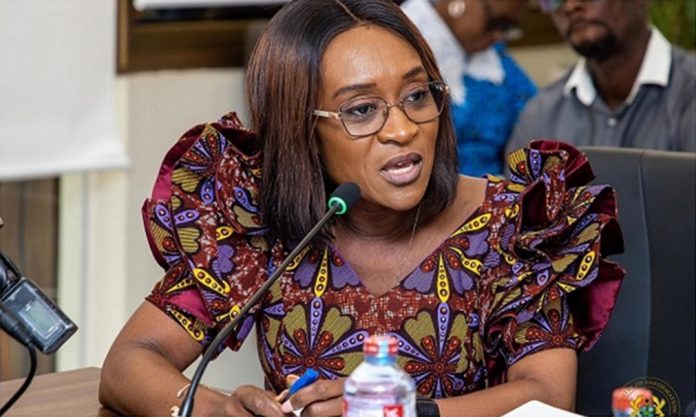
Abena Osei Asare

The chairperson of the Public Accounts Committee (PAC), Abena Osei Asare, appears to have subtly responded to the petition to the Speaker for her removal as the chair of the Committee.

The coded response was that, because the report under consideration was about a government she served in, she would not chair the proceedings.

In her opening remarks to begin the public hearing on Wednesday, November 5, 2025 the Atiwa East Member of Parliament announced that she was ceding the chairmanship to the ranking member, in accordance with the Standing Orders of the House.

The chairperson of PAC is chosen from the minority side of the House, and the Ranking is always from the majority caucus, but the reverse is the case for almost all the rest of the committees.

In her remarks, there was no mention of the petition filed against her by the MP for Gomoa Central, Kwame Asare Obeng, popularly known as A Plus.

However, the giving up of the position, which happens in such situations under various parliaments of the 4th Republic, was affirmed by the Ranking Member, Samuel Atta Mills, who quoted the relevant portion of the Standing Orders, 229 (4).

After the opening prayer and outlining the agenda for the day, the chairperson, AbenaOseiAsare, who served as deputy finance minister under the previous government, yielded her role as the chair to the ranking member, who took over as chair.

It is a way to ensure proper accountability.

She indicated that, “This report relates to 2024 when I was in government. So, usually what we do is that when you are in government, you cede the proceedings of the report to the Ranking Member.

“So, I now hand over to the Ranking Member to take over and I know the Ranking Member will do a good job.”

The Ranking Member, who is the MP for Komenda Edina EguafoAbrem(KEEA) constituency, informed the public of what their Standing Order says.

He said, “Just to let you know, this is in our Standing Orders. And the relevant part is [Order] 229 when it comes to the Public Accounts Committee…”

He continued, “But the relevant part is number 4, where a matter for consideration before the committee relates to the period of administration of the party of the chairperson of the committee, the ranking member of the committee shall be the chairperson for the consideration of the matter. So, that is what she just said.”

PETITION

The Gomoa Central legislator, Kwame AsareObeng, has petitioned the Rt Hon Speaker, Alban Sumana Kingsford Bagbin, to support the removal of the PAC chair, AbenaOseiAsare, for ethical and moral reasons.

In the letter, he argued that the chairperson’s “close association” with the Ministry of Finance, deputising Ken Ofori-Atta “undermines the credibility of her leadership” of PAC. He cited the issues the Office of the Special Prosecutor has raised about the former Finance Minister to make the point above.

Again, the Gomoa Central MP wants AbenaOseiAsare removed as PAC chair because of her alleged “public defence” of the Commissioner-General of the Ghana Revenue Authority, Rev. AmmishaddaiOwusu-Amoah, “when he refused to disclose his age.”

The petition stated that what the PAC Chair did before the PAC of the 8th Parliament, when, as deputy finance minister, she led the GRA to meet the committee, “raises serious doubts about her commitment to transparency and accountability.

“Such a situation not only compromises the impartiality of the Public Accounts Committee but also diminishes public trust in Parliament’s oversight role,” he added.

The petition continued, “It is inappropriate and indeed inconsistent with ethical standards of parliamentary oversight, for someone so deeply tied to the very administration and financial irregularities under review to preside over hearings demanding accountability from others.

He stated that such a posture “erodes” public confidence and brings the image of Parliament into disrepute.

“In view of the foregoing, I respectfully urge your esteemed office to take immediate steps to support the removal of Hon. AbenaOseiAsare as Chairperson of the Public Accounts Committee to safeguard the integrity, impartiality, and moral authority of both the Committee and Parliament as an institution,” the petition ended.

APPOINTMENT

When forming committees of Parliament, both the majority and minority present members according to the ratio.

It is for the various caucuses to decide who among their members should be in leadership at the various committees.

They are then appointed by the Committee of Selection, which is chaired by the Rt Hon Speaker, and then approved by the entire House.


For more news, join The Chronicle Newspaper channel on WhatsApp: https://whatsapp.com/channel/0029VbBSs55E50UqNPvSOm2z

The Ghanaian Chronicle