Home Blog Page 2817

BoG train journalists on Monetary Policy and Financial Reporting

0
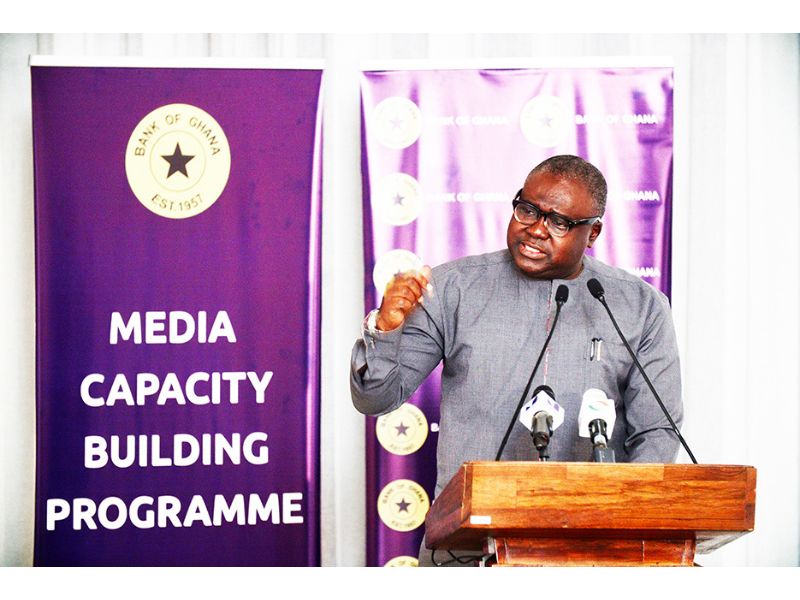
Mr Philip Abradu Otoo Dir of Research BoG
Dignitaries and participants of the Workshop in a picture

The Bank of Ghana (BoG), in collaboration with the Private News Publishers Association of Ghana (PRINPAG), Journalists for Business Advocacy (JBA) and Institute of Financial and Economic Journalists (IFEJ) has provided a 2-day workshop for journalists in the southern zone of Ghana on Monetary Policy and Financial Reporting.

The training took place from 10th to 11th June, 2022 in Peduase, in the Eastern Region, under the theme: “Sustaining The Recovery: The Role of Journalist In Building Confidence”, with over twenty journalists in attendance.

The workshop focused on the following areas; Monetary Policy practices and understanding Inflation Dynamics in Ghana, Understanding Balance of Payments, introduction to summary of Economic and Financial Data, Regulating FinTechs and Payment Platforms and education on eCedis and Foreign Exchange Market, Currency Volatilities, Causes and Effects.

Addressing participants at the workshop, the Director of Research, BoG, Dr. Philip Abradu Otoo, on behalf of the Governor, Dr. Earnest Addison, disclosed that the training workshop was part of the Bank’s strategic measures aimed at building the capacity of business and financial journalists and to improve understanding and communication of monetary policy issues.

According to Mr. Abradu Otoo, the chosen theme was appropriate and timely, “considering the current heightened global uncertainties arising from the complex mix of softening global growth conditions, accelerating inflation, persisting and broadening supply chain bottlenecks, as well as softening confidence, all of which have been amplified by the geopolitical tensions between Russia and Ukraine.”

He continued that at the start of 2022, the global recovery process seemed to gain some traction from the Covid-19 pandemic effects, supported by improved vaccinations and opened economies, despite persisting supply chain constraints.

These gains, the BoG Director of Research stated, have been short-lived on account of heightened risks emanating from lingering supply chain bottlenecks, China’s zero-Covid policy and the Russia-Ukraine war.

“Concurrently, the global economy has witnessed a surge in inflation, sparked by rising food and energy prices, persistent and broadened supply chain bottlenecks and growing demand pressures as economies reopened”, he added.

The surge in inflation across advanced economies and emerging markets and developing countries, he bemoaned, has triggered swift and coordinated rollback of the Covid-related

accommodative policies that provided liquidity injections to the economy.

“The rising interest rates, especially in advanced economies and strengthening of the US Dollar have led to tighter global financing conditions, leading to capital flow reversals and currency pressures in emerging and frontier economies with less buffers, including Ghana”, he stated.

Mr. Philip Abradu-Otto continued that, the data from the Ghana Statistical Service showed that the economy has rebounded strongly from the impact of the Covid-19 pandemic, stemming largely from all the policy measures that were put in place to forestall a recession.

Moreover, he added that, the banking sector remains resilient, despite the reversal of the Covid-19 regulation relief measures in March 2022, emphasising that it is largely attributable to the comprehensive financial sector reforms that took place before the Covid-19 pandemic struck in 2020, the sector continues to remain liquid, profitable and well-capitalised.

According to him, the press, which seeks to inform, persuade and influence the society must be able to impact the direction of economic thinking and to influence society by harking back to the IPI cardinal principle of journalism.

“In so doing, the press will have to use all available data at their disposal to drive analytical discourse and exude confidence. Journalists must go beyond the data provided them and do more interrogation of the data to understand better, the data generating facts.”

Mr. Abradu went on to say that it is essential to distinguish between accurate reportage that comes from publicly available data and accurate reportage from non-publicly available information, adding that the media’s role in influencing the economic narrative is even more crucial during periods of heightened uncertainty.

He contended that,” This hinge on our believe that the Bank in conjunction with the media can build a critical mass of financial and business journalists capable of accurate reporting on Ghana’s emerging vibrant financial markets and in turn help sustain the economic recovery in this period of heightened uncertainties”,

Monetary Policy Practices

Taking his turn, Mr. Providence Mireku, member of the Research Department, BoG, in his presentation disclosed that the Monetary Policy regulate the value, supply and cost of money in an economy for the attainment of macroeconomic objectives.

These objectives, according to him, are to “achieve price stability by keeping inflation under control, reduce output and employment fluctuations and also exchange rate stability, thus minimise sharp volatilities in foreign exchange flows.”

Mr. Meriku added that the Central Banks traditionally tend to focus on the price stability objective because the high and volatile inflation creates uncertainty, undermines the role of money as a store of value and discourage investment and output growth.

Economic and Financial Data

Dr. Francis Loloh, also a member of the Research Department, BoG, in a presentation on this, stated that the monetary policy committee (MPC) considers three key factors, which are the expected inflation gap, the expected output gap, and the previous monetary policy rate (MPR) level in setting the monetary policy rate.

He educated participants that the 𝑒𝑥𝑝𝑒𝑐𝑡𝑒𝑑 𝑖𝑛𝑓𝑙𝑎𝑡𝑖𝑜𝑛 𝑔𝑎𝑝 is the expected deviation of inflation from the medium-term target (expected target), 𝑒𝑥𝑝𝑒𝑐𝑡𝑒𝑑 𝑜𝑢𝑡𝑝𝑢𝑡 𝑔𝑎𝑝 is the expected deviation of output. GDP growth from its potential (long term) growth and 𝑝𝑟𝑒𝑣𝑖𝑜𝑢𝑠 𝑀𝑃𝑅 𝑙𝑒𝑣𝑒𝑙 𝑑𝑒𝑐𝑖𝑠𝑖𝑜𝑛 is the existing monetary policy rate at the time of the current policy meeting.

Digital Cedi (eCedi)

According to Mr. Kwame Oppong, Director of FinTech and Innovation at BoG, in recent years the idea of issuing digital currencies by central banks has been topical around the globe.

“BoG is one of the first few African central banks which declared its intention to pilot a Central Bank Digital Currency (CBDC) within the framework of its financial sector digitisation program and the overall digitisation agenda of the Government of Ghana.”

He stated that, from the point of the CBDC taxonomy, the digital Cedi (or the eCedi) is a retail token based CBDC and that the concept is like cash payment transactions, where payment is done by transferring banknotes and/ or coins from person A to person B.

Also, the eCedi will be under the full control of BoG, which is the only entity to create and destroy digital cash.

Editors Schooled On Biotechnology, GMOs

0
Dr. Daniel Osei Ofosu delivering a presentation at the workshop

Editors and Senior journalists in the Ashanti region have been schooled on Biotechnology and Genetically Modified Organisms (GMOs) at a forum organised by the Open Forum on Agriculture Biotechnology (OFAB)Ghana, in collaboration with the Council for Scientific and Industrial Research (CSIR).

The one-day workshop was meant to equip the media practitioners with the knowledge and understanding of biotechnology in farming and agriculture, to enable them clarify GM technology activities in Ghana and the status of work done on GM product (PBR Cowpea) within CSIR in Ghana, to help educate the general public to adopt the technology and ensure sustainable national food security and improved livelihoods of farmers.

Participants were thus expected to contribute to demystifying the misconception and mystery surrounding the adoption of the intervention.

Biotechnology involves the exploitation of the biological processes for industrial and other purposes, particularly the genetic manipulation of micro-organisms for the production of antibiotics and hormones, among others.

Dr. Daniel Osei Fosu, National Coordinator of the Program for Biosafety Systems, speaking on Basics and Development of GM Technology and Biosafety regulations in Ghana, stressed the need to adopt relevant techniques and best practices to enhance agricultural produce.

According to him, Ghana experiences food security in only plantain, cassava and yam and that there are no GM in Ghana, adding that currently those in existence are under confinement or trial, which approach has been granted by the National Biosafety Authority (NBA).

He said even though GM Technology is not a panacea for all problems,food and environmental safety in Ghana can be assured by adopting the intervention based on proper regulation because local scientists are capable of delivering positive results.

The Program for Biosafety Systems Country Coordinator said regularisation is needed to sieve  and modify agricultural products.

Dr. Jerry Nboyine, a Researcher with the Council for Scientific and Industrial Research of the Savanna Agricultural Research Institute(CSIR-SARI) at Nyankpala, has encouraged Ghanaians to embrace the genetically modified organism (GMOs).

According to him, Organic farming alone cannot feed us as Ghanaians emphasizing that without biotechnology especially in a growing global population, it would be difficult for countries including Ghana to feed itself.

He explained that food security meant producing enough quality food to meet market demand.

Other facilitators at the workshop were Prof. Walter S. Alhassan and Dr. Richard Ampadu- Ameyaw, National Co-ordinator for Open Forum on Agricultural Biotechnology (OFAB).

Fire Officer Passes On; Following June 5 accident

0
Late Ebenezer Boakye

Twenty-five-year-old Ebenezer Boakye, one of six Ghana National Fire Service personnel, who were admitted in critical conditions, following an accident at Obuasi on June 5, 2022 involving a Fire Tender on which they were traveling to put off a fire outbreak, has been reported dead at the Komfo Anokye Teaching Hospital in Kumasi.

The accident victims from the Obuasi branch of the Ghana National Fire Service (GNFS), who were in critical condition had initially been admitted at the AGA Health Foundation and Obuasi Government hospitals respectively, following injuries they sustained when the Fire Tender, with registration number FS 548,carrying them to quench fire at Bogobiri in Obuasi, got involved in an accident.

The accident was occasioned by a cut on the main road, by the Obuasi Municipal Assembly, to correct a faulty bridge at a portion of the Bogobiri/Kunka section of the road.

The driver was taken unawares on reaching the spot and in an attempt to avoid imminent accident swerved resulting in the vehicle somersaulting and crashing.

The Ashanti Regional Fire Commander, ACFO Alfred Harry Giwah, who visited the scene, has condemned the absence of warning signs at the site.

The Obuasi Fire Service Command is yet to announce funeral arrangements of the deceased fire fighter.

From Frederick Danso Abeam, Obuasi

56% of Ghanaian youth say the country is on right trajectory 

0
Guardian graph. Source: African Youth Survey 2022

A survey report published by the Guardian newspaper, has revealed that fifty six per cent of Ghanaian youth believe Ghana is treading on the right trajectory.

According to the report – The African Youth Survey 2022 – which was published on June 13, 2022, 15 countries were part of the survey, which also included Ghana.

The pandemic, climate crisis, political instability and violence have all contributed to making young people “jittery” about their future, since the Covid pandemic began, according to the African Youth Survey published on Monday.

Only 32% of the 4,500 young people interviewed, aged 18-24 years, were optimistic about Africa’s prospects, according to the survey – a drop of 11% since the last survey of its kind published in early 2020.

But marry that with lack of access to water, marry that with a major concern around terrorism, and you’ve now got a demographic group of people that are very jittery about the future of the continent, the survey indicated. A very high percentage of the people in the response group are thinking about migration, according to the Guardian newspaper.

Notwithstanding these high numbers, 56% of Ghanaian youth interviewed in the survey said they would want to stay in the country, as in their estimation there is hope for the country, as the current leadership is doing all it can to make things work.

About 60% of Africa’s population is younger than 25, and more than a third is aged between 15–34 years old. By 2100, Africa will have the world’s youngest population with a median age of 35.

The African countries where the survey was conducted are Rwanda, Ghana, Uganda, Mozambique, Gabon, Democratic Republic of Congo, South Africa, Congo Republic, Angola, Ethiopia, Sudan, Malawi, Kenya, Zambia and Nigeria.

Cordella Sutherland Clinic takes shape

0
A nurse examines a child with fetal Doppler equipment and a baby being weighed during an postnatal exams
Signpost erected at Feyiase along the Bosomtwe road

The late Chief of Feyiase Akoyem in the Bosomtwe District saw the need to respond to the health needs of the community and started a small clinic using the “Security House” at the Palace as a Pediatrics Child Welfare Clinic.

That dream has become a reality as it has now become a Community-based Health, Planning and Services (CHPS) Compound.

Madam Dawn Sutherland, a philanthropist, who relocated from Los Angeles in the USA to Atasemanso Kumasi in 2014, and expressed her desire to help, in line with the objectives of her non-governmental organisation (NGO), Bridge-To-Africa Connection (BATC), to empower women and girls by investing in health initiatives with the help of her friends in the Diaspora.

On a visit to the make-shift Clinic, Madam Dawn Sutherland realised that nurses at the improvised clinic worked with limited resources to help the patients, using scales used by meat sellers and cloth diaper literally hanging from the ceiling to weigh babies.

The Cordella Sutherland CHPS Compound

“The nurses would take the infants, remove their clothes, and hoist them into the scale made of diapers. The babies looked around screaming at the top of their lungs, arms flailing in the air, and peeing and pooping on occasion while being weighed,” she narrated.

She also noticed that the medical supplies were stored in a tiny cabinet, which could only fulfill two days requirements, which situation called for an immense need for larger cabinets and more medicinal supplies.

The five nurses that serve at the Clinic at the Palace in Feyiase Akoyem also make the time to conduct home visits in the community to members who were fearful of the clinic, because of the deplorable conditions and lack of resources, and the fact that it was located right inside the Chief’s Palace.

Due to the limited supplies at the Clinic, the nurses could not ensure proper family planning or proper pediatric care in the homes that they visited.

Inside of the building

Madam Dawn noted then that “The babies of the community need to be weighed in [a] proper scales. They need sterile equipment and medical supplies. There is a lot of work to be done,” as a result of which she decided “to create a better system; a better way for the women and their families to get proper healthcare, one child at a time.”

With the assistance of the Member of Parliament (MP), Dr. Yaw Osei Adutwum, and the Assembly Member, the BTAC approached the Chief and elders of the community with the idea of creating a more stable and functional Clinic on land that was released for that purpose.

With the release of a parcel of land by the Chief, the ground-breaking ceremony was held in September 2014.

Madam Sutherland’s NGO, with the support of friends of BTAC, built a Community-based Health, Planning and Services (CHPS) Compound and christened it Cordella Sutherland Clinic, after her mother, who had a passion for kids and the betterment of their lives.

It was constructed by BTAC, with support with funding by friends of BTAC in memory of the late Feyiasehene, Nana Osei Kuffuor III, to provide adequate healthcare for the people in the community, where precious lives could be saved and prevent unnecessary deaths of the children in the community, thus “create a safe haven for our babies.”

The Clinic, in collaboration with the Ghana Health Service (GHS), currently provides services, including Out-Patient-Department (OPD) and Emergency, antenatal, delivery, postnatal, children welfare clinic, family planning, adolescent health, nutritional health and ultrasound scanning services.

The facility is in line with the policy of the Ministry of Health to prevent disease problems promptly by simple, basic and primary health care procedures, and also extending coverage of healthcare would require engaging the cooperation and authorisation of the people themselves at the various communities.

The BTAC, in partnership the International Black Women Public Policy Institute (IBWPPI), ensures that the Clinic has the necessary equipment and supplies needed to serve the people of Feyiase and surrounding areas.

Among the medical supplies are Sphygmomanometer – professional blood pressure monitors with large adult, regular adult and pediatric cuff; Thermometers (manual and electronic); Sterile hypodermic needles; Glucose monitors and test strips; Beds for the patients,

Professional Medical Weight Scales for the adults as well as infants; Basic medical and hygienic supplies: band-aid, antiseptic, Tylenol, aspirin, cotton, sanitary napkins and antibiotics.

The latest supply of medical equipment including fetal Doppler equipment was by 20-member Volunteer tourists headed by Dr. Donta Morrison from Los Angeles in California early this month.

The Ministry of Health has since February 2021 supplied nurses and midwives to manage the clinic which has since delivered 22 healthy babies.

Madam Sutherland has commended the chief of Feyiase, Nana Addae Gyamera for supporting BTAC to ensure that the dream of his predecessor is fruitful for the benefit of the community at large.

Fight against terrorism is a collective responsibility; GIS Deputy Controller General

0
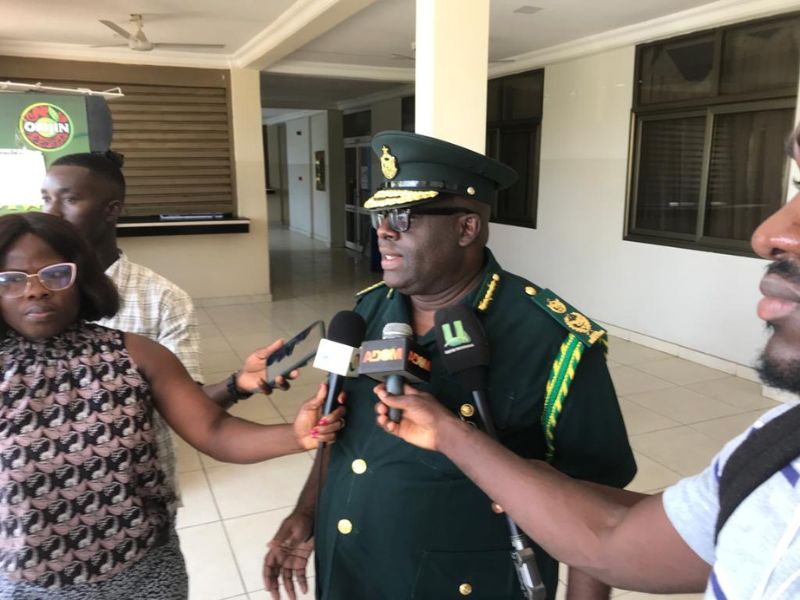
Deputy Controller General of the Ghana Immigration Service (GIS), Mr. Owusu Mensah speaking with the media

The Deputy Controller General of the Ghana Immigration Service (GIS), Mr. Owusu Mensah, has passionately called on Ghanaians to be vigilant in an effort to fight any activity of terrorists and extremist in the country.

According to him, despite the readiness of his office, and by large the security agencies in the country, the fight against terrorism would be a herculean task when there was no collective responsibility.

To this end, he has charged all regional commanders of the Immigration Service to ensure that borders in their jurisdictions were kept safe and secure to prevent any unlawful entry and penetration by terrorist.

He made the observation at a four-day workshop on Evaluation of the Ghana Immigration Service Strategic Plan in Koforidua in the Eastern Region.

The four days’ workshop, which was funded by the International Centre for Migration Policy Development (ICMPD), brought together regional commanders and top officers of the Ghana Immigration Service to deliberate on the Evaluation Strategic Plan and make recommendations to strengthen the operations of the service.

Mr. Owusu Mensah said the programme and the project were developed to achieve numerous objectives to improve the operations of the service.

He stated that the Immigration Service was a well-armed institution that was apprehending and deporting illegal immigrants out of the country, and well prepared to face terrorist attacks.

Despite the huge infrastructural gains by the current government through the provision of vehicles, border patrols, accoutrement, arms and ammunition, more was needed at the various borders to enable the officers perform their mandates more effectively.

The Project Manager for International Centre for Migration Policy Development, Amala Obioboye-Nwalor, said evaluation was not always pleasant, but very important if there was a way forward.

She commended the Service for the significant role being played at the various borders of the country to safeguard the citizens.

Amala Obioboye-Nwalor has assured the GIS of the readiness of her outfit to factor in the emergence threat of terrorism in their next strategic plan.

The International Centre for Migration Policy Development (ICMPD) is an international organisation with operations spread over 90 countries worldwide. It was established by Austria and Switzerland in 1993, and has since grown to 19 member states as of 2022.

Editorial: Kudos to Ghana Police Service, and matters arising

0
Ghana Police

Yesterday, on our front page we carried a story about a policeman who was arrested for conveying 84 parcels of compressed narcotics (Indian hemp) in his private car on Sunday.

This police officer, in an attempt to escape when signaled to stop by colleague officers at a check point, got involved in an accident on the Kpeve Mountains in the Volta Region.

According to our sources, the 36-year old Non Commissioned Officer (NCO), G/Sgt Lotsu Agbeko, stationed at the Formed Police Unit (FPU), fractured his hand and is currently responding to treatment at the Peki Government Hospital under armed guard.

The said police officer reportedly failed to stop when ordered to do so, compelling the personnel to pursue him.

The Chronicle is happy that the Ghana Police Service has not taken the issue lightly. Today, many police men and woman abuse their uniform to engage in robberies and other crimes and are left to go scot free. This is very worrying because if those who have been assigned to enforce peace and arrest criminals are themselves indulging in crimes, then how are we going to develop the country.

The two officers, Inspector Azumah Komla Justice and G/L/CPL Felix Diameh who arrested their own colleague for indulging in the criminal act should be praised. This is a great step that they have taken and their promotion by the Police Service is in good order.

We fully agree with the Ghana Police Service for promoting these two officers. It takes a lot of courage for the police to arrest their own colleagues and so they deserve the promotion they got. If the GPS continues this, it will go a long way to deter others from indulging in these unscrupulous activities.

And to these two faithful officers we say, “Ayeekoo”. The bible even says in Proverbs 3:3-4 that, “Let love and faithfulness never leave you; bind them around your neck, write them on the tablet of your heart. Then you will win favor and a good name in the sight of God and man.” This is exactly what these officers exhibited and we applaud them for that.

This clearly shows that if you do the right thing you will be rewarded and we, therefore, urge other police in the service to learn from these officers.

On the other hand, The Chronicle urges the Inspector General of Police to check the menace of police using their uniform to engage in crimes, because the civilians who drive around could be stopped by police only to be robbed, and the respect for the police will dwindle.

We hope that the ongoing investigations on the ‘wee cop’ will run through its logical course to find out if he was guilty or not and the required punishment meted out. There have been a lot of instances in this country where erring police officers have either been interdicted for investigation to be conducted or where they have been arraigned before court, but we never get to hear about how the cases ended.

As if by coincidence, today’s issue of The Chronicle reports about the arrest of three soldiers and a civilian accomplice by the police over alleged robbery  at Nsakina, near Amasaman in the Greater Accra Region. The suspects are reported to have scaled a wall into a home at Nsakina and allegedly robbed a number of the occupants of eight mobile phones.

The criminal trials of these cases should travel through due process and punishments meted out to culprits to deter such acts from happening.

These cases of security personnel involved in criminal activities is becoming one too many and the earlier we nip this canker in the bud, the better it will be for us all.

UN Trust Fund to provide sustainable solutions to forest degradation

0
Okyenhene, Osagyefuo Amoatia Ofori Panin planting one of the seedlings and Barima Okurupi Botuo Danquah (L), Chief of Sagyimase and Bamuhene Okyeman Nifa traditional council, doing the watering.
The United Nations Development Programme (UNDP) Resident Representative, Angela Lusigi watering one of the seedlings she planted

The United Nations Development Programme (UNDP) Resident Representative, Angela Lusigi, has said that the UN Trust Fund on Human Security seeks to provide support for sustainable solutions to the complex challenges on forest degradation in the Akyem Abuakwa Traditional Area of the Eastern Region.

She urged the Okyeman Foundation, civil society organisations, and the communities not only to restore forest cover, but also to improve social outcomes and expand local livelihood opportunities.

“As part of the UN family in Ghana, UNDP is committed to supporting national and local efforts to address the root causes of multidimensional poverty and natural resource degradation,” said Madam Angela Lusigi.

Building on the work of the Okeyman Foundation, Madam Angela Lusigi disclosed that the United Nations International Children’s Emergency Fund (UNICEF), World Health Organisation (WHO), United Nations Environment Programme (UNEP) and United Nations Volunteers (UNV) were bringing all their expertise and resources together to support the commendable efforts of his Royal Majesty Osagyefo Amoatia Oforipanin to tackle issues of deforestation in Akyem Abuakwa and enhance sustainable livelihoods.

A cross-section of officials from the UNDP

Delivering a speech on the 2022 edition of the Green Ghana Day at Kyebi in the Akyem Abuakwa Municipality, Madam Angela Lusigi reaffirmed that UNDP remained committed to working with all our partners to support the government and people of Ghana, so that the country could realise her ambitious development agenda and achieve the Sustainable Development Goals.

“Our forests, grasslands, croplands, wetlands, savannahs, and other terrestrial to inland water ecosystems, marine and coastal ecosystems are at risk and now it is time to act and we are therefore all faced with an incredible opportunity to transform lives and ensure a sustainable future by restoring degraded ecosystems,” she lamented.

Madam Angela Lusigi explained that by working together, the country can bring positive change with real results on the ground, to safeguard the future for generations to come, adding that the support of every Ghanaian will be able to achieve the ambitious goals for today and for our project ahead.

The exercise was organised by the Forestry Commission, and supported by the UNDP), Okyeman Environment Foundation (OEF), and the Sustainable Development Goals (SDGs) at the Office of the President to plant 150,000 tree seedlings in the Atewa Forest at Kyebi in the Eastern Region.

On his part, the Okyenhene, Osagyefuo Amoatia Ofori Panin, stated that the exercise formed part of the government’s Green Ghana initiative to further preserve the vegetation cover of the Atewa Forest reserve.

He said the planting of trees was very necessary, since that would go a long way to protect the environment, adding that it was important for children, especially school children, to be taught how to plant trees.

The Okyenhene expressed worry about the manner in which individuals were destroying the forest for their selfish interests, stressing that the world was united ecologically and, therefore, when we destroy the ecological system, we destroy ourselves.

According to the Okyenhene, it was very selfish to cut down trees or destroy any part of the ecological system, adding that it was rather proper, as a human being, to take good care of the trees for the generations yet unborn to enjoy.

Osagyefuo Amoatia Ofori Panin, who is also an Environmentalist, further called on his people and the entire populace to support the government’s Green Ghana Day initiative, which seeks to plant 20 million trees this year.

“All Ghanaians must get themselves involved in the tree seedlings, planting and taking care of them to grow. No one is going to get rich doing this but it is a service that will enhance our living and our environment so plant a tree today and watch it grow,” the Okyenhene charged.

The Kyebi District Manager of the Forestry Commission, Emmanuel Antwi, who was excited over the exercise, indicated that species such as Mahogany, Ofram, Emire and Cassia had been planted in the Atewa Forest Reserve.

He applauded the efforts and participation of the Okyenhene, while highlighting his role in last year’s edition of the Green Ghana campaign, saying, “With your leadership and support last year during Green Ghana, the Eastern Region exceeded its target of 500,000 trees, as we planted 700,000, and we’re grateful.”

Mr. Antwi lauded the Okyenhene for taking charge in Ghana’s effort to plant 20 million trees in the country, through the Okyeman Environment Foundation.

Tems diagnosed with health issues, takes break from music

0
Nigerian musician Tems

Nigerian superstar, Tems is taking a break from music till further notice.

The singer revealed this on Instagram after being diagnosed with reflux laryngitis.

Tems announced that she has postponed her upcoming shows in line with the doctor’s directive.

Reflux laryngitis is an irritation in the back of the throat due to acid or other chemicals that come up from your stomach.

Her post read: “It breaks my heart to say this but there’s no other option for me. I’m not feeling too good at the moment.

“After my last performance, I was diagnosed with Reflux laryngitis and I have to take some time off to protect what’s left of my voice.

“On the doctor’s orders, I have to postpone the two shows this week- the Birmingham show on the 15th June and the first London show on July 17th.”

She apologized to fans, adding that new dates for both shows will be announced soon.

“All tickets are still valid! Again I am so sorry. I am so sorry for this inconvenience but I promise to be back better than ever by the grace of God. Then I’ll give you the best show.

“Appreciate you all for understanding. You mean the world to me,” Tems wrote.

Credit: dailypost.ng

Netflix to turn Squid Game into reality TV show with $4.56m prize

0
Netflix

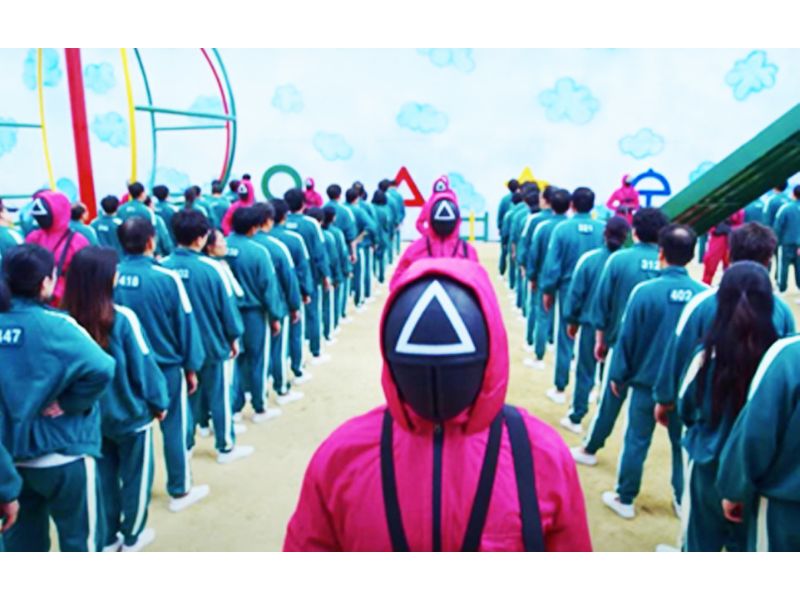
Netflix is recruiting participants for a reality TV show inspired by its most popular series of all time, Squid Game.

456 recruits from around the world will play games where “the worst fate is going home empty-handed” – missing out on a $4.56m (£3.8m) prize.

Netflix also confirmed that the popular series would be renewed for a second season earlier this week.

On Wednesday, the platform announced that its new 10-episode series – Squid Game: The Challenge – would offer the “largest cast and lump cash prize in reality TV history”.

“As [players] compete through a series of games inspired by the original show – plus surprising new additions – their strategies, alliances, and character will be put to the test while competitors are eliminated around them,” it added.

Participants need to be at least 21 years old. They must speak English, and be available for up to 4 weeks in early 2023 for filming.

The 456 participants are a nod to the fictional series, which features the same number of players, with its main protagonist SeongGi-hunalso referred to as Player 456.

The South Korean thriller series tells the story of debt-ridden people competing for a huge cash prize in a deadly series of children’s games.

It holds the record as Netflix’s most-popular series of all time, and it was streamed by 111 million users in its first 28 days of its launch.

Director, writer and executive producer of Squid Game Hwang Dong-hyuk said in a statement on Monday: “It took 12 years to bring the first season of Squid Game to life last year. But it took 12 days for Squid Game to become the most popular Netflix series ever.”

Netflix faces intense competition from streaming rivals, but was also hit after it raised prices and left Russia.

In April, it revealed a sharp drop in subscribers and warned millions more are set to quit the streaming service.

This wiped more than $50bn off the firm’s market value as experts warned it faced a struggle to get back on track.


The Ghanaian Chronicle