Home Blog Page 2724

Feature: Corruption: Africa’s undeclared pandemic

0
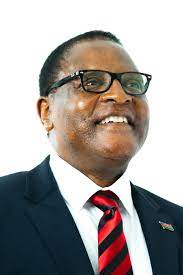
President Lazarus Chakwera
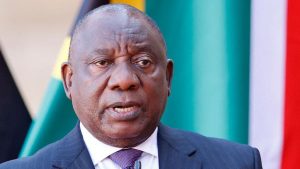
President Cyril Ramaphosa

On June 21, Malawi’s President Lazarus Chakwera fired the country’s chief of police, suspended several senior government officials and also took the extraordinary step of stripping his deputy, Saulos Chilima, of all powers after they were accused of receiving kickbacks from UK-based businessman Zuneth Sattar in exchange for government contracts worth more than $150m.

While Chilima is the highest-ranking official in Malawi to be removed from power over alleged corruption to date, few were shocked by the accusations. After all, it was only in January that Chakwera had to dissolve the country’s cabinet after three prominent ministers – Lands Minister Kezzie Msukwa, Labour Minister Ken Kandodo and Energy Minister Newton Kambala – faced corruption charges.

Sadly, a corruption pandemic is raging in Malawi – and on the rest of the continent.

Indeed, from Malawi to South Africa and Zimbabwe, from Angola to Mozambique and Namibia, in countries across Africa high-ranking civil servants and their relatives, in cahoots with industry and business leaders, seem to have long been shamelessly stealing from the long-suffering masses.
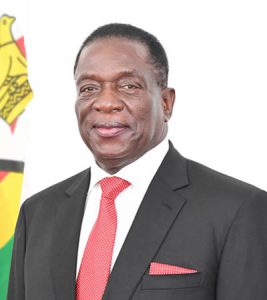
President Emmerson Mnangagwa – Zimbabwe

South Africa, for instance, has recently been rocked by allegations that former President Jacob Zuma and a plethora of former ministers and CEOs of state-owned companies systematically planned and executed state capture to aid the wealthy Gupta family and line their pockets. On June 22, South Africa’s Chief Justice Raymond Zondo released the final instalment of the Judicial Commission of Inquiry into State Capture and found that the ruling African National Congress party, under Zuma, “permitted, supported and enabled corruption and state capture”. He also criticised current President Cyril Ramaphosa, who served as vice president under Zuma, for hesitating “to act with more urgency” to resist the emergence and establishment of state capture.

Beyond the Gupta scandal, South Africa is battling to recover millions of dollars it lost through dodgy contracts linked to the nationwide campaign to combat the COVID-19 pandemic in 2020.

In Zimbabwe, Kudakwashe Tagwirei, a businessman allied to President Emmerson Mnangagwa, stands accused of amassing $90m through a shady central bank deal.

In Mozambique, ex-President Armando Guebuza’s son, Ndambi, former Finance Minister Manuel Chang, and several other senior governing party members stand accused of participating in the disappearance of loans – taken out to finance maritime surveillance, fishing, and shipyard projects – worth $2.2bn.

In Namibia, former Fisheries Minister Bernhardt Esau and former Justice Minister Sacky Shanghala stand accused of taking bribes worth millions of dollars from an Icelandic fishing company.

In Angola, Isabel dos Santos, the daughter of Angola’s former President José Eduardo dos Santos, is being accused of making billions of dollars through illicit activities.

The damage high-level and systemic corruption inflicts on already struggling African economies cannot be ignored or written off as normal or negligible. The illicit activities of elected officials, bureaucrats and industry leaders are leaving states unable to deliver the most basic services to their citizens.

Just last year, acting UN Resident Coordinator Rudolf Schwenk said Malawi is unable to provide its citizens with “effective healthcare, quality education, accessible justice and an accountable and responsive democracy” because of high levels of corruption.

South Africa, meanwhile, is experiencing rolling blackouts, largely because corruption and gross mismanagement have debilitated state utility Eskom. To make matters worse, the country is experiencing this lack of reliable energy amid an unemployment crisis – today, a record 7.9 million South Africans are believed to be jobless.

In addition to the localised corruption perpetrated through state-owned entities, the UN Conference on Trade and Development (UNCTAD) estimates that Africa loses about $88.6bn, or 3.7 percent of its gross domestic product (GDP), annually in illicit financial flows. This mammoth loss should not surprise anyone. After all, many countries topping Transparency International’s Corruption Perceptions Index, such as Sudan, Equatorial Guinea, the Democratic Republic of the Congo (DRC), Chad, Burundi, Somalia, the Republic of the Congo and South Sudan are all in Africa.

Small wonder then that Africa’s youth are extremely worried about the deplorable and depreciating state of affairs on the continent. According to the Africa Youth Survey 2022 (PDF) published on June 14, Africa’s youths believe that the creation of “new, well-paying jobs” and “reducing government corruption” should be the continent’s two leading priorities. The survey interviewed young adults, many of whom are students, from 16 African countries, including Nigeria, South Africa, Ghana, Angola, Kenya, Gabon and Malawi.

Young people are clearly aware that corruption is perhaps Africa’s number one problem. But are the institutions tasked with moving the continent forward taking this devastating ailment as seriously as they should?

Well, they say that they do. The Economic Community of West African States (ECOWAS), the Southern African Development Community (SADC) and the African Union (AU) have each established protocols on corruption.

The AU appears to be particularly proud of its anti-corruption efforts. It brags that its fight against corruption “has contributed significantly to the ongoing transformation of economies across the continent and reinforces the determination towards achieving inclusive and sustainable development as envisaged in Africa’s Agenda 2063”.

In reality, however, these institutions’ well-advertised efforts to fight corruption have hardly delivered any tangible gains. As the above examples well demonstrate, corruption is still as rife as ever on the continent.

The only thing that changed in recent years is the fact that, due to a public awakening about the harms of corruption, most African politicians are now feeling the need to announce their determination to fight corruption during their electoral campaigns.

These election promises, however, seldom transfer into action.

Nigeria’s President Muhammadu Buhari, for example, ran for office on an anti-corruption ticket in 2015, but Nigerians believe corruption has, in fact, mushroomed under his watch.

Similarly, Ramaphosa staked his presidential campaign in 2019 on a pledge to set South Africa on a path of renewal, transparency and accountability, but South Africans believe corruption has actually worsened under his management.

Like Buhari and Ramaphosa, Mnangagwa’s anti-corruption campaign in Zimbabwe has yielded meagre returns and he stands accused of “presiding over a dysfunctional government, a corrupt government”.

So while Africa’s leaders are undoubtedly talking the talk, they seem unable to walk the walk.

But after a pandemic that intensified existing economic struggles, and amid a major conflict in Europe threatening Africa’s food security, among many other challenges, the AU cannot continue its fight against corruption with empty platitudes and box-ticking exercises.

The body that is tasked with leading the continent towards better democratic governance and sustainable prosperity should accept before it is too late that there is a corruption pandemic under way in Africa, and the business-as-usual approach to battling it is proving mostly ineffective. Consequently, it must change tack and begin to systemically hold leaders accountable for their failure to stem government corruption.

The AU must establish credible continent-wide standards and independent surveillance mechanisms to advance the anti-corruption agenda, and implement them, vigorously, as a means to promote democratic principles and institutions, popular participation and good governance.

Eradicating corruption is not only essential to establishing firm adherence to the rule of law and political stability, but it is also critical to promoting economic growth and reducing poverty in countries such as Malawi, Nigeria and South Africa. It is time for the AU to assert its independence and demonstrate a strong, renewed and active commitment to mitigate the socioeconomic consequences of bad leadership in Africa.

Source: Aljazeera.com

Morocco advance to Awcon last eight

0
Rosella Ayane, Morocco

Morocco won a second game at their Women’s Africa Cup of Nations finals, beating Uganda 3-1 in Rabat on Tuesday to advance from Group A to the quarterfinals.

Morocco join Senegal, who beat Burkina Faso earlier in the day, in the last eight of a tournament where the top two teams in the three first round groups, plus two best third placed finishers, all go through to the next round.

Both countries have a full haul of points from their opening two matches. Two penalties and a super second-half header from marauding defender Nesryne El Chad ensured home success after Morocco had started the tournament on Saturday with a close-fought 1-0 triumph over Burkina Faso.

Tuesday’s game proved a tough assignment for the hosts but they were gifted a penalty early on, converted by Rosella Ayane, their English-born striker.

Uganda, who had lost 2-0 to Senegal in their tournament opener on Sunday, fought their way back into the game with a clever freekick from left back Sumatya Komuntale.

Morocco took back the lead in the 68th minute. Captain Ghizlane Chebbak floated in a perfect ball for El Chad to head home. There was a soft penalty for Morocco in the when Komuntale caught Ayane in the face with a trailing hand and Chebbak extended the lead from the spot.

Morocco now meet Senegal in Rabat on Friday to decide top place in the group.

Uganda can still possibly advance but would need a handsome win over the Burkinabe when they clash in Casablanca at the same time.

Credit: supersports.com

South Africa beating Nigeria sets tone for tournament; Banyana coach

0
Banyana Banyana coach Des Ellis

Banyana Banyana coach Des Ellis was delighted with her side’s 2-1 victory over defending champions Nigeria on Monday that got their Group C campaign at the 2022 Women’s Africa Cup of Nations off to the perfect start.

Banyana were comfortably the better side in the win as goals from Jermaine Seoposenwe and Hildah Magaia set them on the way to victory.

“This is a very big win for us as a team. We needed to get this result because it sets the tone for the rest of the tournament,” Ellis said. “We held a meeting on our goals and ambitions before training. We want to qualify for the World Cup and win the title here.”

Banyana also beat Nigeria in the pool stages of the last tournament in 2018 but were then defeated on penalties by the Super Falcons in the final after a 0-0 draw.

“We know what happened in 2018, but we have matured over the past four years and there are changes in our team,” Ellis says.

The semifinalists in the competition all qualify for the 2023 Fifa Women’s World Cup in Australia and New Zealand, while the losing quarterfinalists will play-off for a place in the inter-continental qualification tournament that will be held in New Zealand in February.

If Banyana top their pool they will play one of the third-best placed teams in either Groups A or B, enhancing their chances of reaching the semis and qualifying for a second successive global showpiece competition.

Credit: supersports.com

Zambian Barbra Banda kicked out over ‘gender eligibility’ issues

0
Zambian Barbra Banda

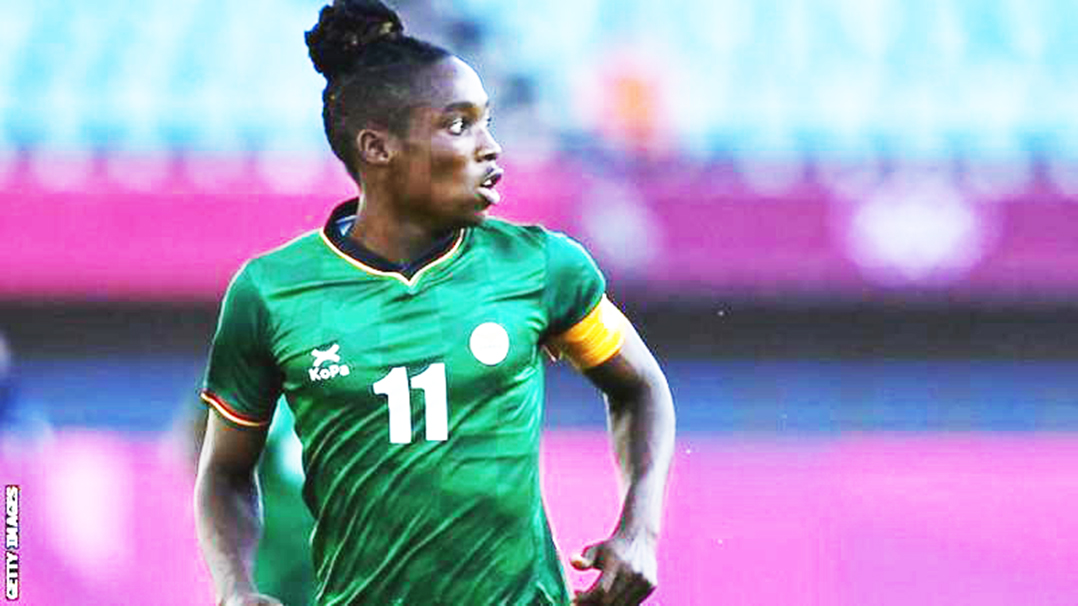
Zambia captain Barbra Banda has been ruled out of the Women’s Africa Cup of Nations (WAFCON) after failing gender eligibility tests.

Despite being allowed to play in last year’s Olympic Games, the 22-year-old forward has failed to meet the criteria required by global governing body Fifa, whose gender rules the Confederation of African Football (Caf) defers to regarding WAFCON.

“All the players had to undergo gender verification, a Caf requirement, and unfortunately she did not meet the criteria set by Caf,” Andrew Kamanga, the president of Zambia’s FA (Faz), told BBC Sport Africa.

“It’s unfortunate that we find ourselves going into the tournament without our best players.” Zambia opened their Group C campaign with a 0-0 draw against three-time runners-up Cameroon on Sunday and face Tunisia on Wednesday prior to finishing the group with a clash against debutants Togo at the weekend.

Banda shot to global prominence when becoming the first player to score back-to-back Olympic hat-tricks in Tokyo.

When asked by BBC Sport Africa on Sunday how it was possible for Banda to have played in the Olympics but not at WAFCON, Caf’s communications director Lux September responded by saying “there is no such decision from the Caf medical committee”.

Banda – who was pulled from the squad by Faz after she failed the verification on the eve of the finals – is one of the most prolific strikers in African women’s football and is currently in Morocco and training with the Copper Queens squad, despite being unable to play.

Credit: bbc.com

Nigeria star ruled out of rest of Women AFCON

0
Asisat Oshoala

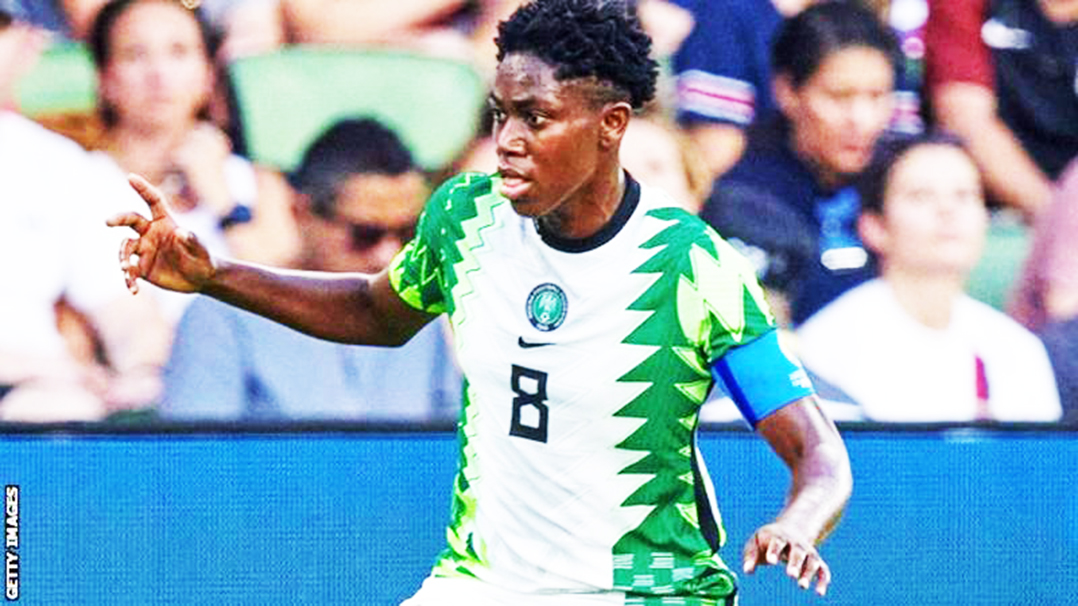
Nigeria forward Asisat Oshoala will miss the rest of the Women’s Africa Cup of Nations (WAFCON) with a knee injury.

The four-time – and reigning – African Women’s Footballer of the Year had her tournament ended by a medial ligament injury suffered in Nigeria’s 2-1 defeat by South Africa on Monday.

The 27-year-old recently won Spain’s Pichichi award after scoring 20 league goals for Barcelona and was expected to help the Super Falcons defend their continental title in Morocco.

Oshoala suffered the injury in the early minutes of the Group C clash, but played on for another hour before she was substituted in the 82nd minute of the game.

Scans revealed Oshoala suffered a grade two medial collateral ligament injury and will be returning to Spain on Thursday, according to the Nigeria Football Federation (NFF).

One team officials said the injury would sideline the former Arsenal and Liverpool player “for several weeks”.

Oshoala’s injury leaves Nigeria with a 24-player squad as they seek to bounce back from their opening game loss against South Africa.

Botswana lead Group C on goal difference ahead of South Africa, with both sides in action again on Thursday against Nigeria and Burundi respectively.

Africa’s most decorated female footballer, Oshoala is the first woman from the continent to claim Spain’s golden boot, despite missing two months of the season through injury.

Oshoala, who recently signed a deal to remain with the Spanish giants until the end of the 2023-24 campaign, has been plagued by thigh and knee injuries in the past nine months.

She won her third Women’s Africa Cup of Nations with the Super Falcons in Ghana in 2018, scoring three goals as Nigeria lifted the title for a ninth time.

Credit: bbc.com

“I love Ghana” -Sadio Mane proud after winning best African award

0
Sadio Mane

Bayern Munich forward Sadio Mane says he’s proud and happy to win the best African foreign based player award in the 2022 Ghana Football Awards which was held during the weekend and revealed his love for the country.

Sadio Mane won the African Cup of Nations, Carabao Cup and the FA Cup this year with  both Senegal and Liverpool.

The former Liverpool forward has moved from Anfield to the Alianz Arena to play for Bayern Munich for £35 million.

Mane, 30, in a video played at the awards ceremony, said he was proud for the recognition and revealed his admiration for Ghana.

“I’m really proud and happy to win this award…And of course, want to thank all the people who have voted for me, the people of Ghana and the whole of Africa for the support and prayers.

“Obviously, I would like to be with you guys and celebrate but I can’t make it but enjoy your evening and want to tell you something I love Ghana and hopefully, I will see you soon,” he concluded.

Credit: kickgh.com

Black Stars must take pre-season seriously, ahead of World Cup; Agyeman Badu

0
Black stars

Former Black Stars midfielder, Emmanuel Agyeman Badu has urged members of the senior national team to take their training seriously this season ahead of the 2022 World Cup in Qatar.

Due to a time change from June/July to November/December, players will not have the normal designated time to prepare for the competition.

Agyeman Badu believes this year’s tournament will be the hardest ever.

“They need to take the pre-season seriously because where they have placed the World Cup this year will be crucial for every country, because all the countries will be coming with their best places.” Agyeman Badu said.

“The Changes FIFA has made with the substitutions will be very crucial to the World Cup, that’s why I said this year’s competition will be the toughest ever.

“And that is why Ghanaian players must take the pre-season seriously.

The 2022 World Cup in Qatar will take place from November 21 to December 18.

Ghana have been placed in Group H with South Korea, Portugal and Uruguay.

Credit: citisportsonline.com

Foreign clubs have contacted me but I will stay at Kotoko; Prosper Ogum

0
Coach of Asante Kotoko, Dr Prosper Narteh Ogum

The head coach of Asante Kotoko, Dr Prosper Narteh Ogum, has disclosed his desire to stay at Asante Kotoko despite receiving offers from foreign clubs.

Ogum, who signed a two-year deal with the Porcupine Warriors before the start of the 2021/22 Ghana football season from WAFA, led the club to win its 24th Ghanaian top-flight title in his maiden season.

Speaking to Cape Coast-based ATL FM, he disclosed that despite being contacted by some foreign clubs, he will respect his contract with Asante Kotoko and stay at the club.

“I have a two-year contract with Kotoko and I will respect it. Although some teams outside Ghana have requested for my services, I am for Kotoko and I love serving them,” he said.

He added that: “I now know and understand my players and vice versa. So I want most of them to stay at Kotoko. [The team] going to Africa although I understand the business aspect of football.”

The coach further revealed his desire to keep Cameroonian forward Franck Mbella Etouga after his impressive debut campaign in Ghana. Etouga scored 21 goals to come second in the Premier League top scorer chart.

The gaffer also added that he believed he could do a good job with the Porcupine Warriors despite the lack of belief among some fans when he first signed for the club.

Prior to his success last season, Ogum managed WAFA and led them to a third-place finish in the 2020/21 season. He also had stints with Ebusua Dwarfs in the top flight in 2016 and masterminded the qualification of Elmina Sharks to the Ghana Division One in 2013.

Credit: myjoyonline.com

Kwarasey takes swipe at Kwesi Appiah for dropping him at the 2014 World Cup

0
Adam Kwarasey

Former Black Stars shot-stopper, Adam Kwarasey, says Kwesi Appiah should have been a man enough to tell him in the face before dropping him at the mundial in 2014.

Black Stars exited from the group stage in the 2014 World Cup in Brazil without a win, losing to both United States of America (US), Portugal and a 2-2 stalemate with eventual champions Germany, amidst money scandals.

Adam Kwarasey, who kept the post against US, was dropped from the subsequent matches for Fatawu Dauda to take over.

Adam Kwarasey, 34, claims that Kwesi Appiah should have respected him by telling him in the face before dropping him.

“If someone decides not to play me and it is for the best thing for the team, I’m fine with that. But do it as a man and with respect,” he told JoySports.

“Tell me and look me in the eyes when you do and I will respect your decision,” he insisted.

Adam Kwarasey also added that he has good stories to tell his son from his spell with the Ghana national team.

Kwarasey, despite announcing his decision to play for Ghana in 2007, made his debut in 2012 against Swaziland in the qualifiers for the 2012 edition of the Africa Cup of Nations.

Credit: kickgh.com

We Are Dying Of Hunger, Bring Back Road Tolls; Workers petition Parliament after gov’t loses estimated GH¢78m in revenue

0
Mr Kwasi Amoako-Atta, Minister for Roads and Highways
Tema Motorway toll booth

Toll Workers of Ghana (TWG) have called on Parliament to ensure that government fulfills the promise of paying them monthly salaries when it collapsed the road toll business. In a petition they presented to the Legislative House yesterday, the group also said that they want government to bring back the road toll collection business.

“…So we are asking our Parliamentarians and people in authority that please fulfill your promise of paying us every month until we are re-assigned. And we are also saying that because the re-assignment is taking too long, we believe that it will be difficult for you to re-assign us so bring back the toll operation and let us go back to work”, Mr Edward Duncan, Secretary of TWG said.

It would be recalled that government, through the Ministry of Roads and Highways in November, last year, called for the cessation of toll collection on all public roads that was fetching the government an estimated revenue of GHS78 million annually. The directive issued by the sector Minister, Mr Kwasi Amoako-Atta, followed an announcement made by the Finance Minister, Mr Ken Ofori-Atta, during the presentation of the 2022 budget.

The Finance Minister said at the time that although the government needed such revenue to fix roads in the country, it has observed that toll booths are doing more harm than good, causing heavy traffic and impacting negatively on productivity, hence the cessation.

“To address these challenges, the government has abolished all tolls on public roads and bridges. This takes effect immediately after the budget is approved,” the Finance Minister said.

But presenting the petition to the Director Public Affairs in Parliament, Madam Kate Addo yesterday, Mr Duncan noted that government has not fulfilled its promise of paying them monthly stipend until they are re-assigned. He intimated that since the collapse of the toll in November last year, he and his group only received two months’ salary and that no money has been paid to then since the beginning of this year.

He also indicated that after they have stayed home for more than six months, they are convinced that government does not have any job for them, so she should allow them to go back to their toll collection job.

“What we are saying in our petition is that we were promised that toll collection will be scrapped and then we will be given alternate livelihood. We have been sitting home from November last year till now, we have not been given any alternate livelihood.

“Another promise was given to us that we will be paid every month until we are re-assigned. Even that, we were paid November to December, but from January till now, we have not been paid a single penny.”

Mr Duncan also pointed out that the issue of toll collection being the cause of traffic jams at many toll plazas, which was one of the reasons given for the collapse, has turned out to be false.

According to the Secretary, the traffic situation, which existed at many toll stations still persist and that’s an indication that toll collection is not the cause.

“If authorities are saying that toll collection generates traffic, I will say that after the suspension, even now if you go to some of the plazas, tolls have been suspended but there is still massive traffic on those roads… So we are saying toll collection points are not what generate the traffic. These are the issues, so authorities should sit down.”

He said government should consult them and they will give her reasons why there are traffic jams at those places since they are the ones that work there.  “We also can give you solutions. We work at the place so we know what the solution is. We will give you practical solution not book solution.”

He pleaded with Parliament to look into the petition and ensure that government comes to their aid because life has not been easy for them. “We hope that they will look into this petition and the recommendations that are made in it and act in it because we are dying of hunger”, Mr Duncan said.

The Ghanaian Chronicle