Home Blog Page 2708

‘Hydro potential in the country is limited’

0
The Bui hydro Dam in Bono Region

Ghana has moved from 100 percent hydro capacity to a mix that is currently dominated by thermal sources of 63 percent, Mr. Abdul Noor Wahab, Manager Generations and Systems Planning, Volta River Authority (VRA), has stated.

He said Ghana’s generation at the end of 2021 was dominated by natural gas followed by hydro, liquid fuel, and others, adding that the country’s major cost driver remained natural gas.

Speaking on the topic: “Ghana’s Energy Generation Mix and the Future Outlook,” at the Gas Accountants Business Summit, organised by Energy Sector Recovery Programme (ESRP), Mr. Wahab said the potential of hydro was limited.

He explained that after Pwalugu’s 60 megawatts, Juale-90mw, and Western River’s about 340mw, available hydro potential in the country was limited.

He said there was potential for solar in almost every part of the country adding that its potential on average was at 15 to 18 percent capacity factor without battery storage.

Mr. Wahab however noted that, the cost of generation would increase significantly when four to six hours of battery storage was added.

He said wind potential was limited as the best wind speeds was along the cost, noting that cost of generation from wind could be 10 US cents/kWh if funding at five percent or lower were available.

Mr. Wahab said thermal had the highest prospect, easy to deploy, had combined cycles that required water for cooling and could now be cooled by air, in addition to having competitive cost.

He said nuclear also had a potential to play an important role but has high capital cost which was likely to affect its quantity in future generation mix and thermal generation would dominate by 2040 with a component of about 88 percent of the mix.

The Gas Accountants’ Business Summit was organised to discuss the natural gas business in Ghana and its related issues to achieve a financially sustainable energy sector.

The summit was on the theme; “The Role of Natural Gas on Ghana’s Sustainable Future,” brought together accountants, lawyers, commercial experts, and other professionals within the energy sector.

Other presentations during the summit covered the Cash Waterfall Mechanism’s concept, accounting and implementation, Public Utility Regulatory Commission (PURC), natural gas prospects for economic transformation, the future of Africa Gas in the global economy, and the outlook of ECG’s billing processes, and many others.

Source: GNA

‘Synchronise ages of consent to sex and marriage’

0
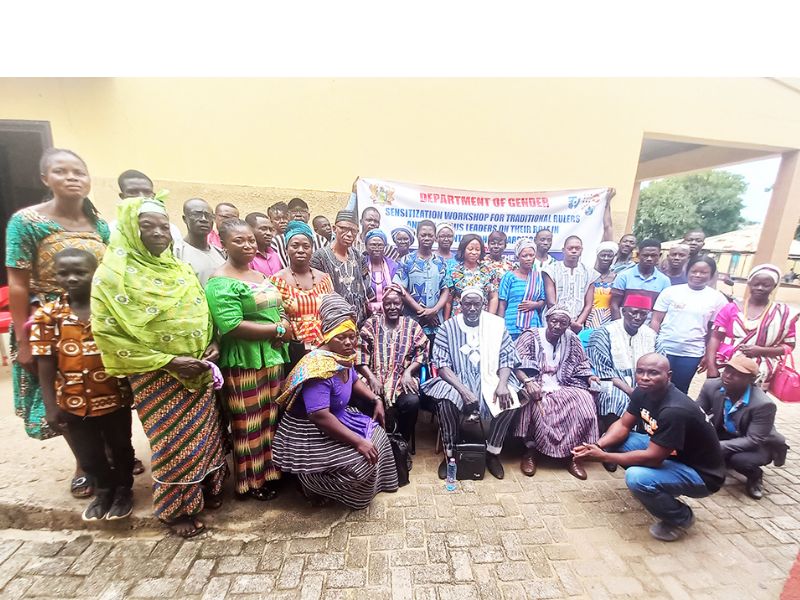
some of the chiefs who made the call

Some traditional and religious leaders in the Upper East Region have called on the government to take steps to synchronise the country’s laws on the ages of consent to sex and marriage.

That, they said, would help fight the menace of rising teenage pregnancy, child marriage and Sexual and Gender Based Violence (SGBV) currently impeding the growth and development of children, especially girls.

They made the call at a forum organised in Bolgatanga by the Upper East Regional Department of Gender under the auspices of the Regional Coordinating Council.

It was part of the implementation of an adolescent sexual and reproductive health project, funded by the United Nations Population Fund (UNFPA), aimed at empowering religious and traditional authorities to fight teenage pregnancy, child marriage and SGBV.

Currently, Ghana’s Criminal Offences Act of 1960, Act 29, pegs the age of sexual consent at 16 while the Children’s Act of 1998, Act 560 provides the minimum age of 18 years for marriage.

Mr Emmanuel NoeniTiizee, the Secretary, Local Council of Churches, Talensi District, said the difference created contradiction and made it easy for people to take advantage of vulnerable children without punishment.

He said for the country to make any headway, it was imperative for the Ministry of Gender, Children and Social Protection, to work with Parliament to reconcile the laws to protect children from exploitation and abuse.

“Apart from the disparities creating immorality from the religious point of view, we think that it is one of the major causes of teenage pregnancy and early marriages and it is not helping society.

“So, our take as a Christian group is that the ages should be merged because if the person is not qualified to marry, the person should not engage in sex, so that whoever, sleeps with such a person can be prosecuted for defilement,” he said.

Naba Adendaa Awamyelum III, Chief of Zorkor-Kodorogo Community, said if the two year-interval between the ages was reconciled, it would empower the chiefs to appropriately educate their subjects.

That way, he said, would help punish people who took advantage of girls below the stipulated age as pregnancy curtailed their growth, development, and education.

Mr Abdulai Jaladeen, the Regional Director, Commission on Human Rights and Administrative Justice, said apart from the two ages, which needed to be merged, there was the need for the framers of the Constitution to review the Criminal Code to be more deterrent than its current state.

He said Ghana had developed many policies and laws nationally and signed unto some human rights international conventions, which had the potential to protect children against sexual exploitation and early marriage.

However, poor implementation had always been the bane.He therefore called for collective effort from all stakeholders to ensure that all children lived in a safe environment.

Mr James Twene, the Regional Director, Department of Gender, explained that despite efforts from government and other partners, teenage pregnancy, child marriage and SGBV were still high and threatened the attainment of the Sustainable Development Goals.

He said the project, which had been implemented in the six districts including Bongo, Nabdam, Talensi, Bawku West, Builsa South and Kassena-Nankana West since 2019, was empowering men and boys, parents and traditional and religious leaders to join the fight to end the menace.

From Anthony Adongo Apubeo

GNA

Peace Council calls for a re-look at Ghana’s arms acquisition regime

0
National Peace Council

Mrs Joana Adzoa Opare, Member, Governing Board, National Peace Council (NPC) has called for a re-look at Ghana’s arms acquisition, utilisation and monitoring regime to ensure peace and security is maintained in the country.

She noted that there was the need to ensure small and light weapons did not fall into wrong hands, because such weapons falling into wrong hands could lead to violence, thereby disturbing the peace of the nation.

She said reports from the National Commission on Small Arms and Light Weapons revealed there were still thousands of illegally acquired arms used for all kinds of criminal activities.

Mrs.Opare made the call at a community engagement on peaceful coexistence in Accra, which was organised by the Council, in collaboration with the United Nations in Ghana, on the theme: “Managing Ethnic Diversity in Ghana for Sustainable Peace.”

The workshop, which was attended by market women, commercial drivers and artisans, forms part of activities marking the week-long celebration of the 2022 International Peace Day on the theme: “End Racism.

Build Peace.”
The International Day of Peace was established in 1981 by the UN General Assembly to commemorate and strengthen the ideals of peace both within and among all nations and peoples as a period of non-violence and cease-fire.

Mrs.Opare said Ghana was a multi-ethnic, multi-religious, multi-lingual, and multi-cultural society.

There are more than seventy ethnic groups in Ghana, who, regardless of their differences, had co-existed in an environment of tolerance for divergent views, and acceptance of differences.

Ghana’s 1992 Fourth Republican Constitution in pursuit of ensuring inclusive society, states in Article 35 (5) thus: “The state shall actively promote the integration of the peoples of Ghana and prohibits discrimination and prejudice on the grounds of place of origin, circumstances of birth, ethnic origin, gender or religion, creed or other beliefs.”

Article 35(6) gives the details of the integration envisaged by the Constitution which must be pursued by all citizens.

Mrs Opare reiterated that managing ethnic diversities for sustainable peace, however, requires challenging work from both the government and the citizenry.

She said the NPC was calling on Ghanaians, institutions of state and civil society to join forces to remove barriers to the realization of a just, fair, open, and inclusive society for all the peoples of Ghana.

She said the Global Peace Index (GPI) for 2022, was an indication for Ghana to step up its efforts at ensuring sustainable peace through the promotion of positive peace; adding that positive peace was a gamut of attitudes, institutions and structures that create and sustain peaceful communities.

Mrs Opare appealed to all Ghanaians, especially market women, drivers, and artisans to help preserve the peace of the nation.

By Iddi Yire

GNA


Kenya Kiambu building collapse: Rescue efforts under way

0
Kenya Kiambu building collapse

Six people have died and many injured after a six-storey building collapsed in Kiambu, central Kenya.

Rescue efforts are under way and emergency workers have managed to pull a child from the rubble.

Several others have also been rescued but “sadly, some are feared to have succumbed to their injuries”, Kiambu county Governor Kimani Wamatangi said.

Building collapses in Kenya have in the past been blamed on poor structural design or sloppy construction.

The cause of this collapse is unclear but the building was under construction when it came down. It collapsed at 05:30 local time (02:30 GMT), before any builders had arrived to start work.

Eyewitnesses said it fell onto adjacent homes, which is where most of the victims are thought to have been. It is not known how many people are still under the debris.

Soldiers, workers from the Kenya Red Cross and National Youth Service personnel as well as local volunteers are all at the scene in Kiambu town, which is about 20km (12 miles) north of the capital, Nairobi.

Excavators can be seen removing debris from the site.

Credit: bbc.com

Protests in Russia’s Dagestan region against new draft

0
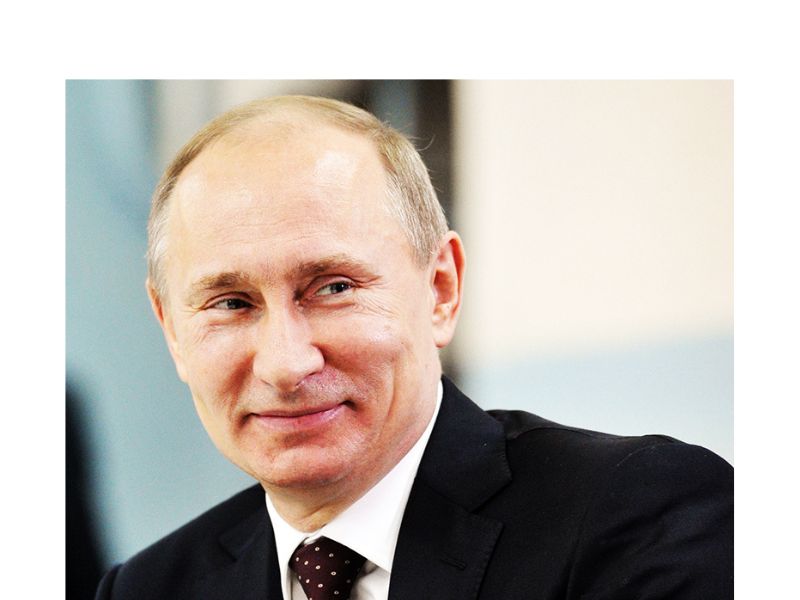
Vladmir Putin

People in Russia’s Dagestan region have clashed with police in the latest protests against Moscow’s call-up of 300,000 military reservists.

Over 100 people were arrested during protests in the regional capital Makhachkala, OVD-Info, an independent Russian human rights monitor said.

It said it was concerned by reports of the province’s “very tough detentions”.

Dagestan is a mainly Muslim region of Russia with a higher death toll than any other province in the war.

Recent analysis by the BBC’s Russian service showed that at least 301 soldiers from Dagestan have died, 10 times more than in Moscow. The true figure is likely to be far higher.

More than 2,000 people have been arrested at mass protests since Russian President Vladimir Putin announced the partial mobilisation of military reservists on Wednesday.

Credit: bbc.com

Five rescuers dead as typhoon hits Philippines

0
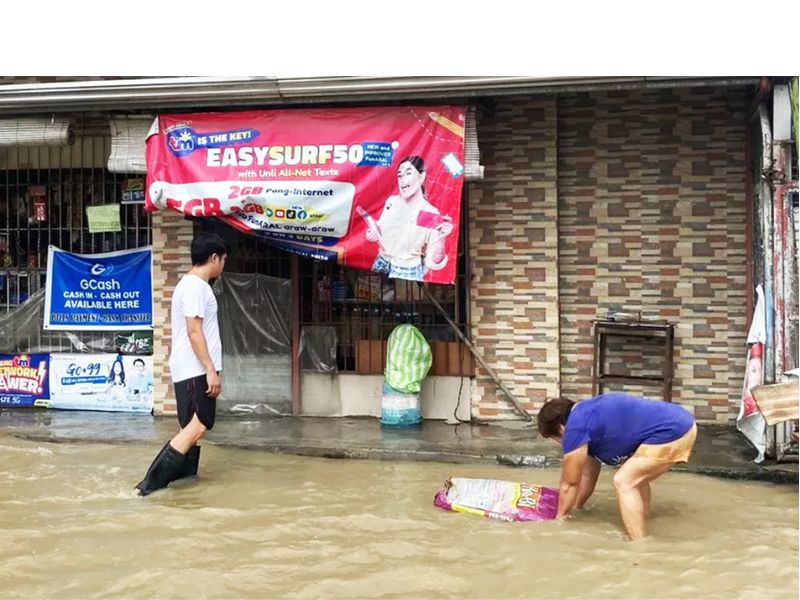
Some residents are attempting to scoop water up, without much success

Five rescue workers in the Philippines have been killed in a typhoon that has left homes flooded and millions without electricity.

They were washed away in flash floods while carrying out operations in the district of San Miguel, north of the capital Manila.

The district was among those hit hard by Typhoon Noru, with some residents seen stranded on their roofs, while others waded through chest-high garbage strewn waters, attempting to pass on supplies.

The typhoon caused gusts of up to 240km/h (149mph) on Luzon, where more than half of the country’s 110 million population live.

Noru, known locally as Karding, first made landfall as a super typhoon, but later weakened at 20:20 local time (12:20 GMT) on Sunday. It is expected to leave the Philippines by Monday evening.

In San Vincente, a village in San Miguel, one man was seen futilely trying to brush water away from his door.

Another, standing on top of the rooftop of her home, shouted that the country’s leaders needed to “focus on climate change”.

Credit: bbc.com

Italy’s far right on course to win election

0
There was little cause for joy at Enrico Letta's Democratic Party headquarters on Sunday night

Far-right leader Giorgia Meloni has claimed victory in Italy’s election, and is on course to become the country’s first female prime minister.

Ms Meloni is widely expected to form Italy’s most right-wing government since World War Two.

That will alarm much of Europe as Italy is the EU’s third-biggest economy.

However, speaking after the vote, Ms Meloni said her Brothers of Italy party would “govern for everyone” and would not betray people’s trust.

“Italians have sent a clear message in favour of a right-wing government led by Brothers of Italy,” she told reporters in Rome, holding up a sign saying “Thank you Italy”.

She is set to win 26% of the vote, based on provisional results, ahead of her closest rival Enrico Letta from the centre left.

Mr Letta told reporters on Monday that the far-right victory was a “sad day for Italy and Europe” but his party would provide a “strong and intransigent opposition”.

Ms Meloni’s right-wing alliance – which also includes Matteo Salvini’s far-right League and former PM Silvio Berlusconi’s centre-right Forza Italia – will take control of both the Senate and the Chamber of Deputies.

Credit: bbc.com

Deadly gun attack at Russian school

0
Security services arrive at the scene of the shooting

A gunman has opened fire at a school in central Russia, killing at least 15 people and injuring 24, Russian officials say.

The victims include 11 children at the school of about 1,000 pupils in the city of Izhevsk.

The gunman killed himself at the scene and was a former pupil of the school.

Videos posted online appear to show panic inside the building where the shooting took place, with children and adults running along corridors.

Other footage shows blood on a classroom floor and a bullet hole in a window, with children crouching down underneath desks.

Eleven children and four adults were killed, including two security guards and two teachers, according to Russia’s investigative committee. All but two of the 24 injured people were children.

Staff and pupils have been evacuated from the school building which is in central Izhevsk – a city of about 650,000 residents.The attacker – named as Artem Kazantsev – is reported to have been armed with two pistols.

A video posted online by state investigators shows the dead body of the gunman on the floor, wearing a T-shirt with a Nazi symbol and a balaclava. Investigators are searching his place of residence.

Credit: bbc.com

Zelenskiy vows to liberate all of Ukraine

0
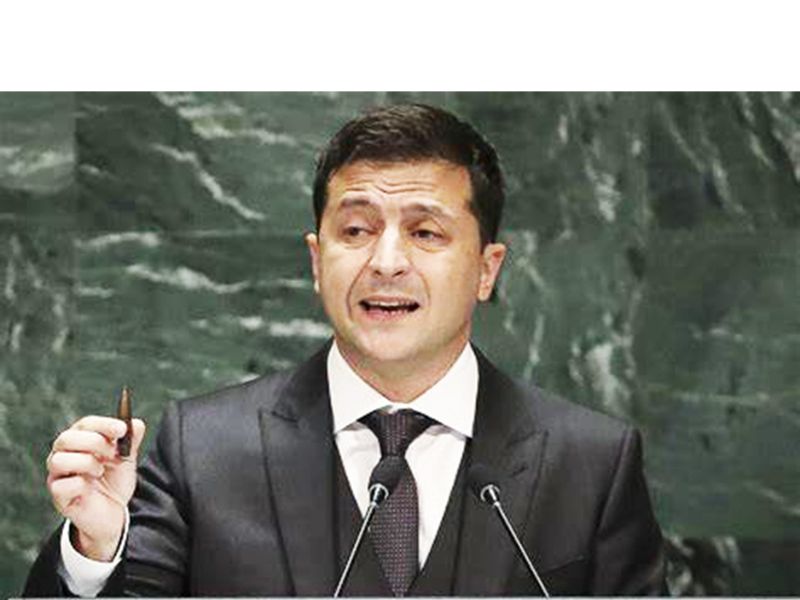
Ukraine president, Volodymyr Zelenskiy

Ukraine’s president, Volodymyr Zelenskiy, has vowed to liberate the entire country as Russia pressed on with its supposed referendum in occupied areas of Ukraine and so-called election workers accompanied by masked gunmen knocked on doors to get people to vote.

Zelenskiy said Ukraine’s armed forces would throw the Russian forces out and retaliate against “every strike of the aggressor”.

He pledged that Ukraine’s armed forces would regain control of the southern Kherson region and the eastern Donbas, which includes Luhansk province and Crimea.

“Every murderer and torturer will be brought to justice for what he did against Ukrainians,” he said.

Reports posted on Telegram groups from occupied areas suggest the local population has overwhelmingly boycotted the Kremlin’s referendum stunt, which began on Friday.

The process finishes on Tuesday, and Vladimir Putin is expected to declare this week that these territories belong to Russia.

On Sunday, locals described a shambolic voting process, largely staged for Russian state television.

In the city of Khakova, officials went from house to house, fumbling with intercoms, while two soldiers with assault rifles stood nearby. Most residents refused to open their doors.

Credit: theguardian.com

How to Remove Plaque

0
Plaque

What’s plaque?

Have you ever noticed that after a dental cleaning your teeth look sparkly and white, but over time they appear more dull and yellow? That yellowish colour comes from plaque, a filmy substance made out of bacteria.

Plaque accumulates on your teeth both above and below your gum line. You may find it unsightly, but what’s more, it can damage your teeth and gums if it’s not removed.

The best ways to remove plaque

The easiest way to remove plaque is to brush your teeth at least twice per day. You should use a soft toothbrush that you replace at least every three to four months, when the bristles begin to fray. You could also consider using an electric toothbrush, which can be more effective at removing plaque than a traditional toothbrush.

Floss before you brush to loosen any bits of food so you can brush them away. To floss your teeth:

Take about 18 inches of floss, wrapping one end around each of your middle fingers.

Hold the floss taut between your thumbs and forefingers, then gently push the floss between two teeth.

Move the floss into a “C” shape on the side of one tooth.

Rub the floss up and down gently, continuing to press it against your tooth. Be careful not to jerk or snap the floss.

Repeat this process for all of your teeth, taking care to floss behind your back teeth as well.

After you’ve flossed, you should spend two minutes brushing your teeth each time. To brush your teeth:

Put a pea-sized amount of toothpaste on your toothbrush. For children, the amount of toothpaste should be about the size of a grain of rice.

Hold your toothbrush on your teeth at a 45-degree angle to your gums.

Move your toothbrush back and forth in short, gentle strokes the same width as each of your teeth.

Brush all the outside surfaces, inside surfaces, and chewing surfaces of your teeth, and don’t forget your tongue.

For the inside of your front teeth, tilt your toothbrush vertically and make small up-and-down strokes.

Unfortunately, plaque accumulates again quickly after being brushed away. Some experts recommend other at-home treatments to remove plaque build-up. These include oil pulling and baking soda treatments.

Oil pulling

Swishing oil — usually coconut or olive oil — around in your mouth may strengthen your teeth, prevent tooth decay, soothe sore gums, and remove plaque.

To perform an “oil pull,” you swish about one tablespoon of coconut or olive oil around in your mouth for 20 to 30 minutes (much longer than you’d swish around typical mouthwash). Coconut oil is believed to be particularly beneficial because it contains fatty acids such as lauric acid, a substance with anti-inflammatory and antimicrobial effects.

Baking soda

Researchers have found that people who brushed their teeth with toothpaste containing baking soda removed more plaque and had less plaque grow back over 24 hours than people who brushed their teeth with toothpaste that did not contain baking soda.

Baking soda is effective at removing plaque because it’s a natural cleanser and an abrasive, meaning it’s good for scrubbing.

How plaque causes tartar to form

Plaque build-up can have serious health consequences. The bacteria in plaque create acid by feeding on the sugars in the foods you eat, which can damage your teeth and cause cavities. The bacteria also make toxins that can aggravate your gums, leading to periodontal disease (gum disease).

When plaque on the teeth combines with the minerals in your saliva to form a hard deposit, that’s called tartar. Another name for tartar is calculus. Like plaque, tartar can form both above and below the gum line. Tartar forms a breeding ground for plaque bacteria to thrive in, allowing plaque bacteria to multiply quickly.

Unlike plaque, tartar can’t be removed by brushing or flossing. To get rid of it, you need to visit your dentist, who will use special instruments to remove it in a technique called “scale and polish.” Scaling refers to the removal or picking off of tartar from the teeth, while polishing helps smooth and shine the teeth afterwards.

How to prevent plaque and tartar from forming

The best ways to prevent plaque from forming is to stick to good dental habits. Brush your teeth for two minutes at least twice per day (ideally once in the morning and once before you go to bed), and floss at least once per day.

Regular dental appointments are also critical in preventing additional plaque and tartar build up on your teeth. Your dentist will scrape and clean your teeth so they’re free of plaque and tartar.

They may also perform a fluoride treatment, which can prevent and slow the growth of plaque bacteria and build-up of tartar on your teeth. This helps prevent tooth decay.

Research suggests that chewing gum sweetened with sorbitol or xylitol between meals can prevent plaque build up. Be sure not to chew gum with sugar, which encourages bacteria growth on the teeth.

Eating a healthy diet that’s low in added sugars, on the other hand, can limit bacteria growth on your teeth. Be sure to eat lots of fresh produce, whole grains, and lean proteins.

Mouthwash or a tool such as a dental pick, interdental brush, or dental stick can be helpful in preventing bacteria build-up between meals.

The bottom line

The better you take care of your teeth, the less plaque and tartar will accumulate on them. You should brush your teeth at least twice per day, and floss once, to prevent plaque buildup.

Also, be sure to visit your dentist regularly for preventative care and tartar removal. Taking good care of your teeth will keep you healthy in long run.

If you think you may have a dental issue related to plaque or tartar build-up, schedule an appointment with your dentist right away.

The sooner you get the dental issue addressed, the less damage it’s likely to cause and the easier (and less expensive) it will be to treat.

Source: www.healthline.com

The Ghanaian Chronicle