Wiz Khalifa took to X to announce the death of his dad, Laurence W. Thomaz, writing that “today my father decided not to wake up.”
The rapper continued on Friday: “I will always love him, miss him and be grateful for the things he taught me. He went out like a true yogi, at peace and on his own time. I love you forever Laurence W. Thomaz.”
Page Six reached out to a rep for Khalifa for comment.
Khalifa added in a follow-up post: “My father’s passing was sudden but seeing how many people love and respected him makes happy and i know he’s proud that he left a positive impact on this earth. Literally all he ever wanted.”
“The last conversation i had with my dad was him telling me how proud of me he was for the movie i was in and I promised him i would do more. LT Forever,” said the artist, 38.
Sharing his gratitude for his followers, Khalifa, whose real name is Cameron Jibril Thomaz, noted on X: “Thank you all for your kind words. It really means a lot in this tough time and is helping me feel better.”
Over on Instagram, the hitmaker took to his Instagram Story to post a series of throwback photos with his dad.
One picture featured his father helping him onto a swing. He simply wrote beneath the shot: “Love you big guy.”
Cardi B may be keeping quiet about her current status with Stefon Diggs, but she is being far more direct about her next business move. While fans continue to speculate about her personal life, she has officially announced the launch of her new hair care brand, Grow-Good. The reveal shifts attention away from rumors and toward a project she says has been years in the making.
Grow-Good was introduced through a teaser video shared on Instagram. In the clip, Cardi revealed that she has been developing the brand for about three years. Behind-the-scenes footage showed her working closely with product developers and discussing formulas.
She also reflected on her personal hair journey in the video. Cardi shared that learning to grow and care for her hair took time and patience. That experience appears to be the foundation of the brand’s mission.
If you have followed Cardi for a while, you may remember her posting DIY hair mask recipes online. She mixed ingredients like avocado, eggs, and oils, explaining how she kept her natural hair moisturized and strong. Those moments helped build interest in her routine long before any brand was announced.
Over the years, she has also shown her natural hair in videos and photos. Despite frequently wearing wigs for public appearances, she has demonstrated that her real hair is long and well maintained. That transparency makes the transition into hair care feel consistent with what she has already shared.
Jaden Smith is setting his boundaries. The musician and Christian Louboutin men’s creative director, 27, had a strong reaction to a journalist’s question after she mentioned Kanye West and his brand Yeezy during an interview at Druski’s screening of Coulda Been Love season 2 on Wednesday, Feb. 11.
In an Instagram video shared by Complex, journalist Jillian Hardeman-Webb brought up the rapper through his association with footwear designer Steven Smith, who worked with West on Yeezy for eight years before he was fired in 2024.
Hardeman-Webb started off her question by saying, “I see that you’re working with Steven Smith, who designed Yeezy footwear with Ye.” After a brief pause, Hardeman-Webb continued, “What are y’all cooking up?”
At the mention of West, Jaden — who had been looking down prior — glanced up and walked away. Hardeman-Webb, who’d directed her microphone to Jaden’s face, watched him continue down the carpet, then turned to the camera and said, “I guess we’ll never find out.”
The video has since gone viral with thousands of comments about the question as well as how both handled the situation.
PEOPLE reached out to a rep for Jaden but has not heard back.
The viral moment comes almost one month after West publicly addressed his history of making antisemitic remarks. The disgraced businessman apologized in an open letter titled “To Those I’ve Hurt,” which appeared as a full-page advertisement (paid for by his Yeezy brand) in the Monday, Jan. 26, edition of The Wall Street Journal.
In the letter, West claimed bipolar disorder caused his erratic behavior and turn to antisemitism. The latter is what prompted sportswear company Adidas to end its partnership with Yeezy in 2022 after West threatened to go “death con 3 On JEWISH PEOPLE.”
“I regret and am deeply mortified by my actions in that state, and am committed to accountability, treatment, and meaningful change. It does not excuse what I did, though. I am not a Nazi or an antisemite. I love Jewish people,” he wrote.
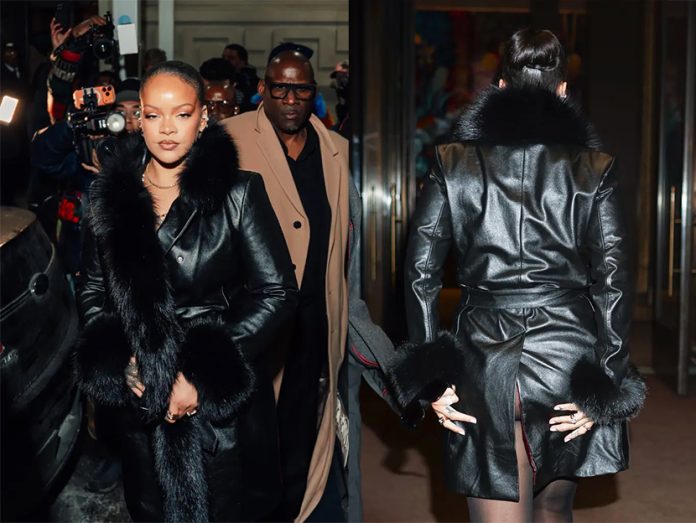
Rihanna suffered a wardrobe malfunction while attending her boyfriend A$AP Rocky’s AWGE fashion show.
The “Diamonds” songstress, 37, stole the show as cameras caught her flashing her derrière while walking inside the Hall des Lumieres on Friday night.
As she stepped inside the venue, her black leather AWGE coat featured a slit that climbed up the back, revealing her backside.
She quickly readjusted the back of her coat so her legs were covered from the flash of the cameras.
The Savage Fenty founder wore a black lace bra and a pair of sheer black footless tights under the jacket, which was adorned with a fur trim. She finished off her look with some classic black stiletto heels.
For accessories, she wore flashy silver jewelry for the outing. She styled her hair pulled back into a slicked ponytail.
Once inside the show, she took several lighthearted photos, holding the program notes in front of her eyes.
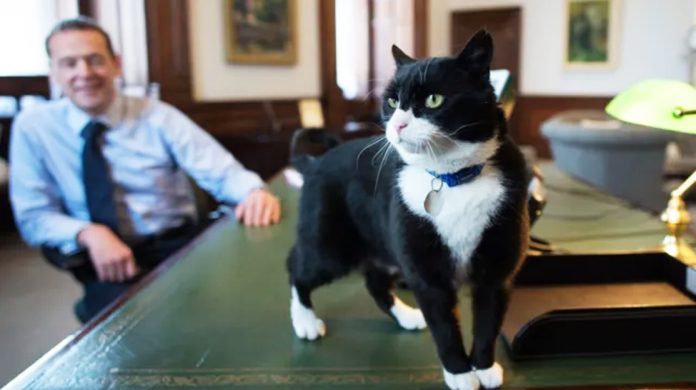
In February 2025, his social media account announced the cat had been brought out of retirement for a new overseas diplomatic posting nearly 3,500 miles away, as a “feline relations consultant (semi-retired) to the new Governor of Bermuda”.
Announcing his death, a post on the feline’s X account paid tribute to the “diplocat extraordinaire” who it said had “passed away peacefully on 12 February”.
“‘Palmy’ was a special member of the Government House team in Bermuda, and a much loved family member. He was a wonderful companion, with a gentle nature, and will be sorely missed,” the post added.
The black-and-white cat, who is named after the 19th-Century Foreign Secretary and Prime Minister Viscount Palmerston, joined the diplomatic service in 2016.
He moved out of the department’s central London building during the Covid pandemic, before formally retiring in 2020.
Announcing his retirement, a letter to Lord Simon McDonald, then the most senior civil servant at the Foreign Office, read that Palmerston had enjoyed climbing trees and patrolling the fields around his new home and wanted to spend more time “relaxing away from the limelight”.
“I have found life away from the frontline relaxed, quieter and easier,” the letter signed in Palmerston’s name read.
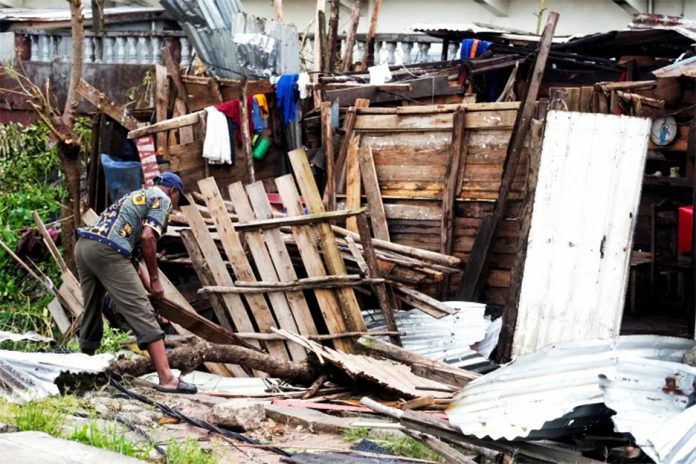
A man sorts his belongings after Cyclone Gezani tore through the port city
Cyclone Gezani has hit Mozambique’s southern coastal province of Inhambane, killing at least four people, according to officials.
The toll in Mozambique on Saturday came a day after the cyclone tore through Madagascar, killing at least 41 people and leaving a trail of destruction across the island.
The AFP news agency, citing meteorologists, said the storm lashed Inhambane with winds of up to 215km per hour (134mph).
It brought down trees and power lines, leaving more than 13,000 people without power, the national electric company said.
Water supplies were also cut off in several districts of the city of Inhambane.
The city is home to some 100,000 people.
Mozambique has been hit by frequent weather-related disasters that scientists say have been exacerbated by climate change.
The Southern African country is only just recovering from severe flooding that affected more than 700,000 people and damaged more than 170,000 homes in recent weeks, according to the United Nations Office for the Coordination of Humanitarian Affairs.
In Madagascar, the government declared a national emergency and said the storm had caused an estimated $142m in damage.
In addition to the deaths, at least 427 people were injured, and some 16,300 were displaced, according to officials.
The eye of the cyclone passed on Tuesday over Madagascar’s second-largest city, Toamasina, which has a population of 400,000, leaving it devastated.
The Indian Ocean island’s leader, Colonel Michael Randrianirina, said about 75 percent of the city had been destroyed.
Former US President Barack Obama has indirectly addressed a racist video posted on President Donald Trump’s social media, telling a podcast host that the “shame” and “decorum” that once guided public officials is now lost.
The offensive video included a clip depicting Obama and his wife Michelle as apes, which drew widespread criticism from Democrats and Republicans.
The White House initially defended the video, calling backlash “fake outrage”. The post was later blamed on a staff member and deleted.
Obama spoke to liberal podcaster Brian Tyler Cohen, who asked the first black US president about the tone of political discourse. Cohen cited Trump’s post among several recent controversies.
The clip – set to the song The Lion Sleeps Tonight – was included at the end of a video Trump’s Truth Social account shared containing unfounded claims about voter fraud in the 2020 election.
The post led to outrage from politicians, including from senior members of Trump’s Republican party.
Senator Tim Scott – the only black Republican senator – described it as “the most racist thing I’ve seen out of this White House”.
The clip recalls racist caricatures comparing black people to monkeys, and appears to have been taken from an X post shared by conservative meme creator Xerias in October.
Trump has told reporters that he “didn’t see” the part of the video that showed the Obamas.
“I didn’t make a mistake,” he told reporters when asked whether he planned to apologise.
The 47-minute podcast featuring Obama was released on Saturday. The episode begins with the host asking him to comment on US “discourse”, which he says “has devolved to a level of cruelty that we haven’t seen before”.
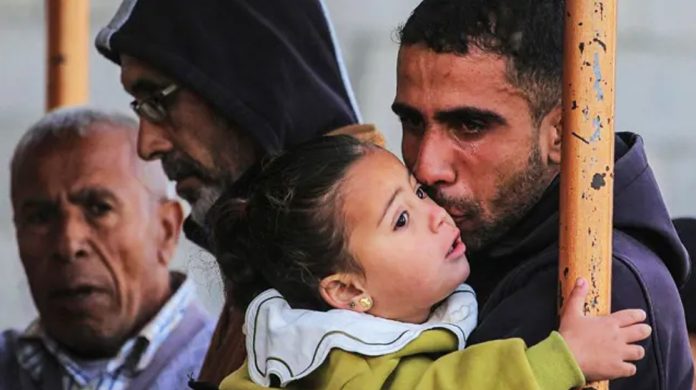
Hamas and Israel have both repeatedly accused each other of breaching a ceasefire
Eleven Palestinians were killed in Israeli strikes in Gaza on Sunday morning, according to Palestinian civil defence and health officials.
The IDF said it had struck terror targets in response to ceasefire violations by Hamas, and that militants had been killed after emerging from a tunnel into the area of the strip controlled by the Israeli military.
The Palestinian Red Crescent said a strike on a tent encampment in northern Gaza killed at least six people, while another strike in the south of the strip killed five.
Both Israel and Hamas have accused each other of near-daily violations of a fragile ceasefire agreement since it took effect on 10 October.
The Hamas-run Gaza health ministry has said at least 600 people have been killed since the ceasefire went into effect.
The latest strikes came as the preparations continued for the implementation of the second phase of a US-brokered ceasefire agreement.
Last month, US President Donald Trump announced a new body called the Board of Peace, which has a mandate from the United Nations Security Council to establish an international force tasked with securing border areas in Gaza, and overseeing the disarmament of Hamas.
The board, which was due to have its first meeting in Washington on 19 February, will also oversee the formation of a new technocratic Palestinian government in Gaza and post-war reconstruction.
Last week it was announced that Indonesia, a Board of Peace member, would deploy 8,000 soldiers to Gaza as part of phase two of the ceasefire agreement.
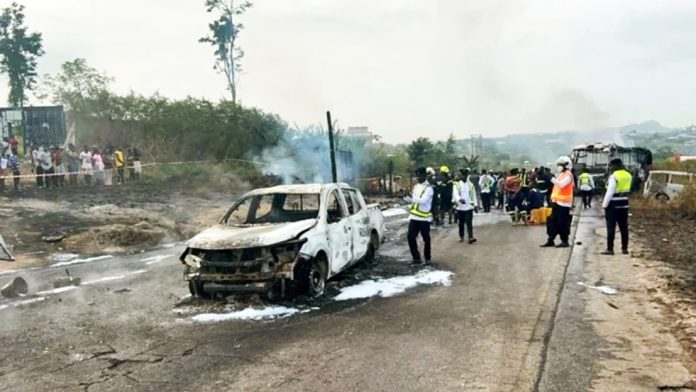
Personnel of the Motor Traffic and Transport Department (MTTD) of the Ghana Police Service at the scene of the accident.
The smell of burnt rubber and petrol still hung heavily in the air hours after the flames had died down.
What began as a routine mechanical fault on the busy Accra–Kumasi Highway ended in horror at Ntoaso near Nsawam — three lives lost, 20 people injured, seven vehicles reduced to charred metal, and families thrown into grief. But beyond the numbers lies a deeper, more troubling story: one of desperation, risk, repeated warnings and a tragedy that many say was preventable.
A bus burnt to the chassis along the N6 Highway.
A Breakdown That Drew a Crowd
It was earlier in the day of Saturday when a fuel tanker developed a mechanical fault and came to a halt along the highway. The tanker was loaded with petrol one of the most volatile and highly flammable fuels transported on Ghana’s roads daily.
Under normal circumstances, such breakdowns prompt caution. But at Ntoaso, the stalled tanker became something else entirely an opportunity.
Within minutes, residents, motor riders and passing motorists began gathering around the immobilised vehicle. Word spread quickly. People arrived with containers. Some came on foot; others rode in on motorcycles. A taxi pulled dangerously close.
Instead of keeping a safe distance, some individuals reportedly took chisels and metal tools and began striking the tanker’s body to force petrol to leak out. It was a moment that would seal the fate of many.
A Highway Turns Into a Fireball
As petrol poured onto the road surface, the environment transformed into a ticking time bomb. Fuel spread across the asphalt, fumes thickened in the air, and yet the siphoning continued. Then, in an instant, everything changed.
The leaked petrol ignited — whether from a spark, engine heat, or another ignition source remains under investigation. What followed was a violent explosion that sent flames roaring across the highway.
Motorcycles were engulfed, a taxi was consumed. People who had been bending over containers moments earlier were suddenly trapped inside an inferno. Eyewitnesses describe chaos — screams, people running in every direction, bodies on fire, and vehicles exploding one after another as the blaze intensified. Seven vehicles were completely destroyed.
The Human Toll
The statistics are devastating. After visiting victims at the Nsawam Government Hospital, Eastern South Regional Police Commander, DCOP Boadi Bossman confirmed the casualties:
20 injured victims were rushed to Nsawam Government Hospital. Six of them suffered severe burns and were referred to Koforidua Government Hospital for intensive care.4 victims were treated and discharged. 10 victims remain on admission.
3 people — two men and one woman — have died from their injuries.
Behind each number is a life disrupted.
One of the most heart-wrenching scenes involved a woman carrying a baby who had joined others to collect fuel. She sustained severe burns. In the chaos, a bystander grabbed the baby and ran, saving the child’s life. The mother now fights through pain in a hospital ward.
Two men who had driven a taxi close to the tanker to siphon petrol were burnt to death inside the vehicle.
The tanker driver himself was not spared. He sustained serious burns and is battling for survival in hospital — a cruel twist for a man whose day likely began like any other.
A Narrowly Avoided Mass Casualty
The fire spread rapidly, reaching a nearby VIP passenger bus. In what officials describe as a decisive act that prevented an even greater catastrophe, the bus driver quickly evacuated all passengers before flames fully consumed the vehicle. The bus was badly burnt. But every passenger survived. It is one of the few bright spots in an otherwise dark day.
“Nobody Should Go there” — Repeated Warnings Ignored and DCOP Boadi Bossman did not mince words: “Anytime a tanker falls or breaks down, nobody should go there. The container is flammable and it can explode,” he warned.
He revealed that police have conducted community sensitisation campaigns along the Accra–Kumasi corridor for years, educating residents about the dangers of tanker accidents and fuel siphoning. Yet the risky behaviour persists.
Even more troubling, he disclosed that officers attempting to secure such scenes have sometimes been attacked with stones by residents determined to access the fuel.
This is not the first time Ghana has witnessed tragedy following tanker-related incidents. Across the country, similar patterns have unfolded: a vehicle breaks down or overturns, crowds gather, warnings are ignored, and an explosion follows. The script rarely changes. The ending is often the same.
Desperation, Poverty, and Dangerous Decisions
Why do people take such risks? Observers point to a complex mix of economic hardship, rising fuel prices, unemployment and opportunism. For some, siphoned petrol represents quick money. For others, it is simply free fuel in difficult times.
But petrol is unforgiving – Unlike diesel, which is less volatile, petrol vaporises quickly. Its fumes are invisible yet highly explosive. It takes only a spark — from a mobile phone, a motorcycle engine, static electricity, or metal striking metal — to trigger disaster.
In Ntoaso, chisels striking a metal tanker created exactly the kind of environment experts warn against. What began as a scramble for free fuel ended in fatal flames.
Emergency Response and Aftermath
Security agencies including the Ghana Police Service, the Ghana National Fire Service, and the National Disaster Management Organisation (NADMO) swiftly moved to the scene.
Their tasks were daunting: Contain the blaze, Secure the perimeter, Prevent additional residents from approaching, Clear debris, Manage traffic disruption, Assist the injured.
Vehicular traffic on the Nsawam–Suhum stretch was diverted through the Nsawam Old Road as officers worked to restore order.
Investigations are ongoing to establish the exact cause of ignition and to determine responsibility.
For now, police say their priority is not arrests but saving lives, stabilising victims, and managing trauma.
A Preventable Tragedy
“This is not just an accident,” one officer at the scene remarked quietly. “It is preventable.”
The pattern is painfully familiar: a tanker breaks down or overturns, crowds gather despite warnings, fuel is siphoned, an explosion occurs, lives are lost, and communities mourn — until it happens again elsewhere.
In different towns, on different highways, the same mistake, the same outcome.
The charred remains at Ntoaso stand as a stark warning.
Three people are dead, Twenty families sit in hospital corridors praying.
Seven vehicles lie twisted and blackened by fire. A highway that should connect cities instead became a symbol of how quickly desperation can turn deadly.
As investigations continue and traffic slowly returns to normal, one question lingers over Nsawam: How many more times must this story be told before it finally changes?
Dark chocolate is any chocolate that contains at least 50% cocoa solids, cocoa butter, and sugar. Unlike milk chocolate, dark chocolate isn’t made with milk, though it could have trace amounts from cross-contamination during manufacturing. Lower-quality dark chocolate also could have oils, butter fats, and artificial flavors.
Humans have been consuming chocolate since the Mayans first drank it around 1500 B.C. Chocolate is still a popular treat today, and now we have even more reasons to crave it, especially dark chocolate.
Does dark chocolate have caffeine?
The more cocoa solids, the more caffeine, in fact. A 3.5-ounce serving of dark chocolate with 70%-85% cacao has 80 milligrams of caffeine. In comparison, an 8-ounce cup of brewed coffee contains about 95 milligrams and a 12-ounce can of caffeinated soda has between 40 and 55 milligrams. If you’re watching your caffeine intake, keep an eye on how much is in your dark chocolate, too.
Check the label. Cocoa is vegan in its natural form. But some brands of dark chocolates pick up small amounts of dairy during processing. Other added ingredients like whey, casein, and lactose are dairy products too.
Is dark chocolate good for you?
Dark chocolate does have some components that offer health benefits. But it’s fairly high in calories, fat, and added sugar. As with many foods, it’s best if you eat it in moderation. It has less sugar than milk chocolate, so it’s the better choice of the two.
Dark Chocolate Health Benefits
The cocoa used to make dark chocolate is rich in flavanols, which are chemicals found in plants like the cacao tree (where the cocoa bean grows). The unique flavan-3-ols in cacao beans are what gives pure cocoa a bitter taste.
Because cocoa’s flavanols have antioxidant and anti-inflammatory properties, it might help to:
Protect your heart
Separate studies have shown that dark chocolate may guard against heart and blood vessel (cardiovascular) disease. Dark chocolate seems to have anti-inflammatory effects as well as properties that help prevent blood clots and lower blood pressure. More study is needed to confirm whether these effects all work together.
Reduce your risk of diabetes
The flavanols in cocoa are thought to increase insulin sensitivity, which over the long run might reduce the risk of diabetes.
Lower blood pressure
One review study found that eating dark chocolate helped to reduce blood pressure, though in small amounts. Other research found that it improved blood vessel flexibility and function and possibly prevents arteriosclerosis, which is stiffness in your arteries caused from buildup of plaque and fats.
Improve vision
One small study found that people who ate dark chocolate had improved vision 2 hours later compared to people who ate milk chocolate instead. It’s not clear how long this effect might last or whether this might work in the real world. A similar small study did not show the same effects on vision from eating dark chocolate. We need much more research into this possible benefit.
Potential risks
Dark chocolate has a lot of sugar, fat, and calories, so it’s best to enjoy it in moderation. The American Heart Association recommends that you consume no more than 25-36 grams of added sugar per day, depending on your gender and size.
An ounce or 2 per day is more than enough to get the health benefits.
Chocolate bars vary in size and weight, so check the label to see how many ounces are in one portion. And note other ingredients, like caramel, that can add extra sugar and fat.
How to Use Dark Chocolate
Dark chocolate is common in treats like:
Candy bars
Cakes
Hot drinks
Puddings
Cookies
If you’re baking with dark chocolate, the best way to melt it is slowly in the microwave. Chop it into chunks and melt it in 30-second increments, stirring between each one. Melting it on the stove in a double boiler works well, too. It’s just not quite as fast.
Here are a few other ideas for adding small servings of dark chocolate to your diet:
Serve a few small squares with fresh fruit.
Stir some melted dark chocolate into your morning oatmeal.
Add 1 or 2 tablespoons of dark chocolate and a frozen banana to your blender and whip up a nondairy substitute for chocolate ice cream.