Home Blog Page 2583

Shukura rioters granted bail

0
Court

Eleven people, made up of drivers, bus conductor, and unemployed persons are being prosecuted for engaging in land guard activities, rioting with weapon, riot and conspiring to commit a crime.

The accused persons are 21 years old unemployed Emmanuel Gyan, Seidu Bashiru, 25 a trader, Wadudu Awudu, 32 a driver, Haruna Seidu, 31 a porter, and Issahaku Suleman, 26 and a driver.

The rest are Hakibu Shaibu, 68 and a driver, Adamu Yussif Haruna @ Baba, 38 unemployed, Oly Rahman, 46 a driver, David Majah, 38 a driver, and Issahaku Suleman, 26 a driver’s mate.

The accused persons all pleaded not guilty to the charges and were granted bail last week in the sum of GH¢50,000.00 with three common sureties.

The court, presided over by Patricia Amponsah, was told by the prosecuting officer, Chief Inspector John Gohoho, that the accused persons came into contact with the law, due to a power struggle at the Shukura Lorry Station.

According to the prosecutor, in September this year, confusion erupted between the members and executives of the Ghana Private Road Transport Union (GPRTU) over who was in charge of ticketing and revenue collection at the lorry station.

He stated that the confusion generated into protracted conflict between these two groups, and on several occasions the police had to intervene to maintain the peace.

C/Insp Gohoho continued that attempts by the Accra Regional Executives of the GPRTU to resolve the issue amicably had proven futile.

As a result, on October 7, 2022, the Accra Regional Police had a distress call that some men were using guns and cutlasses to attack people at the Shukura lorry station.

Without delay, he said, a team of police personnel was dispatched to the scene, and Emmanuel, Seidu, Osman, Wadudu, Haruna and Issahaku were arrested holding cutlasses.

He said the others managed to escape, but shortly after the team left the scene they were called back and the other accused persons were also arrest carrying a knife and cutlasses.

The court was further informed that Hakibu, Adamu, Oly, David and Issahaku were members of the two rival groups and were spotted by the police rioting at the lorry station and were also arrested. He added that many people were injured during the riot.

Chief Gohoho indicated that Emmanuel, Seidu, Osman, Wadudu, Haruna and Issahaku confirmed to the police during interrogation that they were contracted by the GPRTU Branch Secretary, one Abass Mohammed, at large, to repel the attack by the other group.

He asserted that it was as a result of these incidents that the accused persons had been charged with the above counts of criminal offences.

Gomoa Fetteh residents bemoan land guard activities

0
A landguard

Residents of Gomoa Fetteh in the Central Region have made a clarion call to the Ghana Police Service to assist the community combat land guard activities for peace and development to thrive in the area.

The residents said land guard activities had ruined their peace and development for the past 30 years, and that they were left with nothing but fear and insecurity.

The residents told journalists at a press conference recently, that the Gomoa Fetteh Traditional Area was made up of 20 communities, but hooligans had robbed them off their peace, security and development.

The leader of the group, Nana Kobina Easel, attributed the rise of land guard activities in the community to the never ending chieftaincy disputes that had raped the area of its glory.

Nana Easel indicated that these self-styled chiefs, in their quest to legitimise their rule, engaged the services of land guards to cause fear and panic in the area.

“Usually, these de factos load numerous gunmen into the town to sound multiple gunshots, causing fear and panic at any point in time they choose, and no law deals with them for this act,” he said.

He alleged that some of these self-styled chiefs were involved in the sale of lands, and, therefore, called on the general public to beware of purchasing lands in the community.

Nana Easel added that people should ensure that they conducted searches on any land being offered for sale before they made payment.

“We, therefore, advise those who have been running to them to purchase land without asking for proper documentation, that kindly advise yourselves and do due diligence, because you  are being defrauded,” he said.

He consequently called on the Central Regional and National House of Chiefs, the Chieftaincy Ministry, and the police to intervene in the situation in order to restore calm.

One of the community leaders, Ohembaa Amoesima Nkrabea I, added that it had resulted in the inability of women to undertake economic and domestic activities such as selling, going to the farm, or even going to fetch water, due to the high levels of insecurity in the community.

She reiterated that the authorities must do everything possible to restore peace in the area, to enable them have their share in development.

Editorial: Regulatory amendment eminent for fight against illegal mining 

0
Editorial

The national interest surrounding illegal mining has hit the roof top. Every right-thinking individual in the country has in one way or the other advocated for an end to the terror that is being visited on the lands and water bodies of the nation.

Analysts have argued there are laws against illegal mining but they are not biting enough or being effectively enforced.

The Ministry of Lands and Natural Resources is mandated to safeguard the lands and all the resources therein, according to law. Next is the Minerals Commission of Ghana, which is government’s agency with the primary responsibility of developing and coordinating mineral sector policies and monitoring their implementation. The Commission was established under the Minerals Commission Law (PNDCL.154).

With the promulgation of the 1992 Constitution, the Parliament of Ghana enacted the Minerals Commission Act, 1993 (Act 450) to give continued legal backing to the existence of the Commission, as required by Article 269(1) of the Constitution.

An Act to revise and consolidate the law relating to minerals and mining and to provide for connected purposes, the Minerals and Mining Act, 2006(Act 703) was enacted.

Changes were made in the Minerals and Mining (Amendment) Act, 2015 (Act 900), followed by the enactment of the Minerals and Mining (Amendment) Act, 2019 (Act 995).

Though Act 995 imposes harsher penalties on illegal miners than the previous law, The Chronicle has discovered a loophole and would like to initiate a discussion about it.

We have noted that one of the challenges the Minerals Commission is facing in its fight against illegal mining is the action by state security to move to apprehend illegal miners on site after they have been prompted.

The Chronicle participated in a media workshop organised by the Minerals Commission on Minerals and Mining Legislation. The program educated the media on the operations of the Minerals Commission, during which participants brainstormed on the challenges of the fight against illegal mining and the way forward.

We noted with utmost surprise that, contrary to the perception of a rather idle agency regulating mining activities in the country, there are other stakeholders who are not up and doing. One such institution is the state security, which in most situations fails to act on alerts from the Minerals Commission on illegal mining activities.

Participants were informed of the laid down channel of reporting by district officers of the Minerals Commission, which may be information of illegal activities, which is then forwarded to the appropriate security quarters, but in most cases, little or no action is taken.

Interestingly, district officers go the extent of giving out the location of the illegal activity, including exact land coordinates, to enable the security to identify the site, even without the Minerals Commission leading them.

We, first of all, commend efforts of all stakeholders fighting illegal mining in the country, be it in the gold, quarry, or sand winning.

However, considering what this paper learnt from the very educative workshop by the Minerals Commission, we would like to suggest that an amendment be made to give arresting powers to the regulator.

We welcome further education on the law on this subject, as we do not intend to be Law Lords, but our interest is how to jaw-jaw to solve the issue, derailing the effort of the Minerals Commission, who in the end receive backlash for purportedly not having done any work.

It is our blief that if the law allows for some state security personnel to be on secondment with the Minerals Commission through the parent sector, the Ministry of Lands and Natural Resources’ collaboration with state security, in accordance with the law, the former will have security at their disposal for quick arrest, given that it is always on the ground monitoring mining activities.

We are making this suggestion based on what we observed to be a gap in the mandate of the Minerals Commission per the laws it operates under and the reality on the ground.

We hope that the legal brains will keep this debate up and deliberate to come up with a way forward. It is important because most of these illegal miners wield dangerous weapons, and it is only state security that will be able to face and defeat them.

However, to avoid the bureaucracies of reporting to appropriate quarters who may not act on the issue, the regulating body should be mandated by law to have security at its berk and call.

Magistrate travels 144km to dispense justice

0
A Magistrate

Justice delivery at the Sege Magistrate Court in the Ada West District of the Greater Accra Region has become a herculean task, because the presiding Magistrate has to travel 144 kilometres every Monday and Thursday from Doryumu in the Shai Osudoku District to perform his justice delivery duties.

The situation has come about due to the absence of an official residential accommodation for the sitting Magistrate, who is left with no option than to commute between Doryumu, where he has a private residential accommodation, and Sege.

The Chronicle gathered from Sege that the long distance travel to dispense justice naturally has a fatigue effect on the man who is of age.

The paper is also informed from reliable sources that the situation is also having adverse effects on the delivery of justice, since cases are not dealt with on time through no fault of the judge.

Instances were mentioned when the vehicle being used by the Magistrate suffers mechanic defects, and the listed cases had to be adjourned.

The District Chief Executive (DCE) for Ada West, Mr. Sampson Kpankpan, bemoaned the plight of both the judge and court when contacted by The Chronicle.

According to him, hitherto, the Magistrate at Ada East, who is blessed with a duty bungalow, was taking care of the District Court at Sege until the Ada West was carved from the East.

This, he said, had positioned the newly-carved Ada West with the responsibility to provide an official residential accommodation for the new judge.

According to the DCE, the Assembly was making every effort to put up residential accommodation, but until that happened, they had to rent a place for the judge, but lack of cash was delaying the implementation of the plan.

Presently, he went on, the Assembly had secured a three-bedroom house at GH¢1,500.00, but they were unable to raise the two years rent advance, which was GH¢36,000.

Mr. Kpankpan used the opportunity to appeal to Electro Chem Limited in charge of salt mining at Songhor, Non-Governmental Organisations (NGOs) and philanthropists to come to their aid to secure the much-needed residential accommodation for the District Magistrate.

Female Journalists organise breasts screening exercise

0
Some members in a group photograph with some beneficiaries

Female Journalists for Women and Rural Development in Africa (FJWoRDA) and B4 Foundation, a Non-Governmental Organisation have organised a breast screening exercise at Brafoyaw, a suburb of Cape Coast.

The exercise was aimed at creating awareness on breast cancer among women, to enable them seek early treatment. It was also used to educate them on sexual and gender based violence.

A total of 19, out of the 150 community members who took part in the screening, were referred to the Cape Coast Teaching Hospital for further screening.

The Executive Director of FJWoRDA, Mrs Shirley Asiedu-Addo, in her address stated that, breast cancer continue to affect families and communities across the world.

“As female Journalists, we are not just writers and broadcasters. We are mothers, wives, sisters, children, as well as neighbours, and everything that affects the community affects us too,” she said.

She further said: FJWoRDA decided to use October to reach out to the community to create awareness and encourage prompt treatment for any abnormalities detected with the breasts.

She stated that there is life beyond breast cancer if detected early and treated promptly.

Mrs Asiedu-Addo encouraged women to take care of themselves first in order for them to play the critical roles in the development of their families, communities and country.

She urged women to go for regular checkups and seek prompt health care.

She further urged other organisations to support efforts at reaching out to the communities.

An officer with the Domestic Violence and Victim Support Unit, Mr Richard Twum Boadi, urged the participants to take keen interest in domestic violence issues and also report such issues early for immediate action.

He stated that about 80,000 girls, between the ages of 12 and 18, were co-habiting with their boyfriends nationwide, out of which about 50,000 had already given birth or pregnant.

He said “with this, it is the poverty level that keeps increasing”.

He appealed to parents especially mothers to educate adolescents on their sexuality and the implications associated with premarital sex.

The Executive Director for B4 Foundation, Ursula Adadzewa Fynn, indicated that the core function of the foundation was to help women and the under-privileged in the society.

She encouraged the women to cultivate good and healthy lifestyles and also go for regular check-up.

The beneficiaries expressed their gratitude towards the kind gesture.

Ashanti NDC Council of Elders sets records straight

0
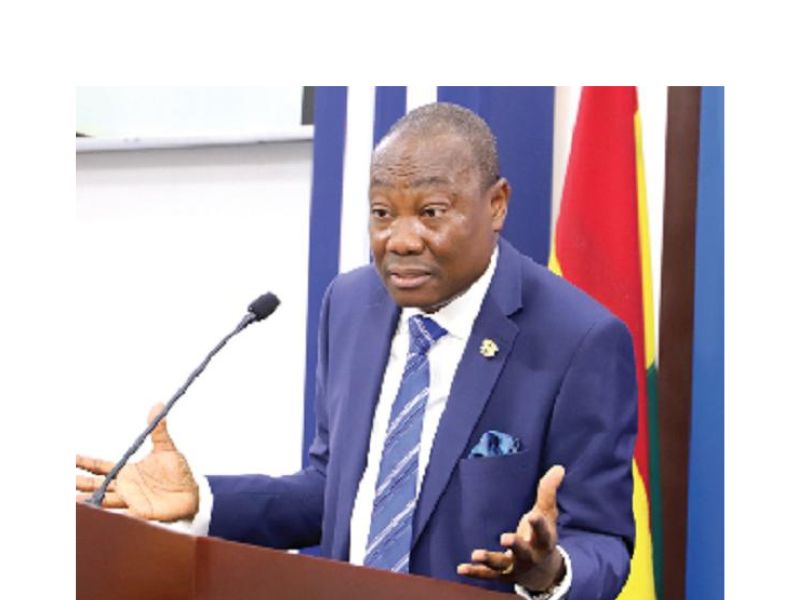
Frank Osei Mensah, Chairman of Ashanti Regional NDC Council of Elders

The Ashanti Regional Council of Elders of the National Democratic Congress (NDC) has vehemently refuted claims and allegations that the impending regional election is fraught with tribal politics.

Mr. Frank Osei Mensah, Chairman of the Council, in a statement, regretted that the report of a 7-member Fact-Finding Committee was being represented by some individuals who have had the chance of reading portions of it.

The first NDC Regional Chairman stated categorically that at no point during the deliberations of the Committee did the members discuss anything about tribe or tribal politics advertently or inadvertently, neither did the final report submitted to the national bodies, stating that the Council of Elders was yet to receive comments and directives from the two apex bodies of the party.

Mr. Osei Mensah explained that the Executive Summary of the report clearly stated that even though no concrete evidence was established that the Regional Chairman and the Secretary collected monies from some NPP officials, some party members, including the Regional Women’s Organiser and the Regional Organiser, were convinced that both the Regional Chairman and the Regional Secretary compromised their positions to the detriment of the NDC party, because of the manner they handled the whole election process in the region.

Ex-Chairman Osei Mensah admitted some members of the Committee, who spoke to the media on the summary of the report, misrepresented it to suit their whims and caprices, therefore, the general public must ignore the elements of tribal politics and misrepresentation of comments by some Committee members.

The Chairman of the Council stressed that the NDC, as a political party, needed all Ghanaians from various tribes and religions to vote massively for the party to win the 2024 elections.

He entreated delegates to remain united and elect hardworking and trustworthy people, irrespective of their tribe to lead the party in the Ashanti Region.

Galamsey can end if all stakeholders diligently play their roles -MINCOM

0
Mr. Martin K. Ayisi, CEO Minerals Commission

The Minerals Commission (MINCOM) is very optimistic that should all stakeholders in the mining sector, especially gold, execute their functions to the letter the terror of illegal mining could end.

The mining regulating institution has made these rather conclusive remarks having observed what could be described as the lackadaisical attitude of other agencies in the value chain.

Last Thursday and Friday, the Commission engaged the media on minerals and mining legislation, during which it was observed that contrary to public perception of the poor performance of the institution, it was rather playing its role.

The journalists (both local and international) were educated on the activities by officials from the Ministry of Lands and Natural Resources, the Minerals Commission, and the National Alternative Employment and Livelihood Programme (NAELP).

During the interaction, the participants sought to understand how the Minerals Commission had decentralised its operations against claims by chiefs and traditional leaders that the government did not involve them in its operations.

The government has been accused of giving out licences to miners without the knowledge of the local authorities. In response, a facilitator from the Minerals Commission, Eric Bukari, debunked the claim and indicated that their district officers send copies of all approved mining licences and accompanying gazettes to the chiefs, the landowners, and other concerned offices.

Another issue which came up was the monitoring system of the Minerals Commission about which the participants were educated that its officials in the various districts filed regular reports to the regional and to headquarters.

These reports are copied to the District Security Coordinating Council, meaning not only the Minerals Commission would be aware of illegal activity in the area, but the assembly itself.

The Commission has also observed that some miners, under the guise of a licence for a particular mining activity, turn to engage in another. Meanwhile, licences are site and mine specific.

Curious about why nothing seemed to be happening to curb the menace, the participants were informed of the numerous reports filed with the Police Service on illegal mining activities, for which no action had been taken.

“We work in accordance with the laws. So, we at the Minerals Commission are doing our part. We believe that if all stakeholders also do their part, we can end illegal mining activities,” Mr. Bukari said.

WORKSHOP TOPIC

The workshop educated the journalists on the small-scale mining aspects of the Minerals and Mining Act, 2006 (703). Sections 81-99 and the Community Scheme; Small-Scale Mining License Acquisition Procedures and License Holder Obligations.

The rest were sanctions for illegal mining under the minerals and mining (Amendment) Act, 2019 (Act 995); an overview of the Minerals and Mining (Minerals Operations-Tracking of Earth Moving and Mining Equipment) Regulations 2020 L.I. 2404; types of minerals rights and characteristics; and lastly, an overview of NAELP.

SANCTIONS FOR ILLEGAL MINING

From the Minerals Commission Legal Department, Mr. Josef Iroko took the participants through the sanctions for mining illegally under the Minerals and Mining Act, 2019 (Act 995), as amended.

It was observed that sanctions under the amended act were stiffer. For instance, the act provides sanctions for providing or being involved in the provision of an excavator for mining operations contrary to law.

One could be fined from 10,000 penalty units up to 15,000 penalty units, or jailed for 15 years minimum and 25 years maximum, an increase from the old law, which pegged the fine at 3,000 penalty units and a maximum jail term of 5 years or both. A penalty unit is GH₡12.

Mr. Iroko highlighted a scenario, which was supported by seasoned broadcaster, Kwaku Sakyi-Addo, that, under the old law, a judge could jail an accused person for a day and the law would have been satisfied.

TRACKING EQUIPMENT

The icing on the cake was a tour of the yet-to-be commissioned control room for tracking of earth-moving and mining equipment, situated in the huge edifice of the Minerals Commission.

The Chief Executive Officer, Mr. Martin K. Ayisi, informed participants about the software, which was locally designed by the University of Mines and Technology (UMaT) at Tarkwa.

He stated that several foreign companies took part in the bidding process, but they could not surpass UMaT.

An official from the tracking department, on the directive of the CEO, showed a test video of how the tracking system would work, and assured them that they have the capacity to track as much earth-moving equipment in a day.

NAELP

Mr. Benedict Addae from the National Alternative Employment and Livelihood Programme (NAELP) gave an overview of the NAELP, whose objectives include providing alternative employment and livelihood programmes to miners impacted by the government’s management of challenges in the illegal mining sector.

They are to also reclaim degraded lands in mining communities to enhance livelihoods. In his presentation, Mr. Addae showed pictures of reclaimed land at Awaso.

Delta Airlines supports youth development in Africa

0
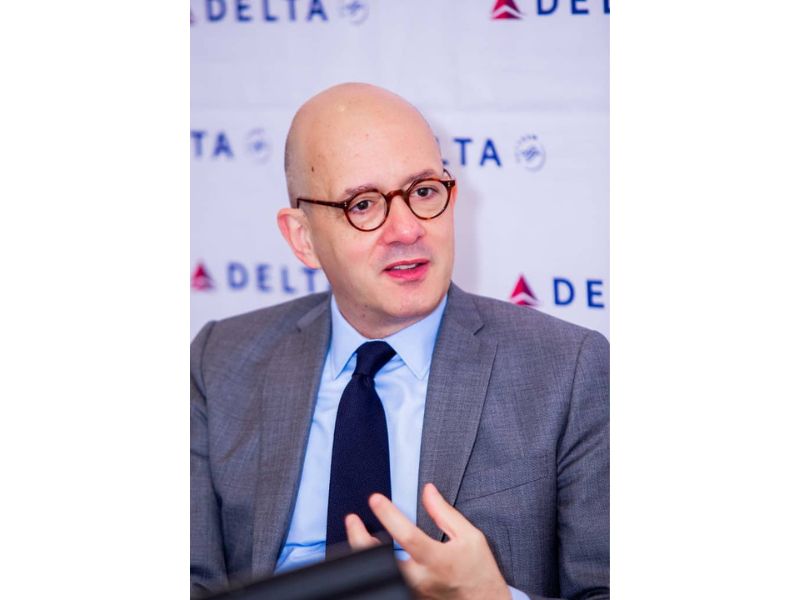
Nicolas Ferri, Delta’s Vice President of Europe, Middle East, Africa, and India

Delta Air Lines and Junior Achievement (JA) Africa, a non-profitable organisation, have renewed their partnership to advance business and STEM (Science, Technology, Engineering, and Maths) education among young people across the continent.

JA Africa, as one of Africa’s largest and most impactful youth-serving Non-Governmental Organisations (NGOs), is bringing on board hands-on, immersive learning in work, financial health, entrepreneurship, sustainability, STEM, economics, citizenship, ethics, and more.

As part of the partnership, the airline would present Delta Social Impact Award to JA Africa’s flagship company of the Year Competition in Lagos, Nigeria. The competition will take place from December 7-9, 2022.

The event is the culmination of a year’s work for the young participants from Eswatini, Ghana, Kenya, Nigeria, South Africa, Tanzania, Uganda, Zambia, and Zimbabwe, who have created and run their own businesses over the past academic year, as part of the JA Company Programme.

“As the next generation of business leaders – and global travelers – we work with Junior Achievement across the globe to facilitate education programs for young people,” said Nicolas Ferri, Delta’s Vice President of Europe, Middle East, Africa, and India.

“We have seen the positive impact of this work, here in Africa. We look forward to continuing our partnership as we support the next generation to meet their full educational potential, and move into meaningful employment,” the company said in a statement released in Accra recently.

Over the next 12 months, Delta will also sponsor JA Africa’s STEM innovation camps for 50 school children each in Accra and Dakar – two cities where the airline flies nonstop to the United States.

The one-day camps encourage creativity, critical thinking, teamwork, and problem-solving as the young people must put forward solutions to solve a specific business challenge. Colleagues from Delta will be on hand to support JA Africa’s team and provide coaching and mentoring to the students throughout the day.

Simi Nwogugu, Chief Executive Officer (CEO) of JA Africa, said: “We are honored to have Delta Air Lines as a long-standing partner. Their sponsorship for JA Africa’s 2022 Company of the Year Competition, through the Social Impact Award, will encourage our young entrepreneurs to use innovative approaches to solving societal issues.

“This grant will also support Innovation Camps in Ghana and Senegal, providing a forum for our students to work in groups to address real-life business challenges. These programs give our students the exposure and skilling they need to thrive in the 21st Century workforce.”

Junior Achievement Africa, part of JA Worldwide, is one of Africa’s largest organizations working on youth economic empowerment. Delta supports 32 JA chapters across five continents to teach students about financial literacy, work readiness, and entrepreneurship.

JA Africa has a presence in 13 countries in Sub-Saharan Africa and collectively reaches more than 300,000 young people and more than 3000 schools every year. JA works in Côte d’Ivoire, Eswatini, Gabon, Ghana, Kenya, Mauritius, Nigeria, Senegal, South Africa, Tanzania, Uganda, Zambia, and Zimbabwe with a goal to secure better lives for the young, their families, and their communities.

Illegal structures on Tema Ramsar site demolished

0
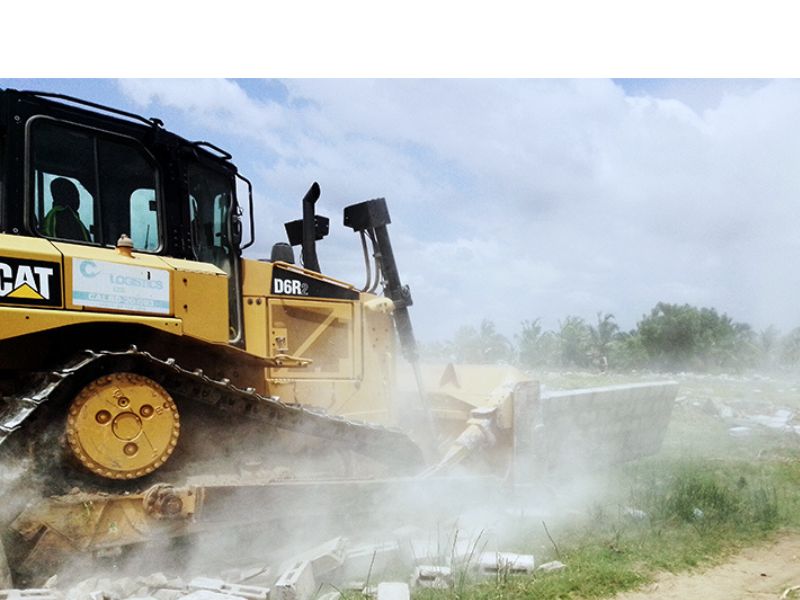
An earth-moving machine demolishing some fence walls standing in the Ramsar

Henry Quartey, the Greater Accra Regional Minister, has ordered the flattening of all fence walls on waterways at the Ramsar SITE at Klagon, near Tema.
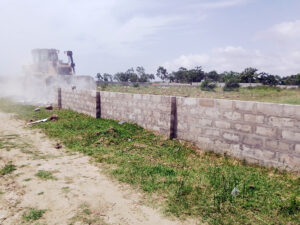
The exercise, led by the Regional Security Council (REGSEC), in conjunction with the Tema Metro and West Tema Municipal Assemblies and NADMO, which began on Wednesday, saw heavy joint state security personnel providing security to the operators of the earth-moving machines, who flattened as many fence walls as they could in the first phase of the exercise.

The exercise, scheduled to end on Friday, is aimed at reclaiming and conserving the buffer from all illegal developers.

Before the exercise would commence, Mr Henry Quartey, ‘Accra Commando’, explained the essence of the exercise to the joint security personnel at a parade at the Klagon District Police Command.

“The area for the operation is swampy so I would urge you to take and obey orders from your field commanders. I thank you for your presence and readiness to provide the needed security to the workers,” ‘Accra Commando’ told the armed security personnel.

Turning to the media, the GAR Minister explained that for all the lands at the Ramsar site, about 3,000 acres were acquired by Kwame Nkrumah’s government and entrusted to the Tema Development Company (TDC) Limited.

However, he said about 2,000 acres of the land had been encroached upon with unauthorised buildings “and for me and as a country, I don’t care who sold the land and to whom. What I know is that all fence walls that have eaten into the Ramsar are going down. There is no order from above to halt this very important operation.


“If we don’t do it today, then, I don’t know when we can do it so I am in full support of the operation. Later, the Minister for Lands and Natural Resources will address you (media) on the progress of work after this first phase.”

The second phase of the exercise, which would see buildings being razed down, Mr Quartey explained, would follow later after the sector Ministry and Forestry Commission had identified the buildings in the waterways in the buffer zone.

Mr Henry Quartey said it was critical to deal with the illegal developments in the waterways “because we can’t pretend these things cannot be halted.”

1D1F: Akufo-Addo commissions maize processing factory at Nsuta

0
President Akufo-Addo cutting a tap to commission the factory

President Akufo-Addo on Tuesday, 18th October, 2022 commissioned the Sekyere Maize Processing Factory located at Nsuta Kwagye, in the Sekyere Central District of the Ashanti Region.


The construction of the Sekyere Maize Processing 1D1F project began in January 2020 and was completed and handed over in June 2022, at a cost of GH¢6.7 million.

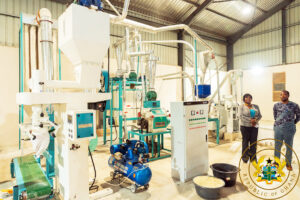
It has a state-of-the-art maize processing equipment, with the capacity to process 4 to 5 tonnes of dry maize and 5 tonnes of maize grits per day respectively.

The processing plant installed at the factory includes a maize Drying Plant and a Grit Milling Machine. It has a standby generator and a mechanised borehole to supply the factory with water. In addition, the factory has a Warehouse, fully furnished office accommodation for staff, a conference room, laboratory room and a canteen for the workers.
The 1D1F Common User Facility (CUF) is a farmer-owned agro-industrial processing facility established with seed funding from the Ministry of Trade and Industry (MOTI) under the Rural Enterprises Programme (REP).

The CUF 1D1F concept was conceived in 2017, following a policy direction by the Ministry of Trade and Industry to re-align the Rural Enterprises Programme to be consistent with the Government of Ghana’s Industrial Transformation Agenda being implemented by the Trade Ministry.

The Model seeks to enhance the ability of farmers and other agricultural value chain actors with little or no financial capacity to establish their own Common User Processing facilities to process their farm products.

In response to this constraint, the Trade Ministry sought funding from African Development Bank (AfDB) to introduce this new concept of establishing CUFs in five (5) Districts, including the Sekyere Maize Processing facility.

These CUFs have been established in selected areas where farmers engaged in the same commodity value chains lack facilities to process the outputs from their farming operations.

The CUF 1D1F is owned by a group of maize farmers and other stakeholders with the following shareholding structure – 70% by Sekyere Central Union of Maize Producers Associations (Mother Association of all Maize Farmer Based Organisations in the Sekyere Central District of Ashanti); 20% by Ministry of Trade and Industry; and 10% by Traditional Council.

The Sekyere Central Union of Maize Producers Associations comprises of 18 individual FBOs. The total membership of the 18 individual FBOs is about 600 farmers.


The Sekyere Maize Processing Factory is expected to directly employ some 118 workers, including Management professionals, Factory Floor workers and Plantation Management workers, who will work on nucleus maize farms.

In addition, over 600 farmers from the Associations will be directly engaged as contract suppliers who will supply maize to the factory.

The Ghanaian Chronicle