Home Blog Page 2513

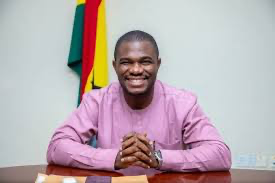
Dr. Hayford Ayerakwa: Choose hope not despair

0
OPINION

Following the Presidential address last Sunday, many people have taken to social and traditional media to express their opinions on what the address meant to them.

One of the interesting takeaways of the address was the issue of money ‘does not like noise’.

This expression has been taken lightly or very seriously, depending on the interpretation one assigns it.

However, this is an age-old expression that has been used by many but coming from the President of the Republic has attracted societal interest. I have seen how much effort people are putting in analysing the President’s speech.

From where I sit, I could see that the President was speaking to different constituents and thus gave a high-level address that was to serve as a guide to specific ministries to provide the detail.

Following the address, the players in the market immediately responded and that together with $710m cocoa syndicated funds have partly accounted for the stability of the Ghana Cedi this week.

One such example is the policy that there will be no haircut on individual, cooperate or pension funds. What must be clarified however is the fact that, based on a new policy directive from the Securities and Exchange Commission (SEC/DIR/002/10/2022), a new policy regime has been introduced, which is discouraging disinvestment before maturity.

This means if one should rush into discounting their investments, they stand to lose part of their investment. This policy is not new in investment except that Ghana has for a long time opted for the amortization approach.

Therefore, I would have expected by now that, the different Ministries and Agencies would have provided detailed policy directions after the address. This unfortunately, is taking a while to come if it will come at all.

Ghana is in a crisis as alluded to by the President. At the same time, Ghana stands the chance to make great economic gains that can change the future of this nation for good.

At present, imports are the most expensive commodities on our shelves. This presents an opportunity to make our locally produced goods cheaper.

For example, if you take a locally produced chicken at current prices, it is still cheaper, healthier (devoid of antibiotics), and more nutritious. How will the average Ghanaian know this truth if they are not told? The same can be said of our locally produced rice which is healthier and cheaper.

I expect the Ministries of Food and Agriculture, Trade, and Information to be on a deliberate and rigorous campaign by now to tell the good news of why we must all patronize in locally produced goods.

Apart from the health and nutritional benefits, this will create jobs and lessen the pressure on the cedi.

One of my recommendations in this regard is for shop owners to begin to designate specific spaces in their shops to locally produced goods or provide clear labelling for locally produced goods. This will help consumers to make quicker decisions.

Households on their part should begin to consider locally produced substitutes for their daily bread baskets. As we patronize in locally produced goods, the cost of production reduces and that will translate to lower prices.

In a conversation with a businessman, he admitted they have decided to stop importing potato chips because the demand has dropped due to increasing prices.

While this is a problem, it presents an opportunity to consider a locally produced substitute. A healthier and cheaper option in my view could be yam chips.

For most middle-class families, if they can access yam chips in a form that makes baking or frying comparable to imported chips, I can guarantee the yam will be preferred over anything else.

The government on its part should be deliberate at providing credit guarantees to some of these innovative ideas that will help to address the import challenges currently facing the country.

Going forward, 1D1F should be relooked at to go into the production of some of these essential domestic and industrial commodities.

The President’s six month notice to importers of specific commodities must not be taken lightly.

The Ministry of Food and Agriculture together with the relevant Ministries of Trade, Finance, etc, should work to ensure that adequate local arrangements have been made for the items to be affected by the new import regime.

The process should be simulated and evaluated ahead of the implementation of such a policy. If this transition is not done well, this can lead to hyperinflation.

One thing that can be done is to engage the importers of affected items to make Ghana their primary source while they possibly change their focus to exporting made in Ghana products instead.

This way, they would not have to collapse their already established businesses which might further worsen the plight of individuals involved in that value chain.

I also expect that policies will be put in place to regulate how food is exported out of the country through our land boarders. For a start, government can put restrictions on the export of some food items to guarantee adequate local supply.

I encourage the youth to channel their social media attention to thinking through solutions and the opportunities that the current crises have presented them.

Universities and training institutions must awaken their creative senses to begin to innovate around what currently exists in the country.

Lecturers and supervisors must push students to innovate solutions in their presentations and project works. As we collectively put our hands on deck, we will soon see the good in the bad.

In times like this, be careful who you listen to. It can give you hope and energy to do the right thing or will demoralize you and throw you into despair. As for me I choose hope, not despair.

Source: myjoyonline

The views expressed in this article are the author’s own and do not necessarily reflect The Chronicle’s stance.

They want to make the naira look beautiful, even if it can’t buy bread –Pastor Adeboye

0
Pastor Adeboye

The General Overseer of the Redeemed Christian Church of God (RCCG), Pastor Enoch Adeboye, on Friday, criticised the planned redesign of the N200, N500, and N1,000 banknotes by the Central Bank of Nigeria (CBN).

The revered cleric expressed displeasure that the Federal Government is concerned with the redesigning of naira notes despite the falling value of the national currency.

Adeboye, who spoke during the church’s November Holy Ghost Service with the theme, ‘Let It Rain’, also said the naira does not even worth the paper it is printed on as people cannot afford to feed.

“You know what’s going on in our country. It doesn’t even make sense anymore. Our naira now is not even worth the paper it is printed on,” the octogenarian said at the programme held at RCCG’s international headquarters along the Lagos-Ibadan Expressway.

“And while people are hungry, trying to find enough money to buy bread to eat, our bosses are thinking of making the naira more beautiful, even if it can’t buy bread, at least, it will look beautiful. Oh Lord, have mercy,” he said.

On October 26, CBN Governor, Godwin Emefiele said the apex bank will issue redesigned N200, N500, and N1,000 notes, effective December 15, 2022, while the new and existing currencies will remain legal tender and circulate together until January 31, 2023.

Though the Minister of Finance, Budget and National Planning, Zainab Ahmad, protested that her ministry was not carried along, the apex bank said it followed due process.

Credit: channelstv.com

Govt announces resumption of Abuja-Kaduna train services

0
Abuja-Kaduna train service

The Federal Government says train services on the Abuja-Kaduna rail line will resume this November. The Minister Of Transportation, Mu’azu Sambo made this known on Monday while giving the score card of his ministry in Abuja.

He said adequate security has been put in place to ensure the safety of passengers but did not give any specific date for the resumption.

Sambo said the ministry has learnt enough lessons from the attack in March that led to the suspension of train service on the Abuja-Kaduna route.

The minister also noted that a system has been put in place that will ensure prompt monitoring of movements on the rail tracks.

The Nigerian Railway Corporation (NRC) suspended train service along the route after Boko Haram terrorists attacked a moving passenger train in Kaduna on March 28, 2022.

The insurgents had blown up the rail track and bombed the moving train, killing some and abducting more than 60 passengers. The unprecedented attack had attracted international and national outrage.

The terrorists, who attacked the train in Kaduna, released hostages piecemeal with the last release being on October 5, 2022.

Credit: channelstv.com

Niger Delta reps demand sack of humanitarian minister

0
Minister of Humanitarian Affairs, Sadiya Farouq

Niger Delta caucus in the House of Representatives has asked President Muhammadu Buhari to sack the Minister of Humanitarian Affairs, Sadiya Farouq over her comment on the recent raging flood. The lawmakers, during a press briefing on Monday, expressed dissatisfaction with the comment by the minister that Jigawa State is the most affected state in Nigeria.

It would be recalled that the Minister had during a press briefing, said Bayelsa State is not within the top 10 most affected states.

Fred Agbedi, the leader of the group, flanked by eight other lawmakers from the region, said the President must relieve the minister of her job, or they will take action.

“We call on the Minister of Humanitarian Affairs, Disaster Management and Social Development to honourably resign her appointment as a minister of the Federal Republic of Nigeria failing which Mr President should relieve her of her appointment immediately,” he said.

Also speaking at the briefing, Bob Solomon, a lawmaker from Rivers State, said the minister has a history of playing politics with intervention.

Abiante Dagomie, another lawmaker from Rivers State, said Bayelsa and other states in the Niger Delta region are currently submerged by flood and urged President Buhari to take action while he noted that no dredging has been done along the major channels of rivers that empty in the delta in the past 30 years.

Credit: dailypost.ng

UK Court Moves Ekweremadu’s Trial To Jan 31

0
Deputy Senate President, Ike Ekweremadu

The Central Criminal Court in London, the United Kingdom, has moved the trial of Deputy Senate President, Ike Ekweremadu over alleged organ harvesting from May 2023 to January 31, 2023.

The Old Bailey agreed that arguments will be heard on the 16th or 19th of December 2022 before the commencement of the trial in January.

Ekweremadu and his wife Beatrice were arrested on June 23 and charged with conspiracy to trafficking a person for organ harvesting in violation of the Modern Slavery Act 2015.

Though he was absent from court on Monday, his wife who was released on bail in July and Sonia, the couple’s daughter, were present.

Last week, Justice Inyang Ekwo of the Federal High Court Abuja ordered the interim forfeiture of Ekweremadu’s assets following an ex-parte motion by the Economic and Financial Crimes Commission (EFCC).

The apex Igbo socio-cultural organisation, Ohanaeze Ndigbo Worldwide, subsequently described the court’s ruling as “hasty” and a “selective judgement”.

Credit: channelstv.com

Chief Justice swears in Election Petition Tribunal members

0
Chief Justice of the Federation (CJN), Justice Olukayode Ariwoola

The Chief Justice of the Federation (CJN), Justice Olukayode Ariwoola has sworn in members of the Election Petition Tribunal for the 2023 general elections.

The event took place on Monday at the National Judicial Institute (NJI) in Abuja, the country’s political capital.

Having administered the oath of office on the members of the Tribunal, the CJN urged the judicial officers not to treat their assignments with levity, warning that he will not tolerate any form of judicial recklessness.

The exercise kicked off a four-day capacity workshop for the justices and members of the Tribunal to end on Thursday.

In other to forestall conflicting rulings by the Tribunals, the Appeal Court compiled a case management system, which is a document that will serve as an additional guide.

Also in attendance at the event include the President of the Appeal Court, Justice Monica Dongban-Mensem; Chairman of the Independent National Electoral Commission (INEC), Mahmood Yakubu; as well as justices of the Court of Appeal.

Justice Dongban-Mensem admonished members of the Tribunal to be firm and law-abiding in the discharge of their duties, nothing that by the nature of their assignments, they will be exposed to temptations but they must be in total control of their thoughts.

On his part, the INEC chairman said the commission has been joined in at least 600 cases, arising from the recent conduct of party primaries.

Credit: channelstv.com

Cedi rally on no ‘haircut’ for bonds pledge may be short lived

0
Cedi

The Cedi recovered strongly against the dollar, appreciating to 13 from 14.05 at last week’s close after President Nana Akufo-Addo said bondholders won’t suffer losses as part of any IMF bailout.

The recovery was aided by a Bank of Ghana clampdown on illegal FX traders. Dollar demand remains heavy ahead of the Christmas period as importers seek to pay for goods in time for the festive shopping season.

We expect the currency’s recovery to be short lived, with rising inflation and high debt levels driving the Cedi back to the 14 levels in the near term.

Twin priorities for Africa leaders at COP27
With Africa contributing only around 3% of global emissions but devastated by extreme weather, such as recent floods displacing millions and destroying farmland across west Africa, the continent’s leaders have two core objectives at the UN’s COP27 climate conference next week.

The first is that developed nations should pay reparations for the impact that climate change is having on Africa, with the funds used to build infrastructure that will be more resilient against extreme weather and support transition to renewable energy.

The second objective is to strike a balance between calls for a global halt to new fossil fuel projects and the priorities of economic development in Africa and the need for new sources of oil and gas to address energy shortages in Europe.

Progress on either of these broad objectives could provide relief for Africa’s economies and currencies.

Naira

Naira tumbles to new low as CBN to void high value notes 
The Naira plunged to a new low against the dollar on the unofficial market, trading at 850 from 772 at last week’s close.

Nigerians rushed to buy dollars after the central bank said it plans to redesign high value Naira notes by mid-December and void any old notes still in circulation by the end of January next year.

The spread between the official and unofficial rates is now more than 88%, the largest ever gap, according to Bloomberg.

The note redesign is intended to mop up excess funds, reduce counterfeit notes and hamper ransom payments from terrorists and kidnappers.

The central bank has expressed concern about the amount of currency in circulation outside of the banking system, reducing the efficacy of its policy levers.

With dollar demand continuing to outpace supply, and with no more central bank support in the parallel market, we expect the Naira to lose further ground in the near term.

Rand

Rand loses ground on Fed hike
The Rand weakened against the dollar, trading at 18.27 from 18.12 at last week’s close after the US Federal Reserve raised interest rates by another 75 basis points to its highest level in 14 years.

The Rand had been trading even lower at the start of the week, briefly touching 18.40, before recovering slightly amid renewed optimism about China’s economic outlook.

Domestic concerns also continue to pile pressure on the local unit, such as ongoing power cuts and uneven taxation (with about 4% of the population being responsible for 84% of the country’s tax receipts).

We expect the Rand to continue trading in the 18s in the week ahead, though it is unlikely to weaken beyond 18.50.

Egypt

Egypt Pounds plunges to record on flexible FX move
The Pound depreciated sharply against the dollar, hitting a fresh record low of 24.15 from 19.67 at last week’s close after the country signalled it was moving to a flexible exchange rate as part of the $3bn IMF loan deal agreed last Thursday.

The Pound’s weakening is likely to fuel inflation, which hit a four-year high of 15% in September. Egypt’s economy has been struggling from the twin effects of the Covid-19 pandemic and commodity price shocks caused by Russia’s war in Ukraine.

That has sparked a foreign investor exodus that is putting more pressure on the Pound, which we expect to sink further in the weeks ahead as the currency floats more freely and adjusts to market based levels.

Kenya

Kenyan Shilling at new low set for further losses
The Shilling declined to a fresh record low, trading at 121.35/121.55 from 121.15/121.35 at last week’s close amid the familiar trend of elevated dollar demand from energy and manufacturing businesses that is outpacing supply.

The central bank continued to support the currency using its dollar reserves, preventing a larger slide. FX reserves fell to just under $7.3bn from slightly above a week earlier.

We expect the Shilling to weaken further in the week ahead as the US Federal Reserve’s 75 basis point hike this week strengthens the dollar.

Uganda

Ugandan Shilling to weaken on debt concerns
The Shilling strengthened against the dollar, trading at 3770 from 3808 at last week’s close.

Energy Minister Ruth Nankabirwa Ssentamu said Uganda plans to start pumping its oil reserves in 2025, with the country likely to court Chinese investment to finance the East African pipeline project. Meanwhile, African health officials said the Ebola outbreak is under control due to successful contact-tracing efforts.

The World Health Organization upped its Ebola risk assessment for the country and the wider region as infections reached the capital Kampala.

The currency’s stronger showing may be short lived. We expect concerns about Ugandan debt levels will cause the Shilling to depreciate in the coming days.

Tanza

Shilling stable as Tanzania President visits China
The Shilling was broadly unchanged against the dollar, trading at 2332 from 2331 at last week’s close. Petrol prices dropped for a third month in a row at the start of November, supported by the government’s TZS200bn fuel subsidy.

While that handout is protecting Tanzanians from inflationary strains, there are concerns about the sustainability of the subsidy and the potential long-term effects it could have on the economy.

President Samia Suluhu Hassan is visiting China this week as Tanzania seeks to drum up investment for the East African oil pipeline that will pump crude from Uganda through to Tanzania’s Tanga port.

We expect the Shilling to be more volatile against the dollar in the days ahead following the US Federal Reserve’s latest rate hike.

Credit: www.azafinance.com 

Pope Francis In Bahrain To Boost Catholic-Muslim Fraternity

0
Pope Francis being welcomed to Bahrain

On his last day of his visit to the Persian Gulf Kingdom of Bahrain, Catholic leader Pope Francis on Saturday celebrates mass at the country’s national stadium in front of thousands.

The pope also led a prayer meeting with local Catholics at the Sacred Heart School in Manama.This is the first time the head of the Catholic Church has visited Bahrain and is Pope Francis’ second trip to a Gulf Arab nation.

On his 2019 trip to Abu Dhabi, the Catholic leader signed a document promoting Catholic-Muslim fraternity. This Bahrain visit has also been aimed at improving ties with the world of Islam.

Bahrain has a small Catholic community of 161,000 in a country of 1.5 million. Catholics are mainly Asian migrants, particularly from the Philippines and India, according to 2020 Vatican statistics.

Bahrain’s government has repeatedly been criticised for human rights abuses targeting migrant works, charges which the authorities in Bahrain deny.

credit: rfi

Republicans target big midterm triumph

0
Trump rallies Republicans in midterm elections

Republicans are increasingly bullish on winning big in Tuesday’s midterm elections, as they slam Democrats over raging inflation and crime while President Joe Biden seeks a late reprieve by warning that GOP election deniers could destroy democracy.


The GOP has considerable momentum in its bid to win back the House of Representatives while the destiny of the Democratic-run Senate will come down to a handful of knife-edge races.


A Republican triumph in either chamber would severely curtail Biden’s domestic presidency and set up an acrimonious two years of political standoffs ahead of the 2024 White House race.


In an exclusive interview with CNN, the potential next Republican House speaker, Kevin McCarthy, laid out his plans for power and vowed to tackle inflation, border security and rising crime. He promised broad investigations against the Biden administration on the Afghanistan withdrawal, the origins of the Covid-19 pandemic and how the administration has dealt with parents and school board meetings.


And he didn’t rule out an eventual push to impeach Biden.

Ex-President Trump, edging ever closer to announcing a 2024 White House bid, wrapped up his campaign in Ohio, with a rally for Senate nominee J.D. Vance on Monday.


Credit: cnn.com

Dogs given to S. Korea by Kim Jong-un at centre of political row

0
Moon Jae-in and his wife, Kim Jung-sook holding puppies born from one of the dogs received from North Korea

South Korea’s former president Moon Jae-in has said he plans to give up a pair of dogs sent by the North Korean leader, Kim Jong-un, as a gift after their 2018 summit, citing a lack of support from his successor.

Moon has raised the white Pungsan dogs, named Gomi and Songgang, since their arrival and took them to his personal residence after his term ended in May.

The dogs are legally categorised as state property belonging to the presidential archives, but Moon’s office said he was entrusted as their caretaker after consultations with the archives and the interior ministry, in an unprecedented decision.

The agencies had sought a legislative amendment to facilitate the move, including financial support. But that effort fell apart due to “unexplained opposition” from the administration of the incumbent president, Yoon Suk-yeol, Moon’s office said.

“The presidential office seems to be negative toward entrusting the management of the Pungsan dogs to former President Moon,” Moon’s office said on Facebook.

Credit: theguardian.com

The Ghanaian Chronicle