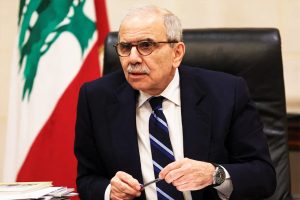
Members of the Catholic Bishops Conference in a group photograph
The Ghana Catholic Bishops’ Conference has called on President John Dramani Mahama to honour his earlier commitment to assent to the Human Sexual Rights and Family Values Bill if it is passed by Parliament.
The call follows the President’s earlier public assurance that he would assent to the Bill if it was duly passed in line with constitutional processes.
“We urge the President to honour this assurance, should Parliament complete its deliberations and pass the Bill”, the Bishops pleaded, saying “Democratic integrity rests in part on the fidelity of leaders to their publicly stated commitments.”
The Conference also called for a national dialogue to subject the Bill to thorough parliamentary scrutiny and possible refinement upon realising that certain provisions in the Bill have raised legitimate concerns.
The Bishops urged stakeholders, including the executive, parliament, religious bodies, traditional authorities and civil society to engage in constructive dialogue marked by respect, intellectual depth and moral clarity.
“The Church remains committed to participating in this dialogue, not as one who imposes, but as one who proposes, confident that truth, when patiently articulated, has a quiet persuasive power,” the statement added.
The call contained in a statement of April 10, 2026 signed by its President, Matthew Kwasi Gyamfi, the Bishop of Sunyani, is in response to public comments attributed to the President and the Minister of Government Communications, Felix Kwakye Ofosu.
The position of the Bishops is against suggestions that national discussions on family values and LGBTQ+ issues are not important.
The Conference referred to reports that the President, speaking at the World Affairs Council, described LGBTQ+ matters as “not the most important issue we face as a nation”, while the Minister subsequently suggested such issues are “not a major priority for Ghanaians”, characterising the debate as a “waste of time.”
“Even if intended to prioritise urgent socio-economic concerns, such descriptions risk conveying that certain moral questions may be set aside as inconsequential, yet no question that touches the structure of human identity, family life and social continuity can be trivial and that nations do not live by bread alone.”
Ethics and development
The Conference rejected what it described as a false dichotomy between economic priorities and moral considerations, arguing that strong family systems are closely linked to improved educational outcomes, reduced crime and enhanced economic mobility.
“To weaken the moral ecology of the family is to erode the very conditions that make sustainable development possible,” it was stated.
The Bishops reaffirmed what they described as two complementary principles – the inherent dignity of every individual, regardless of sexual orientation or identity and the responsibility of society to uphold the institution of the family founded on the union of a man and a woman.
“No individual, regardless of sexual orientation or identity, may be subjected to violence, hatred, or unjust discrimination”, they stressed, condemning without any reservation such acts of moral failures and social wounds.
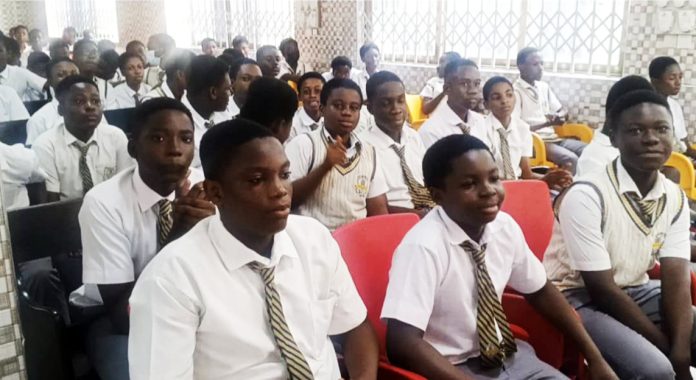
The Men’s Ministry of the Obuasi Area Church of Pentecost (PENEM) and the Municipal Education Directorate have held a Guidance seminar for over 2,000 BECE candidates from 56 schools.
Mr Daniel Asare, the Secretary, led sessions on careers, subject choices, mental health and faith values to prepare students for exams and future decisions.
Guidance officer, Emmanuel Agyei Danso said research revealed that students often mismatch careers with ability, making the annual programme effective.
Mr. Danso noted that the programme was developed following extensive research by the Directorate, which revealed a gap between students’ career choices and their capabilities.
He added that the continued success of previous editions informed the decision to sustain the initiative this year.
Mr. Danso further advised parents to take a more active role in their children’s education, particularly as they prepare for their final examinations. He urged them to collaborate closely with teachers and support their wards in selecting appropriate schools and courses for senior high school.
Students who participated in the seminar expressed appreciation to the organisers and called on the government to consider making such guidance programmes a standard feature across schools nationwide. They urged the government to replicate the programme across the nation.
There is a particular cruelty in the fact that the same earth, which made Ghana the Gold Coast, is now being poisoned by the hunger for gold. The Chronicle has watched successive governments promise to end illegal mining, popularly known as galamsey. We have reported the task forces, the crackdowns, the presidential decrees and the tearful vows made at podiums.
We have also, with equal diligence, reported what followed: excavators returning to the riverbanks, deported nationals re-arrested at the same sites and rivers running brown with mercury and sediment. Ghana cannot afford for us to keep writing the same story.
Let us be precise about what is at stake, because imprecision has long enabled comfortable inaction.
As of September 2024, 60 percent of Ghana’s water bodies had been polluted by galamsey activity. The Pra, Ankobra and Offin rivers, once the lifeblood of communities now carry mercury, arsenic and lead at concentrations far above safety standards, according to peer-reviewed research.
In some mining areas, arsenic levels in the soil exceed safe limits by more than 4,000 percent. Ghana’s own Environmental Protection Authority described the situation, in 2025, as an urgent public health emergency. These are not activist claims -they are government findings.
The economic toll compounds the environmental one. Galamsey is estimated to cost the nation more than $2.3 billion annually in lost revenue and smuggled gold, according to the Woodrow Wilson Center, a Washington-based policy institution that provides nonpartisan research and analysis to global decision-makers.
More than 100,000 acres of cocoa farmland have been destroyed, striking directly at a crop that accounts for nearly 10 percent of Ghana’s exports. Water treatment costs have tripled in affected districts. Some analysts warn that, at the current rate of contamination, Ghana may face freshwater shortages severe enough to require imports by 2030.
The foreign dimension of this crisis demands frank acknowledgement. Between 2008 and 2013, more than 50,000 Chinese nationals entered Ghana to mine gold illegally, according to the Africa Defense Forum (ADF). The changfa machine, which dredges riverbeds for alluvial gold and deposits mercury-contaminated water directly back into rivers, has been among the primary instruments of destruction.
Arrests continue, deportations continue and yet the pattern repeats: arrest, deportation, return. That revolving door does not suggest a system incapable of catching criminals. It suggests one with insufficient will to keep them out or in documented cases, a vested interest in permitting their return.
President John Dramani Mahama himself has stated that “our own people,” spanning party affiliates, traditional authorities, and social networks, are embedded in the galamsey trade. That confession speaks to the depth of the crisis Ghana now confronts.
Illegal miners have routinely operated with impunity, shielded by officials, politicians, and traditional authorities in exchange for private payments. As of this writing, the Black Volta, which rises in the Baoulé Hills of Southwestern Burkina Faso is under active assault in areas such as Bole, in the Savanna Region, the hometown of President John Mahama.
The disappearance of more than 500 seized excavators under a previous administration is emblematic of the rot. Seventy percent of mining sites across Ghana’s four main mining regions are now operating illegally. That figure is not a failure of law. It is a failure of political will, compounded by corruption at multiple levels of the state.
President Mahama’s administration has taken some early steps. A national tracking system for more than 1,000 pieces of heavy mining equipment was announced in January 2026, alongside a new medium-scale licensing category. These are meaningful, if modest, beginnings. Activists who have watched the cycle of promise and betrayal are entitled to their scepticism, and they are right to demand a comprehensive roadmap rather than isolated gestures.
The Chronicle holds no brief for any political party -we hold a brief for Ghana. What Ghana’s interests require is clear: an independent prosecutorial unit with the mandate to charge politically exposed persons linked to galamsey; mandatory gold traceability aligned with international standards; serious investment in alternative livelihoods for artisanal mining communities, without which enforcement will always breed resentment rather than compliance; and unambiguous diplomatic pressure on China to take co-responsibility for the conduct of its nationals on Ghanaian soil.
The Pra River does not belong to any political party. The Offin carries no party colours. They belong to the Ghanaian people and they are being systematically destroyed without the blink of the eye – what a pity!
A few days ago, history quietly carried Ghana beyond its borders—far beyond. When Christina Koch displayed the Ghanaian flag aboard Artemis II, she did more than participate in a scientific milestone; she reminded us that Ghana’s presence in the world is not only measured in technology or power, but also in relationships, memory, and human connection.
Much has rightly been said about the achievement of the Orion team and the broader ambitions of space exploration. Yet, nestled within that global triumph was a quieter, deeply meaningful moment: Ghana was there too. Our flag, carried into a space no human had previously occupied in quite this way, symbolised something larger than national pride—it spoke to the invisible threads that connect people, nations, and histories.
Like many Ghanaians, I initially encountered the news with scepticism. In an age saturated with misinformation and AI-generated illusions, it is easy to dismiss the extraordinary as untrue. A social media post suggesting that a University of Ghana alumna was part of such a historic mission sounded implausible. But it was true. And that truth compels reflection.
How does a nation without a space programme find its flag orbiting the Moon? The answer lies not in rockets, but in relationships.
Countries do not possess equal strength across all domains. Yet history shows that influence is not always exercised through military or technological dominance. When Ghana defeated the United States in the FIFA World Cup, it was a moment of symbolic rebalancing—an arena where different rules applied, and where power asymmetries were temporarily reshaped. In much the same way, Ghana’s presence on Artemis II reveals another domain where influence operates: the realm of human connection.
Ghana has long excelled in this domain. From being one of the first countries to welcome the Peace Corps to hosting generations of international students at Legon, our nation has cultivated a legacy of openness and hospitality. The University of Ghana, in particular, has been a hub of cross-cultural exchange for decades. American, European, and other international students have passed through its halls, carrying with them experiences that often endure for a lifetime.
These encounters matter. They shape perceptions, build affinities, and sometimes—years later—manifest in unexpected ways. One such manifestation may well be the image of Ghana’s flag in lunar orbit.
This moment invites us to ask difficult but necessary questions. Have we fully appreciated the strategic value of these long-standing relationships? Are we doing enough to sustain and deepen them? Institutions across the world, from Stanford University to University of Cambridge, maintain enduring connections with their alumni, recognising them as vital assets in a globalised world. Ghanaian institutions must do the same—not merely as a matter of prestige, but as a pathway to national development.
At its core, this story is about love—love for a place, for a people, for shared experiences. As the Bible reminds us in First Epistle to the Corinthians, “faith, hope and love” endure, but the greatest of these is love. Love is what transforms a temporary stay into a lifelong bond. It is what compels someone, years later, to carry a nation’s flag into space.
Philosopher Thomas Hobbes once observed in Leviathan that motion requires a cause—nothing moves unless something sets it in motion. As he puts it “That when a thing lies still, unless something else stirs it, it will lye still forever, is a truth that no man doubts of” If that is true, then Ghana must ask: what more can we do to inspire such motion in others? How many dormant affinities exist across the world, waiting to be awakened through deliberate engagement?
The display of Ghana’s flag on Artemis II is not an accident. It is the outcome of decades of human interaction—of hospitality extended, friendships formed, and respect earned. It is a reminder that while Ghana may not yet compete in the frontiers of space technology, it holds a different kind of power: the power to touch hearts and shape loyalties.
In an uncertain world, that power matters. It is a form of influence that cannot be measured in missiles or machines, but in memory and meaning. Ghana’s conquest of space, then, is not technological—it is relational.
And perhaps that is the greater achievement (at least in the short term, as we continue to develop our science and technology, history, criminology, African studies, law, herbal medicine, etc.).
Grammy-winning Nigerian singer, Temilade Openiyi, popularly known as Tems, has opened up about how being an artist changed her.
The 31-year-old explained that before she became a professional musician, she was “hyper-indepent” and tended to push people away, but making music has taught her to be open and vulnerable without feeling odd.
Speaking in a recent interview with Doose Of Society, Tems said, ”
Tems: “Being an artist has changed my life. There are a lot of people that know me. It made me grow, I had to shed a lot of habits that were holding me back—one of those things was my hyper-independency and the thing I do where I push people away.”
She added, ‘I have now learned to embrace love and just be open, and be free to give love and be vulnerable without feeling odd.”
Tems launched her music career in 2018 with her debut single, ‘Mr Rabel’, after quitting her job.
However, her breakthrough came after she enchanted the Western music audience with her 2020 collaborative hit with Wizkid, ‘Essence.’
Since then she has collaborated with Drake, Beyoncé, Justin Bieber, and J.Cole, and also won two Grammys.
She recently set a record as the first Nigerian artist to hit over 40 million monthly streams on Spotify.
A lack of sleep at night can make you cranky the next day. And over time, skimping on sleep can mess up more than just your morning mood. Studies show getting quality sleep on a regular basis can help improve all sorts of issues, from your blood sugar to your workouts.
Here’s why you should give your body the ZZZs it needs.
Sharper Brain
When you’re running low on sleep, you’ll probably have trouble holding onto and recalling details. That’s because sleep plays a big part in both learning and memory. Without enough sleep, it’s tough to focus and take in new information. Your brain also doesn’t have enough time to properly store memories so you can pull them up later.
Sleep lets your brain catch up so you’re ready for what’s next.
Mood Boost
Another thing that your brain does while you sleep is process your emotions. Your mind needs this time in order to recognize and react the right way. When you cut that short, you tend to have more negative emotional reactions and fewer positive ones.
Chronic lack of sleep can also raise the chance of having a mood disorder. One large study showed that when you have insomnia, you’re five times more likely to develop depression, and your odds of anxiety or panic disorders are even greater.
Refreshing slumber helps you hit the reset button on a bad day, improve your outlook on life, and be better prepared to meet challenges.
Healthier Heart
While you sleep, your blood pressure goes down, giving your heart and blood vessels a bit of a rest. The less sleep you get, the longer your blood pressure stays up during a 24-hour cycle. High blood pressure can lead to heart disease, including stroke.
Short-term down time can have long-term payoffs.
Athletic Achievement
If your sport requires quick bursts of energy, like wrestling or weightlifting, sleep loss may not affect you as much as with endurance sports like running, swimming, and biking. But you’re not doing yourself any favors.
Besides robbing you of energy and time for muscle repair, lack of sleep saps your motivation, which is what gets you to the finish line. You’ll face a harder mental and physical challenge — and see slower reaction times.
Proper rest sets you up for your best performance.
Steadier Blood Sugar
During the deep, slow-wave part of your sleep cycle, the amount of glucose in your blood drops. Not enough time in this deepest stage means you don’t get that break to allow a reset — like leaving the volume turned up. Your body will have a harder time responding to your cells’ needs and blood sugar levels.
Allow yourself to reach and remain in this deep sleep, and you’re less likely to get type 2 diabetes.
Germ Fighting
To help you ward off illnesses, your immune system identifies harmful bacteria and viruses in your body and destroys them. Ongoing lack of sleep changes the way your immune cells work. They may not attack as quickly, and you could get sick more often.
Good nightly rest now can help you avoid that tired, worn-out feeling, as well as spending days in bed as your body tries to recover.
Weight Control
When you’re well-rested, you’re less hungry. Being sleep-deprived messes with the hormones in your brain — leptin and ghrelin — that control appetite.
With those out of balance, your resistance to the temptation of unhealthy foods goes way down. And when you’re tired, you’re less likely to want to get up and move your body. Together, it’s a recipe for putting on pounds.
The time you spend in bed goes hand-in-hand with the time you spend at the table and at the gym to help you manage your weight.
Too Much of a Good Thing?
Sleep needs vary, but on average, regularly sleeping more than 9 hours a night may do more harm than good. Research found that people who slept longer had more calcium buildup in their heart arteries and less flexible leg arteries, too.
Your best bet is to shoot for 7-8 hours of slumber each night for peak health benefits.
Expectations for the upcoming talks between the United States and Iran in Pakistan are understandably modest. There is even a risk that the meeting won’t take place at all.
Yet, paradoxically, the failure of the talks may still shift the situation in a positive direction. Indeed, the true measure of the ceasefire’s success may not be whether it yields a lasting accord with Iran. It may lie instead in what it forestalls: Even in the absence of a durable deal, Washington may have found a way to avoid going back into a futile war.
Iranian Foreign Minister Abbas Araghchi
Tehran’s reaction to the talks has been ambivalent. The government has cast the ceasefire as a victory, projecting strength at home and abroad. But many voices close to the security establishment are less sanguine, warning that Iran may have sacrificed momentum and weakened its deterrent posture by settling for anything short of a complete and immediate end to hostilities.
Still, whatever the internal debate, there is little dispute about one point: The ceasefire, as it stands, reflects Iran’s terms more than America’s.
Let us consider what the ceasefire entails. The negotiations will proceed on the basis of Tehran’s 10-point proposal, not US President Donald Trump’s 15-point plan for Iranian capitulation. As part of this, Iran will retain control of the Strait of Hormuz during the truce – continuing to collect transit fees from passing vessels.
Washington appears to have conceded two critical points: That it tacitly acknowledges Iran’s authority over the strait, and that Tehran holds the upper hand in setting the terms of the talks. Trump himself seemed to signal as much, describing the Iranian proposal on social media as a “workable” foundation.
Unsurprisingly, this has raised eyebrows in Washington, given the scope of Iran’s demands. They range from recognition of Iran’s continued control over the strait and acceptance of uranium enrichment, to the lifting of all US primary and secondary sanctions – as well as United Nations sanctions – to a withdrawal of US combat forces from the region, and a comprehensive ceasefire that would extend to Israel’s operations in Lebanon and Gaza.
It is difficult to imagine Washington agreeing to such terms in full. Just as uncertain is how far Iran is willing to bend – whether it would pare back its demands or hold firm on a maximalist position.
Israel Prime Minister Benjamin Netanyahu
The geopolitical consequences would be profound if the final outcome reflects these demands. Yet it is equally important to recognise that Tehran is unlikely to wield control of the Strait of Hormuz as a blunt instrument of coercion. Rather, it is more likely to use that leverage to rebuild economic ties with Asian and European partners – countries that once traded extensively with Iran but were pushed out of its market over the past 15 years by US sanctions. Even so, this would be a bitter pill for Iran’s regional rivals.
Trump, however, has already hinted he may be prepared to accept such an arrangement, noting that the US itself is not dependent on the oil that flows through the strait. The burden, in other words, would fall far more heavily on Asia and Europe.
Tehran’s insistence that the ceasefire extend to Israel may prove the most difficult obstacle, given that the latter is not party to the talks and has long resisted being bound by agreements it did not help shape.
For Iran, this demand is rooted in three considerations. First, solidarity with the peoples of Gaza and Lebanon is not merely rhetorical; it is central to Tehran’s regional posture. Having been widely perceived as abandoning these constituencies in 2024, Iran can ill afford another rupture that would further weaken the so-called “axis of resistance”.
Second, continued Israeli bombardment risks reigniting confrontation between Israel and Iran – a cycle that has already flared twice since October 7, 2023. The linkage between these arenas is not only real but widely acknowledged, including in Western rhetoric that casts Iran as the hub of resistance to Israeli and US policies, expressed through its network of allied groups in Lebanon, Palestine, Iraq and Yemen. From Tehran’s vantage point, a durable halt to its own conflict with Israel cannot be separated from ending Israel’s wars in Gaza and Lebanon. As such, it is not an aspirational add-on but a necessary condition.
Perhaps more consequentially, tying Israel to the ceasefire is a test of Washington’s willingness – and ability – to restrain its closest regional ally. If Trump cannot, or would not, do so, the value of any ceasefire with Washington comes into question. An agreement that leaves Israel free to reignite hostilities – and the US unable to keep itself from being drawn back in – offers little assurance of stability. Under such conditions, the utility of a ceasefire with the Trump administration diminishes sharply.
Whatever the outcome of the talks in Islamabad, the strategic landscape has already been altered. Trump’s failed war has weakened the credibility of US military threats. Washington can still brandish force, but after a costly and futile conflict, such warnings no longer carry the same weight.
A new reality now shapes US-Iran diplomacy: Washington can no longer dictate terms. Any agreement would require genuine compromise – patient, disciplined diplomacy that tolerates ambiguity, qualities rarely associated with Trump. It may also necessitate the involvement of other major powers, particularly China, to help stabilise the process and reduce the risk of a relapse into conflict.
Lebanese Prime Minister Nawaf Salam
All of this argues for tempered expectations. Yet even if the talks collapse – and even if Israel resumes attacks on Iran – it does not automatically follow that the US would be drawn back into war. There is little reason to believe a second round would end differently, or that it would not again leave Iran positioned to disrupt the global economy. No wonder Tehran feels confident that its deterrence has been restored.
The more plausible outcome is a new, non-negotiated status quo – one not codified through formal agreement but sustained by mutual constraint. The US would stay out of the war; Iran would continue to exert control over traffic through the Strait of Hormuz; Israel and Iran would continue a low-level conflict. A full-scale US-Iran war would be, for the moment, averted.
Such an equilibrium would reflect not enough political will to reach a comprehensive settlement, but sufficient shared interest to avoid a wider conflagration – and a degree of tolerance for an arrangement in which both sides could claim partial victory.
Iran could plausibly claim it weathered the combined might of Israel and the US while emerging with its geopolitical position intact – if not strengthened. Trump, for his part, could argue that he avoided another forever war, steadied energy markets, and secured tactical gains by degrading Iran’s military capabilities.
So long as both sides cling to a narrative of victory, a fragile equilibrium – absent full-scale war – may yet endure.
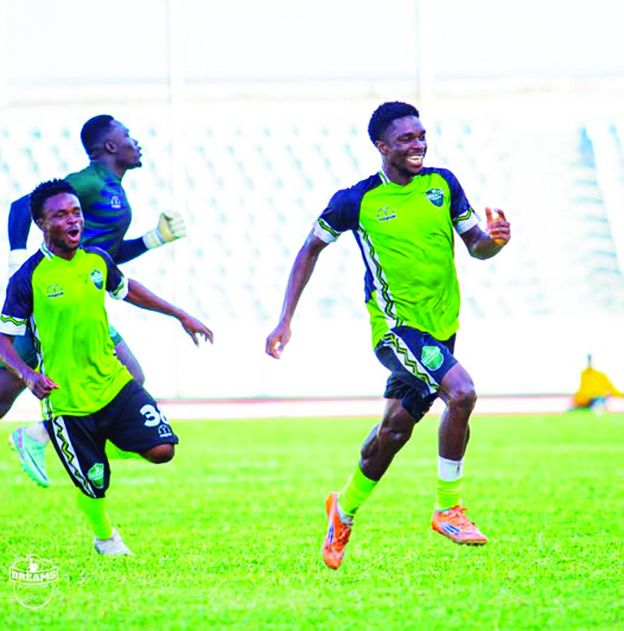
Dreams FC came from behind to thrash bottom-placed Eleven Wonders at the Tuba Astro Turf on Sunday, April 12, 2026. Eleven Wonders took the lead through Eden Kofi in the 35th minute, but the ‘Still Believe’ responded emphatically after the break to overwhelm their opponents. Suraj Seidu restored parity for the hosts two minutes into the second half, before John Antwi fired them ahead with a 56th-minute strike.
Jonathan Nemorden made it 3-1 in the 64th minute, and Seidu grabbed his second of the afternoon ten minutes later. Godfred Sarpong added the fifth as Dreams FC returned to winning ways in style, moving up to 8th in the league standings with 40 points.
Eleven Wonders appear to be edging closer to relegation as they remain rooted to the foot of the table. They will travel to face Swedru All Blacks in their next fixture.
Dreams FC, meanwhile, will look to build on this victory when they travel to take on
Bechem United.
Karela United were held to a pulsating 2-2 draw by tenman Heart of Lions at the Aliu Mahama Sports Stadium in their Matchday 29 Ghana Premier League fixture.
An evenly contested first half ended 1-1, but the game produced late drama as the spoils were ultimately shared.
The visitors opened the scoring through Michael Ephson in the 13th minute, but that lead lasted just six minutes as Eric Antwi restored parity for Karela United.
Heart of Lions were reduced to ten men in the 60th minute after Ismail Abambila was shown a second yellow card. Despite the setback, Chauncy Freeman put them back in front with a 74thminute strike.
Antwi, however, rescued a point for the ‘Pride and Passion’ with his second goal of the game. Karela United missed the chance to secure a fifth consecutive home win but will be relieved to have salvaged a draw. Nurudeen Amadu’s side remain 7th in the league
standings with 42 points and will travel to the capital to face Accra Hearts of Oak in
their next match.
Heart of Lions also stay 10th on 38 points and will be aiming to claim all three points at home against Nations FC in their next fixture.
Vision and Hearts players in a battle for the ball
Vision FC extended their strong home run with a dramatic 1-0 victory over Hearts of Oak at the Nii Adjei Kraku II Sports Complex on Saturday. It was a closely fought contest, with both sides struggling to create clear chances despite an even share of possession.
Vision carried more threat in front of goal, recording the better efforts on target, while Hearts of Oak lacked sharpness in the final third.
The game appeared headed for a stalemate until late drama unfolded in stoppage time. Benjamin Kwarteng struck in the 90+5th minute to hand Vision a crucial win and send the home crowd into celebration.
The result extends Vision’s unbeaten home streak to five matches and strengthens their position in midtable as they move further away from the relegation zone.
For Hearts of Oak, the defeat dents their title ambitions.
After their win over Young Apostles, they had hoped to close the gap at the top, but now remain five points behind, subject to other results.
Vision will aim to build on this momentum when they face Young Apostles next, while Hearts of Oak prepare for a crucial encounter against Karela United in Accra next weekend.