The Ghana Catholic Bishops’ Conference has called on President John Dramani Mahama to honour his earlier commitment to assent to the Human Sexual Rights and Family Values Bill if it is passed by Parliament.
The call follows the President’s earlier public assurance that he would assent to the Bill if it was duly passed in line with constitutional processes.
“We urge the President to honour this assurance, should Parliament complete its deliberations and pass the Bill”, the Bishops pleaded, saying “Democratic integrity rests in part on the fidelity of leaders to their publicly stated commitments.”
The Conference also called for a national dialogue to subject the Bill to thorough parliamentary scrutiny and possible refinement upon realising that certain provisions in the Bill have raised legitimate concerns.
The Bishops urged stakeholders, including the executive, parliament, religious bodies, traditional authorities and civil society to engage in constructive dialogue marked by respect, intellectual depth and moral clarity.
“The Church remains committed to participating in this dialogue, not as one who imposes, but as one who proposes, confident that truth, when patiently articulated, has a quiet persuasive power,” the statement added.
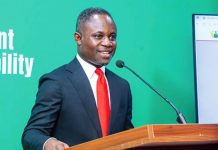
The call contained in a statement of April 10, 2026 signed by its President, Matthew Kwasi Gyamfi, the Bishop of Sunyani, is in response to public comments attributed to the President and the Minister of Government Communications, Felix Kwakye Ofosu.
The position of the Bishops is against suggestions that national discussions on family values and LGBTQ+ issues are not important.
The Conference referred to reports that the President, speaking at the World Affairs Council, described LGBTQ+ matters as “not the most important issue we face as a nation”, while the Minister subsequently suggested such issues are “not a major priority for Ghanaians”, characterising the debate as a “waste of time.”
“Even if intended to prioritise urgent socio-economic concerns, such descriptions risk conveying that certain moral questions may be set aside as inconsequential, yet no question that touches the structure of human identity, family life and social continuity can be trivial and that nations do not live by bread alone.”
Ethics and development
The Conference rejected what it described as a false dichotomy between economic priorities and moral considerations, arguing that strong family systems are closely linked to improved educational outcomes, reduced crime and enhanced economic mobility.
“To weaken the moral ecology of the family is to erode the very conditions that make sustainable development possible,” it was stated.
The Bishops reaffirmed what they described as two complementary principles – the inherent dignity of every individual, regardless of sexual orientation or identity and the responsibility of society to uphold the institution of the family founded on the union of a man and a woman.
“No individual, regardless of sexual orientation or identity, may be subjected to violence, hatred, or unjust discrimination”, they stressed, condemning without any reservation such acts of moral failures and social wounds.
For more news, join The Chronicle Newspaper channel on WhatsApp: https://whatsapp.com/channel/0029VbBSs55E50UqNPvSOm2z