Real Madrid have agreed a deal worth an initial £88.5million to sign England international Jude Bellingham from Borussia Dortmund and he is expected to complete the move inside 10 days.
Carlo Ancelotti has made Bellingham, 19, a priority signing and Real are now set to complete their swoop for the midfielder.
It is understood the deal will guarantee Dortmund £88.5million – but will rise towards £113.5 million as a result of £25m worth of performance-related add-ons – which are believed to be achievable.
Personal terms need to be formally agreed – but that will be a formality. He still has to undergo a medical, bearing in mind his knee troubles in recent weeks, but if he passes that Madrid will be in a position to confirm the teenager’s arrival.
It is hoped the move can be wrapped up within seven to 10 days. Bellingham’s move to Spain has been an open secret for a number of weeks, but they were respectful of the Bundesliga title race before negotiating a fee.
Bellingham is set to miss England’s forthcoming Euro 2024 qualifiers against Malta and North Macedonia due to a long-running knee injury, amid concerns he needs surgery.
Mail Sport understands Bellingham’s camp believe the experience of playing in another country has been the making of him as a person and they are happy to prolong that experience.
Despite disagreeing with her reasoning in the Michael Ankomah-Nimfah v. James Gyakye Quayson & 2 Others case, the Minority in Parliament has given the green light for the approval of Madam Getrude Araba Esaaba Sackey Torkonoo as the Chief Justice of Ghana’s Supreme Court.
The minority group said though they disagree with her reasoning, other qualities qualify her to hold the high office of the Chief Justice.
The caucus noted that her Curriculum Vitae (CV) speaks volumes of the work she has done in the legal sector and hence would not withhold her approval. They also indicated that aside her work, a woman with such vast experiences should be given the opportunity to occupy such a position, hence their decision.
“We will not withhold our approval of the Chief Justice nominee by consensus. Her CV reveals a person of considerable experience, having served as a judge from the high Court to the Court of Appeal and ultimately to the Supreme Court.
“Women who have acquitted themselves should be given opportunities to occupy key national offices. Even as we disagree with her jurisprudence, we find her qualified to occupy the higher office of CJ of the Republic of Ghana,” Mr Mahama Ayariga, MP for Bawku Central indicated at a press conference in Parliament yesterday.
But despite this decision, the Minority did not miss the opportunity to let Ghanaians know why they disagree with Madam Torkonoo’s reasoning.
The caucus said that the Chief Justice nominee at her vetting indicated to the committee that she uses a Textualist approach in interpreting the constitution of Ghana, but that did not reflect in the case under contention.
Mr Ayariga indicated that the text in dispute was article 94 (2)(a), which states that “A person shall not be qualified to be a member of Parliament if he owes allegiance to a country other than Ghana.”
He noted that the facts of the case shows that Mr Quayson at the time of being sworn in as an MP had successfully renounced allegiances to any other country and the only country he owed allegiance to was Ghana.
He said that based on the facts, if the CJ nominee was a Textualist, as she indicated, she would have based her decision on the words ‘qualified to be a Member of Parliament’ and would have arrived at a different reasoning.
“Fidelity to the constitution of Ghana would have dictated that controlling provision of the resolution of the dispute are the words ‘qualified to be a Member of Parliament.
“Disappointingly, a professed Textualist like our CJ nominee abandoned the text and chose to read into the text of the constitution, a replacement text “qualified to file nomination papers to context the elections as a Member of Parliament'”, Mr Ayariga said.
He said the CJ nominee succumbed to a floored precedent set by the Supreme Court in the Ex parte Zenator case.
Mr Ayariga, however, noted that despite the flawed reasoning, the embattled member, Mr James Gyakye Quayson, has already declared his interest to contest the Assin North seat again, which is an indication that he has put the issue behind him and has decided to move on and that is why the minority is also doing same.
He, however, implored the incoming CJ to restore the good name and dignity of the judiciary arm of government because several opinion polls point to the fact that the judiciary has lost its dignity.
“The image of the judiciary is not in a good shape; several opinion polls say that. We hope that Justice Getrude, as a lady CJ, will restore the dignity of the judiciary”, Mr Ayariga said.
Dr Bawumia in a group photograph with participants attending the forum
Vice President Dr Mahamudu Bawumia says Ghana’s economic opportunities for private sector investors are back on track, as the country is navigating its way out of the global economic meltdown.
Dr Bawumia noted that the government is relentlessly re-focusing on economic growth and working hard to regain the trajectory Ghana was on, and get back to pre-Covid growth numbers.
Speaking at the 3rd Ghana Investments and Opportunities Summit in London yesterday, he said “We are living in extraordinary times. Over the past two years inflation has surged. Its rise has been large, sudden and global. In many parts of the world, it is now at levels unseen for generations.
“Meanwhile, financial systems have come under strain. For the first time in recent decades, we have seen high inflation and financial stress emerging in tandem. The world, as we are all aware, continues to face difficult moments caused by several factors including climate change, disruptions in the supply chain of manufacturing goods as a result of the pandemic, among others. ”
He further elaborated that, “These issues as projected by the World Bank are sinking some developed and developing countries into recession. Just when the world was recovering from the ravages of Covid-19 pandemic, which came to shake the foundation of the world’s economy, causing it to a standstill through its devastating effects, resulting in the fall of Global Gross Domestic Product by over 78%, war also broke out between Russia and Ukraine. Its consequence has not only affected the two countries, but also extended to other parts of the world, including Ghana.
“We have been hit by mainly three major external forces. The Covid-19 pandemic hit our capacity to access fundamental goods, and the response put a burden on public finances. The war between Russia and Ukraine hit fertilizer and grain prices, among others, and increased the prices of commodities back home. And the US Federal Reserve’s move to hike interest rate severely hit our capacity to borrow and repay debt in the international market. ”
The investment summit seeks to woo foreign investors to take advantage of opportunities created in the various sectors of the Ghanaian economy in a road up to a total economic recovery.
According to Dr. Bawumia, the government is balancing sound fiscal management with strategic public investments that unlock growth.
“The private sector is the engine of growth, and we are only here to support you. Our government is acting as your facilitator. We will unlock bottlenecks and prioritize limited resources to strategic sectors and projects. We think this is an exciting time to be part of Ghana’s economic growth,” he said in his keynote address.
“We are organising this Investment and Opportunities Summit exactly in that context. First, we want to show that Ghana is back on track and that strong opportunities exist for profitable private investments in key sectors.
“Ghana is home to one of West Africa’s most prominent and efficient ports, Tema, which serves as a feedstock to the landlocked ECOWAS countries. There is also the Takoradi port on the western coast, which serves the logistics, oil and gas, and allied industries.
“Takoradi is undergoing a significant transformation and requires significant investment to help decongest Tema and establish a commercial case for more vessels berthing there,” he added.
Dr Bawumia cited the Brownfield, Greenfield, and Public Private Partnerships as tangible and bankable projects championed by the private sector in Ghana and abroad.
His Lordship Justice Victor Jones Mawulom Dotse has retired from the Supreme Court bench after 40 years of judicial service. The retired Justice had served on the bench of the Supreme Court for fifteen years and six years at the Court of Appeal and High Court.
A sending off ceremony was held yesterday in Accra and was attended by Justices of the superior court, family, friends and other members of the judicial fraternity.
The occasion was marked with a valedictory judgement, which will go a long way to correct a snare that was cast on the judiciary, due to the misconduct of a Tema High Court judge and a Registrar.
Justice Dotse (4th right) in a pose with some of the judges
Justice Dotse, in an emotional speech to mark his retirement from the service, called on the government to regulate the springing up of high rise buildings at certain locations in Accra, which poses grave security concerns.
He wondered how a skyscraper would be overlooking a residence that would house the Vice President of the land.
According to him, the situation is not different from that of the Governor of Bank of Ghana at Cantonments.
The retired Justice also appealed to the Greater Accra Regional Minister to step up his game so that the president’s aim of making Accra the cleanest city in Africa is achieved. He also called for restrictions on the use of major roads by tricycles, as well as enforcement of the traffic regulations to enhance discipline on the roads to reduce traffic emergencies.
Justice Dotse thanked Almighty God for helping him through his career journey, as many were the missiles thrown at them at the bench, but they were saved by the Creator’s mercy and grace.
And that, he said: “If you lose God, you have lost everything in your life…the missiles thrown at us spiritually, some of you will not believe.”
He was specifically grateful to his family, friends and pastors for their emotional, physical and spiritual support.
As he retires from active service, he said he will use the few months ahead of the year to rest, after which he would burn his energy on philosophy.
Thus, he will join the judicial watch, established a trust fund, engage in fundraising activities to rebuild a nursery school at Kpando and a host of many others.
He urged the public to expect his memoire by one and half years’ time.
Prior to his retirement, Justice Dotse was the acting Chief Justice after the retirement of Chief Justice Yaw Anin Yeboah.
He has also served on several boards and committees, including the Legal Service Board and Accra Academy Board.
He was also once the President of Ghana Bar Association in the Volta region and worked as state attorney with the Attorney General (A-G) Department.
Mr Godfrey Yeboah Dame, Attorney General (A-G) and Minister of Justice described the retired justice as somebody who is meticulous to his work.
“He brought to the Court not only abundant wisdom, but also a passion for the truth and an enormous capacity to listen,” the A-G added
Dame noted that due to the contributions he (Dotse) had made to justice delivery in the country, there is no doubt that posterity will look kindly back on him or cast his virtues into the shade.
The Chief Justice nominee, Her Ladyship Justice Gertrude Essaba Sackey Torkornoo, added that the Judiciary and the Judicial Service truly appreciate his service.
She referred to him as a champion of women and the vulnerable and a fair contender for right as well as pray that there should be more like him, particularly for helping in building the democracy and peace of the country.
There were also goodwill messages from the Judicial Service Staff Association, directors, the Bar, judges and magistrates, and General legal Council.
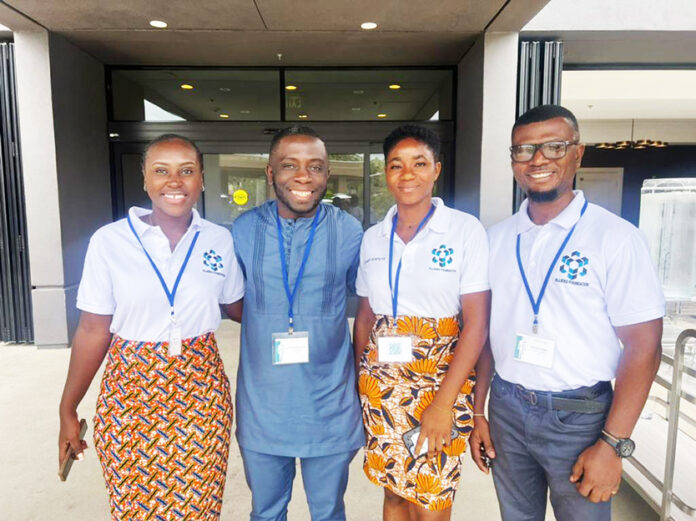
A Non-Governmental Organisation (NGO) based in Kumasi, Elijeko Foundation, has dispatched a delegation to participate in the 10th Edition of the World Patient Safety, Science & Technology summit being held in Newport Beach, California, USA.
The foundation focuses on providing free preventative health education and pre-hospital emergency services.
Organised by the Patient Safety Movement Foundation (PSMF), this milestone event marked the conference’s 10th anniversary and was the first in-person gathering since the COVID-19 pandemic.
Renowned global experts convened to discuss the contemporary challenges and solutions in patient safety.
The Ghanaian delegation attending the conference comprised of officials who are dedicated to fostering a culture of safety and establishing international connections with like-minded individuals working towards eliminating preventable harm to patients and healthcare workers.
The annual World Patient Safety, Science and Technology summit serves as a platform for various stakeholders, including patients, healthcare providers, medical technology companies, governmental entities and private stakeholders.
Notably, former U.S President, Bill Clinton, graced the summit as the Special Guest Speaker. President Clinton, who is also the Founder and Board Chair of the Clinton Foundation, has long been a supporter of the Patient Safety Movement Foundation.
During his address at the conference, President Clinton placed emphasis on the importance of collaboration in the effort to boost patient safety globally and called for a culture of conversion to promote patient safety in healthcare.
Mr. Andrews Kwabena Nyantakyi, the Founder and CEO of Elijeko Foundation, led the Ghanaian delegation and reiterated the critical need for hospitals and healthcare institutions in Ghana to prioritize patient safety.
He explained the rationale behind sending the Ghanaian delegates to the summit was to solidify the relationship between Elijeko Foundation and the Patient Safety Movement Foundation as both organizations collaborate to promote and prioritise patient safety, striving towards zero harm for individuals seeking medical care.
Mr Nyantakyi stressed that patient safety initiatives are crucial in preventing harm and protecting lives.
“Every patient in Ghana deserves safe and effective care and reducing preventable deaths should remain paramount”, he added.
Medical errors, which can occur at various stages of healthcare provision, including diagnosis, treatment, medication administration, surgical procedures and communication among healthcare providers, must be addressed.
Thus, the participation of the Ghanaian delegation in the summit holds significant importance.
Mr. Nyantakyi was joined by Elijeko Foundation’s Country Director, Miss Celestina Kalor Abapiri, Mr. Richard Addo, a Pharmacy Technician at Manhyia District Hospital in Ashanti Region and Ms. Kamelin Donkor.
Mr. Joe Kiana, the founder of the Patient Safety Movement Foundation in his closing remarks tasked the participants to demand their elected officials to hardwire patient safety into national agenda and align incentives so that hospitals worldwide can put evidence-based practices in place.
Parliament is set to consider 69 bills, 125 papers and 16 public motions as it reconvened from recess yesterday.
Aside that, it is also expected to embark on a number of activities such as lectures, public discussions, roundtable discussions and other for a, in commemoration of its 30th anniversary to promote Ghana’s Parliamentary democracy.
“The second meeting promises to be an activity packed one. Before we went on recess, I informed you of a number of activities…”, Speaker of Parliament, Mr Alban Sumana Kingsford Bagbin said, whilst welcoming members back to the house.
Speaker Bagbin told the MPs that to promote parliamentary democracy in Ghana, Parliament would embark on a number of activities such as public lectures and discussions, debate, as well as fora in various parts of the country and around the world.
CPA conference in Ghana
He also noted yesterday that Parliament will host the 66th Commonwealth Parliament Association (CPA) conference, which is scheduled to take place from September 30th to October 6th.
Prior to the reading of the welcome address and the commencement of business in the house yesterday, Speaker Bagbin swore in the new MP for Kumawu constituency, Mr Ernest Yaw Anim, who replaces the deceased former MP, Mr Philip Basoah.
Speaker Bagbin administered the oath of office and oath of allegiance to Mr Anim, who has since assumed his role in parliament as an MP.
Mr Anim, representing the governing New Patriotic Party (NPP), emerged victorious in the recently held by-election in Kumawu.
He garnered an impressive 15,264 votes to outperform his competitors, Kwasi Amankwaa from the National Democratic Congress (NDC) and two Independent Candidates, Kwaku Duah and Kwaku Duah I.
Mr Kwasi Amankwaa secured 3,723 votes whilst Kwaku Duah I received 2,478 votes. The other Kwaku Duah managed to poll only 62 votes.
Acting on Supreme Courts judgement on Gyakye Quayson
Meanwhile, Speaker Bagbin has tasked the House to decide on a procedure to expunge the name of the deposed MP for Assin North, Mr James Gyakye Quayson, from the records of Parliament, as directed by the Supreme Court (SC) on May 17, 2023.
The SC directed parliament to expunge the name of Mr Quayson from its records after ruling that the election and swearing in of the now deposed MP was unconstitutional and in contravention with Article 94 (2)(a) of the 1992 Constitution.
Addressing the House yesterday, Mr Bagbin said that the practice of expunging a member’s name from its records is novel. He noted that neither the Constitution nor the Standing Orders of Parliament provided procedure for doing so, hence his call on MPs to decide on a procedure.
The Greater Accra Regional Chapter of the Ghana Journalists Association (GJA) has asked the Fair Wages and Salaries Commission (FWSC) to cease deductions in allowances from the salaries of staff of the Ghana Broadcasting Corporation (GBC) and allow for an amicable settlement of issues concerning the allowances.
A statement signed by the Chairman, Charles Benoni Okine, said the deductions were creating serious financial, psychological and emotional challenges for members of the Association, a development which demanded immediate attention.
“We find most disturbing in view of the fact that, these allowances, we are told, had been fixed for the past 15 years and are part of the negotiated and approved conditions of service.”
It said it was, therefore, “baffling that after many years of implementation, this purported ‘illegality’ has now come to the attention of the FWSC.”
The Chapter called on the Ministry of Information, to as a matter of urgency, step in to stop the deductions and allow for proper discussions on the matter.
“Much as we will not condone any illegalities, we also think that, our members should, under no circumstance, be made worse off because of a problem they did not cause”, it said.
The Association said the role of GBC in information dissemination nationwide and beyond could not be over emphasised, hence the country could not be unconcerned for the staff to declare industrial action.
It said all efforts must be made to ensure that there was peace and understanding at GBC to prevent uninterrupted service to the nation.
The Association called on all affected workers, including GJA members to remain calm for the authorities to do what was right to maintain industrial harmony.
A front view of the Department of New Psychiatry Building
President Nana Addo Dankwa Akufo-Addo has commissioned a Psychiatry Department building for the Korle Bu Teaching Hospital in Accra.
The facility, which serves the University of Ghana and the Korle Bu Teaching Hospital, was funded by the private sector.
The ultra-modern office complex, called ‘The Melody,’ stands in the memory of the late Melody Millicent Danquah, the first female pilot and squadron leader, and the first to fly an aeroplane solo. She was forced to retire from the service in her 50s due to mental health challenges.
President Akufo-Addo,(middle) cutting a ribbon to inaugurate the building
“This state-of-the-art facility not only serves the University of Ghana Medical School, but also serves the larger Korle Bu Teaching Hospital community. It has a conference room, students lecture hall, faculty research offices, a serene waiting area conducive to teaching and learning, consulting rooms, therapy rooms, a treatment room, a pharmacy, and an observation room,” the President listed.
He commended the “beautiful partnership” between the public and private sector that birthed the facility, remarking that it “show what can be achieved when the experts sit with the private sector.”
President Akufo-Addo, in his address at the ceremony to commission the facility yesterday, bemoaned the lack of access to such medical centres across the country, and advocated the need to solve it.
MORE HOSPITALS
The President opined that the building, championed by a public-private partnership, deepened the government’s commitment to advancing mental health care in Ghana.
He announced “with some pride” that the government had added two psychiatric hospitals to the Agenda 111 hospital project, to be built in the Ashanti and Northern regions.
STATISTICS
According to the President, mental health care played a significant role in the economy of the nation, contributing an estimated 3% to the total gross domestic product (GDP). This meant that GH¢3 of every GH¢100 was attributed to mental health care in Ghana.
President Akufo-Addo,(middle), in a photograph with CEO of KBTH (4th left), VC of UG,and some Gov’t officials
He referred to statistics to say that only 3% of patients who need care receive it in an orthodox psychiatry setting due to geographic barriers, stigma, economic challenges, limited human resources, and inadequate infrastructure.
He said he was aware of the research conducted by some 7% of GDP is lost annually by Ghanaian workers due to psychological distress leading to loss of productive hours.
SOLUTION
However, he mentioned that the government was working to address the disparity by prioritising mental health and increasing funding by 200% since assuming office to support comprehensive care.
He mentioned the Mental Health Act, passed in 2012, whose reforms have led to a coordinated approach to mental health care.
In 2019, the government launched the legislative instrument for mental health, which established the roles and responsibilities of the various stakeholders.
The government, in March this year, also decriminalised suicide in Ghana. “This progressive move will help reduce stigma, improve access to care, and enhance outcomes for individuals struggling with suicidal force and behavior in the country,” the President asserted.
THE STORY
Professor Angela Ofori-Atta, immediate past Head of Department, told the story behind the building, for which she mobilized funds.
According to her, the facility saw the light of day following decades of persistent advocacy for a modern building, but to no avail.
The idea was reignited in 2016 when Melody, her mother died, after falling into a deep clinical depression that made it almost impossible to function.
“In spite of all the mental health challenges, she rose to the rank of squadron leader before being forced to retire in her early 50s,” the wife of the Finance Minister, Ken Ofori-Atta, narrated.
She indicated that the facility was to motivate and inspire the young ones who receive a diagnosis of bipolar disorder, as her mother was able to overcome that to work in the military, despite battling mental health issues all her life.
The Chief Executive Office of the KBTH, Dr. Opoku Ware Ampomah, told the President how the hospital was faring and the importance of the psychiatry department building to the general health care delivery at Korle Bu.
The Minister for Health, Kwaku Agyemang Manu, said the occasion aligned with the vision of his ministry to have a healthy population.
The Vice Chancellor of the University of Ghana, Prof. Nana Aba Appiah Amfo, described the commissioning as a landmark moment not only for the school but for the entire country.
Religious tolerance remains one of the secrets of Ghana’s success story when it comes to national cohesion, peace and understanding. Elsewhere in the world, it is a taboo for Christians and Muslims to cohabit, but the situation is not the same in Ghana.
In fact, there are church buildings all over Nima and Maamobi – which are suburbs of Accra predominantly populated by Muslims. The same situation applies to Tamale, also a dominant Muslim area. In some instances, one can see church buildings standing side by side with mosques. This is a spectacular scene and one of its kind that can be observed in Ghana.
Despite the communal living of these different religious groups, and the close location of their places of worship, one can hardly hear them attacking each other. Apart from the Muslims and Christians, we also have traditionalists who also worship their gods in peace. As a matter of fact, in the Volta Region, it is sometimes common to see these traditionalists trooping to church during Easter, which Christians use to remember the crucifixion of Jesus Christ.
Some of these rites are not limited to traditionalists alone, as Muslims sometimes visit churches when funerals of their Christian friends are being performed. As we indicated earlier, these things will never happen in other countries, but because of our culture of tolerance, we are doing so here in Ghana. Nowadays, it is even trite to see a Christian marrying a Muslim and vice versa.
In a nutshell, all the religious groups have been living peacefully in Ghana – the reason why inter-tribal and religious wars are not common in the country, which is the centre of planet Earth.
It is based on all these advantages we have enumerated that we find very worrying the tension that is building between Archbishop Charles Agyinasare and the chiefs and people in the Ketu South Municipality in the Volta Region.
During one of his Sunday sermons, Archbishop Agyinasare is said to have described Nogokpo, a traditional shrine in the Volta Region, as the ‘demonic headquarters’ in Ghana.
When the issue got into the public domain, the Archbishop used the same platform he used in making the original statement to apologise to Nogokpo, and the chiefs and people of the Volta Region as a whole. He did not end there, but went a step further to explain that his wife of 38 years comes from Keta in the Volta Region, and that some of his children bear Ewe names.
But this apology has not been accepted by the chiefs of Nogokpo, who are insisting that Archbishop Agyinasare appears before them to render a proper apology. Considering that the Archbishop is the head of one of the biggest charismatic churches in Ghana, the tension, which is building between him and Nogokpo, if not addressed, will affect the religious harmony that we are currently enjoying in the country, which is the envy to others.
The Chronicle is, therefore, happy with the intervention that is being made by the Peace Council to have the issue resolved.
The Chairman of the Council, Rev. Dr. Ernest Adu-Gyamfi, was quoted by citinewsroom.com as saying: “The National Peace Council has noted with concern the current impasse between Archbishop Charles Agyinasare, the Founder of Perez Chapel International, and Nogokpo Traditional Authorities.
“Recognising the fact that the impasse, if not quickly addressed, may have consequences on peaceful coexistence and religious tolerance in the country, the National Peace Council, in pursuit of its mandate to facilitate conflict prevention, appeals to the Nogokpo Traditional Authorities and Perez Chapel International to remain calm and not give in to provocations, as efforts are being undertaken to address the situation.”
We believe this is the best way to go, instead of sitting down idle for the matter to degenerate into something else. It is the hope of The Chronicle that the Nogokpo chiefs will accept the intervention of the National Peace Council in the name of peace and harmony.
We believe some of the indigenes of Nogokpo are members of Agyinasare’s church, and dragging the issue will only escalate tensions. Let there be peace, we plead with both factions.
Like a brilliant child who goes to school in a tattered cloth unnoticed by the parents, Begoro Presbyterian Senior High School (SHS) in the Fanteakwa North District of the Eastern Region, has been overlooked regardless of its academic achievements.
The school pantry
The school, which is the only SHS in the Fanteakwa North District and located in Kradaso, a community close to the district capital, Begoro, has suffered many infrastructure deficits, a situation which is gradually affecting teaching and learning negatively.
The school initially started as the Presbyterian Middle Girls Boarding School in the early forties by the Basel Mission, was later converted into the Begoro Women’s Training College on the December 10, 1965.
It was later converted to Begoro Secondary School following the phasing out of the Begoro Women’s Training College on August 31, 1972, and has since produced very important personalities who are, and have, contributed to the socio-economic development of the country.
The only two-storey classroom block
Notwithstanding its contributions towards national development, it has seen little or no infrastructure development since its inception as past and present headmasters, teaching and non-teaching staff improvised for teaching and learning to take place.
This came to light during a literacy quiz competition, organised by the Nick Otchere Literacy Foundation (NOLF) for the school and two others – Osino Presbyterian SHS and Nsutam SHS and Technical.
Speaking to the Eastern File on the sideline, the Headmaster of the school, Mr. Gerald Manteaw, said education was a process of facilitating learning or the acquisition of knowledge, skills, values, beliefs and habits.
The visibly frustrated Headmaster mentioned that quality education, on the other hand, entailed issues such as appropriate skills development, gender parity, provision of relevant school infrastructure, equipment, educational materials and resources, scholarships or teaching force.
The Headmaster is of the view that, the immense contributions of his hardworking teaching and non-teaching staff would amount to nothing if they continued to improvise for basic materials that were pivotal for quality teaching and learning.
According to him, the lack of interest to improve the inadequate infrastructure development had wrought a serious effect on academic performance and danger to the lives of learners, as well as teachers.
The Headmaster indicated that poor infrastructure in schools resulted in the poor quality of education in the lives of the students.
One of the classrooms
He disclosed that a rainstorm which hit the school last year affected some infrastructures, adding that due to lack of finance, the school authorities were finding it difficult to fix the roofing of the affected buildings.
The Presec Headmaster continued that the environment of every school played an important contributing factor to quality teaching and learning, a situation that his outfit could not boast of, because of the poor road network and inadequate classrooms.
The 51-year old school, with over 2,400 students, can only boast of a two-storey building classroom block, which is without doors and windows, with accompanying hanging electrical fittings.
The rest of the classroom blocks are pavilions that are without windows and doors, exposing the students to rain and the scorching sun, as well as competing with goats and sheep during class periods.
Mr. Manteaw further stated that that the school lacked a dining hall, kitchen, assembly hall, worship center and entertainment hall, and therefore has had to make do with a converted two bedrooms into a dining hall, which also serves as for entertainment, an assembly hall, and a chapel.
On the pantry, he was honest to admit that the little said about the pantry, which looked like a relatively modern coop in a village, the better.
What seems to be alarming is the lack of computers for over 100 students the school has registered as candidates who would write ICT as an elective subject in the upcoming West Africa Senior High School Certificate Examination in August, this year.
According to the Headmaster, the destiny of the candidates was in limbo, because the school could only pride itself with makeshift five computers that the students use for practical work in a cubicle-like room.
Mr. Gerald Manteaw has, therefore, made a passionate appeal to non-governmental organisations, philanthropists, benevolent organisations and residents, home and abroad, of Begoro to help provide them with computers.
The Headmaster also complained bitterly about how parents in the area were using their wards, who are day students, for farming and economic activities, adding that especially as on Fridays, which was market day in the area, about 70 percent of the day students absent themselves from school.
The reason was that they were helping their parents, and appealed to the parents to desist from such acts.