Home Blog Page 221

Unlocking Africa’s Economic Growth: Single Market Is The Answer … Moh Damush

0
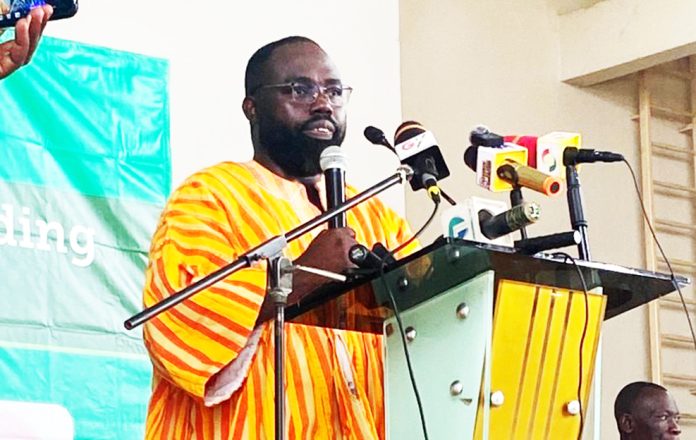
MOH Damush, CEO of Telecel

Moh Damush, Chief Executive Officer of Telecel Group, has underscored the urgency of building a digital single market to unlock Africa’s economic growth, pointing to the African Continental Free Trade Area (AfCFTA) as a gateway to a unified market of about 1.4 billion people.

He said Africa must deliberately harness its digital potential, stressing that the continent’s abundant natural and human resources require sustained investment in connectivity and skills development to translate into lasting solutions.

Mr. Moh Damush made the remarks at the Presidential and Business Leaders’ Dialogue of the Africa Prosperity Dialogues (APD) 2026 in Accra, which brought together African leaders, trade envoys and diplomats.

“Resources alone are like seeds kept in a jar, full of potential but dormant until knowledge turns them into solutions that transform lives. Building a digital single market, where cross-border payments, e-commerce and data-driven trade thrive will determine who can grow, who can compete and who can scale,” he said.

His comments reflect a growing consensus on the role of digital technologies in driving economic growth and narrowing inequality across the continent.

Telecel Group, which operates in several African countries and has its largest presence in Ghana, is investing in digital skills development, entrepreneurship and support for women-led small and medium-sized enterprises (SMEs).

The Chief Executive Officer of Telecel Group also emphasised the importance of inclusive growth, arguing that Africa’s single market must be shaped from the grassroots by traders, creators and innovators.

He noted that women-led businesses are 17 per cent more likely to adopt digital tools when cross-border trade barriers are reduced, adding that improved connectivity is critical to empowering women and the youth.

“SMEs account for more than 90 per cent of African businesses, while youth make up over 60 per cent of our population.

“Yet they are too often treated as beneficiaries rather than builders. Empowering SMEs, women and youth is not charity; it is an economic necessity,” he said.

The Africa Prosperity Dialogues 2026 is a three-day high-level continental forum organised by the Africa Prosperity Network in partnership with the AfCFTA Secretariat, taking place from February 4 to 6, 2026, at the Accra International Conference Centre.

Held under the theme: “Empowering SMEs, Women & Youth in Africa’s Single Market: Innovate; Collaborate. Trade,” the forum convened policymakers, heads of state, business leaders, investors, entrepreneurs and youth advocates to accelerate inclusive participation in the AfCFTA and unlock the continent’s single market potential.

Mr. Damush said Telecel Group’s initiatives-including the Africa Start-Up Initiative Programme, DigiTech Academy and Startocode-are designed to equip young Africans with relevant digital skills.

He disclosed that Startocode will train 100,000 Ghanaian youth under the Government’s One Million Coders Programme.

In addition, Telecel’s Women in Business initiative provides women-led SMEs with digital tools, access to finance and targeted training.

The Telecel Group CEO’s call comes at a time when Africa continues to grapple with high unemployment and limited access to digital technologies.

He said the company’s interventions are aimed at bridging the digital divide and positioning Africa for sustainable growth.

“Connectivity isn’t just an economic tool; it’s an equaliser. If we get this right, Africa will not only prosper, it will redefine prosperity,” Mr. Damush said.

Chieftaincy Crisis: Aowin Nyankamam Sits On A Time Bomb

0
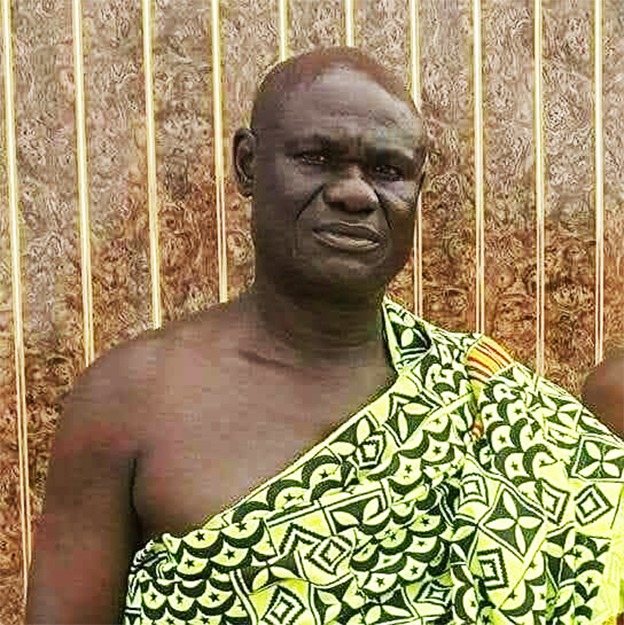
Amos Rosely alias Nana Ebah - Embattled chief

Residents of Nyankamam near Enchi in the Aowin Municipality of the Western Region have appealed to the Minister of Chieftaincy and Religious Affairs, the Western North Regional House of Chiefs, the Western North Regional Minister, the Regional Police Commander and the National House of Chiefs to, as a matter of urgency, intervene in the long-standing chieftaincy dispute in the town.

According to the residents, the Aowin Traditional Council, mandated by law to resolve chieftaincy disputes within its jurisdiction has been dysfunctional for several years, making it impossible to constitute a properly recognised judicial committee, in line with the Chieftaincy Act, to adjudicate the matter submitted by the late Queenmother of the Asamangama Royal Family of Nyankamam.

The current Abusuapanin of the Royal Family, Nana Joe Mends Aboah, indicated that he is trying his best to bring the past glory of the family back and he will not rest until he achieves the complete unification of the Asamangama Royal Family and the community at large.

“The traditional Council has been inactive for too long and this vacuum is what is deepening the confusion in our town”, a concerned elder told The Chronicle.

A member of the Aowin Traditional Council, who pleaded anonymity, when contacted, said the Nyankamam Chieftaincy dispute is a matter of great concern, pledging that the Traditional Council is bent on resolving the dispute soon.

Some residents said the prolonged delay in ensuring the enstoolment of a substantive chief has stalled, thus denting the image of the Aowin Traditional Palace, which situation has negatively affected development.

“Without a recognised chief, we are always left out when development issues are discussed at the traditional level,” a youth leader lamented adding that “Investors and government agencies do not know who to engage”.

Traditionally, the Nyankamam Stool is occupied by royals from four recognised gates or lineages and descendants of Nana Gyande Ebi, Nana Akua Nga, Nana Abon Akasi and Nana Asare Mayei, the lineage from which Nana Ebah originates.

Genesis of the Dispute

The chieftaincy dispute dates back to 1999, following the death of the chief of Nyankamam, Nana Adu Kwame II.

Upon his demise, the late Queenmother, Nana Yaa Meisu, together with the late Abusuapanin Nana Kwasi Abaah nominated and enstooled Mr. Amos Rosely, popularly known as Nana Ebah, as the rightful successor. He occupied the Nyankamam palace and performed his duties as chief with the backing of kingmakers and residents until October 12, 2011.

These events occurred during the reign of the late Omanhene of the Aowin Traditional Council, Odeneho Brentu IV.

The Chronicle gathered that a section of the Royal family expressed dissatisfaction with Nana Ebah’s enstolment and swore an affidavit on February 18, 2008, challenging his recognition as Chief.

The case, residents say, was ruled in favour of the queenmother by a court of competent jurisdiction.

The Chronicle further gathered that during a period when Nana Ebah enrolled as a student of the Garden City University College in Kumasi, another Royal, Mary Abiaw, allegedly took advantage of his absence to initiate processes at the Aowin Traditional Council.

She reportedly nominated Ahmed Amadu, a nephew of Nana Ebah and with the support of some family members and kingmakers, performed some rites to present him as Chief of Nyankamam marking the beginning of the entrenched dispute that continues to divide the community.

Imminent Clashes in view

Residents expressed fear that the situation could degenerate into violent Chieftaincy Clashes if the appropriate authorities fail to act decisively.

“We are sitting on a time bomb”, a resident warned and noting that “If nothing is done, misunderstandings could turn violent. A legitimate Chief will bring peace, unity and development.”

They have, therefore, appealed to the Regional House of Chiefs and all relevant state institutions including National Security to swiftly intervene, emphasising the need for swift action to preserve peace.

Their plea is against the fact that Nyankamam is endowed with vast lands, including Jomoro, Yiwabra Nkwanta, Asantekrom and Yiwabra, with the belief that a substantive and universally recognised chief would help unite the people and accelerate development.

“A stitch in time saves nine”, they cautioned.

From Richmond Antwi Boasiako, Samreboi, W/R.

Mahama Sacks Baba Jamal

0
Baba Jamal Mohammed Ahmed, Former Ghana’s High Commissioner to Nigeria

The Ayawaso East constituency primary of the ruling National Democratic Congress (NDC) has once again exposed the vote-buying infested elections in the politics of the country.

The broad daylight actions of sharing money, television sets and other items by the various NDC Parliamentary Aspirants during the Ayawaso East primary took the shine off the exercise.

The Office of the Special Prosecutor (OSP) has since announced the commencement of an investigation into the alleged “vote-buying, vote-selling and related corruption” associated with last Saturday’s NDC parliamentary primary.

The anti-corruption office issued a statement on Sunday, February 8, 2026 which said the probe would focus on whether corrupt inducements took place and the sources of funding behind them.

The probe, according to the OSP, will also touch on the recently held presidential primary of the opposition NPP.

“The OSP has commenced investigation in respect of the NPP presidential primary conducted on 31 January 2026,” the statement said.

It continued that “On 7 February 2026, the OSP commenced a real-time investigation in respect of the NDC parliamentary primaries at the Ayawaso East constituency.

“The investigations focus on allegations of vote buying, vote selling, and the sources of funding of the alleged corrupt acts.”

The NDC Parliamentary Candidate-elect, Mohammed Baba Jamal, left his post in Nigeria as Ghana’s High Commissioner to the Federal Republic, to contest for the nod to represent the NDC at the by-election.

SACK

However, the President, John Dramani Mahama, has relieved him of his post upon allegations that he bought votes by sharing television sets to delegates.

Shortly after news broke about the alleged vote-buying, Jubilee House issued a statement and announced that the President had “directed the immediate recall of Mohammed Baba Jamal Ahmed (Baba Jamal) from his position as Ghana’s High Commissioner to the Federal Republic of Nigeria.

The decision follows allegations of voter inducement in today’s NDC primaries in the Ayawaso East Constituency, in which Mr. Baba Jamal, a candidate, participated,” Jubilee House said.

The presidency statement indicated that, while the allegations of vote-buying were made against multiple candidates who contested the primaries, Baba Jamal was the only serving public officer among them.

NDC PROBE

The party, on the other hand, strongly condemned the allegation of vote-buying, describing the reported conduct as a violation of the party’s values and the reset agenda.

The General Secretary of the NDC, FifiFiaviKwetey, in a statement issued on Saturday, announced the establishment of a committee to probe the matter.

The three-member committee is chaired by the former party stalwart Kofi TotobiQuakyi, with the Majority Leader, MahamaAyariga, and legal expert EmefaFugah as members.

The committee has been tasked to investigate the alleged inducement and bribery during the Ayawaso East primaries and recommend sanctions and reforms that could help curb inducement in the future internal elections of the party.

PUBLIC

The public appears to be outraged with the development that happened at the weekend.

The president of the policy think tank, IMANI Africa, Franklin Cudjoe, called for the annulment of the Ayawaso East NDC primary.

He argued that the conduct undermined the party’s electoral code and the credibility of its internal democratic processes altogether.

Several others, who agreed with the position of Franklin Cudjoe, also urged that the episode should be a wake-up call for political parties about the persistent challenges of vote-buying and electoral integrity.

Meanwhile, the Majority Caucus of the NDC in Parliament has called for the immediate cancellation of the parliamentary primaries in the Ayawaso East constituency.

The group issued a statement yesterday and strongly condemned the allegations, against the background of the agenda to reset the politics of this country.

According to the Majority Caucus, the allegations undermine the credibility of the party’s internal democratic processes and run contrary to its commitment to ethical political conduct. They said “any candidate who has been established to have engaged in unethical conduct should be banned from participating in the subsequent primary.”

The winner, Mohammed Baba Jamal, has also issued a statement, acknowledging the decision of the NDC to probe the matter.

Acknowledging that he had been recalled by the president as Ghana’s High Commissioner to the Federal Republic of Nigeria, he thanked the President for the opportunity to serve his country in that capacity.

However, he has denied any wrongdoing and said he is ready to assist in the investigation.


For more news, join The Chronicle Newspaper channel on WhatsApp: https://whatsapp.com/channel/0029VbBSs55E50UqNPvSOm2z

Ghana Will Double Coconut Production –Otokunor

0
Dr Peter Boamah Otokunor

The Government of Ghana has set an ambitious target to double the country’s coconut plantation coverage from 90,000 hectares to 180,000 hectares by the end of 2028, as part of efforts to position Ghana as the largest producer of coconut in Africa and the 12th largest globally.

The announcement was made by Dr Peter Boamah Otokunor, Director of Presidential Initiative in Agriculture and Agribusiness (PIAA), during a training and capacity-building programme for coconut farmers held in Kumasi, in the Ashanti Region on February 6, 2026.

According to Dr Peter Otokunor, the initiative forms part of the President’s broader agricultural transformation agenda and is anchored on the large-scale distribution of improved coconut seedlings to farmers across the country.

He disclosed that more than three million improved seedlings are being rolled out nationwide, with the intervention so far adding about 31,500 acres of new coconut plantations.

“This initiative has added 31,500 acres of new coconut plantation to the existing 90,000 hectares of coconut farms in Ghana,” he said.

“It is the vision of His Excellency President John Dramani Mahama that by the time he completes his term in 2028, Ghana would have doubled its total coconut plantation coverage from 90,000 hectares to 180,000 hectares.”

The training programme, held under the theme: “Presidential Initiative on Coconut Development: Training and Capacity Building for Coconut Farmers,” brought together about 500 coconut farmers and agricultural extension officers from the Ashanti and Western North regions. Participants included beneficiaries of the government’s free improved coconut seedling distribution undertaken last year.

The programme marked the first in a series of capacity-building sessions and was organised through a collaboration involving the Government of Ghana, Ghana EXIM Bank and the Coconut Federation of Ghana.

Speaking on behalf of the Ashanti Regional Minister, Dr Frank Amoakohene, the Municipal Chief Executive of Asokore Mampong, Ben Abdallah Alhassan, underscored the government’s integrated approach to agricultural development. He noted that the Capacity Building Performance Programme demonstrates a deliberate effort to link production, processing, financing and market access within the agricultural value chain.

“Agriculture remains a cornerstone of Ghana’s economy and a critical driver of employment, income generation and food security.

“Within this sector, the coconut value chain presents immense opportunities not only for farmers but also for processors, exporters and small-scale agribusinesses,” he stated.

He added that unlocking the sector’s full potential requires sustained investment in knowledge, skills and modern farming practices, stressing that the training aligns with the government’s broader agricultural transformation agenda.

Also addressing participants, Project Manager of the Coconut Federation of Ghana, Rahman Taminu, said the initiative is aimed at revitalising the coconut sector and positioning it as a key contributor to food security, job creation, export growth and rural empowerment.

While acknowledging the importance of seedling distribution, he emphasised that the success of the programme depends largely on proper farm management and sustainability to ensure high survival rates and improved yields.


“This training workshop has been carefully designed to provide farmers with critical technical guidance on best agronomic practices, including proper planting techniques, spacing, pest and disease management, intercropping opportunities, soil fertility improvement and farm maintenance strategies,” he explained.

On behalf of the Chief Executive Officer of Ghana EXIM Bank, Deputy Project Manager Isaac Obeng Antwi-Arko reaffirmed the bank’s strong support for the initiative and commended farmers for their commitment.

He described the seedlings as a long-term investment in both individual livelihoods and the future growth of Ghana’s coconut industry.

Participants were encouraged to apply the knowledge acquired to improve farm management, boost yields, enhance produce quality and increase incomes.

The training focused on improved agronomic practices, nursery establishment, plantation management, pest and disease control and market-oriented production.


Agradaa Ruling Undermines Deterrence -Says KwakuAzar

0
Nana Agradaa

US-based law Professor, Kwaku Asare, popularly known as Kwaku Azar, has sharply criticised the High Court (Appellate Division) for drastically reducing the 15-year prison sentence of Patricia Asiedua Asiamah, also known as Nana Agradaa, arguing that the decision trivialises organised, faith-based fraud.

Writing on his Facebook page, Prof Azar warned that the appellate court’s description of the sentence as “killing a mosquito with a sledgehammer” misunderstood the nature of Agradaa’s offences.

“Agradaa is not a mosquito. This was deliberate, organised fraud targeting vulnerable people, and the trial judge did not use a sledgehammer,” Azar said.

He stressed that the trial court had convicted her lawfully and fairly on three counts, including two counts of defrauding by false pretence and one for charlatanic advertising.

Prof Azar argued that the appellate judge had applied the wrong standard, substituting personal preference for proper judicial review.

“The appellate court reweighed permissible factors and reached a different sense of proportionality. Disagreement is not illegality, but preference is not the proper appellate standard,” he said.

According to Prof Azar, Agradaa’s crimes went far beyond petty theft. She deliberately targeted vulnerable followers under the guise of religion, promising to distribute ₵300,000 at an all-night church service, but instead collecting money under false pretences.

She promoted her schemes widely on television and social media, showing bundles of cash and offering business support or rent assistance that never materialized.

Congregants were induced to pay amounts ranging from ₵500 to ₵1,000 in exchange for the promised “multiplication,” but only insiders ever received anything. When some followers demanded refunds, thugs were allegedly called in to intimidate them.

Prof Azar also emphasized that Agradaa was a repeat offender, having been previously convicted in 2021 for similar conduct, and showed no remorse.

He criticised the appellate court for overlooking the seriousness of her actions, noting that the harm extended beyond the money lost: it eroded public trust, exploited faith, and normalized religious scams. “This is not a mosquito; it is a termite in the foundations of social trust,” he said.

The legal scholar further argued that sentencing should reflect not just the arithmetic of cash involved, but the nature of the crime, the offender, the vulnerability of victims, and broader societal impact. He insisted that the trial court was justified in imposing a long sentence to deter others from weaponising religion for personal gain.

Concluding his critique, Azar warned that while debates on proportionality are normal, the appellate ruling understates the gravity of organized, repeat, faith-based fraud and risks sending the wrong message to society.

“Fraud wearing a cassock is not small fraud. The appellate court’s ruling risks trivializing serious, deliberate exploitation of the vulnerable,” he added.


For more news, join The Chronicle Newspaper channel on WhatsApp: https://whatsapp.com/channel/0029VbBSs55E50UqNPvSOm2z


Editorial: Kudos to AMA for increasing allowance of street sweepers

0
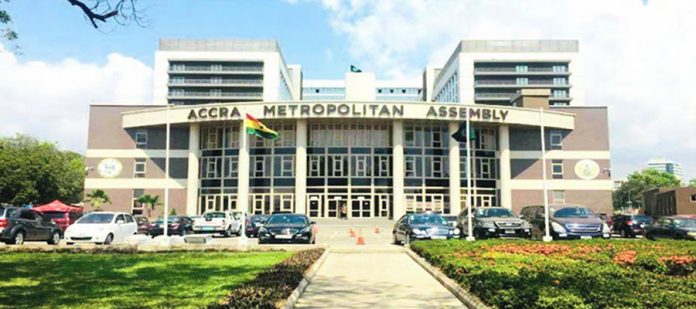
Accra Metropolitan Assembly

The Accra Metropolitan Assembly (AMA) has announced a 100 per cent increase in the monthly allowance of street sweepers, raising it from GH₵400 to GH₵800. The decision, disclosed by Accra Mayor Michael Nii Kpakpo Allotey, is intended to professionalise sanitation work, improve the welfare of sweepers and attract more young people into the sector.

According to the Mayor, the wage increase aligns with the government’s 24-Hour Economy policy, under which sanitation services in Accra have been expanded into a round-the-clock operation. Waste collection and street cleaning are now expected to continue at night to reduce traffic congestion during the day and improve overall urban cleanliness.

Mayor Allotey argued that fair compensation is essential for productivity and sustainability, noting that GH₵800 offers a more competitive entry-level income, especially at a time when inflation has moderated. He urged other metropolitan, municipal and district assemblies to consider similar pay adjustments to help reduce youth unemployment and strengthen local economies.

The Chronicle welcomes the Accra Metropolitan Assembly’s decision to double the allowance of street sweepers. For too long, sanitation workers have been among the most underpaid and undervalued in Ghana’s public service chain. Paying GH₵400 a month to individuals who sweep Accra’s streets daily was not only unjust; it was economically unrealistic. It was a case of employers pretending to pay whilst employees pretend to work.

By raising the allowance to GH₵800, the AMA has acknowledged a basic truth, no city can be cleaner than the value it places on those who clean it. In that respect, Mayor Allotey’s action is commendable and sends a strong signal to other assemblies that sanitation must be treated as skilled, essential work, not charity employment.

That said, higher wages alone will not clean Accra.

The Chronicle has, on numerous occasions, witnessed a troubling contradiction in the capital. Just last Thursday, we observed a large heap of refuse dumped at the Spanner bus stop around Tetteh Quarshie Interchange at where commuters are meant to sit and wait for transport while police officers directed traffic nearby. This scene is not unusual. Sweepers work daily, yet some residents deliberately litter public spaces with impunity.

This points to a deeper problem: weak enforcement of sanitation laws and a culture of indiscipline that undermines even the best policies.

If the AMA truly wants value for the increased wage bill, it must strengthen prosecution of sanitation offenders, empower environmental health officers and revive public education campaigns. Without deterrence, the burden of cleanliness unfairly falls on sweepers while habitual offenders face no consequences.


There is also the question of sustainability. Assemblies across the country are already struggling with delayed DACF releases and rising operational costs. If the wage increase is not backed by stable funding, improved waste revenue collection and private-sector partnerships, it risks becoming another well-intentioned policy that collapses under financial strain.

Finally, the 24-hour sanitation model must be carefully managed. Night work requires proper lighting, protective gear, supervision and security. Without these, extended shifts could expose workers to new risks, undermining the very welfare gains the policy seeks to achieve.

The Chronicle believes the AMA has taken a bold and humane step. But paying sweepers better must be matched with stricter law enforcement, sustained funding, public responsibility, and institutional discipline. A clean Accra is not the duty of sweepers alone; it is a shared civic obligation.


Kristo Asafo Mission donates to Sawua Health Centre

0
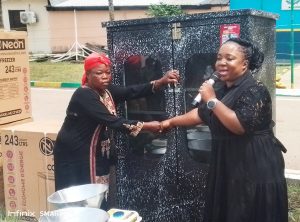
The Administrator takes delivery of the items at the presentation ceremony

The Atonsu branch of the Kristo Asafo Mission, established on February 3, 1971 by the Founder and Leader of the church, the late Apostle Engineer Kwadwo Safo has commemorated its 55th anniversary with a donation to the Sawua Health Centre.

The Church, led by the head pastor, Albert Safo Ntim, donated items worth GHC8,500 to mark the special day on Wednesday.

The donation comprised three infusion stands, 1 Nebulizer, five Bed Side lockers, five washing powder bucket, 10 packets of toilet Rolls, 36 packs of sachet water, 3 bins and 20 gallon of oil.

The Church also organised a food bazaar at the church premises as part of activities to mark the Day (February 3).

Nana Amoakohene, a Member of Council of Elders of the church said February 3 gives special opportunity to members to renew their faith, start new life and continue good life, make special request to God and proclaim special gifts in life.

The Administrator of Sawua Health Centre, Mrs Matilda Abbem, who received the items on behalf of the Center thanked the church for the gesture and pleaded with other organisations and religious bodies to come to the aid of the health facility.

From Oswald P. Freiku, Kumasi


For more news, join The Chronicle Newspaper channel on WhatsApp: https://whatsapp.com/channel/0029VbBSs55E50UqNPvSOm2z

First Batch of Ashanti Regional NAP Beneficiaries Receive Equipment

0
Nechodemus Jerry, National Coordinator for NAP, briefing the Ashanti Regional Minister at the event

The National Apprenticeship Programme (NAP) has distributed equipment to the first batch of beneficiaries in the Ashanti Region towards empowering the youth and addressing unemployment.

The programme, which has trained 14,335 youth nationwide, aims to support those interested in apprenticeship and entrepreneurship.

MCE Deaconess Asante poses with the beneficiaries

Speaking at the event, Dr. Frank Amoakohene, Ashanti Regional Minister, advised beneficiaries not to sell the equipment, but use it to benefit themselves and to enable them train others towards the government’s ultimate goal of reducing unemployment among the youth.

Deaconess Jerryn Asante, Municipal Chief Executive for Ejisu Municipality, emphasised that the programme aligns with President Mahama’s vision to curb unemployment among the youth.

Alhaji Inusah Mahama, Deputy Director of National Youth Employment Authority stated that the programme was a promise fulfilled, exceeding the target of training 5,000 youth.

Some of the equipment distributed to the beneficiaries

He advised the beneficiaries to take the programme seriously whilst the trainers were entreated to be committed to training the youth.

According to him, the government provided start-up tools, including industrial sewing machines, Hair Dryer and other equipment to support the apprentices, besides monthly stipend and fees.

The MCE handing over an oven to a beneficiary baker

Nana Kwasi Agyekum, Donase Chief, encouraged beneficiaries to take advantage of the opportunity, emphasizing that life is not only about passing exams, but also acquiring skills to become their own bosses.


For more news, join The Chronicle Newspaper channel on WhatsApp: https://whatsapp.com/channel/0029VbBSs55E50UqNPvSOm2z

Ashanti Rent Control educates public on its laws

0
Paul Kofi Appiah speaking with The Chronicle

The Ashanti Regional Secretariat of the Department of Rent Control, under the Ministry of Works and Housing, has explained its “existing laws” and their enforcement, some of which are oblivious to the citizenry.

It has also hinted of a new Bill which aims at amending the Rent Act 1963 (Act 220) and also seeks to modernise the rental sector, with key proposals, including restricting rent advances to a maximum of one year.

The existing Rent Act (Act 220) regulates landlord-tenant relationships, assessing recoverable rent and mediating disputes throughout the country.

Speaking in an interview with The Chronicle, Mr. Paul Kofi Appiah, Regional Relations Officer of the Department, said the new bill, when passed into law, will help lessen the financial burden of tenants, vis-a-vis rents, as well as aid landlords deal with “unscrupulous” tenants, in terms of eviction.

The PRO also disclosed that the Department will soon, via Taskforce, commence with the assessment of rental property to determine the “appropriate price”, for which the respective properties should be let out on monthly basis.

In this case, a certificate will be issued to the Landlord or Manager, to serve as a benchmark for rent of the assessed property, subject to review or increase, until after three years of the existing tenancy, unless major improvements or modifications have been made to the property.

He stressed that the assessment of property by the Department is an existing law, but lacks enforcement, which will soon be enforced, indicating that his outfit will also engage Hostel Administrators and Managers to make them aware that it is the responsibility of the Department to determine rents, via assessment as well as educate them on its enforcement.

Mr. Appiah further explained that the “assessment” will take into consideration the location of the property, size and materials used for the building, amenities among others, noting that the assessment will be carried out by a Taskforce, comprising of a Valuer, Legal Practitioner and Rent Officer of the area, in the presence of the landlord or manager and tenants.

The Taskforce would be going around, after the assessment, for monitoring to ensure implementation.

The PRO also disclosed that there is going to be standard tenancy agreement for all, noting that the ACT also mandates Landlords to issue out tenancy agreement to tenants and also register it with the Department.

He stressed that a landlord who does not issue the agreement to his tenants, would be compelled to pay for one by the Taskforce.

Mr. Paul Kofi Appiah disclosed that the renewed enforcement drive by the Acting Commissioner of RCD, Frederick Opoku, underscores the need for effective regulation of the rent sector, to sanitise and streamline the rental space in the country.

From Oswald P. Freiku, Kumasi


For more news, join The Chronicle Newspaper channel on WhatsApp: https://whatsapp.com/channel/0029VbBSs55E50UqNPvSOm2z

Tambuwal refuses Ganduje’s offer to sit in front of APC flag

0
Aminu Tambuwal

A video has emerged showing a chieftain of the African Democratic Congress, ADC, Aminu Tambuwal, refusing to sit under the flag of the All Progressives Congress, APC.

Former APC National Chairman, Abdullahi Ganduje, had offered Tambuwal a seat with the party’s flag right behind.

But the former governor of Sokoto State initially refused to sit demanding that the flag be removed from the designated area.

With the intervention of Ganduje and other people in the room, Tambuwal eventually sat down.

Currently, Tambuwal is an active member of the ADC, which is seeking to wrest power from President Bola Tinubu of the APC in 2027.

Credit: dailypost.ng

The Ghanaian Chronicle