Governor Ademola Adeleke of Osun State has dismissed recent calls for the declaration of a state of emergency in the state, describing them as a continuation of what he termed a failed plot by the All Progressives Congress (APC) to seize power through backdoor.
The governor was reacting to appeals by some civil society groups for emergency rule following recent developments in the state.
Adeleke, however, described the groups as “faceless” and alleged that the call was a desperate move orchestrated by former governor Gboyega Oyetola and APC governorship candidate, Bola Oyebamiji.
In a statement issued on Saturday in Osogbo, Adeleke accused the APC of being the primary source of unrest in Osun, alleging that the party had paralysed local government administration, mismanaged council funds, and illegally deployed security personnel in the state.
According to him, the former governor and his associates are now “the most hated political actors in Osun” due to their actions at the local government level.
“The APC seized local government funds, mismanaged the same, and forcefully occupied the councils, all in a bid to provoke violence and conflict. This is a deliberate strategy to create chaos and blame it on the Adeleke-led administration,” the governor said.
Adeleke maintained that his administration has continued to preserve peace in the state despite what he described as open confrontation and persistent illegality by APC-aligned actors.
He said the call for emergency rule was borne out of frustration after their alleged plans failed.
“Osun APC has failed in its evil bid to destabilise the state, hence their resort to an open call for emergency declaration, for which there is no basis or justification,” he stated.
The governor questioned attempts to blame his administration for the crisis, insisting that the instability stemmed from what he described as the illegal occupation of local government councils by APC-backed chairmen whose tenures had expired.
He further accused the APC of hijacking local government funds in violation of financial regulations, while noting that his government had stepped in to pay local government workers who were allegedly abandoned.
Adeleke said his handling of the crisis has earned commendations from various quarters, adding that Osun has moved beyond the era of political violence.
“No individual or group will be allowed to further disturb the peace of Osun State. Anybody found creating public mayhem will face the full wrath of the law,” he warned.
The governor disclosed that he had directed the state Commissioner of Police to monitor and prevent any attempt to plunge the state into conflict, while also calling on the Inspector-General of Police to take note of the situation.
He also appealed to President Bola Ahmed Tinubu to intervene by calling former governor Oyetola to order, warning that the actions of the minister could tarnish the image of the Presidency.
“Those seeking power should face the electorate. Political power is secured through the people; no backdoor access will work,” Adeleke added.
The Kogi State Government has ordered the temporary closure of selected markets and motor parks across parts of Kogi West Senatorial District to support intensified security operations aimed at flushing out terrorists, bandits and other criminal elements.
The directive was announced in a statement signed on Sunday by the Commissioner for Information and Communications, Kingsley Fanwo.
He said the measure is in support of ongoing clearance operations being carried out in collaboration with the Office of the National Security Adviser and heads of security agencies in the state.
According to the government, the closures are designed to cut off logistics, restrict the movement of consumables and deny criminal elements and their informants access to food supplies and other forms of support during the operations.
The temporary shutdown affects selected communities across seven local government areas.
In Lokoja Local Government Area, the affected locations include Oshokoshoko Market and Motor Park, as well as Jakura, Ogbagbon, Agbaja, Atsawa, Obajana, Apata, Abugi, Amomi, Ebee and Budon.
In Kabba-Bunu Local Government Area, markets and motor parks in Ike Bunu, Aba Marian (Isado), Ofere, Abaa Dola (Ihale Bunu), Aiyede, Oke Offin, Aiyegunle Bunu, Okebukun, Odo Ape Bunu, Agbadu Bunu and Agbede Apa Bunu are covered by the directive.
Communities affected in Yagba West Local Government Area include Okoloke, Isanlu Esa, Okunran, Ogbe, Ejiba, Odo Eri, Igbaruku, Iyamerin, Ogga, Omi, Odo Ara and Oke Ere.
President Bola Tinubu is set to embark on a historic State Visit to the United Kingdom later this month, following an invitation from King Charles III.
Tinubu and his wife, Oluremi Tinubu, will be received at Windsor Castle, west of London, on March 18-19 by Charles and Queen Camilla, the palace said.
The British Royal Family confirmed this in a statement posted on its official X account on Sunday.
“The President of the Federal Republic of Nigeria, Mr. Bola Ahmed Tinubu, accompanied by the First Lady, Mrs. Oluremi Tinubu, has accepted an invitation from His Majesty The King to pay a State Visit to the United Kingdom from Wednesday, 18th March to Thursday, 19th March 2026.
“The King and Queen will host the State Visit at Windsor Castle,” the Royal family stated.
Presidential aide, Bayo Onanuga, also confirmed the development, describing it as a landmark moment in Nigeria–UK relations.
“First state visit of a Nigerian leader to the UK in 37 years confirmed. President Tinubu and First Lady Remi Tinubu to be hosted by King Charles and Queen Camilla from 18th March to 19th March 2026,” he wrote on X.
London and Abuja concluded a strategic partnership in November 2024 to strengthen their cooperation on economic, immigration, and security matters.
The visit is significant as it marks the first time a Nigerian leader will be received in the United Kingdom with full state honours since 1989, when then military president, General Ibrahim Babangida, was hosted by Queen Elizabeth II.
Babangida’s four-day visit included a stay at a royal residence and a State Banquet at Buckingham Palace.
Only two other Nigerian leaders had undertaken formal State Visits to the UK: General Yakubu Gowon in June 1973 and President Shehu Shagari in 1981.
Although several Nigerian presidents have travelled to the UK since 1989, those visits were categorised as private, working, or official engagements, which do not carry the ceremonial weight and pageantry of a State Visit.
The Ghana Anti-Corruption Coalition (GACC), in collaboration with Africa Centre for Energy Policy (ACEP) and ABAK Foundation Ghana, has held an advocacy engagement with the media and others on how to verify published extractive data.
The forum held in Kumasi recently on the theme: “From Disclosure to Impact: Mobilising Civil Society to Verify Published Extractives Data and Advocate for Equitable, Accountable Spend of Funds”, sought to educate the citizenry on the Petroleum Revenue Management (Amendment) ACT, 2015 (ACT 893); to address implementation challenges and refine revenue allocation formulae, as well as the Annual Budget Funding Amount (ABFA).
Group picture of participants
ABFA is the portion of Ghana’s petroleum revenue transferred into the national budget to support development, capped at a maximum of 70 percent of the Benchmark Revenue per the PRMA Act 815, Section 23(3). It is a critical funding source for infrastructure, education, and agriculture, often adjusted based on oil prices and production volumes.
The objective is to train citizens to be knowledgeable on happenings in the extractives sector, mobilise and support citizens to verify content of extractives sector report, as well as to have informed citizens demand responses to extractive sector corruption and non-compliance by government.
Ms. Dorcas Affum Tenkorang, Assistant Programmes Officer, GACC disclosed that the project (monitoring of ABFA projects) which commenced in 2024 will end in March of this year.
She said five districts – Asante Akem Central, Sekondi-Takoradi Metropolitan Assembly, Ho, Nzema East and Tamale were selected noting that her outfit is at advocacy engagement phase with stakeholders.
The programmed Officer explained that GACC has been to the field to monitor and have identified certain issues that stakeholders needed to be aware of, as well as making recommendation to effect changes.
She noted that the merging of ABFA into “The Big Push”, hence the need for the engagements to ensure such mistakes are not repeated.
Ms. Tenkorang urged the citizenry to scrutinise ongoing projects in their communities to ensure that the desired change had been effected.
Dr. Frank Amoakohene, Ashanti Regional Minister, has tasked Metropolitan, Municipal, and District Chief Executives (MMDCEs) to up their game, emphasising that this year is an action year for government appointees and workers.
At a performance contracts signing event at the Regional Coordinating Council, the Minister explained that the contracts mandate politicians and government employees to perform towards achieving the government’s resetting agenda targets.
The contract ensures citizens are informed about governance systems, focusing on security, health, education, agriculture, and more.
The performance contract outlines key performance areas, guiding MMDCEs to deliver and be rated at the end of the year.
Dr. Frank Amoakohene stressed that 88% of the Common Fund remains with MMDAs to fast-track development.
Oheneba Kwabena Andoh, Dean of MMDCEs, assured the Regional Minister of their commitment to achieving the government’s resetting agenda, promising to work tirelessly to improve living standards.
The Executive Director of Vision for Accelerated Sustainable Development (VAST-Ghana), Labram Musah, has called on the Government of Ghana to ban the production and sale of alcohol in sachets and small bottles under 200 millilitres, urging authorities to emulate Nigeria’s recent enforcement action in the interest of public health.
In a press statement issued on Tuesday, Labram Musah described Nigeria’s decision to resume nationwide enforcement of the ban on sachet alcohol in January 2026 as a “shining example” for Ghana and the wider West African sub-region.
He praised Nigeria’s National Agency for Food and Drug Administration and Control (NAFDAC) for prioritising public health despite strong opposition from the alcohol industry.
According to VAST-Ghana, Nigeria’s enforcement move was met with resistance from key industry players, including the Manufacturers Association of Nigeria (MAN), the Nigeria Employers’ Consultative Association (NECA) and the Distillers and Blenders Association of Nigeria (DIBAN), who warned of job losses, factory shutdowns and economic disruption.
However, the organisation said NAFDAC’s resolve demonstrated that protecting public health particularly that of children and young people, must take precedence over commercial interests.
Mr. Musah noted that sachet alcohol and miniature bottles often contain high-strength spirits of up to 43 per cent alcohol, sold at very low prices and easily concealed, making them readily accessible to minors, including school children. He warned that early exposure to alcohol increases the risk of addiction, liver damage and other long-term health complications.
VAST-Ghana argued that Ghana’s Food and Drugs Authority (FDA) already has the legal mandate under the Public Health Act, 2012 (Act 851) to impose a similar ban through administrative measures, without waiting for prolonged parliamentary processes.
The group commended the FDA for previous actions, including restrictions on alcohol advertising and the use of celebrities in alcohol promotions, but stressed that banning sachet and miniature alcohol products was long overdue.
The organisation also welcomed the recent announcement by the Majority Leader and Leader of Government Business, Mr. Mahama Ayariga that government intends to introduce an Alcohol Control Regulations Bill in Parliament.
The proposed legislation is expected to regulate alcohol marketing, sponsorship and promotions, particularly those targeting young people and other vulnerable groups.
VAST-Ghana further pointed to experiences from other African countries such as Uganda and Malawi, where bans on sachet alcohol have reportedly reduced the visibility of high-potency spirits and eased alcohol-related public health burdens.
It cited a 2025 Alcohol Market Report indicating that Ghana’s alcohol sector is projected to grow by 13 per cent annually, a trend the organisation described as evidence of a deepening addiction crisis rather than economic progress.
The group referenced World Health Organization data identifying alcohol as a causal factor in more than 200 diseases and responsible for about three million deaths globally each year.
It also cited recent research suggesting that alcohol initiation among Ghanaian students now occurs as early as age 10.
VAST-Ghana has, therefore, called on the FDA to immediately ban sachet alcohol and small PET bottles, integrate the WHO’s SAFER technical package into national policy, finalise the National Alcohol Regulations, and establish strict conflict-of-interest rules to limit industry interference in public health policymaking.
“Protecting public health through decisive policy is not punitive but preventive,” the statement said, adding that Ghana’s future development depends on safeguarding the health and wellbeing of its population, especially its youth.
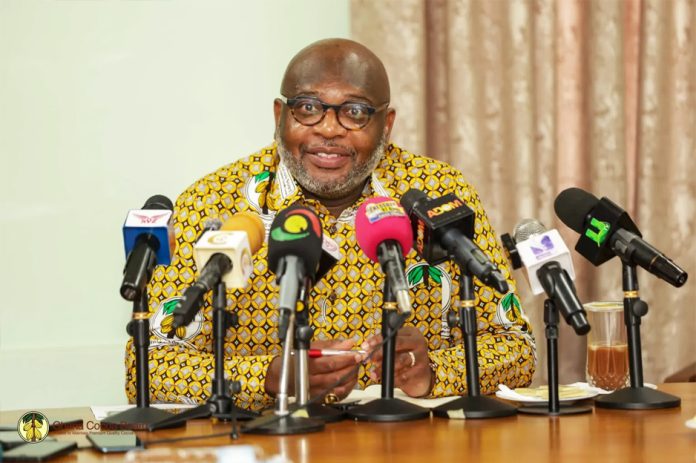
The Ghana Cocoa Board (Cocobod) is currently unable to pay for cocoa it has purchased from farmers due to a breakdown in its traditional financing model, accumulated debt from undelivered cocoa contracts and sharp shifts in global cocoa prices, according to the Chief Executive of Cocobod, Dr Randy Abbey.
Dr Abbey disclosed this during a meeting he held with editors in December, last year, and his recent engagements with the media. His recent remarks came days after the Minority in Parliament organised a press conference to protest the delays in payments to cocoa farmers and accused Cocobod of mismanaging the sector.
Apology to Farmers
The Chief Executive of Cocobod admitted that farmers who have delivered cocoa but have not been paid deserve an apology.
“Those who have delivered their cocoa and have not been paid definitely deserve an apology. And those who have cocoa ready to be sold but are unable to sell and even those preparing to harvest without clarity on purchases, also deserve an apology.”
He assured farmers that Cocobod and the government are engaged in discussions to resolve the situation and that efforts are underway to restore payments as soon as possible.
How Cocoa Purchasing Works
Cocobod does not buy cocoa directly from farmers but purchases are made through Licensed Buying Companies (LBCs), which are provided with funds to buy cocoa on Cocobod’s behalf at producer prices announced at the beginning of each season.
Dr Cassiel Ato Forson, Finance Minister
For over three decades, Cocobod financed cocoa purchases through an annual syndicated loan. Under this system, Cocobod projected expected cocoa output for a season and signed forward contracts with international buyers. These contracts were then used as collateral to secure loans from a consortium of international and local banks.
The proceeds of the syndicated loan were lodged with the Bank of Ghana, which released the cedi equivalent to Ghana Cocoa Board.
Cocobod, in turn, advanced seed funds to LBCs to purchase cocoa from farmers. This system operated for about 32 years.
Financial Distress and Cocoa Bills
According to Dr Abbey, Cocobod’s financial position deteriorated significantly in 2022, when it announced that it could no longer service its Cocoa Bills short-term debt instruments issued to raise funds from institutions and individuals.
The Cocoa Bills were subsequently restructured, resulting in haircuts for investors and a deferment of repayments.
Under the restructuring arrangement, the first repayment is due in September 2025, with funds expected to be lodged by August 2025.
Dr Randy Abbey said this development signalled to the financial market that Cocobod was in financial distress, undermining confidence in its ability to meet future obligations.
Breakdown of the Syndicated Loan
In the 2023/2024 cocoa season, Cocobod attempted to raise its annual syndicated loan under the traditional model. However, for the first time in the history of the arrangement, the loan was severely delayed.
Although the cocoa season opened in September 2023, the first tranche of the syndicated loan was not received until two days before Christmas.
Local Buying Companies (LBCs), according to Dr Abbey, did not receive funds from Cocobod until January 26, 2024.
At one point during the season, Cocobod was unable to draw further funds from the syndicated loan and had to secure a US$70 million bridge facility from the Ministry of Finance to continue purchasing cocoa.
Failure to Deliver Cocoa Contracts
At the end of the 2023/2024 season, Cocobod failed to deliver 333,767 tonnes of cocoa that it had sold forward at US$2,600 per tonne.
This marked the first time in Cocobod’s history that it was unable to supply such a significant volume of cocoa under signed contracts.
“These contracts had been used as collateral to raise financing. Failing to deliver them had serious consequences,” Dr Abbey said.
The failure to supply cocoa further damaged Cocobod’s credibility with international buyers and lenders.
Impact of Global Cocoa Price Surge
Shortly after Cocobod defaulted on the undelivered contracts, global cocoa prices surged to unprecedented levels, reaching between US$9,000 and US$12,000 per tonne before settling around US$9,000.
However, Ghana was unable to fully benefit from the price surge due to the existence of rollover contracts for undelivered cocoa sold earlier at US$2,600 per tonne, which were carried into the 2024/2025 season.
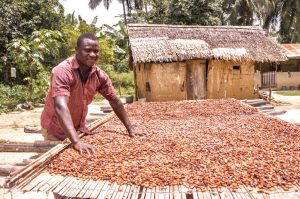
A farmer drying cocoa beans in rural Ghana
When Cocobod calculated its average Free On Board (FOB) price for the season, the rollover contracts significantly reduced the weighted average price, despite high global prices.
As a result, the declared FOB price for the 2024/2025 season was about US$4,800 per tonne, and farmers received approximately US$3,100 per tonne, representing about 63.9 per cent of the FOB. This led to widespread criticism that farmers were being underpaid despite record world market prices.
Revenue Losses
Dr Abbey said the rollover contracts resulted in an estimated revenue loss of US$941.58 million in the 2024/2025 season. “That amount could have gone to farmers and also helped reduce Cocobod’s debt,” he said.
In addition, Cocobod accumulated significant arrears to LBCs. Because LBCs paid farmers US$3,100 per tonne while the cocoa was used to settle US$2,600 rollover contracts, Cocobod owed LBCs the US$500 difference per tonne.
By the end of the season, Cocobod owed LBCs about GH¢4 billion as a result of these pricing differences.
Shift to Buyer-Funded Model
Due to its weakened financial position, Cocobod was unable to raise a syndicated loan for the 2024/2025 season. A request for proposals issued to banks received no responses.
As a stopgap measure, Cocobod adopted a buyer-funded model. Under this arrangement, international buyers financed cocoa purchases directly by paying about 60 per cent upfront, with the balance paid upon delivery. Cocobod then passed the upfront funds to LBCs to purchase cocoa from farmers.
Dr Abbey described this model as temporary and unsustainable, noting that it transferred financing costs to buyers and constrained Cocobod’s flexibility.
In the 2025/2026 season, the volume of rollover contracts reduced to about 98,000 tonnes, allowing Cocobod to declare a higher FOB price of US$7,200 per tonne. In line with government policy, farmers were paid 70 per cent of the FOB, equivalent to US$5,040 per tonne.
However, global cocoa prices subsequently declined sharply to around US$4,100 per tonne. Under the buyer-funded model, buyers became unwilling to purchase Ghana’s cocoa at prices significantly above prevailing market levels, especially given additional costs related to haulage, grading, warehousing and shipping.
As a result, buyers diverted purchases to other cocoa-producing countries, including Côte d’Ivoire, Nigeria, Togo, Ecuador and Brazil.
COCOBOD head office, Accra
Cocobod and the Ministry of Finance according to the Cocobod CE are working on a new funding model expected to take effect from the 2026/2027 cocoa season.
The new model is intended to reduce dependence on raw bean exports, support value addition, and restore financial sustainability. Until then, Cocobod says it is engaging stakeholders to stabilise cocoa purchases and address outstanding payments.
Cocoa Taken but Not Paid For
Dr Abbey said Cocobod had already purchased and fully paid for about 530,000 tonnes of cocoa. However, an additional volume-estimated at about 50,000 tonnes-was taken over from LBCs without corresponding buyer contracts.
This, he explained, accounts for reports by some farmers that their cocoa has been taken but payment delayed. “The cocoa exists, but buyers are unwilling to take it at current prices,” he said.
Minority Protest
The Minority in Parliament on February 5, 2026 accused Cocobod of mismanagement and demanded immediate payment to farmers. The issue has intensified political pressure on the government, particularly in cocoa-growing regions.
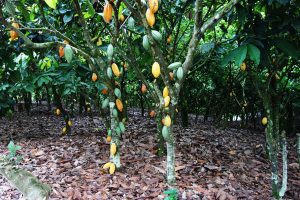
A cocoa farm in Ghana
The Minority Caucus in Parliament had rejected Cocobod’s explanation for the payment delays, accusing the government and Cocobod of mismanagement and failing to prioritise cocoa farmers.
In a statement issued after a press conference, the Minority said Licensed Buying Companies (LBCs) have been unable to pay farmers for cocoa delivered since November 2025 because Cocobod has failed to reimburse them for cocoa already taken over.
According to the Minority, Cocobod owes LBCs more than GH¢10 billion in unpaid cocoa taken-over receipts, leaving the companies financially constrained and unable to continue purchases.
The Minority argued that farmers have been forced to sell cocoa on credit, at discounted prices, or return home with unsold produce, warning that the situation poses serious risks to the cocoa industry and the wider economy.
The caucus dismissed claims that Cocobod lacks funds to pay farmers, citing government budget data indicating that cocoa export receipts amounted to about US$2.56 billion.
It also accused Cocobod of issuing misleading public statements suggesting that sufficient funds had been released to LBCs, insisting that farmers have not been paid for cocoa sold for several months.
The Minority further disputed Cocobod’s assertion that Ghana defaulted on syndicated loan repayments during the 2023/2024 cocoa season.
According to the caucus, Ghana has never defaulted on its syndicated cocoa loans since the facility was introduced in 1993, and it challenged Cocobod’s management to provide evidence of any default.
On the issue of contract rollovers, the Minority described the practice as a standard industry occurrence, noting that previous administrations inherited rollover contracts without disrupting farmer payments.
It blamed the current crisis on changes to Cocobod’s forward sales strategy, alleging that the government reduced advance cocoa sales in anticipation of sustained high prices, leaving the sector exposed when prices fell.
The Minority demanded the immediate payment of all outstanding amounts owed to cocoa farmers and LBCs, an apology from government and Cocobod, and urgent measures to stabilise cocoa purchasing and restore confidence in the sector.
Parliamentary Committee
A day after the Minority Caucus issued its statement, the Parliamentary Committee on Food, Agriculture and Cocoa Affairs met with the Ghana Cocoa Board (Cocobod) on February 6 to assess the payment challenges in the cocoa sector.
The committee, led by its Chairperson, Dr. Godfred Seidu Jasaw, urged Cocobod to intensify public education and engagement with cocoa farmers and other industry stakeholders.
According to the committee, clearer and more consistent communication was needed to help stakeholders better understand the challenges confronting the sector and the measures being implemented to address them.
The committee recommended that Cocobod consider announcing a more competitive producer price to help restore buyer confidence and attract traders who have withdrawn from the Ghanaian cocoa market in recent months.
It also called for urgent reforms to the cocoa pricing system, including the possibility of partial deregulation, to be developed in collaboration with the Ministry of Finance to make cocoa trading more attractive.
In addition, the committee urged the fast-tracking of a new cocoa law that would provide a sustainable financing and pricing framework for the sector. It further encouraged Cocobod to deliberately expand local cocoa processing capacity to create a more reliable domestic market for cocoa beans.
The committee commended Cocobod for making payments to LBCs despite the ongoing challenges. According to figures presented, Cocobod paid GH¢5.48 billion in November 2025, GH¢6.45 billion in December 2025, GH¢5.33 billion in January 2026, and GH¢0.62 billion in February 2026.
However, the committee urged Cocobod to fast-track the settlement of outstanding payments owed to LBCs and to remain vigilant against reverse smuggling, noting that cocoa prices in neighbouring countries are currently lower than those in Ghana.
Farmers Express Frustration Over Unpaid Cocoa
Meanwhile the Ghana National Cocoa Farmers Association has expressed frustration over unpaid wages since November 2025.
The Association claimed its members have not been paid for cocoa supplied since last November. Speaking on a talk show in Kumasi on Tuesday, February 3, 2026, the National President of the Association, Anane Boateng, said months of delayed payments have plunged farmers into severe financial hardship, affecting their ability to meet basic needs such as school fees, feeding and healthcare.
He said that despite several appeals to the appropriate authorities, the problem has persisted for months. According to him, families whose only source of income is cocoa cultivation have suffered significantly as a result of the delays.
Mr Boateng said there has been little communication from authorities, leaving farmers uncertain about when payments will be made. “We have worked hard to produce high-quality cocoa, but we have not been paid. For us and our families, this is a really difficult situation,” he said.
He called on the government to take immediate action to resolve the crisis. “It is really affecting farmers. Some are sick and need medical care, but they do not have the money to go to the hospital,” he lamented. He warned that if Cocobod cannot effectively support the livelihoods of cocoa farmers, the institution should be restructured or scrapped.
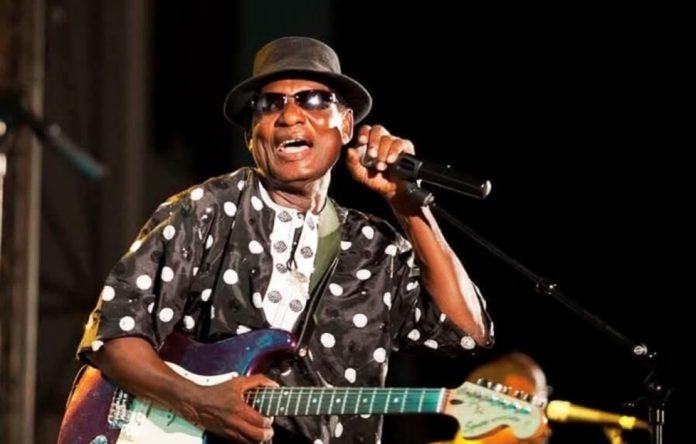
Legendary Ghanaian highlife musician Ebo Taylor has died at the age of 90, the Musicians Union of Ghana (MUSIGA) has announced.
Taylor passed away early on Saturday, 7 February 2026 at the Saltpond Hospital, the Ghana Music Union said in a statement. MUSIGA president Bessa Simons said: “Ghana and indeed the world has lost a great son.”
Taylor’s passing comes just a month after he celebrated his 90th birthday, and a day after the launch of the Ebo Taylor Festival, an event set up to honour his musical legacy. In its statement MUSIGA said: “Uncle Ebo Taylor Rest in perfect peace.”
Born Deroy Taylor on 6 January 1936 in Cape Coast, he became one of Ghana’s most influential guitarists, composers, bandleaders and producers. For more than six decades he helped shape highlife and Afrobeat music in Ghana and beyond, blending traditional rhythms with jazz, funk and soul to create a signature sound.
Taylor first rose to prominence in the late 1950s with the Stargazers and the Broadway Dance Band. In 1962 he took his Black Star Highlife Band to London where he worked with Afrobeat pioneer Fela Kuti and other African musicians, before returning home to produce recordings for major Ghanaian artists including Pat Thomas and C.K. Mann.
His music later found new audiences across the world. In the 21st century international producers sampled his work, including Usher on “She Don’t Know” featuring Ludacris from Taylor’s song “Heaven.” He also released acclaimed albums such as Love and Death (2008), Appia Kwa Bridge (2012) and Yen Ara (2018).
The Ghana Tourism Authority (GTA) has set its sights on a major cultural offensive, with plans to officially commission two of the nation’s most influential northern icons, Hamamat Montia and musician Wiyaala, as global tourism ambassadors.
The revelation was made on Showbiz A-Z on Saturday, February 7, by the Deputy CEO of the GTA, Gilbert Abeiku Aggrey (Santana), who confirmed that the Minister for Tourism, Culture, and Creative Arts, Abla Dzifa Gomashie, has already initiated high-level engagements with both personalities.
Speaking on the strategic move, Abeiku Santana noted that while GTA had been cautious about the costs associated with celebrity influencers, the “commitment and passion” of these two stars have made negotiations flexible.
The partnership is expected to anchor Ghana’s international marketing videos, positioning the country’s heritage as a premium global brand.
“Our sister Hamamat, I mean, will be commissioned as a tourism ambassador for shea butter. Wiyaala has also… is coming on. I’m not supposed to even disclose this, but I think I’ve let it out because you asked me the question. The Honourable Minister, Honourable Dzifa Gomashie, has engaged or contacted these people,” Abeiku Santana revealed.
Hamamat Montia’s appointment is specifically tied to her pioneering work in the shea butter industry. As the founder of the world’s first Shea Butter Museum, she has successfully transformed a traditional village craft into a luxury global experience.
Despite early ridicule—where she admitted that some accused her of “insane” or “occultic” practices for embracing village life—her museum has become a sanctuary for cultural preservation.
For the ‘Lioness of Africa’, Wiyaala, the ambassadorial role will leverage her global musical reach and her unwavering promotion of Northern Ghanaian textiles, specifically the Fugu (Smock).
Wiyaala has long been a vocal advocate for the ‘Wear Ghana’ campaign, often designing her own stage costumes to ensure they reflect the power and artistry of Sissala culture.
Minister Mavis Payne at the Eden Experience Live Recording
Gospel minister Mavis Payne has released a spirit-filled worship song of thanksgiving to God.
With ADEAKYE, Mavis Payne tells her story of how merciful the Lord has been and encourages people to give thanks to God even for the little blessings.
Recorded live at Eden Experience 2025 and released on Friday, February 6, 2026, the song tells a story of her early discovery, consistent growth, and unshaken devotion.
She further describes the song as the sound of a woman who has walked with her gift, nurtured it, and ultimately offered it back to God.
According to Mavis Payne, music has never been a hobby but rather a calling, patiently unfolding since childhood.
ADEAKYE, the first track on the live recording, is currently streaming on YouTube – Mavis Payne Ministries.
Minister Mavis Payne
It is the latest expression of a journey that began long before studios, stages, or spotlights, she intimated.
Growing up, Mavis Payne discovered her gift at a remarkably young age. She recalls being promoted to Class Two after nursery when a simple lunchtime moment changed everything.
As she sang casually, her class teacher stopped to listen. Impressed, the teacher led her before other classes and asked her to sing again—this time, for an audience. That moment of affirmation lit a fire that has never gone out.
With that early encouragement, music became inseparable from her identity. However, she expressed gratitude to family and friends who rallied around her talent, offering support that helped shape both her confidence and discipline.
Over the years, Mavis Payne sharpened her craft by backing several artistes and performing on notable platforms, including TV3’s Mentor, one of Ghana’s most influential music talent shows. She has also worked with respected musicians such as Ackah Blay, experiences that broadened her musical range and professionalism.
Yet, despite these opportunities in the wider music industry, her focus has remained unwavering.
“My heart has always been to minister for God,” she says.
That focus has guided her path from Sunday school to the present day, shaping not just what she sings, but why she sings.
“ADEAKYE” emerges from this deep-rooted sense of purpose. The song is not merely a release; it is a continuation of a lifelong ministry—one anchored in faith, gratitude, and obedience to God’s call.
ADEAKYE is a worship programme Mavis Payne herself is nurturing—an intentional space for encounter, intimacy, and authentic praise. The live recording preserves the rawness of the moment: the unfiltered worship, the communal spirit, and the sacred atmosphere that cannot be replicated in a studio.
ADEAKYE is Mavis Payne’s declaration of hope, renewal, and God’s faithfulness in every situation, emphasising once you witness a new day, rest assured at hope is not lost.
“I thank God for my life and the gift of ministering through singing to win souls for Christ. And to everyone supporting my ministry, may God make His face shine upon you favourably,” she remarked.