Home Blog Page 2153

Ghana celebrates international day of seafarers

0

Stakeholders in Ghana’s Maritime Sector, last Friday, joined the rest of the world to demonstrate a renewed commitment to the fight against maritime pollution ahead of the Day of the Seafarer will falls on June 25, each year.

This year’s Day of the Seafarer coincides with the 50th anniversary of the International Convention for the Prevention of Pollution from Ships (MARPOL) which was initiated in 1973.

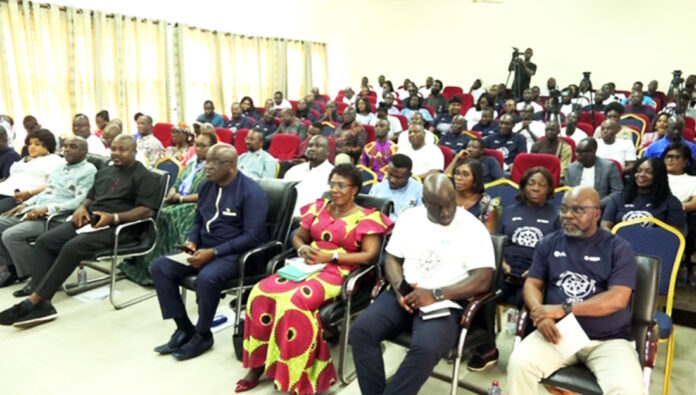
At a forum hosted by the Ghana Maritime Authority (GMA) in collaboration with the Regional Maritime University (RMU), the various participants including seafarers, students, lecturers, maritime administrators, among others, discussed the contributions of seafarers to the safety of shipping and prevention of marine pollution and the challenges encountered.

The Director General of the Ghana Maritime Authority, Thomas Kofi Alonsi, assured of his outfit’s commitment to the fair treatment of seafarers.

“The Welfare of Seafarers has always been our concern and as such the Authority is making efforts to ensure that embarkation and disembarkation of seafarers are registered at our offices by seafarer recruitment and placement agencies for safety and security reasons.

A typical committee has also been commissioned to report on fiscal related issues-particularly in regard to conditions on board vessels,” he said.

Regional Coordinator for the International Maritime Organization, Capt. Dallas Laryea on behalf of the Secretary General, Kitack Lim, encouraged seafarers to use their platforms to promote the sustainable protection of the ocean.

“We invite you to share on social media what you see when you are at sea. Show us the equipment you use to protect the environment, the special training you received. Tell us how you protect our ocean and planets because when it comes to the implementation of all the IMO International treaties, majority are done by seafarers,” he stated.

The Acting Vice Chancellor of the Regional Maritime University, Dr. Jethro Brooks Jnr., called on government and industry to collaborate towards linking graduates to suitable careers.

Minister for Transport, Kwaku Ofori Asiamah, in a speech read on his behalf, by the Chief Director of the Ministry, Mabel Sagoe, touched on the socio-economic benefits the new Cabotage law passed will bring to Ghana.

“Ghana has passed into law the Ghana Shipping Cabotage Regulations 2021 LI 2438 which reserves 50 percent of all officer and 75 percent of all racing positions aboard vessels operating service within Ghana’s maritime jurisdiction for Ghanaian seafarers.

‘This initiative will not only strengthen our national economy but also generate employment prospects for our citizens and those local capacities,” she said.


Amosima Nsona No.1 royal family installs Nana Kwesi Egyir as Ebusuapanyin

0
The newly installed Ebusuapanyin, Nana Kwesi Egyir.

The Nsona Number 1 Royal Family of Amosima in the Abura-Asebu-Kwamankese District of the Central Region has officially installed Nana Kwesi Egyir as the head (Ebusuapanyin) of the royal family.

During the colourful ceremony, Nana Egyirba was also enstooled as Ebusuabaahemaa, while Nana Egyir was additionally installed as the Supi for the Amosima Nsona No.1 Royal family respectively.

Nana Kwesi Egyir gladly accepted the position and thanked his elders for the honour done him with a promise that he would do everything possible to justify the confidence and trust reposed in him.

He noted that though the people of Amosima were predominantly farmers, the deplorable nature of their road network was a major challenge to the community.

According to the newly installed Ebusuapanyin, farmers basically struggled during the rainy season to cart their farm produce to the nearby market areas, due to the poor nature of their roads.

This, he noted, often demoralises the farmers and make their profession highly unattractive to the youth and deter them from developing interest in farming.

He, therefore, appealed to the government to see to it that contractors would move to site to complete all abandoned roads projects in the area, to enhance the movement of goods and services and save lives as well.

He explained that illegal mining activities across the country do not just constitute a national security threat, but also a threat to Ghanaians as a people, as the canker continues to pollute and damage water bodies.

He further appealed to the government not to relent on its fight against the menace, but rather tighten the security around the country’s forest reserves to prevent further destruction to the country’s vegetation cover.

Ebusuapanyin Nana Kwesi Egyir suggested to the government to consider handing the managements of all road tollbooths to traditional rulers for effective management of the facilities if they are reintroduced.

The National Democratic Congress parliamentary candidate for the constituency, Mr Felix Ofosu-Kwakye, who attended the event, noted that a family is the fulcrum around which development evolves.

He, therefore, congratulated the newly enstooled members of the royal family for their acceptance to take up the mantle of leadership to steer the affairs of the family and the community at large.

Mr Ofusu-Kwakye implored them to bring their individual expertise and experience onboard to help the developmental drive of the town, which is the desire of the people.

The colourful event was mainly attended by members of the royal family, opinion leaders, members of the community, as well as friends and sympathisers from far and near.

Ban Single-Use Plastics, Encourage Waste Segregation –Experts Tell Gov’t

0
Executive Director, Blue Economy and Governance Consult, Richster Nii Amarh Amarfio(left), Director of Petroleum, Environmental Protection Agency, Kojo Agbenor-Efunam (middle) & Head of the Marine and Fisheries Sciences Department, University of Ghana, Professor Francis Kofi Ewusie Nunoo (right)

Marine Pollution in Ghana is at a tipping point. Apparently, the incessant pollution of Ghana’s marine environment with plastics does not only pose future concerns but its negative impacts are already being felt.

As a result, experts are calling for urgent corrective action to combat the menace of plastic pollution in the country’s marine environment.

In an interaction with Eye on Port’s Kennedy Mornah on Accra-based Metro TV, the Executive Director of the Blue Economy and Governance Consult, Richster Nii Amarh Amarfio, has added up to the longstanding call for the instant ban of single-use plastics in Ghana.

He contends that because the country has failed to manage single-use plastics, it is best to outlaw their usage rather than allow the issue to fester.

Mr. Amarfio explained that single-use plastics form a chunk of plastic pollutants in the marine environment due to their highly disposable nature. Unfortunately, he said, they are easily accessible and disposal is difficult to control.

“The amount of single plastics we are bringing in is alarming. When I was young, when you go shopping, you go with a basket which is reusable. These days, for everything you buy, it comes with a polythene bag, which you dispose of right after use. Can we just take the bull by the horn and ban them?”, the seasoned fisherman appealed.

Richster, who also serves as the Secretary of the National Fisheries Association of Ghana and Ghana Tuna Association also called for a policy that encourages waste segregation practices at all levels of the society.

He said this has become very necessary because waste disposal practices in the country presently are not environmentally sound.

“People buy organic substances and other biodegradable items and tie them in plastic bags before dumping them into waste bins. What this means is that, the organic substances are not allowed to decompose.

“Waste disposal contractors should be made to take separated waste, for example we need separate bins for organic waste, plastics, paper and other products. This should be done at the district and municipal levels. Why don’t we pilot these at our basic schools and universities?” he added.

His call was further strengthened by the Director of Petroleum at Ghana’s Environmental Protection Agency, Kojo Agbenor-Efunam, who revealed that single-use plastics take about 450 years to decompose.

The environmentalist likened plastic pollution, which he termed as “a man-made disaster”, to humans subjecting the earth to extreme suffocation, even though the price will be ours to pay.

He argued that the problem of waste disposal is not a matter of awareness and education as his outfit consistently embarks on nationwide sensitization. He said Ghana’s problem is one of attitude and a behavioural change towards the environment. He doubled up on the reconsideration of the laws governing single-use plastics hinting that landfill sites are getting overwhelmed with plastics.

He lamented that not only are plastics affecting the marine ecosystem and defacing Ghana’s beach fronts, but posing a great danger to arable lands as well.

“In our younger days, it was very common to find earthworms that enrich our soil, but nowadays they are hard to find. They are being smothered by plastics and they suffocate and die out.”

Contributing to the discourse, the Head of the Marine and Fisheries Sciences Department at the University of Ghana, Professor Francis Kofi Ewusie Nunoo, intimated that fish health and marine biodiversity is at immediate risk from plastic pollution.

He said fishes often ingest plastics as food, which is dangerous for their survival.

He revealed that, during a fisheries study conducted around Tema, researchers discovered plastics in the stomachs of fish species, which he said accounts for many premature fish deaths in the country.

He said when fishes do not die, their growth is stunted and reproduction is impaired.

Prof. Nunoo, who is also the Chairman of the governing board of the Fisheries Commission, described the disheartening nature of plastic flow into water bodies during the rainy season.

“We have studies using satellite remote sensing. When it rains you see large chunks of plastics moving from the Odaw into the Korle.”

Together with Richster Amarfio, Prof. Nunoo appealed to government to reconsider channelling little to zero-treated waste into water bodies as it is unsustainable.

Dormaa West DCE pays working visit to rice farmers at Kojokumikrom

0
The Dormaa West District Chief Executive, Francis Kwadwo Oppong(m) with farmers

The Dormaa West District Chief Executive (DCE), Mr. Francis Kwadwo Oppong, has paid a working visit to rice farmers in the Kojokumikrom Electoral Area.

Dormaa West is one of the districts in the Bono Region that have benefited from the government’s One District One Factory (1D1F) policy with a rice processing factory through the former Member of Parliament, Ali Maiga Halidu.

The DCE made the visit in his quest to ensure that the purpose for which the factory was set up was achieved.

At the Kojokumikrom Pentecost Church, where 67 rice farmers were gathered, Mr. Kwadwo Oppong commended them for their efforts to grow more rice to feed the factory.

The farmers put their grievances before the DCE, and he assured them that his outfit would address them accordingly. Cutlasses were shared among the farmers.

He promised them that his outfit would donate tarpaulins and weedicides on his next visit to aid them in their farming activities.

The DCE proceeded to visit various farms for inspections and commendations, and was accompanied by some assembly staff and the District Agric Officer, Mr. Paul Avah.

Dormaa East Agric Department undertakes field work

0
The Dormaa East District Agricultural Director, Madam Gertrude Adjei Boateng(r) with her officers on a farm

The Dormaa East District Agricultural Director, Madam Gertrude Adjei Boateng, and some district officers, have embarked on field visits in the operational areas of Agricultural Extension Agents.

The visits, which commenced at Asuotiano, afforded the team the opportunity to interact with farmers in the areas to monitor the Fall Armyworm situation after distributing pesticides such as Super Warrior and Viper to them.

The team made assessments of the work of Agric Extension Agents, monitored the adoption of technologies such as planting of improved seeds, row planting, method of weed/pest control, and engagements to know how farmers tackled challenges they faced during their day-to-day activities and possible remedies and recommendations.

The team members observed on the field that some of the affected maize farms had recovered, while others were yet to. Officers were tasked to liaise with the farmers to fight the Fall Armyworm to maximise food production in the district.

The entourage, including Augustine Atta Agyei, DAO-PPRSD, Obeng Daniel Desmond, AEA Officer,  Asuotiano, Justice Sampah-Junior,  MIS Officer, and Madam Adjei Helen, WIAD, also visited Wamanafo Senior High School to monitor the Fall Armyworm situation in some of the teachers’ maize farms.

Pru East youth pledge to promote peace

0
The participants after the peace forum

About 65 young men and women, drawn from 13 youth groups in the Pru East District in the Bono East Region, have pledged to promote peace to ensure the security and development of the area

The pledge was made in a communiqué issued at the end of an engagement with the National Commission for Civic Education (NCCE), under the ‘Preventing and Containing Violent Extremism’ programme in Yeji.

According to the District Director of the Commission, Mr. Emmanuel Nimoh, the threat of extremist activities by groups like Boko Haram, Islamic State, the Taliban and Al Shabab, especially in neighboring West African countries like Burkina Faso, Nigeria, Mali, Niger and Togo, makes it necessary for Ghana to be on high alert in order to prevent a similar fate or, at worst, contain it if it should happen.

He said the Commission, with the support of the European Union, carried out research on the issue, aimed at ascertaining the knowledge and attitudes of the people towards the problem, adding that it was based on the findings of the study that they were engaging various identifiable bodies to discuss ways through which the problem could be addressed.

Inspector Serwonuku Mordey of the Ghana Immigration Service (GIS), who spoke on violent extremism, said it was important for both individuals and communities to live in harmony with each other, and asked the community members to constantly be on the lookout for suspicious characters.

He said it would be important to train volunteers to provide security at places for mass gatherings like churches and mosques, and urged landlords to do thorough background checks on prospective tenants, especially foreigners.

Reverend Elijah Obeng Baffour-Adjei of the Presbyterian Church of Ghana, speaking on peace building and national cohesion, indicated that peace was very essential to our existence as a people.

He said respect for the rights of others goes a long way in ensuring peace, which was a very vital ingredient for development.

Dr. Imurana Mohammed, Director of Programmes at the Commission, who graced the occasion, expressed his delight with the contributions of the participants, and urged them to carry the message to their various communities in order to increase awareness on the issue.

Inter Basic Schools Ball competitions end in Saltpond

0
Trophies on display

The Saltpond Circuit has successfully completed its Inter Basic Schools Ball competitions, which was held at Saltpond, in the Mfantseman Municipality of the Central Region.

In all, twenty-four schools competed in ten disciplines under different age categories by both males (boys) and females (girls) for honours in all the disciplines.

The disciplines included; Under 13 and Under 15 soccer competition for boys and girls, Under 15 volleyball competition for boys and girls and Under 15 handball for same category.

Some of the schools holding their trophies

There was also Under 13 handball for only girls and Under 15 netball competition which was competed by only girls.

Zoning of the Circuit

The circuit was zoned into four, with each zone consisting of 6 schools which competed among themselves in a random all-play-all format.

Winners from each of the four groups gained automatic qualification to the semi-finals of the competition in all the categories, with the winners qualifying for the finals.

Soccer

The soccer competition for Girls Under 13 category was won by Fort Amsterdam M/A Primary School, whereas the Saltpond Beach Road M/A Basic School won the Boys category.

The Under 15 Girls competition was won by the Saltpond T.I Ahmaddiya Basic School, whilst the Mfantseman M/A Basic School emerged as winners for the Boys category.

Handball

The first position in the Girls Under 13 set was taken by SEP Happy Basic School, whilst Hinii M/A Basic School won the Girls Under 15 category. Saltpond Methodist ‘A’ emerged winners of the Boys Under 15 Handball competition.

Volleyball

Saltpond T.I Ahmaddiya Basic School won the Girls Under 15 Volleyball contest, whilst the Saltpond Methodist ‘A’ emerged winners of the Boys Under 15 Volleyball competition, with Lower Town ‘A&B’ M/A being crowned champions of Netball.

Reaction by officials

The Mfantseman Municipal Sports Chairman for Basic Schools, Mr Reuben Charles Pobee Okine, who is also the sports chairman for Saltpond Circuit, informed The Chronicle that he was delighted by the performance of the various schools.

He expressed the hope that those who would be selected to represent the Circuit at the District Level Competitions would give of their maximum best to win more trophies for the Circuit.

Speaking to The Chronicle in an interview, the Saltpond Circuit ‘B’ School Improvement Support Officer, Madam Victoria Korkor Adikorley, praised the teachers who trained the pupils.

She was optimistic that the Saltpond Circuit would be able to put a formidable team together, to compete for more laurels for the Circuit at the district games.

On her part, the Headmistress of Fort Amsterdam M/A Primary School, Madam Eunice Okuruw mentioned that much effort was put into their preparation, which enabled them to emerge victorious.

“Our school is relatively new, therefore, we lack a lot of resources but we put in our best, which helped us to win the U-13 soccer competition for Girls. The other schools should watch out for us next time”, she said.

She made a passionate appeal to the general public and indigenes of Saltpond in particular, to come to the aid of the school and support them with sports equipment and logistics.

Each of the winners in each category was given a trophy for their impressive performances.

Why you pay what you pay at the pump

0
Opinion

Petrol prices are affected by different factors, such as global crude oil supply and demand, government policies and market competition.

Crude oil price is the most commonly known factor impacting petrol prices. But there are other factors.

Understanding these factors that affect petrol price can help us make better decisions on our transportation needs and driving habits.

Petrol price like the weather is unpredictable and changes all the time due to different factors. The price of petrol is not randomly picked. It’s actually influenced by several factors that impact how much you pay at the pump.

The objective of this article is to explain the different factors that affect petrol prices, including crude oil prices, refining costs, distribution costs, taxes, and more.

Crude oil

The most commonly know factor that affects petrol price is the price of crude oil. This is because petrol is made from crude oil. As a result when the price of crude oil increases, the price of petrol also climbs up. Conversely, when the price of crude oil drops the price of petrol  decreases at the pump.

There are factors such as OPEC (Oil Producing, Export, Countries) production rates, the state of the global economy and geopolitical situations that affect the supply and demand dynamics of crude oil.

Ghana produces crude oil offshore.

Refining

Involves removing impurities from the crude oil and turning it into petrol, diesel and other petroleum products. The process requires massive energy and resources. Depending on the type of crude oil the cost of processing might differ. This cost is also pass on to the consumers at the pump.

Ghana has a refinery at Tema, Tema  Oil Refinery (TOR) but it’s  inoperable.

Distribution

Once the petrol is refined at the refinery, it is transported to the petrol stations. But it involves distribution network which includes storage tanks, pipelines, tankers and ships. The transportation cost is based on the distance from the refinery. The cost incurred is also added to the customer at the pump to pay.

Since our refinery is inoperable Ghana relies on BDC (Bulk oil Distribution Companies) to import petrol, diesel and other petroleum products into the country. They are stored in tanks when they arrive and transported in tanker trucks to the petrol stations.

Taxes

Taxes account for a significant portion of what we pay at the pump. It’s an important factor driving up the overall petrol price. In Ghana, it contributes to about 22% of what you pay at the pump.

Other factors

Exchange rate to the US dollar since that is the currency of trade, “petrol dollar”. It impacts the price at the pump due to the rate fluctuations. Hence, the government’s policy of GFO (Gold For Oil) to stabilize the local currency and the price at the pump.

Seasonal price increase which usually occurs during summer holidays when more people travel and demand for fuel is high.

Geopolitical tensions such as conflicts between nations and political instability in major oil producing countries can also create supply disruptions and increase price of petrol at the pump.

An example is the Ukraine war and the devastated effect it has had on  price of fuel and global economies including Ghana.

By Benjamin Amponsah Mensah

Source: myjoyonline.com

The views expressed in this article are the author’s own and do not necessarily reflect The Chronicle’s stance.

Court bars govt from deducting N16 billion from Anambra’s allocations

0
Professor Chukwuma Charles Soludo, Anambra State Governor

The Federal High Court in Awka has blocked a move by the federal government aimed at helping the local government areas (LGAs) in Anambra State to recover over N16 billion diverted by their state government.

The money represents the local governments’ share of the Paris Club refund, which the Anambra State Government received on their behalf from the federal government but refused to hand over to them.

The judge, Nnamdi Dimgba, declared in a judgement handed down on 21 June that the recovery approach adopted by the federal government through the Minister of Finance was unconstitutional.

According to Mr Dimgba, the federal government overstepped its legal authorities with its decision to deduct the money from the allocations of the state and pay it directly to the joint account of the local government areas.

The court agreed that the state government’s failure to pay the local governments’ share of the money into the State Joint Local Government Account “is clearly a constitutional breach”.

But he said the solution is not in the minister “exercising unconstitutional powers of deducting at source monies due to the states, and in this case Anambra State, from the federation account.”

“Where a state has failed to make this payment, the state clearly has fallen foul of its constitutional obligation,” the judge said. “For a breach of the Constitution cannot be cured by another breach of the Constitution by another party, no matter how well motivated.”

Citing section 162(5) of the Nigerian constitution and the Allocation of Revenue (Federation Account Etc) Act, the judge said: “None of the relevant provisions empowers the 1st Defendant (finance minister) to make deductions from the statutory allocation due to a state from the Federation Account on the basis that the State has failed to transfer the LGCs share into the State Joint Local Government Account.”

Credit: premiumtimesng.com

Police arrest three suspects over abduction of Chief Imam in Ondo

0
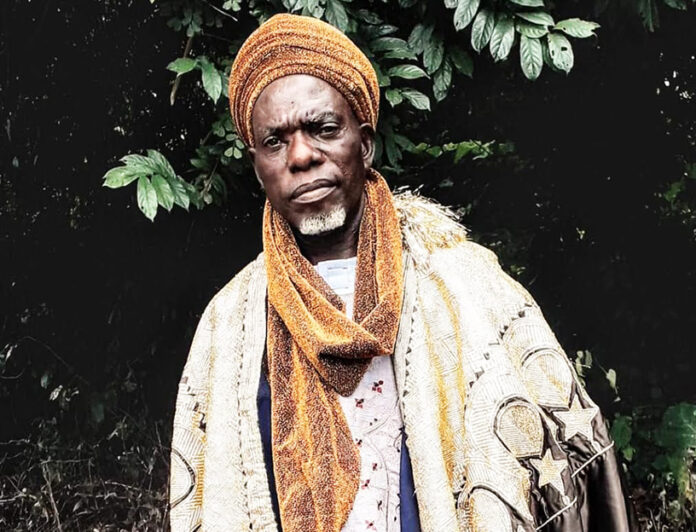
Ibrahim Oyinlade, the Chief Imam of the Uso community

Detectives in Ondo State have arrested three people suspected to have allegedly kidnapped Ibrahim Oyinlade, the Chief Imam of the Uso community in Owo Local Government Area of the state.

The 67-year-old cleric was abducted on his farm and later released the following day.

Parading the suspects, The Public Relations Officer of Ondo State Police Command, SP Funmilayo Odunlami-Omisanya, identified them as Muinah Mohammed (19), Aisha Bello (20) and Isah Bello (40).

“On the 18th of June, 2023, one Mrs Bodunde, around 6pm went to the Uso division to complain that her husband, Alli Ibrahim Bodunde, went to the farm and he was supposed to come back around 2pm,unfortunately, when they did not see him they sent two persons to the farm in order to look for him,” Odunlami-Omisanya said.

“When they got to the farm, they met his car and his mobile phone, but they could not see him. And immediately the case was reported, the police swung into action and at the end of the day, the man was released.”

Narrating his ordeal when the suspects were paraded, Alhaji Bodunde said he was on his farm packing some pineapples he had harvested into the boot of his car around 11:00am on that fateful day when two armed men suddenly appeared from the bush and abducted him, abandoning his car at the scene

According to the Islamic cleric, his abductors had relevant information about him. He said they were unable to collect his phone because they couldn’t see it where he kept it.

He disclosed that they made him trek for over six hours searching for where to hide, adding that they insisted that he should speak to them in pidgin English and must not speak Yoruba.

According to the victim, when they arrived at a place, they put his back against a tree and tied his hands to his back.

Credit: channelstv.com

The Ghanaian Chronicle