Home Blog Page 2144

Putin calls Crimea bridge strike a “terrorist attack” and urges Russian authorities to investigate incident

0
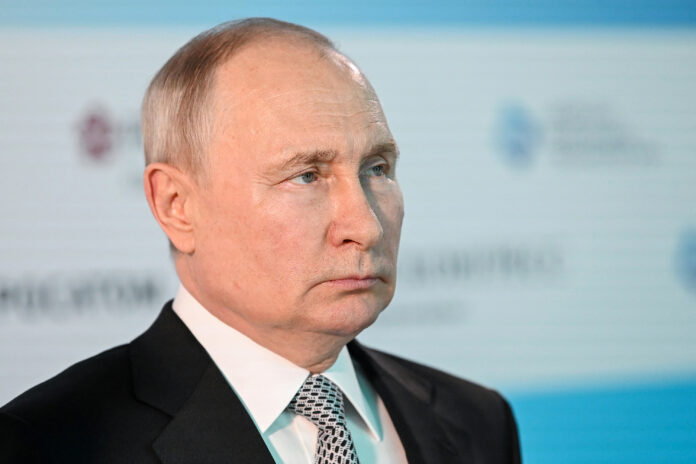
Russian President Vladimir Putin during the Future Technologies Forum in Moscow on July 13

Russian President Vladimir Putin has called a Ukrainian strike on the Kerch Bridge a “terrorist attack.” The key bridge links the annexed Crimean peninsula to the Russian mainland and holds huge strategic and symbolic importance for Moscow.

The Russian President called on his country’s authorities, including the FSB, to investigate the incident and asked for measures to secure the “strategically important transport facility” from future strikes.

“It is necessary to comprehensively assess the damage caused and start restoration work as quickly as possible,” he added.

Russian Deputy Prime Minister Marat Khusnullin said Monday that the supports of the Kerch straight bridge were not damaged by the blast. Divers were completing the inspection of the bridge and the decision on the possibility of launching car traffic will be made within two hours, he claimed.

Earlier Monday, a source from Ukraine’s security service (SBU) said that an attack on the Crimean Bridge was a joint operation of the SBU and Ukraine’s naval forces. The source spoke on condition of anonymity because they had not received authorization to speak on the record.

Source: cnn.com

Libyan authorities rescue refugees in desert near Tunisia

0
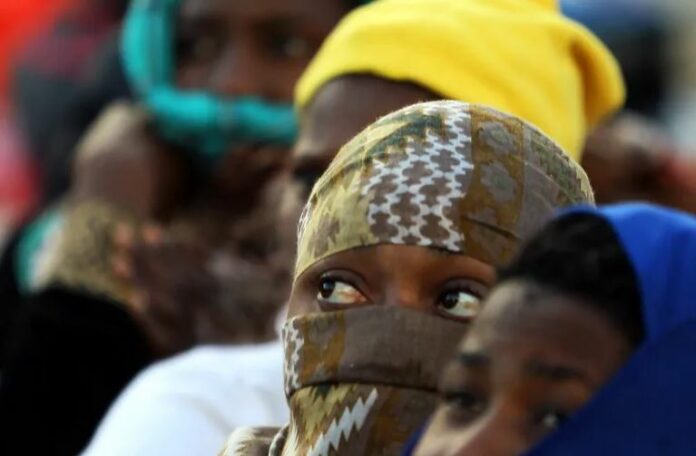
The port of Sfax is a departure point for many refugees from impoverished and violence-torn countries seeking a better life in Europe

Libyan border guards have rescued dozens of refugees and migrants who have been left in the desert by Tunisian authorities without water or food, and their numbers are “rising”, a Libyan officer says.

“The number of migrants keep rising every day,” Mohamad Abou Snenah, a member of a border patrol unit, said on Sunday, telling the Agence France-Presse (AFP) news agency it had rescued “50 to 70 migrants”.

“We offer them medical attention, first aid, considering the journey they have made through the desert.”

Al Jazeera’s Malik Traina reported on Monday that the number of refugees and migrants rescued by the Libyan forces with the help of the United Nations had risen to 191.

Hundreds of Black sub-Saharan Africans have been forcibly taken to the desert and hostile areas on the borders with Libya and Algeria after racial unrest in early July in Sfax, Tunisia’s second-largest city.

Video Duration 02 minutes 11 seconds 02:11

Tunisia and EU finalise deal on migration

Traina, reporting from Misrata, Libya, said the refugees and migrants were part of a larger group expelled from Sfax following riots.

The group was in an uninhabited area close to al-Assah, a town near the Tunisia-Libya border, nearly 150km (93 miles) west of Tripoli.

Source: Aljazeera.com

South Korea floods: Dozens die in flooded tunnel and landslides

0
Crews have been pumping the water out of the flooded tunnel in a desperate rescue mission

At least 40 people in South Korea have died after a weekend of severe rains caused widespread flooding and landslides across the country.

The disasters have prompted calls from President Yoon Suk Yeol to “overhaul” how the country combats extreme weather arising from climate change.

On Monday, the nation was reeling from a tunnel tragedy where at least 13 people died in their vehicles after becoming trapped by floodwaters.

The full death toll is still unknown.

But on Monday, responders were still working to drain the 685m-long (2,247ft) tunnel in the central city of Cheongju – with divers deployed to retrieve victims.

At least 15 vehicles – including a bus – were trapped in the underpass on Saturday, when floodwater from a nearby burst riverbank poured in.

Nine survivors have been found so far. Meanwhile, families of those missing have waited anxiously for information at a local hospital.

“I have no hope but I can’t leave,” a parent of one of those missing in the tunnel told local news agency Yonhap.

“My heart wrenches thinking how painful it must have been for my son in the cold water.”

Police said they will launch an investigation into the fatal flooding of the underpass.

Elsewhere, at least 19 people died in the mountainous North Gyeongsang region in central South Korea after landslides swept away whole houses.

Source: bbc.com

ECG begins fixing new smart prepaid meters in WR

0
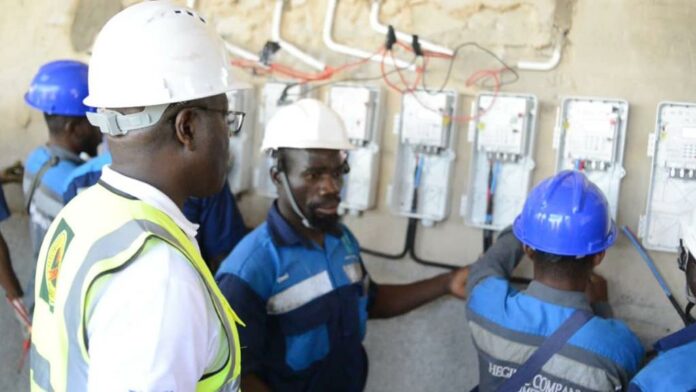
ECG staff working to fix new smart prepaid meters

The Electricity Company of Ghana (ECG) has begun fixing new smart prepaid meters to households in the region, after taking delivery of 40,000 new meters.

Districts in the region have also been allocated their portions of the new smart prepaid meters.

In Sekondi-Takoradi for instance, this reporter chanced upon ECG staff going round installing the smart prepaid meters to new households and replacing old ones.

The fixing of the smart prepaid meters was the redemption of a promises made by the ECG to customers to begin fixing new prepaid meters to new households, as well as replacing old ones as soon as they took delivery of the 40,000 smart meters.

It would be recalled that the ECG assured customers in the Metropolis, and the region as a whole, last month to start deploying about 40,000 prepaid meters in the region, starting from the month of July.

The ECG Regional General Manager, Emmanuel Justice Ofori, gave the assurance and explained that the arrangement was to clear the backlog of requests, and also address challenges of replacing faulty one and old post- paid meters.

Mr. Ofori gave the assurance when he led a delegation of ECG management and Board member, Lawyer Naana Nsarfoah, on a familiarisation tour of the Takoradi Press Center.

“Management has signed a contract with MBH, and then their delivery starts from now to the end of the year.  In about two weeks’ time, we expect to take delivery of the materials and ensure that we start installing them for all those who have requested for new services,” he said.

Mr. Ofori continued that ECG would replace all faulty meters in the system, and then replaced postpaid ones with prepaid meters depending upon the areas that would be selected. For now, ECG staff have been deployed and were fixing new smart meters to new houses, as well as replacing old ones.

The advantage with the new smart meter is that, one could just buy credit using the phone by downloading the ECG app.

Journalists, who mostly interface with customers, have been educated on the use of the app.

Jomoro MP supports flood victims in Nzulezu, 5 other communities

0
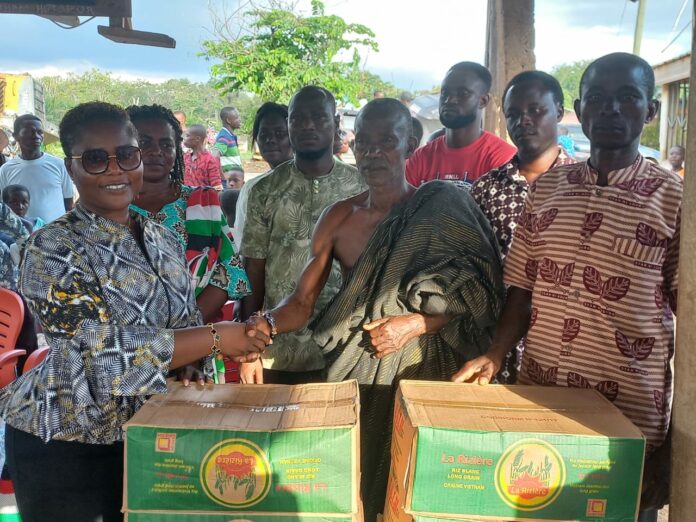
MP Dorcas Toffey handing over relief items to Nzulezu flood victims

Hundreds of residents in six communities in the Jomoro Municipality of the Western Region, who were displaced by floods, have received relief items and various sums of monies from their Member of Parliament (MP), Dorcas Affo-Toffey.

The communities are Nzulezu, Elubo, Ghana Nungua, Cocoa Town, Nsuano, and Zongo Community in Elubo. Also affected were basic schools, especially the Nzulezu Primary School.

The recent flood severely affected pupils given that their schools were flooded disrupting teaching and learning.

This reporter gathered that this is the first time in over 600 years that flood has hit the world tourist destination, Nzulezu, and other satellite communities.

The affected residents in Nzulezu, for instance, were said to have been evacuated in boats to Beyin, a nearby community, for shelter.

The community, which is entirely made up of stilts and houses over 500 inhabitants, was submerged after it rained continuously for seven days.

Properties worth thousands of Ghana Cedis were destroyed in the affected communities including Nzulezu.

Following reports, the MP visited the six communities to assess the extent of damage to the residents and properties, and sympathise with the victims.

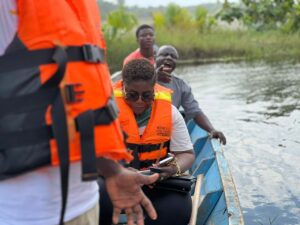
MP Toffey and team riding on a canoe to Nzulezu

Madam Affo-Toffey, apart from the relief items, also donated an undisclosed amount of monies to the communities.

Nzulezu, for instance, received an amount of GH¢10,000 to be used to resolve the insanitary situation due to the floods.

Madam Affo-Toffey, in an interview with the media, said “It’s all about education, zoning and planning because elsewhere, before someone would build, you have to go to the town and country planning department to seek approval and permit”.

“They will ensure the buildings are built in a place that would not disrupt rain water. What we can say for now is for them to stop indiscriminate dumping of refuse. We have a long way to go, but I am sure, with time, things will change,” the MP said in Twi.

Madam Affo-Toffey further said: “They [residents] have built here for long years, so they cannot leave here, but we shall educate them to stop dumping refuse.”

The Jomoro MP continued: “Provisions are being made to support those who do not have places to sleep. These places are flood zones areas, so there is nothing that could be done.”

The Abusuapayin of Nzulezu, Abizi Kojo, expressed the heartfelt appreciation of the community to the Legislature for supporting them, but, however, said that the extent of destruction the flood had caused the communities included destroying the walkways and toilet facilities which were used by tourists.

He, therefore, called on the Tourism Ministry and the Ghana Tourist Board to urgently help in fixing their slipways and the tourist toilet facility, since despite the flooding the community was still receiving visitors from all over the world.

Health Benefits of Lamb Meat

0
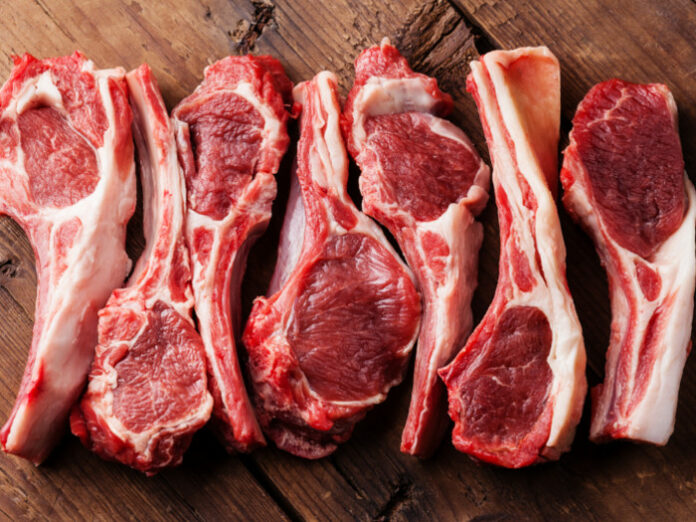
Lamb Meat

Aside from the nutrient profile, lamb has many other nutritional benefits.

Here are ten good reasons to eat lamb.

  1. Lamb Contains L-Carnosine

The Molecular Element For L-Carnosine.

L-Carnosine is a compound that contains two amino acids (proteins) bonded together; beta-alanine and histidine.

Only certain foods contain carnosine in high amounts, and lamb is one of these.

Per 100 grams, lamb contains – on average – 400mg of carnosine, which is slightly higher than beef (365mg).

L-Carnosine’s Health Benefits

Firstly, carnosine is classed as a non-essential nutrient because our bodies can make it internally.

However, recent research is showing that higher amounts of carnosine from external sources may offer additional health benefits.

Among these, carnosine appears to have anti-atherosclerotic effects, meaning that it may help to protect against cardiovascular disease.

Notably, carnosine also helps to reduce the glycation of sugars and proteins in our body.

Glycation leads to the formation of advanced glycation end products (AGEs).

Unfortunately, AGES are harmful compounds which directly cause inflammation and oxidative stress, and they are believed to be one of the keys to the aging process.

Key Point: Lamb is among the best dietary sources of carnosine, a healthy compound that may have powerful health-protective properties.

  1. Lamb is a Significant Source of Complete Protein

One of the biggest positives from eating lamb is the protein content.

Lamb is extremely rich in protein, and depending on the cut it contains anywhere between 25 – 30 grams per 100 grams.

While it is common knowledge that lamb is an excellent source of protein, not all protein is made the same.

In other words; the efficiency by which our body can use protein differs depending on the specific food and the amino acids it contains.

On the positive side, lamb contains every amino acid, and we can, therefore, class it as a ‘complete’ protein.

This completeness means that our body can use lamb protein more efficiently than ‘incomplete’ proteins in plant foods.

Protein is incredibly important for our health, and it encourages lean muscle mass, the growth and repair of cells, and higher levels of satiety.

Key Point: Lamb contains a significant amount of high-quality protein.

  1. Lamb Is Incredibly Nutrient Dense

While some people like to judge food based on how many calories it contains, the caloric load says little about the food’s relative health merits.

The best measurement of the health properties of a particular food is nutrient density.

Lamb passes the nutrient-density test with flying colors, and here is a quick summary of why;

Lamb contains large amounts of healthy fat, including more omega-3 than most land animals and high levels of oleic acid.

High concentrations of bio-available, highly digestible protein.

A substantial amount of vitamins and minerals; particularly B vitamins and zinc.

A range of beneficial compounds including creatine, glutathione, conjugated linoleic acid, carnosine and taurine.

  1. A Surprising Source of Omega-3 Fatty Acids

In the modern world, most people are consuming too much omega-6 and not enough omega-3. This issue is important because omega-3 fatty acids have an anti-inflammatory effect, while omega-6 is pro-inflammatory.

Providing these two essential fatty acids are relatively balanced, they are both useful and beneficial. However, some people are now eating a diet that is approaching 20:1 in favor of omega-6 to omega-3.

Removing omega-6 vegetable oils such as soybean oil is a great way to change this. Additionally, consuming omega-3 fatty acids from seafood (especially oily fish) helps us to get more omega-3.

However, land animals can also be rich in omega-3.

This is especially the case for animals raised on pasture. As one such animal, lamb tends to be an excellent source of omega-3.

In pasture-raised lamb, the levels of omega-3 are higher than grain-finished animals.

As an example, 100 grams of grass-fed lamb rib contains 580 mg of omega-3 and 750 mg of omega-6; nearly a 1:1 ratio (18).

Key Point: Lamb meat – especially pasture-raised – is rich in omega-3 fatty acids.

  1. An Important Source of Heme Iron

A Diagram Showing the Structure For the Molecular Compound Heme.

Many different foods contain iron and it is present in everything from spinach and kale to bananas and tomatoes.

However, just as the digestibility of protein differs, not all iron is made the same.

When it comes to digestion and absorption, heme iron is king.

In fact, we can absorb approximately 15-35% of heme iron (found in animal foods), but this absorption rate drops to 10-15% for non-heme sources of iron (plant foods).

It is unfortunate to see the rise of iron-deficiency anemia.

Over the period between 2004 and 2013, iron-deficiency anemia rates in the US population nearly doubled to 5.6%. During the same decade, red meat consumption fell by 19%.

Importantly, lamb contains a rich source of heme iron in amounts similar to other red meat such as beef.

  1. Lamb Contains a Significant Amount of Creatine

Creatine will be well known to anyone with interest in working out and/or sporting performance.

Markedly, creatine can help to boost muscular endurance, strength and – potentially – muscle mass.

While creatine supplements are very popular, this compound also occurs naturally in various foods.

Red meat is the most substantial dietary source of creatine and lamb contains approximately 300-500 mg per 100 grams.

Although this is not close to the same level as creatine supplement dosages (3 – 5 grams per day), it should still have a physiological benefit – especially for those eating higher amounts of lamb and beef.

Key Point: Lamb contains beneficial amounts of creatine, a compound that can help to improve sporting performance.

  1. Lamb is a Source of the “Master Antioxidant” Glutathione

A Diagram Showing the Chemical Formula For Glutathione.

People often refer to glutathione as “the master antioxidant” because of the critical role it plays in protecting our health and our internal antioxidant defense systems.

We cannot read too much into this since there is no clinical research on humans, but higher glutathione levels track with a longer lifespan in animal studies.

Notably, our body makes the glutathione compound internally from the amino acids cysteine, glutamic acid and glycine.

However, research suggests that consuming more exogenously (from outside sources; i.e. food) could have advantages.

On this note, a further health benefit of lamb is that it contains glutathione.

Also, it contains all three amino acids that our body requires to synthesize glutathione internally.

Key Point: Lamb contains glutathione and it also provides all the essential prerequisites for our body to make its own glutathione.

  1. Lamb Contains Conjugated Linoleic Acid (CLA)

Lamb contains a source of the natural trans-fatty acid CLA.

Firstly, don’t worry about the name ‘trans fat’ because the naturally occurring version found in animal foods is much different from synthetic trans-fat.

In fact, it may even have some health benefits.

For instance, a meta-analysis of 18 controlled trials demonstrates that supplementing with isolated CLA “produces a modest fat loss in humans”.

Furthermore, research shows that people with higher tissue levels of CLA have a reduced risk for myocardial infarction (heart attack).

However, correlation does not necessarily equal causation. To illustrate this point, the people with higher levels of CLA were likely consuming more meat and dairy (and probably less refined carbohydrate).

In other words, it is difficult to pinpoint precisely what is lowering the risk.

Either way, lamb meat is richer in CLA than any other meat and contains approximately 4 – 19.0 mg CLA per gram of fat content.

By comparison, beef typically contains 1.2 – 4.0 mg while pork and poultry contain less than 1.0 mg (32).

Key Point: Lamb is the single biggest dietary source of CLA.

  1. A Source of Healthy Fats

A Fatty Cut of Fresh Lamb Meat Steak On a Tray.

These kinds of ‘health benefit’ lists generally do not mention fat.

After years of health authorities demonizing dietary fat, that is not really a big surprise.

However, let’s give fat the credit it deserves; good fat is an essential and healthy part of the human diet.

Furthermore, two specific fatty acids in lamb are very beneficial for us;

Omega-3: Lamb meat from animals raised on pasture has similar levels of anti-inflammatory omega-3 fatty acids as some fish.

Oleic acid: This monounsaturated fatty acid is one of the most evidence-based fats and it is widely known as the “heart healthy” fat in olive oil. Research consistently links oleic acid to lower levels of inflammation and better health markers.

  1. Lamb is Tasty!

This one is not really a health benefit, but it is always challenging to enjoy supposedly “healthy” (flavorless) low-fat products.

On the other hand, lamb genuinely is nutrient-dense and a healthy food. It is doubtful that anyone would complain about the taste of it.

Put simply; lamb is one of the tastiest (and healthiest) foods in the world.

Source: www.nutritionadvance.com

Feature: Busia comes to life at Hotel Waawaa

0
Prof. Kofi Abrefa Busia

They came from far and near to drink from the rich fountain of knowledge bequeathed to this nation and Africa by Prof. Kofi Abrefa Busia, Prime Minister of the Republic of Ghana in the Second Republic, and to commemorate his 110th Birthday.

A Wenchi royal, Dr. Busia was born on July 11, 1913, and breathed his last on August 28, 1978. To celebrate the world renowned academic, statesman and social icon, a symposium was organised by the Busia Institute for Rural Democratic Development and the Busia Foundation at the Regency African Hotel in Accra last week, attended by the gurus and ordinary folks drawn mainly from the Busia-Danquah-Dombo tradition.

Speaker after speaker praised the vision the former Prime Minister had for the nation, particularly, his dream of developing the rural areas of Ghana to serve as a beacon of hope for the whole country, and to minimise the alarming migration of the youth from their natural habitats into the cities and urban areas.

With the original Chairman, former President John Agyekum Kufuor, unable to attend because of the many problems associated with aging, Prof. Mike Oquaye, former Speaker of Parliament, a political scientist, sociologist and religious icon in his own right, steered the function with an insightful rendition of the vision the former Prime Minister had for transforming this country.

The huge numbers in attendance meant that the original conference hall allocated for the function had to be changed at the last minute to contain everybody. Even then, a number of unfortunate guests had to stand through the presentation of speeches, spiced by the former head of government appearing on the screen with his thoughts and vision.

The event started with a powerful prayer rendered by Nana Yaa Owusu Prempeh, who virtually brought the house down. It was only natural that Akosua Busia, daughter of the deceased Prime Minister, had the last word with the closing prayer.

Without space for the Chairman’s closing remarks, Prof. Oquaye delivered his sermon from the Regent Hotel before the speakers took their turns. He spelt out in no uncertain terms that one of the greatest tragedies of the history of this nation was the senseless overthrow of the Second Republican administration by a military junta, led by then Col Ignatius Kutu Acheampong, and his National Liberation Council. The NLC failed to liberate anybody, rather, the Yentua gang pushed Ghana further into the woods.

The first speaker on the night, Dr. George Domfreh, introduced as a Research Fellow at the Institute of Policy Studies at the University of Ghana, Legon, demystified the concept of devaluation, which was cited mainly for the overthrow.

According to the academic, the Busia regime devalued the cedi in order to encourage importers to bring essential commodities that had been held up as a result of the high value of the cedi at that point in time.

In modern times, devaluation has another term. The economists refer to it as demonetisation. It explains why a single United States dollar is now valued over 10 cedis in Ghana, even though Kufuor’s regime’s removal of four zeros from the national currency brought the cedi slightly higher than the American currency in its monetary policy of 2007.

Dr. Domfreh described Busia as a capitalist with a conscience, whose policies were geared towards the alleviation of the plight of the rural poor.

The Minister for Lands and Natural Resources, Samuel Abu Jinapor, told the audience that he represented the youth policy of the Busia regime which appointed the likes of Mr. John Agyekum Kufuor Minister at the age of 30.  He also praised the idea of plantations pioneered by Busia with teak.

The Minister said Dr. Busia’s regime brought about the idea of teak lumber replacing concrete in the transmission of electricity.

“At the time, this might have sounded like too far a vision to realise, since teak takes almost 10 years to mature. But, today, millions of Ghanaians are enjoying the fruits of Dr. Busia’s foresight.”

Dr. Kwaku Afriyie, Minister for Environment Science and Innovation, told the audience that it was the Busia regime that initiated compulsory maternity leave in this country, while the Member of Parliament for Okaikoi Central, constitutional Patrick Yaw Boamah, cited the former Prime Minister’s concept of development in freedom, and Parliamentary reforms to pave way to free speech and the relaxation of tension in society..

I have my own story to tell on my encounter with the man we fondly referred to as the Best University Scholar in Africa. Dr. Busia’s rural development policy impacted hugely on my holy village Ekumfi Ekrawfo in a manner that has led to the community voting overwhelmingly for the Busia-Danquah-Dombo tradition, since the advent of the Third and Fourth Republican experiments.

Ekrawfo had a poor water supply system, the people relying mainly on ponds, mainly filled by gutter water when it rained. It led to rampant guinea worm infestation. I was a victim of guinea worm infestation right from school at the basic level at Ekrawfo through my first year at Suhum Secondary Technical School.

There were considerable number of times when I missed crucial lessons as a result of guinea worm attacks.

When the Progress Party came to power in October 1969, Nana Amua Sekyi, Tufuhen of Ekumfi Edumafa, became the Member of Parliament (MP) for Ekumfi, Nana Amua-Sekyi, a merchant in Takoradi at the time, was said to be reasonably resourceful. He was said to have declined his wages and allowances as a member of the legislature.

Rather, he challenged the government to add to his MP’s income to develop Ekumfi. One of the very first projects initiated under this deal was drawing treated water from the Narkwa River, two miles away at Essarkyir, for the use of the two communities.

Naturally, the laying of pipes from Essarkyir was through communal labour undertaken by the two communities. Essarkyir, I learned, refused to take part in the communal job involved, claiming that they needed no pipe borne water, because the River Narkwa, flowing along in the town, was free to use.

Naturally, Ekrawfo, without water, embraced the project diligently. Pipe borne water was extended to Ekrawfo and the perilous guinea worm infestation vanished. Since then, Ekrawfo has been forever grateful to the Busia-Danquah-Dombo tradition.

The news is that some Essarkyir residents, who rejected the idea of digging to lay the pipelines, later travelled the two-mile journey to Ekrawfo for water when the need for iced water became acute.

Busia was my hero and role-model. I was at Suhum Secondary Technical School when the Convention People’s Party of Osagyefo Dr. Kwame Nkrumah was overthrown and the former opposition leader, Kofi Abrefa Busia, came back to Ghana and was named head of the Centre for Civic Education.

As soon as I woke up from bed as a student, I headed for the visitor’s reception room to wait for the six O’clock news from radio re-diffusion box.  In the afternoon, I would make myself available for news commentaries and news, as well as analysis from the regions.

My interest then was to catch the Prime Minister delivering a speech with simple words, paying attention to the phonetics. Later I would be on the compound trying to mimic Dr. Busia on his rounds.

Needless to state that I was one of the early volunteers for the National Service Corps concept proposed by the deceased Prime Minister. After the General Certificate of Examination in 1970, while considering further educational options available at the time, I went to my uncle, Kwamina Biney, one-time Executive Chairman of Accra Great Olympics, for financial assistance. Kwamina gladly acceded to my request and added that I needed to do something while whiling away in the house.

He took me to the office of Mr. Joao Da Rocha, General Secretary of the Progress Party at the time, and asked him to find me a temporary job. The General Secretary of the party in power took me to the offices of the Star, the official mouth-piece of the party, to read proofs. The rest, they say, is history.

I am glad to note that the Nana Akufo-Addo regime, drawing its strength from the Busia-Danquah tradition, has renovated the Nkrumah Mausoleum. The Asomdwee Park, the final resting place of Prof. John Evans Atta-Mills, has also been renovated. One believes that the government would think of a fitting memorial for Dr. Kofi Abrefa Busia.

Who seconded the Motion of Destiny that finally gave way for the independence of our lovely country?

I shall returm!

Ebo Quansah in Accra

Australia criticise World Cup gender pay disparity

0
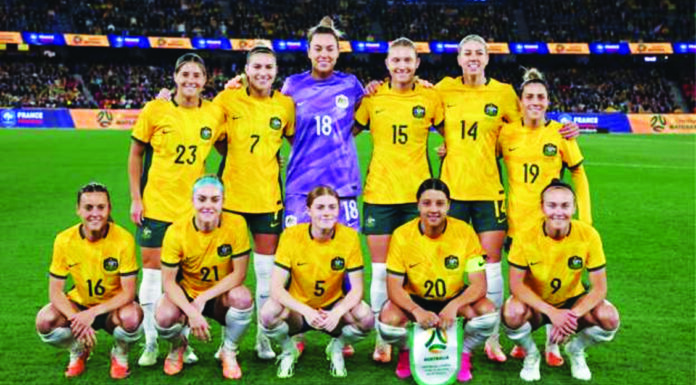
Australia women football team

Australia’s squad have criticised the gender disparity in World Cup prize money and the fact some nations do not have collective bargaining rights.

All 23 Matildas players featured in a video posted by the Australian professional players union (PFA) three days before the tournament begins.

The squad also called for all of the players in Australia’s A-League Women to be fully professional.

Australia are co-hosting the Women’s World Cup with New Zealand.

“736 footballers have the honour of representing their countries on the biggest stage this tournament,” said Australia and Everton midfielder Clare Wheeler in the video.

Western Sydney Wanderers’ Clare Hunt added: “Yet many are still denied the basic right to organise and collectively bargain.”

Brann midfielder Tameka Yallop said: “Collective bargaining has allowed us to ensure we now get the same conditions as the Socceroos, with one exception: Fifa will still only offer women one-quarter as much prize money as men for the same achievement.”

The total prize pot for the Women’s World Cup, which starts on Thursday, is $110m (£84.1m), a 300% increase from the 2019 tournament, but significantly lower than the $440m (£336.4m) pot for the men in Qatar last year.

The A-League’s minimum wage for players increased from $16,344 (£8,509) to $20,608 (£10,730) in the 2022-23 season and is set to rise again in the 2023-24 campaign to $25,000 (£13,011).

The league includes 12 teams with a regular season from November to April. The top four teams then play in semi-finals then a final to determine the champions.

Sydney FC’s Cortnee Vine added in the video: “Our sisters in the A-League are still pushing to make football a full-time career, so they don’t have to work part-time jobs like we had to.”

Speaking at the Fifa Congress in March, Fifa president Gianni Infantino said: “Our ambition is to have equality in payments for the 2026 men’s and 2027 women’s World Cup. This is the objective that we set to ourselves. Fifa is stepping up with actions, not just with words.”

Football’s governing body have also said its “ultimate aspiration” is for equal prize money and “we are on that journey”.

Equal pay has been established in cricket, with the International Cricket Council announcing the milestone on 13 July.

Credit: bbc.com

Australia and New Zealand set to host historic Women’s World Cup

0
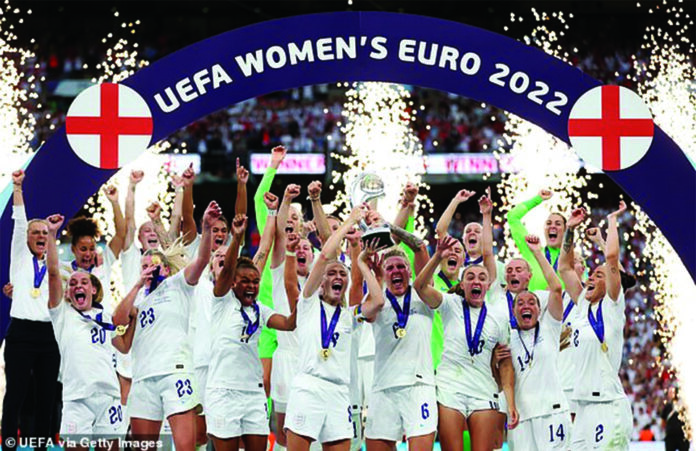
England comes into the tournament as European champions

The 2023 Women’s World Cup starts on Thursday when co-hosts New Zealand face Norway in the tournament opener at Eden Park in Auckland.

Thirty-two teams will battle it out over 32 days for the ultimate prize, but who will be crowned champions at Stadium Australia in Sydney on 20 August?

The Fifa Women’s World Cup will be the ninth official global tournament to be held with Australia and New Zealand hosting the event in July and August.

England are looking to win their first tournament and coach Sarina Wiegman’s will fancy their chances this year after their success at Euro 2022 when they defeated Germany in the final at Wembley.

USA are the current holders of the competition after they defeated the Netherlands 2-0 in the 2019 final.

In total, 32 teams, split across eight different groups will soon compete for the trophy.

When does the Women’s World Cup start?

The World Cup starts on Thursday, 20 July with opening matches involving hosts Australia and New Zealand.

USA will be looking to pick up their third title in a row

New Zealand face former winners Norway at Eden Park in Auckland. Co-hosts Australia start their campaign against the Republic of Ireland at the Sydney Stadium in Australia.

The final will be held in Sydney on Sunday, 20 August.

How many teams are in the Women’s World Cup?

This edition of the World Cup has been expanded from 24 teams to 32.

There are eight groups of four teams who play each other in a round-robin format.

The top two teams from each group advance to the last 16, known as the knockout stages, with the winners progressing to the quarter-finals, then semi-finals and the final.

There will be 64 games in total.

Eight teams are making their debut at the Women’s World Cup – Haiti, Morocco, Panama, the Philippines, Portugal, Republic of Ireland, Vietnam and Zambia.

Which venues are being used?

There are 10 venues across both countries – six in Australia and four in New Zealand.

In Australia: Stadium Australia and Sydney Football Stadium in Sydney, Brisbane Stadium, Melbourne Rectangular Stadium, Perth Rectangular Stadium and Hindmarsh Stadium in Adelaide.

Stadium Australia in Sydney will host the World Cup final on 20 August

In New Zealand: Eden Park in Auckland, Wellington Regional Stadium, Forsyth Barr Stadium in Dunedin and Waikato Stadium in Hamilton.

Who are the favourites?

The United States are ranked number one in the world and are chasing a fifth World Cup title – and a third in a row, which would be a new record.

They are favourites to go all the way but face competition from Euro 2022 finalists Germany, who are the only other nation to win two consecutive World Cups and are ranked second in the world.

European champions England are also considered one of the favourites despite injuries to key players, while Canada won Olympic gold at Tokyo in 2021, beating world number three Sweden in the final.

Spain’s squad boasts several of Barcelona’s Champions League winners, including Alexia Putellas who is widely considered the best player in the world, and will be strong contenders despite a player dispute with the federation.

France are under new management but have a talented squad, while the Netherlands were beaten finalists in 2019 and Euro 2017 winners so cannot be written off.

South American giants Brazil are ranked ninth in the world and could be a threat, alongside joint-hosts Australia who are spearheaded by Chelsea superstar Sam Kerr.

Who are the previous winners

There have only been four winners of the Women’s World Cup

United States: 1991, 1999, 2015, 2019

Germany: 2003, 2007

Norway: 1995

Japan: 2011

Groups

  • Group A: New Zealand, Norway, Philippines, Switzerland
  • Group B: Australia, Republic of Ireland, Nigeria, Canada
  • Group C: Spain, Costa Rica, Zambia, Japan
  • Group D: England, Haiti, Denmark, China
  • Group E: United States, Vietnam, Netherlands, Portugal
  • Group F: France, Jamaica, Brazil, Panama
  • Group G: Sweden, South Africa, Italy, Argentina
  • Group H: Germany, Morocco, Colombia, South Korea

Credit: bbc.com

I’ll replace Rawlings as your Godfather – Alan tells Voltarians

0
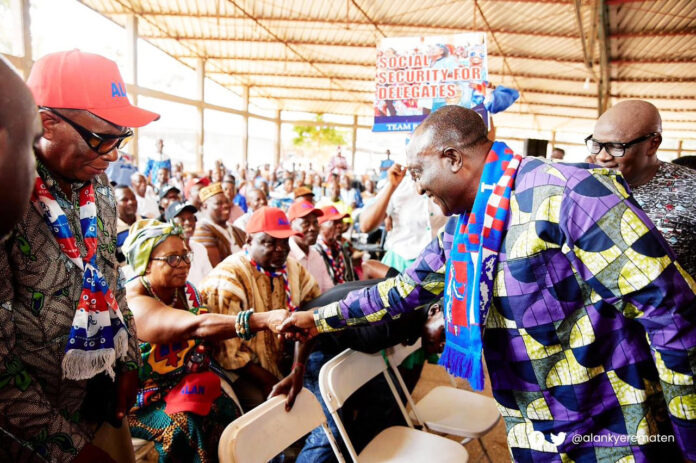
Alan greeting the delegates

A flagbearer aspirant of the New Patriotic Party (NPP), Mr Alan Kwadwo Kyerematen, says though the demise of former President Rawlings is very unfortunate, the people of Volta Region should not be worried because he (Alan) is ready to replace (Rawlings) as their godfather.

Addressing delegates from the various constituencies who gathered at Aflao in Ketu South, Dzodze, in the North and Sogakope in Central Tongu respectively yesterday, Mr Alan Kyerematen, also known as Alan Cash, said if the delegates in the Volta Region give him the mandate to lead NPP and eventually Ghana, he will equally play the positive role that the late Rawlings played in the development of the Region.

According to him, Jerry Rawlings was a charismatic leader and that he also has the same trait in him. He appealed to Voltarians to extend the same love they had for Mr Rawlings to him (Alan) and that, as president of Ghana he would ensure that Volta Region gets its fair share of the national cake.

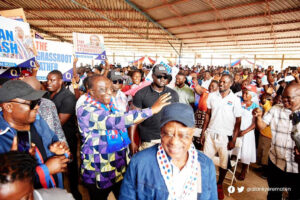
Alan acknowledging cheers from delegates at Sogakope

Mr Kyerematen further told the delegates that though Volta Region is seen as ‘no go area’ for the NPP, he is sure the political dynamics would change, after he (Alan) has been elected to lead the NPP and that the people of the region really love him.

He admonished delegates to vote for leaders who have been tried to enable the NPP to break the eight, stressing that delegates should not vote for candidates who could only become a flagbearer, but a flagbearer who could win a national election as well.

According to him, he remains the only candidate that can March the NDC boot-for-boot even in the stronghold in the Volta region.

Mr Kyerematen said the ten candidates contesting the flagbearer position are distinguished personalities of the NPP, but he tops them all, saying he can mobilise two million votes in the Ashanti Region to break the eight if delegates give him the mandate.

He assured delegates that when voted as the flagbearer, he would change their fortunes and that of the party executives, as he would pay them monthly stipends.

The Minister for Railways and MP for Hohoe, Mr John Peter Amewu asked delegates to take bold decisions without any intimidation and vote massively for Mr Kyerematen, saying he is a supporter of Mr Kyerematen and the President never intimidates him as a cabinet Minister.

Mr Amewu urged delegates to be prepared to sacrifice for the betterment of Ghana and vote for Mr Kyerematen to become the president.

Former Minister for Zongo Development, Alhaji Boniface Abubarka, Mr Yaw Boabeng Asamoah and some NPP Regional executives are accompanying Mr Kyerematen on the tour.

The Ghanaian Chronicle