Home Blog Page 19

Why Carlos Queiroz was appointed new coach of Ghana

0
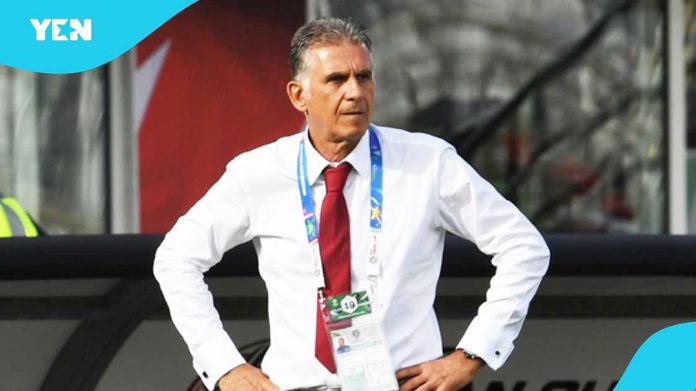
Carlos QUeiroz, Black Stars new coach

Carlos Manuel Brito Leal de Queiroz is certainly one of the most travelled coaches in the history of football, having worked in Europe, Africa, Asia, the Middle East and North America.

Having accepted the new challenge of leading the Black Stars to the 2026 World Cup, the Portuguese tactician may face one of his most difficult tasks, considering how passionate Ghanaians are about the senior national team.

Black Stars players

Regardless of the challenge, the pedigree of Queiroz is not in doubt, as he is one of the most high profile coaches Ghana has ever appointed in its football history.

The deep tactical knowledge and tournament management skills of Queiroz, in combination with the football talents in the Black Stars, could be a picture perfect match that may change the fortunes of Ghana football.

Mandate

Queiroz has been handed a clear and ambitious mandate which is to guide Ghana to the quarter-finals of the tournament, a stage the Black Stars have not reached since their iconic run in South Africa in 2010.

Should he meet that target, a two-year contract with an option for renewal is expected to be offered to the 72-year-old.

The appointment follows the dramatic sacking of Otto Addo in the early hours of March 31st, just hours after Ghana’s 2-1 defeat to Germany in Stuttgart.

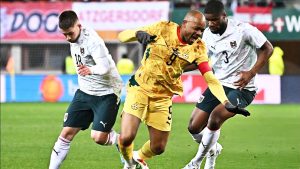
Addo had also overseen a chastening 5-1 loss to Austria three days earlier, which was Ghana’s heaviest defeat in 19 years, and GFA president Kurt Okraku moved swiftly to bring his tenure to an end after intense discussions with the sports ministry.

Addo finished his second stint with a win rate of 36.4 percent across 22 games, and it was widely reported that he had lost the dressing room, a factor that proved decisive in the GFA’s decision to act.

The search for a replacement began immediately, with the GFA receiving between 600 and 800 applications for the position in the days that followed.

Queiroz who returns to management after a short spell with Oman has described the Ghana job as a mission.

“Today, I accept this mission with the same passion and commitment that have guided me throughout my career. Ghana is a nation of talent, pride, and footballing soul. I arrive with respect for its history and belief in its future.

“Together, with unity, discipline, and ambition, we will work to honour the expectations of a great football nation. This is not just another job, it is a mission. And I am ready to give everything of my experience and knowledge once again, in service of the game and the happiness of people,” he added.

Why Queiroz Won the Race

Among the candidates considered, Paulo Bento and Fernando Santos emerged as early frontrunners alongside Queiroz.

Both carry solid international pedigrees, but it is understood that the GFA leaned decisively toward the former Manchester United assistant for a combination of reasons that went beyond raw coaching credentials.

Chief among them was Queiroz’s familiarity with African football. He has walked this road before. He managed Egypt, taking the Pharaohs to the 2021 Africa Cup of Nations final before departing, and prior to that, he had a stint with South Africa.

He also applied for the Cameroon job in 2018, signaling a long-standing interest in African football that the GFA took note of when weighing up their options. Neither Bento nor Santos could point to comparable experience in this context.

A Flexible Approach Sealed the Deal

A further factor that tilted the balance in Queiroz’s favour was his willingness to be flexible with his backroom arrangements.

While he is expected to arrive with about 4-6 members of his own technical staff, including his trusted assistant Roger De Sa, he has indicated a readiness to accommodate some of the remaining technical team from Otto Addo’s tenure within the setup.

Kurt Okraku, GFA President

For the GFA, that flexibility was significant. The belief within the association is that retaining elements of the existing backroom staff will help Queiroz settle into the role more quickly, reducing the disruption that inevitably accompanies a coaching change of this nature.

Building continuity behind the scenes, even as the head coach changes, was seen as a practical and sensible approach given how little time remains before the World Cup begins.

A CV Built for Big Moments

Queiroz’s appointment brings a level of experience and gravitas to the role that the GFA have been seeking since Okraku outlined the profile of their ideal candidate last week.

The man who served as Sir Alex Ferguson’s right hand at Manchester United, who coached Real Madrid, who guided Iran to three World Cups and who took Portugal to the 2010 World Cup knockout stage is no stranger to high-pressure environments or the demands of tournament football.

He has managed at four World Cups across different nations, navigated dressing rooms of enormous complexity, and developed a reputation as a tactically astute and meticulous operator who prepares his teams thoroughly for the challenges ahead.

That, combined with his African experience, made him the standout candidate in the eyes of the GFA’s leadership.

The Timeline Ahead

With time at an absolute premium, Queiroz is expected to move quickly. The Portuguese coach is anticipated to name a provisional World Cup squad by May.

The Portuguese and his staff will then have the opportunity to assess players across the final weeks of the European club season before settling on their preferred group.
Black Stars Skipper, Jordan Ayew

Ghana also have friendlies against Mexico in May and Wales on June 2nd scheduled as final preparation fixtures, and those matches will be crucial in helping Queiroz evaluate his options and bed in his tactical ideas before the tournament begins.

The new coach will also be working within the context of a squad facing significant uncertainty. Mohammed Kudus, Ghana’s most dangerous attacking threat and their top scorer at the 2022 World Cup in Qatar, remains a doubt for the Mundial after suffering a fresh quad injury.

Ghana has been drawn in Group L for the 2026 World Cup alongside EnglandPanama and Croatia. Their campaign opens against Panama in Toronto on June 17th, before facing England in Boston on June 23rd and Croatia on June 27th.

Career

In 1984, Queiroz was appointed as assistant manager of Estoril-Praia. After that, Queiroz was appointed Portugal national team coach in 1991. He had a record of 14 wins in 31 matches. Afterwards, he went on to manage the Portuguese Primeira Divisão team Sporting CP in 1994.

United States and the Japanese teams

He subsequently coached the NY/NJ MetroStars in the United States and the Japanese team, Nagoya Grampus Eight. In between, he found time to author the Q-Report, detailing plans to professionalize the development of footballers in the United States.

United Arab Emirates

Queiroz returned to coaching national teams in 1999, when he took the job as head coach of the United Arab Emirates.

South Africa

He became head coach of South Africa in 2000. Under Queiroz, South Africa qualified for the 2002 FIFA World Cup, but Queiroz resigned in March 2002 before the finals, after falling out with the South African Football Association.

Manchester United

Queiroz became a coach at English club Manchester United in June 2002. He began his work at the start of the 2002–03 season, working alongside Alex Ferguson, who had gone without an assistant manager since the departure of Steve McClaren in the middle of 2001.

Real Madrid (2003-2004)

Queiroz’s position at Manchester United as assistant manager attracted the attention of Real Madrid, who wanted Queiroz as their manager to replace departing manager Vicente del Bosque in the summer of 2003.

 Portugal (1991-1993)

On 11 July 2008, it was announced that Queiroz was leaving Manchester United, having agreed to a four-year contract to become the head coach of the Portugal national team.

Iran

On 4 April 2011, Queiroz agreed to a two-and-a-half-year deal to coach Iran until the end of the 2014 World Cup in Brazil, alongside goalkeeping coach Dan Gaspar and assistant coach Omid Namazi.

Colombia (2019-2020)

On 7 February 2019, Queiroz took over as the new manager of Colombia on a three-year contract. He was the only European and African coaching a South American national team, and was the fourth European manager to be in charge of the Colombian team.

Egypt (2021-2022)

On 8 September 2021, the Egyptian Football Association announced the signing of Carlos Queiroz to replace Hossam El Badry.

Qatar

Queiroz was appointed manager of the Qatar national team in February 2023, succeeding Félix Sánchez, who led them at the 2022 FIFA World Cup which they hosted. He signed a contract until the 2026 World Cup.

On 6 December 2023, after twelve matches with Queiroz charge, consisting of four victories, three draws and four losses, the Qatar Football Association announced that his contract had been terminated by mutual agreement, and he had been replaced by Tintín Márquez.

Oman (2025-2026)

On 15 July 2025, Queiroz became the head coach of Oman. Under his tenure, Oman did not qualify for the 2026 FIFA World Cup, finishing last in their fourth-round qualification group after drawing with Qatar and losing to the United Arab Emirates. On 22 March 2026, Queiroz stepped down from the Omani national team reportedly due to the region instability following the 2026 Iran war.

Ghana

On 13 April 2026, Queiroz was appointed head coach of Ghana national team ahead of their participation in the 2026 FIFA World Cup.

Credit: Flashscore, Wikipedia

Stonebwoy to organise annual concert for inmates at the Nsawam Prison

0
Stonebwoy and wife with Prison official

Afro Dancehall Artiste, Stonebwoy and his wife, Dr Louisa Satekla, donated food items and essentials to Nsawam Medium Security Prisonas part of their charitable outreach to support inmates and give back to society.

During the visit, they engaged with inmates and offered encouragement, with prison authorities praising the gesture and noting its positive impact beyond the material donation.

The ‘Top Skanka’ crooner also pledged continued support, including a promise to stage an annual live concert for inmates at Nsawam Prison.

In addition to the donation, Stonebwoy and his wife offered words of encouragement to the inmates of the facility. The gesture was widely welcomed by prison authorities, who expressed appreciation for the visit and support.

According to officials at the prison, the artiste also pledged his continued commitment to the facility, including a promise to stage an annual live concert for inmates at Nsawam.

He said the team appreciated the effort made despite the musician’s busy schedule, adding that taking time to engage directly with inmates demonstrated genuine concern for their wellbeing. He further encouraged other well-wishers to follow the example set by the artiste.

The prison authorities also extended thanks to Stonebwoy, his wife, and his management team for their generosity and encouragement, describing the visit as meaningful and uplifting for the inmates.

The donation forms part of Stonebwoy’s broader social impact initiatives, which continue to blend philanthropy with community engagement.

Moses Bliss opens up on wife’s battle with unknown ailment

0
Moses Bliss and wife Marie

Popular Nigerian gospel musician, Moses Bliss, has narrated how his wife, Marie Bliss, battled an unknown ailment.

Moses who shared this during his recent ministration at the Mountain Experience program in Abuja, stated that Marie couldn’t breathe during the sickness.

While testifying to the power of God, the singer explained that the ailment which could not be diagnosed despite multiple tests, comes with body pain and difficulty breathing

He further revealed that the undiagnosed illness was overcome with prayers.

‎”Me and my wife were in the UK, and all of a sudden, we don’t know when the devil came. My wife became ill with one side of her body paining her, the back is also paining her, and before you know it, she could not breathe very well. It became serious that we had to take her to the hospital. And doctors said they don’t know the cause.

“They were doing all sorts of tests and they did not know what was going on and I started crying. I had to quickly rush down to Nigeria for a program. On the flight back to London, the spirit of God told me what are you waiting for? Are you not going to put an end to this nonsense, to this Harassment. Who are you waiting for?

“So when I got to the hospital I started praying with my wife, and pumping the words of God into her heart. While on my way home, she called me that she had been discharged,” he said.

27th TGMA: Wendy Shay stakes claim to Artiste of the Year title

0
Wendy Shay

Celebrated Ghanaian songstress and Telecel Ghana Music Awards (TGMA) Artiste of the Year nominee, Wendy Shay, has stirred conversation online after confidently declaring herself the winner of this year’s topmost award category.

In a post shared on her X page, the Too Late hitmaker expressed strong belief in her chances, writing that she is aware many people already see her as the eventual winner.

“I know everyone is aware this year’s TGMA Artiste of the Year is me. Thanks to Ghana, SHAYGANG, media personalities, and all the artistes showing me love and advocating for me to win,” she stated.

Wendy Shay also made a passionate appeal to various fanbases across the industry to rally behind her.

She specifically called on supporters of Shatta Wale (SM), Stonebwoy (Bhimanatives), Sarkodie (Sark Nation), Black Sherif (Blacko tribe), and other fan groups to vote massively in her favour.

Wendy Shay is competing in a highly competitive Artiste of the Year category with Black Sherif, Medikal, Stonebwoy, Sarkodie, and gospel powerhouse Diana Hamilton.

Credit: 3news.com

Feature: No-Bed Syndrome Part (6): Leadership defines who owns the flow

0
Dr. George Oduro, an Emergency Physician

In every overcrowded emergency department there is a moment of quiet frustration that everyone feels but few dare to name. A patient lies on a trolley. The doctor has assessed and decided to admit to a hospital ward. The nurse has treated and documented. The admission has been accepted. Yet nothing moves. The patient does not move from the emergency department. The ward says it is full. The porter is not available. The family waits. The staff wait. In that pause, a deeper question rises. Who owns the flow?

In the first article of this series we asked what we really mean by “No-Bed Syndrome”. We concluded that it is rarely a simple shortage of physical beds. In the articles that followed, we examined how patients get stuck, how admission does not always mean movement, how discharge delays quietly block capacity. And then we examined why data and transparency matter. Now we confront a deeper layer beneath all of these observations. When movement fails, who is responsible?

“No-Bed Syndrome” is not only an operational problem. It is a governance problem.

Earlier in this series, we described a case in Accra in which an ambulance moved between three major facilities in search of capacity. Each hospital reported no available bed. The deeper question was not simply whether space existed. It was whether each hospital had someone clearly responsible for patient flow and empowered to act when that flow began to fail.

The visible failure was an overcrowded emergency department, with patients unable to move to hospital wards after admission. The underlying issue was governance. What looks like a capacity problem often begins much earlier as a problem of coordination, authority, and oversight.

“No-Bed Syndrome” reveals a problem of accountability before it reveals a problem of capacity.

The public often assumes that overcrowding in the emergency department simply reflects a shortage of space. Build more wards and the crisis will resolve. Infrastructure does matter. But many times the blockage is not physical at all. It is organisational. It lies in unclear clinical authority, fragmented accountability, and the absence of an institutional owner for patient flow from arrival to discharge.

Flow does not organise itself. It is either deliberately managed or quietly neglected.

Unfortunately, in many hospitals, emergency care is treated as the front door and little more. Once a patient is accepted for admission, responsibility is assumed to transfer completely to the inpatient team. On paper this appears orderly. In practice it creates a blind spot. When ward rounds begin late, discharges are delayed. When ward discharge paperwork is postponed, beds remain occupied. When investigations are deferred, decisions drift to tomorrow. The emergency department becomes the point at which system fragmentation becomes visible.

This is not a criticism of individuals. It is a description of the prevailing structure.

When governance is diffuse, each department quite naturally optimises for its own pressures. The theatre list must run. The outpatient clinic must continue. The ward must manage its census. But without a clearly defined institutional owner of flow, the system behaves as separate islands. The emergency department absorbs what does not move. Congestion becomes normal. Boarding becomes routine and chronic. Emergency department overcrowding becomes normal.

Patients and families experience something different. They experience one hospital. They do not see internal boundaries, nor should they need to. When they are told there is no bed, they interpret that as a system failure. From their perspective, it is the hospital that has failed them.

Governance begins with recognition that flow is a safety function of the hospital. Overcrowding in the emergency department is not merely uncomfortable for patients. It is clinically dangerous. Delayed antibiotics, delayed pain control, delayed imaging, delayed senior review, and delayed definitive treatment are measurable risks. In the emergency department when movement slows, risk rises. Protecting flow is therefore not an efficiency exercise. It is patient safety stewardship.

Ghana’s health sector policy framework, through the Ghana Health Service and the Ministry of Health, emphasises quality, accountability, and patient safety. The Ghana Patient Charter affirms the right to appropriate and timely care. These principles must be visible in how hospitals manage capacity and movement. When admitted patients remain on trolleys for prolonged periods in an emergency department, the right to appropriate and timely care is compromised. Governance of patient flow is therefore not optional. It is central to national quality commitments.

These commitments only matter if they shape daily decisions. That requires clear ownership of patient flow and a shared understanding of who must act when delays occur. Effective flow stewardship therefore requires clarity.

Who monitors boarding time every day? Who has authority to declare emergency department occupancy unsafe? Who can convene urgent bed review meetings? Does this person or group work out of hours and on holidays? Who ensures discharge planning begins early enough to create capacity? Who has the power to escalate when thresholds are breached?

Ownership means that when emergency department congestion crosses a defined threshold, a named leader is notified and action begins immediately.

Most hospitals have policies, including referral guidelines and transfer targets. But without defined ownership and regular oversight, policies remain paperwork. Governance means structured accountability that detects delay and corrects it, rather than allowing it to settle into habit.

Leadership culture plays a decisive role. When senior executives visit clinical areas, what do they ask? Do they stop to ask or just walk through? Do they ask how many admitted patients remain in the emergency department? Do they ask what prevented discharge today? Do they review boarding time as routinely as financial performance? The issues leaders prioritise become the issues institutions take seriously.

“No-Bed Syndrome” exposes whether emergency department overcrowding is viewed as episodic or structural. If it is treated as a temporary surge, the response will be temporary. Extra trolleys or more beds. Short term holding spaces. Appeals for staff resilience. Move patients from trolleys to chairs. If it is recognised as a governance issue, the response changes.

Bed management becomes strategic. Discharge coordination becomes a daily discipline. Escalation triggers are clearly defined. Flow becomes a shared leadership concern, as important as financial governance, and arguably more so. No balance sheet can fully measure the cost of delayed care caused by blocked patient movement.

Protecting patient flow requires multidisciplinary alignment. Doctors, nurses, allied health professionals, laboratory services, radiology, pharmacy, transport, and support staff all influence movement or patient flow. If laboratory turnaround is slow, discharge stalls. If imaging is delayed, decisions wait. If pharmacy processing is prolonged, beds remain occupied. Governance must therefore be cross professional. No single specialty can solve emergency department overcrowding alone.

There is also a moral dimension. When a patient spends many hours on a trolley after admission, their dignity is compromised. Privacy shrinks. Families wait in uncertainty. Prolonged boarding also places a heavy burden on relatives who must remain nearby for extended periods, sometimes sleeping on the floor or improvised bedding on verandas outside the hospital. Staff, too, experience ethical strain. Governance is not simply about throughput. It is about respect for citizens at a time when they are most vulnerable.

Financial structures influence behaviour as well. If institutional incentives reward occupancy rather than throughput, urgency to discharge may weaken. Emergency departments rarely control such levers. But hospital leadership can align institutional priorities with safety by recognising prolonged boarding and overcrowding as system risks rather than a departmental inconvenience.

Transparency strengthens accountability. Measuring boarding time and occupancy creates visibility. When data are openly reviewed, denial becomes difficult. However data alone do not move patients. Authority must accompany information. A bed manager without escalation power cannot resolve gridlock. Decisions that affect flow often sit at senior clinical and executive levels. A flow coordinator without executive backing remains symbolic. Therefore, bed management only works when those responsible for patient flow have the authority to act.

Flow also extends beyond hospital walls. In Ghana, discharge frequently depends not on a formal community care system, but on family readiness or private arrangements. When relatives cannot mobilise transport, funds, or home support, beds remain occupied. What happens outside the hospital directly affects how patients move within it. Governance must account for the real structures that exist, not the ones we wish existed.

So the central question returns. Does anyone begin the day with explicit responsibility to protect safe patient movement across the entire institution? If not, emergency department congestion and overcrowding will recur. If yes, and if that responsibility is backed by authority, data, and structured review, improvement becomes possible.

As we have emphasised throughout this series of “No Bed Syndrome” articles, the aim is not to find someone to blame, but to understand the problem well enough to fix it.

A hospital that defines ownership of flow protects patients and staff alike. When movement improves, emergency departments regain capacity to assess new arrivals promptly. Admitted patients reach wards sooner. Clinical risk decreases. Morale improves. Public trust strengthens.

Ownership of flow reflects institutional maturity. It signals whether a hospital sees itself as a collection of independent units or as a coordinated system. In that sense, “No-Bed Syndrome” becomes a test of design. Are our structures built for today’s demand, or have responsibilities become so diffused that no one is expected to act when emergency department overcrowding happens?

If you work in healthcare in Accra or Kumasi, when admitted patients remain in the emergency department for many hours, who is clearly responsible for resolving that delay? Is there a named person or office that owns patient flow across the whole hospital?

If you are a hospital administrator, do you know, at this moment, how many admitted patients are boarding in your emergency department? If that number rises tomorrow, who has the authority to act immediately?

When occupancy approaches full capacity, is there a predefined escalation process that automatically activates, or does response depend on individual negotiation?

If you are a clinician, do you feel empowered to escalate unsafe congestion beyond your department? Or does it feel like a problem that belongs to someone else?

If you are a patient or family member, when you were told there was no bed, did anyone explain who was responsible for solving that problem?

Your experience matters. The sustainable reform we want does not begin with blaming departments or hospitals. It begins with defining who owns patient flow and who is expected to act when delays occur. When the responsibility is visible, improvement becomes possible.

In the next article, we move to one of the most sensitive areas of hospital practice: the interface between specialties. Shared responsibility across specialist boundaries will examine how professional culture, workload pressures, and mutual expectations shape whether patients move or remain stuck. Governance may define ownership. Collaboration will determine whether ownership translates into action.

By Dr. George Oduro, FRCS, FRCEM (UK), FGCS
Consultant in Emergency Medicine


For more news, join The Chronicle Newspaper channel on WhatsApp: https://whatsapp.com/channel/0029VbBSs55E50UqNPvSOm2z

Why Am I Always Hungry?

0

Your body relies on food for energy, so it’s normal to feel hungry if you don’t eat for a few hours. But if your stomach has a constant rumble, even after a meal, something could be going on with your health.

The medical term for extreme hunger is polyphagia. If you feel hungry all the time, see your doctor.

Several things can cause hunger.

  1. Diabetes

Your body turns the sugar in food into fuel called glucose. But when you have diabetes, glucose can’t reach your cells. Your body pees it out instead and tells you to eat more.

People who have type 1 diabetes, in particular, may eat large amounts of food and still lose weight.

In addition to a spike in your appetite, symptoms of diabetes may include:

  • Extreme thirst
  • The need to pee more often
  • Weight loss you can’t explain
  • Blurry vision
  • Cuts and bruises that take a long time to heal
  • Tingling or pain in your hands or feet
  • Fatigue
  1. Low Blood Sugar

Hypoglycemia is what you have when the glucose in your body drops to very low levels. It’s a common concern for people with diabetes, but other health problems can cause it, too. They include hepatitiskidney disorders, neuroendocrine tumors in your pancreas (insulinomas), and problems with your adrenal or pituitary glands.

In severe cases, people with hypoglycemia may seem drunk. They may slur their words and have trouble walking. Other symptoms may include:

  • Anxiety
  • Feeling like your heart is skipping a beat
  • Pale skin
  • Shaking
  • Sweating
  • Tingling around the mouth
  1. Lack of Sleep

Not getting enough rest can affect the hormones in your body that control hunger. People who are sleep-deprived have a bigger appetite and find it harder to feel full. You’re also more likely to crave high-fat, high-calorie foods when you’re tired.

Other effects of sleep deprivation include:

  • A hard time staying alert
  • Change in mood
  • Clumsiness
  • More accidents
  • Trouble staying awake during the day
  • Weight gain
  1. Stress

When you’re anxious or tense, your body releases a hormone called cortisol. This amps up your feeling of hunger.

Many people under stress also crave foods high in sugar, fat, or both. It may be your body’s attempt to “shut off” the part of your brain that causes you to worry.

Other symptoms include:

  • Angry outbursts
  • Fatigue
  • Headache
  • Sleep problems
  • Upset stomach
  1. Diet

Not all foods fill you up the same way. The ones that curb hunger best are high in protein — like lean meats, fish, or dairy products — or high in fiber. Good sources of fiber are fruits, vegetables, whole grains, and beans.

Healthy fats like those found in nuts, fish, and sunflower oil can lower your cholesterol levels. They’re key to a balanced diet and can help you feel satisfied after you eat.

Pastries, white bread, many packaged meals, and fast foods lack these nutrients but are high in fat and unhealthy carbs. If you eat a lot of these, you could find yourself hungry again soon after a meal. You may eat more than you should.

You might feel fuller after a meal if you take more time to chew and enjoy your food, rather than eating it quickly. It can also help to pay attention to what’s on your plate instead of the TV or your phone.

  1. Medication

Some drugs can make you want to eat more than usual. Antihistamines, which treat allergies, are known for this, as are antidepressants called SSRIs, steroids, some diabetes medicines, and antipsychotic drugs.

If you’ve gained weight since you started a medication, the medicine could be making you feel hungry. Talk to your doctor to find out what other drugs might work for you.

  1. Pregnancy

Many moms-to-be notice a huge leap in appetite. This is your body’s way of making sure the baby gets enough nutrients to grow.

Most women gain between 1 and 5 pounds during the first 3 months (your doctor will call this the first trimester) and then 1 pound a week during the second and third trimesters.

Other signs that you might be pregnant are:

  • A missed period
  • The need to pee often
  • Upset stomach
  • Sore breasts or breasts that get bigger
  1. Thyroid Problems

The thyroid is a butterfly-shaped gland in your neck. It makes hormones that control the rate at which every organ in your body works. If your thyroid is working too hard, you could have hyperthyroidism.

Besides an enlarged thyroid gland, other signs of the problem may include:

  • Fast pulse
  • Feeling nervous
  • More sweat than normal
  • Muscle weakness
  • Thirst even after drinking
  1. Diet Soda

Many people drink sugar-free soda to cut back on calories or lose weight. But the fake sugar in these drinks tells your brain to expect calories it can use for fuel. When your body doesn’t get any, it turns on your “hunger switch” and tells you to get calories from food instead.

If diet soda is making you hungry, you may also notice:

  • Headaches
  • Sugar cravings
  • Weight gain
  1. Dehydration

Are you hungry or just thirsty? You can’t always tell the difference in the signals you get from your body.

Other signs of dehydration include:

  • Dizziness
  • Feeling tired
  • Peeing less often or having dark-colored pee

Some research shows that if you have a glass of water before or during a meal, you might feel full on fewer calories.

  1. How Much Do You Exercise

Your body burns calories for fuel when you work out. This leads to a boost in your metabolism, the process by which your body uses energy. In some people, that can set off an increase in hunger.

Written by Stephanie Booth

Credit: webmd

Federal High Court Grants El-Rufai Bail

0
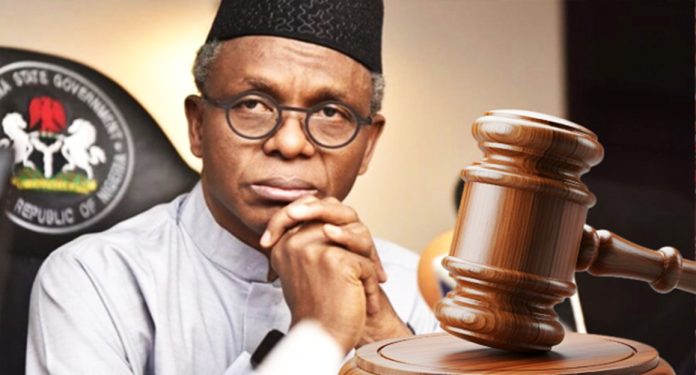
El-Rufai was Kaduna governor from 2015 to 2023

Justice Rilwan Aikawa of the Federal High Court sitting in Kaduna State has granted the former governor of the state, Nasir El-Rufai, bail.

He is being charged for alleged financial misconduct, including deposits into his domiciliary account and how his earnings were handled by the Independent Corrupt Practices and Other Related Offences Commission (ICPC).

However, El-Rufai’s bail application was stalled at the Kaduna State High Court, as the presiding judge, Justice Darius Khobo, has reserved ruling on the bail application to April 21, 2026.

The former governor is being arraigned before the state high court on multiple charges bordering on alleged fraud and abuse of office levelled against him by the ICPC.

El-Rufai was brought before the state court on Monday, April 13, 2026, by ICPC operatives and personnel of the Department of State Services (DSS). He is facing an amended nine-count charge after the prosecution reviewed its initial filing.

According to documents from the Kaduna State High Court, one of the key allegations is that the former governor authorised the release of about ₦11 billion from Kaduna State funds to an unregistered entity for a proposed light rail project that was never executed.

The prosecution also accused El-Rufai of approving and receiving ₦289.8 million as severance allowance, an amount said to be far above the legally approved entitlement of about ₦20 million, thereby conferring undue financial benefit on himself.

In another count, he is alleged to have mismanaged over $1.08 million, part of a World Bank loan granted to Kaduna State, in contravention of the terms governing the facility.

El-Rufai has denied all allegations.

Credit: channelstv.com


Atiku alleges plot to block ADC convention, condemns move as abuse of power

0
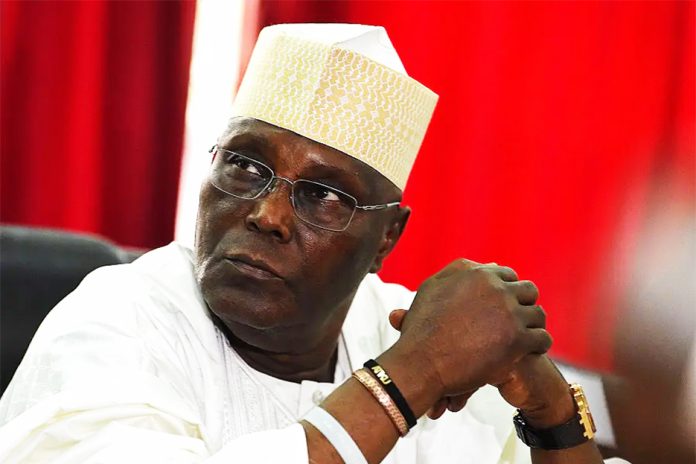
Atiku Abubakar

Former Vice President Atiku Abubakar has alleged plans to prevent the African Democratic Congress, ADC, from holding its convention in Abuja, describing the development as an abuse of public office.

The claim was made in a statement shared on April 14, 2026, on his official page.

According to the statement, the alleged move involves efforts to revoke the license of Rainbow Event Centre, the venue scheduled to host the ADC convention.

Atiku said the opposition party had fulfilled all necessary requirements for the event, insisting that there was no legal basis to deny it access to the facility.

“The ADC has paid every fee. The ADC has signed every contract. The ADC has broken no law,” he said.

He described the situation as an attempt to stifle opposition activities, warning that such actions could undermine democratic principles.

“This is how democracies are strangled in a thousand petty, vindictive acts against opposition parties,” the statement read.

The former presidential candidate further maintained that the convention would go ahead as planned, despite the alleged pressure.

“The convention will hold. The ADC will rise. And Nigeria will rise with it,” he added.

Credit: dailypost.ng

INEC staff should uphold electoral integrity, due process -Dr Agboke

0
The outgoing Resident Electoral Commissioner of INEC in Osun State, Dr Mutiu Agboke

The outgoing Resident Electoral Commissioner of the Independent National Electoral Commission, INEC, in Osun State, Dr Mutiu Agboke, has urged staff of the commission to ensure that the mandate of the electorate determines the outcome of elections.

Agboke gave the charge during his farewell address at a handover ceremony held in Osogbo on Tuesday.

He cautioned staff against allowing themselves to be used for any form of malpractice, stressing the importance of professionalism in the discharge of their duties.

According to him, “electoral officials must always reassure voters that their votes will count. INEC is constitutionally mandated to ensure credible elections.

Agboke who warned that any process that determines election winners outside the will of the electorate would undermine democratic values and increase voter apathy advised staff to uphold the ethics of their profession and resist undue influence, reminding them of the consequences of compromising their integrity.

“Any other thing determining the winner of an election would not only be antithetical to democratic values but increase apathy in the political space.

“I leave you all to uphold the ethics of your profession. Do not be susceptible in any manner. Remember, if you are used, eventually you would be dumped,” Agboke stated.

Reflecting on his tenure, the outgoing Commissioner expressed appreciation to staff for their cooperation and acknowledged varying perceptions about his leadership style and emphasised his commitment to due process and credible elections, insisting that he would maintain the same principles under any circumstance.

“To some, Agboke was too tough. To others, too soft. Whatever perception you have, it was all in the name of instilling the spirit to do the right thing.

“I made it a duty to emphasise due process and votes being counted. If I die today and resurrect, it is the same method I will adopt,” he said.

Agboke also thanked stakeholders for their contributions to the electoral process in the state and called for continued collaboration to sustain credible elections.

Credit: dailypost.ng

Italy suspends defence agreement with Israel

0
Italy Prime Minister Giorgia Meloni

Italy has suspended a defence agreement with Israel that involves the exchange of military equipment and technology research, according to Prime Minister Giorgia Meloni.


“In view of the current situation, the government has decided to suspend the automatic renewal of the defence agreement with Israel,” Meloni said on Tuesday on the sidelines of an event in Verona, according to the Italian news agencies ANSA and AGI.

Approved by Israel in 2006, the agreement is renewed automatically every five years. It calls for cooperation across defence industries, education and training of military personnel, research and development, and information technology.


Meloni’s right-wing government has been one of Israel’s closest allies in Europe, but in recent weeks, it has criticised Israeli attacks on Lebanon.

There was no immediate reaction by the Israeli government after Tuesday’s announcement.


Tensions between the two countries have risen over the past week after the Italian government accused Israeli forces of firing warning shots at a convoy of Italian peacekeepers in Lebanon.


Italy summoned Israel’s ambassador in protest over the incident, which damaged at least one vehicle and caused no injuries.

On Monday, Israel summoned Italy’s ambassador after comments by Italian Foreign Minister Antonio Tajani that condemned “unacceptable attacks” on Lebanese civilians by Israeli forces.


Tajani, who is also deputy prime minister, was in Beirut on Monday for talks with Lebanese President Joseph Aoun and Foreign Minister Youssef Raggi.

He later wrote on X that he was there to “convey Italy’s solidarity following Israel’s unacceptable attacks against the civilian population”.

Credit: aljazeera.com

The Ghanaian Chronicle