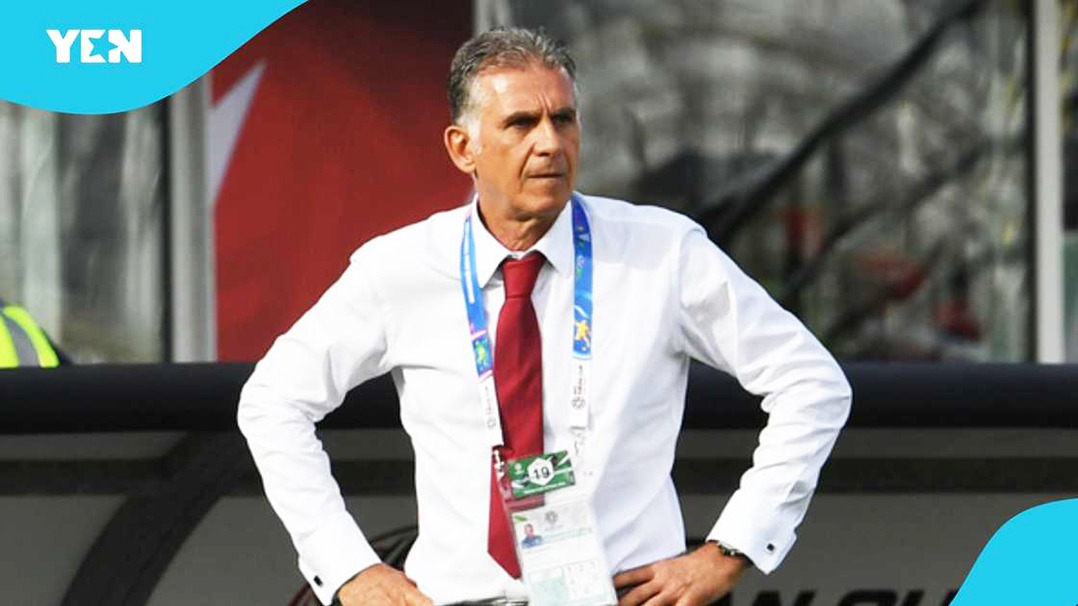
Carlos Manuel Brito Leal de Queiroz is certainly one of the most travelled coaches in the history of football, having worked in Europe, Africa, Asia, the Middle East and North America.
Having accepted the new challenge of leading the Black Stars to the 2026 World Cup, the Portuguese tactician may face one of his most difficult tasks, considering how passionate Ghanaians are about the senior national team.
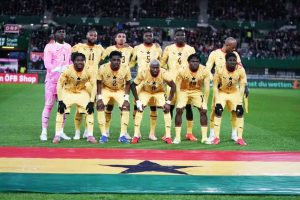
Regardless of the challenge, the pedigree of Queiroz is not in doubt, as he is one of the most high profile coaches Ghana has ever appointed in its football history.
The deep tactical knowledge and tournament management skills of Queiroz, in combination with the football talents in the Black Stars, could be a picture perfect match that may change the fortunes of Ghana football.
Mandate
Queiroz has been handed a clear and ambitious mandate which is to guide Ghana to the quarter-finals of the tournament, a stage the Black Stars have not reached since their iconic run in South Africa in 2010.
Should he meet that target, a two-year contract with an option for renewal is expected to be offered to the 72-year-old.
The appointment follows the dramatic sacking of Otto Addo in the early hours of March 31st, just hours after Ghana’s 2-1 defeat to Germany in Stuttgart.
Addo had also overseen a chastening 5-1 loss to Austria three days earlier, which was Ghana’s heaviest defeat in 19 years, and GFA president Kurt Okraku moved swiftly to bring his tenure to an end after intense discussions with the sports ministry.
Addo finished his second stint with a win rate of 36.4 percent across 22 games, and it was widely reported that he had lost the dressing room, a factor that proved decisive in the GFA’s decision to act.
The search for a replacement began immediately, with the GFA receiving between 600 and 800 applications for the position in the days that followed.
Queiroz who returns to management after a short spell with Oman has described the Ghana job as a mission.
“Today, I accept this mission with the same passion and commitment that have guided me throughout my career. Ghana is a nation of talent, pride, and footballing soul. I arrive with respect for its history and belief in its future.
“Together, with unity, discipline, and ambition, we will work to honour the expectations of a great football nation. This is not just another job, it is a mission. And I am ready to give everything of my experience and knowledge once again, in service of the game and the happiness of people,” he added.
Why Queiroz Won the Race
Among the candidates considered, Paulo Bento and Fernando Santos emerged as early frontrunners alongside Queiroz.
Both carry solid international pedigrees, but it is understood that the GFA leaned decisively toward the former Manchester United assistant for a combination of reasons that went beyond raw coaching credentials.
Chief among them was Queiroz’s familiarity with African football. He has walked this road before. He managed Egypt, taking the Pharaohs to the 2021 Africa Cup of Nations final before departing, and prior to that, he had a stint with South Africa.
He also applied for the Cameroon job in 2018, signaling a long-standing interest in African football that the GFA took note of when weighing up their options. Neither Bento nor Santos could point to comparable experience in this context.
A Flexible Approach Sealed the Deal
A further factor that tilted the balance in Queiroz’s favour was his willingness to be flexible with his backroom arrangements.
While he is expected to arrive with about 4-6 members of his own technical staff, including his trusted assistant Roger De Sa, he has indicated a readiness to accommodate some of the remaining technical team from Otto Addo’s tenure within the setup.
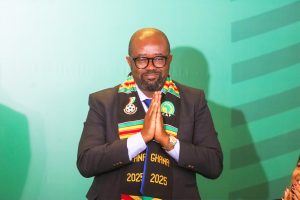
For the GFA, that flexibility was significant. The belief within the association is that retaining elements of the existing backroom staff will help Queiroz settle into the role more quickly, reducing the disruption that inevitably accompanies a coaching change of this nature.
Building continuity behind the scenes, even as the head coach changes, was seen as a practical and sensible approach given how little time remains before the World Cup begins.
A CV Built for Big Moments
Queiroz’s appointment brings a level of experience and gravitas to the role that the GFA have been seeking since Okraku outlined the profile of their ideal candidate last week.
The man who served as Sir Alex Ferguson’s right hand at Manchester United, who coached Real Madrid, who guided Iran to three World Cups and who took Portugal to the 2010 World Cup knockout stage is no stranger to high-pressure environments or the demands of tournament football.
He has managed at four World Cups across different nations, navigated dressing rooms of enormous complexity, and developed a reputation as a tactically astute and meticulous operator who prepares his teams thoroughly for the challenges ahead.
That, combined with his African experience, made him the standout candidate in the eyes of the GFA’s leadership.
The Timeline Ahead
With time at an absolute premium, Queiroz is expected to move quickly. The Portuguese coach is anticipated to name a provisional World Cup squad by May.
The Portuguese and his staff will then have the opportunity to assess players across the final weeks of the European club season before settling on their preferred group.
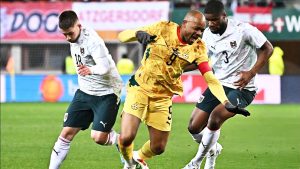
Ghana also have friendlies against Mexico in May and Wales on June 2nd scheduled as final preparation fixtures, and those matches will be crucial in helping Queiroz evaluate his options and bed in his tactical ideas before the tournament begins.
The new coach will also be working within the context of a squad facing significant uncertainty. Mohammed Kudus, Ghana’s most dangerous attacking threat and their top scorer at the 2022 World Cup in Qatar, remains a doubt for the Mundial after suffering a fresh quad injury.
Ghana has been drawn in Group L for the 2026 World Cup alongside England, Panama and Croatia. Their campaign opens against Panama in Toronto on June 17th, before facing England in Boston on June 23rd and Croatia on June 27th.
Career
In 1984, Queiroz was appointed as assistant manager of Estoril-Praia. After that, Queiroz was appointed Portugal national team coach in 1991. He had a record of 14 wins in 31 matches. Afterwards, he went on to manage the Portuguese Primeira Divisão team Sporting CP in 1994.
United States and the Japanese teams
He subsequently coached the NY/NJ MetroStars in the United States and the Japanese team, Nagoya Grampus Eight. In between, he found time to author the Q-Report, detailing plans to professionalize the development of footballers in the United States.
Queiroz returned to coaching national teams in 1999, when he took the job as head coach of the United Arab Emirates.
South Africa
He became head coach of South Africa in 2000. Under Queiroz, South Africa qualified for the 2002 FIFA World Cup, but Queiroz resigned in March 2002 before the finals, after falling out with the South African Football Association.
Manchester United
Queiroz became a coach at English club Manchester United in June 2002. He began his work at the start of the 2002–03 season, working alongside Alex Ferguson, who had gone without an assistant manager since the departure of Steve McClaren in the middle of 2001.
Real Madrid (2003-2004)
Queiroz’s position at Manchester United as assistant manager attracted the attention of Real Madrid, who wanted Queiroz as their manager to replace departing manager Vicente del Bosque in the summer of 2003.
Portugal (1991-1993)
On 11 July 2008, it was announced that Queiroz was leaving Manchester United, having agreed to a four-year contract to become the head coach of the Portugal national team.
Iran
On 4 April 2011, Queiroz agreed to a two-and-a-half-year deal to coach Iran until the end of the 2014 World Cup in Brazil, alongside goalkeeping coach Dan Gaspar and assistant coach Omid Namazi.
Colombia (2019-2020)
On 7 February 2019, Queiroz took over as the new manager of Colombia on a three-year contract. He was the only European and African coaching a South American national team, and was the fourth European manager to be in charge of the Colombian team.
Egypt (2021-2022)
On 8 September 2021, the Egyptian Football Association announced the signing of Carlos Queiroz to replace Hossam El Badry.
Qatar
Queiroz was appointed manager of the Qatar national team in February 2023, succeeding Félix Sánchez, who led them at the 2022 FIFA World Cup which they hosted. He signed a contract until the 2026 World Cup.
On 6 December 2023, after twelve matches with Queiroz charge, consisting of four victories, three draws and four losses, the Qatar Football Association announced that his contract had been terminated by mutual agreement, and he had been replaced by Tintín Márquez.
Oman (2025-2026)
On 15 July 2025, Queiroz became the head coach of Oman. Under his tenure, Oman did not qualify for the 2026 FIFA World Cup, finishing last in their fourth-round qualification group after drawing with Qatar and losing to the United Arab Emirates. On 22 March 2026, Queiroz stepped down from the Omani national team reportedly due to the region instability following the 2026 Iran war.
Ghana
On 13 April 2026, Queiroz was appointed head coach of Ghana national team ahead of their participation in the 2026 FIFA World Cup.
Credit: Flashscore, Wikipedia