Home Blog Page 1453

NHIA, NIA collaborate to register children under 15 years

0
NHIA Deputy Chief Executive in charge of Operations, Mrs Louisa Atta-Agyemang

The collaboration between the National Health Insurance Authority (NHIA) and the National Identification Authority (NIA) of Ghana marks a significant milestone in advancing healthcare coverage and national identification for the country’s youth.

Through a cooperative agreement, the two authorities have set the stage for a targeted registration drive scheduled to kick off on June 10, 2024.

This initiative specifically aims at registering children aged 6 to 14 years nationwide, with the goal of issuing them with Ghana cards.

These cards will not only grant access to healthcare services under the National Health Insurance Scheme (NHIS), but also provide official identification through the NIA.

By equipping young individuals with Ghana cards at an early stage, the initiative spearheaded by NHIA and NIA strives to enhance the youth’s access to crucial healthcare services while simultaneously easing their involvement in various socio-economic activities that mandate official identification.

The collaborative efforts between the two government agencies underscore Ghana’s commitment to streamlining administrative processes and broadening the reach of social services.

The agenda behind this joint registration drive contributes to a more inclusive society by emphasizing the vital role of healthcare access and identity recognition for the Ghanaian youth.

At a second phase training session currently underway at Winneba for staff from the middle and northern belts of the National Health Insurance Authority, representatives from NHIA and NIA highlighted the importance of universal healthcare coverage and the essential role of ensuring every child’s access to fundamental services in Ghana.

The NHIA Deputy Chief Executive in charge of Operations, Mrs Louisa Atta-Agyemang emphasised the significance of this partnership in extending healthcare access and laying a foundation for a more inclusive and empowered community.

Echoing this sentiment, the National Identification Authority Executive Secretary, Dr. Kenneth Agyemang Attafuah, stressed that Ghana Card’s function as a pivotal instrument for identity verification and access to public services, especially for children in the demographic of 6 to 14 years.

The anticipated joint registration drive, scheduled to commence on June 10, 2024, will establish registration centers in schools nationwide to facilitate the process.

Encouraging active involvement from parents and guardians, the authorities urged them to ensure their children partake in the registration to obtain the crucial Ghana card, securing their pathway to essential healthcare services.

This initiative not only signals a progressive step towards comprehensive healthcare coverage and national identification for Ghana’s youth, but also highlights the government’s dedication to fostering a more inclusive and empowered society where every child’s rights and recognition are safeguarded.

By Lydia Adjei-Tutu
Ghana Has An Important Voice In Shaping Future Peace In Ukraine

0
The writer

The war in Ukraine has had worldwide ramifications. It has spread far beyond the continent of Europe, lighting a fuse before a powder keg capable of turning the whole world upside down.

Africa, for example, has suffered its immediate consequences with a steep increase in staple food and fertilizer prices. Whether the war results in food shortage, an attack on territorial sovereignty, a nuclear threat, an impediment to freedom of navigation or a violation of international humanitarian law, its consequences and risks are felt wherever we live on the planet. The war has now been raging for almost 28 months.

Thousands of people have died, entire families have been forced to leave their homes and their country. Since 24 February 2022, the fundamental principles of the United Nations Charter have been flouted in Ukraine.

As the ‘people of the United Nations’, we cannot stand by idly. But how can we proceed, when cultural clashes and blockages in international institutions are a worrying sight? I am convinced that partnering with Ghana, and other like-minded countries in Africa, and looking beyond our differences, we can find the necessary political will to act, by drawing on our common humanity.

Switzerland’s DNA is one of dialogue. To those who will call us overly optimistic, I would remind you that my country is made up of four cultures and four official languages, and that our ability to speak together is the foundation of our unity in diversity. I know this is much the same for Ghana, with its peaceful coexistence.

At a time when the documents on which we have built our international order – such as the United Nations Charter and the Geneva Conventions – are being defied, I as Swiss Foreign Minister, am convinced that we must put this culture of dialogue to work for world peace.

This is why my country, at the request of President Zelenskyy, has assumed its responsibilities and will be organizing the first High-Level Conference for Peace in Ukraine on 15 and 16 June. I am glad we can count on Ghana as a partner in this endeavor.

While it is too early to make peace, it is more than time to prepare for it. The aim of this conference is therefore to establish a common framework and concrete steps towards a future peace process. In concrete terms, we are ready to conduct a courageous and necessary dialogue, to compare all points of view on the Ukrainian conflict with, as a common framework, respect for international law.

Firstly, we want to establish mutual understanding between as many States as possible on a comprehensive, just and lasting peace in Ukraine. Discussions will focus in particular on the various peace plans already proposed.

Additionally, this platform of exchange will focus on subjects of global interest, such as food safety, freedom of navigation, nuclear safety and humanitarian aspects, including prisoner exchanges. Finally, this initiative to end the war in Ukraine can only be followed by concrete and effective action, if there is discussion at the highest political level on how Russia can be involved in such a process.

Switzerland, as a neutral state with a humanitarian and diplomatic tradition, has always been able to listen to and understand the different interests involved. On the road to peace, we can get nowhere on our own.

Together, on the other hand, we can go a long way. But we have to move in the same direction. To do that, we need to pool our strengths, our ideas and our visions of the world, however different they may be.

Ghana has an opportunity to shape this conference from its specific perspective and contribute significantly by making its voice heard. The Ukraine Peace Summit is a great opportunity for Ghana and for Africa to contribute to shaping a future peace-order and to protecting its own interests.

By Federal Councillor Ignazio Cassis, Swiss Foreign Minister.

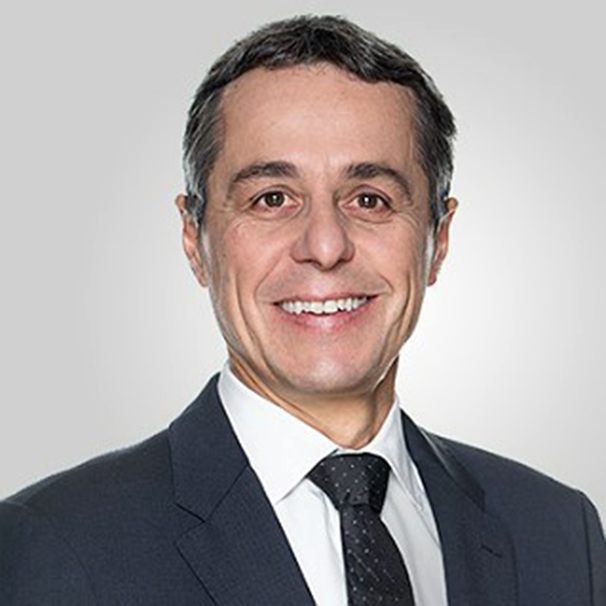
Ignazio Cassis, Foreign Minister and Former President of Switzerland

Editorial: Government Absorbing The Cost Of Dialysis Is Commendable

0
Editorial

The National Health Insurance Scheme (NHIS) will from this month absorb the cost of dialysis for all patients at varying proportions, with the vulnerable group receiving free eight sessions per month, according to a story published by graphiconline.com. Dialysis is a life-saving treatment for people with kidney failure. It removes waste products and excess fluid from the blood when the kidneys are unable to do so. However, it is a costly treatment and many people in Ghana cannot afford it.

According to the story, the scheme will absorb the costs of all eight dialysis sessions per month for patients aged under 18 and above 60 years, which it has categorised as the vulnerable group, for an initial period of six months.

The acting Chief Executive Officer (CEO) of the National Health Insurance Authority (NHIA), Dr. Da-Costa Aboagye said the scheme would absorb the cost of two dialysis sessions per month at GH¢982, that is GH¢491 per session, at all government facilities offering dialysis services, except the Korle Bu Teaching Hospital (KBTH), where a philanthropist has already offered GH¢380 subsidy per session, and NHIS would top up with GH¢245.50, which is 50 per cent of the cost per session, for two sessions per month, estimated at GH¢491.

Dr Aboagye explained that the support for the vulnerable group, with 84 verified patients, was estimated to cost GH¢329,952 per month and a six-month cumulative sum of GH¢2.3 million for those under 18 and above 60 years. For those aged 18 and 59 years the cost of dialysis for 147 verified patients worked out to GH¢144,354 per month and about GH¢1.01 million by the end of December this year, for all facilities, except KBTH.

The cost of dialysis for the treatment of 300 patients aged 18 and 59 years at KBTH is also estimated to be GH¢147,300 per month and a cumulative GH¢1.03 million by the end of December this year. This brings the total amount estimated to be absorbed by the scheme to GH¢4.35 million by the end of six months, Dr Aboagye stated.

The Renal Patients Association of Ghana have being lamenting about the turbulent times they go through as they struggle to finance their dialysis treatment. The financial burden of dialysis has long been a source of despair for many families in the country, often forcing them to make heart-wrenching choices between treatment and other essential needs. By absorbing these costs, the NHIS is offering a lifeline to those in need.

This move sets a precedent for other corporate entities and stakeholders to step up and contribute to healthcare support in Ghana. The NHIS’s proactive approach, backed by the government’s release of GH¢2 million and additional allocations, demonstrates a robust commitment to addressing the immediate needs of renal patients while working towards a sustainable, long-term solution.

As we applaud this initiative, it is also crucial to acknowledge the urgent need for a permanent, comprehensive strategy to manage renal diseases and other illnesses not currently covered by the NHIS. This long-term vision is essential to ensure that no patient is left behind and that access to critical healthcare services is not dictated by financial constraints.


The NHIS’s intervention comes at a pivotal time, providing much-needed relief amid ongoing economic challenges. It reflects a profound understanding of the intersection between health and financial stability, recognizing that the wellbeing of citizens is paramount to the nation’s progress.

We urge the government, corporate entities and all stakeholders to build on this momentum and work towards a healthcare system that ensures equitable access for all. The NHIS has lit the path towards a more inclusive healthcare system; it is now up to all of us to walk that path together.


LGBTQ Application: High Court directs parties to file submissions

0
Court

The Accra High Court handling Mr Rockson Nelson Dafeamekpor’s Application for Mandamus to compel the Speaker of Parliament and the President to act on the anti LGBTQ bill within seven days, has directed parties to file their submissions.

They are to make their next appearance on June 29, 2024.

Mr Dafeamekpor, also the South Dayi Member of Parliament’s (MP’s), prayed the Court to direct the Speaker of Parliament to present the Human Sexual Rights and Family Values Bill to the President, in accordance with Article 106 (7) of the Constitution, on the basis that Parliament duly complied with all the constitutional provisions.

The MP also prayed that the Bill must be transmitted to and received by the President for assent or otherwise, in accordance with Article 106 (7) of the Constitution.

Again, Mr Dafeamekpor wanted an order directed at the President to receive the Human Sexual Rights and Family Values Bill, as presented by Parliament, in accordance with Article 106 (7) of the constitution to either assent to it or otherwise.

The Court, presided over by Justice Ellen Lordina Mireku, dismissing the application to fast track the passage of the Bill, held that although the court had jurisdiction over the matter, granting of mandamus was discretional.

To her, the Supreme Court should be allowed to determine the cases before it.

Another reason the Court gave was that there was an argument of a breach of the Constitution in the passage of the Human Sexual Rights and Family Values Bill by Parliament and would, therefore, be inappropriate to compel the Speaker to transmit the Bill, considering the pending suits at the apex court.

Prior to the Court’s decision, Madam Sylvia Adesu, Chief State Attorney, also argued that the application was premature and violated principle of the separation of powers.

She said the Constitution did not allow the court to interfere with the work of Parliament.

The Chief State Attorney said the applicant did not fulfil the requirements for a mandamus to be granted.  Madam Adesu said it would be very disrespectful for the Bill to be transmitted to the President for him to act on it when there were suits before the Supreme Court, challenging its passage.

Nii Kpakpo Samoa Addo, counsel for Mr Dafeamekpor, said the arms of government must operate within the ambit of the Constitution.

Citing Article 286(5) which stipulates that the Office of the President and the Speaker are public offices and subject to the Judicial jurisdiction of the court.

Applicant’s lawyer said the court had exclusive jurisdiction over mandamus.

By Gifty Amofa

GNA

ECOWAS, NACOC hold Workshop on drug treatment as alternative to incarceration

0
Dignitaries and participants in a group photograph

The Economic Community of West African States (ECOWAS), in collaboration with the Narcotic Control Commission (NACOC) and ENACT, is holding a workshop on the pilot project on alternatives to incarceration of persons with substance use disorders in Ghana.

The workshop, which opened in Accra on Monday, June 3, 2024, will last five days, ending this Friday, June 7, 2024.

The Director-General of NACOC, Kenneth Adu-Amanfoh, in a keynote address to open the workshop noted the importance of recognising the gravity of the challenge being faced.

He observed that substance use disorders continue to plague society, exacting a toll not only on individuals but on families, communities and the nation as a whole.

He continued that the traditional approach of incarceration has proven insufficient in addressing the root causes of addiction, often exacerbating rather than alleviating the problem.

The workshop in session

“That is why the initiative we are embarking upon today is so crucial. By exploring alternatives to incarceration, we are not only demonstrating our commitment to justice and compassion but also recognising the inherent dignity and worth of every individual, regardless of their struggles,” he remarked.

He said that the alternative to the incarceration programme, which is designed to focus on treatment and recovery for People Who Use Drugs (PWUDs), is anticipated to result in the recovery of PWUDs, contributing to a safer and more crime-free society.

The pilot project, he opined, represents a significant step forward in the collective efforts to confront substance use disorders with empathy, innovation and evidence-based strategies.

“I am optimistic that with the multi-sectoral participants with varied expertise herein gathered at this 5-day workshop comprising presentations from subject matter experts and open discussions on drug treatment, rehabilitation, social reintegration and the need for the establishment of the Drug Recovery Court and its place in Ghana’s Criminal Justice System will set the foundational pillars for the pilot project,” Mr. Adu-Amanfoh said.

STATISTICS

It is estimated that 18% of the global prison population is incarcerated for drug-related crimes, which amounts to approximately two million people worldwide.

Often, these people are low-level offenders who use drugs or have drug use disorders.

According to the 2023 World Drug Report, about 296 million people used drugs at least once in 2021, and about 39.5 million of these people have SUD. Unfortunately, only 1 out of 5 people with SUD have access to any form of treatment.

The United Nations Office on Drugs and Crime (UNODC) estimated in 2020 that about 3.1 million people were arrested for drug-related offences at the global level, of which 61% were arrested for drug possession for personal use.

Also, among those convicted for drug-related offences, the majority were estimated to be in contact with the criminal justice system for personal use offences instead of trafficking offences.

GOV’T STEPS

The D-G, NACOC, Mr. Kenneth Adu-Amanfoh, told the participants from member states of ECOWAS that the government of Ghana had taken significant steps towards placing health and human rights at the heart of national drug policy.

This step, he noted, was evident through the enactment of the Narcotics Control Commission Act 2020 (ACT 1019), which provides for a shift from incarceration to public health for persons with substance use.

Act 1019 also makes provision for the creation of a Substance Use Disorder Rehabilitation Fund to rehabilitate persons medically certified to be suffering from substance use disorder.

ECOWAS REP

The ECOWAS Resident Representative in Ghana, Ambassador Baba Gana Wakil, gave the context of the pilot project.

Stressing that traditional punitive measures for substance abuse have been a significant concern globally, he also referred to several reports to demonstrate the number of people who use drugs.

He said that the 2023 World Drug Report said about 296 million people used drugs at least once in 2021, and about 39.5 million of these people have SUD.

According to him, the proposed alternative aims to prioritise rehabilitation, mental health support, and community-based solutions over punitive measures.

He said that the objectives encompass promoting a coordinated response to drug offenders by providing drug treatment as an alternative to incarceration for individuals struggling with drug addiction.

Police arrest man in Bauchi for selling 5-yr-old daughter N1.5m

0
Police in Bauchi State

Police authorities in Bauchi State have apprehended a man accused of attempting to sell his five-year-old daughter for N1.5 million. The suspect identified as Yusuf Umar, 49, claimed to be a staff of the Warji Local Government Council.

According to the police report, Umar had already arranged to hand over the child to an unknown person, unaware that the potential buyer was an undercover police detective.

“On the 26th of May 2024, the accused to the infant 5-year-old daughter from the estranged wife in Warji LGA under the pretence that he would take her to his sister in Bauchi town.

“Unknown to the mother, he had already arranged to hand the daughter to an unknown person not knowing that he is a police detective,” the Commissioner of Police in Bauchi Auwal Mohammed said.

He said the suspect was arrested in a hotel in Bauchi.

Meanwhile, the police also arrested four members of the professional hunters’ group for their involvement in criminal conspiracy and culpable homicide after torturing a young man named Jacob Ayuba to death on allegations that he stole N150,000.

Credit: channelstv.com

Cost of Airfares increase by 19% in Nigeria –NBS

0
National Bureau of Statistics, NBS

Airfares in Nigeria increased by 19 percent to N89.189.19 in April 2024 compared to the same period last year.

The National Bureau of Statistics, NBS, disclosed this in its latest Transport Watch report.

“In air travel, the average fare paid by air passengers for specified routes single journey was N89,189.19 in April 2024, showing an increase of 0.25 percent compared to the previous month (March 2024). On a year-on-year basis, the fare rose by 19.00 percent from N74,947.30 in April 2023”, the report reads.

The report also showed the cost of road and water transport.

Accordingly, NBS’s report said the average transport fare paid on Okada transportation was N476.49 in April 2024 which increased by 0.92 percent when compared with the value recorded in March 2024 (N472.16).

On a year-on-year basis, the fare increased by 3.07% when compared with April 2023 (N462.29).

For water transport (waterway passenger transportation), the average fare paid in April 2024 increased to N1,385.95 from N1,384.32 which indicates an increase of 0.12 percent on a monthly basis. On a year-on-year basis, it increased by 34.45 percent from N1,030.83 in April 2023.

Credit: dailypost.ng

Nigeria secures $7bn foreign direct investment to boost oil sector –Edun

0
Minister of Finance, Wale Edun

The Minister of Finance, Wale Edun, has said that Nigeria secured a $7 billion Foreign Direct investment to boost the country’s oil and gas sector.

Edun disclosed this on Sunday, during an interview with Channels Television.

“In terms of figures, 7 billion dollars is estimated to come in from the oil sector with another major improvement in the economic environment, the national single window project, which is an e-community and trade facilitation platform that will revolutionize what goes on at the ports,” he said.

The Minister of Finance, Wale Edun, has said that Nigeria secured a $7 billion Foreign Direct investment to boost the country’s oil and gas sector.

Edun disclosed this on Sunday, during an interview with Channels Television.

“In terms of figures, 7 billion dollars is estimated to come in from the oil sector with another major improvement in the economic environment, the national single window project, which is an e-community and trade facilitation platform that will revolutionize what goes on at the ports,” he said.

Meanwhile, in the last year, several multinationals include Kimberly-Clark, Procter and Gamble (P&G), GlaxoSmithKline (GSK), Unilever, Sanofi-Aventi Nigeria, manufactures of Huggies and Kotex brands of diapers, Kimberly-Clark, announced exit from Nigeria over harsh economic realities.

However, Edun has explained that Multinationals exiting Nigeria do not have a liquid foreign exchange market.

Credit: dailypost.ng

Businesses, airports, hospitals, power supply affected as labour begins nationwide strike

0
Labour begins strike

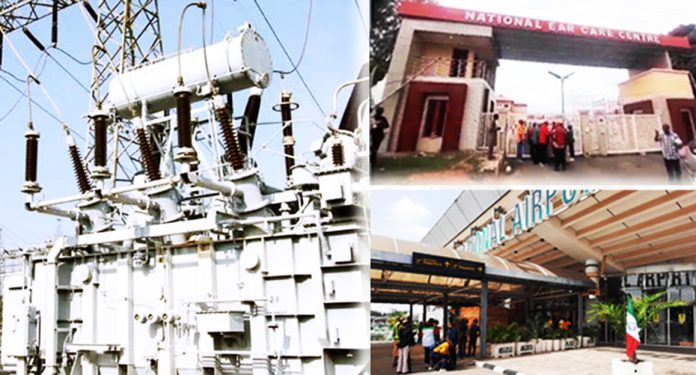
Workers have downed tools across the nation as the Nigeria Labour Congress (NLC) and the Trade Union Congress (TUC) begin their industrial action over the hike in electricity tariff and a lack of consensus on a new minimum wage.

While the National Assembly had stepped in at the last minute to avoid the industrial action declared on Friday, the discussions ended in a stalemate, leading to the commencement of the strike.

The industrial action has affected businesses and critical services across the country including schools, hospitals, and power supply as workers complied with the Trade Union Congress (TUC) and Nigeria Labour Congress (NLC) order.

From River State in the South-South region to Kaduna in Nigeria’s North-West, the workers’ actions grounded economic activities.

 Activities were halted at airports across the country including Abuja, Port Harcourt, Kaduna, and Lagos.

At the Port Harcourt Airport, as early as 7:00 am, airport workers under the aegis of the Association of Nigerian Aviation Professionals (ANAP) and the National Union of Air Transport Employees (NUATE) blocked access into the airport for vehicles.

This left passengers stranded, forcing some of them to come down from their vehicles and trek into the airport. However, flights haven’t been disrupted and there is a heavy security presence.

According to the Chairman of the Rivers State chapter of the Association of Nigerian Aviation Professionals Emmanuel Akagha, the passengers are still being allowed into the airport because the road leading to the airport connects some communities. He, however, said there’s no checking-in or boarding allowed.

It was a similar situation in Lagos State as passengers. At the airport, some stranded passengers were captured with luggage in hand. The aviation unions locked the gate, denying staff and passengers access to the terminal.

At the Abuja Airport, there is an unusual quietness. A few passengers are seen at one of the entrances into the terminal as doors are locked. Inside the airport terminal is empty. No staff were in sight. The airline stands were also empty.

Activities were equally paused in schools. Across the country, students who were already in school were sent back.

In the nation’s capital Abuja, Channels Television spotted clusters of forlorn public school students returning home. In Ibadan, Oyo State, students who turned up at school were sent back by their teachers in compliance with labour’s directive.

The situation was the same in Oyo, Cross River, and other states.

Credit: channelstv.com

GIS Boss lauds cooperation of security agencies at the country’s land borders

0
Comptroller-General of Immigration (CGI), Mr. Kwame Asuah Takyi

 The Comptroller-General of Immigration (CGI), Mr. Kwame Asuah Takyi, has commended security agencies for collaborating at the borders in the interest of the nation.

He urged them to intensify their efforts, particularly with the upcoming general elections, to prevent any unwanted individuals from entering the country and disturbing its peace.

Mr. Takyi emphasised that regardless of the agency, whether it is Immigration, National Intelligence Bureau, Port Health, Plant Quarantine, Customs, National Security or Narcotics Control Commission, the top priority should always be the safety of the nation.

These comments were made during the commissioning of the renovated Mognori and Pulimakom Border Posts, as part of his tour of the 5 northern Regions.

The CGI and his team have already visited 4 out of the 5 regions, including Northern, North East, Upper West and Upper East regions.

During his visit to the Upper West region, he went to Missiga and Kulungugu, under the Bawku Sector and the Zebila Command, and to the Regional Headquarters, where he held a durbar with Officers.

He then proceeded to the Tumu Sector, Nero and Lane Checkpoints.

As part of his visit, Mr. Takyi paid a courtesy call on the Overlord of the Wala Traditional Council, Wa Naa Fuseini Seidu Pelpuo IV, where he was received by the Council of Elders, led by the Busa Naa, Ali Seidu Pelpuo.

During his engagements with his men and other border officials, Mr. Takyi boosted their morale and encouraged them to continue their good work.

Additionally, he inspected some ongoing projects in the Upper West Regional Command.


The Ghanaian Chronicle