Home Blog Page 1419

‘We sometimes are not on talking terms while performing on stage’ –Keche on 15-yr musical journey

0
Keche

One of the most dedicated music groups of our time, Keche, has explained the motive behind their longevity in the music scene.

The hip-life duo formed in 2004 consisting of Joshua Kojo Ampah and Andrew Kofi Cudjoe rose to fame with their debut album Pressure. The group has remained resolute for 15 years.

Speaking in an exclusive interview on The Chat on Channel One TV, Keche revealed that the key factor that has contributed to their longevity as a group is their mutual understanding and respect for each other.

“I say this thing all the time… It’s understanding and respect for the company – for the brand Keche…I mean two people Since we are from different backgrounds and with different ideologies, there will be a misunderstanding…

“We are in Africa and have heard of Psquare who are even twins – from the same womb but had issues and have broken up…So you should know that it is 180 per cent that it is possible for us to also have misunderstandings.” The leader of the group keche Andrew said.

Andrew explained extensively, “There are times that we are on stage performing but we are not on talking terms …But we have to pretend all is well just to save the image of the brand and make our money”.

Without mincing words, the other member of the group Joshua also attributed part of their success to the media.

He stressed that although they may not always agree, their mutual understanding and respect have enabled them to thrive for more than a decade in the music industry.

Keche is currently out with a single dubbed ‘My Father’. The song, featuring ‘Aseda’ hitmaker King Paluta, is making waves on streaming platforms and the airwaves.

Credit: citinewsroom.com

Akofa Edjeani criticizes FDA’s Alcohol Ad ban

0
Veteran actress Akofa Edjeani

Veteran actress Akofa Edjeani has voiced her disapproval of the recent Supreme Court ruling that upheld the Food and Drug Authority’s (FDA) directive banning celebrities from advertising alcoholic beverages.

The FDA had laid out guidelines for the Advertisement of Alcoholic beverages by public figures which was published on February 1, 2016, stating, “No well-known personality or professional shall be used in alcoholic beverage advertising.”

The FDA explained that this guideline aims to prevent minors from being influenced by celebrities to consume alcohol.

Expressing her concerns on 3FM over the lack of proper consultation by the FDA before implementing the directive. Edjeani believes the FDA did not thoroughly consider the implications of the guidelines.

“It’s unfortunate, and I don’t understand how learned men and women could arrive at this decision. I’m not convinced it was well thought through. Who did they consult from our industry? Who did they talk to before making this decision?”

She questioned the logic behind the directive, “Advertising is still happening whether it’s by a celebrity or not. If someone wants to drink, they will drink. If they claim we’re influencing minors, they should provide proof,” she asserted.

The FDA further noted that the ban aligns with a policy by the World Health Organisation (WHO) and is part of efforts to protect children and young people from being lured into alcoholism.

A suit was filed against the FDA’s directive, arguing that it was unconstitutional and violated the right against discrimination guaranteed by Article 17 of the 1992 Constitution. The Supreme Court, in a 5-2 majority decision on Wednesday, June 19, dismissed the case and upheld the FDA’s directive.

The court ruled that the FDA’s directive was neither unreasonable nor excessive, and it did not contravene any constitutional provisions.

Credit: pulse.com.gh

Deaf woman’s long road to Buckingham Palace speech

0
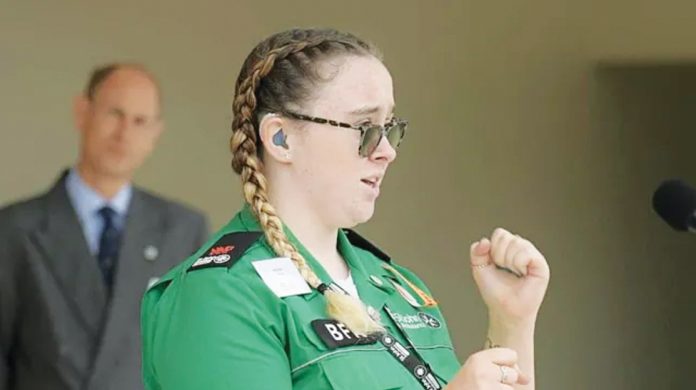
Hafwen Clarke signed to an audience of 500 people as the Duke of Edinburgh looked on

When Hafwen Clarke taught 500 people how to say thank you in sign language on the lawn of Buckingham Palace, it was the culmination of years spent spreading knowledge of signing to those around her.

The trilingual 19-year-old St John Ambulance volunteer and student had been invited to make history by becoming the first person to use British Sign Language (BSL) to deliver a speech at the palace.

Along with other young people from across the UK, she was receiving her Duke of Edinburgh (DoE) Gold Award from the new Duke, Prince Edward, who took over the role from his father Prince Philip, the founder of the awards.

As she stepped out in front of the crowd to deliver the speech she had worked on for a month, with the Duke of Edinburgh standing just feet away, Hafwen, from Aberystwyth, Ceredigion, was very nervous.

But years of challenging herself, as a deaf child and young woman in a hearing world, had stood her in good stead.

Hafwen was born without hearing into a family where her mother was a first-language Welsh speaker and her father, from England, had learned some of the language as an adult.

Her first language was BSL, but she went to a Welsh-language mainstream primary school, Ysgol Penrhyn-goch, where Welsh became her second language, and she had learning support from Welsh BSL signer.

Hafwen’s journey to her historic speech started as far back as the age of 10, when she first started going to St John Ambulance groups.

She said: “My mum suggested I join. I wasn’t very confident at that time. I didn’t know how to communicate with people in the same group as me. I was very quiet.

“One friend from primary school helped me a lot. She tried to encourage me to communicate using pen and paper.”

Credit: bbc.com


Crew arrested after yacht fireworks spark Greece blaze

0
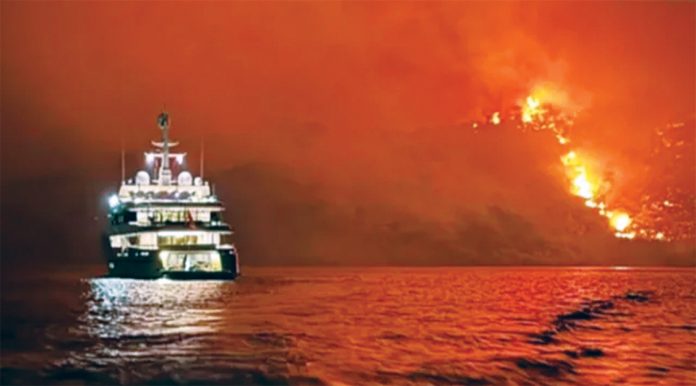
Firefighters shared this photo, but did not confirm that it is the luxury yacht

Thirteen people have been arrested following a forest fire on the Greek island of Hydra, that authorities allege was sparked by fireworks launched from a superyacht.

Friday’s blaze burnt through 300 acres of the only pine forest on the renowned tourist island, which lies south of Athens, Greece’s Climate Crisis Minister Vassilis Kikilias said.

The flames were brought under control, but with difficulty. As there are no roads to the beach, firefighters had to access it by sea, while helicopters dropped water from the air.

Greek media reported that all those arrested are crew members of the superyacht, Persephoni. It is available for summer charter from €249,000 per week (£211,200; $269,300), according to several luxury yacht dealers online.

The public prosecutor has asked for the vessel to be confiscated, Mr Kikilias was quoted as saying.

Several local media outlets, citing court documents, reported that the visitors on the yacht were 17 Kazakhstan nationals who have since left Greece, however the BBC has been unable to independently verify this.

On Sunday morning, the crew were filmed walking into the Piraeus Prosecutor’s Office, wearing matching work uniforms and covering their faces with sunglasses, masks and hats.

There is contention between Greece’s coast guard, and the fire department.

Local media is reporting that while fire officials are relying on the statement of a captain of a nearby vessel, who allegedly saw flares or fireworks being launched from Persephoni – the coast guard says there is no evidence of this.

Credit: bbc.com

Ukraine says it destroyed Russian drone base

0
Russian drone base

Ukraine says satellite pictures show the destruction of a Russian warehouse used to launch Iranian-made drones and to train cadets.

The photos – posted by Ukraine’s Navy – follow reports of a massive explosion near a Russian airfield in the southern region of Krasnodar.

Moscow has yet to comment on the reports, but did say it has shot down a number of drones in the region overnight on Friday.

Navy officials in Kyiv said a number of training instructors and cadets learning to operate the Iranian-made Shahed drones were killed by the attack, which they said happened on Friday night.

In a post to Telegram, Navy officials in Kyiv said the operation was planned and conducted in partnership with Ukrainian intelligence agencies.

The base sat on the Sea of Azov opposite the occupied Ukrainian city of Mariupol, data from Planet Labs – the US-based company who took the photos – showed.

“New satellite images confirm the destruction on the night of June 21 of the Shahed-136/Geran-2 storage and preparation facilities, training buildings, control and communication points of these UAVs located in the Krasnodar Territory,” naval officials wrote in a post to Facebook.

The photos posted to social media appeared to show two large warehouses bisected by a road running north-south on 11 April. Subsequent photos taken on Saturday showed one of the warehouses completely destroyed, with the other having sustained significant damage.

Russia said on Friday that it had shot down 114 drones during a Ukrainian attack on oil refineries and military targets in the south of the country. Officials said that one person was killed by falling debris, but did not mention the attack on the drone base.

Credit: bbc.com

Fasin JHS block in ruins, roofing sheets hang loosely

0
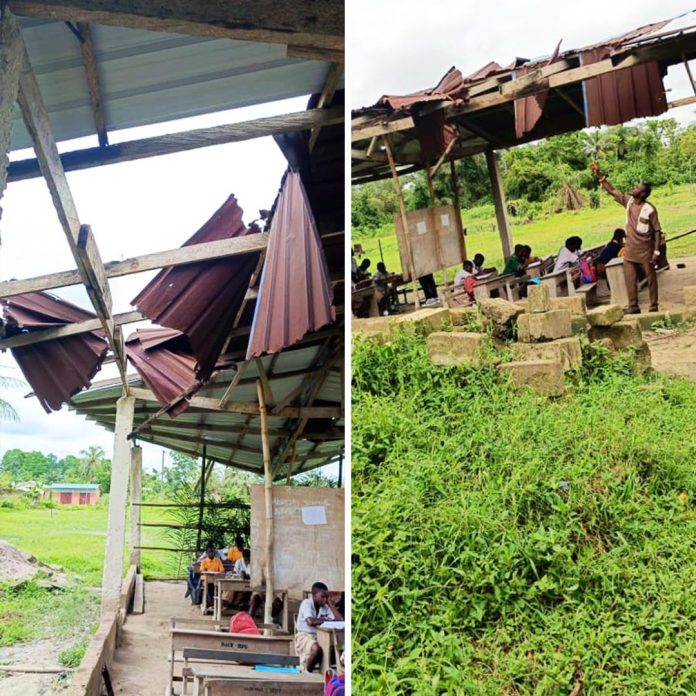
A concern parent pointing to the dilapidated structure of the school; Roofing sheets hanging loosely

An uncompleted school block which serves as classroom for pupils of Fasin, a community in the Ahanta West Municipality, is in total ruins.

The uncompleted structure, which serves both the primary and Junior High School is in total mess and at the mercy of the weather.

Looking at the condition of the school in this rainy season, there is the likelihood that it will be forced to shut down and resume when the raining season is over.

Pictures of the dilapidated school structure had already gone viral on social media.

The school structure in ruins

Assembly Member for the area, Osagyefo Stephen, told The Chronicle that he, together with the chiefs in the area, have forwarded a report to the Municipal Chief Executive (MCE) for Ahanta West, drawing his attention to the dilapidated structure of the school.

The school, he said, was started as a communal project by the Fassin community with intent to build a primary and Junior High School for the community.

Hitherto, he said, the community accessed basic education from Kwamekrom.

However, with the growing population, Fasin decided to build her own JHS block. The chief of the village donated bags of cement and packs of iron sheets to raise the structure.

But due to financial constraints, they have been unable to complete it, leaving the structure in ruins.

He said when he assumed office as the elected Assembly Member he was briefed by the chief, regarding the project. He also consequently informed the MCE about the project, when the latter visited the community.


Armah Buah buys bus to transport pupils in remote areas to school

0
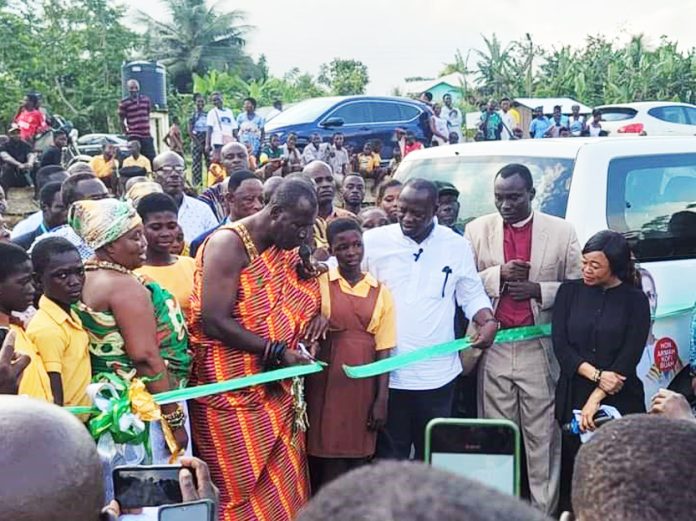
MP Armah Buah launching the Ellembelle Free School Bus Initiative

The Member of Parliament (MP) for Ellembelle, Emmanuel Armah Kofi Buah, has launched the first phase of the Ellembelle School Bus Initiative over the weekend.

The historic initiative, the brainchild of the Legislator, who is also the Deputy Minority Leader in Parliament, will see school pupils from the remote areas of the District being bussed to and from school, on daily basis.

Most of the pupils, particularly from the northern part of the District – Aiyinase, Kanokware and Nyamebekyere – trek for about three kilometres before they could join their counterparts in school.

Speaking at the launch of the initiative, Emmanuel Armah Kofi Buah indicated that pupils from hard to reach areas within the constituency had to endure the inconvenience of walking long distances to school. But with the introduction of the school bus initiative, they would be transported to their respective schools each day at no cost to them and their parents.

This would ensure that the pupils arrive on time and prepared to learn. It would also ensure effective teaching and learning.

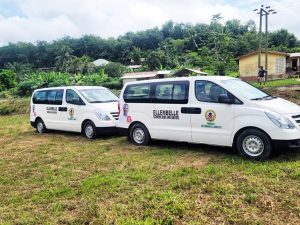
The two 12 seater mini bus

He was confident that the initiative would significantly promote pupils punctuality, enhance their overall academic performance and create a more comfortable learning environment for them.

Legislator Armah Buah who launched the initiative, expressed the hope that it would be replicated in other rural areas, to reduce the burden of pupils having to trek for longer hours to access education.

The Ellembelle School Bus initiative is in partnership with the Ellembelle District office of the Ghana Education Service (GES).

For now, MP Armah Buah has purchased two brand new 12 seater luxurious mini buses at a cost of GH¢500,000 to kick-start the initiative.

The mini bus would begin to transport pupils from Kanokware and other remote areas to Nyamebekyere, to and from, on daily basis.

Fuel, maintenance of the car as well as wages for the driver would be catered for by the Legislator.

He said as a legislator, he had identified so many other areas that he would explore with the intent to making life comfortable for the constituents.

Apart from the bus initiative, Armah Buah is the brain behind the introduction of the mobile van clinic and the motherly care in his constituency.

US aircraft carrier arrives in South Korea amid tensions with North Korea

0
F-18 fighter jet sits in the hangar of the USS Theodore Roosevelt

A nuclear-powered United States aircraft carrier has arrived in South Korea for three-nation exercises aimed at stepping up military training, days after North Korea and Russia signed a mutual defence pact.

“The US Navy’s aircraft carrier Theodore Roosevelt … arrived at the Busan Naval Base on the morning of June 22,” the South Korean Navy said in a statement. “[The aircraft carrier’s arrival] demonstrates the strong combined defence posture of the South Korea-US alliance and their firm resolve to respond to the escalating threats from North Korea,” it said on Saturday.

The carrier is expected to participate in joint exercises with South Korea and Japan this month. Pyongyang has always decried similar combined drills as rehearsals for an invasion.

The leaders of the three nations had agreed at a summit in August 2023 to hold annual military training drills. Earlier this month, their defence chiefs announced new exercises aimed at sharpening their combined response in various areas including air, sea and cyberspace.

The arrival of the USS Theodore Roosevelt strike group comes a day after South Korea summoned the Russian ambassador to protest against deal reached between Russian President Vladimir Putin and North Korean leader Kim Jong Un this week. The pact pledges mutual defence assistance in the event of war.

Putin visited North Korea for the first time in 24 years.

Credit: aljazeera.com

Road dust in rural areas is sickening children and causing development delays say medical experts.

0
Amina Seidu, mother of Ayisha with one of her children. She worries about the impact of dust on their health

Sagnarigu, Northern Region– Amina Seidu and her family were still celebrating their daughter Ayisha’s second birthday when the little girl’s health took a frightening turn. Ayisha developed a persistent cough that quickly escalated. Ayisha’s breathing became labored, and she was irritable and feverish.

“One week after Ayisha celebrated her second birthday, she started coughing, but I thought it was normal because the weather was cold too, so I bought a cough syrup from the pharmacy for her,” says Amina. “But her condition did not improve. We stayed up all night because she coughed a lot.”

After two weeks Amina finally took her child to the hospital where a doctor diagnosed Ayisha with a severe upper respiratory tract infection. Ayisha received antibiotics and nebulizer sessions, and after weeks of treatment the little girl finally improved.

But the family’s relief was short-lived. Just six months later, Ayisha fell ill again. This time, the symptoms were even more severe and required more aggressive treatment.

Doctors told Amina the family needed to take drastic action: Ayisha needed to leave their home in Sagnarigu.

“The doctor told me, ‘The dust from untarred roads in this area is too much for your daughter’s developing lungs. Every day she breathes it in, it’s making her worse,’” recalls Amina with tears in her eyes. Amina had no choice but to send her little daughter away to live with relatives in a nearby community where the roads are paved and the air is significantly cleaner than in Sagnarigu.

Communities across Ghana are struggling with illnesses caused by dusty roads but this area is being impacted more than most. Sagnarigu, Amina’s hometown, has consistently recorded the highest number of upper respiratory tract infections in the Northern Region of Ghana. Out of more than 430,000 cases reported in the region in the past three years Sagnarigu Municipality has recorded the highest number – nearly 48,000.

Dust darkens the skies around the local hospital

Road dust carries various types of pollutants into the air that, once inhaled, cause illnesses in the respiratory system, lungs and heart.

“When we inhale dust, it easily enters our bloodstream. The air we breathe contains many pathogens and germs,” says Dr Mark Abugri, director of Health Services in the Sagnarigu Municipal Health Directorate. “Our immune system and the mucous membranes in our nose usually protect us, but when these defenses are compromised, the risk of infection increases significantly.”

Air pollution is particularly dangerous to children whose small and developing systems are more vulnerable to damage from the pollutants they inhale. According to the State of Global Air Report 2024, Air pollution accounted for 8.1 million deaths globally in 2021, becoming the second leading risk factor for death, including for children under five years.

The report also foundthat in 2021, more than 700,000 deaths in children under five years were linked to air pollution, representing 15% of all global deaths in children under five.

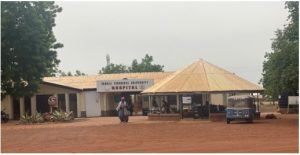
Dr Martin Atuguba, a doctor at the Tamale Technical University Hospital, says that upper respiratory tract infections are among the most common conditions treated at the hospital. He says children under five frequently present with symptoms such as runny noses, fever, general malaise, and severe cough.

Dr Atuguba says that young children have higher sensitivity to environmental pollutants like dust. Their smaller airways can become easily irritated and inflamed by fine particulate matter, leading to more frequent and severe respiratory infections compared to adults, whose respiratory systems are more developed and resilient. Untreated or repeated respiratory tract infections can be dangerous and have lifelong impacts.

“Chronic and severe respiratory infections can lead to developmental delays in motor skills, language, and social interaction, affecting the child’s overall growth trajectory,” Dr. Atuguba  bemoans. “The early years are critical for the development of a child’s immune system. Frequent infections can strain and sometimes weaken the immune system, making children more vulnerable to other diseases. Repeated respiratory infections can stunt a child’s growth and development.”

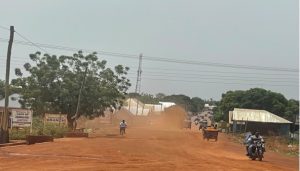
A dusty road in Sagnarigu Municipality

Dr Atuguba says he is deeply concerned about the health and long-term impacts of the road dust on the children in the community and has called on leaders to take urgent action to address the problem.

“Paving the roads would significantly reduce the amount of dust in the air, thereby lowering the incidence of respiratory infections among the community’s children,” he says.

Advocates in the community have been calling for action for a long time.

“The connection between poor road conditions and the high incidence of upper respiratory tract infections is quite significant,” says Godson Kofi Davies, a public health advocate here. “Paving roads to reduce dust generation can have a substantial impact.”

Davies also worries about long term impacts on children. “For children, inhaling fine dust can lead to asthma, bronchitis, and long-term health impacts like reduced lung function.”

In the short term he is calling for awareness campaigns to educate families like Amina’s about the danger of allowing respiratory symptoms to worsen before treatment is sought. “By the time individuals seek medical attention, the conditions have often deteriorated, leading to more severe health outcomes,” Davies says.

He also points out that dust particles often carry allergens such as pollen, mold spores, and pet dander, which can trigger allergic reactions and worsen respiratory or skin conditions in both children and the elderly.

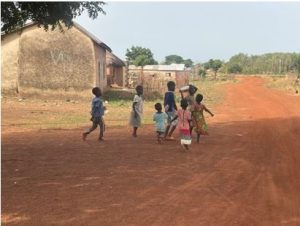
Children playing on an untarred road in the community

“Establishing a community monitoring system to continuously assess air quality and the effectiveness of interventions is essential,” he says.

Issah Baba, the Assemblyman for Sagnarigu, has been advocating for help from local and national governments. He says  the community’s population of more than 20,000 people, are exposed to severe health risks due to dust pollution. Elderly and young, more vulnerable to pollution, are suffering the worst. Many families, like Amina’s are having to make heartbreaking decisions to move family members away.

Baba says that traders operating along these dusty roads often find their goods covered in dust by the end of the day – a sign of the significant amount of dangerous pollutants they are exposed to.

The Assemblyman details ongoing efforts to report these issues to relevant authorities but he says, until now, the hugely expensive cost of paving roads here never makes it to the top of the cash-strapped government’s list of priorities. He says he is angry that remote areas of the country like Sagnarigu are left out of the government’s development agenda.

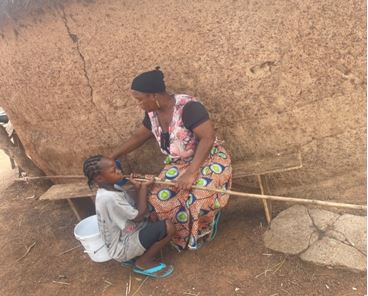
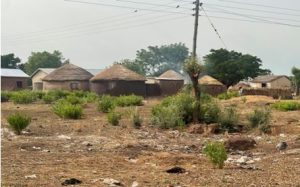
Mud houses in a dusty environment in the community

“Every time we include a lot of things in our budget, but we don’t realize that amount of money to carry out those projects,” Baba says.

In the meantime there is a lot that communities and individuals can do to protect themselves. Assemblyman Baba urges community members to adopt better environmental practices, such as stopping littering, and to follow speed limits to minimise dust generation.

This story was a collaboration with New Narratives as part of the Clean Air Reporting Project. Funding was provided by the Clean Air Fund. The funder had no say in the story’s content.

Feature: ‘Becoming the Mining Hub of Africa is Detrimental to Inclusive and Sustainable Development of Ghana’

0
Feature

In recent years, Ghana has not only emerged as a significant player in the global mining industry but has also ascended to the position of the number one producer of gold in Africa. While this development might appear to promise economic growth and increased foreign investment, the reality on the ground paints a far less optimistic picture.

The unchecked expansion of both legal and illegal mining activities has wrought significant socio-economic and environmental havoc across the nation, calling into question the true benefits of Ghana’s burgeoning status as the mining hub of Africa.

The evidence of the danger we face in working towards this goal is amply manifested in the current the state of our water bodies, forests, biodiversity, and the violations and abuses wrought on communities by mining actors.

Corruption and Illicit Financial Transactions

At the heart of the mining sector’s troubles lies pervasive corruption and illicit financial practices. The opaque processes governing the allocation of mining permits and concessions have become breeding grounds for underhanded dealings. These transactions often involve powerful elites who manipulate the system to their advantage, sidelining the interests of local communities and the nation at large.

The result is a wealth disparity where the riches generated from mining do not benefit the broader population but rather a select few. This endemic corruption undermines public trust in governmental institutions and stifles genuine socio-economic development. If left unaddressed, this perception can tarnish the reputation of even those mining operations committed to respecting social and environmental safeguards.

Displacement of Agriculture and Unwholesome Food

One of the most profound impacts of unsustainable mining in Ghana is its displacement of agriculture, particularly cocoa farming, which has historically been a cornerstone of the country’s economy. The sub-surface rights to minerals and mining often take precedence over surface land rights, leading to the expropriation of fertile agricultural lands for mining activities.

This not only jeopardizes the livelihoods of farmers but also threatens Ghana’s food security. Recent data indicates that Ghana’s cocoa yield has dropped significantly from close to 1 million tons to almost half its previous production trend.

This shortfall is projected to lead to a shortage of cocoa products, adversely affecting local processing companies and resulting in job losses. There is also the risk to our entire food systems, with farmers returning to heavy metal-exposed abandoned mining sites to grow food crops for both subsistence and the market.

Environmental Degradation

Mining activities, especially when conducted irresponsibly, have devastating effects on the environment. The deforestation and destruction of critical forests and biodiversity ecosystems are particularly alarming.

Forests and watersheds play essential roles in maintaining ecological balance and supporting life through the provision of clean air, water, and other ecosystem services. Their loss translates into long-term environmental degradation that impacts not just current residents but future generations as well.

The pursuit of transition minerals, essential for low-emissions technologies, will come at the cost of Ghana’s rich natural heritage, with forests being razed and biodiversity irreparably damaged. The enactment of  Legislative Instrument 2462 to allow government access to protected critical biodiversity hotspots exemplifies this reckless approach in our quest to become a mining hub in Africa.

Water Pollution and Health Risks

Water pollution is another severe consequence of unsustainable mining practices in Ghana. The contamination of water bodies with heavy metals and other toxins poses grave health risks to local communities. Almost all the major rivers overlapping the rich mineral belts of Ghana are polluted, diverted, or dammed.

Mining operations frequently lead to the discharge of harmful substances into rivers and streams, compromising water quality and rendering it unsafe for consumption and agriculture. This pollution has cascading effects, leading to a rise in waterborne diseases and negatively impacting food safety.

The inability of water treatment and distribution companies to manage these contaminants further exacerbates the crisis, leaving many communities without access to safe drinking water. The documentary by Erastus Asare Donkor, “Poisoned for Gold,” is instructive if we truly prioritize the health and wellbeing of citizens.

Recent incidents have highlighted the health risks associated with exposure to contaminated food and water. Heavy metals such as mercury and lead, commonly found in mining runoff, accumulate in the food chain, affecting not only immediate consumers but also future generations.

Chronic exposure to these toxins can lead to serious health conditions, including kidney problems caused by mercury, neurological disorders, and developmental issues in children, posing a significant public health challenge.

Impacts on Climate Mitigation Initiatives

The accelerated, unsustainable mining has significantly affected Ghana’s ability to achieve results under Ghana REDD+ initiatives, particularly the Ghana Cocoa Forests Emissions Reduction Program (GCFRP).

This initiative, aimed at reducing emissions from deforestation and forest degradation, has struggled to meet its objectives due to large scale deforestation and forest degradation in the ear-marked emissions reduction area, resulting from mining encroachment.

The government’s active sponsorship of accelerated mining coupled with lapsed compliance and enforcement as well as the introduction of community mining, has resulted in the displacement of numerous non-mining related jobs and environmental goods and services, undermining efforts to promote non-consumptive utilisation of forest and environmental assets, combat climate change and protect biodiversity.

It’s as if the assumption is that the mined gold can somehow replace the water, carbon sinks, and biodiversity that are being lost, which is a dangerously flawed notion fueled by greed.

Associated Community Rights Violations

Another critical issue associated with the increasing mining agenda is the blatant abuse of community and citizens’ rights to a healthy environment, sometimes with direct support from government actors. There has been a deliberate weakening of regulatory mechanisms that would ensure adherence to business and human rights principles.

Respecting human rights in the extractive sector is further hampered by the absence of Free, Prior, and Informed Consent (FPIC) as a key governing policy and legal framework for concession allocation.

Additionally, certain provisions in Ghana’s minerals and mining legal framework give precedence to mineral rights over surface rights, such as cultural, water services, and land use. This legal imbalance exacerbates community disempowerment and environmental injustice.

Socio-Economic Impacts

The socio-economic impacts of mining extend beyond environmental and health concerns. Mining communities often experience a decline in quality of life due to the influx of mining activities. Traditional livelihoods are disrupted, leading to unemployment and social instability. Additionally, the promised economic benefits of mining, such as job creation and infrastructure development, often fall short of expectations. Instead, these communities face with high cost of living and deteriorating living conditions, inadequate compensation, and a lack of meaningful development.

The Way Forward

Given these myriad challenges, it is clear that the current trajectory of Ghana’s mining sector is unsustainable and detrimental to the nation’s long-term prosperity. To mitigate these adverse effects, Ghana must adopt a more sustainable approach to mining. This should involve:

  • Urgently reviewing the legal framework for mineral governance in Ghana to prioritize FPIC and grant communities the right to accept or reject mining activities.
  • Implementing stringent regulation and oversight of mining activities, ensuring transparency and accountability in the allocation of mining permits, and prioritizing the rights and needs of local communities, with a mandatory polluter-pay obligation for actors in the mining sector.
  • Establishing an unambiguous legal framework setting boundaries, limitations, and no-go areas for mining in Ghana that prioritize the protection of water bodies and watersheds, forest reserves, biodiversity havens, and culturally sensitive areas. LI 2462 must be repealed with immediate effect.
  • Adhering to and complying with existing legal frameworks on environmental impact assessments without political or elite capture and interference.
  • Ensuring full compliance with the Minamata Convention to safeguard our environment against the unregulated use of mercury within our mining sector.
  • Investing in sustainable agricultural practices and supporting farmers to enhance food security.
  • Rehabilitating degraded mining sites and preserving forests and biodiversity to restore ecological balance.
  • Addressing water pollution issues by enforcing the buffer zone regulatory policies and legal frameworks, while also embarking on an aggressive state led action to restore and protect our rivers and water bodies to guarantee citizens access to clean and safe water.

In conclusion, the quest to become the mining hub of Africa will not ensure our collective prosperity; instead, it will exacerbate climate risks, food insecurity, wealth inequalities, and environmental pollution and degradation. We need to rethink our approach and consider intergenerational equity, no matter how obsessed we are with mining. It is time for Ghana to strive towards a more balanced and sustainable future that benefits all its citizens, both now and for generations to come.

By Daryl Bosu

For inquiries, Contact:

Daryl Bosu

Email: daryl.bosu@arocha.org

The Ghanaian Chronicle