Home Blog Page 1417

Feature: When a Thief is Being Pursued, Thieves Join in the Pursuit So, What Happens to a Failing State Asset?

0
Feature

Today, Tuesday of June 25, 2024, the president of the republic will meet union leaders to deliberate over the sale of SSNIT hotels shares. If it is possible, both parties should read this feature article before sitting down to discuss issues. I will want to talk about, failed/failing state assets and the history of sale of state assets

Failed/Failing State Assets: The socialists believe strongly that everything must belong to the state. To them that is the only way the economy of the nation will grow. Blinded by obsession, they fail to recall events from the first republic where state assets yielded losses to the detriment of the economy.

There was the State Farms, which were poorly managed by the workers and administrators alike. In the end while a lot was pumped into the farms to prove that socialism and national ownership were the best options, the funds just went down the drain. When they get to work, workers used farm equipment and inputs to cultivate their own farms nearby, instead of working on the state farms.

In all this, the only sector that yielded good results and earned the country handsome revenue was the cocoa industry, which was and still is, a private industry.

Many state assets fail, due to management or staff or both. In the event that a junior staff does something wrong and warrants disciplining, the union will rise up in protest and solidarity. On every May 1, Workers’ Day, we never hear the head of the TUC, rebuking workers for unprofessionalism, but rather he will make demands on government to always hold the worker high. This aspect of production, which is labour, which may be full of uncommitted workers can help reduce productivity and no one cares, because at the end of the month, salary will come.

Workers in state institutions can report to work late and leave earlier than they should. The excuse is, they did not get vehicle in time, that was why they came late and, in the evening, they have to close an hour or two early, less they get home late. Work time is for gossiping and working lotto, including pilfering things at work and these bring down productivity. Dare management to bare its teeth and the union will be up in arms because the work does not belong to anyone’s father. It is for abanand everybody is aban.

These are contributing factors which make state organisations fail. Such behaviours cannot be accepted in the private sector.

The talk about assisting state entities, even if they are failing, I recall some decadesago, the government mandated Agriculture Development Bank to finance the state’s Ghana Oil Palm Development Corporation. Records showed that the corporation was failing and yet, the bank had to continue to pump in more money which went down the drain.

We once had the Omnibus Service in Ghana, when its buses get broken down they were left as scraps. One patriotic Ghanaian bought the non-functioning buses and repaired them here in Ghana and put them back on the road to ease transportation stress in the capital. That was when King of Kings was born.

Why those buses could not be repaired by Omnibus Services, tells us that work attitude in a state own establishment is far different from that of the private sector. While the state sector looks at the only the unjustifiable welfare of workers, the private sector looks at productivity and profit generation.

I believe in the saying that, government has no business in business. When any state asset is failing, it must be sold off with the first offer made to Ghanaians who will be mandated to make it operational. Government can also invite the private sector to form a partnership and leave the running of the establishment to the private partner, while it supervises administration.

Those screaming madly against the sale of shares of SSNIT hotels, should first consider whether it is proper to keep pumping state funds and resources into an establishment who constantly records losses or to sell it off to generate funds to invest in profitable ventures.

Suggestions are flying around about how to resolve problems in state establishments; like laws must be implemented to check negative conducts of workers and other weird suggestions. It is as if such people do not know what working in state establishment is about.

There is a demon of irresponsibility which seems very difficult to exorcise in such establishments.No matter how many changes are made, if such a demon is there, there is nothing to do but to close shop.

The questions are, what should be done if a state enterprisecontinues to flop? Should state funds be committed to it?

The state must relieve itself from businesses because when they fail, it is the taxpayers’ money, which should have gone into proper use, that would be poured down the drain, seeking to uphold the dignity of the nation.

It is about time, the finance minister renders account to us, of all state establishments, their performance, returns and how much the state spends on them. It will be then that we shall know what unpardonable wastage, the state and government is making.

SSNIT for example was established to collect contributions from the worker, so that at the end of his working life, the Trust, will pay him monthly pension. One might think that SSNIT, a financial institution will only invest in the money market, but it went in full time competition with major players in the health delivery, real estate and hospitality sectors.

Earlier SSNIT went into banking, where it was doing quite well until, the NDC sold off its Social Security Bank. Perhaps, if only SSNIT, a financial institution,was allowed to be only in the financial sector, it will not have problems, now. It looks like SSNIT is failing in its line of investment and may soon be closed down.

This is so because, recently we were told by SSNIT that in the not-too-distant future, it will not be able to pay pensions again. Then what will happen to it? Sell the Trust to a private investor or close shop and shut down completely? What happens to the Ghanaian worker and his pension?

This is what should alarm Ghanaians and give us a wake-up call. What is exactly going on in SSNIT? How is it managing workers’ funds? How is it managing its’ investments in sectors it has no line of business in? Maybe, this sale of shares of SSNIT hotels, is just an opening of more things to come, as the Trust is dying slowly. This should be the concern of Ghanaians.

A Short Account of Sale of State Assets:

Prof. Stephen Adei once noted that“the immediate post-colonial economy era in Ghana was characterized by high levels of government ownership of enterprises, high levels of economic regulation, and explicit suppression of financial markets and exchange. This trend continued for most parts of the 1960s, 1970s, and early 1980s when Ghana began to change course with the adoption of the Structural Adjustment Program. Most of these programs included the transfer of state enterprises into the private sector”.

In 1983, the PNDC Government launched the Economic Review Programme and passed the Divestiture of State Interest (Implementation) Law, 1983(PNDCL, 326), which came into force on January 1,1988, to divest, thus by the State, of any of its interests in any statutory corporation or any corporate body incorporated under the Companies Code, 1963 (Act 179) or under the Incorporated Private Partnership Act, 1962 (Act 152). The express intent was to dispose of loss-making state enterprises. But was that really the case?

Off, went under the hammer, and Ghacem Cement, Ghana Telecom, Nsawam Cannery, Kanda GNTC, Atlantic Hotel, Meridian and Star Hotels, Abosso Glass Factory, Continental Hotel (Sold to Golden Tulip), West Africa Mills Company, Tema Steel Company, Ghana Agro Food Company, GIHOC Bottling, Gliksen W/A Company and Ghana Oil Palm Development Company, among others, were sold to those in the corridors of power, their close links and associates and foreign entities.

We never had the socialists protesting as they are doing today.

In the banking sector, the state-owned Social Security Bank, managed by SSNIT, and which was one of the profit-making banks at that time was sold to the private sector, with the state first shedding off, 20% of its shares in 1995 and by 1999, the state had only 28%, today, SSNIT has only 19.4%.

In the case of Bank for Housing and Construction, it made a profit of ¢3 billion in 1999 and had a deposit base of ¢86 billion when in January 2000, it was liquidated. Its prime assets, including lands at the east of Achimota forest were sold at cost of three pieces of agbelikalaklo. There was no reason for liquidating a bank of such good standing except for the intent of targeting its assets.

All these happened in a constitutional era and no socialist took to the street to protest.

The saddest is the case of Ashanti Goldfield which as at 1994 was the second largest gold producer in Africa and among the top ten in the world. Ghana then had 55% shares holding the trump card in all final decision making. In 1994, the NDC sold off Ghana’s 30% shares for $400 million and went on to sell the remaining 25%, leaving Ghana without any share in our gold.

Where were the socialists when the NDC government was given away our hens that laid golden eggs? And yet today, when SSNIT who had announced that in the not-too-distant future itwill fold up business, is selling shares in some of its non-profit making hotels, these cowards and hypocrites are out there shouting foul, just for political reasons.

I will always say, that “when a thief is being pursued, thieves will join in the pursuit.”

Those screaming today, must explain why they made no sound or cry when state assets were sold by the PNDC and NDC.

Hon. Daniel Dugan

All to play for in Group D, as France host Poland

0
Kylian Mbappé, France

It’s still all to play for in Group D on the final match day, with the top three separated by just a point. Sat on four points and knowing a draw will be enough to secure a top-two finish, France are in a good position as far as advancing goes, but with finishing top theoretically offering an easier route through the knockout stages, they’ll be kicking themselves they couldn’t beat their nearest rivals, the Netherlands.

France could still do enough to finish top on this final day if they can either better the Netherlands’ result or score in their game against Austria. Heaping yet more final day misery on France would serve as no more than a consolation prize for Poland, who are already eliminated from the competition.

The lack of game time for record appearance holder and goalscorer Robert Lewandowski hasn’t helped their cause, but it’s been second half collapses that have proved fatal to Poland in Group D, with both of their two defeats being decided by goals after the hour mark.

The omens don’t look good for signing off on a high either, as the Poles have lost three of their last four group stage finales at the European Championships. With all three defeats coming in tournaments they exited at this stage, history would suggest a fourth will swiftly follow, and given they’re without a Head to Head win against France since 1982, it’s hard to find many sources of inspiration for Poland.

Credit: flashscore.com


No Politics Please, I Want Accra To Be Clean …says Ga Mantse as he launches Homowo clean-up exercise

0
Ga Mantse addressing the gathering

His Royal Majesty, King Tackie Teiko Tsuru II, Ga Mantse, has suggested the closure of all shops in Accra on Tuesday July 2, 2024 to ensure massive participation in the Homowo Clean-Up exercise.

According to him, the clean-up exercise should be devoid of politics because a filthy environment and subsequent contraction of various sicknesses has no political boundary.

“We expect all shops and businesses in the designated area to close on the day of the exercise. We also urge leaders of various groups and associations to participate fully,” the Ga Mantse said,   at the launch of the exercise in Accra last week Friday, June 21, 2024.

Dr Siaw Agyapong, CEO of Jospong Group sitting among the chiefs

The one-month campaign themed: “Let’s Keep Accra Clean”, aims to promote good waste management practices, improve environmental cleanliness and instil a sense of community ownership and responsibility towards environmental stewardship.

The exercise, a collaboration between the Ga Traditional Council (GTC), government ministries, local government authorities, traditional leaders and waste management giant, Zoomlion Ghana Limited, will take place in all the 25 local government authorities within the Greater Accra Region.

It will involve household registration for organised waste collection services, education on waste management techniques and enforcement of bye-laws to ensure compliance with waste management regulations.

The Ga Mantse warned against the politicisation of the exercise, emphasising that environmental cleanliness affects everyone regardless of political affiliations.

He urged all residents to adhere strictly to sanitation bye-laws, clean their frontages, gutters, and premises, and called for the reintroduction of communal labour and intensified public education on sanitation.

He also issued a stern warning to those who refuse to comply with the sanitation bye-laws, stating that a special task force would be deployed to arrest offenders and ensure they face the full force of the law.

“The Assemblies should also take up their responsibilities by making refuse bins available and at vantage points,” he urged.

Ga chiefs present at the event

He announced an exciting twist to the clean-up campaign—sanitation competitions, stating that schools, communities, markets, and lorry stations will vie for the top spot, with awards up for grabs for the cleanest.

These awards will motivate participants to go the extra mile, fostering a spirit of friendly competition and community pride, he said.

To this end, King Tackie Teiko Tsuru II took the opportunity to issue a rallying cry to corporate institutions in the capital, urging them to embrace sustainable practices and green policies that prioritise environmental wellbeing.

In a show of support, collaborating government ministries pledged their resources and expertise to ensure the initiative’s success, demonstrating their commitment to a cleaner, greener Accra.

Accra’s Mayor, Elizabeth K.T. Sackey, sounded a clarion call for change, decrying the city’s persistent poor sanitary conditions.

She emphasised that a clean environment was pivotal to safety and security, and praised the Ga Mantse’s involvement, saying, “His Majesty’s participation underscores the gravity of this issue and the collective responsibility we must embrace to create a cleaner, healthier Accra for all.

She vowed that the AMA will spare no effort in ensuring the clean-up exercise was a resounding success, leaving no stone unturned in the quest for a cleaner, greener, and healthier Accra.

Deputy Minister of the Ministry of Local Government, Decentralisation and Rural Development (MLGDRD), Vincent Ekow Assafuah, praised the Ga Mantse’s leadership, acknowledging his invaluable contributions to Accra’s cleanliness.

He observed that the Homowo festival was not “merely a celebration, but a poignant reflection of our cultural heritage, deeply rooted in the values of cleanliness and community pride.”

The invited guests who attended the programme

For her part, the Minister of Sanitation and Water Resources (MSWR), Lydia Seyram Alhassan, said her ministry was fully equipped and ready for the clean-up exercise.

She revealed a formidable arsenal of resources, including 30 compaction trucks, over 30 tricycles, thousands of Wellington boots, 15,000 security personnel, a dedicated task force and environmental health officers tasked with enforcing sanitation bye-laws.

She urged every citizen in Accra to join forces and play an active role in making the campaign a resounding success.

Greater Accra Regional Minister, Daniel Nii Kwartei Titus-Glover, commended his predecessor’s efforts and expressed gratitude to the Ga Traditional Council (GTC) for reviving the ‘Keep Accra Clean’ campaign.

He noted that the exercise would be implemented in phases, with the first phase set to launch on July 2, 2024 in the Accra metropolitan area.

“We have mobilised resources, and forged partnership to ensure the success of the clean-exercise,” he assured.

The Minister of Environment, Science, Technology and Innovation (MESTI), Ophelia Mensah Hayford, endorsed the initiative, noting that it would foster a cultural shift towards environmental stewardship, where community members take ownership of their surroundings and work together to protect and preserve the beauty and health of their environment.

Dome, Kunsu market traders: ‘No Frema, No Vote’

0
A market queen at Dome declaring support for Frema Osei-Opare

Traders from the Dome Market in Accra and the Kunsu market in the Ahafo Ano South West district in the Ashanti region, last Friday, simultaneously appealed to the New Patriotic Party (NPP) hierarchy to consider a Bawumia-Akosua Frema Osei-Opare ticket for the upcoming presidential election.

Kunsu Traders shouting “No Frema, No vote”

They praised Mrs. Frema Osei-Opare for her contribution to women empowerment and socio-economic activities to grow both the local and national economy.

Chanting refrains of ‘No Frema, No Vote’ the traders at Dome indicated their preference for the Chief of Staff to partner Dr. Mahammud Bawumia.

The over 100 traders explained their declaration and support for the chief administrator at the Jubilee House, in the fact that she exudes grace and competence in attitude and work, which qualities make her best  suitable to partner the flag-bearer.

They also referred to the benevolent acts of the Chief of Staff at the Presidency and her contribution to the growth of the party, which has benefitted women, particularly traders, at the various markets across the country.

The current state of Kunsu local market

Madam Angela Asiamah, one of the traders, said the market women and traders have enjoyed social interventions by the government and were convinced that Madam Frema Osei Opare could help the NPP to win a third term in government.

Madam Ama Wiredu, another trader at the market, described the Chief of Staff as competent, caring and sympathetic, and was confident that her candidature would benefit all Ghanaians.

Their support for Madam Frema Osei Opare, Madam Wiredu said, emanates from the setting up of most people, especially traders, in business as well as empowering the youth to become employable, for which they want her named as Dr. Bawumia’s running mate, to ensure a massive NPP victory on December 7.

At Kunsu, the traders pleaded with Dr. Bawumia to consider selecting a female running-mate and clamoured Mrs. Akosua Frema Osei-Opare name as their preferred choice.

Mr. Elvis Ofosu Kwartey, a spokesperson for the traders said Mrs. Osei-Opare has a listening ear, motherly love and also is a philanthropist.

She also helps them in their trading activities and has also aided other markets nationwide in dire moments.

Madam Akosua Afrakomaa, another trader, said she believes it is through the benevolence of the Chief of Staff that the Kunsu market could be upgraded.

Madam Afrakomaa noted that it is within the powers of the Chief of Staff to even construct a new market for the people of Kunsu and its surrounding communities, and pleaded with the flagbearer to consider Mrs. Osei-Opare, who is known to have made significant contribution in the rehabilitation of the burnt Race Course market in Kumasi.

“It is high time the female population is sufficiently represented in government to give real meaning to the Affirmative Action Bill, a proposed Legislation that seeks to provide gender parity in Ghanaian politics and increase women’s participation in decision making positions that at least 40% of public offices be reserved for women.

Unit Committee member Ampadu Obeng Hene complains of poor conditions at the market

A Unit Committee Member of the Kunsu Electoral Area, Nana Ampadu Obeng Hene, explained that the current state of the Kunsu market, which serves traders from 38 towns within the Ahafo Ano South West District, Kumasi, Tepa and Nkawie makes it necessary for a new market to be built to accommodate traders and save them from the scorching sun and rains.

He said Mrs. Osei-Opare is known to provide a relief for women, particularly traders, to help build a solid social unit for nation building.

YEA rolls out Biz & Employment Assistance program for 1,452 businesses

0
Mr Kofi Agyapong interacting with some of the beneficiaries

The Youth Employment Agency (YEA) has announced the successful roll out of its Business and Employment Assistance Programme (BEAP) with 1,452 businesses aimed at bolstering Ghana’s economic recovery post-COVID-19, the management of Youth Employment Agency (YEA) has rolled out its Business and Employment Assistance Programme (BEAP) with 1,452 businesses.

The programme is aimed at supporting 10,000 Small and Medium Scale Enterprises (SMEs) and startups severely impacted by the Covid-19 pandemic.

The 1,452 businesses constitute the first phase of the BEAP initiative as more businesses will be added every month.

Mr Kofi Agyapong stressing on a point at one of the interactive sessions

In its effort to sustain the initiative, BEAP commenced payments to the 1,500 beneficiaries verified under the programme.

These individuals have been strategically placed within various sectors such as chop bars, pharmacies, and schools, receiving vital salary support amidst ongoing economic challenges.

The disbursement of payments to the first 1,500 verified BEAP beneficiaries marks a significant milestone in YEA efforts to alleviate unemployment and support struggling enterprises.

The programme, offering GHS 500 per recruited employee with additional employer contributions, aims to mitigate financial strains faced by businesses highlighted in a recent survey by the Ghana Statistical Service.

BEAP not only provides a lifeline to SMEs, but also aims to foster employment opportunities across Ghana, targeting a total of 20,000 beneficiaries as part of its broader initiative.

The YEA remains committed to utilizing sustainable funding from the Communication Service Tax exclusively for job creation and economic empowerment initiatives.

In addition to BEAP, the YEA has been instrumental in various employment and skills training programmes, collaborating closely with state agencies to enhance community services, health care, and vocational training opportunities.

Targeting various establishments such as chop bars, pharmacies, schools, and more, BEAP strives to alleviate the financial burden on these enterprises while bolstering employment opportunities for Ghana’s workforce.

The plans is to support 10,000 companies, facilitating the employment of approximately 20,000 individuals.

In 2022/2023, the government of Ghana through YEA recruited:
• 15,000 Community Protection Assistants working with the Ghana Police Service.
• 6,000 Community Health Workers working with the Ghana Health Service,
• 1,500 Prison Office Assistants working with the Ghana Prisons Service,
• 4,000 workers on the Cocoa Rehabilitation Programme.
• 5,000 Insurance Agents for the National Insurance Commission with base pay.
• 13,000 direct jobs secured through the YEA Job Centre
• 2,000 dressmaking trainees undergoing apprenticeship training with GHC500 monthly support.
• over 30,000 entrepreneurs trained by both the National Entrepreneurship and Innovation Programme (NEIP) and the Ghana Library Board with support for set-ups,
• 2,000 young people trained by the Accra Digital Centre in Basic and Advanced IT skills.
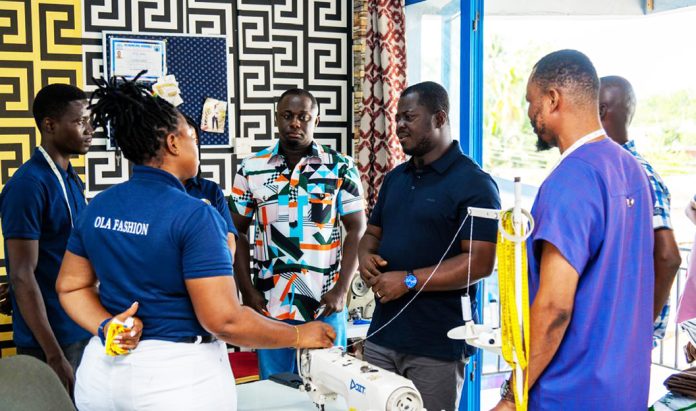
• Currently, YEA is recruiting another 20,000 young people to be trained and set up in 10 different trade areas being – carpentry, masonry, plumbing, hairdressing, beauty care, auto works, General Electricals, Plaster of Paris (POP), Steel Works, Welding and Fabrication and Painting. All arrangements have been made for training to start next week.
• 45,000 Sanitation Module beneficiaries
• financial support to over 500 dress makers and 40 large garment companies

YEA initiatives impacted various sectors, including community services, health, entrepreneurship, and vocational training, experienced substantial growth, offering a beacon of hope for Ghanaian youth seeking stable employment and entrepreneurial ventures.


Editorial: Keeping BECE Candidates In Suspense Should Not Happen Again

0
Editorial

As the West African Examination Council (WAEC) and the government trade accusations and counter accusations over the release of funds for this year’s Basic Education Certificate Examination (BECE), the Majority Chief Whip, Frank Annoh-Dompreh, has told his colleagues in Parliament that an amount of GH¢80 million has been released by the Finance Ministry for the conduct of the exams.

But a Graphic Online report says WAEC has received only GH¢47.125 million from the government, contrary to the GH¢80 million announced in Parliament by Frank Annoh-Dompreh. Even the said GH¢47.125 million is yet to officially hit the account of the examination body.

Prior to this latest development, uncertainty was hanging over the conduct of the 2024 Basic Education Certificate Examination, as GH¢95.83 million needed to organise the examination had not been released by the government.

However, as we are being told, WAEC has now received GH¢47.125 million out of GH¢95.83 million required to successfully facilitate the exams. The examination is scheduled to commence early next month.

Though the release of the GH¢47.125 million to WAEC is a commendable step taken by government, the positive development is marred by the prolonged uncertainty and psychological stress inflicted on students, parents and educators. This is due to the government’s delay in responding to WAEC’s financial needs.

Also, the psychological stress of potentially having their exams postponed or canceled is not to be underestimated. This stress affects not only their academic performance, but also the overall well-being of students. This is the reason why government should not delay in future when it comes to release of funds for the final exams.

Although, Mr. John Kapi, the Head of Public Relations at WAEC, had earlier expressed fears that the examination might not proceed if the funds were not released promptly, we believe the latest release should help alleviate that fear.

In our view, education, a cornerstone of national development should never be left at the mercy of financial uncertainties, as the country has just experienced. It is essential that the government prioritises timely and adequate funding for educational institutions and programs.

The late release of funds will surely have practical implications beyond psychological stress, as WAEC may have to resort to expensive airlifting of examination materials. This situation is unsustainable and underscores the need for proactive financial planning and management.

As we indicated earlier, the government must learn from this experience and take concrete steps to prevent such crises in the future. Ensuring that WAEC and other educational bodies receive timely and sufficient funding should be a non-negotiable priority. This requires not only prompt action when issues arise, but also a robust financial management system that anticipates and addresses potential problems before they escalate.

Additionally, transparent communication is crucial. The discrepancy between the announced GH¢80 million and the actual GH¢47.125 million received by WAEC needs clarification. Transparent and accurate communication builds trust and ensures that all stakeholders are well-informed.

Moving forward, the government must prioritise education funding and implement reforms to ensure that such delays do not occur again. The future of our students and the integrity of our educational system depend on it.

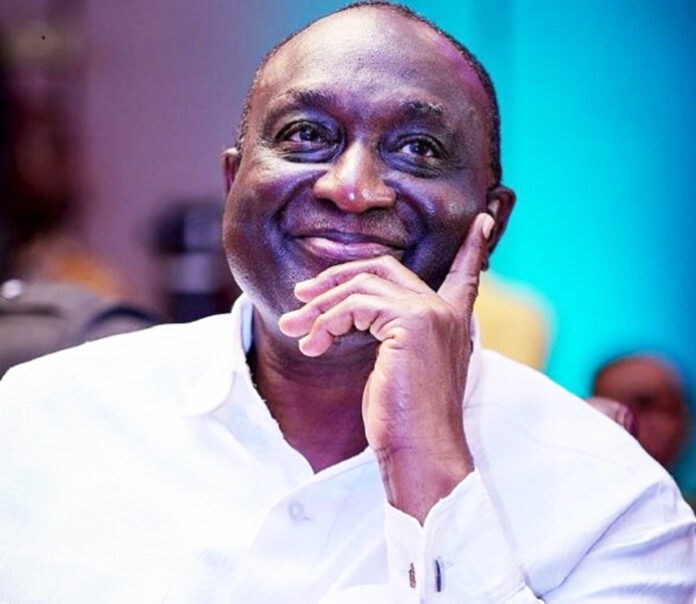
Alan Kwadwo Kyerematen On Taxes

0
Mr Alan Kyerematen

I stood at the cashier till in the Junction Mall, Shoprite supermarket, watching on as Mercy, the salesgirl was scanning my purchases and recording the prices, after which I would be presented with my bill.

When she got to the last item, the machine was not picking the cost and looking on the screen it looked like I was going to pay less than GH¢280.00. After the last item was locked in, my bill leapt to GH¢308.64. As we are in an era of protests, I protested.

To cut a short story shorter, I demanded there should be a re-run and Mercy who looked very calm and composed, with an okay from her supervisor, started the process all over again and arrived at GH¢308.64. A gentleman as I am, I humbly apologised to Mercy whowas so merciful, accepting my apology, whole heartedly.

When I got home, I wanted to find out where I erred and embarrassed that beautiful, calm and humble salesgirl, called Mercy. And what I found out shocked me. The actual cost of the items I bought totalled GH¢253.19 and then the taxes followed. There wasGetFund (2.5% or GH¢6.33); NHIL (2.5% or GH¢6.33) and Covid (1.0% or 2.53). These totalled GH¢15.19 and when added to the GH¢253.19 the total came up to GH¢268.38.

Now walks inVAT with 15% or GH¢40.26. So, in total my bill arrived at the cool GH¢308.64. And I was in the shop thinking that beautiful Mercy was scamming me. Once again, Mercy of Shoprite Junction Mall, I am so, so sorry, find it in your sweet heart to forgive me.

But why was the VAT not worked on the value of the items, but rather on the cost of the items and other taxes? It would have cost me, GH¢37.98 and not GH¢40.26.

Taxes since the biblical times of Jesus were never favoured and tax collectors were branded evil ones. During those times,tax collectors would add on, any amount to the tax and when paid, they would deduct it as their remuneration. This made them extremely rich.

In this day and age, Ghanaians are complaining about taxes and there is justification for this. For if your shopping cost you GH¢253.19 and total taxes added on,is GH¢55.45, there is cause for protest.

On the other hand, taxes form the largest source of revenue for government and must not be ignored. Without taxes there will be very little internally-generated funds and government will rely solely on foreign and internal loans

With high taxes, there is the law of diminishing returns government. Government may target say GH¢100 billion from taxes for development and so increases the tax rates or introduces new taxes or both. With the people already poor, government will not achieve its target. And this is the situation in a country like Ghana. For example, if numerous customers decide not to go to Shoprite anymore, but patronise the corner shops, government will lose out, here.

And one thing is that taxation in Ghana is saddled on a few groups of people, made up mainly of companies that are registered under the Ghana Revenue Authority (GRA), imported goods and public and state workers. The burden on them is so huge as they must provide the bulk of revenue for government and the state.

On importation of goods for example, there are twenty-two different taxes apart from VAT, which add up to 65% of the value of the imported item. This is outrageous. And Alan Kwadwo Kyerematen who is well vested in governance, has promised that he will eliminate some of the taxes, merge some and in the end make importation less burden with taxes, when elected into office.

He emphasised that government must create an enabling environment for the private sector-led growth is our desire for transformation will not elude us.

In another groundbreaking and innovative approach, Alan intimated that a government under his leadership will shift from the current heavy reliance on indirect taxes to direct taxes.

“I will ensure a recalibration of the existing tax regime structure to optimize revenue mobilization from direct taxes (personal and corporate), and reduce over-reliance on indirect taxes (import duties, levies, and charges) to make the corporate sector more competitive and profitable.” He stated.

The ordinary Ghanaian may not understand what Alan is saying, but the traders do and if Alan, as president, is able to do what he is saying here, the ordinary Ghanaian will feel the positive impact in life.

One other way, to eliminate the burden of taxation, is to spread the tax net. Everyone in any form of business, except farming, must be made to pay tax. Those down the ladder, like hawkers, food vendors and other very small-scale businesses must be given a fix rate of between GH¢1.00 to GH¢10.00 a month, or a bulk payment of between GH¢10.00 to GH¢100.00 a year.

Digitalisation must be enhanced to make payment of taxes, electronically. In that way money will flow directly into state coffers, instead transiting in the tax collectors’ pocket, where some of the money will take up permanent residence.

With the tax net spread to cover all forms of businesses, except farming, and Alan’s reduction of taxes, every Ghanaian will gladly pay his or taxes and the country will get more than enough revenue.

By Hon. Daniel Dugan

The views expressed in this article are the author’s own and do not necessarily reflect The Chronicle’s stance.

Ejura Traditional Council cuts sod for New NHIA Office Complex 

0
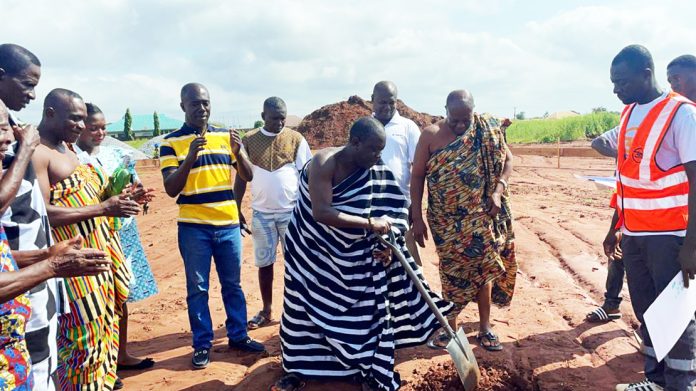
Nana Odiasempa Antwi, Krontihene of Ejura performing the ground breaking ceremony

The Ejura Divisional Council has performed a ground breaking ceremony for the construction of a new office complex for the National Health Insurance Authority (NHIA) in the Ejura-Sekyedumasi Municipality.

The new office complex would help bring NHIA services closer to the people, while improving quality healthcare delivery and jobs for residents.

Odiasempa Antwi, the Krontihene of Ejura Divisional Council, who led the contractors, officials of the NHIA and other stakeholders to perform the ceremony for the project, on behalf of Ejurahene, commended the government and the NHIA for their efforts in providing health insurance services to the people.

He expressed his excitement about the new office and assured the contractor that the Divisional Council, led by Barimah Osei Hwedie, would provide all the necessary support for the swift completion of the project.

The project is expected to be completed in eight months.

Nana Agyei Abotate, the Gyaasehene of Ejura Divisional Council assured that the traditional council would always monitor the project to ensure that the contractor is working within the time.

The Site Manager for the construction firm, in charge of the project, Mr. Owusu, said the project would have five offices, six washrooms with two dedicated for physically challenged persons.

He indicated that all materials needed for the project are readily available.

He expressed his gratitude to the chiefs and residents of Ejura for welcoming the firm with open arms and called for continued support to ensure the smooth completion of the project.

Rotary Club of Kumasi plants 2,000 trees to protect Barekese Dam

0
Members of Rotary of Kumasi and Staff of GWCL at the Barekese Dam site

Rotary Club of Kumasi and Rotary Club of Kumasi Central under formation in Kumasi, in collaboration with Ghana Water Company Ltd. planted over two thousand (2000) trees in the buffer zone of the Berekese Dam, to set up a Rotary community corps in protecting the forest from encroachers.

The Rotary club of Kumasi has promised to procure drones to enable them to monitor the activities of the encroachers.

Members of Rotary of Kumasi planting trees at the Barekese Dam

Nana Effah Mensah, the President of the Club explained that they decided to move in swiftly to salvage the situation, after the Club was briefed about the devastating effects of the illegal activities on the buffer zone of the dam.

He stated that they were alarmed by the situation, after the authorities of the GWCL updated members on the current situation of the dam.

According to him, they realised that if they do not also come in, water distribution in Kumasi and surrounding areas will be disrupted anytime and that could lead to a water crisis.

He disclosed that, as a result of the activities of encroachers, the forest cover that is supposed to protect the catchment area has been reduced drastically, which resulted in reduction of water volume in the dam.

Mr. Effah Mensah assured of the Club’s commitment in collaborating effectively with the Ghana Water Company Ltd. to nip the activities of the encroachers, who are mostly farmers and illegal chainsaw operators in the bud, to prevent the dam from pollution and shrinking.

The Rotary Club of Kumasi is the second-oldest Rotary club in Ghana. It is an association of business and professional leaders who strive to promote goodwill, peace and understanding around the world by performing community service and promoting ethics, an organization that is neither political nor religious.

The Ghana Water Company Limited (GWCL) has, on numerous occasions, sounded the alarm bells on the destruction of the forest cover that protects the dam and, thereby, exposing the reservoir to evaporation.

The alarm bells caught the attention of the Rotary club of Kumasi, which has laid down measures to help protect and reclaim the depleted forest around the Barekese dam enclave.

Prof Rita Akosua Dickson Gets Second Term as KNUST VC

0
Otumfuo Osei Tutu II, Chancellor congratulating VC Prof. Rita Dickson

The Vice Chancellor (VC) of the Kwame Nkrumah University of Science and Technology (KNUST), Prof Rita Akosua Dickson, has secured a second term, following her initial appointment four years ago.

The Office of the Institution’s Registrar announced the decision taken by the University Council in a communiqué on Thursday, June 20, 2024.

Prof. Rita Akosua Dickson – Tenure renewed as VC

She will now lead the university in the delivery of quality education for the next two years, with her appointment expiring on July 31, 2026.

“It is announced for the information of Members of Staff, Students, the entire University Community and the General Public that the Council of the University at its 22nd (Regular) Meeting held on Thursday, June 20, 2024 approved the recommendations of the Committee set up by the Council to evaluate the application for renewal of appointment of the Vice-Chancellor for a second term of two (2) years.”

The initial appointment of Prof Dickson was due to expire July 31, 2024, however, the renewed appointment takes effect on August 1, 2024.

Mrs. Dickson is a Professor of Pharmacognosy and served as the Pro Vice-Chancellor of the University, before making history as the first female VC.

She is also an alumna of the KNUST, based in Kumasi, in the Ashanti Region.

The Ghanaian Chronicle