Parents of a form three student of Labone Senior High School, Abraham Sambou, have formally petitioned the Ghana Education Service (GES) to investigate allegations of physical assault and unjust expulsion of their ward from the school’s boarding house.
According to the petition, the incident occurred on June 18, 2024 when a Senior Housemaster, Eric Agyemang, also known as ‘Power’, allegedly slapped Abraham, following accusations by the School Prefect, Blessing Nyamekye, that Sambou was using a mobile phone and refused to hand it over.
Despite denying the allegations, Abraham was reportedly detained in the Housemaster’s office until his guardians arrived in the afternoon.
The petition, authored by Abraham’s guardians, Raissa Ebu and Ebenezer Ebu, claim that the student was expelled from the boarding house without due process, a decision that has imposed a significant burden on the family, requiring Abraham to commute daily from Kasoa to Accra.
This situation, according to the petitioners, has disrupted Abraham’s education, especially as he prepares for his final exams.
The guardians expressed serious concern over the mistreatment of their ward and the school authorities’ handling of the situation.
The petition reveals that when they met with the school’s Headmistress, Mrs. Rejoice Acorlor, she supported Mr. Agyemang’s action and stated that she would have acted more harshly.
Mrs. Acorlor reportedly indicated that if the incident had occurred before the WASSCE registration, she would have prevented Sambou from registering for the exam.
The petitioners demand the following actions;
A thorough investigation into the allegations against Sambou, the actions of Mr. Agyemang, and the response of the Headmistress.
Revocation of Sambou’s indefinite dismissal from the boarding house and others.
Ghanaians are waiting in anticipation to find out who the two leading presidential aspirants, John Mahama, and Mumuni Bawumia, would pick as running mates. Ghanaians are not going to get a lot of suspense from a second Mahama presidential campaign. Ghanaians know who John Mahamais, in excruciating detail; they know he stands for nothing, politically; they know what kind of campaign he runs; and they know that he is going to make some false promises, even if they don’t know what. So the most anticipated nomination is from Bawumia of the NPP.
The 1992 Constitution of Ghana mandates the presidential candidate to choose their running mate for the vice presidency. The process of selecting a vice presidential candidate has become highly personal to the presidential candidate, and the criteria for the choice has become personal by the presidential candidates as was the case in Kufour and Aliu Mahama, and Akufo Addo and Mumuni Bawumia for the NPP and Rawlings and Atta Mills. Normally, the vice president is just a sidekick and serves at the pleasure of the president.
. The running mates traditionally have been selectedby the presidential candidateson the basis of electoral considerations, typically in order to provide geographic, demographic, or ideological “ticket balancing”. It seems John Mahama has no problems choosing his running mate. He claims he has already chosen a certain man yet to be revealed. Bawumia has a few paths before him. One of the few outstanding questions is whom the NPP candidate, Mumuni Bawumia, might pick as a running mate, and when. It seems Ghanaians are very anxious to see whom he picks.
All the presidents have chosen their vice presidents to ‘balance’ the ticket in the eyes of the voters, a vice president has limited constitutional power and is more than an errand boy, however, it would be wrong to ridicule the office of the vice president. All running mates do not have actual political power except the one granted by the Constitution or the President. However, given the vice president’s limited constitutional powers, and the remote possibility of presidential succession, it would be wrong to ridicule the office of the vice-president.
The first and most important criterion is any candidate should have the requisite qualification of a president, including the ability to step up at a moment’s notice to be the president when the need arises. This means the person chosen should have the ability and be prepared to govern if something happens to the president.
The second is chemistry. The president should choose a candidate who he can work with amicably. The need for compatibility cannot be brushed aside.For the avoidance of doubt, Vice-presidential selections do not tend to have much electoral impact, but the choice normally reveals what the incoming president thinks it might take to beat the opposition party. A disagreeable pair can doom a candidate and the administration dysfunctional. We remember Rawlings and Arkaah.
Thirdly, there should be political balance. The balance in question could be geographic—a northern presidential candidate like John Mahama and Bawumia would pick a Southerner. He might try to balance out the ticket, and blunt his difficulties with religion by choosing a Christian female or male member of the party, which would be a handy rejoinder whenever anyone points out he is a religious bigot who does not like women in higher office. He might also make a similar electoral calculation and select a younger person, which would appeal to the youth.
He could try to unite the party and neutralise younger rivals by choosing a more established older candidate. Or, in the case of Buwumia, maybe, annoyed by certain elements in the Akufo-Addo regime,he would try to fortify his own strengths by choosing a completely new younger person who would let him alone.
Bawumiahas his needs, and ambitious NPP politicians have theirs. The same goes forMahama and his NDC. There will be no shortage of aspirants from both major parties. But caution is needed — and for good reason. Sometimes, as with Kufour and Aliu Mahama, John Mahama, and Amissah Arthur, these marriages of convenience (the relationship between president and vice president) work. But some do not work as with Rawlings and Arkaah.
All too often the dynamic between the president and vice president ran the range from cold and distantly cordial to outright hostile. The result is a vice president would be cut out of the action, relegated to trivial duties, or dispatched to attend funerals locally or abroad.
Fourth, intimidation. We have said we are not very much concerned about John Mahama and who he picks as his running mate. He is experienced and knows what to expect having done so on more than one occasion. Our concern is with Mumuni Bawumia of the NPP and who he chooses as his running mate.
We hope he would not allow himself to be intimidated to please the NPP’s Ashanti wing, which might presently, be not at all happy with certain internal party dynamics. Having an unpopular, arrogant person on the ticket might hurt him. Bawumia should select someone who appeals not only to NPP voters but also to those that make the difference between winning and losing campaigns—presumably, floating voters.
Fifth, loyalty. Bawumia should not be interested in a junior partner or co-president; he wants someone to have his back in all situations. Picking a proven loyalist without serious political ambitions might give him a sense of security and support and ease any paranoia he would have about a running mate trying to overtake him.
Sixth, experience. A vice president should have some years of national-level experience, including substantial knowledge in foreign policy, and industrial and science and technology policy. A vice president should bring to their tickets deep experience in governing and a recognition on the part of the presidential candidate that the person he chooses has anexperience needed. One of the gravest threats in choosing a compatible vice president is the perilous rise of narcissism among young politicians in Ghana, especially, leading to the fracturing of the NPP.
The disgruntled old base of the party has long gritted its teeth and gone along with the ‘me youth generation’ taking over the party. Many of the old members see the poor showing in 2020 as an indication that it is time to change the internal dynamics and fight the burgeoning, perpetual expansion of poisonous self-adulation creeping into every corner of Ghanaian politics and way of life.
By Kwadwo Afari
Editor’s note: Views expressed in this article do not represent that of The Chronicle
Mr Daniel Nii Kwartei Titus-Glover, the minister for the Greater Accra region, has called on the Metropolitan, Municipal and District Chief Executives (MMDCES) to be proactive and not limit the performance of their duties to the comfort of their offices.
According to him, there is more work to be done on the ground, yet the MMDCEs are not being active, giving the regional minister more work to do.
The the structures cleared by the taskforce
As a result, the minister has, therefore, promised to summon all the MMDCEs to remind them of their roles in keeping up with the development of the region.
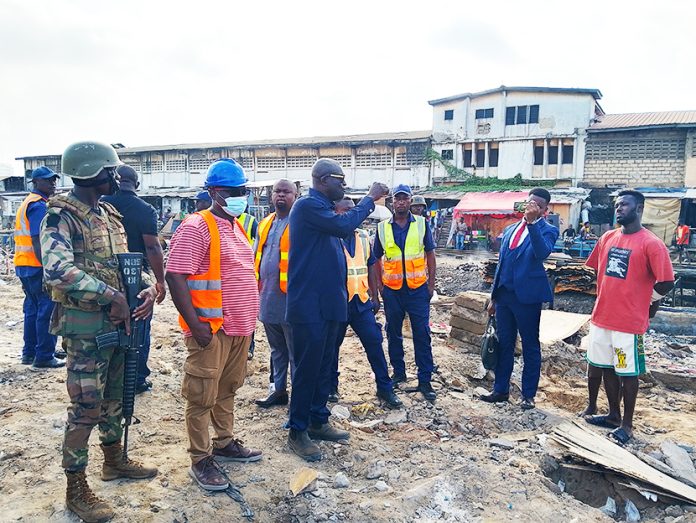
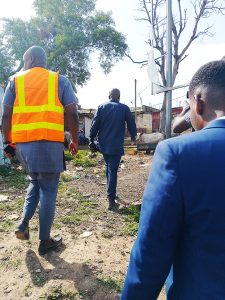
He said this after paying a working visit to ECOMOC, a slum near the Kwame Nkrumah Circle, as well as cattle market on the Kanda Highway in the Greater Accra region yesterday.
The Minister said he was compelled by the circumstance to perform certain tasks that are preserved for the MMDCEs just to ensure that things are done as expected.
Mr. Titus-Glover was particularly concerned about how the city of Accra is gradually being taken over by stray animals – cattle, dogs, sheep and others, yet the MMDCEs are not working to address the problem.
“It is not the duty of the regional minister to be coming round in these things. It is the work of the MCEs, and from here I’m going to summon them to my office and give them my final warning,” he said.
He said cattle being left to move freely is not good for the image of the city of Accra and does not speak well of the people.
This, he recounted, calling the MCE for Ayawaso West Assembly to act on cattle grazing on the lawns in the Tetteh Quarshie Interchange just last week Saturday.
Mr. Titus-Glover going to talk to a cattle seller
“When you sit in your office, you will be in your comfort zone. The president did not give you the office to sit in the office. Even the President himself, once in a while travels round the regions to get things for himself. So when he is reading the reports, he will say I have been here. I was in Saboba. I was in Tatale. I was in Zabzugu. He knows what he is talking about.
So that is the work that I do,” he advised.
Mr. Titus-Glover was happy that after cautioning the cattle sellers on the Kanda Highway, they have relocated most of their animals and encouraged others to keep their animals locked from public spaces.
Fencing the ECOMOC pylons
During the tour of ECOMOC, the minister promised to raise funds to fence the pylons to prevent the squatters from resettlement in the area.
He said the fence would not only protect power supply to Accra and its environs, but save lives and properties.
The minister told journalists after the inspection that the fire that gutted ECOMOC on June 5, 2024 destroyed some of the power lines, leaving parts of Accra in total darkness.
He added that the power lines also posed a threat to the squatters and had vowed to eject them completely from the area, in prevention of crime and other social vices, which are prevalent there.
After the fire incident, the Minister visited the scene on June 6, 2024 for a first-hand information and ordered demolition of the illegal structures.
However, during yesterday’s visit, the minister realised that the squatters have already started demarcating the land with charcoal powder to distribute it among themselves, despite being warned.
The minister said the Board chairman and management of GRIDCO have met with the minister and had requested that the pylons are protected.
In furtherance of the request, the Minister has assigned taskforce to conduct daily monitoring of the area to ward off any activities by the squatters to raise the structures.
He said it was the Regional Coordinating Council’s (RCC) decision to demolish the structures under the pylons and protect life and property.
So far, he is happy with the work done by the RCC taskforce and the joint security team from the military and police.
The Lagos State Government has clarified its position on the cause of the cholera outbreak currently ravaging the state.
News reports had earlier suggested that the consumption of an unregistered tiger nut drink reportedly sold in Eti-Osa Local Government Area of the state was responsible for the outbreak.
However, in his reaction to the report, the Director of Public Affairs at the state’s Ministry of Health, Tunbosun Ogunbanwo, said Ms Ogunyemi did not disclose any conclusion of the state’s investigations into the causes of the outbreak.
Mr Ogunbanwo, in a telephone interview with PREMIUM TIMES Saturday night, said Mrs Ogunyemi was misrepresented. He said various possible sources, including the tiger nut drink, were being investigated to determine the cause of the outbreak.
In the interview, Mrs Ogunyemi classified a tiger nut drink reportedly consumed by many of those who presented cholera cases in Eti-Osa Local Government Area as a significant denominator, noting that most of them confirmed they took the drink before presenting cases of diarrhoea and other cholera symptoms at the hospitals.
Mrs Ogunyemi said in the interview: “So when we noticed an increase in cases in Eti-Osa Local Government Area of Lagos specifically, we went there to investigate. We carried out a survey and found that the common denominator, which was one of the deadly factors, was a tiger nut drink. People who came to the hospitals all identified that they had drunk tiger nut drink.
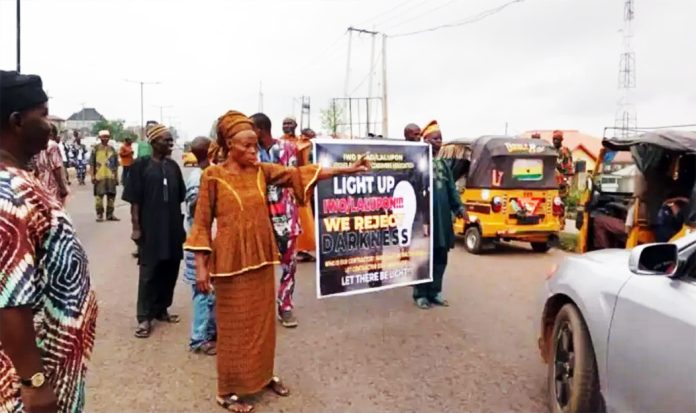
Scores of residents from communities along the Ibadan – Iwo Road staged a peaceful protest at the Ibadan Electricity Distribution Company (IBEDC) office in Ibadan on Monday.
The residents stormed the IBEDC office located at Alabebe area to press home their demands.
They noted that the protest was staged to protest against erratic supply of electricity to their communities. DAILY POST reported that the residents stormed the IBEDC office in the early hours of Monday.
During the protest, the residents also blocked part of Ibadan – Iwo Road to press home their demands.
Our correspondent reported that the road is a major route that links Ibadan in Oyo State with Iwo in Osun State.
The residents early on Monday decried what they described as poor electricity supply to their communities.
Some of the communities affected include Olodo, Monatan, Alabebe, Iyana Church, Lalupon, Eji Oku, Iyana Offa, Adeleye, Lagun.
Others are Adewumi, Trailer Park, Erunmu, Fatumo, Atari and Ile-Igbon.
DAILY POST reports that IBEDC closed the office to prevent a breakdown of law and order.
A resident identified as Mr Akin said that the protest became necessary due to the erratic supply of electricity by IBEDC to the various communities.
In 2004, some displaced white farmers from Zimbabwe arrived in agrarian communities in the Shonga district of Edu Local Government Area of Kwara State on the invitation of the state government. The governor of the state at the time, Bukola Saraki, said they were invited to revolutionise agricultural practice and enhance the government’s agro-economy initiative.
About 20 years after, PREMIUM TIMES’ Yakubu Mohammed visited some of these communities, where he found local farmers enduring the brunt of government-backed deforestation and land degradation as they contended with the worsening food crisis ravaging the country.
Abdullahi Jubril, a local farmer in Dumagi, one of the villages affected by the takeover of land by the Kwara State Government in 2004, now struggles to cater for his family from a small portion of farmland he said has been overused and barely gives him enough yields.
Before 2004, Mr Jubril practised a mixed-crop farming system, planting guinea corn, millet, melons, yam, groundnut, and other grains. However, he said, the arrival of white Zimbabwean farmers facilitated by the Kwara State Government under the Shonga agricultural project threatened local farmers like him.
Findings by PREMIUM TIMES showed that the state government acquired 13,000 hectares of land covering vast farmlands with economic trees. Subsequently, the government apportioned 4,755 hectares of the land to local farmers in a buffer zone set some 500 metres away from each of the affected villages.
This, however, rendered many local farmers helpless, including their wives, who relied on the economic trees to make daily earnings. The farmers say the new farmland apportioned to them “was no longer fertile.”
In separate interviews, this reporter spoke to 13 local farmers in Shonga, Ndakansa, Dumagi, Sanchitagi and Faigi villages, all in the northern part of Kwara State. They shared similar stories of declining annual yields as some sought alternative livelihoods.
They explained that their farmlands are no longer fertile for crops like yam, guinea corn and melon.
This trend, they believe, is worsening the food crisis in the state.
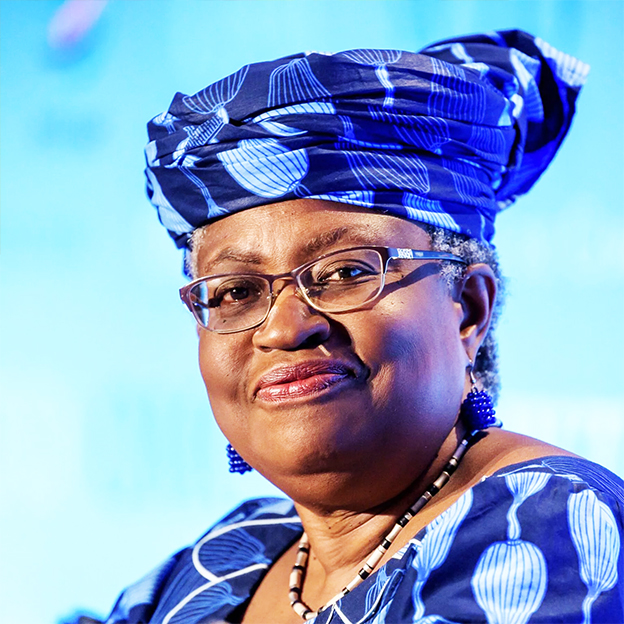
The Director General of the World Trade Organization, WTO, Ngozi Okonjo-Iweala, has alleged a plot to use her name to fight political battles.
Okonjo-Iweala cautioned those behind the act to desist from misusing her name for their political ends.
She was reacting to a remark that Nigeria’s debt profile hit N24 trillion in two months for the first time in the country’s history.
A Facebook post had quoted Okonjo-Iweala as saying: “Nigeria debt for the first time in history has risen to 24 trillion in just 2 months even after removing subsidy is something unbelievable.
“I call several time to help and advise but the current administration and cabals refuse to let me come in. How can you remove fuel subsidy with a debt of 24 trillion in 2 months.” [sic].
Reacting, the former Nigerian Minister of Finance described the remark as false.
Posting on X, she wrote: “THIS IS IMPORTANT- It appears that there are people in Nigeria trying to use my name and image on social media to fight battles on different sides of the political divide, putting words in my mouth that I never said.
“Therefore, I want to alert everyone that the message below is FAKE. This is a stern warning to all those trying to misuse my name for their political ends that I will continue to rebut any attempts to use my name and image falsely!”
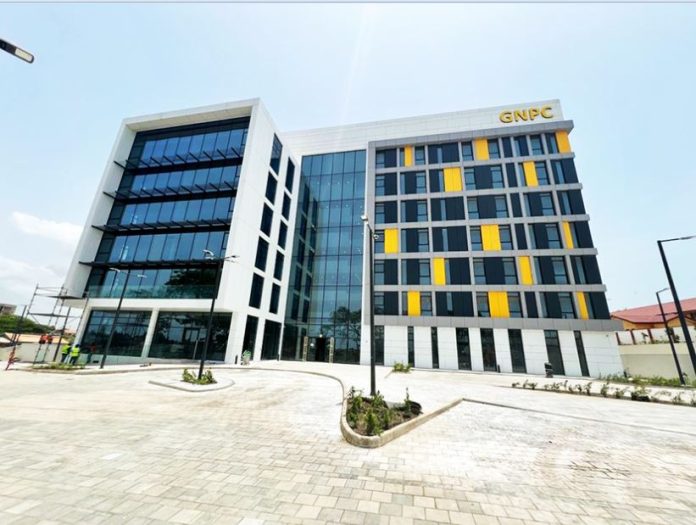
It has been established that Ghana National Gas Company Limited (GNGCL) received a total volume of 35,690.20 mmscf raw gas from the Jubilee and TEN Fields in 2023, as compared to 39,663mmscf in 2022. This translates into a reduction of 10 percent.
The GNGCL overall indebtedness to the Ghana National Petroleum Corporation (GNPC), as at the end of 2023 was $604,051,751.38.
Based on the 35,690.20 mmscf supplied, average volume of gas received from GNPC declined from 3,305 mmscf per month in 2022 to 2,974 mmscf per month in 2023.
The downturn was largely due to upstream supply constraints. Raw gas received by GNCCL is processed into Lean gas, Liquefied Petroleum Gas (LPG) and Condensates.
The total volume of Lean Gas, LPG and condensates processed from the jubilee Field was 32,977.56mmscf, 99,15093 and 35,20373 MT respectively in 2023.
That implied that Lean Gas and LPG volumes declined by 11.2 percent and 149 percent respectively, while the volume of condensates increased by 11.2 percent between the two periods.
This was contained in the Public Interest and Accountability Committee (PIAC) 2023 annual report of the management and use of petroleum revenue.
RECEIPTS
That apart, GNGCL also received $271,493,365.62 as payments from the sale of LPG, Lean Gas and stabilised Condensates produced in 2023. The reported revenue also included payment for invoices issued in 2022.
Ghana Gas facilities
As at December 2023, the company’s cumulative outstanding receivables, including legacy debts preceding the introduction of the Energy Sector Recovery Programme (ESRP), amounted to $954, 554, 67549.
In 2023, the total volume of processed derivatives of Lean gas, LPG and Condensates that were dispatched to clients amounted to 117,956,609.71MMBtu, 95,605.53MT and 12,806.65MT respectively.
The nominal invoice value of the derivative product was $334,023,650.90 which was a 6.8% decline relative to the invoice value of $358,304,405.18 reported in 2022.
The total volume of Lean Gas sold by GNGCL was 117,956,609.71MMBtu in 2023 relative to 118,799,496.14MMBtu in 2022.
This is equivalent to a downturn of 0.7 percent. On the other hand, the monetary value of the Lean Gas sales increased by 9.4% to $284,302,438.91 in 2023 from $259,968,833.64 in 2022.
This increase is as a result of the 2023 increase in tariff from the first quarter prices to the fourth quarter, as compared to that of the tariff applied in 2022.
Previous years, the sale of Lean Gas was the largest source of GNGCL revenue in 2023. The revenue from the sale constituted 84 percent of the company’s revenue in 2023, which was an improvement over the previous year’s outturn of 726 percent.
However, the largest client of GNGCL in terms of volume was ENI in respect of gas transporter service charges. Its share in the total volume of gas sold was 66.2% in 2023 which translates into a nominal value of 781,140,081.88MMBtu.
Ordinarily, the largest client in terms of volume purchased should be the same as that of the largest client with respect to value.
However, this was not the case due to the differential prices at which lean gas was sold to the various. This non-uniformity in the tariff applied by GNGCL was due to the type of services provided to the various customers.
Total volume of Liquefied Petroleum Gas sold by GNGCL declined from 113.300.51MT in 2022 to 95,605.53MT in 2023. This represents a reduction of 156%.
In terms of revenue, the net proceeds from the sale of LPG amounted to $43,277,473.96 in 2023 relative to the revenue of $75,056,054.95 recorded in 2022. This represents a decline of 42.3%. The downturn in net revenue was largely attributable to the relatively low volumes of LPG sold in 2023.
CONDENSATES
The volume of condensates sold fell sharply from 30,471.95MT in 2022 to 12,806.65MT in 2023. This translates to a year-on-year decline of 137.94%. This was as a result of no sale of Condensates from October to December 2023. However, the product was in storage at the Tema Oil Revenue (TOR).
Revenue realised from the sale of condensates in 2023 was $6,472,663.42 as compared to $23,279,516.59 in 2022 representing a decrease of 72.2%.
The marked reduction in revenue was primarily a function of the downturn in the volume of Condensates sold in 2023 relative to the preceding year.
GAS INDEBTEDNESS
The cumulative indebtedness of GNGCL to Ghana National Petroleum Commission (GNPC) for the supply of raw gas stood at $604,051,751.38 at the end of December 2023, which was a 78% increment on the cumulative stock debt of $560,400,710.88 recorded at the end of 2022. According to GNGCL, the rise in its indebtedness to GNPC was primarily due to the inability of the VRA to meet its debt service obligation.
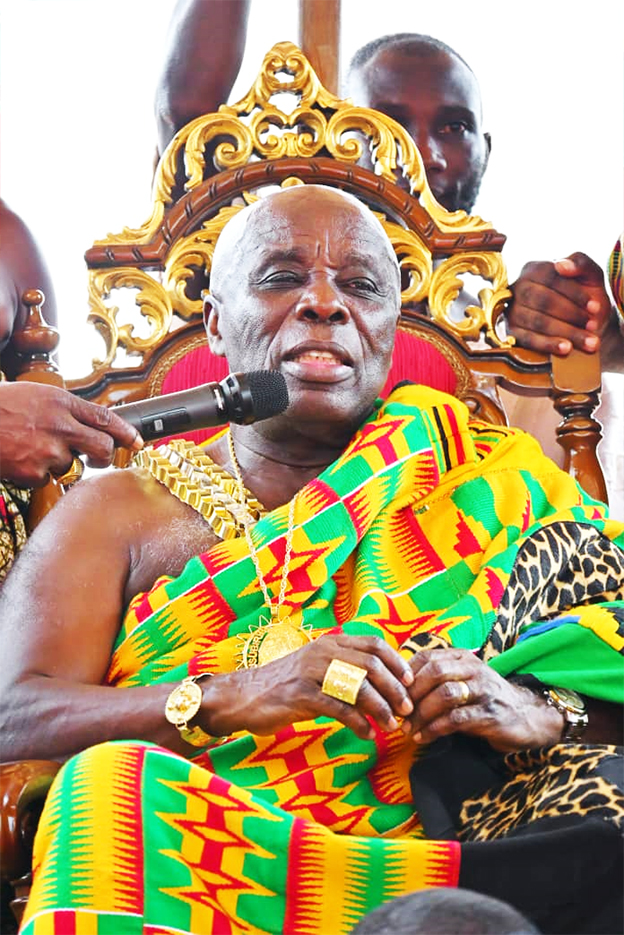
The Okyenhene Osagyefuo Amoatia Ofori Panin is calling on the State to pay teachers a well deserving remuneration for their work. He says the role of the teacher in a comprehensive quality education cannot be over emphasized.
To him, teachers must be motivated well to give off their very best even though they’re currently doing well under the circumstances they have found themselves.
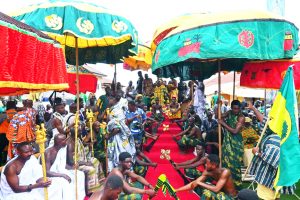
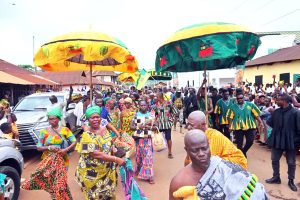
Addressing a durbar of the Chiefs and people of the Benkum division of Akyem Abuakwa State at Begoro, Osagyefuo Amoatia Ofori Panin called on the government to act fast on teacher remuneration.
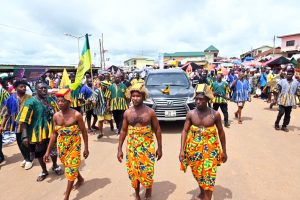
Okyenhene arriving at the durbar grounds
He acknowledged that the free Senior High School Education introduced by the Akufu-Addo government is one of the biggest investments, which affords every Ghanaian child a free education to the secondary school level.
However, Osagyefuo Amoatia Ofori underscores the importance of addressing some few challenges hindering the success of the program.
He advocates for enough classroom, tables, chairs, beds and other facilities that would make learning more convenient for the school children.
Osagyefuo Amoatia Ofori Panin called on the Government to motivate teachers and pay them well. According to Okyenhene, teacher motivation and good remuneration are inextricably linked with quality education.
Okyenhene sitting in state
‘The future of our children is dependent on quality education and skills development. Today, every Ghanaian child has the means to free SHS education. We must note that, it’s not just about passing through the school.
“There must be quality education. If you provide all the amenities and you don’t pay the teacher well, it affects the children’s education’, Okyenhene stress.
Be A Servant Leader
Okyenhene Osagyefuo Amoatia Ofori Panin also called on leaders to serve in humility and respect. According to Okyenhene, throughout history, there was no single rich or great leader who died and was buried with his riches, but the lives that they impact leaves on till eternity.
‘There is no rich man in the world who has been buried with his fleet of cars or houses. The memories they leave in the lives of others and their communities rather stay for life”, Osagyefuo noted Osagyefuo Amoatia Ofori Panin added that a great leader is the one who leaves an indelible legacy for generations unborn.
‘There is power in humility, there is authority in humility, we don’t use power to enrich ourselves, we use power to serve diligently. The greatest currency is humility and service’, Osagyefuo Amoatia Ofori Panin
The Benkum Divisional durbar is the second out of the five divisional royal durbar’s schedule to be held in honor of Okyenhene’s 25th Anniversary celebration on the accession to the Ofori Panin stool under the theme: 25 years of Sustainable Leadership and Service to Humanity.
History of The Benkum Division
Benkum is the second largest division within the Akyem Abuakwa State structure. It has over 300 towns and villages. Within the Akyem Abuakwa state hierarchy, the Benkumhene otherwise known as the
Fanteakwahene is the commander and chief of the left wing of the army with his permanent residence at Begoro, the capital of the division. The Benkum Division occupies a very large area of land. It was the bastion of the western division of the Akyem Abuakwa Army.
Chiefs arriving at the durbar grounds
In ancient times, the Western part of Akyem Abuakwa state was more exposed to hostile states than any other division. The Benkum Division shares borders with Asante, the Kwahu, the Akwamu, Krobo and parts of the Volta Region. The Benkumhene dress and coronet the same way as Nifahene and both are equal in rank.
In parades, the Benkumhene is the third to the Adontenhene. The Benkumhene belongs tothe Royal Asona clan. The principal chiefs in this division are the Odauhene of Osenase and Otwereso. He is equal in rank to the Benkumhene and shares all things equally.
The Benkumhene and Begorohene, however, take precedence in all matters, civil and military and he is the acknowledged head of the division.
The rest are chief of Apinaman, the chief of Osino, otherwise known as Mumuadu Sei, the chief of Suhum, Amanase, Sawirako, and Apedwa among others.
From all indications, Lagos is about to be at a standstill for the highly anticipated wedding of the multiple award-winning singer and performer David Adeleke popularly known as Davido and his long-term partner Chioma Rowland.
Many questions such as the celebrities invited, location, date and many more have been asked about the highly anticipated wedding and here is what we know so far:
Davido officially confirmed that his wedding to his long-term partner Chioma will take place on Tuesday, June 25, 2024. This would be a follow-up to their initial traditional wedding which took place in 2023.
Given that the lowest price of a Rolls Royce is estimated at $20,000, with the cost of two amounting to $40,000, Chioma’s engagement ring is estimated to be worth over 30 million naira.
Following the confirmation of Davido’s wedding as a strictly by-invitation ceremony, an exclusive list of celebrities who will be in attendance has been confirmed by the stars themselves with pictures and videos on social media.
So far a short list of footballers, influencers and other public figures has been confirmed and they include; Victor Osimhen, Amaju Pinnick, OGB Recent, Verydarkman, Tunde Ednut, Israel DMW.
It has been confirmed that the wedding will take place in Lagos with the specific venues not also confirmed ahead of the event.