According to celebrated Ghanaian Highlife musician, Amandzeba Nat Brew, younger musicians should come to the realisation that Fela Kuti’s popular Afrobeat would not have been successful without highlife influence.
In his assertion, the success of Nigerian icon Fela Kuti’s Afrobeat, would not have been possible without Fela’s collaboration with Ghanaian musicians like Uncle Ebo Taylor.
In an interview with Hitz FM, the ‘Wogbe Dzeke’ hitmaker shared his insights on the influence of Ghanaian Highlife music on various African music genres.
According to him, the blend of highlife, Jazz, and Juju music created a unique sound that resonated globally.
“Fela’s Afrobeat would not have been very successful if he hadn’t stopped his band and come down here and work with our people like Uncle Ebo Taylor. So Fela combined Highlife, Jazz and Juju music.
“If you ask anyone, they will tell you Afrobeat and all other sounds… are based on the sound that is coming from here,” he said.
He also noted that genres like Amapiano, when scrutinized, reveal that “the rhythm is even from here.”
He explained that attempting to fit African music strictly into Western melodic forms can undermine its essence.
“For us in Africa, particularly Ghana, our languages are very tonal, so if you want to produce a song and you don’t study it, you may think it’s difficult… So, when you want to strictly set in in a Western melodic form, it defeats the very definition of Highlife.
“Because most of us are quite a bit lazy in producing work, you may ignore it and listen to what is coming from outside,” he said.
Gospel legend Kofi Owusu Dua-Anto popularly known as KODA will be buried on Friday, September 20, 2024.
The private funeral service will be held at the KICC Dominion Centre, Spintex Road, off Coca-Cola Roundabout in Accra. Dress code for the funeral service is an all-white attire, signaling a glorious entry of the Gospel Artiste into eternity.
Kofi Owusu Dua Anto better known as KODA died on Sunday, April 24 at aged 45.
KODA’s music legacy includes hits like ‘Nsempii,’ ‘Nkwa Abodoo,’ ‘Yapai,’ ‘Adorso,’ amongst others.
KODA is a multi-award-winning artiste passionate about sharing the gospel and helping shape the sound and music direction of others through music production.
He has produced music for the likes of the late Danny Nettey, Pastor Joe Beechem, Nii Okai, Halal Afrika, Eugene Zuta, and many more.
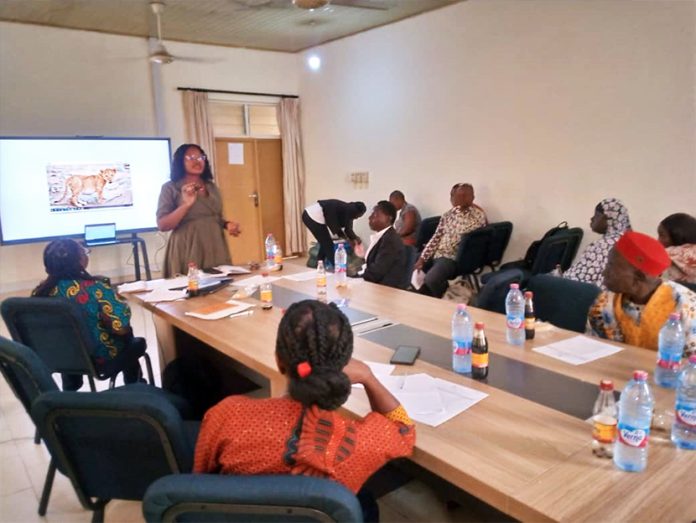
A total of 34 girls, who were married before the age of 18 years, between 2021 and the second quarter of 2024 in the Upper East Region have been rescued from child marriage.
Statistics from the Upper East Regional Child Protection Committee has revealed that the girls were between the ages of 13 years and 17 years from some districts in the region.
It also reported that the Builsa South and Nabdam districts had the highest cases of 13 years and 12 years respectively.
According to the Committee, many of the girls, through the support of various organisations and institutions had returned to the formal school system through the re-entry policy of the Ghana Education Service, whilst others had been supported to learn vocational skills.
This came to light at the 2024 first and second quarter meeting of the Committee in Bolgatanga, organised by the Department of Children under the Ministry of Gender, Children and Social Protection, in collaboration with the Regional Coordinating Council, with funding support from the United Nations Children’s Fund (UNICEF).
The meeting was to help the members of the Committee to present achievements and challenges of activities on child protection carried out within the period under review to the stakeholders to influence discussion that would inform future planning and implementation.
The Committee comprised representatives from the departments of Gender, Children, Social Welfare and Community Development, RCC, Ghana Health Service, Ghana Education Service, Food and Drugs Authority, National Disaster Management Organisation, state human rights institutions, traditional and religious leaders, the media and some civil society organisations.
Mrs Georgina Aberese-Ako, the Acting Regional Director of the Department of Children, presenting the report to the participants, commended members of the Committee for the achievement in rescuing the girls from child marriage and helping some to return to school.
She said child marriage was one of the major challenges confronting the growth of girls in the region and deepening the education gap between boys and girls, and it was imperative for stakeholders to work collectively to address the challenges.
“It is a great achievement because rescuing even one girl from child marriage and helping her to return to school is not easy and it is important, but we are not resting, we will continue to do all we can to ensure that child marriage and other child protection issues are reduced”, she added.
Ms Dora Kulariba, the Upper East Regional Adolescent Focal Person, Ghana Health Service, noted that apart from the child marriage menace, teenage pregnancy was still a major challenge in the region although significant progress had been made.
She revealed that at the end of the second quarter of 2024, teenage pregnancy cases in the region reduced to 11.7 per cent from 12.8 per cent and 14.9 per cent within the same period in 2023 and 2022 respectively.
“If we look at the percentages, we can say we are doing well as a region but if you look at the absolute figures, especially in some of the districts, it will tell you we need more education for our adolescents to have accurate information on their sexual and reproductive health,” she added.
Ms Yvonne Wonchua, Gender Desk Officer, RCC, commended the Committee’s efforts to addressing challenges facing children in the region, particularly girls and urged the stakeholders to intensify education to the grassroots to achieve maximum impact.
Since last weekend, there’s been a spate of galamsey coverage across the Ghanaian media – TV, radio and print. This is a marked contrast to the minimal coverage given to last month’s Eco-Conscious Citizens call to the media and the Western North Regional Minister for the halt of the galamseyers’ destruction of the Atronsu landscape and stream, or the press briefing at the Kpeshie lagoon estuary at La, Accra where Eco-Conscious Citizens founder Awula Serwah highlighted the impending environmental hazards due to concrete developments on wetlands.
The fight against the galamsey menace is the responsibility of all Ghanaians, from the president, elected representatives, specific statutory bodies, ordinary citizens, to the media, whose job it is to highlight such environmental ills.
However, judging by the number of requests from TV and radio stations for Awula Serwah to contribute to their news coverage of galamsey since last Saturday, it’s undeniable that the media has given serious coverage to galamsey because of the current water crisis particularly in the Central Region, which was highlighted over the weekend by the Ghana Water Company Limited.
With less than a week to go before the 60th Oguaa Fetu Afahye festival in Cape Coast, which the Asantehene will be attending, the water company pointed out the cause of its challenges – low water output and degradation of its equipment – was the unchecked environmental vandalism, known as galamsey, which occurs up and down its source of water, which is the now very turbid River Pra.
We’ve monitored a high number of media coverage since the water crisis was announced. Indeed, this morning, Awula Serwah was on the GBC News Focus programme entitled ‘GWCL Rings Alarm Bell on Effect of Galamsey On Operations: What Solutions Have Political Parties Manifestos?’ This will be repeated this evening around 11pm.
The media needs to more than just report what’s in the manifestos – it needs to challenge the politicians on how their manifestos will immediately arrest the poisoning of our water bodies and farm lands, and the depletion of our forest cover.
Joy News also launched its Hotline documentary ‘Poisoned Rivers’ this week. This, like the news and magazine programmes coverage, show that galamsey and the state of our water bodies are worse than when President Akufo-Addo made his ‘presidency on the line’ pledge to deal with galamsey seven years ago.
Not only don’t the manifestos of the two main political parties show a robust plan to deal with what Awula Sewah describes as an “existential threat,” but when one hears the level of debate on galamsey in parliament reduced to which party polluted the water bodies more than the other, what hope is there that the people we’ve elected to manage our environment know what to do?
Eco-Conscious Citizens is a non-partisan environmental group. However, earlier this year when it launched its Eco-Conscious Citizens Friends Of The Environment Manifesto (EECFOTE Manifesto), majority of the contents were endorsed by NDC MP and Lands and Forestry Committee of Parliament Ranking Member Dr Abdul Rashid-Pelpuo. Sadly none is included in the NDC manifesto.
The first two of the five-point EECFOTE Manifesto are:
Repeal E.I. 144 and withdraw L.I. 2462 within the first 6 months of administration – Accra needs more forests, not less, and it’s “perverse” that mining, and logging, should take place not just in forest reserves, but also in globally significant bio-diversity areas, such as Atewa Forest and the Draw River Forest Reserve.
Pause Community Mining and enshrine the rights of communities to reject mining in their localities, within the first six months of your administration – we can’t properly regulate the few large mining companies, how much more the hundreds of small scale mining operators. In addition, the wishes of communities that do not want the so-called community mining must be respected.In this period of electioneering, if the politicians and the relevant statutory bodies show no will to deal with the galamsey menace, then the citizenry will have to advise itself.
The government can declare a state of emergency within which to repair our polluted water bodies, among other things. In the absence of any robust action to address the effects of galamsey, the citizenry can look to demonstrations or general strikes, to force the authorities to do the work they are mandated to do, which includes protecting the environment and the health of the citizens.
Time is running out – we need to see a commitment to deal with the canker of illegal mining before we reach the point of no return. We should vote wisely at the forthcoming general elections.
P.S: Just when this release was meant to go out, we read that the Lands Minister has an emergency meeting today. According to him, “the government would soon deploy law enforcement agencies to target areas with rising illegal mining activities with a special focus on the Central Region”. Better late than never.
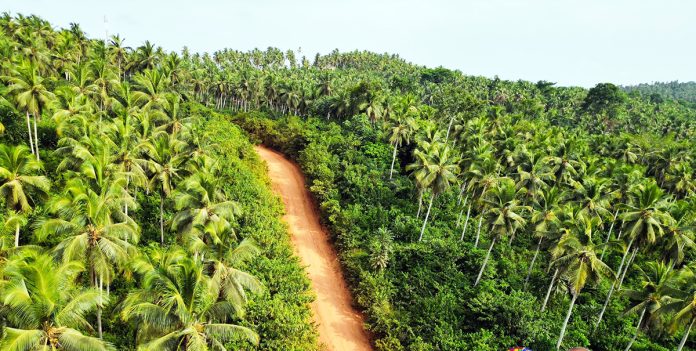
The Jomoro municipality, aka Western Nzema Traditional Area, can easily be described as the Coconut Capital of Ghana. From its coconut-lined, clear sandy beaches to its thick hinterland, mature coconut trees make up over sixty percent of the vegetation of Jomoro.
In most areas, one can see cassava and other cash crops growing healthily under the tall coconut trees. The sight of those would make the modern-day PHD holder in Agriculture feel like a novice. This is what has sustained the people of Nzema, especially Jomoro.
It is why poverty levels in Jomoro are lower than comparable communities, in-spite of the inexplicable neglect of this resource-rich community by successive national governments in Ghana.
It is in this context that any analysis of the supposed advantages of the proposed Petroleum Hub should be discussed. The government of Ghana, through the Petroleum Hub Development Corporation (PHDC), aims to establish a private sector-owned $60bn Petroleum Hub on a 20,000-acre land to be compulsorily acquired in the Jomoro Municipality of the Western Region of Ghana. The said project is expected to create 780,000 jobs by 2036, earn the country $1.5bn in revenue and lead to 70% increase in revenue.
Unfortunately, other than a proposed one-time payment for the 20,000-acre land (the price of which nobody knows at this point), there has not been any word on generational compensation, equity interest, or earmarked employment and senior leadership quotas for either the directly affected communities or to Nzema Maanle as a whole.
This is very problematic. Why should the people of Jomoro be the ones sacrificing everything for this hub – Potential displacement of local communities, loss of land with generational income and benefits, environmental degradation among others in exchange for nothing other than the general “jobs are coming” mantra? Let’s do the Maths for the government’s proposal to compulsorily acquire 20,000 acres:
Assume that each acre contains 100 mature coconut trees, and each tree produces 100 coconuts per annum. This means 100x100x20,000 = 200,000,000 coconuts per annum
Now take the going price of 3 GHS per coconut. This gives 600,000,000 GHS per annum, equivalent of $40m per annum.
Now multiply this by the remaining life of these coconut trees, which we can estimate to be sixty years minimum. $40m x 60 = $2.4bn or 36bn GHS.
As we can see, the opportunity cost of the coconuts on the 20,000-acre land is a minimum of $2.4bn over the next 60years. Anything less by the government of Ghana is a disadvantage to the people of Jomoro. Apart from the direct cost of the coconut trees above, the coconut industry in Jomoro provides direct employment opportunities in various sectors, including:
Farming and Harvesting: 1,200 – 2,400 jobs (Ghana Coconut Industry Report, 2020)
Collecting from Farms: 300 – 600 jobs (International Coconut Community, 2019)
Peeling and Processing: 450 – 900 jobs (Coconut Industry Development Plan, 2018)
Counting and Sorting: 225 – 450 jobs (Ghana Ministry of Agriculture, 2020)
Loading and Handling: 300 – 600 jobs (Coconut Exporters Association, 2019)
Flight and Logistics: 150 – 300 jobs (Ghana Civil Aviation Authority, 2020)
In addition to direct employment, the coconut industry in Jomoro also generates indirect jobs in:
Transportation and Logistics: 750 – 1,500 jobs (Ghana Road Transport Coordinating Council, 2020)
Marketing and Sales: 450 – 900 jobs (Coconut Marketing Board, 2019)
Support Services: 300 – 600 jobs (Ghana Ministry of Trade and Industry, 2020)
Government Tax Collection and Administration: 75 – 150 jobs (Ghana Revenue Authority, 2019)
Total indirect employment: 1,575 – 3,150 jobs
INDUSTRY INSIGHTS
The coconut industry is a significant contributor to Ghana’s economy, providing employment opportunities and income for thousands of people.” – Mr. Kofi Poku, CEO, Coconut Federation of Ghana
“The industry has the potential to create more jobs and increase revenue if we invest in modern technology and best practices.” – Mr. Ama Nyamekye, President, Ghana Coconut Exporters Association.
CONCLUSION
The Jomoro area is poised for significant economic growth, with two major industries offering promising opportunities for development. While the petroleum hub project anticipates generating substantial revenue and employment, concerns regarding land acquisition, displacement of local communities, and potential negative impacts on the local coconut industry and the delicate environment must be addressed.
In contrast, the coconut industry presents a more inclusive and sustainable option for growth, providing employment opportunities and income for thousands of people, with potential for expansion and increased revenue through investment in modern technology and best practices.
Therefore, prioritizing the development of the coconut industry, while ensuring fair and equitable practices, may offer a more beneficial path for the local economy and indigenous communities.
From the above analysis, there is considerable wealth in Jomoro from the coconut and its ancillary industries. This thriving local economic stimulant has enabled the local economy to survive despite government neglect and the lack of amenities available in other comparable communities in Ghana.
Therefore, any proposed project that seeks to destroy or disrupt this industry must provide commensurate long-term compensation and benefits to the local communities. Anything short of that will be a disadvantage to the people of Jomoro and further exacerbate existing social and economic inequalities.
Tea is a healthy drink, but it may not be the best choice for keeping your teeth white. Dentists say the brew — especially the basic black variety — can cause more stains than coffee. Herbal and white teas can wear away the outer covering of your teeth, called enamel, and cause stains, too.
Sauces and Stains
They may be tasty, but deeply colored sauces — think soy, tomato, and curry — also cause stains. Switch to light-colored or creamy sauces, and brush and rinse soon after eating.
Sports Drinks
Acidic foods and drinks can also affect your teeth. Sports or energy drinks can erode enamel, setting the stage for stains. Drinking water during workouts is a better choice.
Wine and White Teeth
If a food or drink can stain a tablecloth, it can stain your teeth. It’s no surprise that red wine, an acidic drink known for its dark, rich color, will discolor teeth. But white wine, which has even more acid, also can.
Fruits and Berries
Blueberries, blackberries, cherries, pomegranates, and other vibrant fruits can stain teeth. So can juices and pies made from them. Paler fruits, like white grapes and white cranberries, are less likely to cause stains. But they do have acid that can soften or weaken your enamel.
Soda, Cola, and Other Carbonated Drinks
Looking for a reason to cut back? Thanks to acids and dyes, these drinks — even light-colored ones — can lead to serious stains. Plus, the chemicals that add flavor can also eat away your enamel.
Candy and Sweets
If your favorite sweet — like hard candy, chewing gum, or a Popsicle — makes your tongue change colors, it can also stain your teeth. The good news is that unless you eat those goodies often, they probably won’t do much harm.
Lessen Stains: Cut Back
You may not want to cut all teeth-staining food and drinks out of your diet. Many of them — like blueberries, blackberries, and tomato sauce — are rich in antioxidants. So keep eating them, but ease up a bit or opt for other sources, like cauliflower, apples, grapefruit, and melon.
Use a Straw
Sip stain-causing drinks like sodas, juices, and iced tea through a straw. This should keep the liquid away from your teeth.
Swallow Swiftly
Don’t let stain-causing foods and drinks linger in your mouth. Swallow them. When it comes to food, though, chew it well and don’t gulp to make sure you don’t choke.
Rinse — Then Brush — After Eating
Swish your mouth with water right after you eat or drink something that can stain. Wait 30 minutes to an hour before you brush after eating something with acid — any sooner and you could hurt the enamel on your teeth. If you can’t get to your toothbrush, chew a piece of sugarless gum as soon as you’ve eaten.
The Centre for Public Interest Law (CEPIL) has called for the amendment of the Minerals and Mining Act, 2006 (Act 703) and to make comprehensive regulations to guide its implementation.
It said the regulations in the Minerals Income Investment Fund Act (MIIF) must include specific provisions that mandated companies to give employment quota for Persons with Disability (PWDs) especially in areas where they had capacity to perform.
Mr Alhassan Iddrisu, a Lawyer and Legal Advocate at CEPIL, made the call during an engagement with the Blind Union of Ghana (GBU) with support from OXFAM Ghana, to present a Policy Brief on Addressing gaps and human rights violations in Ghana’s mining sector in Braille form.
The policy brief is part of the FAIR for ALL (PvP) project which highlights key challenges bedeviling the cocoa-mining sector value chain offering policy proposals to contribute towards addressing the challenges.
Broadly, it seeks to contribute to a world in which global value chains serve people and the planet before profit, where people benefit fairly from value chains and ensure that the benefits of resources are equally distributed.
Mr Iddrisu said in the entire body of the MIIF regulations, there were no mention of provisions for disabilities and how to ensure the inclusiveness of the PWDs in the mining sector value chain.
He said the MIIF was established as a Special Purpose Vehicle (SPV) with the mandate to manage the equity interest of Ghana in mining companies and receive dividends from these equity interests, to receive minerals royalties and other related income due the Republic.
It was also to provide for the management and investment of funds.
The Legal Advocate said the Policy Brief proposed that an amendment be made to the MIIF Act that ensured a dedicated share of the profits from the investment of the fund was committed to addressing poverty and other livelihood diversification projects in the mining – affected communities.
That, the Lawyer said, should complement interventions initiated under the Minerals Development Fund (MDF) in mining communities.
Mr Iddrisu said protecting and promoting the rights of persons living in extractive communities should be a priority since it could derail the nation’s effort at maximising benefits from the extractive resources.
He said the country had failed to harness its natural resources efficiently to spur economic growth despite decades of exploitation.
The Lawyer partly attributed that to inefficient resource governance and wrong priorities of the Government regarding the extractive sector.
Mr Peter Obeng-Asamoah, Executive Director, GBU, said the first step for one to fight and demand for rights was to know those rights.
‘‘…Most of us did not have an inkling about mining, energy and the issues. It was when CEPIL stepped in and they began to give us that information and even went a step further to put it in accessible format to enable us to read it,” he stated.
Mr Obeng-Asamoah said the series of engagements with CEPIL enlightened them about happenings in the mining sector and the exclusion of PWDs in the value chain.
The Executive Director commended CEPIL for support in the protection of their rights.
Ghana will host Angola at the Baba Yara Sports Stadium on Thursday, aiming to kick off their 2025 Africa Cup of Nations qualifying campaign with a victory.
These two sides faced off during the qualifying series of the last AFCON, with the Black Stars securing a 1-0 home win and a 1-1 draw in the return leg.
Ghana
Otto Addo‘s second stint as Ghana’s head coach has been promising, with two wins and a draw in four matches, despite a defeat to Nigeria in his first match after the comeback.
Ghana Black Stars
Ghana’s recent form includes a dramatic 2-1 victory over Mali and a 4-3 win over Central African Republic, both in 2026 World Cup qualifiers.
Ghana’s disappointing group-stage exit at the recent AFCON led to the dismissal of Chris Hughton, but the Black Stars have since turned things around and are now seeking to win three consecutive matches across all competitions for the first time since July-August 2022.
The hosts also have an ongoing unbeaten record against the visitors, winning and drawing two each against them in four previous meetings.
Angola
Angola enters this fixture on a high after winning the COSAFA Cup in July, triumphing in the competition for the fourth time in July.
Pedro Goncalves‘s men went undefeated throughout the tournament, culminating in a 5-0 victory over Namibia in the final, with Victor Pedro Nanque scoring a brace.
The Palancas Negras are aiming for their 10th AFCON appearance, having reached the quarterfinals of the last edition before losing to Nigeria.
LA Galaxy winger Joseph Paintsil, Turkey-based Kingsley Schindler, Anderlecht’s Majeed Ashimeru, and Athletic Bilbao’s forward Inaki Williams have all returned to the Ghanaian squad after missing the 2026 FIFA World Cup qualifiers against Mali and the Central African Republic in June.
Leicester forward Ayew has scored in the last five games for the team and is expected to start in attack once more, with West Ham’s Mohammed Kudus playing behind him.
Prediction
Ghana appear to have rediscovered their form under the new coach, and they have also enjoyed success in this fixture, which is why we are predicting a victory for them on Thursday against Angola, a team that has struggled in AFCON qualifying matches.
Credit: sportsmole.co.uk
Tunisia begin their road to redemption againstMadagascar
Tunisia would take on Madagascar at Stade Olympique Hammadi-Agrebi in Rades. Tunisia will begin their road to redemption this week after they were dumped out in the group stage of the previous edition of the Africa Cup of Nations in the Ivory Coast at the start of the year.
Tunisia
The Carthage Eagles were drawn alongside Mali, South Africa and Namibia in the previous competition and failed to win any of their matches, drawing two after a shocking opening match defeat to Namibia.
Since then, the North Africans have posted a mixed bag of results, drawing goalless in back-to-back friendlies against Croatia and New Zealand in March, while they beat Equatorial Guinea 1-0 and played out a 0-0 stalemate against the Brave Warriors in their World Cup qualifiers in June.
Following the most recent goalless draw with Namibia, the Tunisian Football Association brought Faouzi Benzarti to lead the side to continental glory, and he will be featuring in his first match in charge of the Carthage Eagles this week.
Tunisia have a rich history in this competition, qualifying for the main event over 20 times in their history, through they have not won the title in two decades despite reaching the quarter-final in seven of their last 10 attempts.
Meanwhile, Madagascar will see this match as a chance to exact revenge, as it was this very opponent that knocked them out of the only Africa Cup of Nations main tournament they ever qualified for in their history back in 2018-19.
Since then, Barea have failed to make much of an impact in qualifying, with the last edition ending with the side failing to win any of their six group-stage matches, drawing three and losing three.
Credit: sportsmole.co.uk
CAR & Lesotho eye first ever Afcon qualification
Both Central African Republic and Lesotho are hoping to qualify for the upcoming African Cup of Nations tournament for the first time in their history when they undergo their initial Group B qualifier at Stade El Abdi on Thursday evening. This will be the first meeting between the two nations
Lesotho
CAR head into their first Group B 2025 Afcon qualifier on the back of an eventful 4-3 defeat against Ghana in a CAF World Cup qualifying fixture that took place on the 10th of June. Prior to their encounter against the Black Stars, CAR went on a three-match winning streak.
Lesotho on the other hand, are winless in their last four matches across the board and recently participated in the 2024 COSAFA Cup in July.
Les Fauves are expected to give Amiens striker Louis Mafouta the nod in attack on Thursday, especially after the French Ligue 2 star netted an impressive hat-trick against Ghana last time out.
Savoy also called on the services of Geoffrey Kondogbia and Brad Pirioua for their upcoming list of Afcon qualifiers, with both midfielders plying their trade for French Ligue 1 outfit Marseille.
As for Lesotho, Notsie listed eight players from South Africa’s PSL in his latest squad selection, most notably that of Thabo Makhele, Teboho Letsema, Motebang Sera and Tlotliso Phatsisi
Algeria and Equatorial Guinea are set to clash at the Miloud Hadefi Stadium on Thursday, both aiming to kick off their 2025 Africa Cup of Nations qualifying campaign with a victory.
The two sides have met just once previously, with Equatorial Guinea emerging victorious in a 1-0 win at the 2021 AFCON.
Algeria
Algeria, having suffered a 2-1 defeat to Guinea in their first competitive match under Vladimir Petkovic, quickly rebounded with a 2-1 win over Uganda, as goals from Houssem Aouar and Said Benrahma secured the victory for the Fennec Foxes in the 2026 World Cup qualifying match.
The Northern Africans are now seeking to qualify for a seventh consecutive AFCON edition in a bid to clinch their third title, having won the second one in 2019.
Algeria’s recent AFCON campaign was disappointing, as they failed to advance beyond the group stage for the second time in a row.
Algeria are gradually rebuilding their team under the new coach – their recent performance hinted at a promising future, while they also have an ongoing unbeaten streak in AFCON qualification.
Linda Sun, a former deputy chief of staff to New York Governor Kathy Hochul and former Governor Andrew Cuomo, was charged on multiple counts along with her husband and co-defendant, Chris Hu, according to the US attorney general. The couple are naturalised US citizens.
This comes amid rising scrutiny in the US over foreign influence operations that have been dismissed and rejected by China.
Sun, 41, was charged with violating and conspiring to violate the Foreign Agents Registration Act, visa fraud, alien smuggling and money laundering conspiracy, according to an unsealed copy of the 64-page indictment.
Hu, her 40-year-old husband, was also charged with money laundering conspiracy and conspiracy to commit bank fraud as well as misusing means of identification, according to prosecutors.
The couple’s home on Long Island was raided by federal investigators in July, and Sun had been terminated from the governor’s office for more than a year after officials were alerted of suspicious activity.
Both have pleaded not guilty and were set to be freed after setting bond, which amounted to $1.5m for Sun and $500,000 for Hu. They have been instructed not to have any contact with the Chinese consulate and embassy, and their travel is limited to New York City, Long Island, Maine and New Hampshire.
Sun worked in the US state’s government for about 15 years, holding positions in the administration of Cuomo before becoming Hochul’s deputy chief of staff, according to public employment records and her LinkedIn profile. She acted as an undisclosed agent of the People’s Republic of China and the Chinese Communist Party and engaged in political activities to further Chinese interests, according to the US Attorney’s Office in New York.
“The dogs bark, but the caravan moves on.” – Arab proverb.
If you spend time on LinkedIn, you’ll undoubtedly notice the platform has become overrun with barking dogs—job seekers who are frustrated and angry—while employers keep moving on, looking after their self-interests.
Job seekers expressing their “emotions” online aren’t doing themselves any favours. It’s common knowledge employers Google candidates and check their LinkedIn activity to determine whether they’re interview-worthy. An employer’s reputation and brand are represented by its employees, making it prudent to vet candidates’ online behaviour by looking for red flags such as:
Offensive behaviour
Narcissistic behaviour
Content designed to provoke (trolling)
False information
Negative (read: bashing) posts about former employers or employers in general.
The last red flag is worth noting as employer-related negative posts are increasingly prevalent. Some posts I’ve read come across as if the poster is waging a holy war against employers.
Three reasons you shouldn’t complain online:
Complaining is toxic.
Complaining is not leading.
Complaining keeps you stuck where you are.
“Don’t be overheard complaining… not even to yourself.” – Marcus Aurelius.
Describing something—an event, an experience, a person—negatively (complaining) without indicating the next steps or plans to fix the problem or yourself is easy. The act of complaining requires little thought and no action.
What good has complaining ever done? Publicly venting your frustrations and anger may feel like you’re “sticking it to the man,” but does it change your circumstances, increase your chances of landing a job, or make you happier?
Self-proclaiming career coaches and resume writers serve their self-interest by telling job seekers that the reason they’re not getting interviews is because their resume sucks. While this may be true, it’s rarely mentioned that employers may be turned off by a job seeker’s online behaviour.
I’ve met many job seekers with a rockstar-like resume, frustrated they weren’t getting interviews. After reading some of their LinkedIn comments, I can see why employers aren’t contacting them. I know of two instances where a job offer was rescinded due to the to-be employee’s online behaviour. While your resume is important, what’s more important—critical to landing interviews—is your digital footprint.
Employers will disregard your candidacy no matter how skilled or experienced you are if they feel your online behaviour may affect their brand and reputation; hence, your online behaviour has consequences. Whether those consequences benefit or hinder your job search is entirely up to you. Keep your rants, vents, and anger about employers and the job market off LinkedIn and other social media platforms. While your feelings may be valid, your behaviour isn’t.
More than ever, Image is everything!
Instead of showing your network and employers your armchair opinions about how employers don’t know how to hire, show why you should be hired. Do not allow your ego to lead you to think your opinions and rants will influence employers’ hiring decisions. On the other hand, while complaining may feel cathartic, it hinders your job search efforts because:
Complaining is never a good look.
When you post complaints on LinkedIn, you put your negativity on full display for your network and employers to see. Furthermore, you’re publicly biting the hands that you want to feed you. Regardless of how you frame a “rant” or “venting,” it’ll likely convey a bitter, angry, or entitlement tone, which isn’t an impression you want to give to your network and employers.
“Wow, this person would be difficult to work with.”
“This person has a poor attitude.”
“Why’s this person painting all employers with the same brush?”
“This person is playing the ‘I’m a victim!’ card.”
“This person needs to stop blaming everyone.”
Appearing bitter and angry towards employers will hinder your job search.
Complaining in public shows a lack of emotional control and judgment.
Managing your emotions and responding appropriately to challenging situations is a crucial aspect of being a professional. Complaining about your job search difficulties or criticizing employer hiring practices on LinkedIn shows a lack of self-control and judgment of the possible consequences of your online behaviour.
Understandably, employers seek employees who can remain calm under pressure, handle setbacks gracefully, and project a positive, solution-focused attitude. Publicly expressing your frustrations suggests you might have trouble handling workplace challenges or negative feedback.
Complaining makes you appear entitled.
Complaining gives the impression that you feel entitled to a job and have unrealistic expectations, which are turnoffs.
Employers gravitate towards candidates they feel will be grateful for the opportunity, eager to contribute, and committed to achieving success. When you complain, you appear focused more on what you believe you are entitled to than what you can offer.
LinkedIn is the most powerful tool you have at your disposal to reach employers. Hence, you want to project an image that attracts employers as opposed to repelling employers, which is what you’re doing when you complain about employers and the job market.
Bashing employers on LinkedIn won’t change how they look after their self-interests. Focus on your self-interests; to find an employer you’ll want to align your career with. Barking at employers won’t stop the caravan from moving on.
Nick Kossovan, a well-seasoned veteran of the corporate landscape, offers “unsweetened” job search advice. You can send Nick your questions to artoffindingwork@gmail.com.
Editor’s note: Views expressed in this article do not represent that of The Chronicle