Home Blog Page 1306

Feature: The Decline of Ghana Sports (2)

0
Feature

Re: The Track and Field and the Rex Brobbey Approach.

After the fallout with Ernest Obeng, the NOC announced that it was going to concentrate more on local based athletes. The question here is, has it groomed any local? There are no serious programmes laid out, for that.

In comes Rex Brobbey, a national sprint star, who with great passion undertook a personal agendum to unearth sprinters, with his Ghana’s-Fastest project. Rex was determined to produce good sprinters for Ghana.

His selfless desire was to get a world top sprinter from Ghana. This should have been the work of our National Sports Council (NSC), but it has no serious programme laid down for that, and Rex filled that yawning gap.

What are our national coaches doing? Are they just waiting for a budding star to appear and claim them as their own?

I remember this coach at the national sports stadium, in the seventies, who would pick and choose any of the academical stars and start coaching them, by force. Some of the national stars claimed that the method of his coaching at national team level, was way below the standard of training they received in their schools. So, how did this coach get to be a national coach? Is this still going on?

In the case of Rex Brobbey, the question is what help even, by way of encouragement, did the nation’s athletics body give him? Rather, he was being attacked and his sponsors told things that were not encouraging. The man had turned out over thirty sprinters for this country, including those who are flying the national flag today.

All the NSC needs to do is to fully support Rex and invite him to join the Council and work in partnership for the good of athletics. But that was not to be. The NSC seems to dare anyone to touch the sport, and yet it is just sitting there doing nothing.

There is always this child-parent bond between athlete and school coach, which can be so strong that the athletes would sacrifice their all to make that coach, very, very proud. For he or she had identified them, picked them out in their raw state, polished them and set them on the road to stardom.

That bond could have made our athletes performed much better than they do if only Rex was recognised and invited to join the managers of the team. Baton changing is the highest risk factor in relays and with Rex Brobbey around,havingrun the relays at world events for the country, he could surely use that experience and impart the skills unto the sprinters. Today, maybe without Rex, we get disqualified at world events.

The decline in our track and field could be factored into the attention our sports authorities are giving to our athletes. If the reason is due to lack of funding, the authorities should have thanked God for Rex Brobbey who uses his own resources and goes out looking for funds to groom sprinters.

With a letter of recognition, Rex could have gone to the skies to get adequate funding from national and international sponsors and get the team into serious competitions to prepare them for the Olympics and World Championships.

This can also encourage our retired top athletes to go out there and look out for potential world beaters in their division. I can see the likes of Emelia Blavo, unearthing high jumpers, Agbashie hunting for throwers, George Osei bringing out long distance runners who could beat the East Africans, and many others coming out to help make Ghana sports great again.

Unfortunately, today we are not among Africa’s best. Countries like Botswana which was unknown only a decade ago, is now a leading and shining star in Africa. Zambia goes out there to win a medal. And where is Ghana? La Cote d’Ivoire has a world class sprinter in Marie-Josee Ta Lou who appears in every sprint final and in Ghana we have not produced any female to take over from Alice Anum.

As for Nigeria, we dare not go there. A nation, whose best used to be beaten by our second team, has now become our lords. And today, Liberia and Zimbabwe can feature in Olympic 200 meters men finals with Ghana completely out of the equation.

The decline of the sports in Ghana could be due to lack of management and other factors including cases of sexual harassment of our female athletes.

Following a publication in the Times newspaper edition of August 29, 2010, about allegations of some female athletes that some coaches sexually harass female athletes, a former chief athletics coach of the NSC, Dr Emmanuel Owusu-Ansah urged the government, through the sports ministry to institute a committee of enquiry into the allegation.

Sexually harassing female athletes under the care of coaches, had resulted in many talented victims shying away from the sports. I do not think any such committee was set up to investigate the allegations.

The other was the case of undue favouritism and made it clear that underperforming athletes in Team Ghana could be chosen over the best during the 1984 Olympic Games.

In 1977, at the Ghana Academicals’ final selection for the Ghana-Togo Games, officials picked a hurdler to replace the third fastest sprinter, call Monster, in the set of six sprinters. Togo was not competing in hurdles and so the Ghanaian hurdles team had to break camp. But this hurdler who is a favourite of the officials was promised a chance to travel to Togo.

A series of hundred-meter runs, a sort of endurance race, was organised to select the top four to join the best two sprinters to make the team.  Monster who won in the first four races, with the hurdler always placing fifth, pulled a muscle in the fifth with a few meters to breast the tape and dropped down in pain.

He did not finish (DNF) and the hurdler who now came fourth was chosen over him. Yes, the third top sprinter who only pulled a muscle which could heal in a day or two, was dropped. How many good athletes were treated like this or any other way to deny Ghana the best?

When our footballers put up an attitude before their final group stage match against Portugal in the 2024 FIFA World Cup, by holding the nation to a ransom, demanding to be paid first, many Ghanaians condemned them

Only those who understand what goes on in sports administration in Ghana, will rather condemn the handlers and call the players, heroes. For how can the state budget almost $22 million for the Stars’ preparation and participation in the World Cup and yet, the players received nothing all the way to their final match in the group stage? The threat of the boycott was the only way to get what they truly deserved.

The 1977 Academicals camped in Achimota School in Accra, and they were to receive weekly allowances. At the end of the first week in camp, the officials sat at a table to give the Academicals their allowance.

Before one would be able to receive his or hers, they would first have to answer ridiculous questions, like what was served for supper on the first night, what attirethe head coach wore and more.

Failure to come out with the right answer would mean that athlete did not report on the first day and would be denied that day’s allowance. What happened to the deducted allowances can be any one’s guess.

The sports men and women can be used to create source of revenue for officials. The story was told of a situation where a coach on the team, had to step in to compete in the pole vault. At the end of the games, he was classified an athlete and paid what athletes got.

For the sake of money, Ghanaian officials could delist their own. Will this official ever participate for Ghana, even if he could win a gold medal?

In conclusion, the Martha Bissahissue comes in. This fine athlete won gold for Ghana at the 2014 Youth Olympic Games in Nanjing, China covering the distance of 800 meters in 2:04.90. She was seventeen, then. With that feat, Ghanaians were hoping for the first medal in Olympic track and field.

But unfortunately, like the 1980 and 1984 Olympics, we denied ourselves that opportunity. Martha had come out publicly to say that the authorities had demanded GH¢7,000.00 as bribe before offering her a scholarship. This is a serious allegation and she was asked to come out with the name of the official who approached her, or retract and apologise, failure to do so would attract suspension.

Martha could not meet the demands of the athletics body and so she was suspended indefinitely in July 2016, an Olympic year.

We are told that her conduct did not warrant suspension under Olympics laws. So, why was she suspended? Is it to show her how powerful the local athletics authority can be? Could there not be any way of finding out the truth? Could an official or anyone very close to Martha have told her this and she just could not mention names?

From 2014 to 2016, if only Martha had been put through tough trainings and races, she could have had a medal in all of the past three Olympics and World Championships. Martha is now twenty-seven and she run for her college and local athletics team in the USA.

Recording times above 2 seconds in the 800 meters, she cannot make it into the semi-finals of the Olympics or World Championship and with that Ghana can kiss any opportunity for a medal in track field in world events, good-bye.

Our sports, especially in the track and field is on the steepdecline.

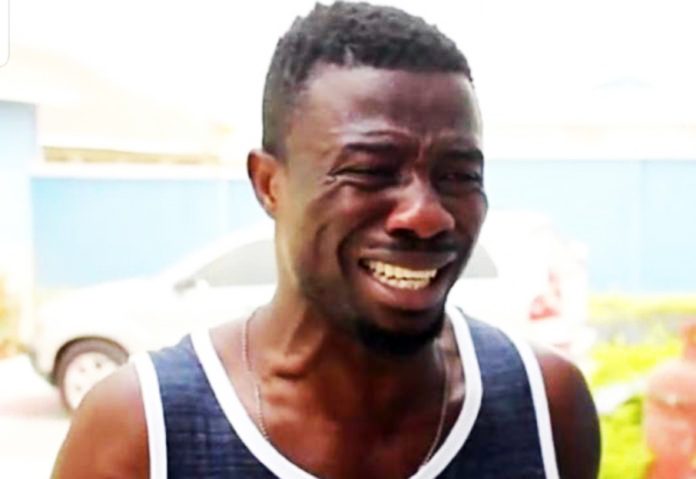
Hon. Daniel Dugan
MPs Insist On Using Sirens On Our Roads … Speaker Directs Committee To Include Their Input In New LI

0
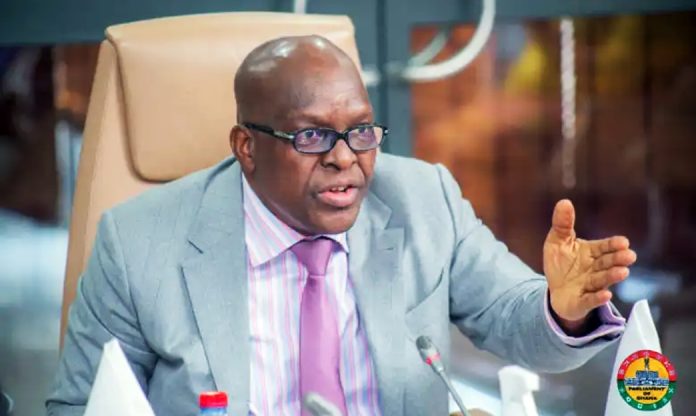
Rt Hon Alban Bagbin, Speaker of Parliament

The Road Traffic Amendment Regulations 2024 that was withdrawn in July, following public uproar has been re-laid. The Legislative Instrument (LI), would have allowed Members of Parliament and others to use sirens whilst driving on our roads

Though the new regulation, as laid, excluded the Speaker, MPs and the Chief Justice from using sirens and motorcades, Parliament has been united, demanding that they are included.

Members from both sides of the political divide took turns to contribute to the issue, emphasising the need for the House to boldly defend itself and explain to the public the prudence in having such privilege.

During day two of the extraordinary sitting of Parliament on Wednesday, September 4, 2024 the Speaker, Alban Sumana Bagbin, referred the L.I. to the Subsidiary Legislation Committee for consideration and directed the committee to input the concerns raised by members.

Knowing that an L.I., according to law, matures automatically 21 days from the day it is laid and no changes could be made to the content, MPs suggested that it should be withdrawn for the changes to be reflected and relayed.

However, Speaker Bagbin directed that it should not be withdrawn and that  the committee should consider the L.I. in its entirety and draw the attention of the House to areas identified, apart from those discussed.

“I agree with you. But let’s not just withdraw the instrument. Let’s do the proper thing. Let’s consider it in its entirety. There are other areas you can identify apart from this. Then you draw the attention of the house, and then the proper thing will be done at the end of the day,” he said.

The Speaker continued that, “So I will reiterate the referral to the committee to consider and report to the house. Please, let’s go by that.”

IT’S WRONG

In his comments, the former Minority Leader, Haruna Iddrisu, expressed concerns over the exclusion of the Speaker and the Chief of Staff from the list of state officials who could use sirens and motorcades.

“In my view, it’s wrong for the number three to be out of this privilege. The Chief Justice of the Republic of Ghana is also out of the motor traffic regulation, not entitled to it. You can keep Ministers and Members of Parliament out,” he said.

Haruna added, “Yes, MPs. There will even be times that, Mr. Speaker, leadership is here, where you have to take a major vote. You are looking for a member who is still in his constituency in Kasoa; you want his vote here because you want him to exercise a mandate. That is not abuse of a motorcade or a police siren. So, Mr. Speaker, let’s guard against our privileges and immunities as MPs. It is guaranteed additional rights because of the role we play.”

Former Minority Chief Whip, Mohammed Muntaka Mubarak, also expressed concerns, arguing that the investment made to have privileges for the Speaker could not be thrown away by the new L.I.

BE BOLD

The First Deputy Speaker, Joseph Osei Owusu, indicated that what was critical was that “we stand together on matters that are important to us.”

The MP for Assin South, Kennedy Agyepong, cautioned his colleagues against kowtowing to public pressure.

“My contribution is to caution my colleagues to be bold for once, because we’ve been cowards to the public. Anything concerning Parliament, we are afraid of the reaction of the public. And anything that the government needs, they will first come to Parliament. For a whole Speaker to say that he cannot even enjoy a motorcade.

“Although we are servants to them, we also have to enjoy rights. I want you Members to be bold. Look, in case there is an emergency and you need members of Parliament from, say, Adentan to come here. So, if he enjoys a motorcade, is it a sin? Mr Speaker, I am speaking for Parliament,” he added.

CONSISTENT

The Majority Leader, Alexander Afenyo Markin, spoke sternly to his colleagues, reminding them of what compelled the Minister for Transport to withdraw the earlier regulation.

“Mr Speaker, I think that as a House we have to be very consistent. Members of Parliament cannot always run away when there is an issue regarding their welfare and turn around to demand the same rights. And to say sadly, today, this is affecting you. When the instrument originally was laid, there was a pre-laying. Members of Parliament made inputs. At the end of the day, we left the learned Professor, Dr. Dominic Ayine, in the cooler. Politicians are always in a rush to protect their heads when there is crisis. But sometimes we can have a collective fall. We know the challenges we face coming from home. We know going to the constituency,” he said.

He continued that, Honourable Minister, it’s my humble prayer to you that in view of the issues that have come up, we have a second look at this regulation to include MPs, an essential public of… Mr. Speaker, that we need MPs and key appointees whose work will require the use of certain privileges to be included. The fact that they will be listed does not mean every day they are going to have it in use.”

NOTHINGNESS

The Speaker urged members to stand up for what is right, as there are only two people elected on the 7th of December in the election year—the president and the member of parliament.

“And the two of you are to lead the people to make their conditions better. Then you allow yourselves to be reduced to nothingness because you are afraid of responsibilities. I am not. When this matter came up, it was a shock to me because we are said to have amended the regulations, and my reaction was that parliament could not amend a regulation. That is when they took it up. I was also bashed…”

“Now, timorous souls, they went back, and look at what they are bringing to you. These heads that you have, if you are using the heads properly they will always be on top. It is when you are using it wrongly that they will cut it off. Please, let’s stand for what is right and do what is right. Let’s have the gut. Let allow the committee to go and look at it,” he said.

Bawumia’s Plans To Reduce Cost Of Living … Food Security, Transportation, Housing And Energy On The Radar

0
Dr Mahamudu Bawumia, NPP presidential candidate

The campaign team for the presidential candidate of the ruling New Patriotic Party (NPP), Dr. Mahamudu Bawumia, has announced a detailed plan on how he will reduce the cost of living, should he win the December 7, 2024 polls.

Addressing a news conference in Accra yesterday, the Bawumia for President Campaign Team introduced a multifaceted strategy that addresses key issues, including food security, transportation, housing and energy.

This initiative, according to the campaign team, is part of the NPP’s 2024 manifesto, reflecting Dr. Bawumia’s commitment to alleviating financial pressures on citizens.

FOOD PRICES

The campaign team, giving insight into the NPP 2024 manifesto, indicated that Dr. Bawumia’s plan focuses on stabilising food prices by supporting local agriculture through financing and guarantees from the Development Bank Ghana (DBG) and the Ghana Incentive-Based Risk-Sharing System for Agricultural Lending (GIRSAL).

The team said that by increasing the production of staple foods and investing in preservation methods for perishable items, the strategy aims to reduce food waste and keep prices stable.

This approach is said to have been designed to ease inflationary pressures on food, a critical concern for many Ghanaian households.

TRANSPORTATION COSTS

The Bawumia for President Campaign Team noted that on public transportation, Dr. Bawumia’s plan includes measures to lower the costs.

This, the team said, promoting electric vehicles (EVs) for public transport is a key component, offering a sustainable and cost-effective solution.

The expansion of the Gold-For-Oil Programme (G4O) is also part of the strategy, intended to stabilise fuel prices through strategic reserves and import policies.

Additionally, the introduction of a flat rate for spare parts and extending the validity of driver’s licenses to 10 years are expected to reduce maintenance costs and administrative burdens.

HOUSING OPTIONS

According to the campaign team, housing affordability is another major focus of Dr. Bawumia’s plan.

He has proposed a range of housing solutions, including social housing initiatives like shelters for vulnerable populations and an expanded rental assistance scheme for low-income workers. The plan, the team said, also includes incentives for private real estate projects and enhanced services from state agencies such as the State Housing Company (SHC) and the National Homeownership Fund (NHF).

The team explained that these measures aim to make homeownership and affordable rental options more accessible to all Ghanaians.

ENERGY EFFICIENCY

To address energy costs, Dr. Bawumia’s plan includes adding 2,000 megawatts of solar power to the national grid. This move, his campaign team has explained, is expected to lower energy costs while promoting sustainability.

The team said that the introduction of net metering, which allows solar system users to sell excess power back to the grid for free electricity, is another innovative solution to high energy bills and power shortages.

ACCESS TO SERVICES

Dr. Bawumia’s plan also seeks to simplify access to public and private services by utilizing the GhanaCard for all basic data collection.

The campaign team has explained that the streamlined approach aims to reduce redundancies, making it easier and more cost-effective for citizens to access essential services.

AMBITIOUS VISION

Dr. Bawumia’s strategy leverages existing institutions and proven mechanisms, enhancing its feasibility.

By building on established frameworks like DBG and GIRSAL for food security and expanding the G4O Programme for fuel stabilisation, the team noted that the plan offers a practical path to reducing living costs.

PMMC takes steps to promote Ghanaian jewellery globally  

0

The Precious Minerals Marketing Company (PMMC) is taking steps to promote Ghanaian jewellery in the international market.

Nana Akwasi Awuah, Managing Director of PMMC, said the Company had invested in a 3D printer and software that designs, prints and was used to create sophisticated jewellery for both the Ghanaian and the international markets.

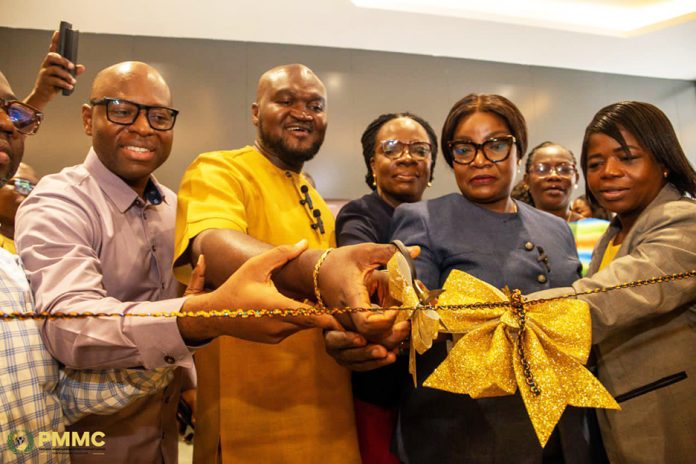
Nana Awuah was speaking at the opening and moving of the Company’s Spintex Branch to the Marina Shopping Mall, on the Spintex Road in Accra.

The new shop on the Spintex Road will serve parts of the Greater Accra Region, including Tema, Lashibi, Nungua, Teshie and surrounding areas, where customers will easily walk in and transact business without traveling long distance to the Company’s main office at Accra.
There are trained and knowledgeable staff available to assist customers to make informed buying decisions.

The Managing Director said the Company had also improved on its finishing, regarding its jewellery.

He said the Company had organised some meetings with the Jewellers Association of Ghana and very soon those plans would come into fruition, in terms of assisting them to take advantage of the African Continental Free Trade Area.

“So, that is what we are doing in order to promote jewellery and generally value addition of our precious minerals in Ghana,” he added.

He said they want to get people to understand the culture of owning jewellery and as part of their grand agenda and strategy for them to appreciate the value of jewellery.

“We want to embark on social re-engineering, where Ghanaians will come to accept and take jewellery as a store of value,” he added.

The Managing Director said Ghana currently was number one in Africa in terms of gold production and number six in the world.

He said the whole idea was to be able to encourage value addition and drive it well to turn round the narrative of exporting gold without value.

Nana Awuah said the Company was looking at the concerns on responsible sourcing of natural resources, which they had developed responsible sourcing guidelines internally to direct its operations.

He said the Company had sourced responsibly for the jewellery and would soon come up with a hallmarking system for jewellery made by other jewellers in the system to enable them to penetrate the international market.

He called on those who travelled out of the continent to buy jewellery in Dubai or elsewhere to equally come to Ghana and purchase their jewellery, because “we have improved with the investment in 3D technology, which is being used everywhere in the world.

“So, our brothers from the West Africa sub-region, Nigeria, Senegal and elsewhere who make those long journeys to Dubai and elsewhere to buy jewellery, can now turn all the attention and procure them right here in Ghana,” he added.

GNA

Goldfields provides free medical care for host communities

0
Free drugs displayed on a table at the Outreach programme

Over five hundred residents of Brahabebome and surrounding villages in the Tarkwa Nsuaem Municipality have benefitted from annual medical outreach programme organised by Gold Fields Ghana Foundation (GFGF).

The successful medical outreach held last Saturday saw residents line up to undergo medical screening for free.

The programme was very exciting because 90% of the health personnel, who took the residents through the exercise, were either current or past beneficiaries of the Gold Fields Ghana Foundation scholarship programme.

Residents seated waiting for their turn to undergo medical screening

The health personnel included Doctors, Nurses and Pharmacists, who have all returned to give back to the community that supported their education, a testament of the Foundation’s vision of fostering a cycle of support and development within its host communities.

The initiative, which is part of the Foundation’s expanded access to quality healthcare programme, has not only provided essential medical services to the community, but has also showcased the long-term impact of the Foundation’s various interventions.

The Executive Secretary of the Gold Fields Ghana Foundation, Abdel Razak Yakubu, highlighted the importance of this coordinated approach, stating that “the interventions that the Foundation has in our host communities are not just bits and pieces. Everything is linked.

“When we give scholarships, we have a vision that one day, the beneficiaries will come out of school and also give back to the community and we are excited about that.”

The Foundation, he stressed, had invested over GHS130,000 in procuring medicines and paying stipends to volunteers involved in the outreach programme, which takes place every quarter. This significant investment underscores the Foundation’s dedication to improving the health and well-being of the people in its host communities.

The outreach programme, part of a four-year initiative that began this year, is designed to expand access to quality healthcare for the residents of Brahabebome and surrounding areas.

Almost 500 residents benefitted from the free medical services offered during the event, which included treatment for various ailments such as high blood pressure, malaria and respiratory infections.

The presence of an Optometrist at the outreach was particularly appreciated by the community members, many of whom received much-needed eye care.

Residents undergoing medical screening

Ibrahim Iddrisu, the Unit Committee Chairman of Brahabebome, expressed his gratitude to Gold Fields, saying “This medical outreach has enabled many to check their health and the introduction of an Optometrist has greatly helped those with eyesight problems.

“Gold Fields has not only provided scholarships, but has also asphalted our roads and built a community centre for our social gatherings and funerals.”

Nana Adjoa Baawah I of Apinto Brahabebome also praised Gold Fields for their efforts in bringing healthcare to the community’s doorstep and that this is the first time such a comprehensive healthcare service had been provided in the area.

“All ailments, including high blood pressure and malaria, were attended to. I am very elated by Gold Fields’ efforts to make our communities better off by bringing this free medical outreach to Brahabebome,” she said.

Dr. Antoinette Atta Hasford, a medical officer at Tarkwa Mines Hospital, reported that the most prevalent issues treated during the outreach were malaria in children and respiratory infections. She also raised concerns about the elderly, many of whom had high blood pressure or diabetes, but had stopped taking their medication without any apparent reason.

Dr. Atta Hasford called for an attitudinal change, urging caregivers and family members to encourage these patients to take their medication seriously and attend regular health reviews.

One of the scholarship beneficiaries, who is currently in her final year at the Tarkwa Midwifery School, Margaret Edu-Bofuo, expressed her deep gratitude to Gold Fields for the scholarship that has enabled her to pursue her dream of becoming a nurse. “Without their intervention, I wouldn’t have fulfilled my dream of being a nurse, as my parents didn’t have the means to finance my education at that level,” she said.

The success of this year’s medical outreach is a clear indication of GFGF commitment to leaving a lasting legacy in its host communities through coordinated, impactful initiatives that not only address immediate needs, but also empower the residents.

Editorial: ‘Surgical’ Response To Fight Illegal Mining Must Be The Last Resort 

0
Editorial

The Minister of Lands and Natural Resources, Samuel Abu Jinapor, has reaffirmed the government’s commitment to intensifying efforts against illegal mining, also known as galamsey, particularly on water bodies.

According to him, the government would soon deploy law enforcement agencies to target areas with rising illegal mining activities with a special focus on the Central Region.

Conversations on galamsey and its dire impact arose after the management of Ghana Water Company Limited in the Central Region announced that there would be challenges with water supply in Cape Coast, Elmina and surrounding communities.

The company revealed that the recent demand-supply gap is due to inadequate raw water received at the Sekyere Hemang Water Treatment Plant (WTP), caused by galamsey activities.

Environmental groups, civil society organisations and concerned citizens have since voiced their frustrations over the lack of significant progress in curbing galamsey activities, which have resulted in the contamination of rivers, destruction of farmlands and loss of livelihoods for many Ghanaians.

The Minister of Lands and Natural Resources has assured the public that a comprehensive operation would be launched within the next 24 hours to clear illegal miners from key areas. The minister further explained that the government’s anti-illegal mining initiative, known as Operation Halt, was designed to be a targeted and strategic effort. He further explained that the operation is not continuous but rather surgical, with enforcement actions taken whenever illegal mining activities are identified as increasing in particular areas.

However, The Chronicle sees this move by the Minister as a familiar promise. For years, the devastating effects of galamsey have been well-documented, yet the problem persists, wreaking havoc on the environment, public health, and livelihoods across the country.

The crisis at the Sekyere Hemang Water Treatment Plant (WTP) is a stark reminder of the immediate and long-term consequences of galamsey. The Ghana Water Company Limited’s revelation that raw water supply to the plant has been severely compromised by illegal mining activities is both alarming and disheartening.

This is not just an environmental issue; it is a public health emergency. The contamination of water bodies due to galamsey has far-reaching implications, affecting not only the availability of potable water but also the overall health of communities that depend on these water sources.

The Chronicle is glad that the Minister of Lands and Natural Resources has assured the public that a comprehensive operation will be launched to remove illegal miners from key areas. This operation, part of the government’s broader anti-illegal mining initiative, known as Operation Halt, is described as targeted and strategic, designed to be a “surgical” response to illegal mining activities.

While this approach might seem pragmatic, given the unpredictable nature of galamsey operations, it raises several concerns. First and foremost, the intermittent nature of enforcement, acting only when illegal activities are identified as increasing may not be sufficient to deter the determined and often well-organized individuals and groups involved in galamsey. These miners are notorious for their resilience, often returning to sites shortly after enforcement operations have concluded.

The sporadic nature of Operation Halt could inadvertently create a cycle of cat-and-mouse, with illegal miners simply lying low until enforcement efforts wane. Moreover, the promise of a new operation to address rising illegal mining activities comes at a time when public confidence in the government’s ability to tackle galamsey is waning. Environmental groups, civil society organisations and concerned citizens have repeatedly expressed frustration over the lack of significant progress in curbing galamsey.

The fact that a major water treatment facility like Sekyere Hemang is now struggling to operate due to galamsey activities speaks volumes about the scale of the problem and the inadequacy of current efforts to combat it.

The government’s renewed commitment, while encouraging, must be accompanied by a reassessment of the strategies employed in the fight against galamsey. There is a need for a more sustained and coordinated approach that goes beyond sporadic enforcement. The government must enhance transparency and accountability in its anti-galamsey efforts, ensuring that enforcement actions are not only effective but also fair and consistent.

The time for promises and piecemeal actions has passed. What is needed now is sustained, decisive and transparent action to protect our water bodies and environment. Only then can we begin to restore public confidence and truly turn the tide in the fight against galamsey.

MP halts planned demo over deplorable Nsuta-Tadieso-Gyetiase road

0
Hon. Adelaide Yaa Agyeiwaa Ntim, MP- Nsuta-Kwamang-Beposo

The Member of Parliament for Nsuta-Kwaman-Beposo, Adelaide Yaa Agyeiwaa Ntim, has acted swiftly to avert a planned demonstration by residents of Gyetiase and Tadieso in the constituency over the deplorable state of roads.

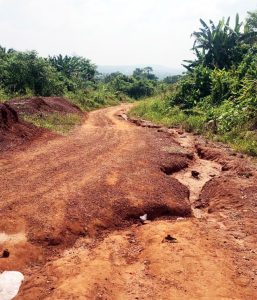
The current state of the Nsuta-Tadieso-Gyetiase road

The residents had threatened to stage a massive protest against the NPP government due to the poor condition of the road stretching from Nsuta to Gyetiase through Tadieso.Hon. Ntim, who is also the Deputy Health Minister, intervened by taking a proactive step and followed up with the Ministry of Roads and Highways to address the issue.

Last Tuesday, she questioned the Minister of Roads and Highways, Asenso Boakye, on why the road project had been abandoned by contractors when the Roads Minister appeared before the Assurance committee on which she (MP) serves as a member on Tuesday.

She emphasised the importance of completing the road, highlighting its potential economic impact on the constituency. Responding to the inquiry, Asenso Boakye assured that he would promptly investigate the matter and address any challenges faced by contractors working on the road.

As a result of the timely intervention by Adelaide Ntim, the planned demonstration was halted as efforts are being made to ensure swift rehabilitation of the deplorable road to the relief of the residents of Gyetiase and Tadieso.

Adelaide Ntim has promised to mount pressure on the road Minister to ensure that the road sees the needed rehabilitation.

She has, therefore, pleaded with the residents to exercise restraint as she seeks ministerial approval to address the challenges facing the constituents.

CSOs Blame MOTI for Stalled Passage of Consumer Protection Bill

0
Executive Director of Consumer Protection Agency (CPA), Mr Koffi Kapito

Civil Society Organisations (CSOs) in the country are blaming the Ministry of Trade and Industry (MoTI) for the stalled passage of the Consumer Protection Bill, despite having a draft for almost two decades.

In a joint press conference in Accra, the Executive Director of Consumer Protection Agency (CPA), Mr Koffi Kapito, said it is painstakingly surprising that the Ministry of Trade and Industry (MOTI), whose duty it is to ensure that the draft bill gets to Cabinet and Parliament, has not been able to act for nineteen years since the process started.

“Ghana started the process of getting a Consumer Protection Law in 2005 during President Kufuor’s time. MOTI and the Ministry of Energy commenced the Consumer Protection Bill and the National Petroleum Authority (NPA) Bill at the same time.

That of the NPA Act 691 was passed into law in the same year (2005) whilst that of the Consumer Protection Bill remains a draft document, lying at the 3rd floor of the MOTI Building” he said.

Koffi Kapito further lamented that whilst the Draft Consumer Protection Bill gathers dust on the mahogany desk on the Fourth Floor of the Ministry of Trade and Industry (MOTI) building, other ministries and agencies are making are getting Parliament to pass their bill for them.

He added that “despite the bill always been listed among bills to be submitted to Parliament, it is pathetic the snail pace at which the MOTI is handling the process. The seeming lack of interest in the law by the MOTI can be seen to have stalled the progress.

“The concern of many Ghanaians is that if urgency is not attached, the bill will not be passed within the life of this current Parliament”.

The West African Regional Director of CUTS International, Appiah Kusi Adomako Esq., on his part,  explained that in 2016, the New Patriotic Party (NPP), then in opposition, promised in their 2016 Manifesto “to protect Ghanaians from inferior quality goods, products and services”, adding that “we will facilitate the passage of a Consumer Protection Law.” (Page 31 of the NPP 2016 Manifesto).

With less than four months to the general elections, the government is yet to fulfill its promise to the 34.5 million Ghanaian consumers.

“Four presidents have come and three gone, yet the progress has painstakingly been slow with no demonstrable appetite by the Executive arm to facilitate the passage of the bill. It is clear that the absence of Consumer Protection Law in the country has contributed to the widespread and deliberate abuse of consumer rights in the country.

“Consumer rights are fundamental human rights, which the state has a binding duty to promote, protect and safeguard through the enactment of laws and their enforcement,” Mr Adomako opined.

In their next step of action, Appiah Kusi Adomako Esq. revealed that they will officially petition His Excellency, the President, the Speaker of Parliament and the Leadership of Parliament.

They will also mobilise one thousand Ghanaian consumers to picket at the premises of the Ministry of Trade and Industry until they see that the Ministry has taken the necessary steps in ensuring that the draft Consumer Protection Bill makes it way to Parliament, via Cabinet.

The CSOs called on government to take immediate and decisive action by tidying up the draft bill, undertake stakeholder consultation and prioritise the introduction of the Consumer Protection Bill to Parliament when Parliament reconvenes.

They also urged the Speaker of Parliament, Majority and Minority Leaders and the Parliamentary Select Committee on Trade, Industry and Tourism to prioritise the passage of the bill on the Parliamentary calendar.

They further urged the lawmakers to approach this legislation with the seriousness it deserves, Explaining that it is not just another bill but a lifeline for millions of Ghanaians.

“We need a law that is strong, comprehensive, and enforceable— one that truly protects consumers from all forms of unfair business conduct,” he added.

“We pledge to work collaboratively with the government, businesses, and other stakeholders to ensure that once this law is enacted, it is implemented effectively and benefits all Ghanaians,” Mr Adomako added.

Ghanaian Journalist hugs tree for 24 hours to break world record

0
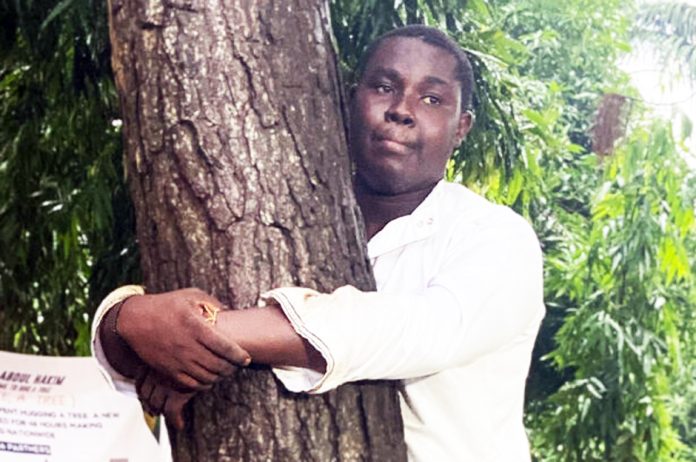
Abdul Hakim Awal

A 23-year-old Ghanaian Journalist based in Kumasi, Abdul Hakim Awal has broken the world record for the longest time to hug a tree.

Abdul’s ‘tree-hug-a-thon’ took place outside Kumasi Cultural Centre and lasted for 24 hours 21 minutes.

His achievement surpasses the previous record of 16 hours held by Ugandan environmental activist Faith Patricia Ariokot, which she set earlier this year.

Per report by the Guinness World Records, Abdul took on the challenge to highlight the importance of nature conservation in Ghana.

While embarking on his record attempt, Abdul pledged to also plant a new tree for every minute of his attempt. After the 24 hours, Abdul planted a total of 1,461.

Abdul was not permitted any breaks during his record attempt – he had to remain standing and keep his arms wrapped around the tree throughout the entire duration.

Now that the record stands at 24 hours – the point at which record attempts are considered ‘marathons’ – the title has been modified to the longest marathon hugging a tree.

This means that future challengers will be permitted breaks (a total of two hours per day) in order to combat the harmful effects of sleep deprivation.

Abdul, who has witnessed the consequences of desertification on his family’s hometown of Garu, now hopes to establish a nationwide tree-planting initiative.

He said: “We know how trees, an essential resource which the entire human race depends on, are becoming scarce in Ghana.”

“Though we have been taught about preservation of trees since the early years of our lives, the contribution from everyone is not as significant as it should be.

“This attempt for the longest time to hug a tree, to me, spells out an important task to preserve human life by preserving trees.”

Abdul is not the first Ghanaian to set a tree-hugging world record this year. His achievement follows that of the forestry student based in the US, Abubakar Tahiru who set a record for the most trees hugged in one hour with a total of 1,123.

There’s the use of juju in the movie industry – Kwaku Manu

0
Kwaku Manu

Ghanaian veteran actor, Kwaku Manu, has candidly revealed the dark underbelly of the movie industry, confirming the widespread use of black magic, commonly known as “juju,” among some actors and actresses.

In an exclusive interview with popular blogger ZionFelix, Kwaku Manu corroborated earlier claims made by fellow actress Portia Asare that juju is a reality within the industry.

“Just like in any other industry, some people resort to evil means to destroy others,” – Kwaku Manu stated, pointing out that the practice is not unique to the movie sector but reflects broader societal issues.

In a startling personal anecdote, Kwaku Manu recounted an incident where a veteran actress confided in him that he had been spiritually targeted on multiple occasions, yet remained unharmed.

“She told me I was untouchable because they’ve spiritually tried me many times,” he revealed, suggesting that he had been protected from these malicious efforts.

Source: GhPage

The Ghanaian Chronicle