Home Blog Page 1279

Common Fund Administrator wins governance award

0
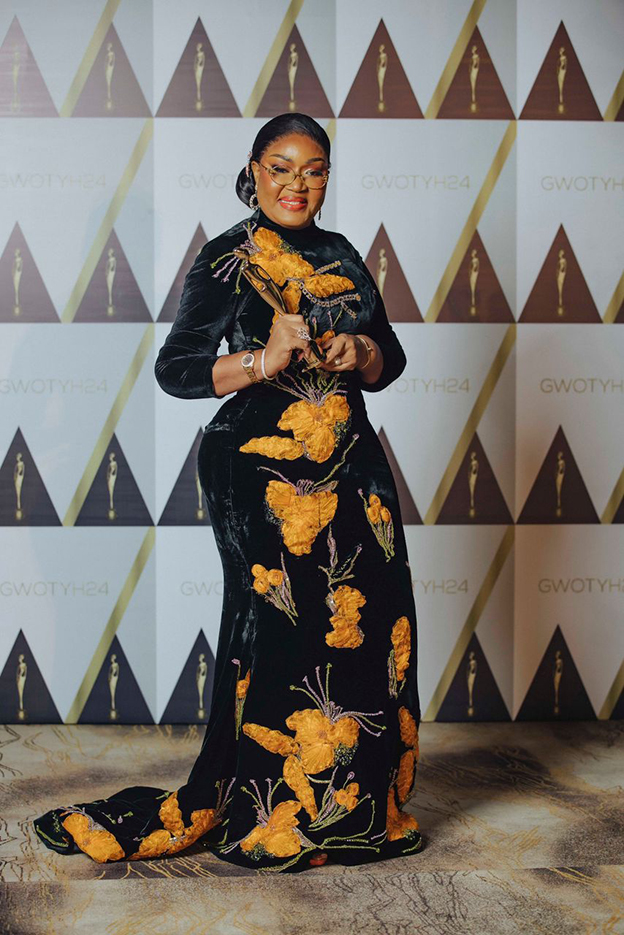
Irene Naa Torshie Addo

The Administrator of the District Assemblies Common Fund, Irene Naa Torshie Addo, has been honoured, together with the First Lady, Rebecca Akufo-Addo and former First Lady, Nana Konadu Agyeman Rawlings, at the 9th edition of the Ghana Women of the Year Honours 2024.

Naa Torshie was awarded for her outstanding contributions to governance.

The First Lady, Rebecca Akufo-Addo, was honoured with the ultimate Women of the Year award and former First Lady, Nana Konadu Agyemang Rawlings was honoured with the Lifetime Achievement award.

Organised by Glitz Africa, the three influential women were honoured for their exceptional contributions to society.

The event, which took place last Saturday, celebrated these women for their dedication to leadership and governance, as part of the 2024 Ghana Women of the Year Honours.

Naa Torshie received special recognition for her outstanding work in governance and seized the moment to praise the role of President Nana Addo Dankwa Akufo-Addo and Vice President Dr. Mahamudu Bawumia in advancing women’s leadership in Ghana.

Irene Naa Torshie Addo

“The men out there who are creating the space and leveling the playing field for us women to also be actors,” she said, “I’d like to call to mind His Excellency the President and the Vice President for giving women in Ghana the opportunity to excel.”

WOMEN IN POLITICS

Naa Torshie highlighted the growing number of women in leadership positions across the country, citing examples like the first female Chief of Staff and women leaders in foreign affairs, the Ghana Revenue Authority (GRA), and communications.

Yet, despite these advancements, she pointed out the challenges women still face in political representation.

“Women are not doing very well in Ghana when it comes to politics. Sometimes they don’t even make up 20% of Parliament or other spaces,” she remarked, calling for greater participation of women in politics.

In her speech, Naa Torshie acknowledged that women often have to work twice as hard to be recognised in male-dominated spaces.

She predicted a future where women would hold the highest offices in the land. “There’s going to be a day when we’ll have women president, vice president, and the whole of Parliament will be full of women,” she confidently declared.

She emphasised that the time to achieve 50 percent representation of women in Parliament is now.

DEDICATION

The former Tema West MP, Naa Torshie, also shared a personal reflection on the sacrifices she made throughout her career, especially as a single mother.
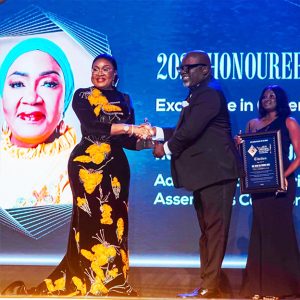
Irene Naa Torshie Addo (L)

She dedicated her award to her family, particularly her daughters and apologised for the times she could not be there for her due to her political commitments.

“For the times I’ve never been there as a single mother, for taking you out of the country, for all the times you wanted to share your secrets with me that I wasn’t there, I say I’m sorry. But this call is bigger than motherhood,” she said, acknowledging the challenges of balancing politics with motherhood.

DREAM

In her remarks, she urged all young women to dream big and to prioritise their personal development.

“Dream big so that you get scared of your own dreams, but with God in your boat, everything is possible,” she encouraged.

Naa Torshie expressed her gratitude to Glitz Africa for the recognition, commending the organisation for creating a platform to celebrate the achievements of women in Ghana and for highlighting the critical role women play in shaping the future of the nation.

Editorial: Unregistered Traditional Medicine Is A Danger To Public Health

0
Editorial

Yesterday, the state owned Daily Graphic reported that over 521,000 traditional and alternative medical practitioners operating in the country are unregistered and unlicensed. The paper quoted the Traditional Medicine Practice Council (TMPC) as saying that the figure includes about 321,000 unregistered or unlicensed traditional medicine practitioners and over 200,000 complementary alternative medical practitioners.

The paper further reported that practitioners and institutions that are operating illegally, constituted more than 80 per cent of the local traditional and alternative medicine industry.

The TMPC was birthed by the Traditional Medicine Practice Act, 2000 (Act 575) to regulate the practice of traditional medicine, to register practitioners and license practices, to regulate the preparation and sale of herbal medicines and to provide for related matters.

Section 9(1) of Act 575 states that: “A person shall not operate or own premises as a practitioner or produce herbal medicine for sale unless that person is registered in accordance with this Act”.

The Registrar and Chief Executive Officer of the TMPC, Dr Michael Kyeremateng, who spoke on behalf of the Council, however, said the alarming rate at which unauthorised practitioners had flooded the airwaves in particular to advertise their institutions and products was even more concerning.

“Currently, in Ghana, we know that we have over 60 to 70 per cent of our population accessing traditional and alternative medical centres for primary health care. Issues escalate before they move on to any other allopathic centres for emergencies.

“You realise that the life of the average Ghanaian is at risk because of so many mushroom clinics and hospitals, and practitioners occupying our airwaves without the requisite licence and certification,” the paper quoted him as saying.

It is an undeniable fact that majority of Ghanaians, especially those in the rural areas, rely on traditional medicine anytime they fall sick. As a result of this development, thousands of traditional medical practitioners have emerged. They produce herbal medicines that can cure almost every ailment on planet Earth.

But unlike the orthodox medicine, these herbal preparations do not sometimes go through any scientific process before they are offloaded onto the market. It is upon the basis of this that medical doctors do not recognise these herbal medicines. The government itself might have noticed this shortcoming and,therefore, decided to enact the TMPC Act, 2000 to regulate the industry.

Regrettably, despite the existence of this Act, the Traditional Medicine Practice Council, which is to enforce the law, is now telling Ghanaians that majority of the herbal preparations on our market are not registered. This is a serious matter, but Dr Michael Kyeremateng in the interview he granted to Daily Graphic did not state the steps his outfit had taken to ensure sanity in the industry.

As a matter of fact, nowadays, immediately one tunes into a radio or television station, the first thing the person will hear or see is the advertisement of herbal medicines. These practitioners are so eloquent in their presentations in the local languages that one is tempted to buy the medicine being advertised, when the said herbal medicinesmight not have even been registered.

In our opinion, this is a serious national security issue that must not be toyed with. It is possible that thousands of Ghanaians are dying after they have taken these herbal preparations that have not been registered by any regulatory body.

It is true that our forefathers relied on traditional medicines before the Europeans introduced orthodox medicines to them, but the rate at which some of these traditional medicines are emerging on the market is alarming.

The Chronicle is, therefore, calling on the Traditional Medicine Practice Council to wake up from its slumber and start working. Whining without any concrete action, in our view, is meaningless.

They must work together with the radio and televisions to ensure that only registered traditional medicines are advertised on our airwaves. In this way, the Council will be protecting the lives of Ghanaians.

Rising Tensions Over the Nile: Egypt’s Strategic Maneuvers Against Ethiopia’s GERD

0
Opinion

Egypt’s stance against Ethiopia’s Grand Ethiopian Renaissance Dam (GERD) has escalated, raising the possibility of military conflict between Cairo and Addis Ababa. Egypt has openly aligned itself with Somalia and covertly with Eritrea in opposition to Ethiopia. The GERD is crucial to Ethiopia, which contributes at least 85% of the Nile’s waters. This makes the dam vital for its economic development.

Egypt’s reliance on outdated agreements—the 1929 treaty and the 1959 accord—does not reflect the current geopolitical realities or the needs of upstream countries such as Ethiopia. The old treaties, combined with recent shifts in regional alliances and rising tensions, have created conditions that could lead to a destabilizing conflict over Nile waters.

From July 2014 to August 2022, South Sudan and Uganda were Egypt’s regional allies, supporting Cairo’s strategy. However, Egypt faced challenges in implementing its strategy against Ethiopia in South Sudan due to significant local opposition, particularly from the Nuer community, which has historical ties to Ethiopia.

Recently, Somalia and Eritrea, once unlikely allies, have shifted their stances due to changing geopolitical dynamics. Their alignment with Egypt is driven by two key factors. First, Somaliland—a self-declared autonomous region within Somalia that lacks international recognition—signed an agreement with Ethiopia this year. This deal allows Ethiopia access to ports on the Gulf of Aden and the Red Sea.

The Somali government, which considers Somaliland part of its territory, views the agreement between Somaliland and Ethiopia as a threat to its sovereignty. Consequently, Somalia has threatened to use all available measures, including potential military action, to prevent Ethiopia from utilizing these strategic seaports via Somaliland. This shift has significantly influenced Somalia’s alignment with Egypt, as both seek to counter Ethiopia’s growing influence.

Second, the Fano militia, an armed ethnic nationalist group from Ethiopia’s Amhara region, is dissatisfied with the November 2022 peace agreement between the Ethiopian government and the Tigray People’s Liberation Front (TPLF). Following the peace deal, the Fano militia feels that Ethiopian Prime Minister Dr. Abiy Ahmed abandoned his reform agenda and believes that the TPLF should not be allowed to exist as a political organization.

As a result, the Fano militia established its main base in Eritrea, where it has received and continues to receive military training and support. Eritrea, likewise, is dissatisfied with Ethiopia’s decision to sign a peace accord with the TPLF.

Cairo views these developments as an opportunity to destabilize Ethiopia. It has begun supplying weapons and military equipment to Somalia and also assisting the Fano militia through the Eritrean government. This strategy aims to destabilize Ethiopia further and maintain control over the Nile waters.

It is worth noting that Ethiopia has taken precautionary measures by suspending Ethiopian Airlines flights to Eritrea. This move is in response to Eritrea’s plan to block these flights by September 30. Additionally, Ethiopian Airlines has revealed that the Eritrean government has frozen its bank account in Eritrea, making it impossible for the airline to operate there.

Egypt’s ongoing military strategy against the GERD could potentially lead to a regional war. The possibility of conflict arises because countries like Eritrea and Somalia support Egypt, while other regional actors, including some upstream nations not explicitly mentioned here, oppose Egypt’s insistence on maintaining its monopoly over the Nile waters.

Egypt’s strategy to block the construction of the Grand Ethiopian Renaissance Dam is not new. The plan to prevent Ethiopia from building the dam began soon after Ethiopia announced its construction on the Blue Nile in 2011.

However, the conflict between the two nations intensified after Dr. Abiy Ahmed became Ethiopian Prime Minister in April 2018. Cairo should stop pressuring Addis Ababa and start working on a deal that accommodates the interests of all parties involved. Egypt’s insistence on adhering to the 95-year-old Nile waters treaty is likely to escalate regional tensions.

A more reasonable approach would be for Egypt to acknowledge that the colonial-era 1929 agreement no longer effectively governs the use of Nile waters by countries like Ethiopia. Using proxy militias or countries like Somalia and Eritrea to pursue anti-Ethiopia interests is not an effective way to resolve the disagreement. A mutually beneficial agreement between Cairo and Addis Ababa is the only reasonable way to resolve the conflict.

By Duop Chak Wuol

Duop Chak Wuol is an analyst and critical writer. He is a graduate of the University of Colorado and can be reached at duop282@gmail.com.

Editor’s note: Views expressed in this article do not represent that of The Chronicle

Torgbui Sri III reminds Ewes of their bond as one people

0
Torgbui Agbesi Awusu II addressing the gathering

The Awomefia, Torgbui Sri III, has  reminded Ewes living outside the Volta region to always bear in mind that “we are one people bound together by our shared history and origins”, and no matter where “we live, our connection to each other remains strong”.

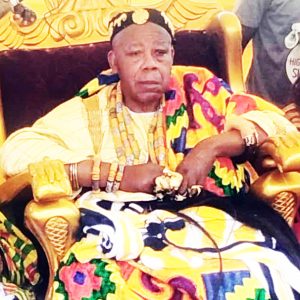
Torgbuiga Mawufeame Fugah, President Council of Ewe Chiefs seated in state

He said the shared heritage calls for unity in purpose, progress and in peace and, therefore, “wherever we find ourselves, we must never forget that our strength lies in our ability to work together”.

The Awomefia emphasised that “Our ancestors worked hand in hand to build strong communities and we must follow in their footsteps.

We must support one another, stand together and lift each other up. Let us never allow divisions to weaken the bonds that unite us as Ewe people”.

These were contained in a speech read on his behalf by Torgbui Agbesi Awusu II, Paramount Chief and Awadada of Anlo Dukor (State), at the climax of the celebration of ‘Eweza’ last Saturday, at Oforikrom in Kumasi, in Ashanti region.

Organised by the Council of Ewe Chiefs in Ashanti, Ahafo and Bono regions, in collaboration with the Manhyia Palace, EWEZA is an annual gathering of people from the Volta region living in Ashanti, Ahafo and Bono regions to socialise and deliberate about issues that affect them as a people.

Torgbui Agbesi Awusu said there are more than 500,000 Ewes living in the Ashanti, Bono and Ahafo regions, which should be “a powerful reminder of our vast presence and the important role we play in the socio-economic fabric of these regions.

“Our numbers carry significance, not only in terms of population, but also in terms of cultural relevance and contributions”.

He said the Ewes are known for the natural values of hard work and integrity, which have carried them through generations and must continue to be “our guiding principles in everything we do. Whether in business, education or family life, let us strive for examples of diligence and honesty”.

Touching on the upcoming December elections, the Paramount Chief and Awadada urged Ewes to come out and vote when the time comes, saying “Let your voice be heard and let us do so with peace in our hearts.

“Remember, the decisions we make today will shape the future of our children and generations to come”.

Torgbuiga Mawufeame Fugah, President of the Council of Ewe Chiefs advised politicians to be conscious of the consequences of their public pronouncements and focus on issue-based campaigns by explaining their manifestos.

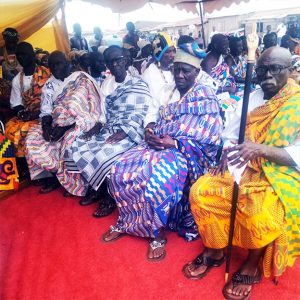
A section Ewes at the forum

He said “political parties are not rivals, but partners for progress and development of our nation”, and power is given to the elected party through the ballot and citizens who vote “look up to them for progress, economic development, provision of good healthcare, good education for their children and citizens, employment opportunities and above all peace”.

Torgbuiga Fugah also lamented that “our children are gradually being influenced by other cultures such as the LGBTQ+ and others and our local cuisine, food, dance, dress and conduct are fading away”

He called for a deliberate effort to recapture our values and safeguard them because people “without culture and cultural values are considered as lost people”.

Nana Adubofour Kwaw II, Otumfuo Gyaasehene, who represented the Asantehene Otumfuo Osei Tutu II, advised the youth from the Volta region resident in Ashanti, Bono and Ahafo regions to accord their leaders back home and in the regions the due respect and also strive to maintain peaceful coexistence with other ethnic groups.

He said the Eweza is a good opportunity for Ewes in the three regions to group and deliberate, and encouraged them to organize the festival every year.

Prof. Joshua Alabi in a speech read on behalf of Former President and flagbearer of the NDC, John Dramani Mahama, thanked the Ewe communities in various parts of the country outside the Volta region for their continued support and dedication to the NDC.

He stressed that John Dramani Mahama has a record of delivering on his promises and would not promise what he cannot do, emphasising that it is the reason all NDC’s campaign messages are promises that can easily be achieved as compared to the NPP.

From Thomas Agbenyegah Adzey, Kumasi 

Streets deserted, businesses closed as Ilesa observes traditional curfew for late Oba Aromolaran

0
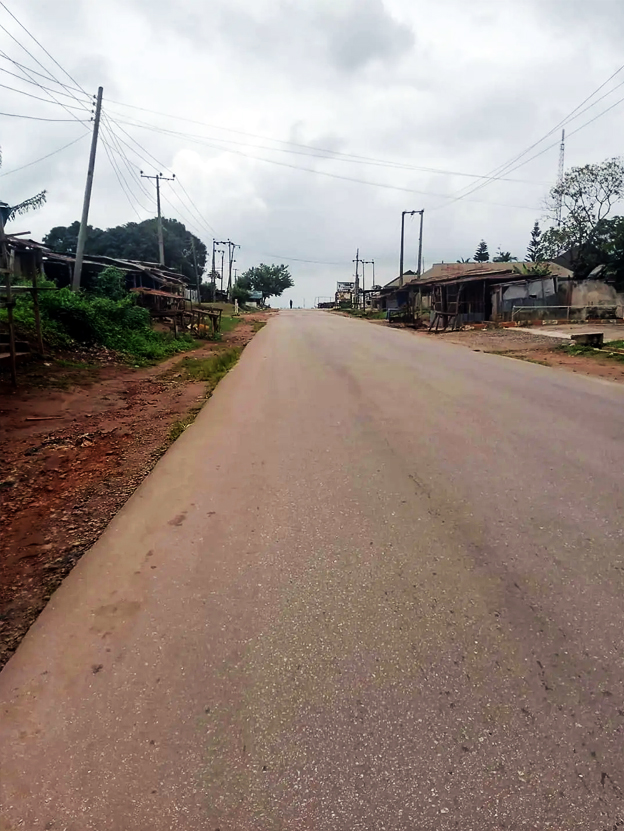
Deserted street

Streets in Ilesa town are deserted and businesses have been under lock and key as traditionalists priests observe sacred rituals for the late Owa Obokun Adimula of Ijesaland, Oba Gabriel Adekunle Aromolaran.

DAILY POST observed that the town has remained deserted and under lockdown following a sit-at-home order issued by the traditional priests to honour the monarch.

The curfew (Oro) which started at 10:00 pm on Monday, September 16 and lasted until 2:00 pm on Tuesday, September 17, was imposed to ensure that the traditional rites of passage for the late king were performed in secrecy, in accordance with the tradition.

Shops, markets and other businesses were shut down, while residents stayed indoors throughout the duration the curfew.

The Owa-in-Council had earlier declared a three-day market closure and a seven-day curfew in honor of Oba Aromolaran immediately after his passing.

DAILY POST recalled that Oba Aromolaran who reigned for 42 years died on Wednesday, September 11, 2024.

His death was not however made public until Thursday, September 12, 2024 by Chief Olayinka Fasuyi, the Asiwaju of Ijesaland.

Credit: dailypost.ng

Cholera Kills Seven, 71 Hospitalised In Adamawa

0

Not less than seven persons have died as a result of a cholera outbreak in the Yola North Local Government Area of Adamawa State. A statement by the National Emergency Management Agency in a statement shared on its X.com page on Tuesday, also said a total of 71 others have been hospitalised.

The development comes as the Nigeria Centre for Disease Control and Prevention disclosed that the country had recorded 1,528 suspected cases of cholera and 53 deaths in 31 states across 107 Local Government Areas.

According to NEMA, the outbreak was caused by a recent flood that contaminated the communities’ drinking water sources.

The statement added that around 100 people were also under monitoring and observation.

It read, “The National Emergency Management Agency has responded to a suspected cholera outbreak in Yola North LGA of Adamawa State, affecting the communities of Alkalawa, Doubeli, Rumde, and Gwadabawa.

“As of September 16, 2024, 71 patients have been hospitalised, with over 100 under observation, and seven confirmed deaths.

“The outbreak is attributed to a recent flood disaster that contaminated the primary drinking water source. Due to the overflow at the isolation centre, some patients are being transferred to the Federal Medical Centre.”

NEMA further disclosed that it had collaborated with the state government to implement emergency measures aimed at mitigating the impact of the disease.

“NEMA, along with the Adamawa State government, has initiated emergency measures, including chlorinating toilets and providing water treatment to reduce the spread of infection.

“They have also conducted community education to raise awareness about the disease. NEMA is closely monitoring the situation and coordinating with stakeholders for timely intervention,” the statement concluded.

Credit: channelstv.com

Lagos State Threatens To Demolish 280 Illegal Structures

0
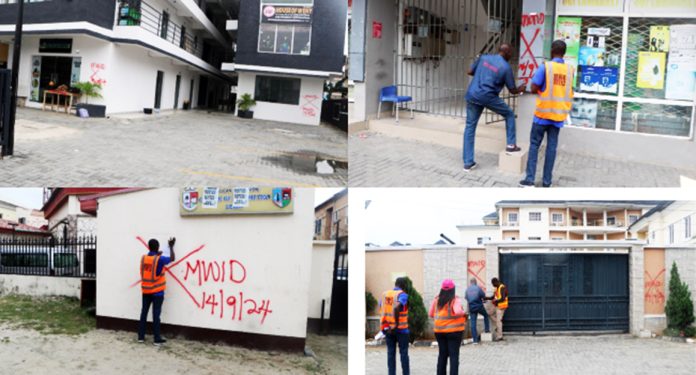
Illegal Structures marked to be demolished

The Lagos State Government has threatened to demolish 280 illegal structures to forestall the creation of slums, distortion of the Lagos State Master plan and erosion of the state coastal area. A statement titled ‘LASG SERVES CONTRAVENTION NOTICE ON ILLEGAL OCCUPANTS OF MAYEGUN WATERFRONT SCHEME ’ by the Commissioner for Waterfront Infrastructure Development, Ekundayo Alebiosu on Tuesday, said notices have been issued to over 280  illegal property owners and occupiers in the Mayegun Waterfront Scheme, located in the Eti Osa Local Government area of the state.

Myegun said the contravention notices required the occupants to provide relevant documentation and approvals that justify their occupation of the properties in question within seven days of the notice, failure of which a demolition notice will be served on them.

The over 280 properties, which included completed, under-construction, and undeveloped lands, were found to be without any government papers authorising their construction after a detailed technical assessment of the Mayegun Waterfront Scheme, by the survey team of the Ministry of Waterfront Infrastructure Development charged with the responsibility of maintaining the Lagos State Waterfront Schemes.

Alebiosu urged the property owners to voluntarily remove their structures before the expiration of the contravention notices served on them, or come forward to regularise their documents if they have any to avoid penalty.

He warned that all the illegal activities along the Waterfront schemes and corridor, must come to an end immediately, as the State Government will no longer condone or accept people encroaching on government properties, land and setbacks.

Revealing that the State Government, through the Ministry, is currently sanitising the Okun Ajah waterfront scheme where similar encroachment is, Alebiosu noted that the state government will not relent in its efforts to protect the State Waterfront Schemes and infrastructure, while ensuring the safety of life and properties along the coastal area of the State.

Credit: channelstv.com

Tinubu assents bill for establishment of Centre for Arms Control

0
President Bola Tinubu

The National Security Adviser, NSA, Nuhu Ribadu, says President Bola Tinubu has assented to the Bill for the establishment of the National Centre for the Control of Small Arms and Light Weapons.

Ribadu disclosed this during a Workshop on Gender Mainstreaming in Preventing the Proliferation of Small Arms and Light Weapons in Nigeria and the West African Sub-region, on Tuesday in Abuja.

Represented by the Director of External Affairs, Office of the National Security Adviser (ONSA), Amb. Ibrahim Babani, the NSA said that the President’s assent to the bill was a major milestone in the government’s commitment to curbing the proliferation of illegal arms.

According to him, the legislative backing strengthens the Centre’s mandate and paves the way for more coordinated and decisive action.

He also stressed the need for gender mainstreaming in preventing the proliferation of small arms and light weapons in the country.

Ribadu said that the workshop was anchored on key international frameworks, including United Nations Security Council Resolution 1325.

According to him, the resolution emphasises the critical need to protect women from the impacts of conflict while also ensuring their full participation in peacebuilding and security initiatives.

“Moreover, the ECOWAS Convention on Small Arms and Light Weapons underscores the collective responsibility of our region in curbing the spread of these dangerous weapons, which disproportionately affect women and children in conflict zones.

“The importance of gender mainstreaming in preventing the proliferation of SALW cannot be overstated as it strengthens our strategies, and ensures that our approach to security is inclusive and sustainable,” he said.

Credit: dailypost.ng

Amin Adamcalls on stakeholders to ensure success of SMEs 

0
Dr Mohammed Amin Adam, the Minister of Finance

Dr Mohammed Amin Adam, the Minister of Finance, has emphasised the need for the collective responsibility of all stakeholders, to ensure the success of Small and Medium-sized Enterprises (SMEs) in Ghana.

He said SMEs were the lifeblood of the country’s economy and, therefore, the need to create an enabling environment for the SMEs to thrive, “Our SMEs are the lifeblood of our economy, and it is our collective responsibility to ensure their success.”

Dr Adam said this in a speech read on his behalf at a stakeholder sensitisation on the SME Growth and Opportunity (SME Go) programme in Bolgatanga, the Upper East Regional capital.

The programme brought together officials from the Ministries of Finance, Trade and Industry, the Ghana EXIM Bank, Ghana Enterprises Agency (GEA), Development Bank Ghana and SME owners among others.

“The data is clear: supporting SMEs is crucial to achieving our growth and development ambitions. We must be intentional about providing access to financial resources, expertise and capacity building programmes that empower them to drive innovation, create jobs, and stimulate economic growth,” he said.

Dr Adam said Ghana’s growth model must evolve beyond heavy reliance on foreign direct investment and raw material exports, which could be volatile and expose the country to external shocks.

“Instead, we must harness the potential of our homegrown SMEs to build a prosperous, dynamic, and competitive economy. Today, we embark on a new chapter in our journey toward economic transformation.

“We have overcome challenges in the past and our recent achievements in macro-economic stability – robust growth, lower inflation and stronger public finances demonstrate our resilience and determination,” the Finance Minister added.

He said through the SME GO, the Ministry would bind the public and private sectors together to create a better ecosystem for SMEs, “Our implementing partners;  Ghana Enterprises Agency, Ghana Exim Bank, 1D1F, and Development Bank Ghana, possess the expertise and capacity to deliver results swiftly.”

Dr Adam said the Ministry consulted with stakeholders, including the Association of Ghana Industries and civil society, to design selection criteria and financing instruments tailored to meet the needs of high-growth potential SMEs.

“Additionally, we recognize that financial support alone is insufficient, which is why the Programme includes comprehensive capacity-building programmes to upskill both beneficiaries and the wider business landscape.

“This is particularly important because it seeks to address the risk of lending to SMEs by Commercial Banks, who continue to be worried about low loan recoveries,” Dr Adam said.

He said it was the Ministry’s vision to create a platform for SMEs and raise SME champions to generate impact that resonated throughout the communities, and leave a legacy of empowerment, innovation, and prosperity for future generations.

According to the Minister, the SME GO programme was the largest SME financing initiative in the history of Ghana and perhaps in Africa, as government supported the GEA and GEXIM with a total of GH¢700million.

He said the Development Bank Ghana committed a total of about GH¢1.2 billion to support SMEs through participating financial institutions and the International Finance Corporation committed to support SMEs with US$400million through financial institutions.

“As we continue to solidify the country’s position as a leading hub for entrepreneurship and investment, government will continue to place immense focus on nurturing the small and medium enterprises sector, recognizing the integral role they play in both society and economic expansion,” he said.

Alhaji Dr Hafiz Bin Salih, the Upper East Regional Minister, in a speech delivered on his behalf, noted that SMEs were a backbone of the Region’s economy, and formed a catalyst for job creation for economic development.

He said the Region was endowed with several man-made and natural resources including the Tono, Vea and Tamne Irrigation Dams, which created investment opportunities, and urged participants and investors at the meeting to take advantage of the opportunities.

From Godfred A. Polkuu, Bolgatanga

GNA 

People wish my husband and I divorce so that they can jubilate – Afua Asantewaa

0
Afua Asantewaa and her husband

Popular Ghanaian socialite and entrepreneur Afua Asantewaa Aduonum has taken to social media to address critics of her marriage.

In a video that has since gone viral on TikTok, Afua Asantewaa, visibly saddened, expressed her frustration with people who seem to be eagerly anticipating bad news about her marriage.

She questioned why some individuals were so invested in the idea of her becoming a divorcee. “There are people who always want to find out every morning if Afua Asantewaa is still married. They wish there would be breaking news saying that Afua Asantewaa is a divorcee. They want me to get divorced so they can celebrate.”

Afua Asantewaa concluded by clarifying that she is not as troublesome as some people have been led to believe.

As of the time of writing this report, the video had garnered over 3,000 likes and numerous comments.

Credit: pulse.com.gh

The Ghanaian Chronicle